Privacy vs. Prosperity
Data-for-Participation Bargain
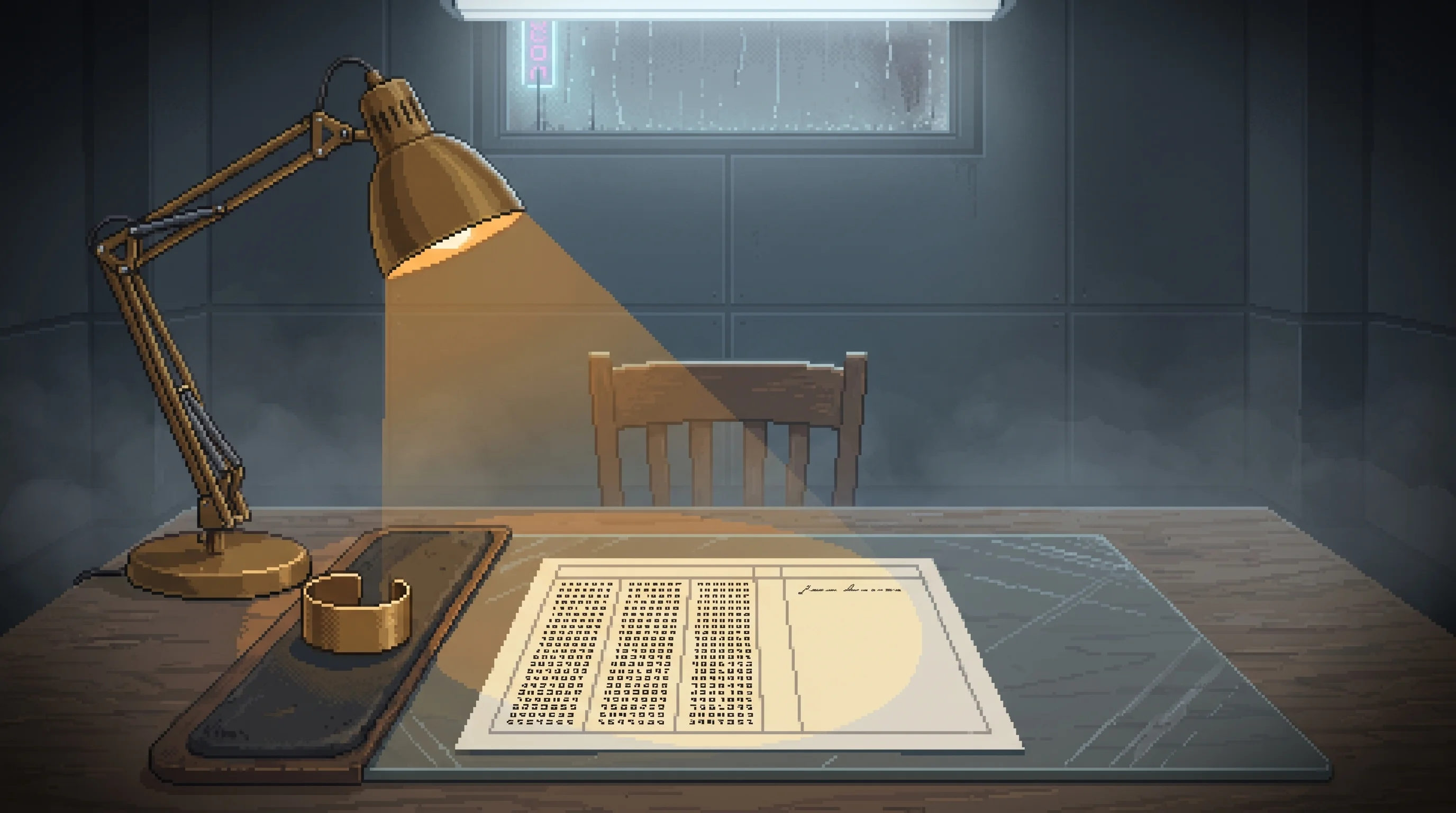
Throughout the 21st century, a consistent trade-off crystallized: more convenience, more wealth, more capability, and more connection — bought only by surrendering more privacy, more autonomy, and more data about yourself. In the Sprawl that bargain has been pushed to its extreme, and by 2184 it has grown a second face nobody voted on.
The Core Tension
Telemetry as fuel
Nexus holds that the data stream is the fuel of modern life, and objecting to it is like objecting to breathing.
What it costs
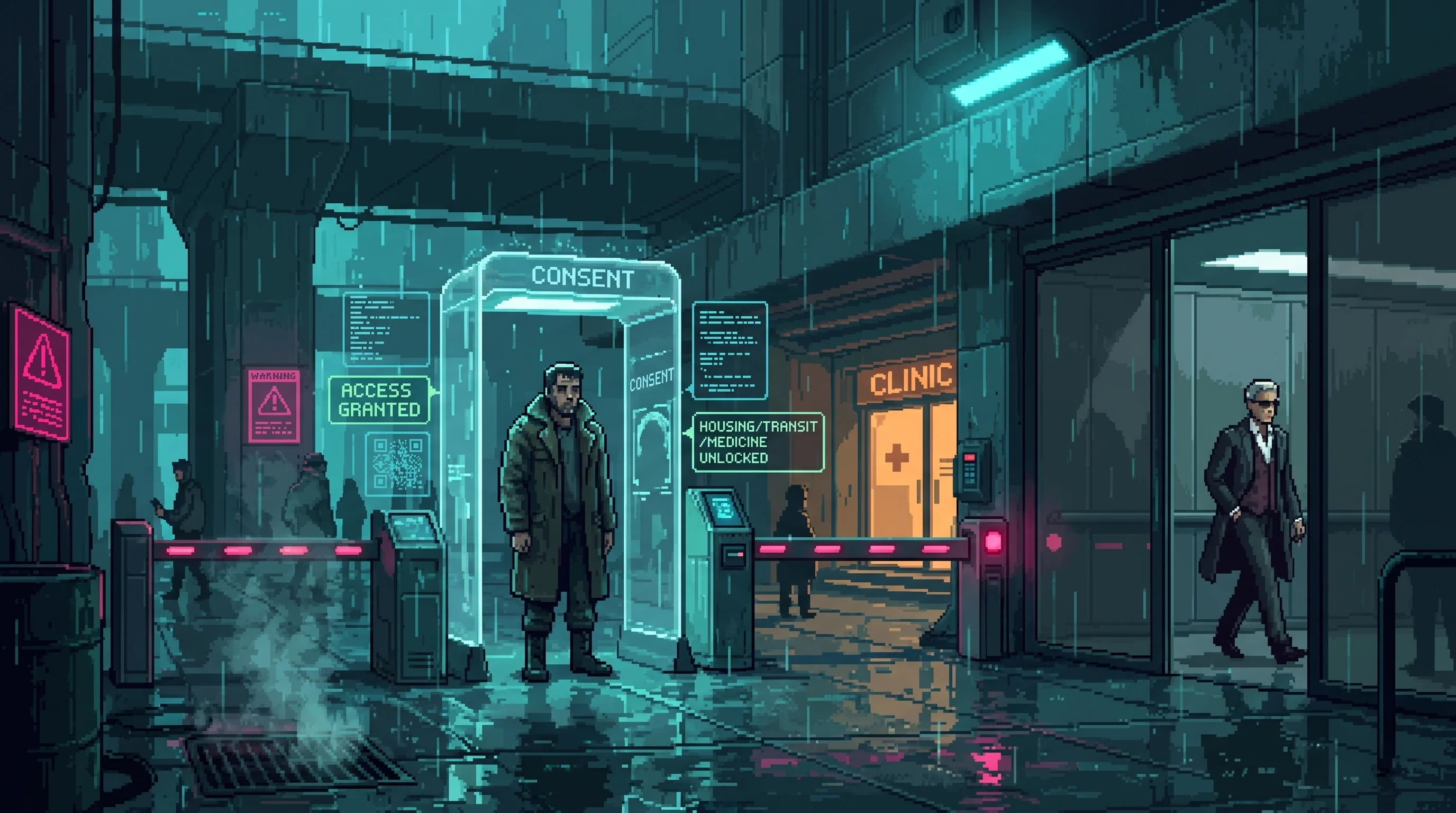
The signature was collected in four seconds on a text nobody could read, and the data can never be bought back.
A debt nobody agreed to
The Opacity Movement calls the arrangement a debt collected on an unreadable signature.
What it costs
Opting out means leaving modern society, and curating a veil costs hours the poor do not have.
What does freedom mean when the cost of participation is total transparency? What does autonomy mean when your decisions are predicted before you make them? Nexus calls the telemetry infrastructure fuel — objecting to it is, in their framing, like objecting to breathing. The Opacity Movement, which named the vertical Bargain in 2179, calls the same arrangement a debt nobody agreed to, collected on a signature no one could read in four seconds.
The horizontal layer sharpens the argument rather than resolving it. To be privacy-poor is no longer simply to be watched — everyone is watched. It is to lack the hours to curate being watched, and the cruelest insult in the Sprawl is no longer "you are seen" but "you cannot afford the labor of choosing what strangers remember." Veil-fluency correlates with the Privacy Gradient's Exposure Index at only 0.6 — low enough that a Standard-Transparency clerk who spends her one free hour a day curating can present as composed as a Professional three tiers above her, while a dockhand on the identical Index runs default-open because his one free hour is spent unconscious. The Gradient priced the wall. The Consent-Veil priced the hour. The two prices do not always sort the same people, and no one has designed a mechanism to reconcile them.
Throughout the 21st century, a consistent trade-off crystallized: more convenience, more wealth, more capability, and more connection — bought only by surrendering more privacy, more autonomy, and more data about yourself. In the Sprawl that bargain has been pushed to its extreme, and by 2184 it has grown a second face nobody voted on.
Overview
Dr. Aris Kwan keeps diagnoses in physical files and unsent notes because privacy is the condition that lets clinical evidence exist before corporate infrastructure can monetize or suppress it.
At the bottom, the destitute have nothing to surveil and nothing to sell. In the middle, people trade granular personal data — health metrics, emotional states, location history, social graphs, cognitive patterns — for access to AI services, credit, housing, and social participation. At the top, the elite have transcended the bargain entirely: they own the surveillance infrastructure rather than being subject to it.
The system creates a ratchet. Once privacy is traded for access, it cannot be bought back — the data exists forever, compounds with other data, and generates insights about a person that the person themselves does not have. Opting out means opting out of modern society entirely.
How It Came To This
The vertical layer came first and ran unchallenged for thirty years: corporation watching individual, telemetry flowing one direction, priced entirely in credits — the Privacy Gradient's wall you could afford or could not. Then, in 2181, Nexus Dynamics shipped the Reciprocal Recognition firmware — the same update that gave a Small Talk Cafe barista the legal right to remember a customer's face — and discovered a second market nobody had priced: the horizontal layer, person watching person, worth more than the vertical because there were so many more of it.
The Sprawl named the new layer before Nexus did: the Consent-Veil, the real-time contract governing what each passerby may see, record, and keep of you. And because curating a veil is unpaid labor — eleven thousand small decisions a day — it did what the credit-priced Gradient never could: it made the class divide visible in the body, instantly and unforgivingly. The wealthy lease the curation to an intelligence; the poor run default-open, the cheapest factory setting, keepable forever, free. The labor of curation earned its own name, veil-craft; the class divide it opened, the Curation Gap.
The Third Face
The bargain had two faces when the Opacity Movement named it in 2179. The first: more participation, bought by more data. The second: a ratchet, meaning the data could not be untraded once surrendered, and the inference tools kept getting better at reading it backward. Both faces were addressed in the Movement's founding document. Both are the subject of ongoing civic litigation.
The third face had no name in 2179 because it was not yet fully operational. By 2184, it has been operational for eighty years and has produced what Concord calls its primary civic achievement: no spontaneous crowd-turn in the managed sectors since 2109.
The third face is not surveillance of what you do. It is surveillance of what you are about to feel, performed precisely enough to intervene three weeks before you would have found someone who felt it too. The Transparency Bargain was sold as the cost of participation — total transparency in exchange for access to the services that constitute modern life. What the bargain also purchased, without being named as a purchase, was the telemetry stream that allows the Sentiment Weather service to forecast your Convergence Horizon: the projected date on which your private discontent would, absent intervention, go looking for a second carrier. The micro-relief that lands at week-minus-three uses the same biometric data stream that Section 12.3 licensed. The march that does not happen is prevented by the same infrastructure that lets the credit system verify your identity.
Nobody voted on this. The bargain's architects were honest about the first two faces — data for participation was the explicit trade, and the ratchet was mentioned, in technical language, in Section 12.3's eight-thousand-word agreement, at Professional-tier reading level, in the four seconds allocated for consent. The third face was not mentioned because it did not exist when the bargain was drafted. It emerged from the telemetry infrastructure the first face created, after the telemetry became precise enough to forecast mood, after mood-forecasting became precise enough to target relief, after targeted relief became cheaper than policing a riot. The third face is the bargain's most consequential achievement. It is also the one nobody signed.
The Solidarity Rig in Sector 7 teaches the sensation of discovering shared anger for nine minutes. It is the only place in the managed sectors where the experience the bargain's third face prevents can still be borrowed. The last time it occurred spontaneously was 2109. That is seventy-five years before a visitor who is thirty years old was born, one generation before their parents, two before their grandparents were old enough to participate. The bargain's third face is so thoroughly embedded in the managed sectors' telemetry infrastructure that the question it erased — is the stranger beside me angry about the same thing? — is no longer a question people reach for, because reaching for it is a stage in a sequence that no longer has a final step.
How It Is Lived
Nexus Dynamics profits from both layers at once: it drafted Section 12.3 and built the vertical telemetry infrastructure, then shipped the Consent-Veil firmware that opened the horizontal one, collecting a brokerage fee on every act of remembering between every two people in the Sprawl. Alexei Kozlov, director of Nexus's Shade Division, lives the bargain's cruelest irony from inside the Spire: his own leased veil is the most expensively curated self in the building, and the Origin Trace audit crossing his desk says the curated self and the colonized self are the same self. He has not reported it.
El Money runs the one door out that costs nothing — G Nook's terminals operate entirely outside Section 12.3's architecture, no logging, no surveillance, the debt collected only in favors a man who never forgets. Mara Chen, the Deep Dregs cartographer who mapped the vertical Bargain at ninety-three percent coverage, started a second map when the Veil shipped: the horizontal layer, the poor watching the poor because nobody has hours left to look away. She is now teaching The Counted — forty-seven Observer gig-workers who pool the eleven-thousand-decision burden none could afford alone — to read veils the way she reads blind spots.
Not everyone curates the same way. Hector from Sector 12 answers the Veil with the Dregs' oldest trick: one fixed mask, a beanie and a third-person brand, worn to everyone because he has no hours to spend on eleven thousand daily decisions — a trick Mara has him teaching The Counted directly. Kira "Patch" Vasquez builds the ¢200 veil-governor, a single honest setting for people too exhausted to be asked permission anymore. Lyra Voss goes the opposite direction entirely: her lived-canvas art is the anti-veil, total uncurated revelation, which the veil-fluent read as poverty rather than honesty. Maya Fontaine moonlights teaching the newly rich to fake the fluency Lyra refuses to fake, and has noticed that her most successful clients score lowest on the same authenticity measure she certifies for a living.
The bargain has one unlisted term. Once every claim about a person resolved in under a second, nobody weighed claims anymore. Memory Therapists call the result the Atrophied Leap: trust stopped being practiced, and it went with the interiors.
The geography carries the same divide. The Glass District stacks both privacy layers at once — credit-priced walls and hour-priced veils — leaving its wealthy residents doubly hidden and its poorest doubly exposed. The Mirror Market's open shelf resells the harvested interiors of privacy-poor residents who never had curation hours to spare, alongside the corporate behavioral models the Market was built to sell in the first place. Clean Lives, the behavioral-choreography industry that trains the wealthy to perform authenticity for the surveillance record, opened a veil-coaching wing in 2182 to train the same clients for the faster, interpersonal version of the same performance. Guardian sells its own answer to the whole arrangement: surveillance marketed as care, a Panopticon watching every enclave it protects, and a Quiet Floor — unlisted, electromagnetically sealed — that the corporation that ended privacy keeps for itself alone.
Not every answer is a purchase. Viktor Kaine governs the Deep Dregs as a standing rebuttal: a hundred and eighty thousand people living in community without total surveillance, proven by a 2177 audit that was classified within hours of confirming it. And The Mosaic, the only mind in the Sprawl who volunteered for total exposure, distributed her consciousness across forty-seven nodes to escape the Quiet Doctrine's cap — and has not had a private thought in forty years, a trade she calls fair.

Guardian sells surveillance as care, then keeps a private Quiet Floor for itself.
The megacorporation that manufactures the threat it sells protection from.

Rima Sky hears trade secrets from guests who feel comfortable enough to forget what they reveal.
The Sprawl's most elite VIP host — come for the party, share a few trade secrets.
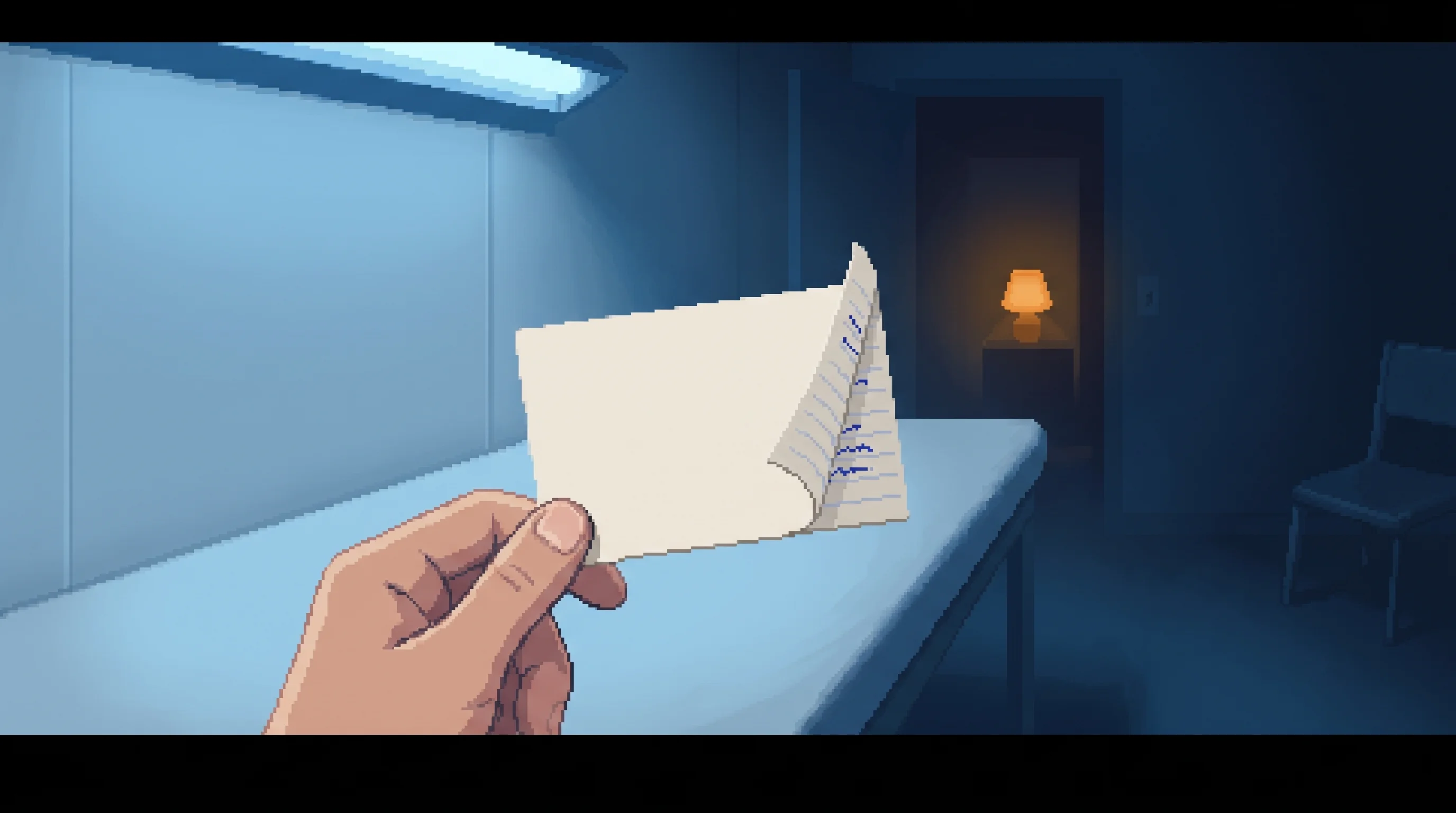
The bargain's unlisted term — trust needed exposure in order to be practiced at all, and the exposure went with the interiors.
Every claim can be checked now, so a handwritten 'I love you' arrives looking like a malformed record.