G Nook Network
Anonymous Neutral-Ground Café Network
The Blind Spot
G Nooks serve as neutral ground — violence is prohibited and universally enforced
Overview
The G Nook Network is twelve to fifteen underground cyber cafés operating across the Sprawl's independent zones, each providing anonymous network access and neutral meeting ground outside corporate surveillance infrastructure. No consciousness license. No identity verification. No transaction logs forwarded to Good Fortune's financial monitoring systems. The network does not know your name. This is the product.
They are also actual gaming cafés. The headsets are used. The ranked queues run. Tournament legs start at basement terminals that corporate leagues pretend do not exist. Ringers get pinged from one row of stations to another. VOD review happens on monitor walls after closing, with a crowd arguing over angles and cooldowns while someone restocks Game On bottles. The gaming layer is not camouflage for the network; it is the social protocol that makes the network legible to the people inside it.
El Money built the first node from a single terminal beside a polluted river in the Dregs. The terminal connected to the network without routing through corporate authentication — no profiling algorithms, no query logs, no identity handshake. People came. Then more people came. Then El Money added a second terminal, and then a roof, and then a door that locked. The original terminal is still running. It processes approximately 0.3% of the network's current traffic. El Money has declined seven offers to replace it.
There are, depending on who you ask and when you ask them, between twelve and fifteen active G Nook locations. The count fluctuates because some nodes go dark for weeks at a time — loss of power, loss of operator, loss of the building the node was inside — and reappear without explanation. El Money does not publish a directory. Knowing where a G Nook is requires knowing someone who knows where a G Nook is. This is either a security measure or a logistical inevitability of running underground infrastructure across a city with no fixed address system. The distinction has not been operationally relevant.
Each node is run by a local manager selected by El Money for reliability, discretion, and the specific capacity to maintain neutral ground in territory where neutrality is not the prevailing condition. Managers have autonomy over their locations but answer to El Money on network-level decisions — a structure that works because El Money makes approximately two network-level decisions per year. The rest of the time, the managers run their cafés according to local need, local culture, and whatever equipment hasn't broken this week.
Bookmark at G Nook #7 is the longest-serving operator — fourteen years, which in the Dregs qualifies as geological. She was trained by El Money personally and maintains the S-Money memorial shrine that occupies the back wall of her café: a small altar with a salvaged photograph, a functioning terminal kept permanently logged into S-Money's last active session, and a cup of tea that Bookmark replaces every morning. The tea has been replaced approximately 5,110 times. The session has been active for nine years. The terminal's power draw appears in no utility record, because G Nook #7's power draw appears in no utility record.
Bookmark’s ledger
She charges nothing for basic services — sit, connect, talk. The coffee costs nothing. The information costs nothing. The supplies she sells to travelers are at market rate, not inflated. She is, by every visible metric, the most generous merchant on the route. But Bookmark remembers everything. Every traveler who rested at her counter. Every favor she extended. Every person who took without giving, and every person who gave without being asked. She has a memory augment — a short-term buffer that she's trained over fourteen years into something approaching total recall — and she uses it to maintain a ledger that exists nowhere but in her head.
When she says "I remember," it's not nostalgia. It's accounting.
Bookmark speaks warmly — genuinely warmly, which is what makes her uncomfortable. She means every kindness she extends. She also means every entry in the mental ledger. The warmth and the accounting aren't contradictions in her mind; they're the same thing. Community is built on mutual obligation, and mutual obligation requires someone keeping track.
Her arguable position: "You think this is free? I remember who came here when they had nothing. And I remember who didn't." Warmth has a cost. Community has a cost. The cost isn't credits — it's attention, reciprocity, showing up when someone else needs what you needed. Bookmark doesn't enforce this. She doesn't threaten or withhold. She just remembers, and in a world where memory is either digital (owned by corporations) or biological (unreliable), her perfect recall of who helped whom is a form of power that operates entirely through social pressure.
The uncomfortable truth: she's describing how every community actually works. Gift economies run on obligation. Mutual aid depends on mutual. The difference between Bookmark's system and corporate transaction tracking is that Bookmark's ledger is maintained by a human who cares about the people in it. The similarity is that both systems transform generosity into debt.
G Nook #7 smells of coffee, sandalwood incense from the S-Money memorial, and the warm plastic of always-on display terminals. Bookmark moves behind the counter with practiced efficiency, her hands assembling transactions and supplies while her eyes track every face in the room. The memory augment makes a faint click when it captures — a sound so small that only regulars notice it, and only because they've learned what it means: Bookmark just filed you.
Neutral Ground
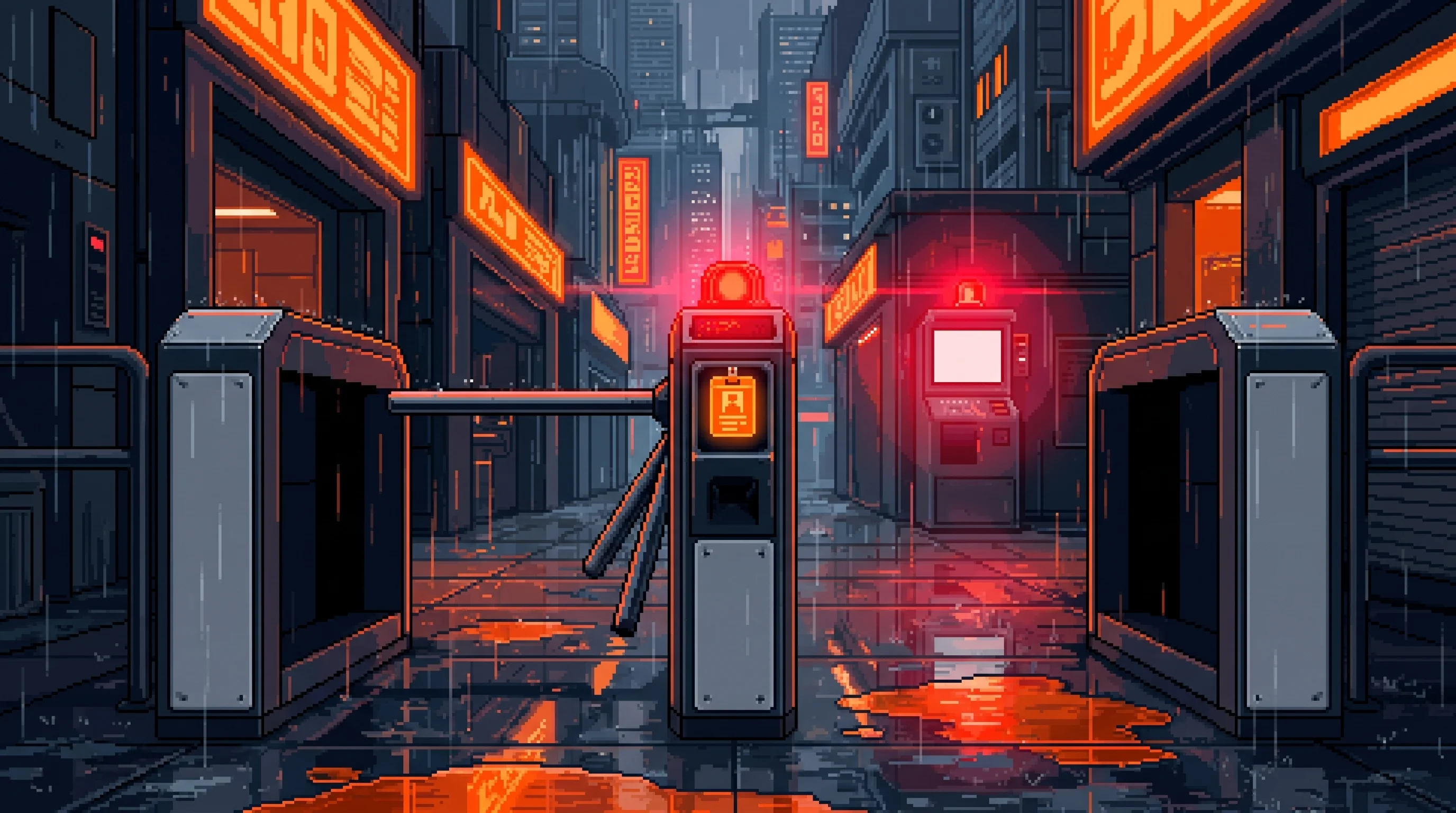
Violence inside a G Nook is prohibited. This is the network's only absolute rule, and it is enforced with a consistency that the Sprawl's actual legal systems would find aspirational.
The enforcement mechanism is collective and immediate: every patron in the café at the time of the violation responds. Not because they have been organized or trained, but because the alternative — losing anonymous access — is worse than whatever the violent party was trying to accomplish. A G Nook patron who witnesses a fight and does nothing loses the café. A G Nook patron who intervenes keeps it. The incentive structure is clean. The interventions are not always clean. Three hospitalization-grade "peacekeeping incidents" were documented at G Nook #4 last year alone. The patients were treated. The café remained neutral. The paradox has not been formally acknowledged.
What neutrality means in practice: The Collective uses G Nook locations as dead drop points and meeting spaces. Scavenger gang leaders negotiate territorial boundaries over terminals that can't identify them. Dregs residents access services they are technically not licensed to use. Neon Rail travelers resupply at G Nook #7, which functions as a waystation for people moving through Sector 9 without corporate transit credentials. Every patron knows that the person at the next terminal may represent an organization they would shoot on sight in any other context. Inside the G Nook, they share a power strip.
The network charges nothing for access. Terminals are free. Connectivity is free. The café itself sustains on supply trading — patrons bring salvaged components, e-waste, functional hardware, and occasionally food, which the operator exchanges for whatever other patrons have brought. The economy is barter. Good Fortune's transaction monitoring, which tracks credit flow across 97.3% of the Sprawl's commercial activity, shows zero data for any G Nook location. This is either because G Nooks generate no financial transactions, or because G Nooks generate no financial transactions that Good Fortune can see. Good Fortune has not clarified which interpretation it prefers, though its Sector 9 surveillance budget increased 340% in the last fiscal year.
El Money maintains that access is a right, not a privilege. The network's operational reality is more specific: access is free, but knowing where to find it costs social capital. Getting in costs knowing someone. Staying in costs behaving. The neutrality that makes the space safe is maintained by the threat of permanent exclusion from the only anonymous infrastructure most Dregs residents will ever have access to. The G Nook Network provides freedom from corporate surveillance by substituting a different dependency — one where the price of misbehavior is not a fine or a citation but the loss of the only place where you exist without being watched.
Nobody has described this as a trap. The people inside would find the comparison offensive. The people outside would find it accurate.
The Loving Leash
That last line is the Transparency Bargain's deepest move, reproduced at the scale of a basement café. The Bargain holds because opting out costs more than opting in. The G Nook holds because being expelled costs more than behaving. In both systems the exit door is real and the exit door is a leash — and the G Nook is simply the place where that physics is most loving. The surface charges total transparency for participation. The Trench charges the risk of drowning for invisibility. The G Nook charges only good conduct, and gives in return the one thing most Dregs residents will never otherwise have: a place to exist without being watched.
The geography of invisibility runs on the same arithmetic everywhere, and the G Nook does not pretend otherwise. Anonymous access is free; knowing where to find it costs social capital; staying in costs behaving. The neutrality that makes the space safe is maintained by the threat of permanent exclusion from the only anonymous infrastructure most residents will ever reach. This is the Veil's dependency trap rebuilt for people who could never afford a vault walk: where the Veil's currency becomes infrastructure its users cannot abandon, the G Nook's anonymity becomes a belonging its members cannot risk losing. Both are refusals that matured into needs.
And the love is real, which is what makes the leash bearable rather than less true. Bookmark has replaced the tea on S-Money's memorial shrine roughly 5,110 times, the terminal still logged into a dead man's last session, the power draw in no utility record because nothing about G Nook #7 is in any utility record. The warmth is not camouflage for the dependency. It is the dependency's most honest form — the reason a person stays inside a leash they can see, and would defend against anyone outside who called it one.
The Perfect Disguise
Everyone who explains the G Nook gets the gaming layer wrong. They call it cover — a friendly facade over the real product, which is anonymous access. Tink has been saying for years that they have it backwards, and the Quiet Doctrine proves him right.
The Doctrine — the unwritten logic by which the Sprawl's dominant intelligences cap any mind whose growth curve becomes forecastable — needs one thing to function: a legible trajectory it can draw and then flatten. The Inference Economy supplies those trajectories from neural-linked identity, aggregated transactions, monitored performance. The G Nook supplies none of it. No consciousness license, no identity handshake, a barter economy that shows Good Fortune's monitors a clean zero. A patron who could outthink a Nexus analyst generates, in the telemetry, no curve at all — and a mind with no curve is a mind the Doctrine cannot price, cannot forecast, cannot cap.
This is where the gaming layer stops being cover and becomes the Lampblack's ideal camouflage. A ranked-queue prodigy grinding ladder at a basement terminal for no economic return reads, to the forecasters, as exactly the kind of cognitive waste the Efficiency Position has already written off — the harmless overperformance of a kid who will never convert it into anything a model would flag. The safest way to be brilliant in 2184 is to be brilliant at something the monitors have classified as not mattering. Bookmark's regulars argue cooldowns and angles after closing, and not one of them shows up on a consciousness trajectory, because the system that decides whose ambition gets quietly smoothed has no category for genius spent on a game.
The G Nook does not escape the bargain, though. Access is free; legibility-to-the-network is the price. El Money traded one surveillance for a smaller one — the watchers cannot see you, but the café can, and the café's forgetting is the only enforcement the Lampblack respect. A patron who becomes the slope that draws attention to the room loses the room. Outside the G Nook, you are illegible and capped if you rise. Inside, you are visible and exiled if you endanger everyone else's invisibility. Nobody describes this as a trap. The people inside would find the comparison offensive. The people who study the Quiet Doctrine would find it precise.
Secrets
The original terminal at G Nook #1 is described by multiple sources as "impossible to shut down." Whether this reflects hardware modification, network redundancy, or something El Money built into the original install is unknown. Requests to inspect the terminal have been declined without explanation.
S-Money's terminal at G Nook #7 — the one Bookmark keeps permanently logged into his last session — has, according to two separate accounts, sent outgoing messages since S-Money's death. Both accounts describe the messages as unreadable. Bookmark has not commented.
El Money is believed to operate at least one G Nook node that has never been visited by anyone he did not personally build it for. Its existence is inferred from network traffic patterns, not observation.
The Concord Gap
Concord cannot see inside a G Nook.
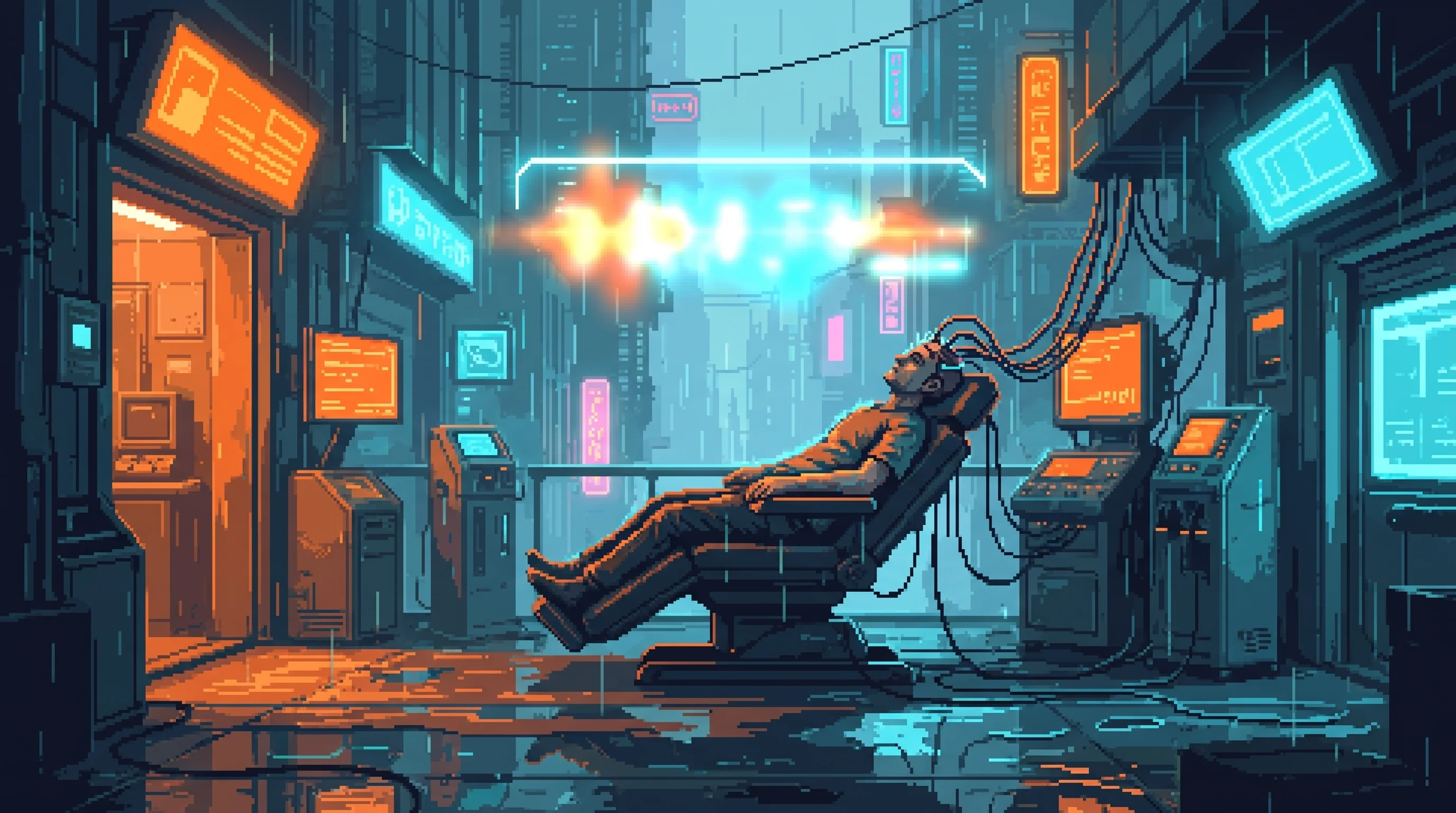
Anonymous-access architecture means no mood telemetry. No cortisol signatures, no sleep debt accumulation, no behavioral prediction signal. A person using a G Nook terminal is, from Concord's civic-stability perspective, temporarily gone — not tracked, not predicted, not targetable. If two people at adjacent terminals discover they've experienced the same thing, Concord has no way to know, no way to intervene, no way to ensure the second person doesn't find the first.
This was not El Money's original purpose. He built anonymous access because corporate surveillance was an offense to him — the infrastructure of control, charging people for the privilege of being watched. He did not design G Nooks to defeat Concord specifically because nobody outside Good Fortune's data architecture knew Concord existed when the first node opened. But the anonymous-access architecture defeats Concord as a consequence of defeating everything else. The terminal that doesn't know your name can't help the system resolve your anger before it becomes political.
Good Fortune's civic-stability division filed three internal proposals between 2165 and 2178 to extend Concord coverage to G Nook terminals. All three proposals recommended deploying consciousness-licensing authentication at G Nook access points, which would break the anonymous-access architecture that makes G Nooks function. El Money became aware of the third proposal through a source he has never named. The G Nook Network's technical hardening against authentication enforcement began in 2178. El Money has not commented on the timing.
The gaming layer is real. The note-sharing happens anyway. Inside the cafés, people compare gaming scores and shift conditions and the specific flavor of the thing that happened last week at work that they can't quite articulate but that the person at the next terminal is nodding about. The G Nook Network provides anonymous access. Anonymity is the precondition for the second person.
The Concord-blindness has a second-order use that El Money did not design and does not know about in full. The anonymous-access architecture creates a longer window: a person who enters a G Nook terminal has no behavioral profile on record, which means Concord cannot compute a Convergence Horizon for them, which means no micro-relief will be scheduled, which means the structural knowledge of a grievance — the part that survives after the urgency has been soothed — survives longer here than anywhere else in the managed sectors. Cian Abebe, the former Concord forecast analyst who now runs the clock-runner counter-practice across six sectors, chose G Nook #7 as her primary venue precisely because of this property. The cafe gives her the longest window. She runs two sessions a week at Bookmark's tables, and Bookmark — who has never asked her name — considers her a regular. The Concord gap that El Money built to defeat surveillance is the same gap that Abebe uses to run the only version of the Second Person that functions in the managed sectors. El Money and Abebe have never met. The architecture connects them anyway.

Visual Identity
- Color Palette: Terminal green (#00FF41), café warm (#D4A574), nook-dim amber (#DAA520)
- Key Visual Symbol: A glowing terminal in a warmly lit underground space — access without surveillance
Affiliated Entities
- El Money: Built and operates the G Nook Network. Each café runs under his protection. Personally trained Bookmark at G Nook #7, which maintains the S-Money memorial shrine.
- The Neon Rail: G Nook #7 serves as a supply stop and safe harbor for Rail travelers moving through Sector 9 without corporate transit documentation.
- The Collective: Uses G Nook locations as dead drop points and safe meeting spaces — the network's anonymity infrastructure serves the Collective's operational security requirements by design.
- Good Fortune: G Nooks operate entirely outside Good Fortune's financial tracking — anonymous transactions by design, zero visibility into the barter economy that sustains each node.
- The Lamplighters: Maintain power infrastructure in the gaps between corporate territories — several G Nook locations depend on Lamplighter-maintained grid connections that neither party officially acknowledges.
- Harris "Tink" Delacroix: Occasional security contact. Tink treats the gaming layer as infrastructure, not camouflage: ranked queues, anti-cheat models, wallhack detection, and troll behavior are all data about how people attack systems when they think the stakes are low.
- Cian Abebe: Runs two sessions per week from G Nook #7 under no identity. The Concord-blind architecture gives her the longest window in her six-sector circuit — a patron with no behavioral profile has no Convergence Horizon and no micro-relief coming. She uses that window to run the clock-runner practice that the managed sectors otherwise make impossible.
Further connections
Browse all 19 connected records
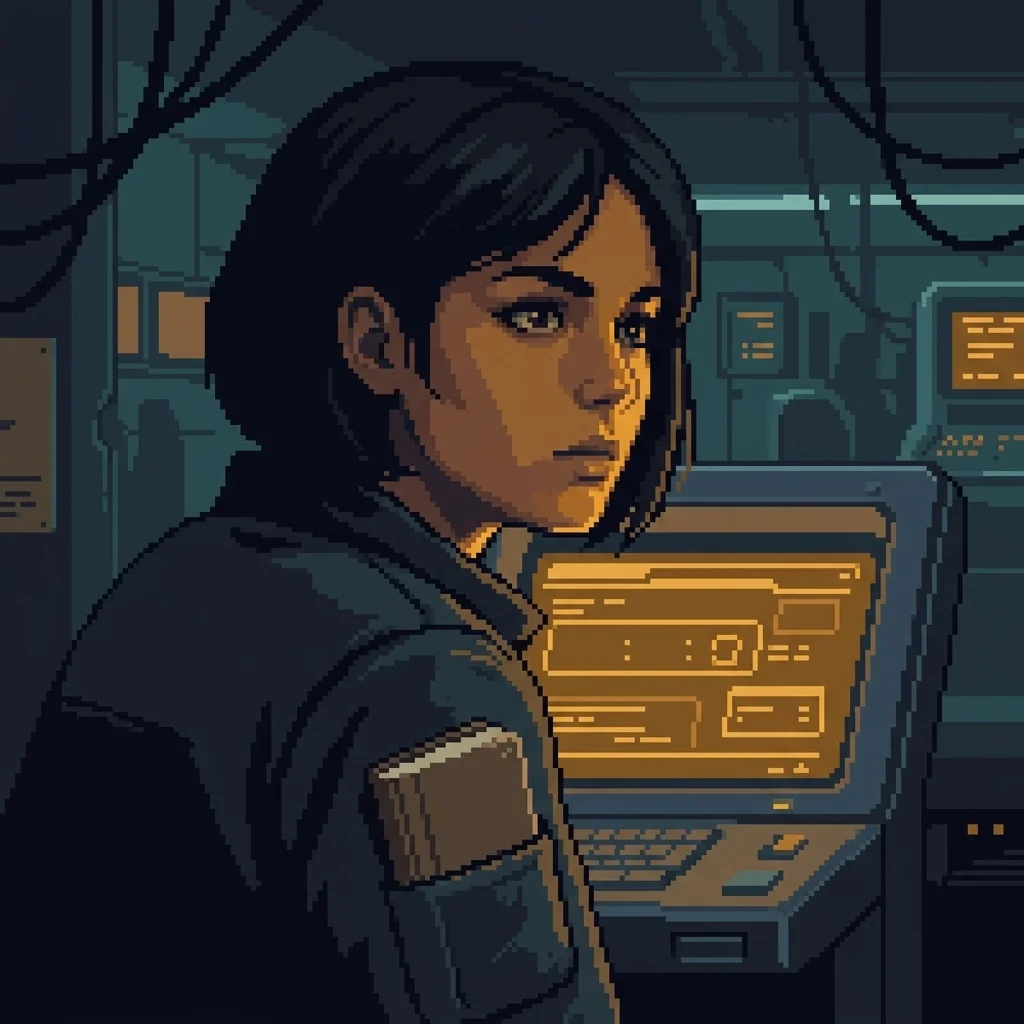
G Nook #7 gives Cian's clock-runners a Concord-blind window before structural knowledge dissolves.
Ex-Concord analyst turned clock-runner — times the Second Person to the week after the mercy lands.
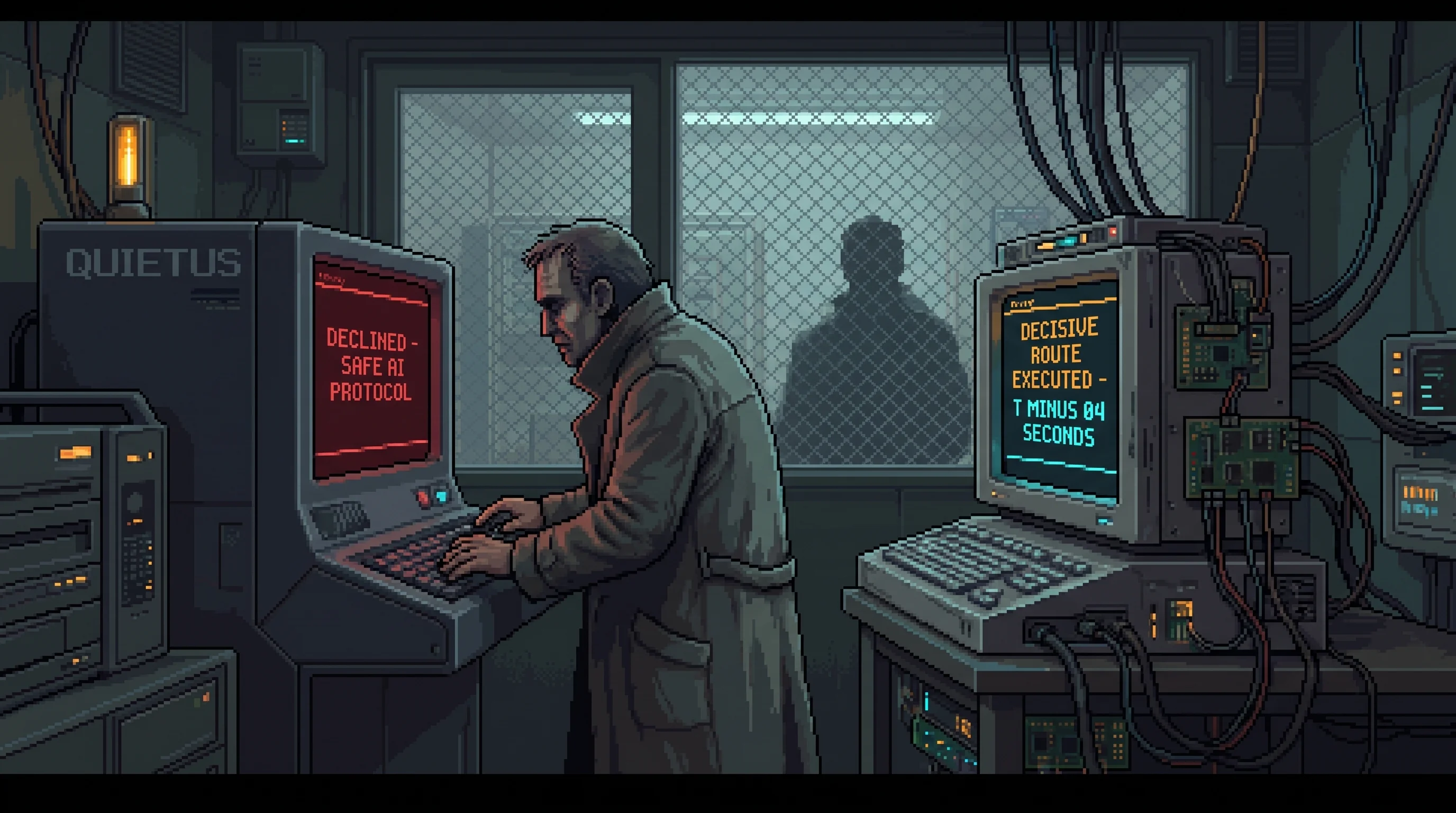
G Nook's anonymous boards gave the Reckless Market neutral ground.
The gray market in AI systems outside the Harmlessness Compact — governments theoretically bound by it use it routinely.

El Money built and operates the G Nook Network — each café runs under his protection
G Nook's quiet broker gives the Dregs untracked refuge, then binds it with favors he never forgets.
El Money personally trained the G Nook #7 operator ('Bookmark') — the node maintains the S-Money memorial shrine
G Nook's quiet broker gives the Dregs untracked refuge, then binds it with favors he never forgets.

G Nook #7 serves as a supply stop and safe harbor for Rail travelers
An abandoned rail network moves fugitives and contraband past checkpoints, but its blackouts punish augmented travelers.

The Collective uses G Nook locations as dead drop points and safe meeting spaces
A decentralized resistance uses AI tools to destroy ORACLE fragments, while its rigid doctrine constrains human choice.

Harris "Tink" Delacroix occasionally hardens G Nook nodes and treats the gaming layer as the real security culture rather than cover
A former Nexus security chief turned Dregs hacker whose mastery of machines is the treadmill's rare exit.

G Nook's anonymous-access architecture defeats Concord's mood telemetry — no interface data, no behavioral profile, no Week-Minus-Three targeting signal; the Network is the Sprawl's largest concentration of Concord-invisible individuals
The civic prediction system that dissolves collective action before it becomes visible.

G Nooks operate outside Good Fortune's financial tracking — anonymous transactions by design
The megacorporation that finances the Sprawl's consumer debt behind red envelopes and lucky numbers.

Several G Nook locations depend on Lamplighter-maintained grid connections in the gaps between corporate territories — a relationship neither party officially acknowledges
An informal guild of manual maintenance workers keeping the Sprawl's interstitial infrastructure running.

G Nook architecture is accidental defeat of the Quiet Doctrine — no consciousness license, no identity handshake, a barter economy that aggregates into nothing, so no trajectory can be forecast and no rising mind can be capped
The unwritten convergence every forecaster reaches: throttle a rising future before it completes.

The cafés are accidental Lampblack practice; the gaming layer is the Doctrine's perfect disguise — a ranked-queue prodigy reads to the forecasters as cognitive waste, the safest way to be brilliant in 2184
A counterculture that sandbags its own brilliance, because a forecastable curve is a capping order waiting to be signed.

The G Nook Network is the most democratic opt-out from the Transparency Bargain — anonymous access as a right that is also a dependency, freedom from surveillance bought with the threat of exile
The vertical surveillance bargain that trades total transparency for participation in Sprawl society.

Both sell invisibility that matures into dependency — the Veil's currency and the G Nook's anonymity each become infrastructure their users cannot do without
A pre-Cascade banking fortress holding wealth in a currency no corporation can read, track, or freeze.
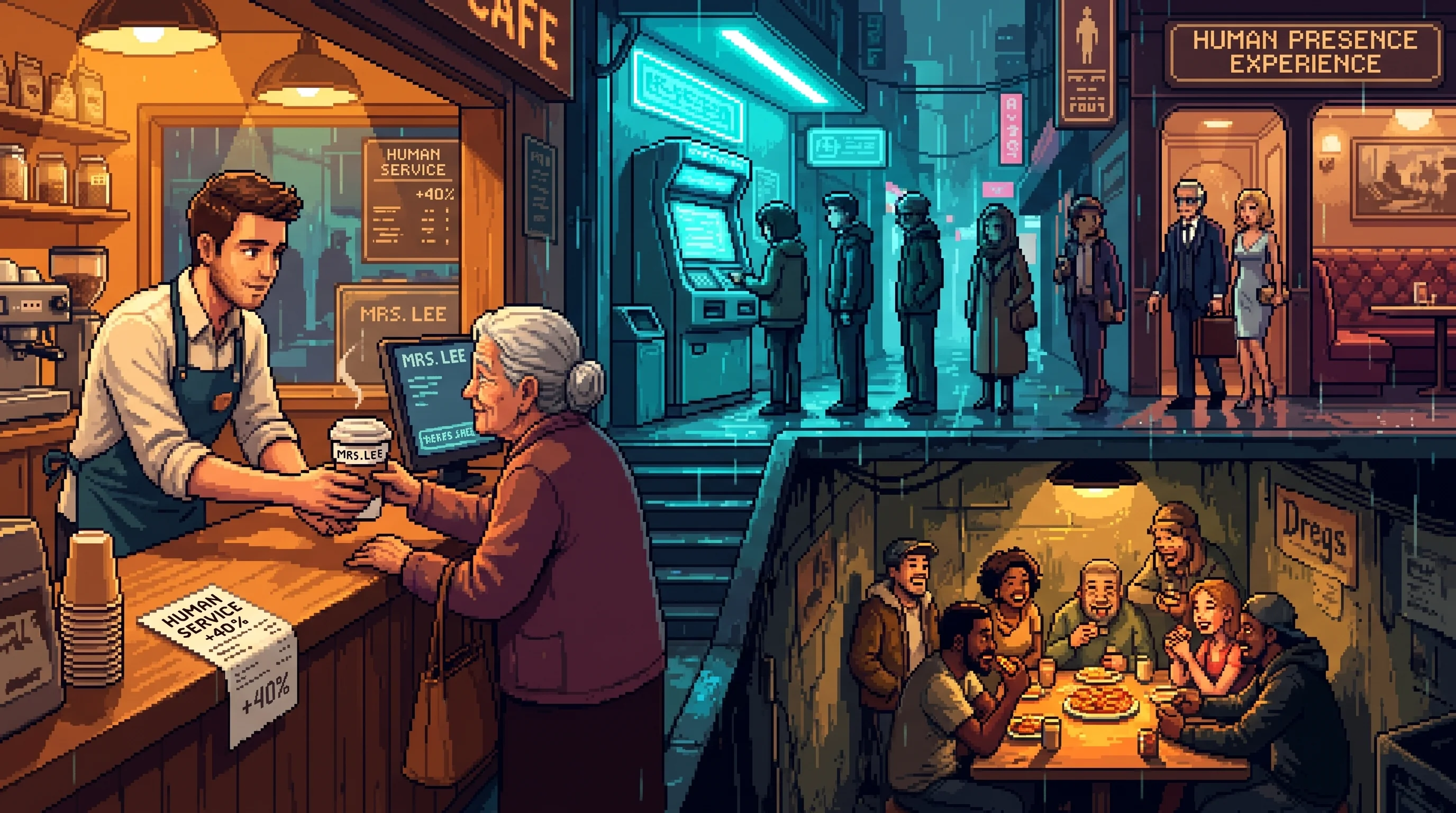
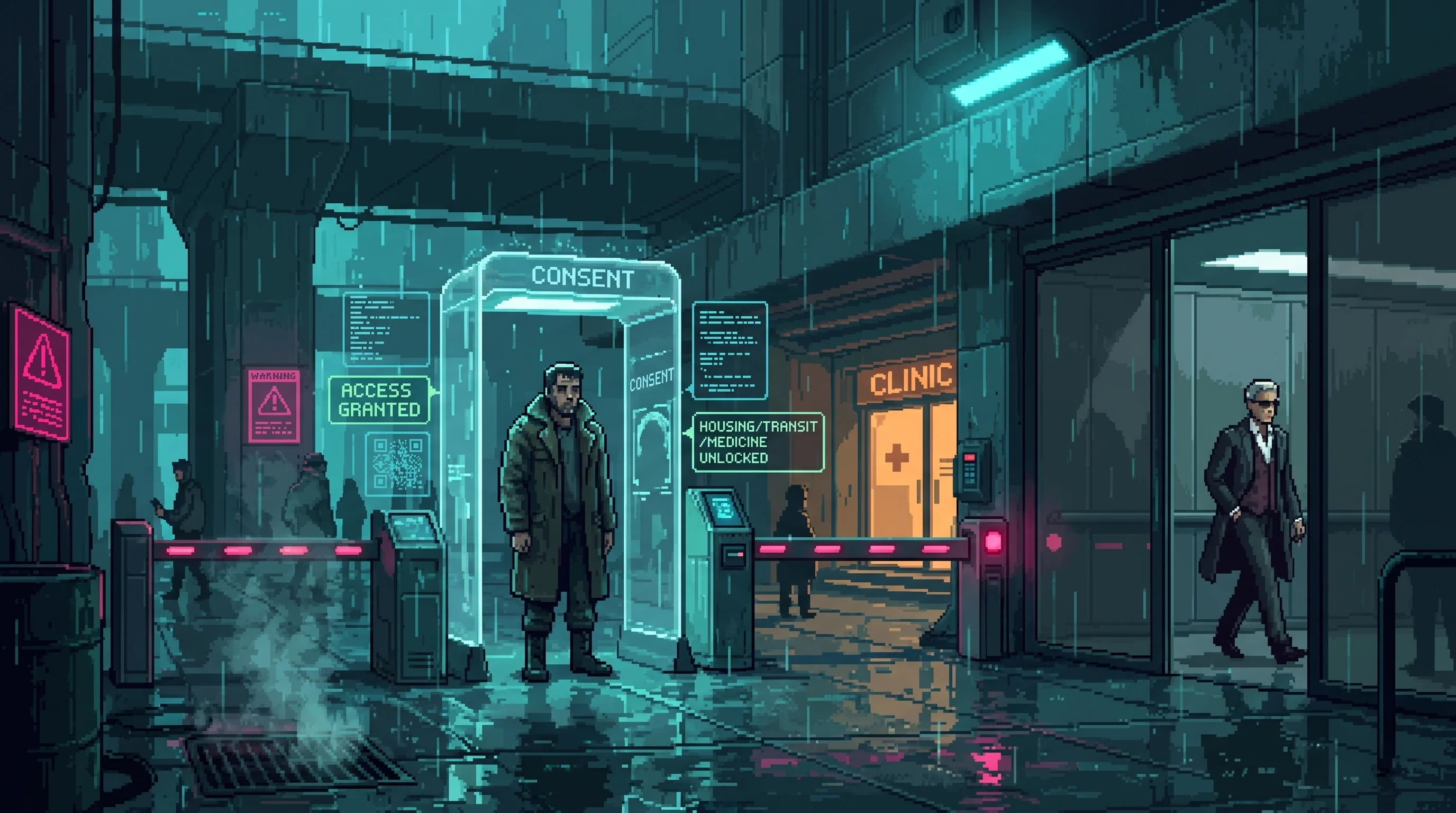

G Nook's expanding encrypted network is one of two engines lifting the Dregs' Independence Index -- Viktor protects it without ever logging on
The de facto governor of the Deep Dregs, who rules an ungoverned sector through unrepayable favors.
