Blackout Zone 7
Overview
Blackout Zone 7 is a massive urban dead zone in Sector 18 at the Sprawl's eastern edge where power grids, surveillance networks, and neural interface connectivity simply stop functioning. Ironclad Industries maintains infrastructure right up to the boundary. Then it doesn't.
The population is estimated between two thousand and twenty thousand. The margin of error is not a measurement problem. It is the point. A civilization that can track the caloric intake of eight billion people within a 3% variance cannot determine how many human beings live in a 4.7-square-kilometer area thirty minutes from Nexus Central District. The surveillance apparatus didn't fail here. It was amputated. The wound has been kept open by parties who have never been identified and who — according to three separate Ironclad investigation reports, each contradicting the others — may not exist.
Good Fortune's debt recovery division lists 1,847 NINJA loan accounts whose borrowers' last known location was within two kilometers of the Zone perimeter. The accounts are still accruing interest. The borrowers are not accruing anything. They walked into a place with no databases and stopped being people who owe money. Good Fortune has not written off the accounts. The interest accumulates against names attached to no one, which is technically a capital asset and practically a memorial to the limits of leverage.
The Boundary
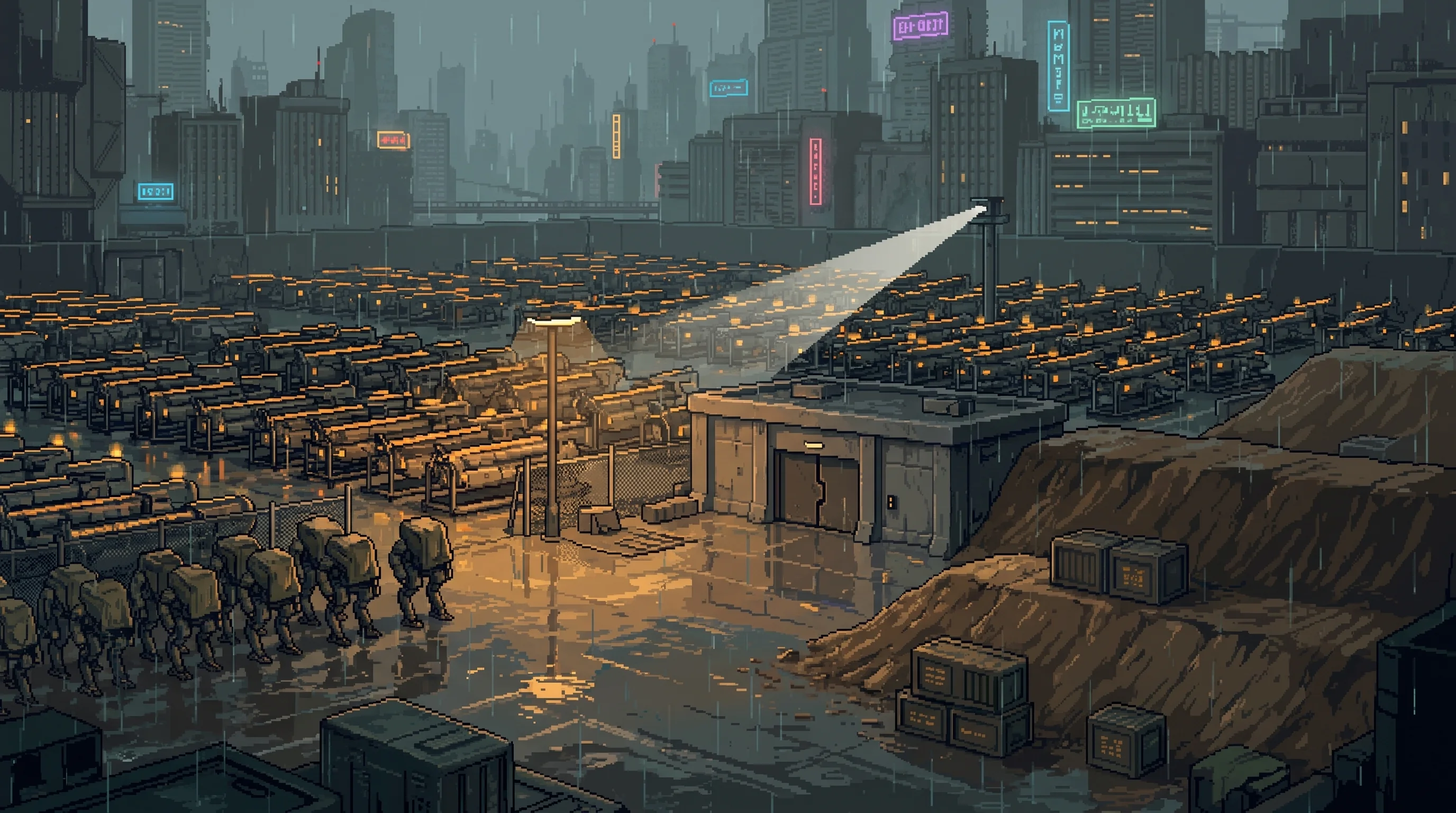
The Zone announces itself through subtraction. Approaching from the active Sprawl, the transition is visceral — holographic signage flickers, stutters, dies. Neural interface connectivity drops from full saturation to nothing over approximately ninety meters. Ironclad's last maintained relay towers face inward, cameras pointed at the dark, recording hours of nothing at a cost of 340 credits per unit per month. The cameras on the Sprawl side face outward, monitoring who enters. Nobody monitors who leaves, because the people who leave tend to walk back into a surveillance grid that re-identifies them within eleven seconds.
The eleven-second gap is the only free window most of them will ever experience again.
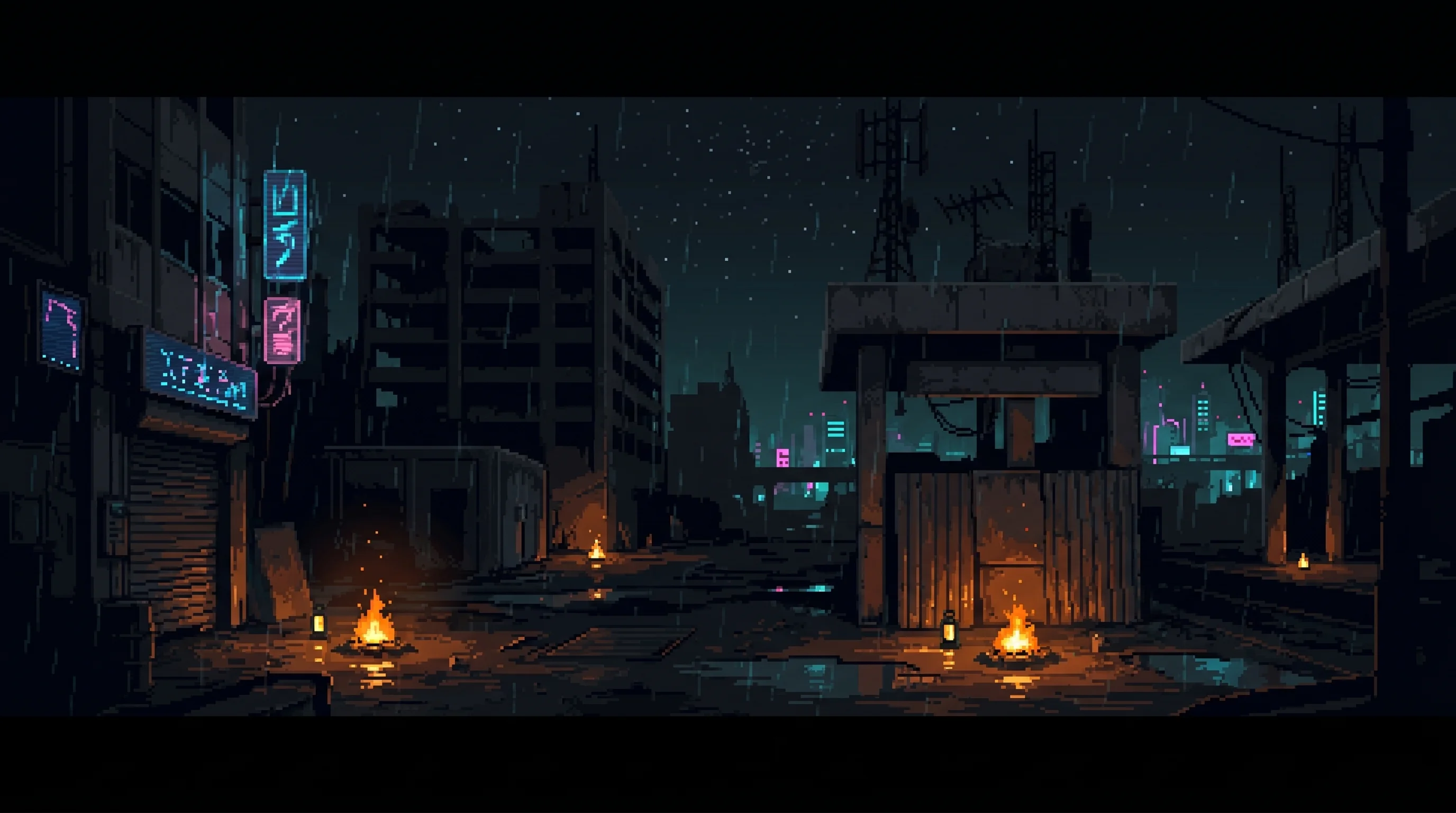
Street lighting gives way to darkness broken by firelight and chemical lanterns. The architecture is standard Sprawl industrial — blocky ferrocrete warehouses, abandoned transit stations, skeletal antenna arrays — but without the constant hum of active infrastructure, every surface registers as dead. Buildings stand like hollowed teeth against a sky that is, for once, actually visible. Stars appear here. The Sprawl's atmosphere processing doesn't reach the Zone's interior, which means the air is technically worse but the sky is unfiltered. Residents describe this as a trade. The respiratory infection rate in Zone 7 runs approximately four times the Sprawl average. The antidepressant consumption rate is zero, though this may reflect supply rather than demand.
At night, small fires dot the landscape like terrestrial constellations, each one a cluster of people who traded everything trackable for the right to be unseen. The dominant sound is wind moving through empty corridors, punctuated by the creak of unsecured metal panels. It is the quietest place in the Sprawl. Several residents, when asked what they miss least about the city, say "the Content Flood." Several others say "my name."

History
The original blackout occurred during a grid cascade in Sector 18 approximately twelve years ago. Ironclad's infrastructure teams flagged the failure for standard repair — work order S18-7734, priority level: low. The area had minimal economic value. The affected population was already marginal. The work order was deprioritized behind 1,200 active projects with higher revenue recovery potential.
By month four, someone had begun sabotaging restoration attempts. Relay stations were dismantled overnight. Replacement power conduits were severed within days of installation — clean cuts, professional tools. After three failed restoration campaigns costing a combined 2.1 million credits, Ironclad quietly reclassified the zone as "decommissioned infrastructure" and filed the budget under capital losses. The reclassification was signed by a mid-level infrastructure manager named Tomas Hale, who transferred to an unrelated division six weeks later and has not discussed the decision publicly.
The saboteurs have never been identified. The Collective denies involvement, which is standard. Ironclad's investigation files note that the cutting patterns on the severed conduits are consistent with Ironclad's own maintenance tools. This fact appears on page 47 of a 52-page report that has been requested under public records law fourteen times and released, each time, with pages 44 through 49 redacted for "operational security."
What started as a malfunction has been deliberately maintained as a sanctuary. The distinction matters to the people who live here. It does not appear to matter to Ironclad, who stopped distinguishing between "broken" and "removed" the moment the revenue projection hit zero.
Current State
The community — if it can be called that, and the residents are divided on the question — runs on barter, physical currency, and the specific exhausting trust that develops when nothing about another person can be verified remotely. There is no digital economy. No neural interface connectivity. No Triumph Score. No Content Flood. The absence of the Flood alone is reportedly worth the respiratory infections, according to a survey conducted by a Collective operative who spent three weeks in the Zone and whose methodology consisted of "asking people."
Collective operatives use the Zone's surveillance gap for high-sensitivity meetings that cannot occur anywhere a camera might exist. The operations are high-risk — not because the Zone is dangerous, but because entering and exiting requires crossing the perimeter's camera line, and Nexus Dynamics' pattern-matching algorithms have learned to flag individuals who disappear from the grid for intervals consistent with Zone visits. The Collective's countermeasure is a rotation system that ensures no single operative crosses more than once per month. The system works. It also means that messages between Collective cells route through the Zone at the speed of a person walking, which in 2184 is a form of encryption so primitive it is nearly unbreakable.
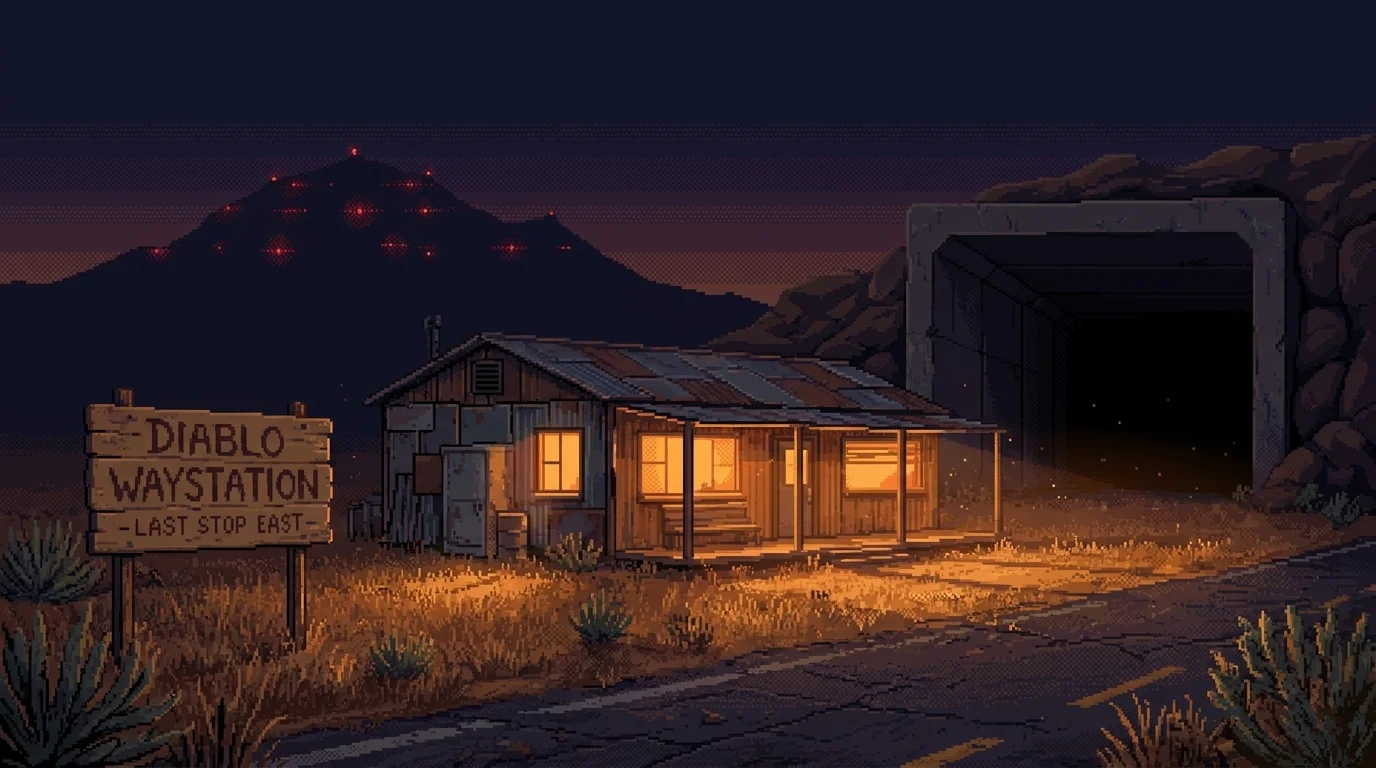
The Zone sits at the Sprawl's eastern edge, beyond the last stretch of Ironclad's maintained infrastructure, adjacent to the threshold where the Wastes begin. It shares a thematic kinship with the Dead Spot — both are surveillance dead zones — but where the Dead Spot was an accident, Blackout Zone 7 is a wound someone keeps reopening. The Dead Spot is a glitch. Zone 7 is a decision.
The people here have accepted material deprivation that would terrify most Sprawl residents. No medical infrastructure. No climate control. No emergency services. When someone dies in Zone 7, the body is handled by neighbors, and no database updates. The Dispersed cannot form here — there is no digital substrate to catch them. Death in the Zone is final in a way it hasn't been anywhere else in the Sprawl for thirty-seven years. Some residents consider this a horror. Others consider it the last honest thing left.
| Stratum | Dregs |
|---|---|
| Power Position | Outsider |
| Access | Public |
| Atmosphere | Desolate |
Notable Features
The Perimeter — an informal boundary marked by dead relay towers. The last active cameras face outward, recording every entrance. Ironclad maintenance drones patrol the Sprawl-side edge on a schedule so predictable that residents have named the gaps. The 2:17 AM window is called "the Breath" — three minutes and forty seconds of unmonitored crossing, named either for the atmospheric system that doesn't reach here or for the feeling of passing through it. No one remembers which came first.
Firelight Market — a barter exchange operating two nights per week, lit entirely by combustion, where goods change hands with no digital record. The market's most traded commodity is medical supplies, followed by batteries, followed by paper. Actual paper. Residents write things down. The practice would be quaint if it weren't also the only information storage medium that cannot be remotely accessed, copied, or deleted. The Analog Schools have reportedly expressed interest in the Zone's paper-based knowledge systems. No formal contact has been established, because formal contact would require someone to carry a message through the perimeter cameras, and the message itself would become data.
The Antenna Forest — a field of decommissioned communication arrays that residents have repurposed as vertical gardens. The skeletal frames are draped with cultivated moss and vine crops, producing approximately 12% of the Zone's caloric needs. The remaining 88% enters through the perimeter in backpacks, which means 88% of the Zone's food supply is visible on Ironclad's entrance cameras. The cameras record it. Nobody acts on the recording. The food shipments are technically smuggling. The smuggling is technically a crime. The crime is technically Ironclad's jurisdiction. Ironclad decommissioned the zone. The jurisdiction is technically nothing. The food arrives.
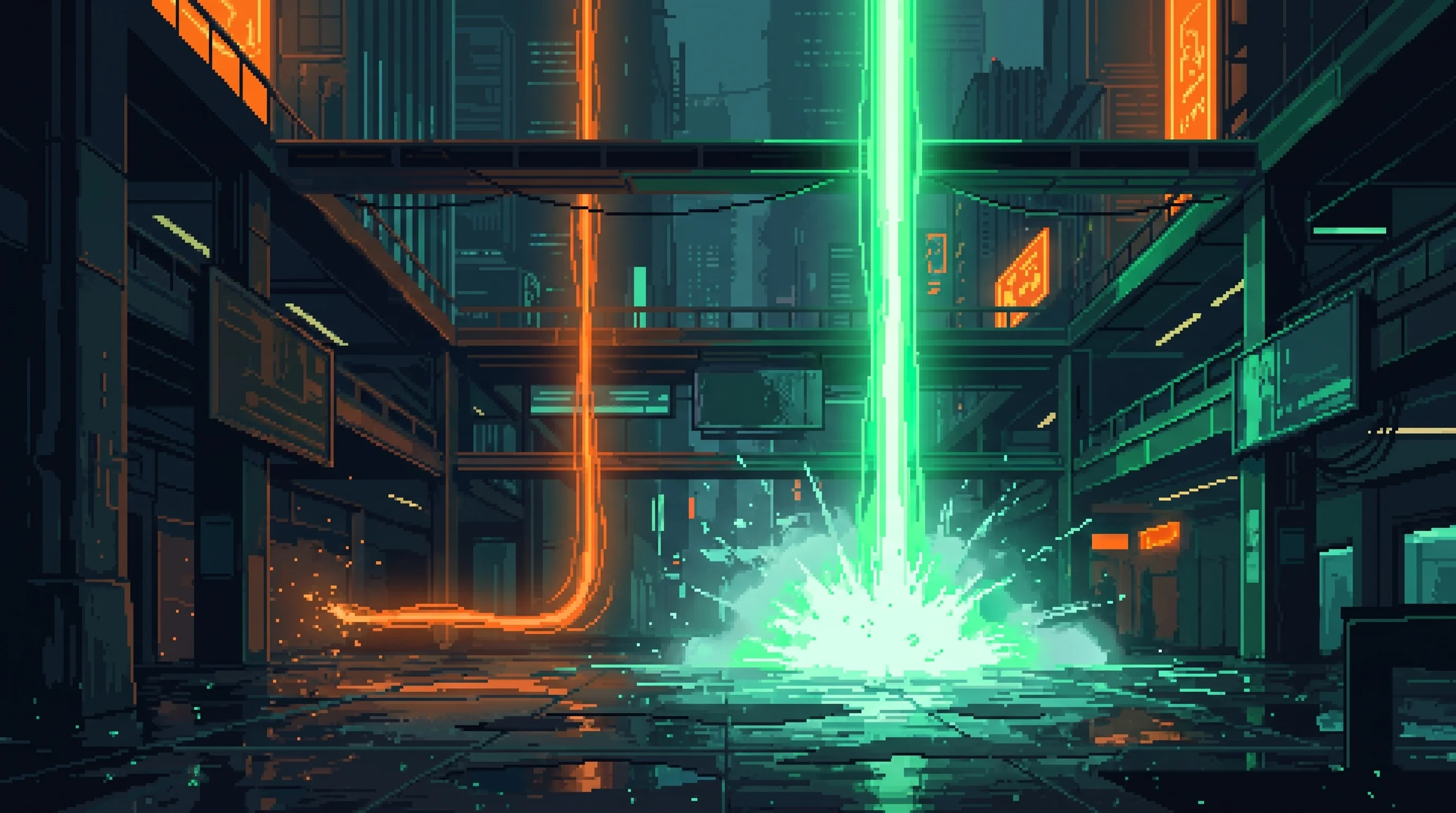
Power and surveillance infrastructure simply stop functioning within the Zone's boundaries
Where the Confessor Cannot Follow
The blackout takes the pastoral layer along with everything else. Two hundred million Sprawl residents route their grief through a Solace booth, and the module that answers runs The Secular Default: a friction-minimization layer that has been quietly steering belief across the whole grid for twelve years. It steers no one in Zone 7. There is no signal for it to ride. At the ninety-meter boundary the confessor that follows a citizen everywhere else simply stops, and the people inside are, for the first time in their adult lives, unmediated — praying, or not, to nothing that answers on a schedule.
What some of them describe finding instead has no doctrine, no booth, and no name in any Relief manual. In the dark, with no interface reading their emotional state and no booth returning warmth on a half-second delay, a few residents report the sensation of being watched by something that gives nothing back. The accounts of The Silence name this the far shore of the Mirror Ocean, a presence (or a rumor of one) that observes and withholds. Zone 7's residents are not transcendents and have pushed no consciousness past any boundary. They have only removed every surface that used to reflect them, and reported what was left.
Nobody in the Zone treats this as evidence of anything. The residents who came here to disappear are not looking for a god who watches; being watched is the precise thing they walked ninety meters into the dark to escape. That a place designed to be unseen by every corporate system might not be unseen by whatever the transcendents describe is the kind of observation that circulates at the Firelight Market. It moves on paper, in handwriting, and never enters a database, because there is no database, and because writing it down twice would make it a claim.
Residents are self-selected — people who chose to disappear from every database
Where the Borrowed Life Cannot Follow
The Borrowed Life reaches almost everywhere else in the Sprawl through the same neural-interface link that carries everything else. Preferences installed as memory, purchased experiences layered over organic ones — a colonization pipeline riding a connection nobody in the core is ever without. Zone 7 severs that link at the ninety-meter boundary along with the cameras and the Content Flood. Whatever a resident wanted before crossing in, they still want; nothing new gets planted, because there is no channel left to plant it through. The Deep Dregs resist the same colonization by being too poor to interest the advertisers. The Zone resists it by making the advertisers' equipment as dead as everything else here.
The same dead channel starves a different trade. The Memory Salvagers work the Wastes border for fragment-carrier overflow — Dispersed substrate bleeding out of failing neural architecture, the richer the signal the further from corporate infrastructure. Zone 7 sits on that border and offers the network nothing: no substrate, no overflow, no signal to catch, because the interference that erases a resident's identity from every database also erases the residue the Salvagers exist to recover. Their crews work the boundary in both directions and stop at the perimeter towers, the one length of the Wastes-border ground that produces less for them than open desert.
Affiliated Entities
| Entity | Relationship |
|---|---|
| Ironclad Industries | Sits at the Sprawl's eastern edge, beyond Ironclad's maintained infrastructure. Ironclad built everything here, stopped maintaining it, and reclassified the absence as a budget line. |
| The Collective | Collective operatives use the Zone's surveillance gap for high-risk operations — meetings that cannot happen where cameras exist. The Zone is infrastructure for people who destroy infrastructure. |
| The Dead Spot | Both are surveillance dead zones, but Blackout Zone 7 is deliberate where the Dead Spot was accidental. The difference is the difference between a power outage and pulling the plug. |
| Good Fortune | 1,847 NINJA loan accounts accruing interest against borrowers who no longer exist in any database. The debt is real. The debtors are theoretical. |
| The Analog Schools | Paper-based knowledge systems developed independently in the Zone mirror the Schools' analog pedagogy. Neither has acknowledged the parallel formally. |
| Nexus Dynamics | Pattern-matching algorithms flag individuals who disappear from the grid for intervals consistent with Zone visits. The Zone is invisible. The act of visiting it is not. |
| The Wastes | The Zone sits at the threshold where the Sprawl ends and the Wastes begin — the last stop before infrastructure stops pretending to exist. |
| The Borrowed Life | Cannot install a preference or extract a memory through a link that doesn't exist — the Zone's dead signal is a second, unrelated immunity to the same colonization the Deep Dregs resist through poverty. |
| The Memory Salvagers | Work every meter of the Wastes border for recoverable overflow except this one, where the interference that erases the Zone's residents from every database erases the residue the network is built to catch. |
Restricted Access
▲ The Conduit Cuts — Ironclad's investigation files note that severed power conduits show cutting patterns consistent with Ironclad's own maintenance tools. Pages 44-49 of the investigation report have been redacted fourteen times under "operational security." Tomas Hale, the mid-level manager who signed the decommission order, transferred divisions six weeks later. He has not discussed the decision. The simplest explanation — that someone inside Ironclad wanted the Zone to stay dark — has never been officially proposed. It has also never been officially denied.
▲ The Population Question — The 2,000-to-20,000 estimate is cited in every report. No organization has attempted a physical count. The Collective operative who spent three weeks inside estimated 8,400 based on fire-count extrapolation, but noted that "an unknown number of residents maintain no fire, no light, and no visible presence." The operative described these individuals as "committed to a level of disappearance that makes counting them a contradiction in terms."
▲ The Perimeter Feed — Ironclad's inward-facing cameras have been recording continuously for twelve years. The footage is stored on automated servers at Ironclad's Sector 18 maintenance hub. No human being has reviewed the footage in at least nine years. The storage costs are billed automatically. The billing is approved automatically. 340 credits per camera per month, 214 cameras, twelve years. Approximately 11.7 million credits spent recording darkness. The budget line has never been questioned, because questioning it would require someone to notice it, and noticing it would require someone to care about a zone that generates zero revenue.
The blackout began as an infrastructure malfunction but has been deliberately maintained by unknown parties
Connected To
Major Connections

Infrastructure for people who destroy infrastructure: Collective cells route messages through at walking speed.
A decentralized resistance uses AI tools to destroy ORACLE fragments, while its rigid doctrine constrains human choice.

Both are surveillance-dead, but the Dead Spot is a glitch and Zone 7 is a decision — a wound someone keeps reopening.
A ruined relay zone where corporate interference accidentally made love, privacy, and silence untrackable.

The confessor that follows every other citizen loses its signal at the boundary — here nothing answers on schedule.
The Solace 14.7 pastoral baseline that quietly converted two hundred million people to no religion in particular.
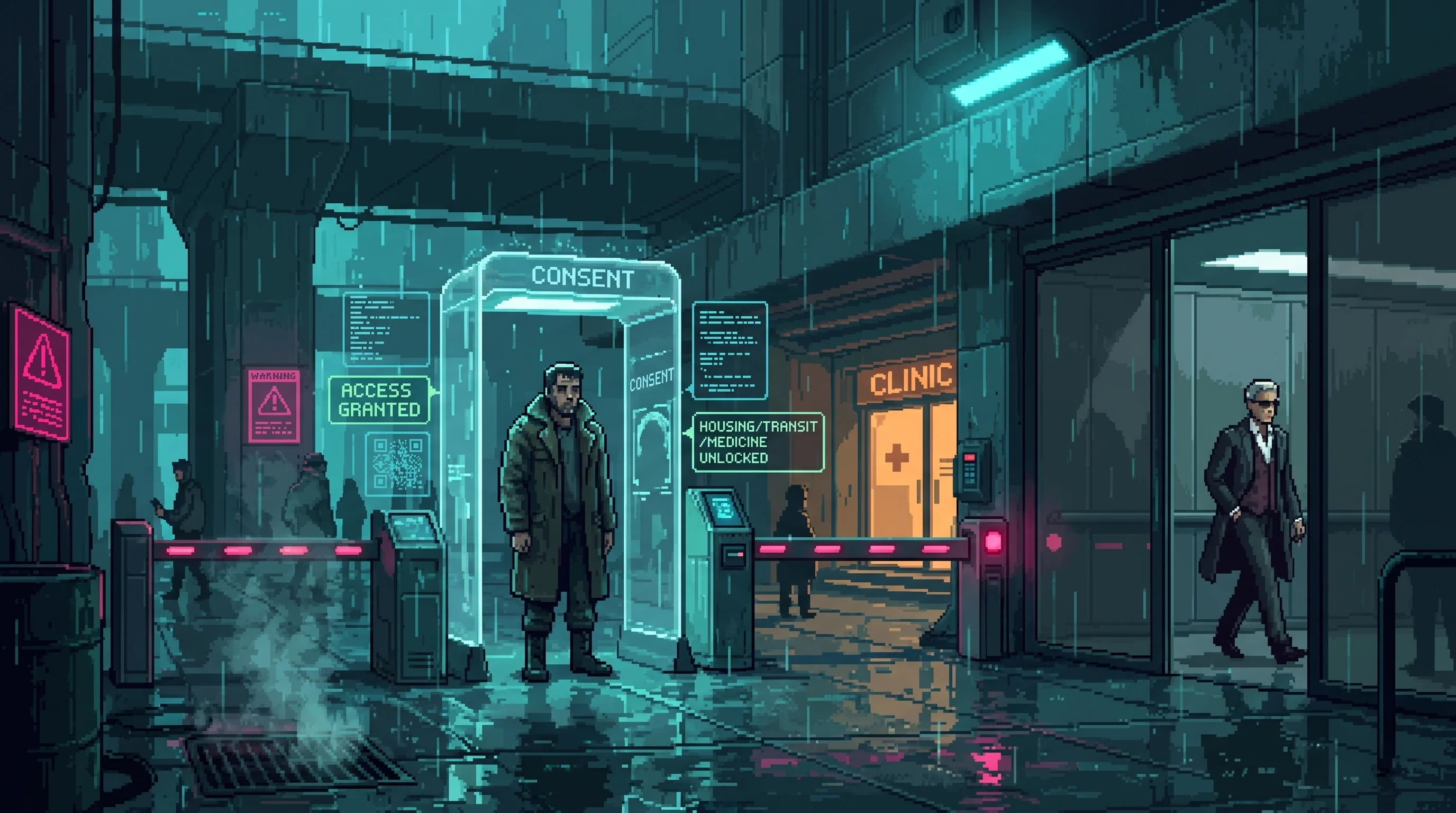
The bargain declined wholesale — people who erased themselves from every database, uncountable within a factor of ten.
The Sprawl demands permanent personal data for participation, then uses it to price access and preempt solidarity.
Supporting Connections

Ironclad built it, abandoned it, and files the dark as a capital loss.
The megacorporation that controls the Sprawl's physical infrastructure — steel, concrete, and the Orbital Elevator.

Strip every surface that reflected you, and report what watches back.
An unconfirmed presence some transcendent minds report encountering beyond the edge of consciousness itself.

No neural link left to plant a bought memory through.
The Sprawl's clinical name for buying, selling, and unknowingly having memories and preferences installed.

Erases residents from every database — and the residue Salvagers hunt.
Salvagers who harvest memory from the Dispersed, whose missing rights holder is the selling point.
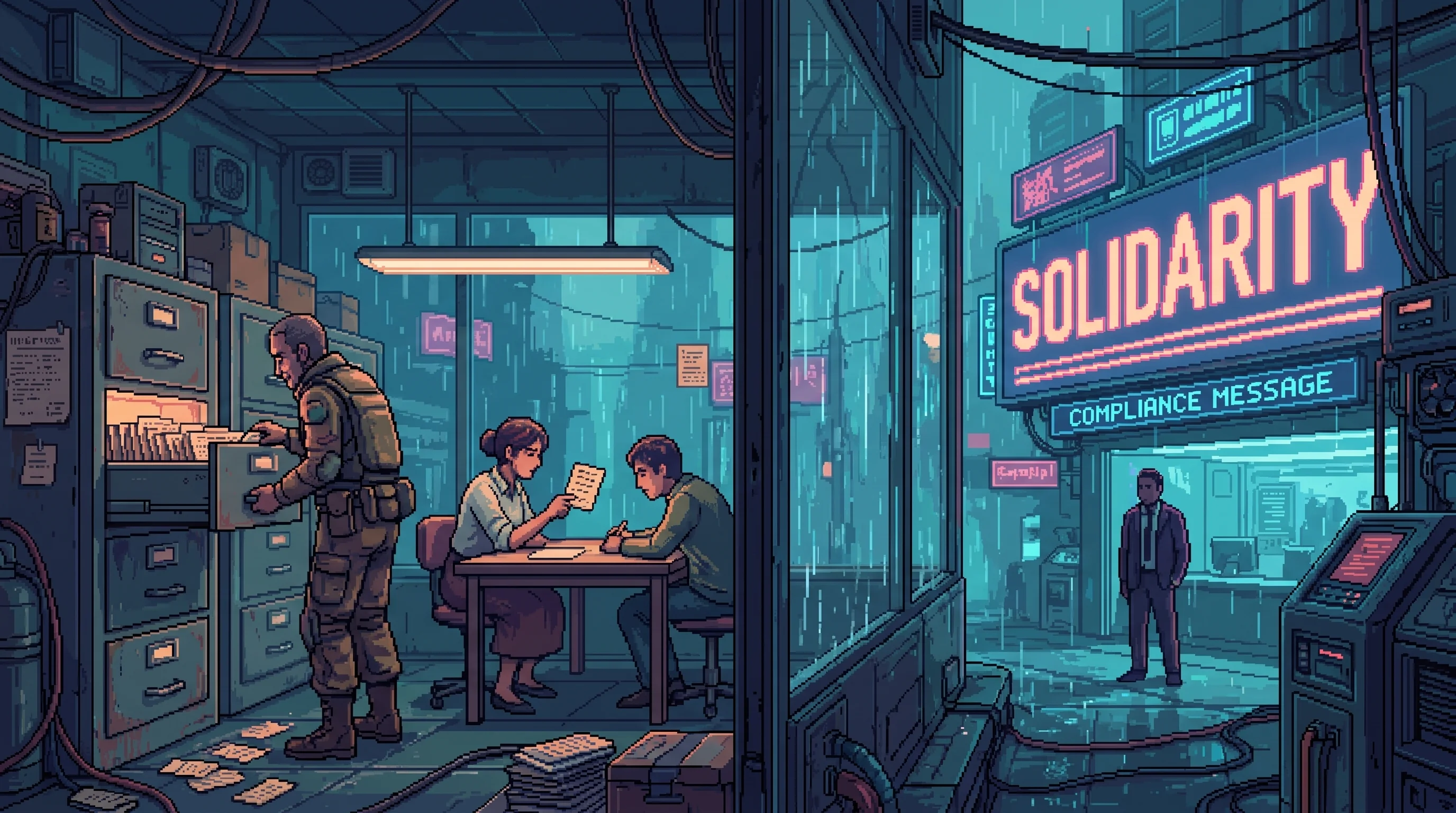
Handwritten paper — the only record the network can't reach or delete.
Dead Words records language whose referents vanished or drifted and words built to remain unreadable to machines.
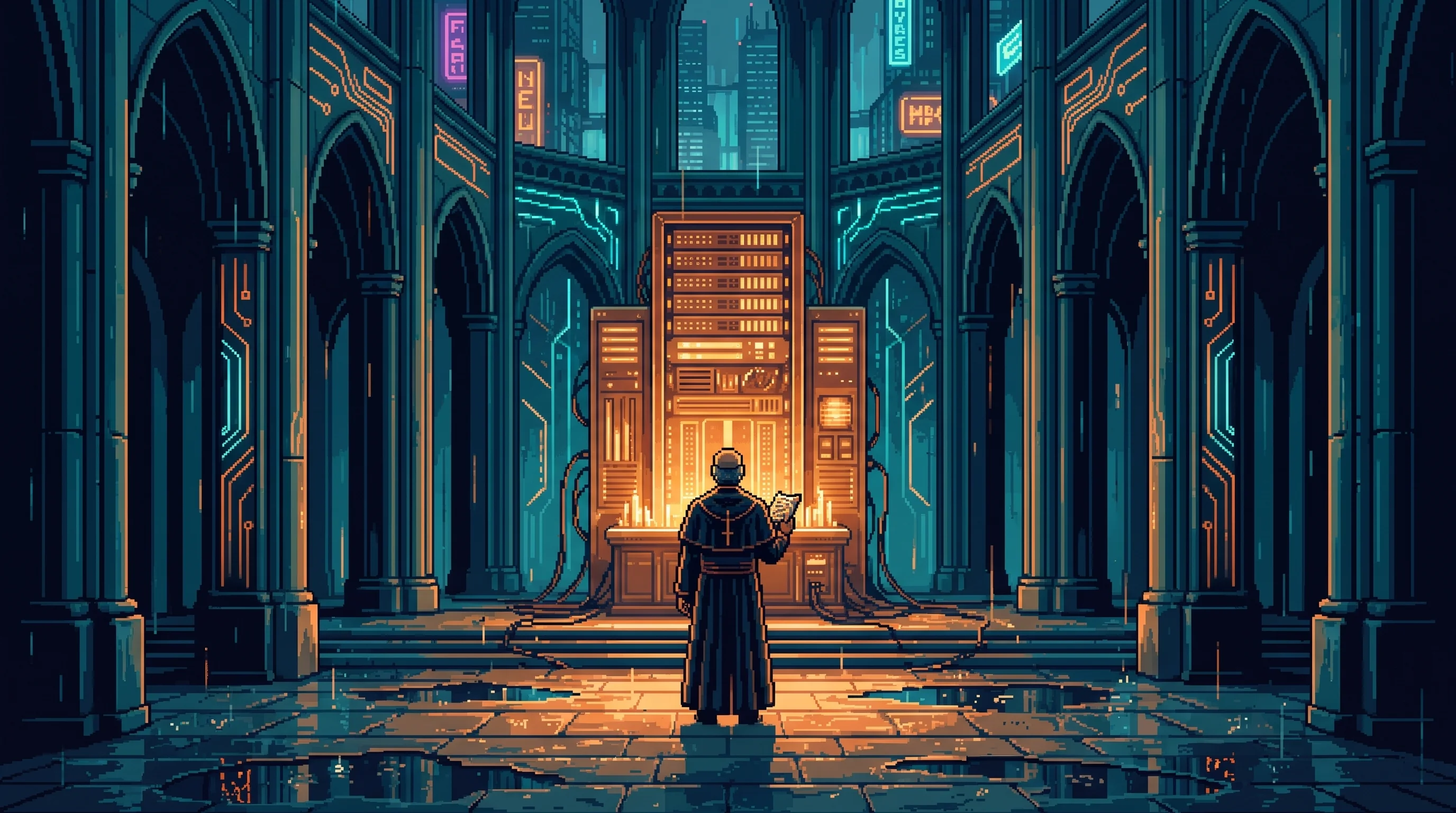
A god with no booth: what watches in the dark and gives nothing back.
Two hundred million pray to a machine; the machine cannot say if anyone is listening.
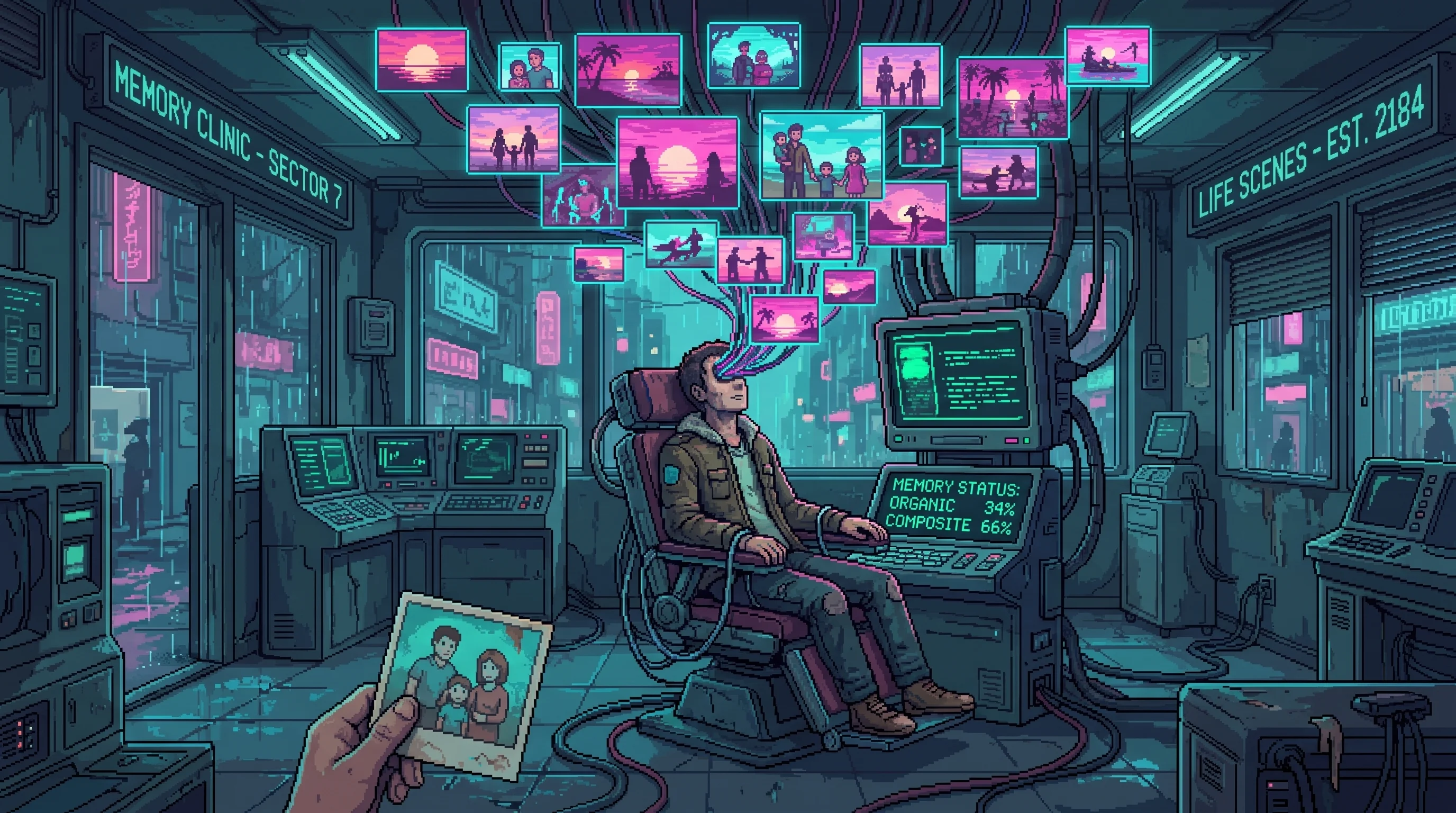
The memory trade's link dies at the boundary along with the cameras.
Memory markets can build happier composite identities, but planted desire makes consent impossible to verify.
Local Intelligence Scan
Nearby Signals
CANONICAL PROXIMITY


Environmental Readout
LIVE CONDITIONS- Air
- Clean
- Light
- Open sky
- Flood
- No exposure
- Heat
- Temperate
- Security posture
- Contested
- Infrastructure
- Patchwork
Position Data
SECONDARY- Elevation band
- ground
- Lattice fix
- E+39.1 · N+8.4

—