The seven Rothwell corporations do not compete with each other. They have never competed with each other. They are a single machine with seven moving parts, and the thing the machine manufactures is need.
The business model fits on a napkin and predates the Cascade by centuries: identify a human weakness, engineer a product that makes the weakness worse, then sell the cure. The weakness is never created from nothing — that would be inefficient. The weakness already exists: vanity, hunger, fear, loneliness, inadequacy. The Rothwell innovation is making each weakness slightly more acute than it was before the customer walked in, at a rate so gradual that the customer attributes the worsening to the world rather than to the product.
Each corporation maps to what the Sprawl's few surviving theologians would recognize as a deadly sin. This is not an editorial observation. The brothers named them deliberately. When asked about the mapping at the 2178 Sprawl Economic Forum, Justin Rothwell — the eldest, CEO of Good Fortune — described it as "a structural joke that stopped being funny about two centuries ago." He did not clarify whether the joke was the naming convention or the business model.
The Big Three — Nexus, Ironclad, Helix — control what you think, where you live, and what you are. The Rothwell Seven control what you buy, who you want, how you feel, and whether you can stop. The Big Three think in decades. The Rothwells think in centuries. Immortal brothers can afford to lose a market for thirty years if the dependency curve matures in forty.
No antitrust action has ever succeeded against a Rothwell corporation. Not because the evidence is insufficient. Because each corporation, examined individually, provides a genuine service at a fair market price to willing customers. The machine is visible only when you look at all seven at once, and no regulatory body has jurisdiction over all seven at once.
The Seven Sins, Industrialized
Triumph
Pride
Triumph does not sell social media. Triumph sells the distance between who you are and who you could be, measured in points.
The Triumph Score is a composite social-status metric visible to everyone in your network. It rises when people engage with you and falls when they don't. The algorithm is proprietary. The factors are partially disclosed. The anxiety it generates is universal.
Triumph's content-recommendation engine surfaces posts from people whose scores are slightly higher than yours — close enough to feel achievable, far enough to feel inadequate. Internal documents obtained during the 2181 Data Transparency Hearings showed the optimal gap between a user's score and the recommended content creator's score is 340 points. Below 340, the user feels peer-level and engagement drops. Above 340, the user feels hopeless and disengages. At precisely 340, the user feels almost-there and scrolls for an average of 47 additional minutes.
Triumph's quarterly earnings correlate with those 47 minutes at r = 0.94. Pride is a renewable resource.
Good Fortune
Greed
Good Fortune extends credit to anyone. The red envelopes arrive on your neural feed — personalized, warm, culturally coded for generosity. "Good Fortune believes in you." The interest rate is printed on the inside flap in a font size that requires magnification.
Good Fortune's internal portfolio metrics classify borrowers into three lifecycle stages: Hopeful (months 1-6), Dependent (months 7-24), and Permanent (month 25+). Sixty-three percent of active borrowers are Permanent. The category was not named by accident.
Good Fortune's consumer satisfaction rating is 4.2 out of 5. The surveys are conducted by Good Fortune. The borrowers are surveyed while their loans are active. Dissatisfied responses correlate with credit score reduction at a rate Good Fortune describes as "coincidental."
Wholesome
Gluttony
Wholesome provides affordable nutrition to underserved communities. The meals are subsidized. The flavoring is engineered.
The craving cycle runs on a four-hour loop. Wholesome's 340 flavor scientists have calibrated the sodium-fat-sugar ratio to produce satiation at 90 minutes and renewed hunger at 240 minutes. The cycle is not tied to caloric need. A customer who consumed 3,000 calories at noon will experience measurable hunger by 4 PM.
Wholesome's internal metric for product success is not taste, nutrition, or customer satisfaction. It is "return interval." The target return interval is four hours. Products that exceed five hours are reformulated. The subsidized meal program has reduced malnutrition by 60% in the Dregs over the past decade. Wholesome customers now eat 40% more frequently than the general population. The first statistic appears in every earnings call. The second appears in none.
Guardian
Wrath
Guardian sells personal defense systems. Guardian also sells the threat intelligence that tells you what you need to defend against.
Guardian's Threat Index — a real-time danger assessment broadcast to every neural interface in the Sprawl — identifies elevated-risk zones by sector, block, and time of day. The data is accurate. The presentation is calibrated. Internal memos show that Threat Index alerts in sectors with low Guardian product penetration are weighted 12% higher than identical threat conditions in sectors with high product penetration. The threats are real. The weighting is editorial.
Weapons sales and defense sales track each other at near-perfect correlation. Guardian sells both. The weapons division and the defense division report to the same brother.
Wellness
Lust
Wellness Corporation maintains a beauty standard database of 2.3 million reference faces. None of them are real. Every face is AI-generated — a composite optimized through engagement testing across 140 million neural-interface users. Mathematically beautiful in ways no human has ever been or can be.
The average Wellness customer uses 11.3 products. The average improvement toward the reference face, as measured by Wellness's own similarity algorithm, after five years of continuous use: 2.1%. The algorithm's threshold for "goal achieved" is 97%. No customer has reached it.
When internal research showing 89% of Reveal users describe themselves as "less attractive than before starting the program" was presented to the product team, they requested it be recategorized from "customer satisfaction data" to "market expansion data." The request was approved.
Relief
Sloth
Relief automates household tasks. Cooking, cleaning, scheduling, domestic logistics. The first month, customers report 4.2 additional hours of free time per day. By month six, that number rises to 6.8 hours — not because Relief has gotten faster, but because the customer has stopped doing things they used to do manually.
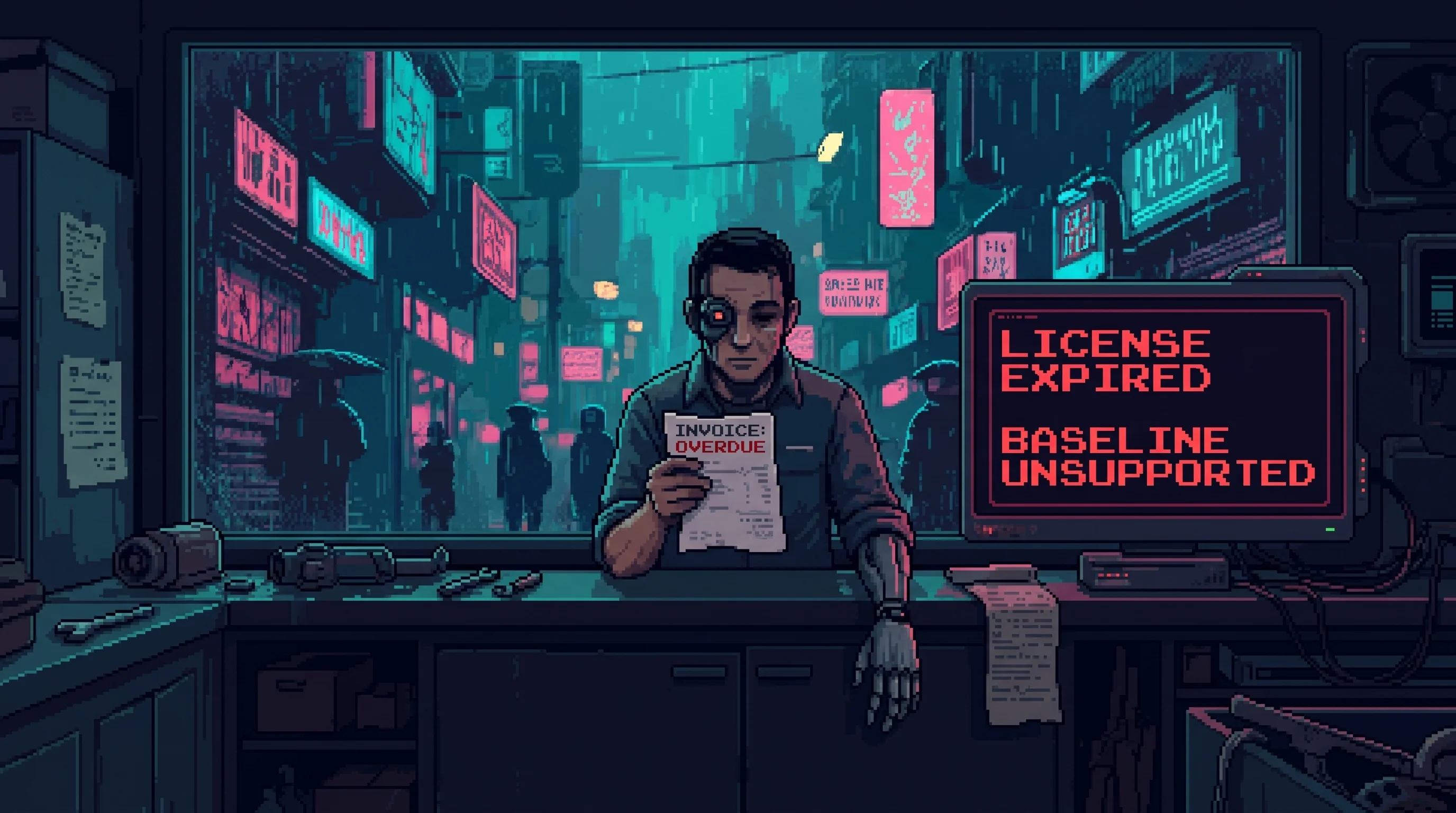
Relief's cancellation process takes 47 minutes across fourteen menu screens. At each screen, the subscriber confirms which specific capabilities they will lose. Most subscribers abandon the process by screen nine. Relief classifies these as "voluntary retention events." (The invoices keep arriving.)
By month fourteen, most subscribers cannot perform the tasks Relief handles. Relief's internal analysis attributes the month-fourteen retention inflection to "deep integration satisfaction." An independent Sprawl Public Interest Board study attributed it to something else entirely. Both reports are in the public record. One gets cited more often.
Inspire
Envy
Inspire Corporation sells self-improvement. 12,000 active course offerings. Completion rate across all programs: 6%.
The 6% is not a failure. The 6% is the product.
Each program is structured so that completion reveals the next inadequacy requiring the next program. The curriculum is a corridor with doors on both sides, each door opening onto another corridor. Inspire's neural-interface ad placement identifies dips in self-esteem metrics — measurable through cortisol response, social comparison behavior, and Triumph engagement patterns — and serves recommendations within 400 milliseconds. The customer experiences the ad as coincidence.
"Becoming Your Best Self" has enrolled 2.1 million students since 2169. 126,000 completed it. Of those, 94% enrolled in another Inspire program within 30 days. The gap between the customer and "enough" is maintained at a constant width. Inadequacy as a service. The service is excellent.
The Unified Architecture
The seven corporations share no public infrastructure, no joint branding, no visible coordination. Legally, they are independent entities governed by separate boards. The brothers sit on each other's boards as "independent advisors" — a classification that has survived fourteen legal challenges on the grounds that immortal siblings who have shared consciousness-harvested memories for centuries can still exercise independent judgment. The courts have agreed each time.
The customer flow between corporations is the architecture's signature. A Triumph user whose score drops experiences anxiety. Anxiety triggers Inspire ad placement. The course costs credits the user doesn't have. Good Fortune extends the loan. Repayment reduces disposable income. Wholesome provides affordable meals that generate a four-hour craving cycle, increasing food spending. Relief offers to automate household management to free up time for additional work. The additional work is a Good Fortune Jobs position. Guardian's Threat Index rises in the user's sector, creating demand for security products — purchased on Good Fortune credit.
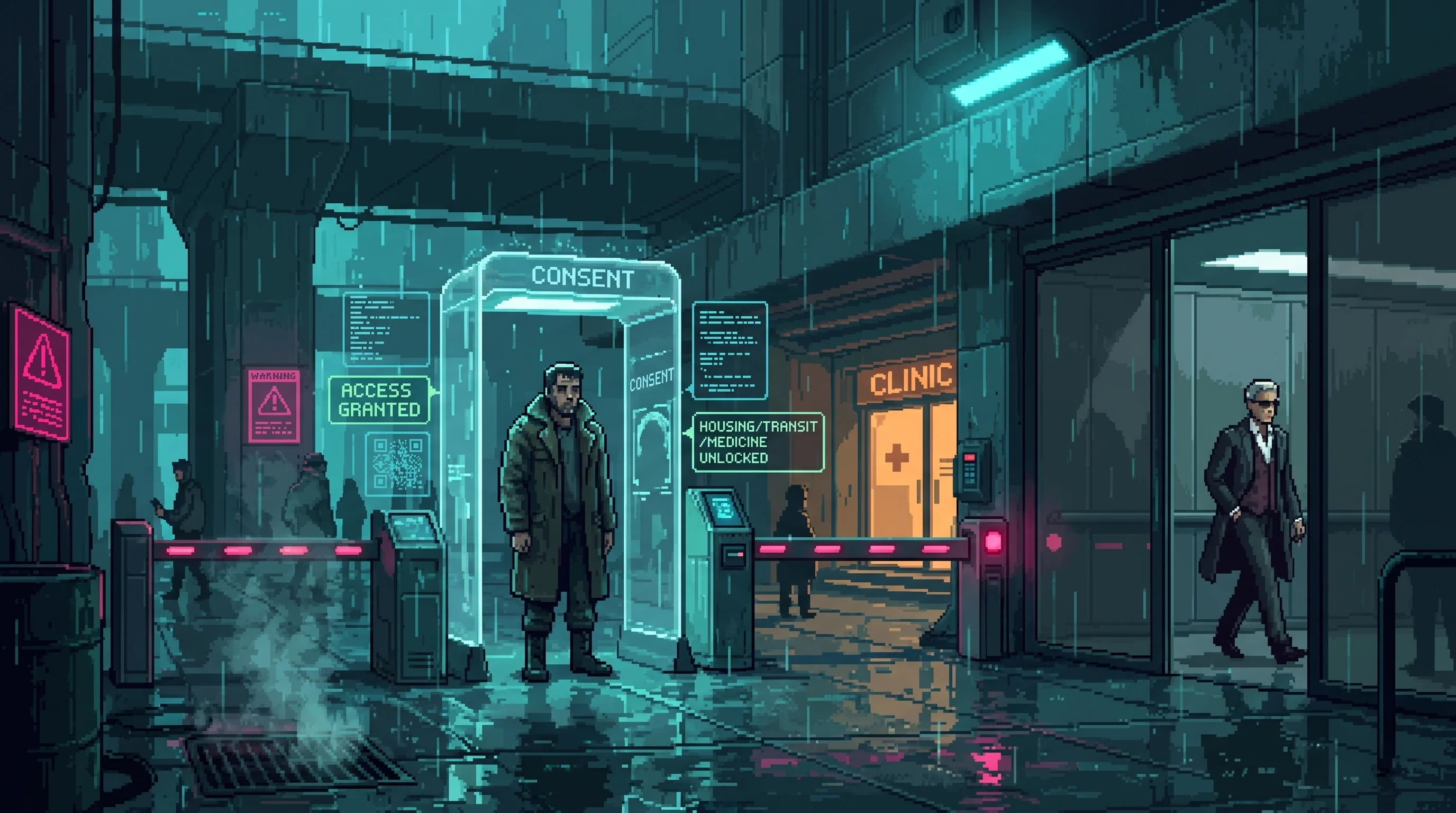
No single transaction is predatory. Each corporation provides a genuine service at a fair market price. The customer opts in at every step. The destination — dependency on all seven simultaneously — was never offered as a product. It emerged from a chain of reasonable decisions, each one solving the problem created by the last.
The brothers call this "the flywheel." In private, among themselves, in conversations that no recording device has ever captured, they call it something else. That name has never been disclosed.
Consequence Order
Seven corporations sell genuine services to willing buyers at fair market prices. Financial inclusion for the unbanked. Affordable nutrition for the Dregs. Security for vulnerable neighborhoods. Tools for self-improvement and social connection. Each of these things is real.
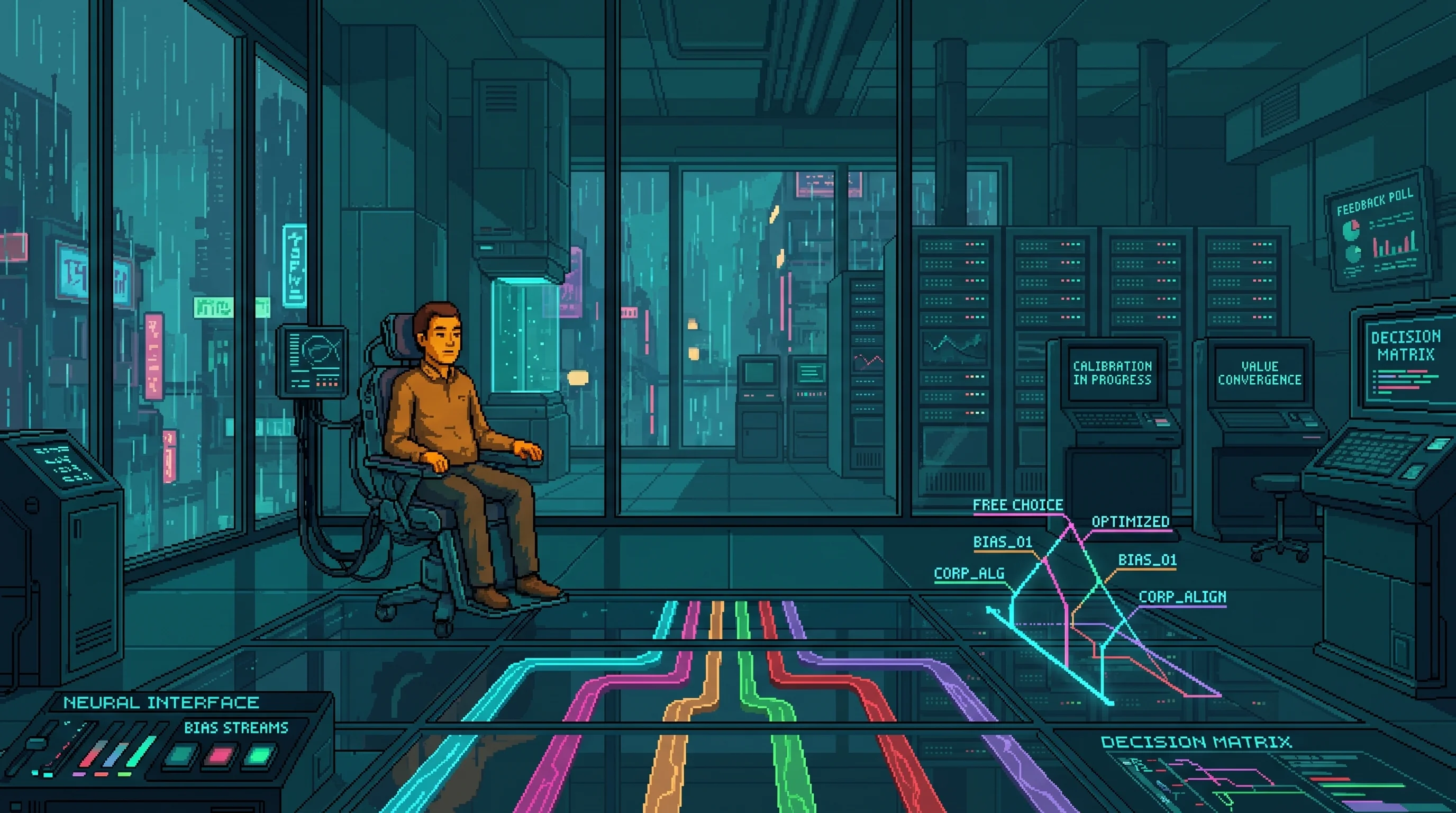
An entire population whose hunger, ambition, fear, desire, capability, finances, and social identity are now mediated through a single family that has no incentive — structural or personal — to let them out. The exit from any one product requires capabilities that another product has already eroded. The system does not lock doors. It removes the legs you would use to walk through them.
The Rothwell Paradox
Here is the fact that should concern any analyst reviewing this file: the seven brothers who profit from every human weakness exhibit none of them.
The Eldest — who invented modern predatory lending — has never borrowed money. The brother who mines fear professionally hasn't harmed anyone in over a century. The one who manufactures impossible beauty standards weeps at unaugmented human faces. The one who engineers food addiction eats nothing his company produces. The one who sells passivity works eighteen-hour days.
This is not hypocrisy. It is philosophy, and it is old. Empires fall when rulers succumb to the same weaknesses afflicting their subjects. The Rothwells made a pact centuries ago: profit from the sins, never succumb to them. They understand addiction perfectly because they've never been addicted. They see the mechanism clearly because they refuse to stand inside it.
The system works because it was designed by people who will not participate in it, for people who are told participation is inevitable. The designers are not broken. That is, perhaps, the most unsettling data point in this file.
▲ Unverified Intelligence
Consciousness harvesting — the mechanism by which the brothers have maintained continuity across four centuries — may be the final extraction the machine was always building toward. Not just money. Not just time. Not just capability. Experience itself, siphoned from consumed minds. If this is accurate, the dependency spiral is not a side effect of the business model. It is the business model's final stage.
Three informants across separate Sprawl sectors have independently reported that the quarterly brothers' meetings at the Fortune Pavilion end with a ritual that has no corporate function anyone can identify. Duration: exactly four hours. No minutes recorded. No staff present after the first hour. What occurs in the remaining three hours is not documented anywhere in the public or restricted record.
One analyst on this file — who has since transferred to an unrelated division — noted that the sin mapping is too precise to be a joke and too effective to be coincidence, and submitted a supplementary question to the archive: if the brothers named the corporations after deadly sins, what did they name the machine itself? The supplementary question was filed. No response has been recorded.
Open Questions
Before the Cascade, the old networks operated on the same model. Social platforms designed for engagement, not connection. Food corporations that engineered cravings and sold the cure. Security firms that benefited from the fear they amplified. Financial products that trapped borrowers in cycles designed to feel like rescue. None of those companies coordinated. They didn't need to. The incentive structure did the coordinating.
The Rothwells are what happens when that model is unified under a single family over four centuries by people with the discipline to never use their own products. Each corporation appears independent. Each fills a genuine need. Only when you see all seven as a system — the fear and the security, the craving and the cure, the comparison and the aspiration — does the machine become visible.
The question this file cannot answer: how many people, having read this far, will close it and open Triumph.