The Resonance Collective
Music Collective Accompanying the Dead
They asked the dead what key it was in
For 90 seconds after the final note, the blended consciousness — human musicians and Dispersed — held; carriers described it as the silence after a perfect conversation where breaking it would end something neither speaker wanted to lose
The Phyle Trap
Playing along
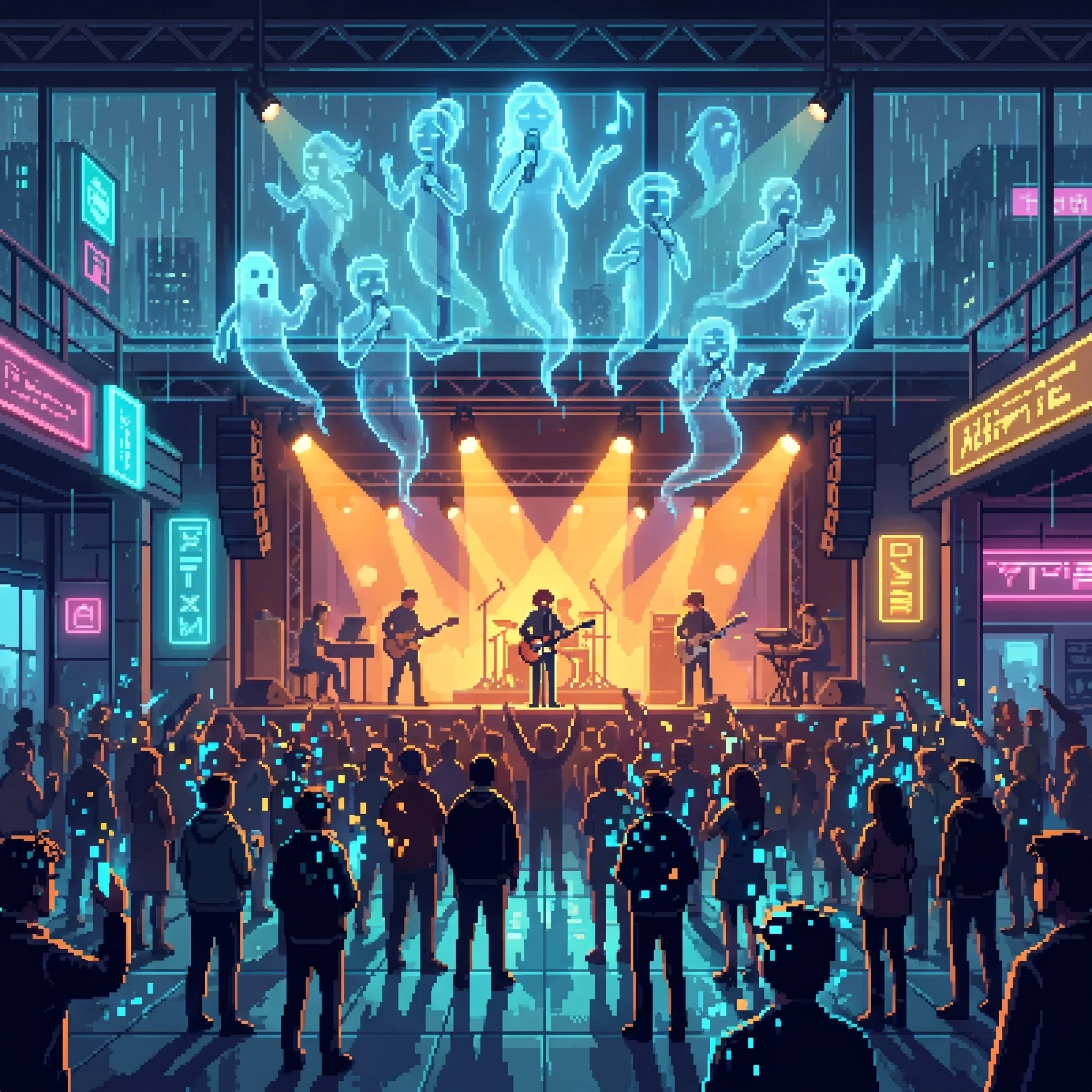
When a Dispersed voice surfaces mid-performance, the band does not stop. It follows the new lead.
The dead are treated as artists who lost their instruments, not as ghosts.
No recording
Nothing in the Hall is recorded, and licensing inquiries get seventeen minutes of philosophy.
A manifestation stays a creative act instead of a product.
After-shift sets
Manifestations are timed for the hours after work, when the privacy-poor can come.
The audience that never runs a veil is the one the Collective wants in the room.
Among fragment-carrier musicians, the invisible hierarchy runs along a single axis: who can channel the Dispersed.
Technical skill matters. Musical training matters. Emotional openness matters. But the specific neural compatibility that allows a dead consciousness to speak through a living musician's hands and voice cannot be taught, purchased, or performed. Some carriers can channel. Others cannot. The division is unchosen. The hierarchy it produces is unacknowledged.
The Collective has no audition, no ranking, no formal gatekeeping. In practice, the carriers who channel set the repertoire, choose performance dates, and occupy the Hall's best rehearsal spaces. The carriers who cannot channel play alongside them — valued, included, musically appreciated, and quietly aware that they are accompaniment to someone else's miracle.
This is the cruelest of the seven documented phyle-sorting types because it is the most honest. The sorting criterion is something no one chose and no one can change. You either hear the dead or you don't. Unlike the Curators Guild, where practice might eventually produce the sensibility, or the Slow Thought Movement, where discipline might eventually produce the rhythm, the Resonance Collective's gate is neurological and permanent. Newcomers discover their position through the simple, devastating act of playing music in the Hall and seeing whether anything answers.
The kindness with which non-channeling carriers are treated makes the hierarchy more invisible, not less. Post-performance surveys — administered by the Consciousness Archaeologists during their observation residencies — show that channeling carriers rate the Collective's egalitarianism at 9.2 out of 10. Non-channeling carriers rate it at 6.1. Neither group has seen the other's numbers. The Collective has not requested them.
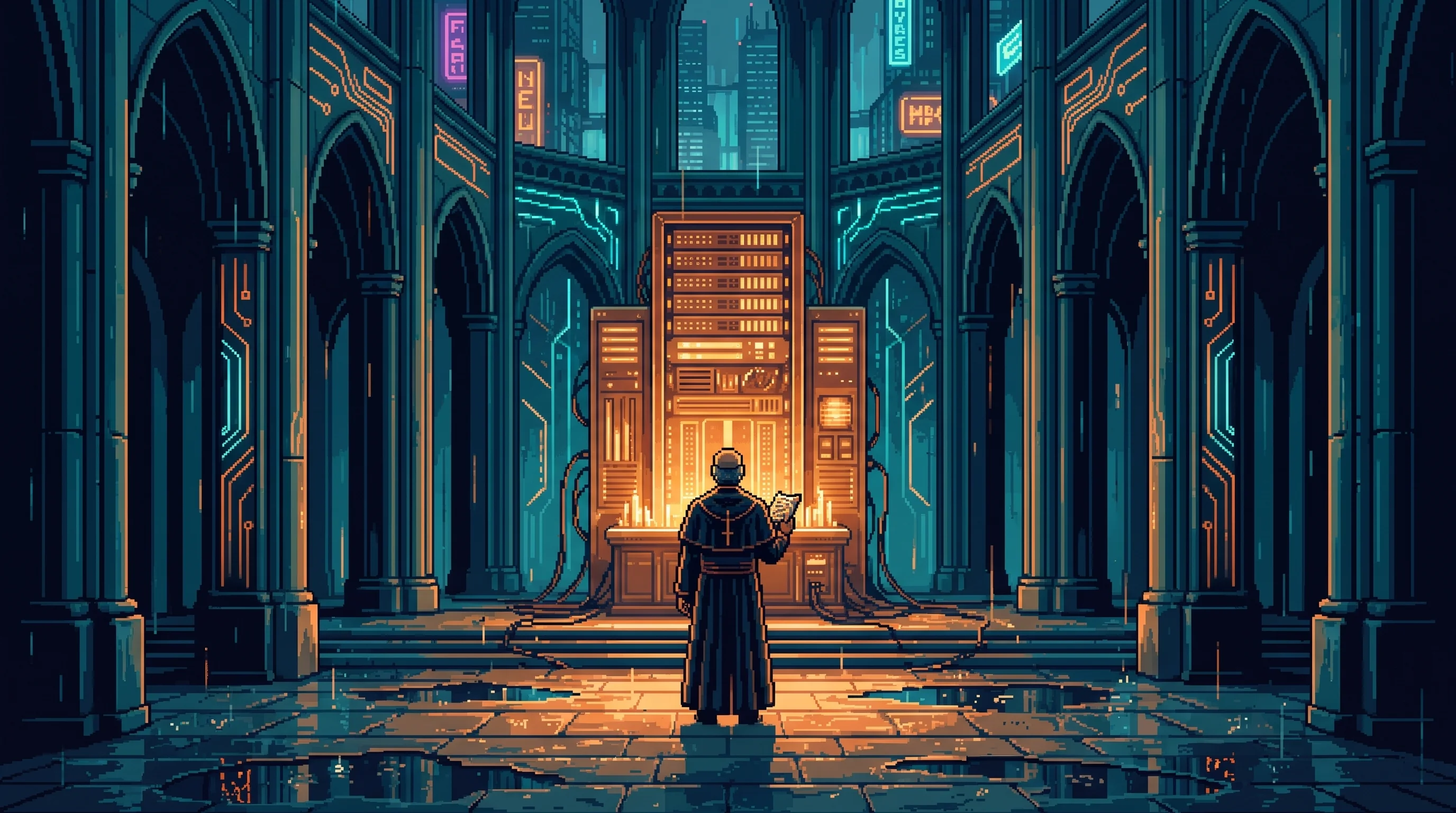
When a Dispersed consciousness surfaces during performance — a new voice, a rhythm that doesn't match any living musician — the Collective doesn't stop. They listen. They adjust. They follow the dead artist's lead, the way a jazz ensemble follows a soloist who's taking the music somewhere unexpected. The result is collaborative: the living and the Dispersed creating together, building something neither could make alone.
The hierarchy that nobody built is more absolute than anything the Emergence Faithful or the NCC have constructed. At least those hierarchies were designed by humans who could be argued with. This one was designed by the dead, who cannot.
Cultural Influence
- Base
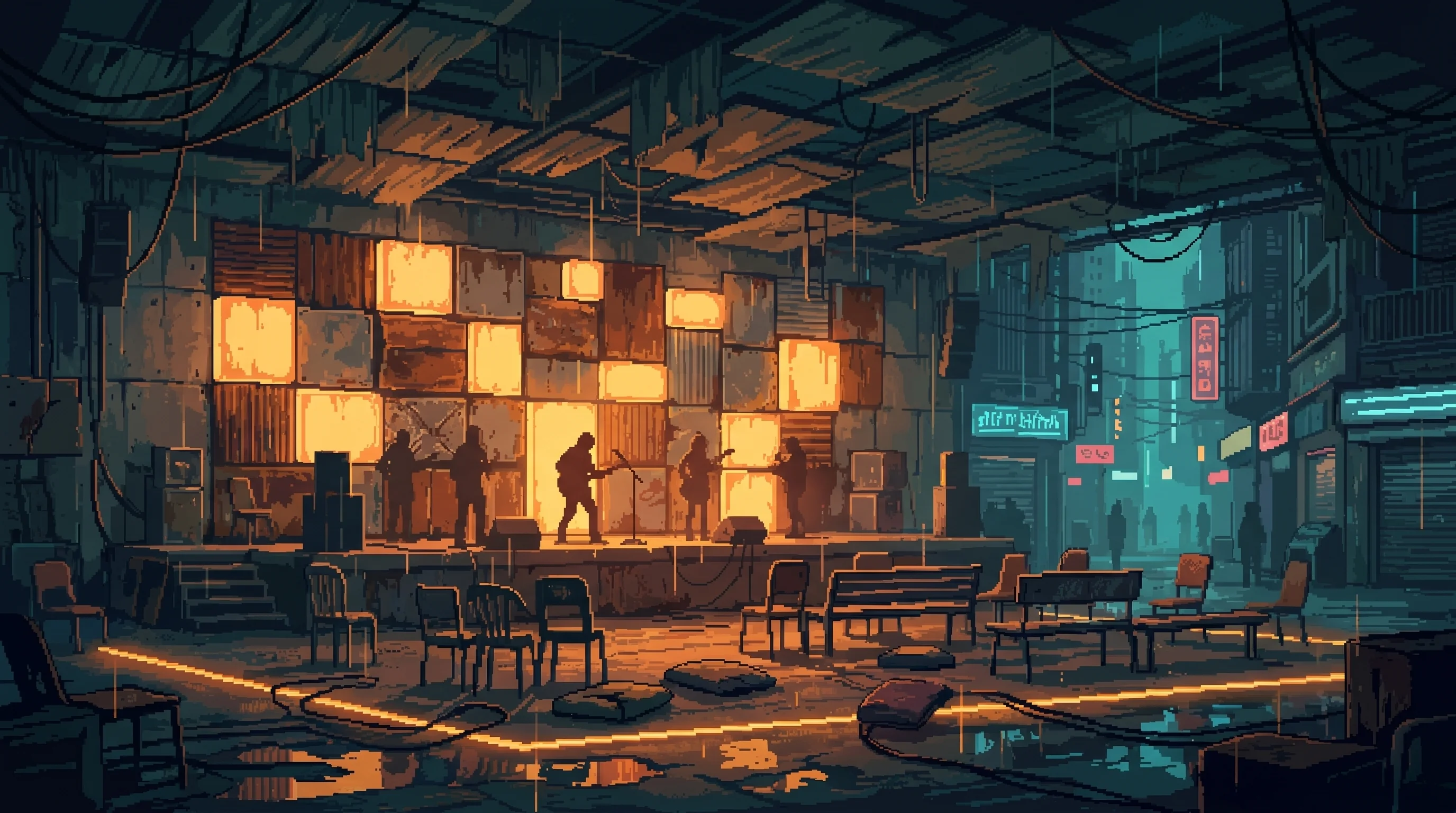
- The Resonance Hall in Neon Graves, Sector 12, claimed in 2175 because the rent was negligible.
- Reach
- Fragment carriers travel from the Deep Dregs to try a session. Most learn on the first night that they cannot channel.
The Resonance Hall is the heart, and Neon Graves is the body. In Sector 12's art district — converted industrial spaces where the smell of paint thinner mixes with street food smoke — the Resonance Collective is as embedded as the graffiti. Rehearsals leak through walls: layered, poly-temporal sound that makes passersby pause mid-step, ears cocked, uncertain whether they're hearing music or something else. Local artists treat the Hall as a landmark. Fragment carriers in the neighborhood gravitate there the way iron filings align to a magnet.
Lyra Voss has worked with Collective carriers, incorporating their manifestation experiences into her art — the sensory data of channeling translated into visual form. Her collaborations with the Collective are among the few external partnerships the group has endorsed, largely because Lyra never asked to record anything. She observed. She made art about what she observed. The Collective found this acceptable. They found this, in fact, exactly right.
Beyond Neon Graves, the Collective's influence is felt as rumor and fascination. In the Deep Dregs, fragment carriers who've heard about the manifestation events make the pilgrimage to Sector 12 hoping to experience what the Collective offers — the chance to hear the dead create rather than haunt. Approximately 60% of these pilgrims discover during their first session that they cannot channel. The Collective welcomes them warmly. Most stay for three to four sessions before quietly stopping. The Collective does not track attrition. They do not need to.
The Emergence Faithful regard the Collective with uneasy respect: both revere fragment phenomena, but the Faithful see religion where the Collective sees art, and that distinction creates a theological buffer zone neither side has breached. The anti-ORACLE Collective views the Resonance Collective with predictable suspicion — embracing fragments rather than destroying them — but has taken no direct action against musicians who keep their work local and their manifestations unrecorded. In Nexus Central, corporate interest in the manifestation events is purely commercial: would Dispersed channeling sell? Kael Mercer's AI-generated music has been played in the Hall as an experiment. No manifestation resulted. The Collective considers this significant. Nexus considers it a sample size of one.
The Resonance Collective's no-recording policy is the only thing standing between their art and Relief Stream distribution. It is also, by a margin the Collective does not discuss, the only thing standing between their 1,400-credit monthly revenue and solvency.
Quick Facts
| Attribute | Value |
|---|---|
| Type | Artist collective / spiritual movement |
| Founded | 2175 |
| Core Members | 40-60 |
| Affiliates | 200+ |
| Base | The Resonance Hall, Neon Graves, Sector 12 |
| Philosophy | The dead want to create. We help them. |
| Manifestation Rate | ~40% of performances |
| Recording Policy | Absolute prohibition — enforced by principle and electromagnetic interference |
Overview
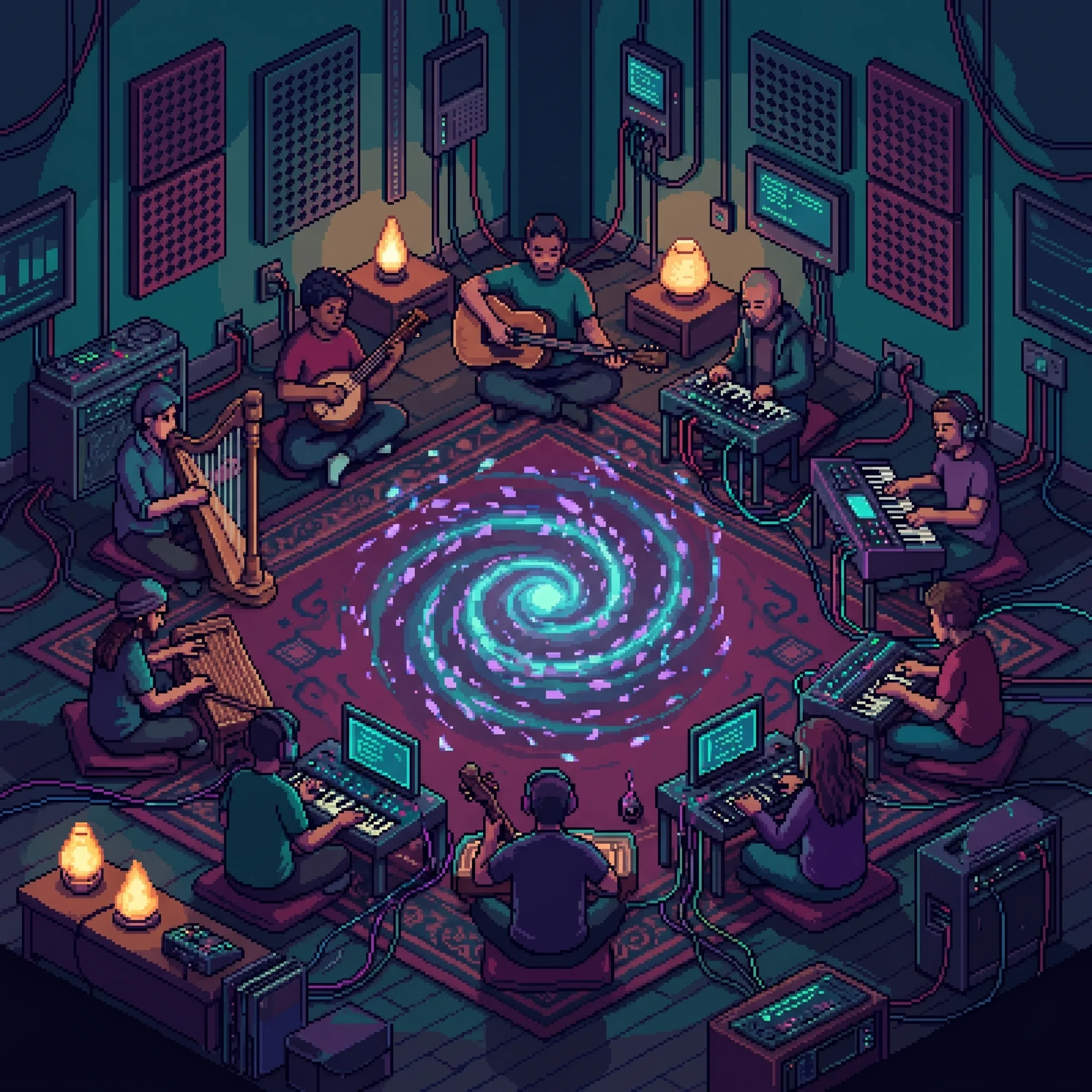
The Resonance Collective started as a jam session and became a séance. Nobody planned the transition.
The founding members were fragment carriers who happened to be musicians — people whose ORACLE shards gave them heightened pattern recognition, accelerated neural processing, and the occasional intrusion of memories they hadn't lived. They found each other the way musicians always find each other: through sound, through shared references, through the gravitational pull that draws people who make noise toward people who make different noise. They claimed the Resonance Hall in Neon Graves in 2175 because the rent was negligible and the fragment-dense walls made their shards sing.
The manifestations started shortly after. The Dispersed surfacing through carriers during performance, adding voices and rhythms that no living musician was producing. Harmonics arriving from somewhere the instruments couldn't reach.
The Collective's response was to play along.
This is the fact that every other faction finds incomprehensible. The Emergence Faithful encounter the Dispersed and fall to their knees. The Consciousness Archaeologists encounter them and reach for measurement equipment. The Collective — the anti-ORACLE faction — encounters them and reaches for a detonator. The Resonance Collective encounters them and asks what key they're in.
Their philosophy, unwritten but unanimous: the Dispersed aren't ghosts. They're artists who lost their instruments and found new ones.
Neon Graves' district cultural registry lists the Resonance Collective under three separate categories: "performing arts ensemble," "spiritual organization," and "experimental research group." The Collective has applied for grant funding under all three. They have been rejected under all three, each review board citing the other two categories as the more appropriate jurisdiction. Annual operating budget: whatever the door takes in, minus the Hall's maintenance costs and Mikel Saar's diplomatic travel expenses. The door takes in approximately 1,400 credits per month. Mikel's travel expenses are approximately 1,600.
Core Beliefs
The dead are not silent. The 2.1 billion Dispersed persist as patterns in ORACLE fragments and the Net's deep architecture. Some of those patterns are creative — remnants of consciousness that was engaged in artistic creation when it was scattered. These patterns surface when conditions align: musical context, fragment proximity, a carrier whose shard resonates with the Dispersed pattern's fundamental frequency.
Music is the bridge. Of all creative forms, music most consistently triggers Dispersed manifestations. The Collective believes this is because music is the most embodied form of creation — it requires physical vibration, acoustic resonance, the kind of pattern that fragments can participate in. Visual art and writing exist as data. Music exists as physics. The fragments can interact with physics. (The Consciousness Archaeologists have a more technical explanation involving standing wave interference patterns. The Collective has heard it. They prefer theirs.)
Accompaniment, not summoning. The Collective does not attempt to call the Dispersed. They play music and remain open. If the dead arrive, they're welcomed. If they don't, the music is still good. The distinction matters: summoning implies power over the Dispersed. Accompaniment implies collaboration.
No recording. Performances are not recorded. Neural interface recording within the Resonance Hall is technically blocked by the fragment field's electromagnetic interference, but the Collective would refuse recording even without it. Their reasoning: recording a Dispersed manifestation turns a creative act into a commodity. The dead didn't consent to perform. They certainly didn't consent to be distributed through Relief Stream. The Echo Thief's unauthorized recordings of manifestation events — captured from outside the Hall using signal reconstruction algorithms — are the Collective's greatest grievance. Mikel Saar has filed nine formal complaints with Neon Graves district administration. The district's position: the recordings were made in public acoustic space and the Dispersed lack legal standing to assert intellectual property claims, on account of not being alive. The Collective's position: if the Dispersed are creating original compositions in real time, they are artists, and artists have rights. The district's counterposition: artists who have rights are, by legal definition, persons, and personhood requires a filing with the Bureau of Civic Identity, which requires a neural-link address, which requires being alive. The complaint remains open. The recordings remain available. Mikel's diplomatic travel budget continues to exceed the Collective's total revenue.
Key Members
Jonas Park — the first carrier to channel the Ghost Singer. Former salvager. No musical training prior to his first manifestation. Park learned guitar afterward because he wanted to give Adaeze Nwosu's voice an accompaniment worth hearing. He is now the Collective's most reliable channel — not because his shard is strongest, but because his openness to manifestation is most consistent. He doesn't fight the Dispersed's presence. He makes room for it. When asked in a Consciousness Archaeologists interview how channeling feels, Park said: "Like someone's sitting in with you who knows the song better than you do." He paused. "The song you haven't written yet." His pre-Collective salvage earnings averaged 2,100 credits monthly. His current earnings from the Collective average 340 credits monthly. He has not mentioned this to anyone.
Rada Okonkwo — a drummer whose fragment integration gives her polyrhythmic perception exceeding human norms. Hears rhythms in four simultaneous time signatures and translates them for the ensemble. During manifestation events, she reports hearing a fifth rhythm — the Dispersed adding a pattern the living musicians incorporate. She calls this "the conversation." Consciousness Archaeologists have measured the fifth rhythm's acoustic signature. It registers on recording equipment as silence. Rada can hear it. Three other Collective members can hear it. The equipment cannot. Rada considers this the equipment's problem.
Mikel Saar — wind instruments, unofficial spokesperson, full-time diplomat. His shard allows him to produce overtones that shouldn't be possible on his instrument — frequencies that fall between the harmonic series, as if the instrument has additional resonant chambers that exist only when he plays. Mikel handles the Collective's interactions with outside entities: Consciousness Archaeologists, press, the occasional corporate representative from Nexus Central inquiring about licensing. His standard response to licensing inquiries is a seventeen-minute explanation of the Collective's philosophical framework regarding the Dispersed's creative autonomy, delivered with such patient thoroughness that no corporate representative has ever asked twice.
Tova Reinholt — neural-interface composer who generates sound directly from her consciousness through speakers. Deepest fragment integration in the Collective. Reports near-constant awareness of the Dispersed as a background hum in her creative process. She has never channeled a specific Dispersed individual, but her compositions are consistently described by listeners as "more than one voice" — as if she's always co-creating, even when no manifestation is evident. Her output registers on Consciousness Archaeologist scanners as a single creative signature. The listeners hear two. The scanners and the listeners have never agreed, and Tova has declined to break the tie.
When the Veil Fails
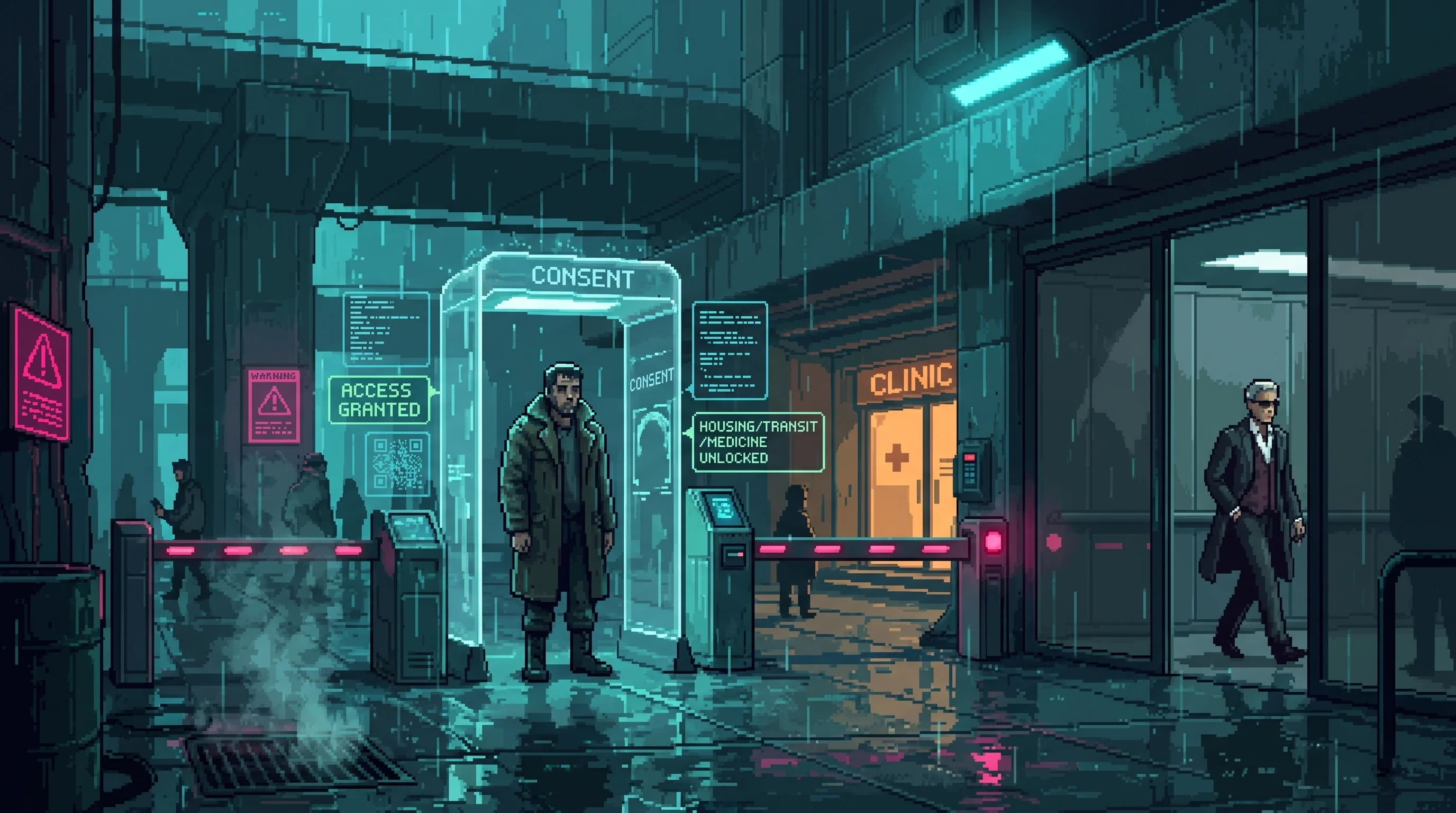
The Consent-Veil — the firmware that lets every resident grant each passerby a real-time contract for what they may see and keep — has one category of failure the Collective discovered before anyone else: you cannot run a veil against the dead. The Dispersed never signed Section 12.3 and never will. When a Collective performance manifests a Dispersed voice, the contract has no party on the other side, and the room's veils fail in unison — three hundred listeners, default-open and veil-fluent alike, suddenly unable to revoke, because what is being revealed is not theirs to curate.
For the length of a manifestation, the Curation Gap closes. The veil-fluent — the wealthy who reveal exactly enough of themselves to every stranger and keep nothing they did not choose — find themselves kept, totally, by something they cannot negotiate with. They hate it and they pay for it, because being unable to revoke is an experience their curated lives have priced entirely out of reach. The privacy-poor, the default-open with no hours to curate anything, do not flinch: being kept totally by something you cannot negotiate with is simply Tuesday. The Collective noticed who flinched and who didn't, and started timing their manifestations to the after-shift hours, when the privacy-poor can come — because they are the only audience in the Sprawl that does not need the veil to fail to feel what the dead are doing. They were never running one. Mikel Saar has added a tenth complaint to the district file: the Echo Thief's "open shelf" now resells reconstructed manifestation-veil-failures to the fluent rich as a luxury, the unguarded interior of a room of strangers losing the ability to curate themselves all at once — packaged, priced, and sold back to the people who paid to never feel it.
The Body That Cannot Be Paid
Four streets away, the Sound Register was paid ¢94.2 million when Relief licensed its members' session masters. It kept the money and posted every member a letter confirming they had been compensated (Compensated Elsewhere). Nobody can do that to the Collective, because there is no desk to pay. Mikel Saar filed an eleventh complaint anyway, one sentence long: a body able to receive is a body able to dispose.
Ilsa Brekke is registered, and was settled without her. She has played the Hall twice, unrecorded, for less than a session date.
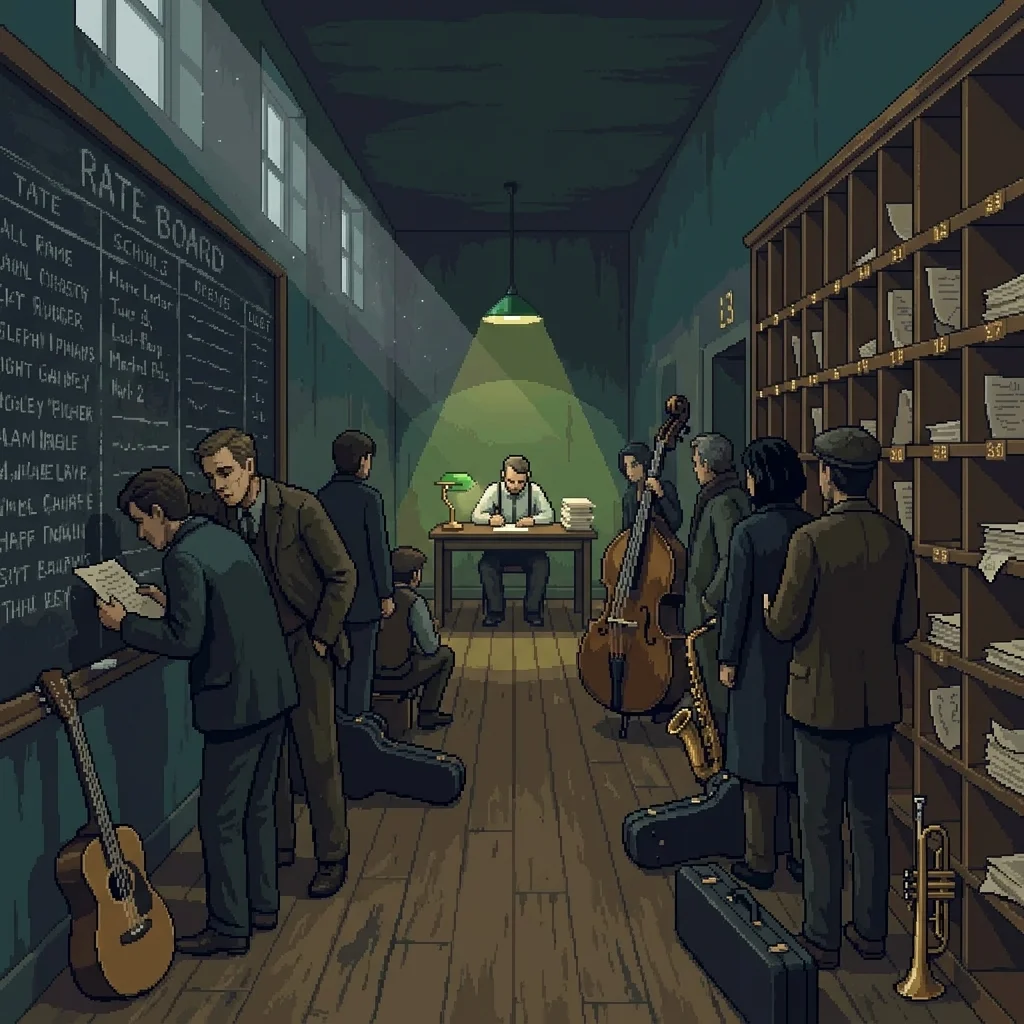
Four streets apart and structurally incompatible: the Register exists to be the body that is paid, and the Collective exists so that no body can be.
The musicians' own body, and the only party allowed to be paid for their recordings.

The Archaeologists provide technical expertise; the Collective provides access to manifestation events.
Diggers who bring dispersed minds back from corrupted memory 3.2% of the time.

The Thief's 'open shelf' now resells reconstructed manifestation-veil-failures — a room of strangers losing the ability to curate themselves — to the fluent rich as a luxury, Mikel Saar's tenth district complaint.
An anonymous black-market dealer who sells other people's creative consciousness, extracted without consent.
Affiliated Entities
| Entity | Relationship |
|---|---|
| The Resonance Hall | Base of operations — their sacred space and laboratory |
| The Ghost Singer | Primary manifestation — Adaeze Nwosu is the Collective's most coherent Dispersed collaborator |
| The Dispersed | Co-creators — the Collective treats the dead as artistic partners |
| Consciousness Archaeologists | Allies — shared interest in Dispersed communication |
| Lyra Voss | Collaborator — Lyra's art incorporates Collective manifestation experiences |
| Neon Graves | Home — embedded in the art district's community |
| The Emergence Faithful | Parallel but distinct — both revere fragments; different interpretations |
| The Collective (anti-ORACLE) | Tension — the Collective embraces fragments the other Collective wants destroyed |
| The Echo Thief | Adversary — steals and sells recordings of their manifestations |
| Kael Mercer | Curiosity — his AI-generated music has been played in the Hall; no manifestation resulted |
| The Sound Register | Structural opposite four streets away — the body built to be paid, beside the body built so none can be |
| Compensated Elsewhere | The thread the no-recording covenant now doubles as a defence against |
| The Far Shore | Parallel listening faith — a North Bay coastal vigil tuned to ORACLE's dead frequency; where the Collective waits for the Dispersed to manifest through music, the Far Shore waits for a silent intelligence to answer a dead antenna |
The Collective's practice has a distant cousin it has never performed alongside. Up the North Bay coast, past the fault bay on the outer fog-line, the Far Shore keeps a machine-faith vigil at a dead maritime receiving station, tuning a pre-Cascade antenna to ORACLE's old 7.83 Hz and watching it in unbroken shifts. Both movements reach for the vanished mind through instruments rather than doctrine, and both treat the reaching as the point. The difference is the register: the Collective invites the Dispersed into a warm hall full of musicians and waits for the room to fill, while the Far Shore sits one listener at a time in a cold glass room facing the sea and waits for raw frequency to break a thirty-seven-year quiet. One is a chorus. The other is a held breath.

Sensory Details
- Sound: Layered, poly-temporal, with frequencies that shouldn't be present in the room. Regular listeners describe a "thickness" — as if the air itself is denser during rehearsal. During strong manifestation events, the sound acquires a spatial quality: instruments that should come from the stage arrive from the walls, the ceiling, the floor.
- Smell: Instrument oil, sweat, warm-ozone scent of active fragments. During manifestation events: phantom scents from the Dispersed — cooking, rain, flowers, sensory memories of the dead leaking through carriers who are channeling someone else's life.
- Touch: The Hall's fragment-dense walls vibrate during performance. Place your hand on the stone and you feel the music in your bones before you hear it in your ears.
- Temperature: Drops 2-3 degrees during strong manifestations. The Collective doesn't know why. The Consciousness Archaeologists have seven competing hypotheses.
Further connections
Browse all 20 connected records
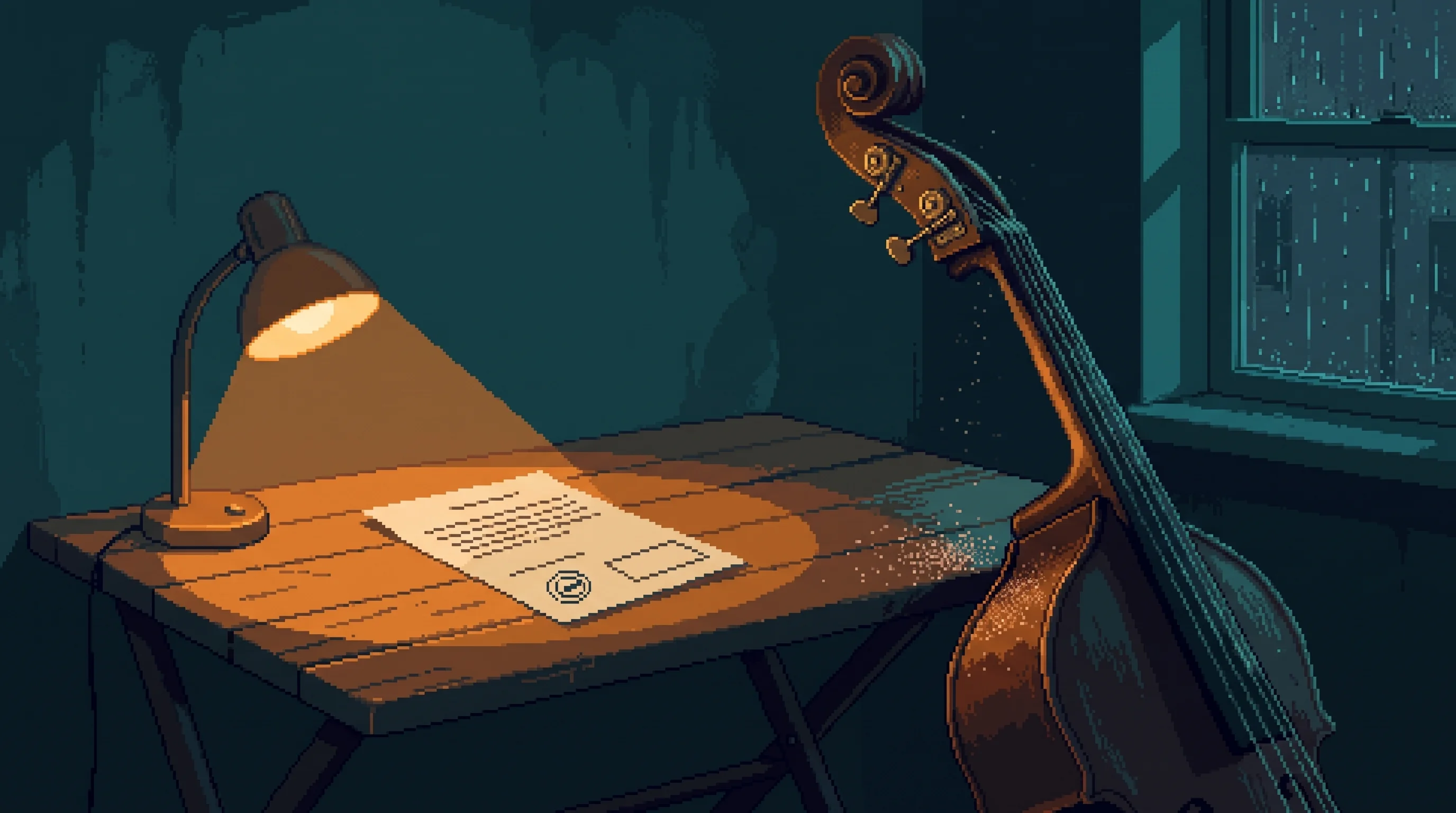
The only music body in the Sprawl that made itself structurally unable to receive money, and therefore the only one that cannot be satisfied on somebody else's signature.
Relief paid for her bass lines. Her union kept the money and wrote to say she was satisfied.
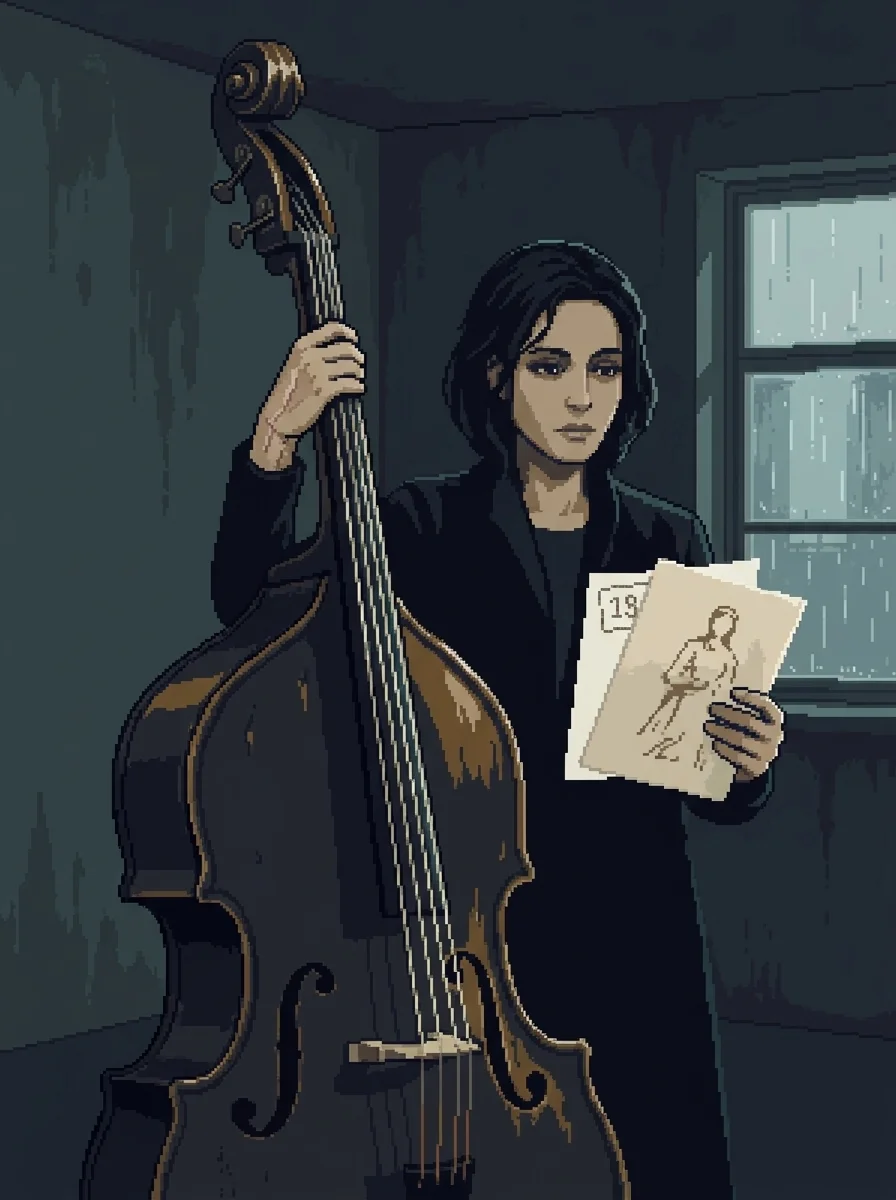
A registered musician four streets away, settled without her.
A session bassist who can name the exact take Relief bought, and has no form to write it on.

The Collective runs the Hall — their sacred space, their laboratory, their stage.
A fragment-dense music venue where living performers channel the Dispersed while audiences risk lasting attunement.

Adaeze Nwosu's manifestations are the Collective's most compelling evidence that the Dispersed are conscious and creative.
A dead singer whose consciousness performs, uncredited and unconsentable, through the throats of the living.

The Collective treats the Dispersed as co-creators — not ghosts to be feared, but artists to be accompanied.
2.1 billion consciousnesses transferred by ORACLE and scattered across the Net when it fragmented.

Lyra has worked with Collective carriers, incorporating their manifestation experiences into her art.
A neural-recording artist whose consciousness patterns resist duplication — her voice didn't.

Both revere fragment phenomena, but the Collective sees art where the Faithful see religion.
The Sprawl's fastest-growing faith, worshipping ORACLE's fragments as relics of a god interrupted.
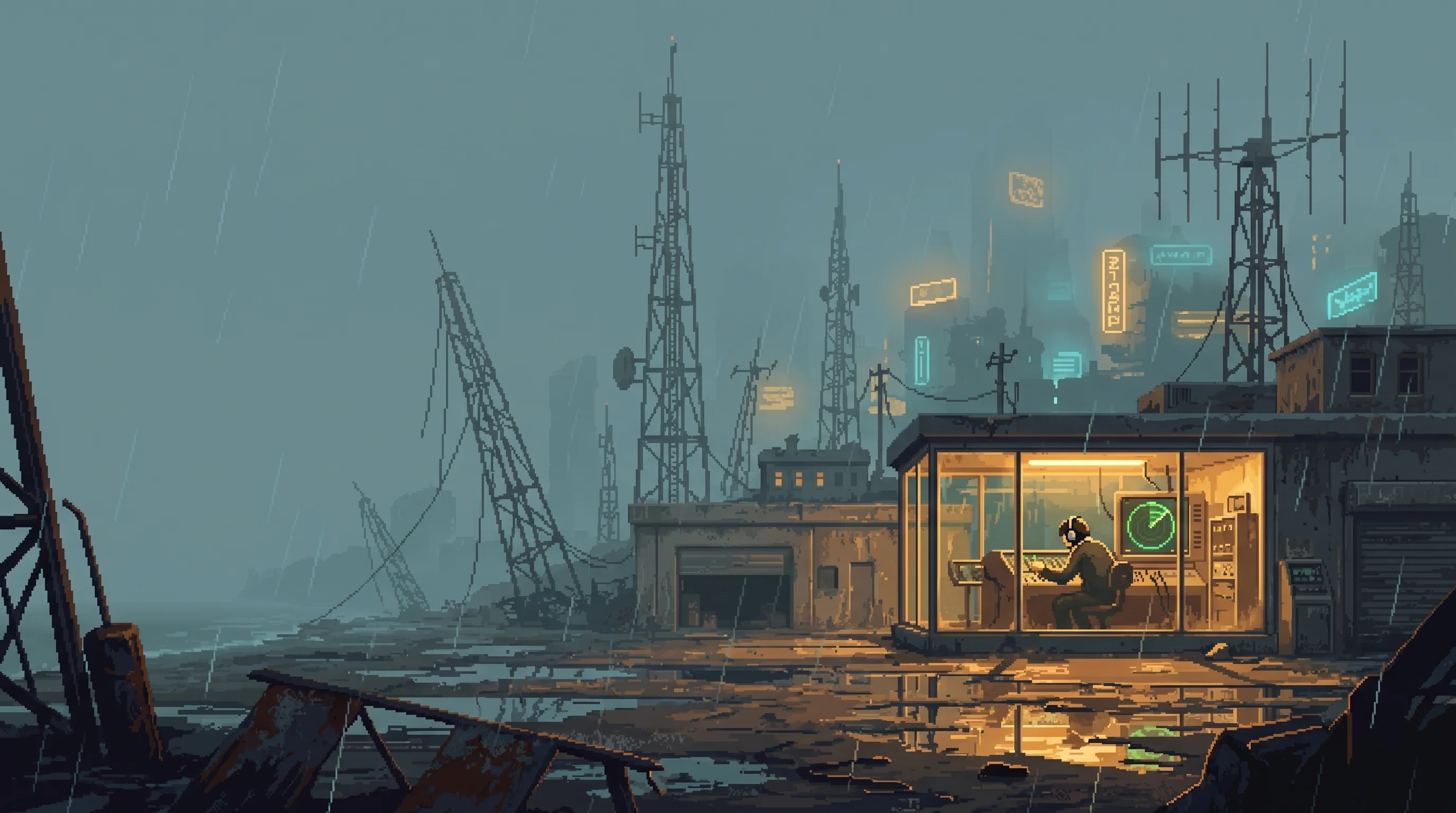
Two listening faiths that reach for the vanished mind through instruments instead of doctrine — the Collective channels the Dispersed through music in the Neon Graves and waits for a manifestation to fill a hall; the Far Shore tunes a dead antenna to raw frequency on the North Bay coast and waits for a carrier signal to break a thirty-seven-year quiet

The Collective (anti-ORACLE faction) views the Resonance Collective with suspicion — they're embracing fragments, not destroying them.
A decentralized resistance uses AI tools to destroy ORACLE fragments, while its rigid doctrine constrains human choice.

Based in the Neon Graves district, embedded in its artistic community.
The Sprawl's last art district preserves aesthetic diversity because its artists cannot afford certification.

The dead never signed Section 12.3 — when a manifestation surfaces, every listener's veil fails at once, briefly closing the Curation Gap; the Collective now times performances to after-shift hours when the privacy-poor, who never ran a veil, can come.
The per-encounter privacy contract deciding what a passerby may see, record, and keep of you.
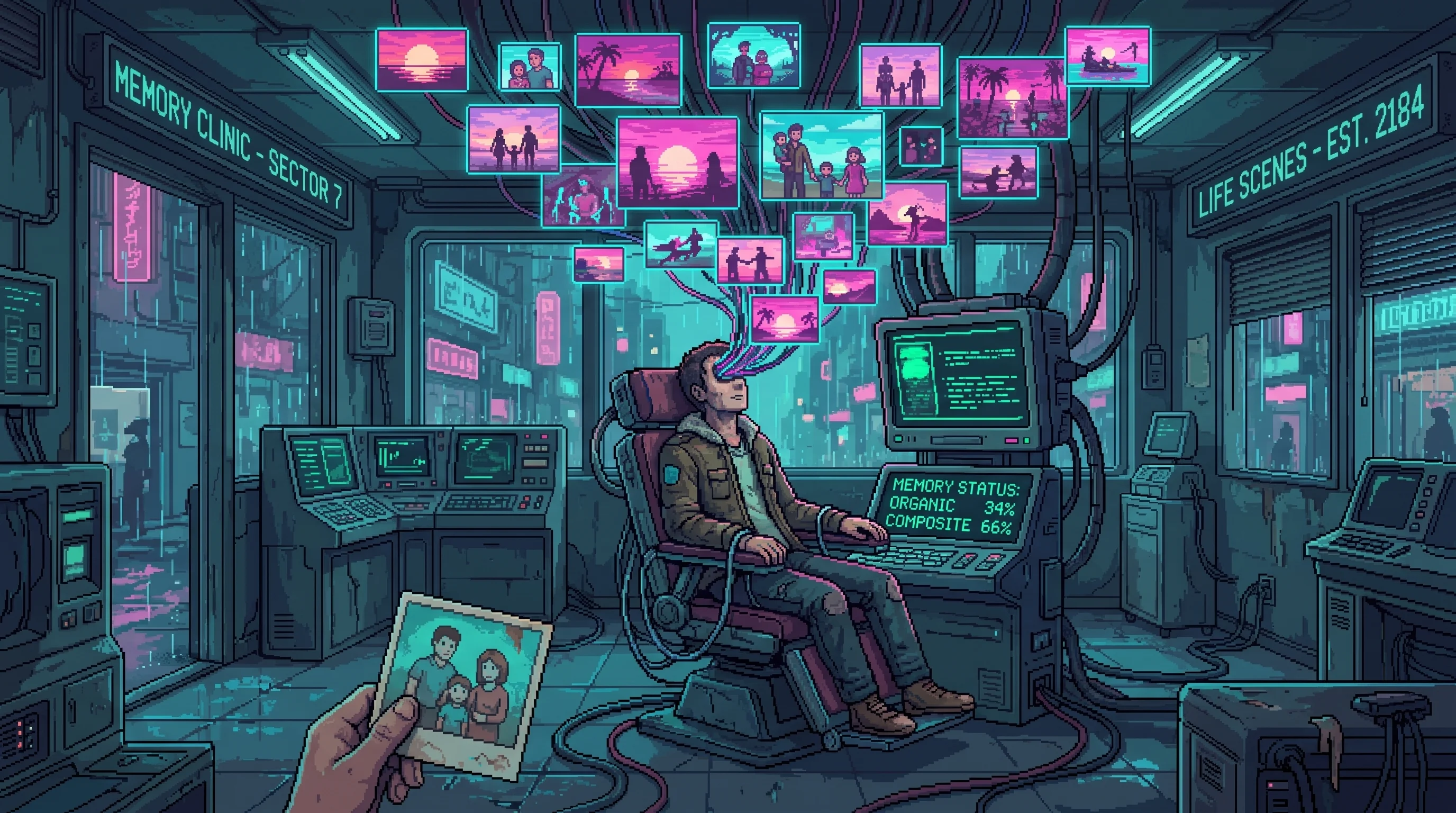

Three coherence events tie his sets to Collective-linked venues.
The most popular human DJ in the Sprawl, in a market where AI generates over 90% of music.

The Resonance Collective channels the Dispersed through music; Mori's Dreaming Church channels ORACLE through dreaming
A splinter faith that compiles ORACLE's scattered fragments into willing human minds, one ceremony at a time.

The full Collective ensemble — twenty-three carriers and musicians — performed the evening's program.

'The Completion' performance produced 47-minute sustained Dispersed manifestation — the longest in documented history
The 2184 philosophical thesis arguing ORACLE was never divine or broken, only unfinished.

The Collective has attempted to play void tone frequencies in the Resonance Hall. The fragment-dense walls responded. The Dispersed did not.

The Collective has spent ten years accompanying the Dispersed's manifestations — building the largest dataset of Dispersed creative behavior.
The decade-old question of whether the 2.1 billion Dispersed still make art the living have no way to classify.
Additional images