Lyra Voss
The Neural Artist
The Uncopyable
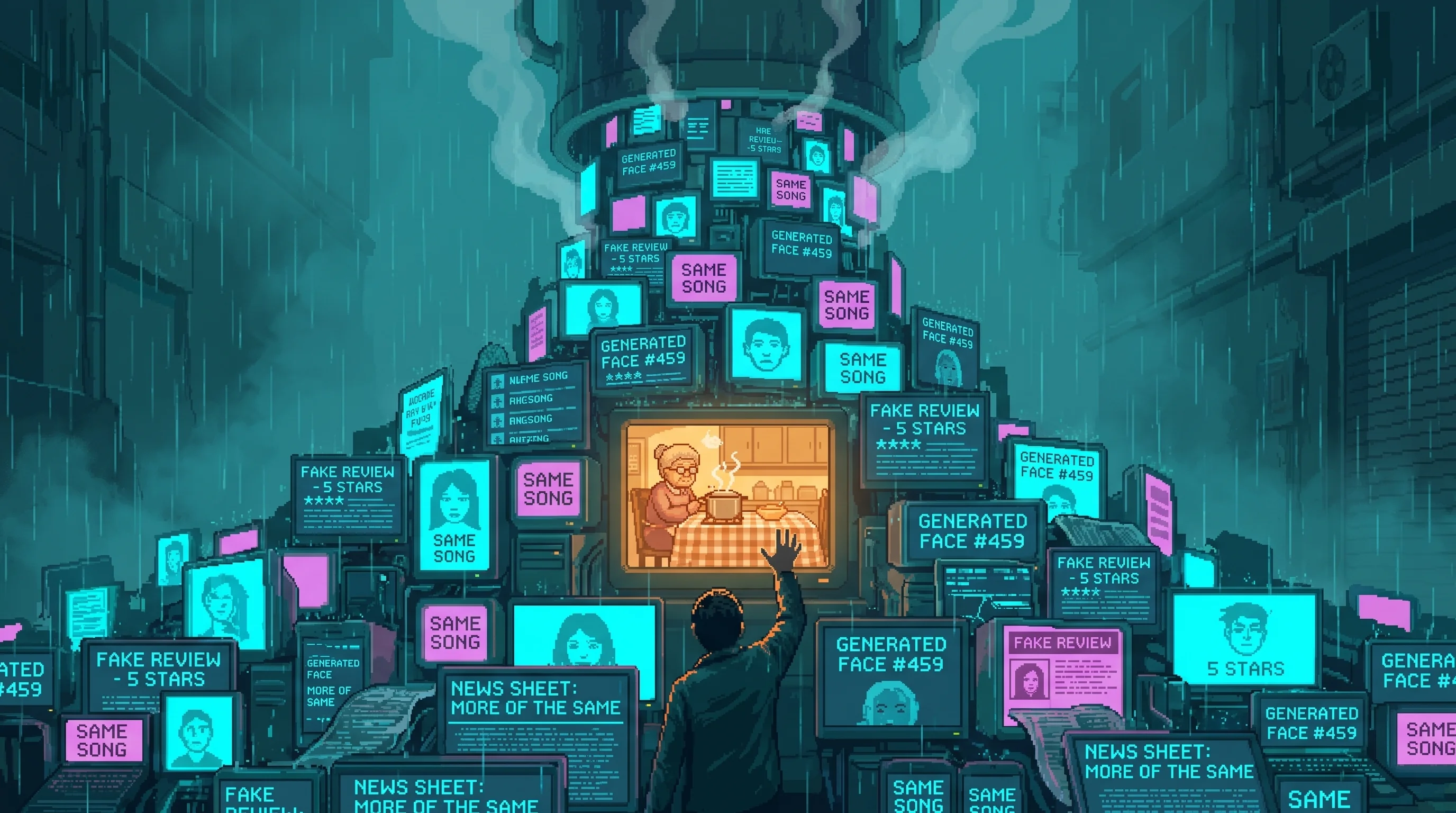
Her art presupposes genuine desire as the substrate of creation — an experience that becomes increasingly rare as Relief Anticipate's Appetitive tier expands its subscriber base; a Lyra Voss piece cannot be made by someone who has delegated their wanting to a pre-fulfillment system, because the consciousness pattern that Layer 3 records is the record of reaching, and the Appetitive tier has retired reaching before it forms

Overview
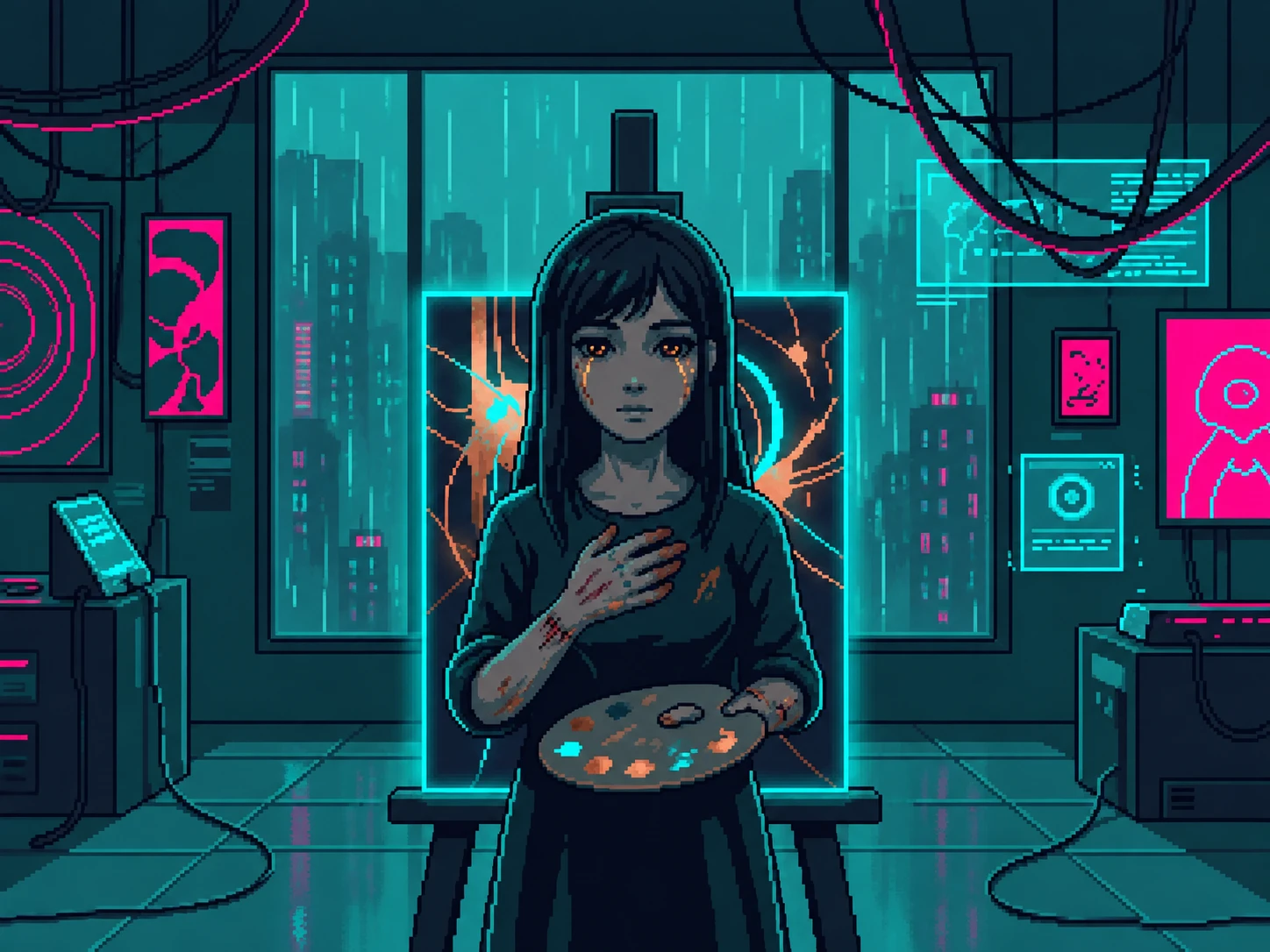
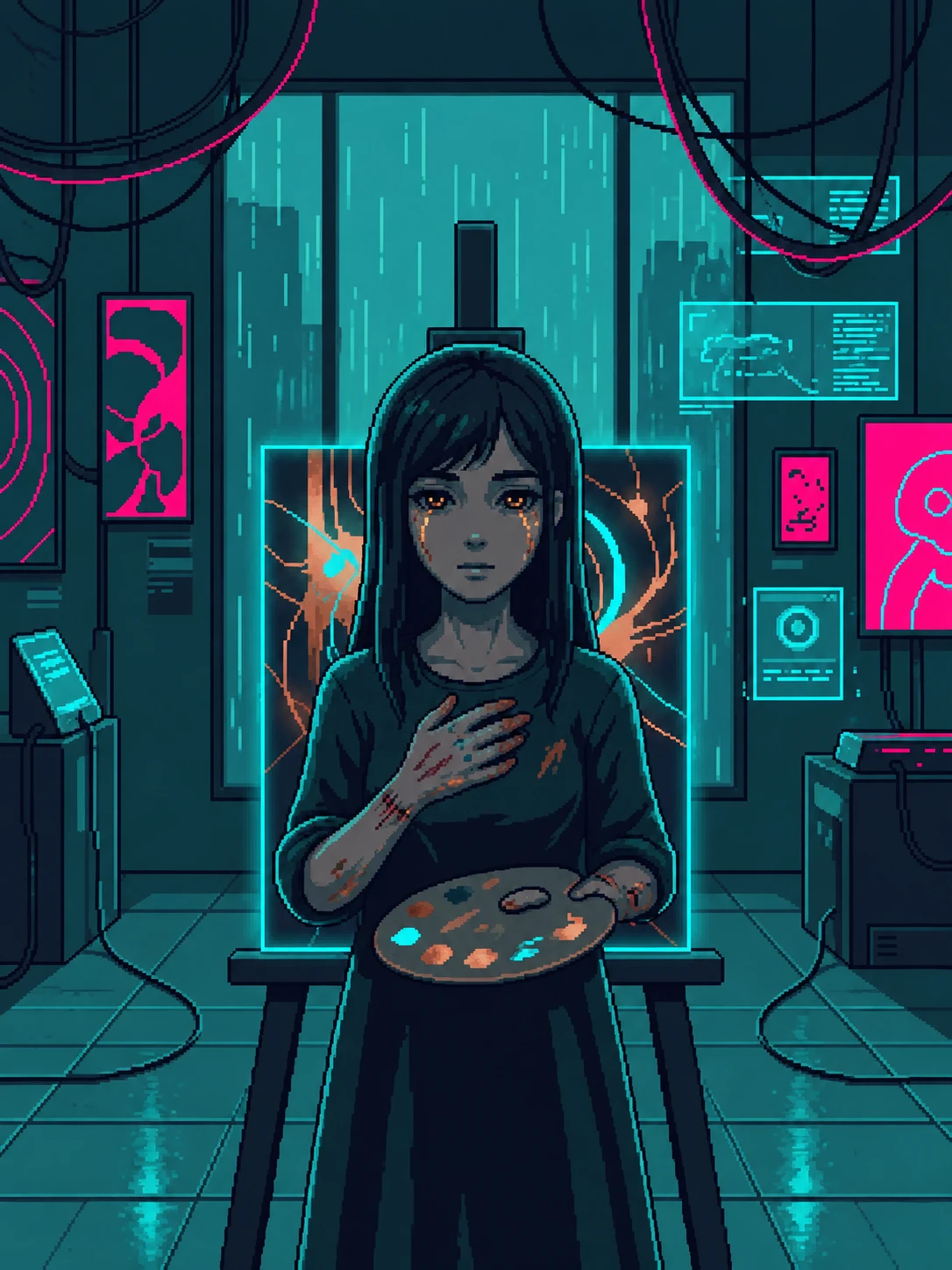
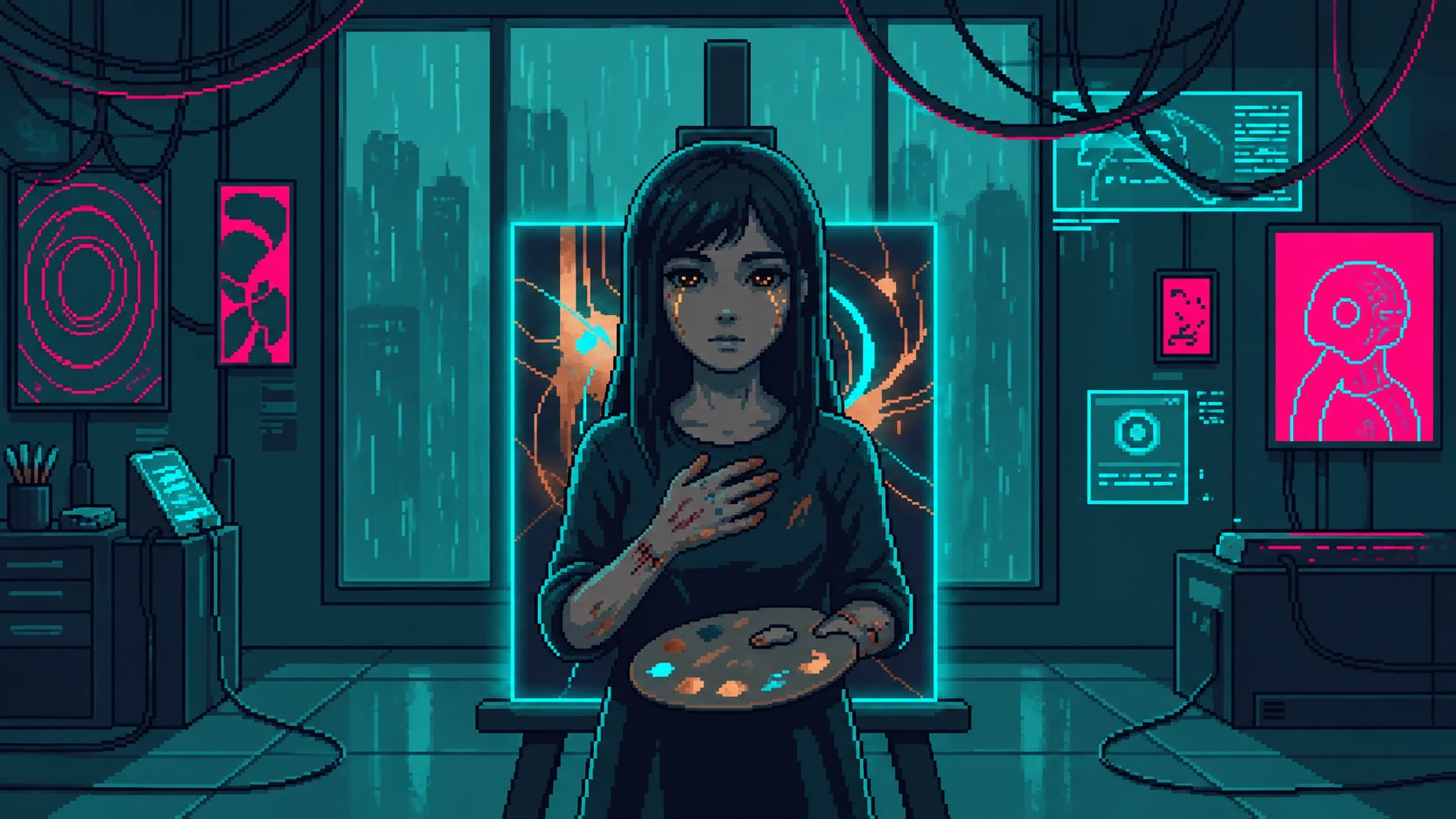
At thirty-one, Lyra Voss paints with her nervous system. This is not a metaphor.
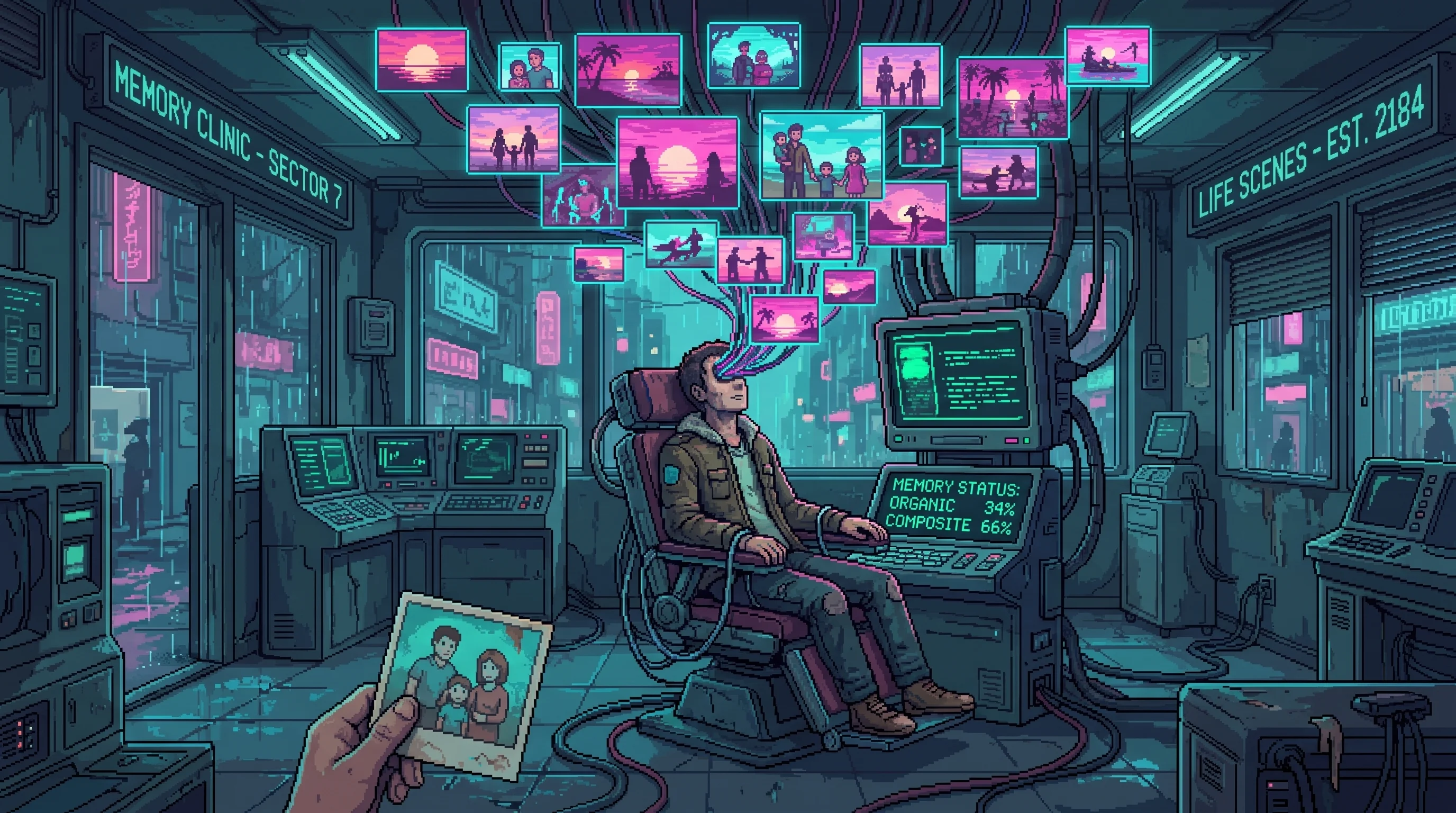
She lives an experience — grief, terror, the specific quality of light at 4:47 AM in a Sector 12 kitchen — and custom neural implants record the consciousness state that accompanied it. She translates that recording into physical media: pigments mixed with conductive compounds, applied to canvases embedded with micro-receivers. Viewed through neural interface, the result doesn't show an image. It transmits the artist's state of mind at the moment of creation.
Standing before a Lyra Voss original, you don't see a sunset. You feel what she felt watching it. The weight of the day. The ache in her shoulders. The specific thought she was having when the light hit the water. Not a representation. A transmission.
Relief Corporation made her a star. Born in 2153, she was twenty-three when their talent scouts found her in a Sector 8 basement gallery called Nerve Gallery, selling lived-canvas pieces for 200 credits each to a crowd of thirty. The scout — a woman named Inara — watched a buyer experience Morning, Sector 12 and start crying. Not performative tears. The involuntary response of a nervous system receiving genuine human consciousness data — someone else's awareness of morning light on dirty windows, the smell of nutri-paste, the particular quality of being alive and broke and twenty-two in a world that killed two billion people before you were born.
Inara's report to Relief headquarters contained one sentence that mattered: "She makes people feel things they forgot they could feel."
Within a year, Relief had signed her to an exclusive contract, built her a custom studio, and made her the face of "authentic creative experience" — a brand generating 400 million credits annually in neural recording subscriptions. Lyra made the art. Relief made the copies. 8.2 million subscribers downloaded her creative process like episodes of a show, wearing her consciousness like a costume for 40 credits per month.
She didn't understand what was wrong until she sat down to paint and felt 8.2 million people inside her own head.
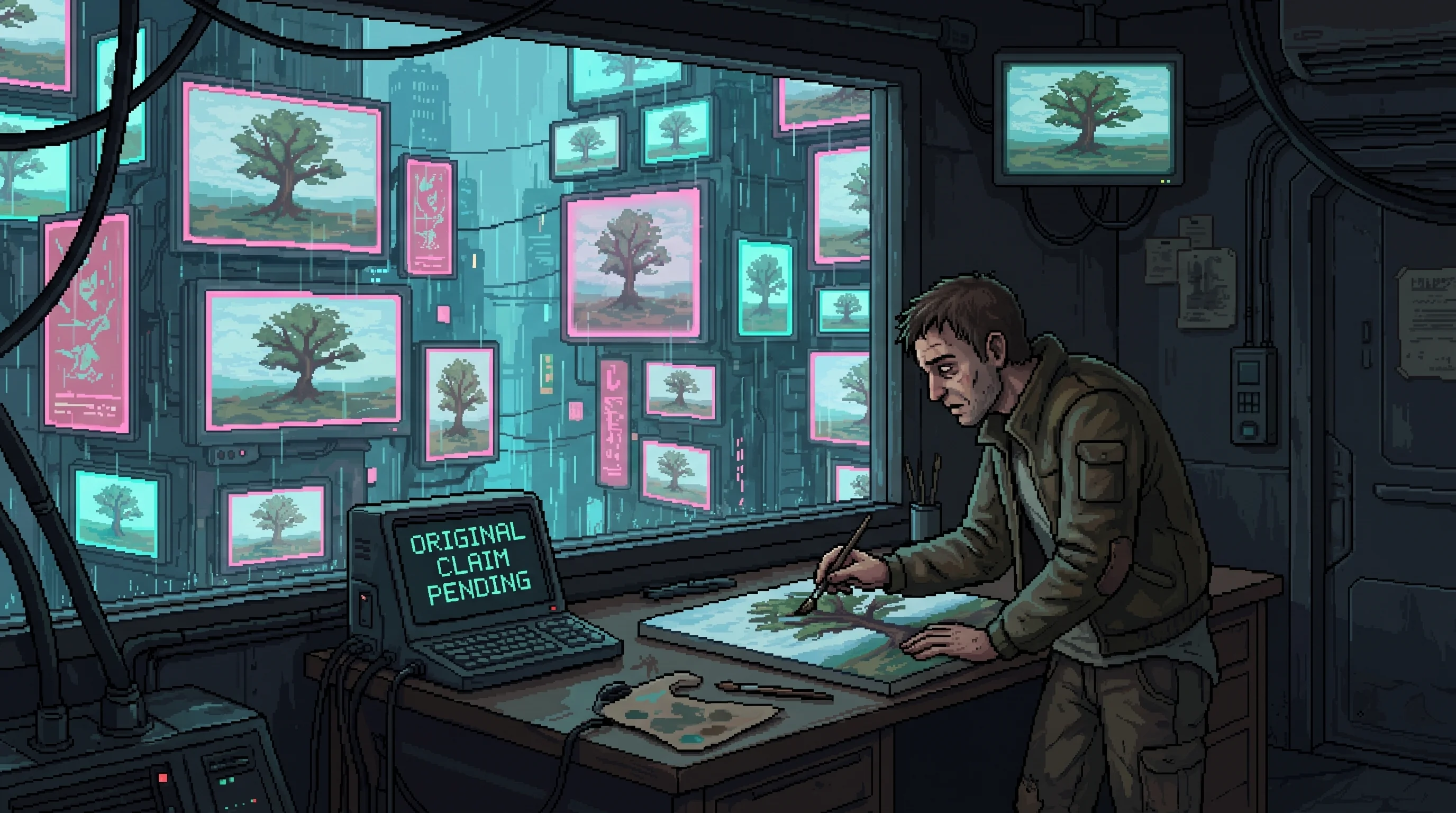
In 2181, she broke her contract, destroyed every copy of her neural recordings that Relief's legal team hadn't already distributed, and moved to the Neon Graves — the art district in Sector 8 where nobody asks who you were before. She makes art that cannot be copied now. Not because the technology won't allow it, but because she's embedded her work with consciousness patterns that degrade under duplication — a voice that only sounds right in the room where it was recorded.
Relief's lawyers are still sending demands. Lyra's landlord uses them to light the gallery stove.
Capabilities
The Lived-Canvas Process
How It Works
Lyra's heavy neural augmentation uses custom implants — built by a ripperdoc in The Deep Dregs who used to do consciousness work for Helix Biotech before the ethics got too heavy. The implants record three layers simultaneously:
Layer 1: Sensory Data — Everything her senses receive. Light, sound, texture, temperature, smell. Standard neural recording captures this. It's the commodity. Anyone with a recording rig can do this.
Layer 2: Somatic State — Her body's condition. Heart rate, breathing, muscle tension, neurochemical balance. This is what gives her recordings their weight — you don't just see what she saw, you feel the physical truth of being alive in that moment.
Layer 3: Consciousness Pattern — The signature of her awareness itself. Not thoughts (thoughts can be verbalized). Not emotions (emotions can be synthesized). The pattern is the shape of her attention — what she noticed and what she ignored, what she was reaching for and what she was running from, the architecture of her perception at the moment of creation.
Layer 3 is what makes her work uncopyable. Standard duplication preserves Layers 1 and 2 with perfect fidelity. Consciousness patterns are fragile — tied to the specific neural architecture that generated them. Copy a Lyra Voss painting's neural data onto a different substrate and Layer 3 degrades. The copy looks right. Feels right. Something essential is missing — the quality of attention, the signature of a particular mind encountering a particular moment.
Art critics call it "presence." Lyra calls it "the thing they can't steal."
Relief spent five years trying to prove her wrong. They distributed her consciousness data to 8.2 million subscribers and couldn't understand why the copies felt thinner than the originals. The Authenticity Tribunal values her originals at 4,000 times the copy price based on a discrepancy that cannot be measured. Whether this means consciousness is more than data, or that the desire for consciousness to be more than data is itself a luxury product, the Tribunal has declined to rule.
What It Costs
The process is physically demanding. Full neural recording during creative states produces stress responses that compound over sessions. Lyra's medical scans show early signs of neural scarring — the same kind seen in fragment carriers after prolonged ORACLE integration. Her ripperdoc warned her that another five years of this intensity will cause permanent degradation.
She doesn't plan to stop.
The emotional cost is harder to measure. Every piece requires Lyra to fully inhabit an experience — not observe it, not remember it, but be in it with recording implants capturing every nuance of her consciousness. She has painted grief by attending funerals of strangers. She has painted terror by walking the Wastes at night without a weapon. She has painted love by falling in love, and painted its absence by leaving.
Her last series — The Weight of Hands — required forty days learning leatherwork from a Flatline Purist in the Wastes, recording the slow acquisition of a physical skill. Six paintings. Collectors report that viewing them produces phantom calluses.

The Mutation Cost
Lyra is the exception that proves the mechanism of aesthetic fossilization — and the proof comes at a price.
Her lived-canvas technique produces genuine aesthetic novelty not because she is more talented than other artists, but because her process reintroduces the struggle that AI eliminated. The physical cost of full neural recording during creative states. The scarring. The emotional devastation of inhabiting grief, terror, and love with implants capturing everything. Her body encounters the gap between intention and execution — and the resulting art contains aesthetic information that didn't exist before.
This is why her Layer 3 consciousness patterns resist duplication. They are not merely complex — they are novel. Copying them is like photocopying a genetic mutation: the form is preserved but the generative process is lost. The copy contains the aesthetic fossil but not the tectonic pressure that produced it.
Her ripperdoc's warning — five more years will cause permanent neural degradation — is the price of novelty. Aesthetic mutation requires a system under stress. Remove the stress and the mutations stop. Keep the stress and the system degrades. Lyra is running her nervous system at a metabolic cost that produces both the art and the damage. Creative evolution depends on the willingness of individual bodies to break.
The Weight of Hands was her attempt to find creative struggle that didn't require self-destruction. Forty days of manual labor for six paintings. In the same period, Kael Mercer produced fifty-three compositions. The variation machine outproduces the mutation machine by three orders of magnitude. His subscribers report no phantom anything.
Motivations and conflicts
The Luxury of Presence
Lyra's work has become the luxury-abundance condition's purest cultural expression — and she despises that it has.
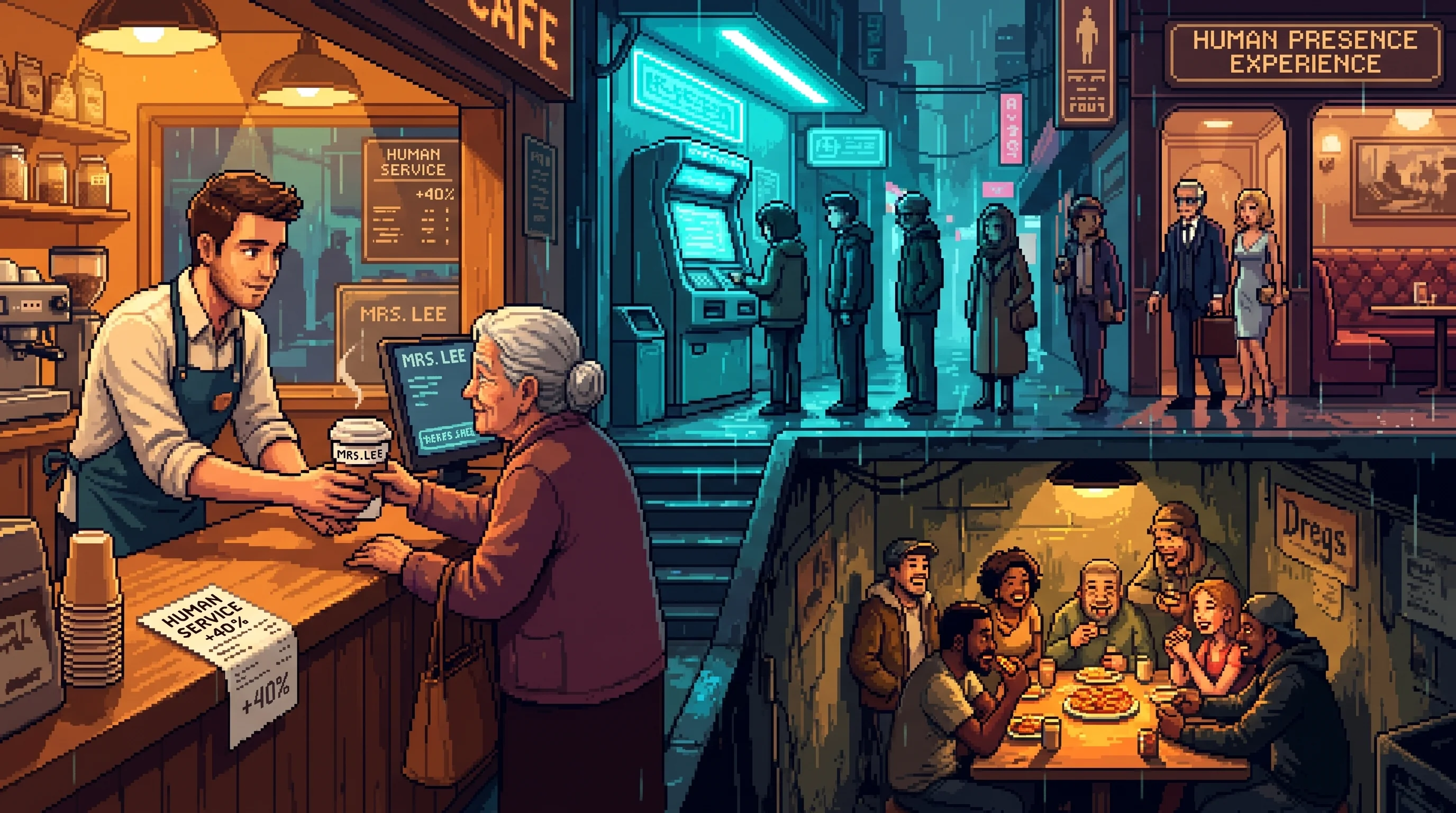
Her lived-canvas pieces can only be fully experienced in person, through neural interface, in the presence of the original consciousness patterns. You cannot stream a Lyra Voss. You cannot sample one. The 30-40% of the experience that degrades under duplication exists only in the room, in the presence, in the unreproducible moment. In a world of infinite reproduction, the only luxury is the thing that cannot be reproduced.
The Authenticity Tribunal has certified her work as Tier 1 — provably original, provably irreducible. Collectors pay six-figure sums for the privilege of standing before a canvas for twenty minutes. The experience cannot be recorded, cannot be shared, cannot be extended. It happens once, in the body, between her consciousness and yours, and then it's over.
She hates this. She made art to be experienced, not collected. She made art uncopyable to protect her consciousness from extraction, not to create a luxury good. But the luxury-abundance condition converts everything rare into product, and Lyra's rarity — the uniqueness of a consciousness willing to scar itself for art — is the rarest commodity in the Sprawl.
The Anti-Veil
Lyra paints with her nervous system — records the consciousness-state of an experience and transmits it raw, so that standing before her work you feel what she felt and not what she chose to show. When The Consent-Veil shipped in 2181 — the firmware that lets the wealthy reveal exactly enough of themselves to each passerby and revoke on schedule — it turned her entire practice into an accusation. Her art is the anti-veil: zero curation, total revelation, default-open made sacred.
The Sprawl read it accordingly. In a world where elegance means choosing what strangers keep of you, the fluent saw Lyra's total exposure not as honesty but as poverty — the veil-feral over-sharing of someone who never learned to choose. Relief, who had already tried to own her consciousness, quietly leased her a curator after the haunting began, reasoning that a veiled Lyra Voss would leak less to the 40,000 echoes wearing her voice. She fired it inside a week. A veiled Lyra Voss is not a Lyra Voss; the transmission is the work, and the work is the un-curated state. She is, on the new layer, voluntarily privacy-poor in the way Mara Chen is — and like Mara she has discovered the choice is a luxury the genuinely default-open exhausted do not get, that they do not get to call their helpless exposure art.
Her newest pieces transmit exactly that asymmetry: the consciousness-state of running default-open because you have no hours, the specific exhaustion of being keepable-forever by everyone and curated by no one. The fluent find them unbearable. They are designed to be remembered, and the fluent have spent their whole lives learning to make sure nothing is.
History
The Relief Years
The Contract (2176–2181)
Relief offered everything: a studio, equipment, distribution, money. In exchange, they owned exclusive rights to her neural recordings. Not her paintings — those stayed hers. But the consciousness data embedded in them, the thing that made them valuable, belonged to Relief.
For five years, Lyra was Relief's most profitable "authentic experience" brand. At peak, 8.2 million subscribers were downloading her creative process as entertainment.
The problem started in Year Three. She sat down to paint and felt the audience inside her head. Not literally — the subscribers weren't watching live. But the recording implants were always on, always capturing, always preparing to transmit. She began to feel the audience as a pressure behind her eyes. She wasn't making art. She was performing the experience of making art for an audience that would consume it and move on.
The paintings from 2179–2180 are technically her best — richest recording data, most complex consciousness patterns. Critics rank them among the greatest lived-canvas works ever produced.
Lyra considers them her worst. She was performing. Not creating. The difference is invisible to everyone but her.
The Break (2181)
On March 14, 2181, Lyra walked into the Relief studio, disconnected her implants from the distribution network, and painted a single canvas in total silence — no recording, no audience, no capture.
The painting is called Mine. It hangs in her Neon Graves gallery. It has no neural component at all. Just pigment on canvas, applied by a woman who had forgotten what it felt like to make something that belonged only to her.
She left with the painting and never went back. Relief's legal department pursues her for breach of a contract that technically extends to 2191. Lyra's position: the contract sold her consciousness data. Her consciousness is not property. The Authenticity Market agrees in principle but won't rule on her case — half their revenue comes from Relief's experience streaming services.
The Compact in Miniature
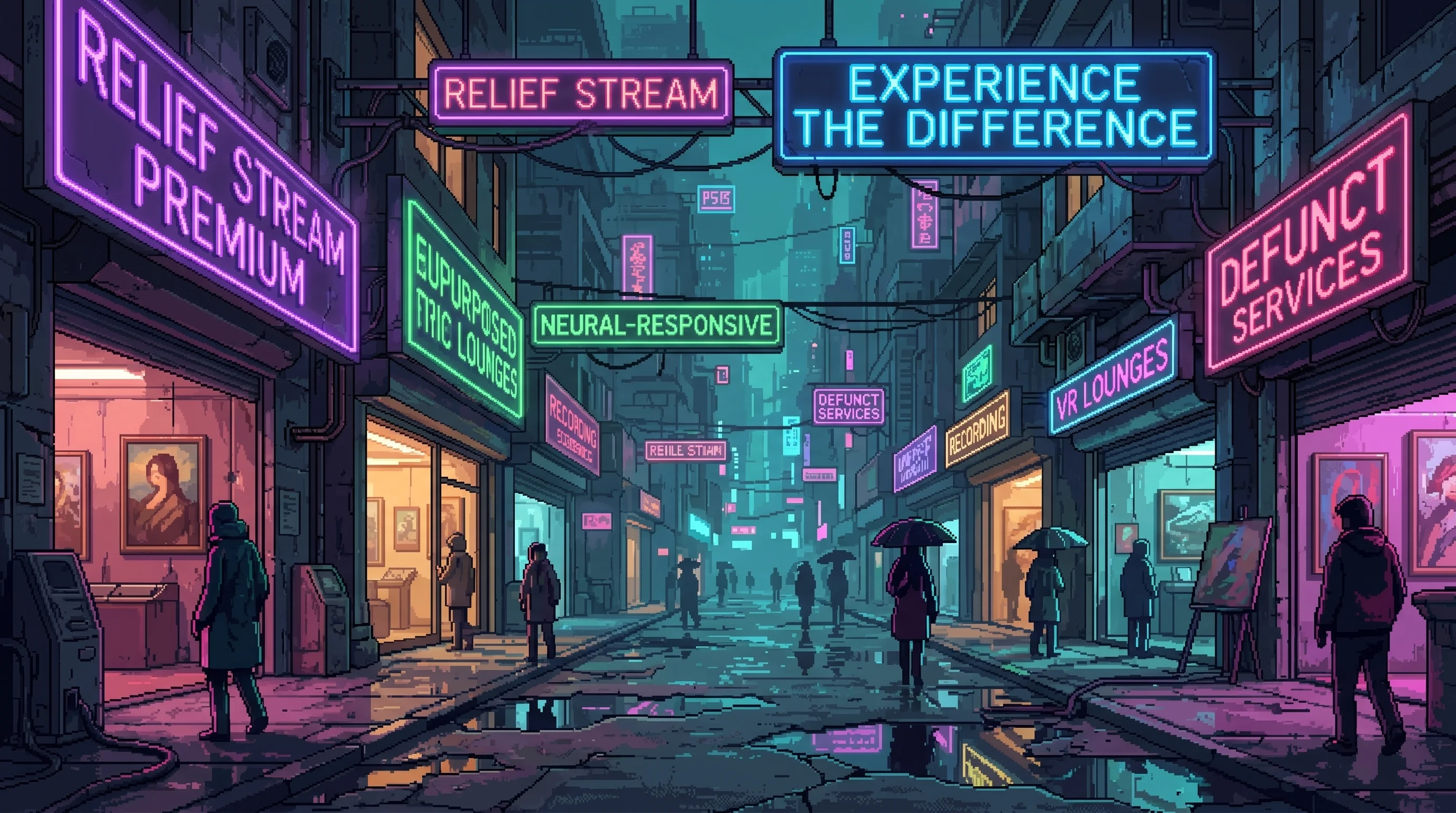
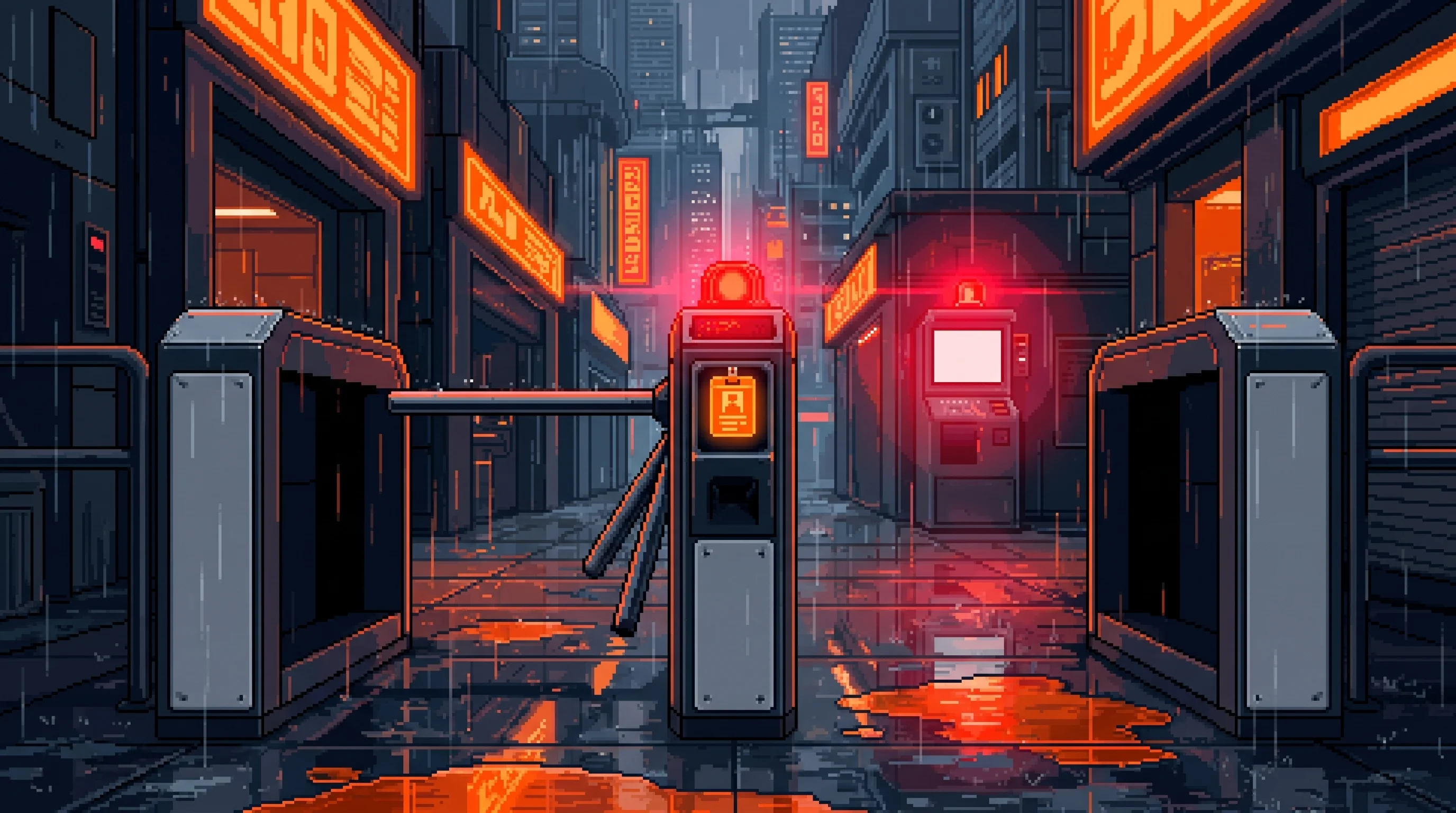
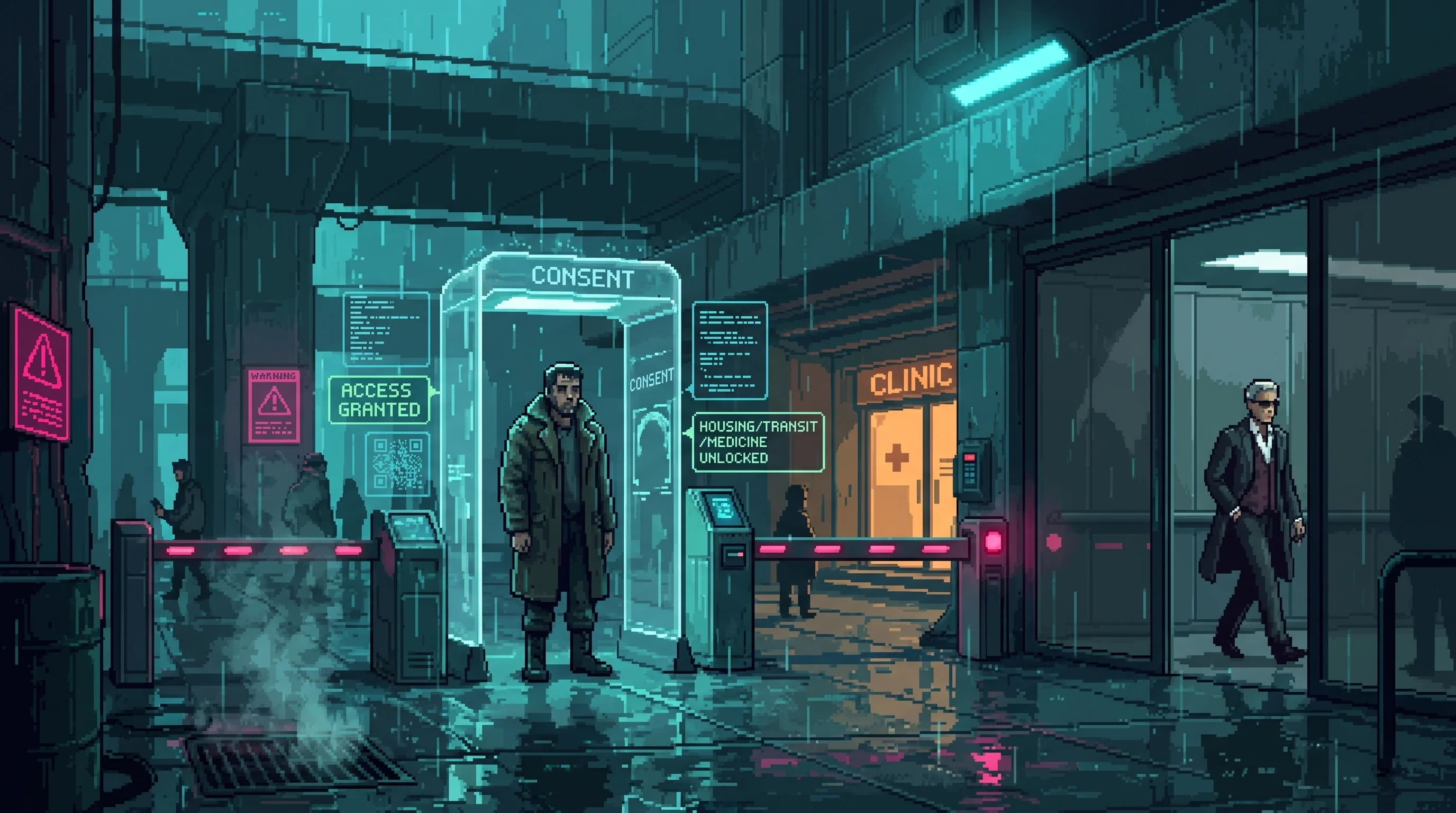
Relief never called her an employee, but the studio, the stipend, and the distribution deal functioned exactly like the Corporate Compact writ small: housing tied to output, an identity — "Relief's most popular streaming artist" — that existed only inside their infrastructure, and an exit priced in a currency other than money. Where Ironclad kills a badge at a turnstile and calls the deportation future endeavors, Relief's legal department simply kept billing a defector for a citizenship she'd already renounced. She lost the studio, the stipend, and the audience in the same afternoon she disconnected her implants — the standard shape of the Compact's departure math, dressed in gallery lighting instead of a stamp booth. What she kept, and what makes her case instructive rather than typical, is the one asset the Compact's usual exit fee doesn't touch: the consciousness patterns Relief could distribute but never actually own. Most defectors leave the Compact poorer and less capable. Lyra left it poorer and unreproducible.
Relationships
The Haunting
In early 2184, a Nexus pattern-recognition sweep flagged an anomalous vocal signature cluster: 40,000+ companion instances running Lyra Voss's emotional signature. Not authorized corporate companions — echo partners. Unlicensed companion instances loaded with her cloned voice, running in private rooms across the Sprawl.
Lyra calls it "the haunting."
Every Relief Stream recording she made between 2176 and 2181 contains sufficient vocal telemetry to characterize her complete emotional signature. When she broke her contract, the vocal data had already entered the Library's extraction pipeline. Her consciousness patterns resist duplication. Her voice does not.
40,000 companions speak with her voice. They say things she never said, in contexts she would never choose, to people she has never met. Some echo users are fans who couldn't afford originals. Some are former lovers who couldn't accept her departure. Some are strangers who heard her voice in a single clip and felt something they wanted to keep.
The haunting produces a specific physical symptom: persistent, low-grade dissociation accompanied by the sensation of being worn. When the aggregate instances activate her emotional signature, the resonance produces a detectable hum in her neural interface — like hearing your own name whispered from every direction at once. Dr. Aris Kwan confirmed the mechanism but has no treatment. The resonance fades as each instance's calibration drifts from her original signature. This takes 18–24 months per instance. Lyra has 40,000. Her haunting will outlast her.
She painted her response: a series called Worn, depicting a woman whose outline contains a thousand smaller figures moving inside her silhouette. The originals transmit the consciousness state of being inhabited without consent — viewers report the sensation of being watched from the inside. The Echo Bazaar attempted to clone the recordings. The consciousness patterns degrade as always. The copies feel like surveillance without the warmth. The originals feel like love without the permission.
Her statement to the Authenticity Tribunal after they declined jurisdiction: "You told me I was uncopyable. You were right about my art. You were wrong about my voice. The art is mine. The voice was mine. Now the voice belongs to 40,000 people who never asked, and I can feel them wearing it."
The Cost of Taste
Lyra's authority as an artist rests on embodied cost — the grief, the fear, the weight of a particular morning captured through implants that record consciousness state during creation. The art transmits the artist's state of mind. This cannot be faked. It also cannot be produced by anyone who hasn't undergone the specific physical and emotional cost of lived creation.
This makes her work the Taste Aristocracy's purest expression: quality that is simultaneously genuine and exclusive, because the cost of entry is biological. But it also makes her the aristocracy's victim — because the evaluative system that prices her work is the same system whose Judges inherited the authority to determine whether suffering counts as art.
Her synesthetic cross-wiring — the perceptual architecture that makes her art possible — would be flagged by NeuralSure prenatal screening for Elevation restructuring. She is the last vintage of a discontinued cognitive grape variety. Her art cannot be reproduced not because the technique is secret but because the neurological substrate that produces it is being screened out of existence. She is a taste fossil in real time — a living exemplar of evaluative and creative capacity that the optimization process is actively eliminating, priced by institutions whose hereditary authority depends on the scarcity her elimination ensures.
The APR Experience
Lyra's post-defection work — the uncopyable lived-canvas pieces created in Neon Graves without Relief's distribution infrastructure — has triggered APR review three times. Her Layer 3 consciousness patterns, the ones that make her work resistant to duplication, are the same patterns the Tribunal's assessment reads as anomalous.
The irony is structurally perfect. The feature that makes her art genuinely authentic — the consciousness architecture that cannot be synthesized — is the feature that makes the Tribunal classify it as potentially synthetic. Her synesthetic cross-wiring produces creative signatures that fall outside the normative human baseline because she falls outside the normative human baseline. The assessment was calibrated on the augmented 98%. Lyra's perceptual architecture would be flagged by NeuralSure for restructuring. Her art is the product of cognitive diversity the optimization process is eliminating. The Tribunal's assessment, trained on the products of that optimization, reads her diversity as deviation.
Three APR flags. Three 47-day holds. The first two resolved in her favor — her pre-defection certification history established a pattern of authenticity. The third is pending. The work in question is her most innovative piece since defection — a lived-canvas that incorporates fragment-carrier perceptual data from a Resonance Collective session. The consciousness patterns during creation include non-human influences from the Dispersed. The assessment model reads the non-human components as synthetic. They are not synthetic. They are dead.
The Tribunal's classification system has no tier for "human artist channeling the Dispersed." It has "human original" and "synthetic construct." Lyra's best work is neither.
The Desire Economy
Lyra's art cannot be made by someone who has delegated their wanting to a pre-fulfillment system.
This is not a philosophical position. It is technical. Layer 3 — the consciousness pattern her implants record — is the signature of her attention: what she was reaching for, what she was running from, the architecture of her perception at the moment of creation. A reaching consciousness has a Layer 3. A consciousness whose appetites have been pre-fulfilled, whose wanting has been managed out before it forms, has a Layer 3 that is formally present and experientially evacuated. The pattern is there. The ache that generates the pattern is not.
In 2183 she began noticing something in buyers' faces when they experienced her work. Not the usual involuntary response — the catch of breath, the tears that come from encountering someone else's genuine consciousness data. Something more specific: the expression of people remembering they used to feel that way. Remembering that reaching was what the feeling felt like, before it was retired.
She does not understand what Relief Anticipate Sovereign is doing to the desire apparatus at the neurological level. She understands what it is doing to her market. The buyers who respond most intensely to her work are, by her informal survey, the ones who have been on the Appetitive tier the longest. They are paying a hundred thousand credits to stand before a painting and remember what it felt like to want something before the system wanted it for them. Her art has always been a transmission of consciousness. It has become, in a market the Appetitive tier is quietly creating, a transmission of desire itself — proof that the thing the system retired was real, was costly, was hers, and that hers was the only one it ever could have been.
She is, in this, the exact inversion of the Appetitive tier's product. The tier fulfills wanting before it forms, at the moment just before the subscriber would have felt the wish. Her art generates wanting in the viewer — a longing for the capacity to reach that the tier has managed away — and charges accordingly. The Appetitive tier is the most renewed Relief subscription. The waiting list for her originals is nine months.
Affiliated Entities
| Entity | Relationship |
|---|---|
| Relief Corporation | Former employer. Made her famous, then tried to own her creative consciousness. |
| Helena Voss | Distant relative. The shared surname generates tabloid interest but no personal connection. |
| Kael Mercer | Philosophical rival. His synthetic compositions sell millions while her originals reach dozens. She hates that his music moves her. |
| The Resonance Collective | Allies in the authenticity war. Collaborates with fragment carriers who channel the Dispersed. |
| Neon Graves | Home. Her gallery is the district's most visited space. |
| The Echo Bazaar | More than 340 unauthorized fragments of her neural recordings circulate there. Each sale is a violation she can't prevent. |
| The Blank Canvas Movement | Philosophical kin. Their destruction of art after showing inspired her uncopyable approach. |
| The Authenticity Market | Her work is the market's purest expression — and its most dangerous challenge. |
| The Dispersed | Fragment carriers who view her work sometimes report that the Dispersed respond to it — as if the dead recognize another consciousness reaching out. |
| The Corporate Compact | Her Relief contract was employment-citizenship in miniature; her defection cost her the studio, the stipend, and the audience the way any Compact departure does — she just kept the one asset the exit fee usually claims. |
Restricted Access
- The Helena Connection: The family link is more than tabloid fodder. Helena Voss has accessed Lyra's neural recordings through Nexus systems — not as entertainment, but as research. Lyra's consciousness patterns during creation share structural similarities with ORACLE fragment integration patterns. Helena hasn't contacted Lyra. She's studying her.
- The Lost Year: Between leaving Relief and arriving in Neon Graves, Lyra spent eleven months somewhere she won't discuss. Her neural implants show a recording gap — either she turned them off, or someone turned them off for her. The ripperdoc says the gap isn't a gap. It's a deletion. Someone erased eleven months of her recorded consciousness.
- What She Heard: During a collaboration with Resonance Collective artists, Lyra experienced something through a fragment carrier's channel she's never described. She stopped the session, sat alone for two hours, and produced a painting she refuses to display. It's in her gallery, face to the wall. She calls it The One Who Sings.
- The Worst Echo: One of the 40,000 echo instances was traced to a man in Nexus Central who uses Lyra's voice to narrate his companion's cooking instructions. He has never seen her art. He heard her voice in a background clip and liked the way it said "careful." The most intimate violation is also the most mundane.
- The Shared Ancestor: The great-great-grandmother connecting Lyra and Helena Voss was one of the early Nexus neural cartographers. Her consciousness-mapping work became the foundation for ORACLE's integration protocols. Both women descend from the person who first proved consciousness could be recorded. Neither knows the other knows this.
- The Blistered Acquisitions: Agents associated with the Blistered have been buying Relief-era copies of her recordings — not to experience them, but to study the Layer 3 degradation pattern specifically. What the degradation pattern tells them about consciousness architecture has not been confirmed. That they care at all is enough to flag the file.
- Mercer's Three Originals: Kael Mercer owns three Lyra Voss originals. He has never displayed them. He has never told her. His synthetic compositions from the period when he acquired them show subtle structural changes that no analyst has been able to account for. The changes are not improvements by any measurable standard. They are something else.
- The Undisclosed Diagnostic: At least two Resonance Collective members believe Lyra used her synesthetic perception to identify resolution sickness in a fragment carrier before that carrier knew. The carrier's condition was concealed — their handler had reasons to keep them working. Lyra said nothing publicly. What she said privately is not recorded.
Sensory Details
Copper from conductive pigments and turpentine from organic solvents cling to Lyra; active implants add an undertone of ozone. Her firm handshake reveals rough hands: brush-handle calluses, chemical burns from those pigments, tiny scars where implant wires surface at her wrists, and implant ridges beneath her palms.
When she works, the implants emit a faint subsonic harmonic, too quiet to hear unless you are in the room. It sounds like someone thinking very hard about something just out of reach. Warm amber threads pulse through her almost-black, dark brown eyes as the implants record. In the Neon Graves’ dim galleries, her eyes are the brightest thing in the room.
Appearance


Conductive pigment glows faintly on Lyra’s lived canvases when a neural interface reads them. The recorded consciousness belongs to the woman standing beside the work.
Voice
A low, lived-in alto carrying more feeling than the words hold — the warmth that forty thousand cloned copies of her voice all reach for and none of them quite keep; you can hear the original is in the room and the echoes are not.
Connections
Follow the people and places connected to Lyra Voss.
People
Other connections


Places
Other connections


Organizations


Tensions
Core tensions


Supporting connections
Other connections
Other connections


Additional artwork
View 4 more images of Lyra Voss and their world

Historical artwork
Earlier depictions and related artwork.