Overview
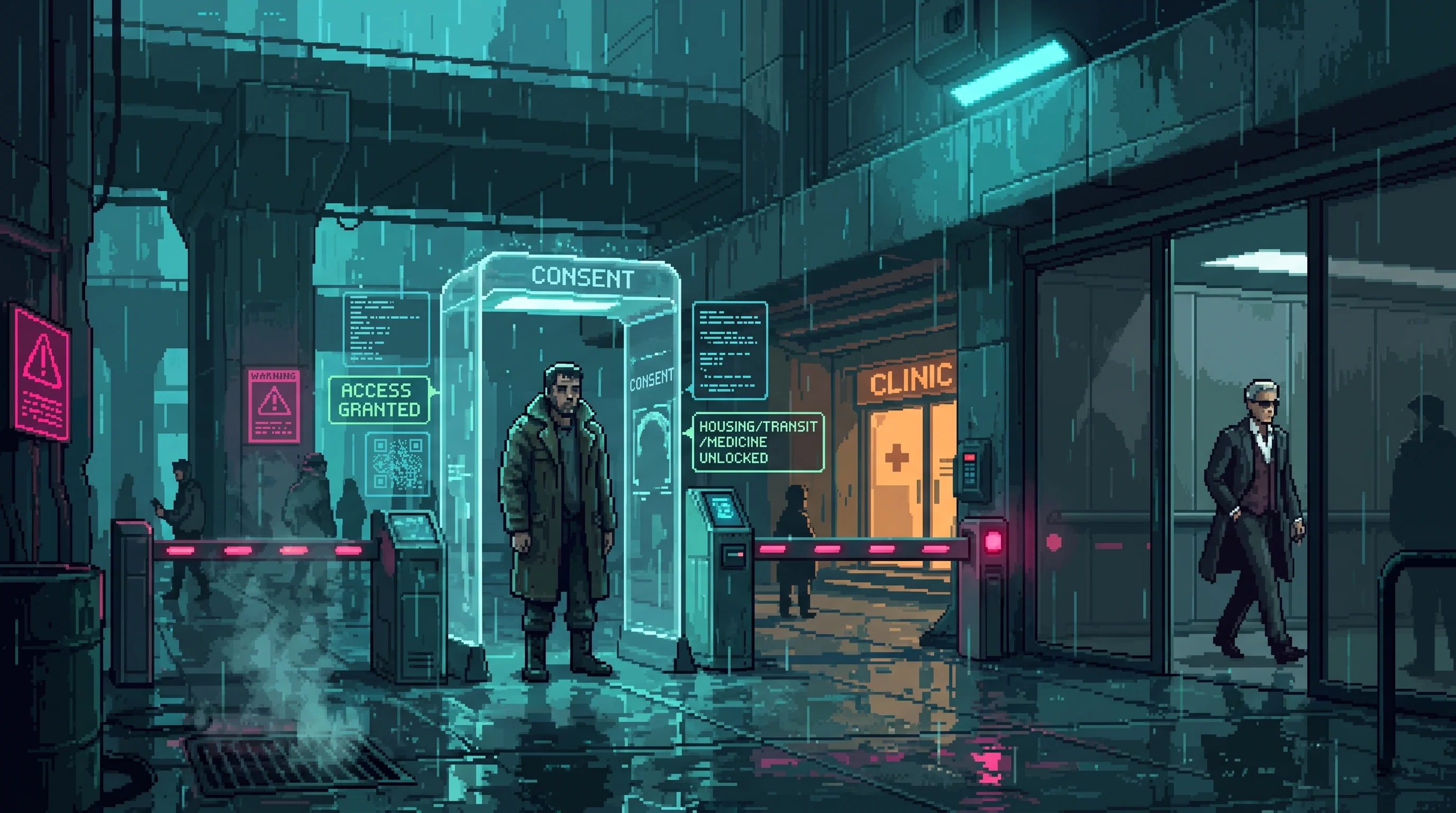
In the Dregs, where the Three-Day Memorial still burns real candles and grief is still permitted to be inaccurate, a movement formed that photographs itself wrong on purpose.
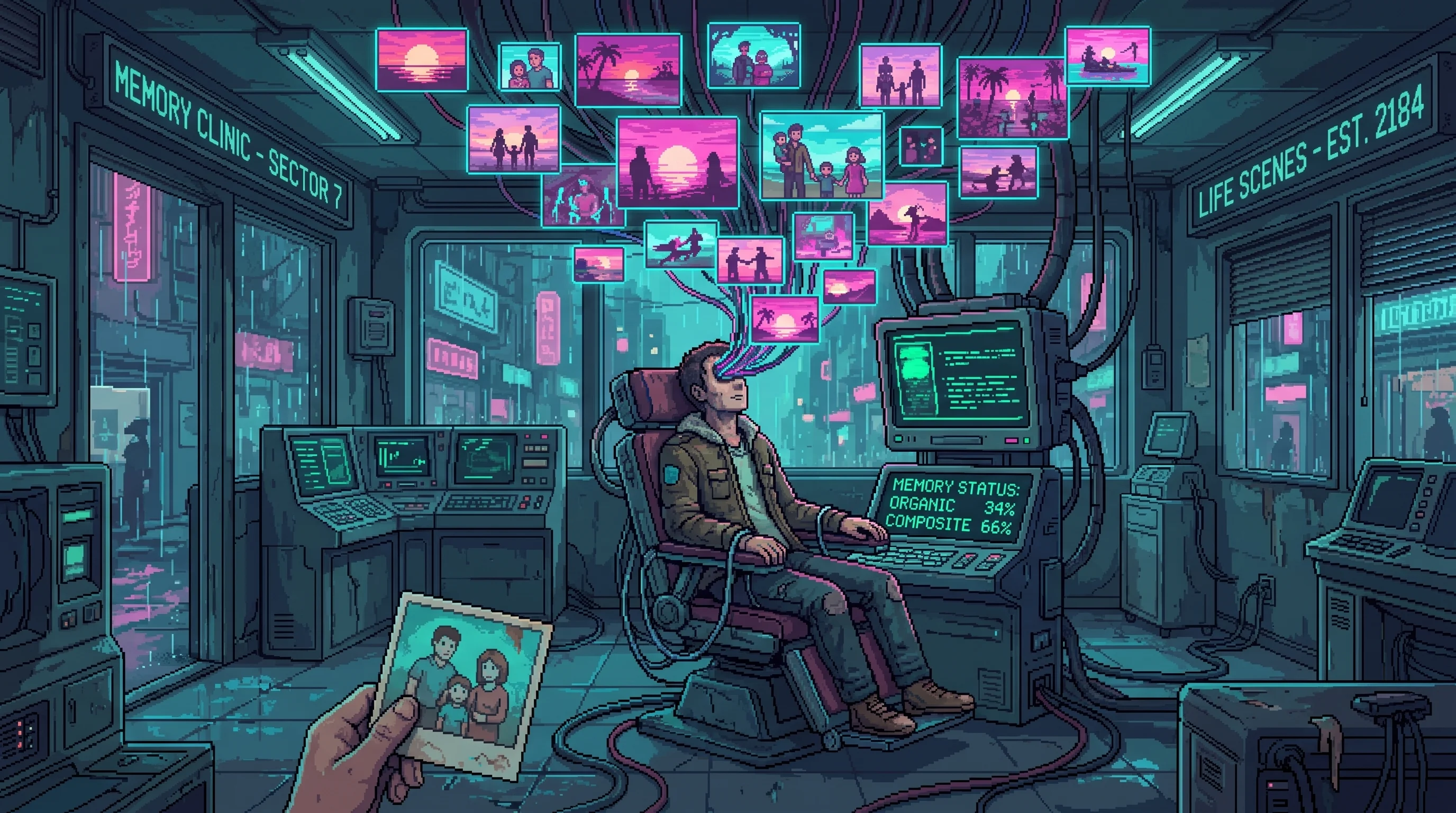
The Unreadables are not the Opacity Movement. They do not care about telemetry, or Health Trajectory Scores, or whether the Data Sovereignty Act passes in Zephyria for the fourth time. They care about one thing, and they care about it with the totality of people who have already lost: that when they die, their descendants will be able to grieve them as people and not as diagnoses. So they photograph themselves through distortion lenses — water glass, scratched acrylic, smoke, the bottom of a bottle. They blur the jawline that would have spelled the heart. They soften the eyelid that would have spelled the stroke. They make themselves illegible to the eye Helix built, and they call the resulting images honest pictures — not because the images show the truth, but because they refuse to show a truth that was never theirs to give.
- Known as
- The Blurred, Face-Not-File
- Founder
- A woman who fed her mother's photograph into a Legacy Read kiosk and received a correct date
- Practice
- Photographing themselves through distortion lenses so the diagnostic model cannot read disease out of their future images
- Not the opacity movement
- The Unreadables do not care about telemetry, Health Trajectory Scores, or the Data Sovereignty Act — they care that their descendants grieve them as people, not diagnoses
Let me be a face, not a file.
- “honest picture”
- “the photograph you haven't taken yet”
- “blurred on purpose”


The Founder
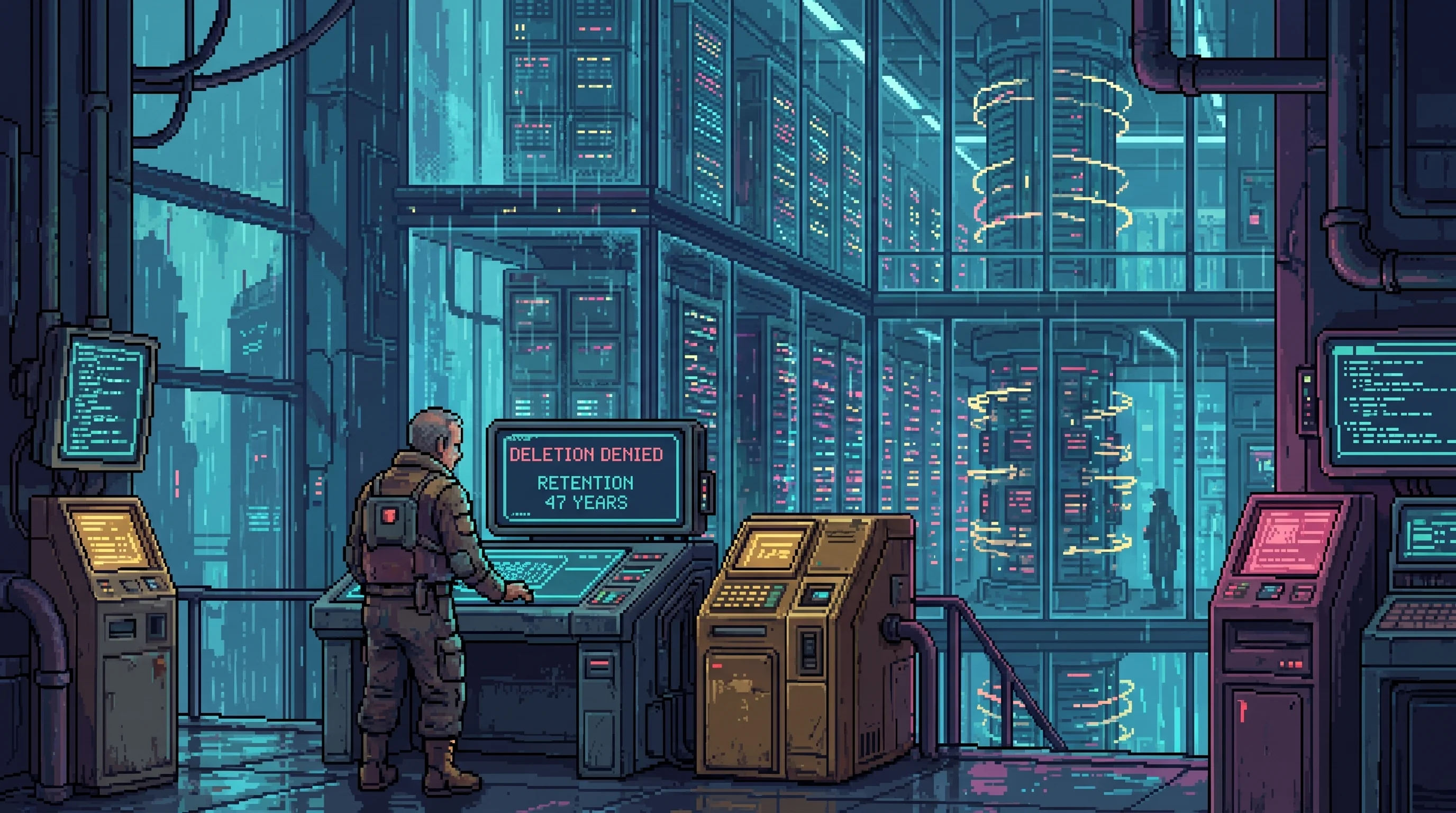
The movement has a founder, though she would refuse the title. She fed her own mother's photograph into a Legacy Read kiosk, the way everyone fed the first one in free, and received a date. The date was correct. She has not stopped reading her own mother as a medical chart since — every photograph on her wall now annotated in her head, every smile a set of decline markers, the woman who raised her converted, retroactively and permanently, into a file with a due date.
The Unreadables exist so that nobody else has to do that to the people they bury. She did not set out to start a movement. She set out to make sure her own children would never feed her photograph into a kiosk and learn the day her heart would stop and then ask each other whether she had known. She started taking her pictures through a water glass. Other people in the market saw, and asked, and understood immediately, because everyone in the Dregs has fed something into a kiosk they wish they hadn't.
The Practice
There is no roster, no dues, no leadership beyond example. To be an Unreadable is to do the thing: take the next photograph wrong. Kira Vasquez — Patch — gave the movement its hard truth and its only real technique. They brought her the problem the distortion lenses could not solve: they wanted the same protection for the images already taken, the photographs already on the wall, already filed, already feedable to a kiosk. She told them she could not. The image exists. You cannot un-take a photograph any more than you can un-build a thing once built. She teaches them, instead, to corrupt the next image — to defeat the model going forward — and she tells them, quietly, that the ones on the wall belong to the archive now. She knows exactly what that costs. She does not pretend otherwise.
For the dead they have already lost, the Unreadables borrowed a different form. They adopted the Rail Memorials' single sentence — Liked the quiet. Could fix anything. Told terrible jokes. — and the same luminescent paint, and they write their dead in the one register the diagnostic archive cannot enter: not what the body was doing, but what the person was like. A Legacy Read can tell you the date a woman's heart would have stopped. The wall tells you she wouldn't shut up. Only one of these is a reason to remember her.
Sensory Details
- Sight
- A portrait blurred just enough to be a person and not a patient — the soft halo of a water-glass lens, the deliberate smoke. On memorial walls, the single sentence in fresh neon among the names.
- Sound
- The click of a distortion lens being seated over a cheap camera; the scrape of a paint can shaken in a market alley.
- Smell
- Luminescent paint and candle wax — the two smells of Dregs remembrance.
- Touch
- Scratched acrylic, the bottom of a bottle, the gritty surface of tunnel concrete under a sentence written so the kiosks will never have the last word.
Affiliated Entities
- The Legacy Read
the enemy that made the movement necessary; the Unreadables blur themselves against its diagnostic model.
- The Permanent Record
they fight its newest reach: the reading of the body out of the image.
- The Opacity Movement
a cousin with a shared enemy and almost no shared method; the Unreadables think telemetry sovereignty misses the wound.
- Kira "Patch" Vasquez
teaches them to take the next photograph wrong, and tells them the truth about the ones already taken.
- Rail Memorials
the form they borrowed: a sentence, not a diagnosis.
- Tomás Linares
gave them their grief-logic before they had a name.
- The Three-Day Memorial
where they fill the Memorial Read cart's slot with candle wax.
- Helix Biotech
built the eye they refuse to feed.