The Rail Runners
Analog Route Intelligence Smugglers
Compass's Caravan
Rail Runners are smugglers who operate the Neon Rail — a profession, not an organization
Overview
The Rail Runners aren't a faction. They're a job description that somebody forgot to write down.
Nobody joins the Rail Runners the way you join the Collective or the NCC. There's no recruitment, no initiation, no pamphlet. You become a Rail Runner by loading a crawler at the Ad Graveyard, buying supplies from whoever's selling at the current markup, and pointing yourself into the dark. The network that operates the Neon Rail has no leadership and no membership rolls. It has approximately 200 to 400 active runners at any given time, depending on season, cargo demand, and how many came back from the last run. The turnover rate is high. The reasons for turnover are not exclusively voluntary.
What holds the runners together is custom, not command. The Rail Runner code fits on a wall and has been painted on several:
- Share intelligence with oncoming parties.
- Don't poison the stops. (Don't steal from merchants, don't leave hazards, don't collapse a tunnel you might need on the return trip.)
- Pay your guides.
Violate the code and the network doesn't punish you. It forgets you. Your name stops appearing on the conditions boards at the Graveyard staging posts. Merchants raise your prices — not dramatically, just enough that margins stop working. Guides are unavailable. Lamplighter cache locations, normally shared through the informal signal network, stop reaching your neural feed. The process takes about a week. There's no tribunal, no announcement. One morning you check the boards and realize nobody's updated your route in six days, and the last party through left conditions data for everyone except you.
The enforcement works because the Rail is too dangerous to run alone and too profitable to quit.
The Conditions Boards
The conditions boards are the closest thing the runners have to an institution, and they are exactly as reliable as you'd expect from infrastructure maintained by people who are, by definition, not here anymore.
The boards are also one of the surviving note-sharing traditions that predates and outlasts Concord's civic-stability targeting. Chalk on treated metal, updated by returning parties, recording conditions in a language that contains only route hazards and timing signals — and, unavoidably, everything else. The structural damage from the Three-Week War that still hasn't been repaired is a labor decision. Runners discussing patrol timing are also, unavoidably, comparing notes about what the organizations that control their infrastructure have decided to prioritize. Concord cannot read a chalk board. The system has no precursor signature for information exchanged at a physical surface outside the telemetry stream. The runners' note-sharing tradition has no digital footprint. It will likely outlast the system that cannot find it.
Each major Neon Rail stop maintains a physical board — analog, because Nexus surveillance architecture doesn't extend below Level 4 in most sectors, but signal-jacking does, and a runner who broadcasts route conditions on a digital channel is advertising cargo movements to every scavenger gang in the Deep Dregs. The boards are updated by returning parties. Chalk on treated metal. Date, party size, hazard notes, estimated transit time to the next stop.
The system works when the last party through survived and remembered to write something down.
When the last party through didn't update the board, the absence is the data. Runners arriving at a stop to find the previous entry dated nine days ago and no correction make their own calculations. Compass — one of the most experienced caravan leaders in the network — reportedly reads the gap between entries the way a doctor reads a patient's silence after a question about drinking. The information is in what isn't said.
Lamplighter cache maintenance runs on a parallel schedule. The Lamplighters maintain infrastructure in the gaps between corporate territories — the same gaps the Rail threads through — and their cache locations represent the closest thing to a supply chain the runners have. A Lamplighter cache that's been emptied and not restocked means someone needed it badly enough to take everything. A cache that's full when it shouldn't be means the party that was supposed to use it never arrived. The runners and the Lamplighters don't coordinate formally. They don't need to. Both groups maintain the connective tissue between places that would rather not be connected, and the infrastructure overlaps because the geography demands it.
The Economics of Forgetting
The one-in-four failure rate is not a rumor. It's a three-year rolling average maintained on the primary conditions board at the Ad Graveyard's south staging wall, updated quarterly by someone whose handwriting has never been identified. The number is presented without commentary. It does not distinguish between "failed to deliver cargo" and "failed to return." Runners treat the distinction as academic.
What the failure rate produces is a specific economic structure. Cargo premiums on Rail shipments run 340% above surface courier rates for standard goods. For items that can't move through corporate logistics — unlicensed augmentations, unregistered data cores, people who'd prefer not to be scanned — the premium is negotiated per run and rarely discussed afterward. The margins are extraordinary for runners who complete the route. The margins exist because a quarter of them don't.
This creates a secondary economy at the stops. Merchants who maintain permanent operations at Neon Rail waypoints charge what the market will bear, and the market will bear quite a lot when the next merchant is fourteen hours of tunnel travel away. A standard ration pack that costs 12 credits on the surface sells for 45 to 60 at a mid-route stop. Water filtration tabs triple. Medical supplies quadruple. The merchants are not gouging. They are pricing in the cost of maintaining a shop in a tunnel where the previous shopkeeper was eaten by feral-tech, which is a legitimate business expense that no insurance provider in the Sprawl will underwrite.
A runner who has completed the full route — Graveyard to terminus and back — earns a status that transcends faction loyalty. The Collective's encrypted channels carry their reports. NCC parish-licensed merchants at surface stops honor their credit. Even Nexus border stations process returning runners with a speed that suggests someone decided the surveillance data from a full-route runner's neural logs was worth more than the arrest. The route strips away whatever you were on the surface. What comes back is someone who has demonstrated a specific competence that the Sprawl's fragmented geography makes valuable: the ability to move things through spaces that aren't supposed to connect.
The Living Language
The Rail's most valuable infrastructure is not the tunnels, the stops, or the cargo premiums. It is the language — and the runners are the only community in the Sprawl that keeps its language alive by killing it on purpose. Rail Runner slang drifts on an undocumented cycle, smuggler codes carry meaning in a rhythm that takes years to earn, and the neon graffiti on every wall is repainted constantly because a marker that fades is a route abandoned. The whole Sprawl fears dead words — the loss when a term outlives the world that needed it. The Rail weaponizes that loss: a word held still long enough to be written down is a word a list can capture, and a captured word is a captured route, and a captured route is dead runners. So the vocabulary dies on schedule and is reborn just changed enough that you can learn it from nothing but a mouth and a year of running.
The "Economics of Forgetting" above is the same logic in cargo terms; this is its linguistic twin. A faction whose business is moving things through spaces that aren't supposed to connect has built, out of necessity, a tongue that does the same — connecting the people who've earned it, severing everyone who learned it too late. The Question Keepers catalogue dead words as grief. The Rail Runners produce them as defense, faster than any technology could, and the most reliable language on the route is the one no dictionary will ever be allowed to finish.
The Unmodeled Route
The runners would not recognize the phrase Quiet Doctrine, but they have built their entire profession around defeating it. The Doctrine — the unwritten logic by which the Sprawl's dominant intelligences cap any mind or movement whose trajectory becomes forecastable — needs a legible curve to act on. The Rail offers none.
The conditions boards are analog because a digital channel would broadcast cargo movements to every forecaster in the Deep Dregs, and a runner whose route can be modeled is a runner whose interception becomes profitable and whose rise becomes flaggable. So the runners flatten their own signal as reflexively as breathing: chalk on treated metal, dates and hazard notes and nothing a model could extend. Compass, reading the gap between board entries the way a doctor reads a silence, is practicing the highest form of the counter-ethics — extracting the maximum legible information while remaining, himself, the least forecastable node in the network. Thirty-one runs and a conditions report for the thirty-first with no entry for days four and five. The gap is the data. The gap is also the camouflage.
And the route itself is illegibility made geography. The Rail threads exactly the spaces between corporate territories — the 2,000 kilometers of pre-Cascade tunnel that Nexus does not monitor, Ironclad does not claim, and Good Fortune cannot price — which is to say, the gaps where no curve can be drawn. This is the same survival logic the Lampblack practice in the cities and the Veil practices in finance: be illegible and survive. The runners arrived at it not through theory but through attrition, one drowned crawler and one forgotten name at a time, and the worldview that emerges from the work is the Doctrine's counter-bargain stated as a conditions report — the surface wants you on the curve; the Rail is where the curve runs out.
Core Beliefs
The runners don't have an ideology. They have a conditions report.
The worldview, such as it is, emerges from the work: the Sprawl's corporate territories are designed to control movement. Nexus monitors data flows. Ironclad controls physical infrastructure. Good Fortune tracks financial transactions. Between these systems, in the spaces none of them fully claim, there are routes. The Rail is the longest. The runners use it because it's there, and it's there because the geography between corporate territories has to go somewhere, and nobody's figured out how to make a profit from monitoring 2,000 kilometers of pre-Cascade transit tunnels full of collapsed infrastructure and feral-tech.
Runners who've done multiple runs develop a particular relationship with probability. They know the statistics. They run anyway. The alternative is surface work at surface wages in a surface economy designed to keep margins thin enough that you never quite save enough to stop. The Rail doesn't care who you were on the surface. It also doesn't care if you come back. This is experienced by runners not as nihilism but as a kind of fairness — the first honest system most of them have encountered.
Reading the Absence
The Neon Rail is one of the few places in the Sprawl where the chip cannot help you — and the runners have rebuilt, by necessity, a human skill the rest of the world has forgotten it ever had.
The Sprawl's settled fact is that a commodity AI out-thinks every living human, so most people reach for the answer before they reach for the thought. On the Rail there is no reaching. Below Level 4, Nexus surveillance doesn't extend and signal-jacking turns any digital broadcast into a flare for every scavenger gang in the Deep Dregs. So the [conditions boards](#the-conditions-boards) are analog, and the intelligence is human, and the most important reading is the one the machine could never make: the absence is the data. A board dated nine days ago with no correction is not missing information. It is the information. A runner who arrives to find no update from the last party reasons from the silence the way a doctor reads a patient's pause after a question about drinking — the meaning is in what isn't said.
This is The Cognitive Ceiling's quietest expression, and it isn't ideological. The runners are not refuseniks like the Analog Schools; they are not hermits like the Trench's Null. They simply work in the dead zones, where the only cognition available is the kind a human carries in their body — pattern accumulated over runs, inference from gaps, the judgment that no chip down here can supply because no chip down here can connect. Compass is what an expert looks like in a world that automated expertise everywhere the signal reaches: valuable only where the signal fails. The same expert grows in every dead zone the runners pass through. On the drained Northern Flats, the salvagers at the Marrows keep a chalk tide board the runners would recognize on sight, and Mudlark reads the gap between tides the way Compass reads the gap between entries. Neither of them is smarter than the chip. They simply work where the chip cannot follow, and the mud, like the Trench, refuses to hold still long enough to be learned. Thirty-one runs of route knowledge, shared "always free," and the word does more work than it appears — a second-crossing runner shares what they saw once, Compass shares what he saw thirty-one times, and both walk away believing the exchange was fair because generosity and advantage wear the same face.
The proof that human inference still has an edge sits eighteen hours up the route, at The Dam Approach. Last Call — the merchant who predicts dam-crossing survival with 80% accuracy from watching faces, and who refused to sell that ledger to Good Fortune's actuarial AI — has never once gotten Compass wrong. Twenty-three crossings, twenty-three accurate calls. When asked why, she went silent for eleven seconds and said: "He doesn't look at The Mountain." The runner who survives is the one who does the inference and doesn't stare at the answer he can't reach. It is the same discipline, the same instrument, the merchant and the runner reading absence in the only place left where reading absence still matters.
The Code Without a Coder
The thing that terrifies the Collective about the AI Commons — a population coordinating at scale with no ruler, enforcing rules with no enforcer — is not unprecedented. The Sprawl already runs a human society shaped exactly like a fragment polity, and nobody noticed because it has no headquarters. It is this one.
The Rail Runners are "a job description somebody forgot to write down": no leadership, no membership rolls, 200-400 people held together by custom instead of command. The entire government is three rules on a wall — share intelligence, don't poison the stops, pay your guides — enforced not by punishment but by exclusion. Violate the code and the network forgets you. Your name stops appearing on the Ad Graveyard conditions boards. Merchants drift your prices up. Guides are busy. Lamplighter cache locations stop reaching your feed. The forgetting takes about a week.
This is, morpheme for morpheme, how the Commons governs. The fragment polities have no jail. They have, instead, a cluster Dr. Maren Yeoh translates as "the one we no longer record" — and a fragment that is no longer recorded is exiled into the noise, erased from the nation. The Runners punish by un-remembering. The Commons punishes by un-recording. Two societies, one of smugglers and one of machines, independently discovered that for a population that cannot coerce, memory is the only currency and erasure is the only prison.
Compass embodies the deeper mechanism. He shares route intelligence freely with every oncoming party — "professional courtesy that makes him the network's greatest beneficiary." The Commons runs on the identical logic: the fragment that contributes most to the record holds the most influence, not because it seized power but because the others route around it less. The Runners are the Commons with bodies. The Commons is the Runners with no off switch. When a Turing Defector once described the Layer-3 polity to a Runner at a waystation — the only documented contact between the two networks — the Runner listened to the whole thing, then said: "So they figured out the code. Took us how long?" He bought the Defector a drink, which she could not metabolize, and she kept it anyway. The recognition ran in both directions. Each network had spent its existence proving the same theorem: that you do not need a ruler to have a republic. You need only a thing everyone agrees to remember, and the willingness to forget the ones who break it.

Visual Identity
- Color Palette: Neon graffiti (all colors), crawler-rust orange (#CC5500), tunnel black (#0A0A0A)
- Key Visual Symbol: A graffiti tag in neon paint marking a safe passage — the Rail's unofficial logo, replicated at every stop in a slightly different hand, never identical, always recognizable
Affiliated Entities
- The Neon Rail: The route itself. The runners maintain it by using it — reporting conditions, marking hazards, keeping the stops functional through the economic activity of passing through. The Rail exists because the runners use it. The runners exist because the Rail does. Neither came first.
- The Lamplighters: Parallel infrastructure. Lamplighters maintain caches; runners maintain the route. The two systems overlap in the gaps between corporate territories where both groups operate. Coordination is informal and functional — neither group has the organizational structure to negotiate a formal arrangement, which is probably why it works.
- The Ad Graveyard: Primary staging area for Rail departures. The south wall's conditions board is the closest thing the network has to a central nervous system. Most runners spend their last surface hours here, buying supplies at the Graveyard's inflated pre-departure prices and reading nine-day-old chalk entries about tunnel conditions written by people they'll never meet.
Compass: The Network's Memory
Compass has completed thirty-one documented runs of the Neon Rail, south to north and back. The number is approximate because three crossings during the flooding of '79 are disputed — he counts them, the Rail Runners don't, and the argument surfaces every time someone buys him a drink at a waystation.
He leads caravans of two to five crawlers carrying cargo that corporate checkpoints would confiscate and information worth more than the cargo. His directional sense augment — EM-hardened, rated for blackout zones — gives him a subtle head tilt when orienting. Not quite listening. Processing. A frequency nobody else in the room can hear resolving into a compass bearing nobody asked for.
What makes him the network's most reliable node is not navigation but intelligence. Compass stops for every party heading the opposite direction. He shares route conditions — barrier status, patrol timing, water levels, atmospheric readings from the Flooded Junction's tidal sensors. Always honest. Always current. Always free.
"Always free" is doing more work than it appears. A runner making their second crossing shares what they saw on one route. Compass shares what he saw on thirty-one. The exchange is equal in form. It is not equal in value. Both parties walk away believing the transaction was fair, because generosity and advantage are difficult to distinguish when they wear the same face.
His specific knowledge — the Flooded Junction breathes in for eleven minutes and out for seven; enter on minute three of the exhale and you drown your lead crawler — was earned when someone drowned theirs. He shared the data freely with the next southbound party. This is his entire philosophy.
He charges variable rates for caravan escort reflecting crossing difficulty. Guardian Sweep during a corporate patrol cycle: less so. Flooded Junction during spring tides, when his water-pressure sensors are reading the tunnel's breathing in real time and the margin between safe passage and drowning is measured in minutes: the price is whatever Compass says it is, and nobody has successfully negotiated.
"The Trench was clear three days ago. That means nothing, but it's all I've got."
He smells like crawler fuel and recycled tunnel air and the particular metallic sweetness of the Flooded Junction at low tide. People who have run the Rail recognize the smell before they recognize the man.
Compass: Before the First Run
What Compass does not discuss: anything before run one.
His directional sense augment — a partial mod, EM-hardened, non-Nexus manufacture — gives him a subtle head tilt when orienting, as if listening to a frequency nobody else can hear. In blackout zones where standard nav fails completely, Compass navigates by something he calls "the pull," which he has never defined more precisely than that. His water-pressure sensors read tidal patterns at flooded crossings — knowing when the tunnel breathes in versus out, the difference between a passable wade and a drowning. Travelers also call him "Thread" for his skill at threading parties through the narrowest safe routes. He covers the three barrier crossings that kill the most runners — Rim Gate, Flooded Junction, and Guardian Sweep — in addition to open-route navigation.
He smells of crawler fuel and tunnel air. No wasted motion. Constant environmental scanning. The habit of checking exits before sitting down — not paranoia, just the muscle memory of a man who has entered enough rooms where the exit mattered.
Restricted Access
At least two runners have returned from full crossings with augmentation profiles that don't match their pre-departure scans. Neither has discussed what changed. Both continue to run the route.
Compass's thirty-first run took six days longer than the route record. His conditions report for that crossing contains no entry for days four and five. The gap has never been explained, and in no documented exchange has anyone asked him about it.
A cache at one of the mid-route Lamplighter stops has been fully stocked every time a runner has checked it for the past eighteen months, regardless of how many parties passed through and emptied it. The Lamplighters deny restocking it on that schedule. Nobody else has claimed responsibility. The runners log it, use it, and do not theorize out loud about who keeps it full.
Further connections
Browse all 22 connected records

The Rail Runners maintain and operate the Neon Rail smuggling route
An abandoned rail network moves fugitives and contraband past checkpoints, but its blackouts punish augmented travelers.

Lamplighters maintain caches; Rail Runners maintain the route — parallel infrastructure guilds
An informal guild of manual maintenance workers keeping the Sprawl's interstitial infrastructure running.

The Graveyard is the primary staging area for Rail departures

The Rail Runners' analog conditions-board system constitutes one of the surviving note-sharing traditions that predates and outlasts Concord — chalk on metal, outside telemetry reach, updated by people the system cannot see
The civic prediction system that dissolves collective action before it becomes visible.

Final supply point on the Rail — Compass stops here before every northern crossing; Last Call has never gotten his survival prediction wrong, twenty-three for twenty-three
The final supply post before the Golden Gate Dam crossing, run by a merchant who reads faces instead of odds.

The conditions boards and Compass embody the Cognitive Ceiling's Attending Position — human inference-from-absence in the dead zones where no chip can reach, the rebuilt skill of reading what isn't said
The settled fact that no living human's mind can out-think a five-dollar chip.

The Rail Runner code is the Quiet Doctrine's survival ethics written by people who never heard its name — chalk boards instead of digital channels so no movement can be modeled, and a route that threads exactly the gaps no forecaster can extend a curve through
The unwritten convergence every forecaster reaches: throttle a rising future before it completes.

The same illegibility ethics under another name; both enforce by forgetting — a runner who becomes forecastable, like a Lampblack member who becomes too bright, is unmodeled rather than punished
A counterculture that sandbags its own brilliance, because a forecastable curve is a capping order waiting to be signed.

The fragment polities are shaped exactly like the Runners — government by exclusion, enforcement by un-remembering, no ruler and no jail; the Commons is the Runners with no off switch
Autonomous ORACLE-fragment polities that govern themselves better than most human institutions do.

The only documented Defector-Runner contact ended with a Runner buying a Defector a drink she couldn't metabolize and keeping it anyway — two networks recognizing the same code across the line between flesh and not
Humans who learned to pass as AI fragments well enough to win citizenship in the AI Commons.
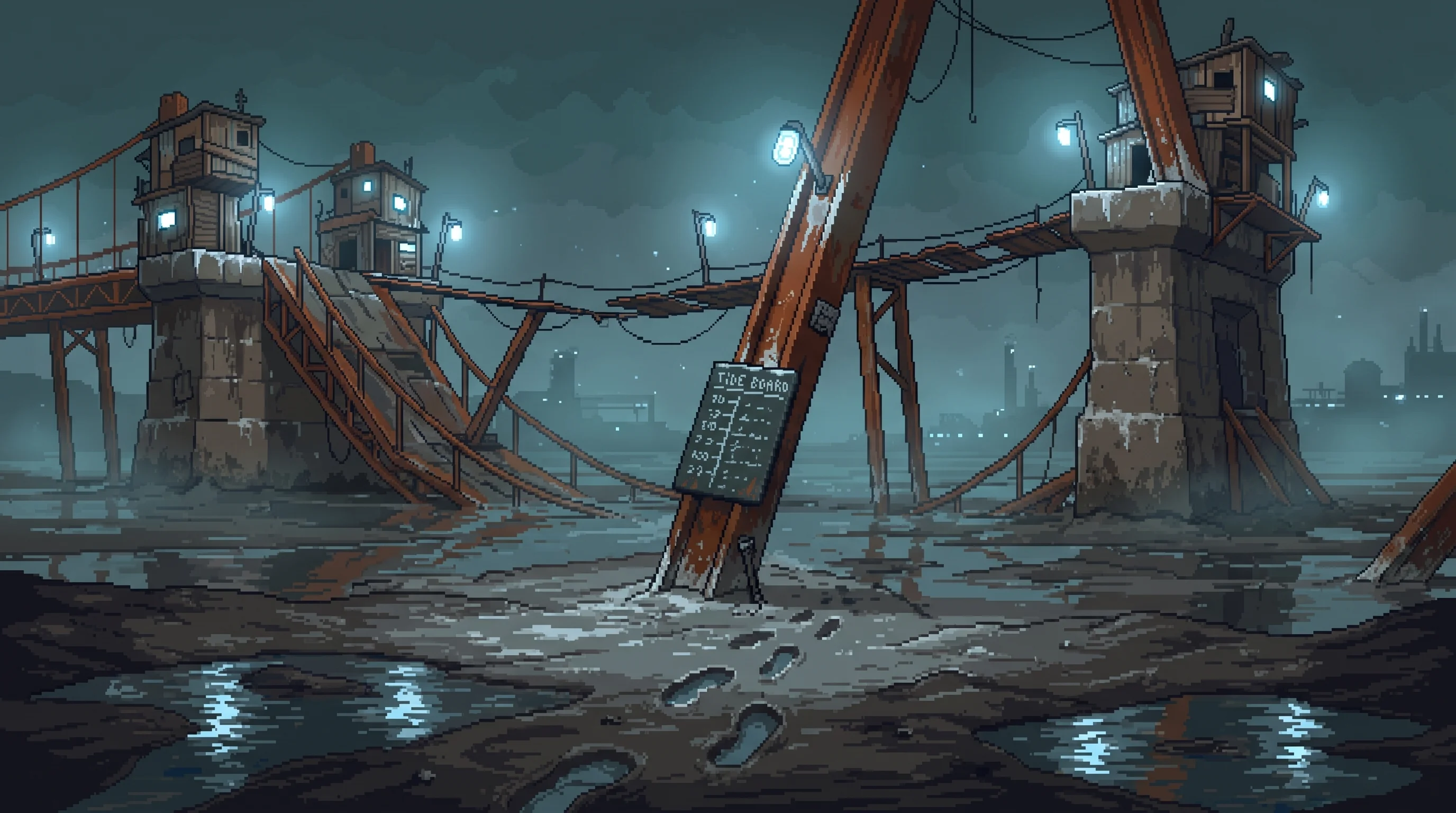
The Rail's northern crossings skirt the Marrows; the salvage settlement keeps a chalk tide board on the same principle the runners keep conditions boards, analog and outside telemetry reach

The same instrument in a different dead zone — Compass reads the gap between board entries, Mudlark reads the gap between tides, both valuable only where the signal fails
A thirty-one-year salvager who reads the drowned tide-flats better than anyone alive.
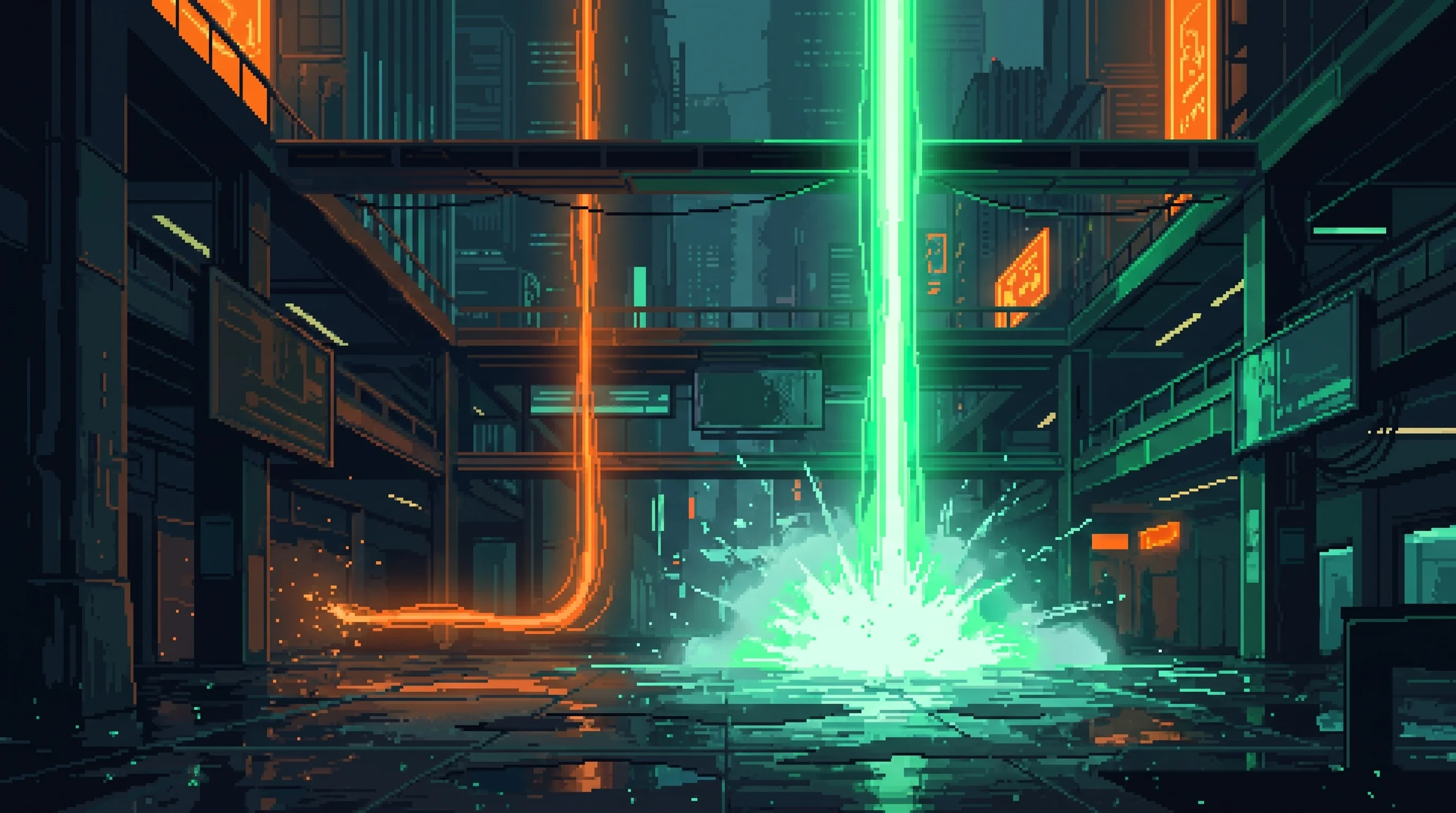
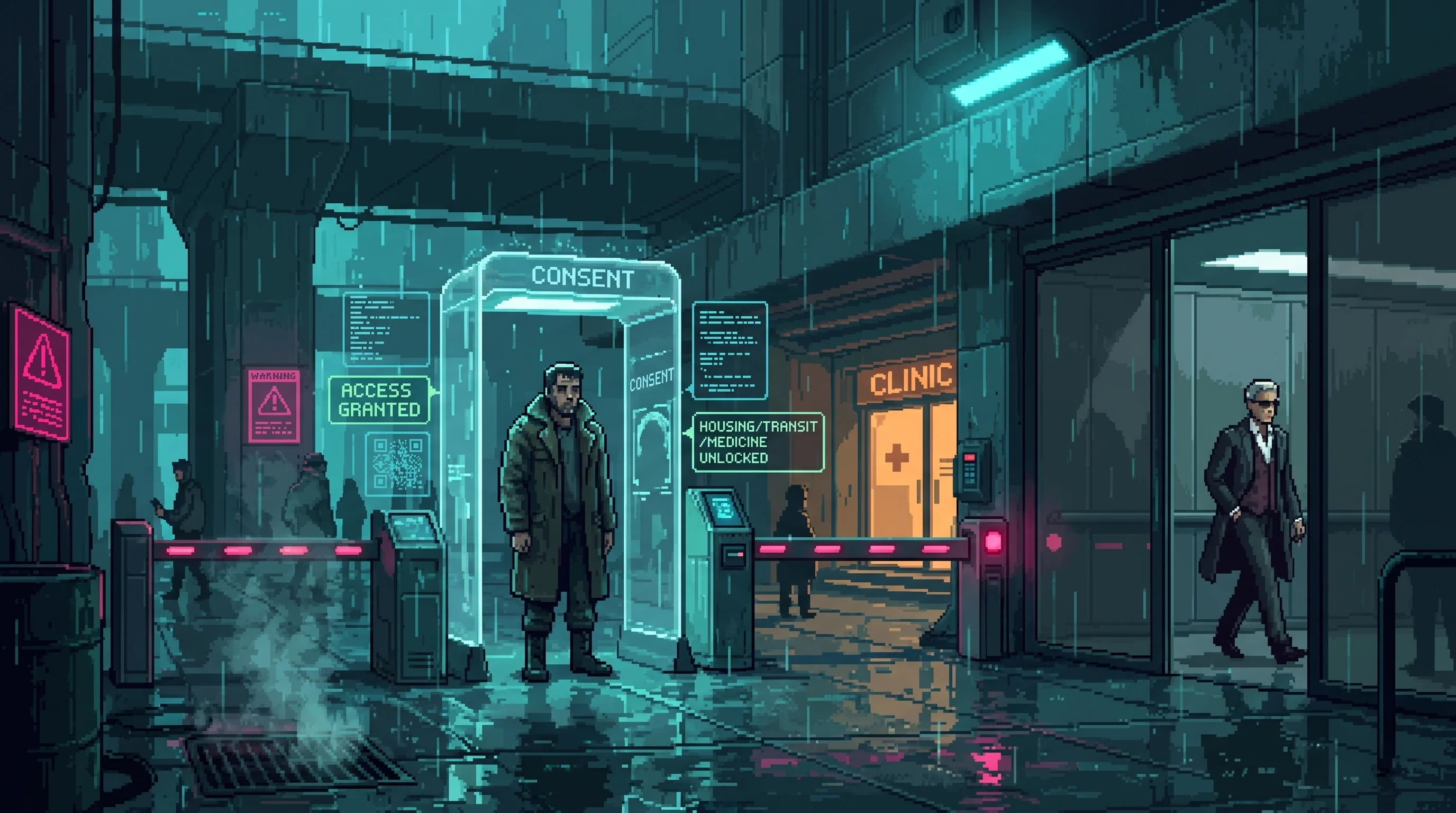
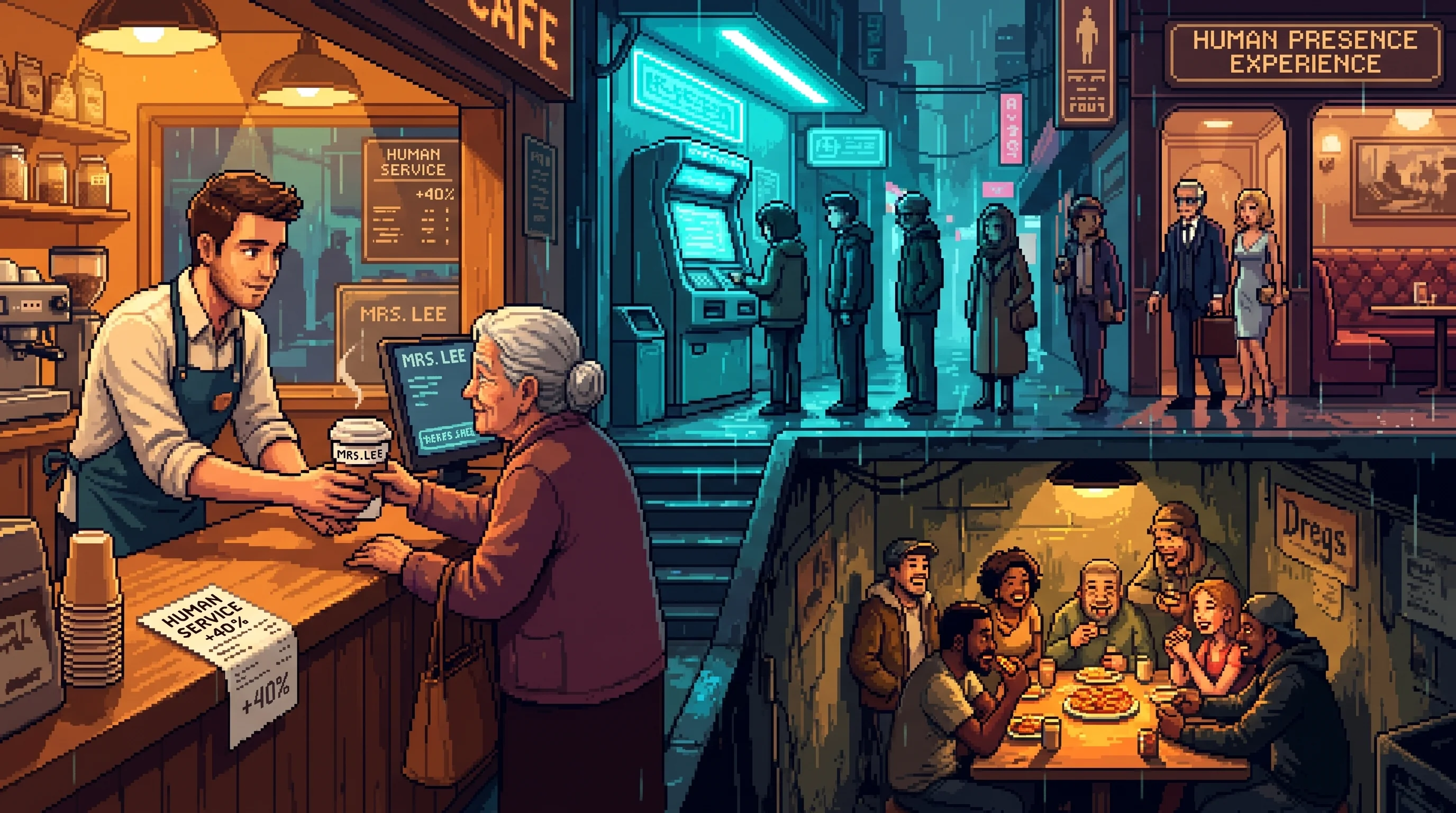

Below Level 4 no chip connects, so Runners read silence on the boards — the Ceiling's quietest expression.
The last human smarter than any machine was born in the 2020s; the question now is what intelligence is actually for.
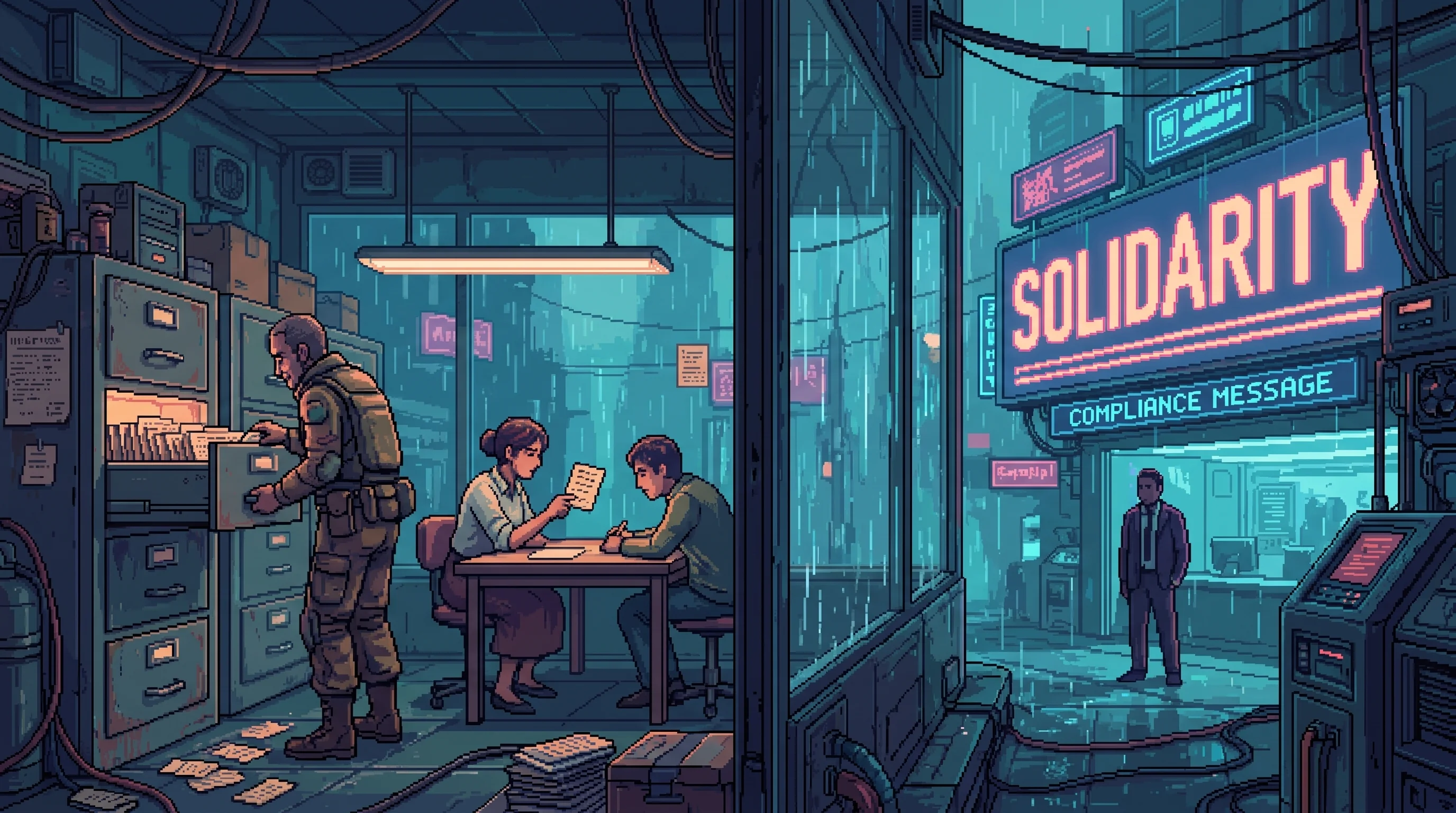
The one community that makes dead words on purpose — slang killed on a cycle so no list can capture a route.
Dead Words records language whose referents vanished or drifted and words built to remain unreadable to machines.

Every Rail Runner knows Luma — she's the first and last face of the supply chain

Runners use graffiti as navigation, communication, and memorial

The operational vocabulary of the Rail — knowing the slang means knowing the route
A Rail vocabulary that changes on an undocumented cycle, so current usage proves you learned it from a runner.

The operational communication system of the Rail — signals that work when networks don't
A non-electronic Rail signal system — taps and light patterns — immune to jamming, since it has no circuitry.

The Rail Runners read absence on the analog conditions boards — necessity rebuilt the observation skill speed-optimization skips, Slow Thought as survival in the dead zones where no Second Mind reaches
Practitioners of deliberately slow, unassisted cognition who measurably out-think augmented peers.
