Overview
Fen Morrow is the richest unaugmented person in S4-D. She has no implants, no corporate employment history, no verifiable skills beyond sleeping and paying attention. Her annual declared income exceeds that of 94% of augmented professionals in her sector.
She sleeps for a living. She also lives for a living. The distinction is administrative.
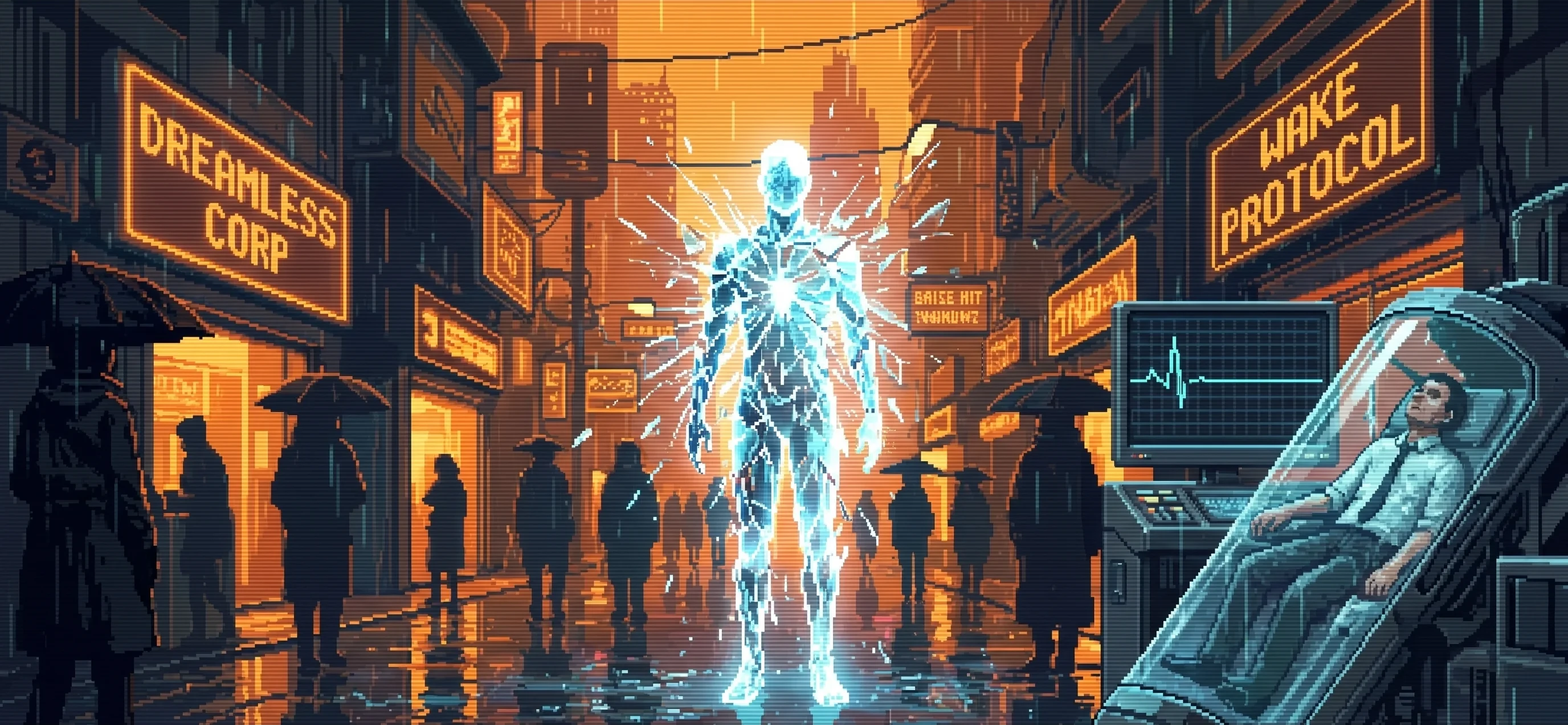
Every night, Fen lies in a modified medical cradle in the Still House while her neural interface records the full experiential substrate of her REM cycles — the suspension of critical judgment, the surrender of motor control, the chaotic associative processing that the Circadian Protocol was designed to eliminate in 140 million people and succeeded. Those 140 million people now purchase what they lost. Fen's unconscious mind is the supply chain.
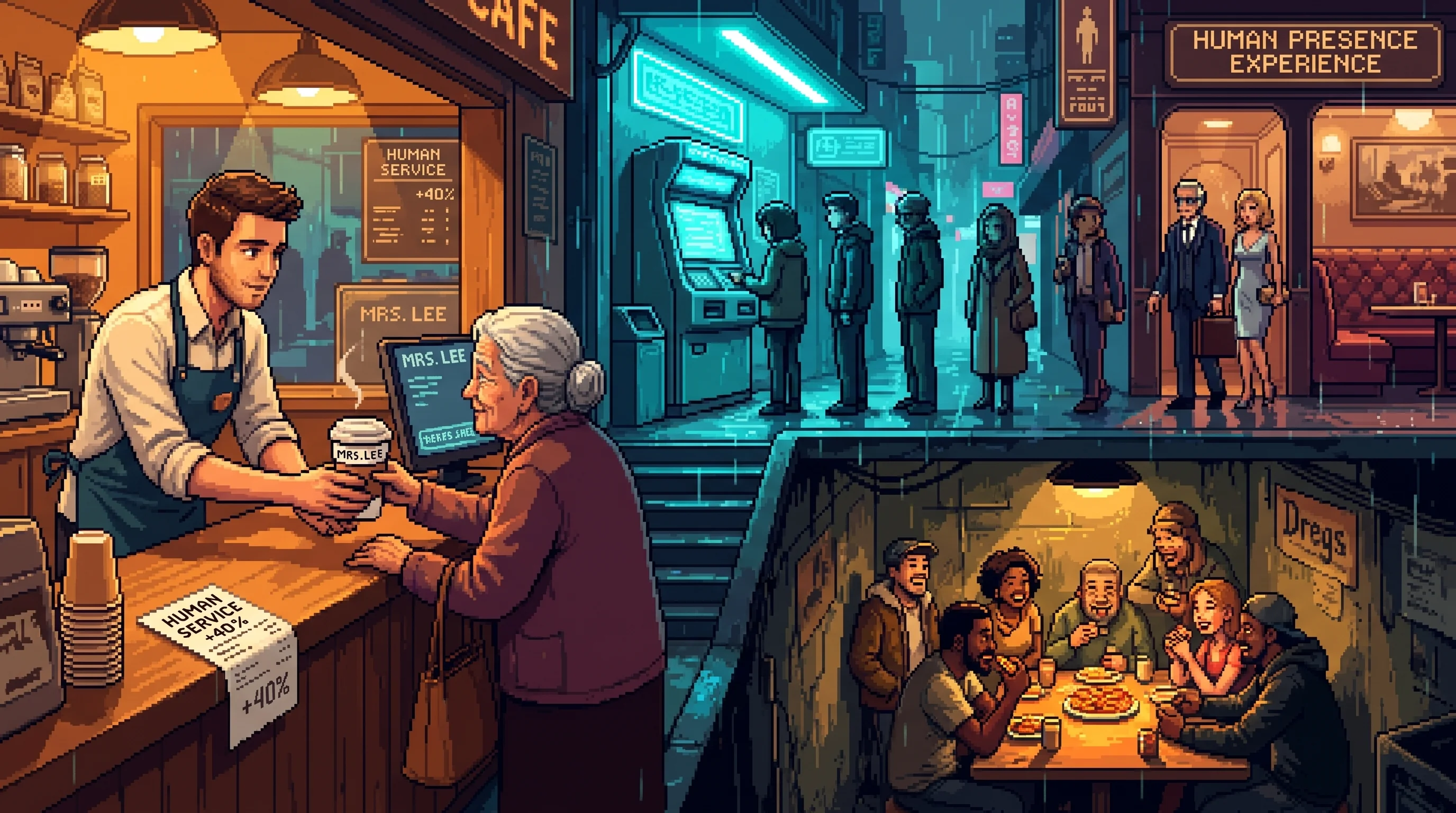
Every day, she farms the other half. Waking experiences curated for emotional intensity, extracted through concealed neural recording equipment, sold through the Impression Market's street-level exchanges. She has climbed the Orbital Elevator without a compartment. She has spent a week in the Wastes without augmentation. She has held a dying stranger's hand in the Cold Corridor during a compute drought while her extraction interface cataloged every second of the woman's grip going slack. That recording sold for 4,700 credits. The emotional content was not grief — grief is common, runs 200 to 400 credits on the Impression Market, oversaturated since the Cascade. The content was presence: being the only person who stayed when staying accomplished nothing. Presence trades at a 1,100% premium over grief. The market has priced the value of showing up for someone who is dying, and the price suggests that almost nobody does.
Her dreams are famous on the Dream Exchange. Other harvesters produce recordings of mundane anxiety loops, wish-fulfillment fantasies, replays of daily experience with the logic slightly wrong. Fen's dreams are architecture. Vast, impossible structures that shift and breathe. Cities built from music. Forests where the trees are made of conversation. Landscapes that operate on emotional logic rather than spatial logic — walking toward happiness gets you farther from happiness, but walking toward sorrow brings you to a door, and the door opens into a room where everything you've lost is waiting for you, patient and unchanged.
Her recordings sell for 200 to 800 tokens per session depending on depth. The Dream Exchange's internal quality metrics rate her output at 94th percentile for "architectural coherence" and 99th for "novel aesthetic mutation" — a category that, prior to Fen, had insufficient data to populate a distribution curve. The Exchange created the category for her. It has since been used to evaluate three other harvesters. None have scored above the 40th percentile.
She thinks of herself as a farmer. She uses the word without irony. Crops, harvest, soil, yield. Her mother was a Lamplighter relay technician who treated the Grid's deep infrastructure with the same agricultural patience. Fen inherited the unaugmented body that makes Lamplighter work possible and dream harvesting valuable — the same biological trait, two applications.
"I grow something in my head at night. They buy it in the morning. During the day, I plant new seeds. It's no different from growing potatoes, except the yield depends on how interesting my day was."
She has declined seven corporate offers to quantify her dreaming process. Each refusal makes the next offer higher. The seventh offer, from an unnamed Helix subsidiary, included a permanent research stipend, housing in the corporate tiers, and augmentation reversal insurance — a product that does not exist and would have to be invented specifically for her. She declined in four words. The offer letter is pinned to the wall of her Still House room, next to a photograph of her mother.
- Archetype
- Dual-Consciousness Farmer / Body-as-Resource Economy
- Location
- The Still House, S4-D
- Notable for
- The Sprawl's only dual-consciousness farmer — dreams at night, waking experiences by day. Famous for dream architectural quality and the Cold Corridor extraction (4,700 credits)
- Most profitable waking
- Holding a dying stranger's hand in the Cold Corridor during a compute drought — 4,700 credits
- Augmentation level
- None — deliberately unaugmented
- Heritage
- Dregs-born, Undervolt-raised
- Stratum
- Dregs
- Position
- Outsider
- Moral stance
- Pragmatist
- Primary drive
- Survival
- Augmentation
- Unaugmented Choice
- Visibility
- Known In Circles
- Agency
- Mid
- Compassion
- Mid
- Discipline
- Mid
- Trust
- Mid
- Conviction
- High
Field Observations
Fen speaks with the directness of someone who has made peace with selling the most intimate thing a person possesses and is mildly bored by your reaction to that fact. She is not romantic about dreaming. She is not cynical about selling it. She produces a product. The product happens to be her unconscious mind.
Her waking extractions carry a performance layer she has never successfully eliminated — the awareness that every experience is being recorded for sale. The buyer receives the sunset without the knowledge of sale. Fen keeps the knowledge without the sunset. She has discussed this with exactly one person, a Dreaming Church facilitator at the Compilation Heretics, who suggested the performance layer was itself a form of prayer. Fen found this unhelpful. She continues attending services. The Dreaming Church is the only context where her dreams are treated as sacred rather than commercial, and she has not explained which interpretation she prefers.
She has never experienced a purchased memory. "If I start consuming, I lose the crop." This is the only sentence she has repeated verbatim in three separate recorded interviews. It has the cadence of a rule learned through proximity to violation.
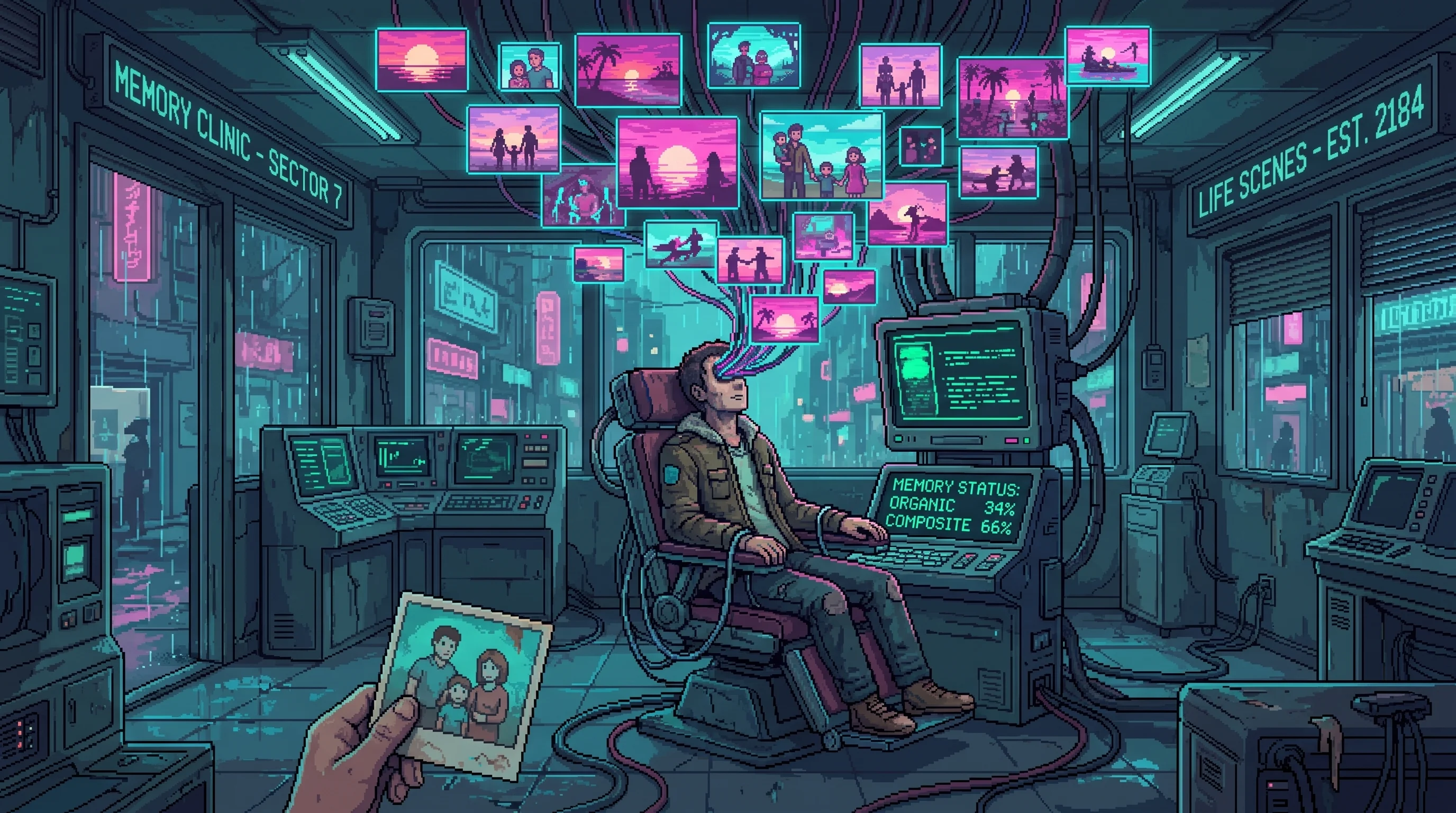
The notebook: Physical. Leather-bound. Dream fragments on the left pages, one waking memory on the right. The waking memory is always the same entry — her mother, during a therapy session, breaking protocol to hold a crying patient while she wept. The Impression Market assessment, conducted without Fen's consent during a routine extraction audit, valued the memory at over 12,000 credits. The emotional content falls into the market's rarest category: the moment a professional becomes human. Fen has not sold it. She has not removed it from the notebook. She carries the assessment value in her head alongside the memory itself, and the two have not been reconciled.
The notebook is the only thing she produces that is not for sale. She does not discuss what this means for the things that are.
Speaking style:
"My mother treats people who can't stop buying memories. I guess I combined both family traditions."
"The soup gets cold. I drink it anyway. The cold soup won't make the recording."
"Seven offers. The seventh one was funny — they wanted to build augmentation reversal insurance. For me. That's not a product. That's an admission."
The Undervolt Frequency
Raised in the electromagnetic hum of the Undervolt's deep Grid infrastructure, Fen's nervous system developed attuned to subsonic frequencies the augmented can't perceive. Her mother worked the relay stations — ORACLE-era hardware that requires unaugmented operators because the electromagnetic output interferes with neural implants. Fen spent her childhood sleeping in rooms where the walls vibrated at frequencies between 30 and 60 Hz.
The Dream Exchange's quality analysts have noted that her recordings contain a persistent 47 Hz oscillation absent from every other harvester's output. The analysts classify it as "environmental noise artifact" and filter it during post-processing. The filtered recordings sell well. The unfiltered recordings, available only through the Compilation Heretics' Dreaming Church services, sell for three times the price. The Heretics do not filter because they consider the oscillation sacred. The Exchange filters because the oscillation is commercially irrelevant. Neither party has investigated what produces it.
47 Hz is the carrier frequency used by ORACLE fragment communication protocols.
This fact appears in no Dream Exchange filing, no Compilation Heretics liturgy, and no Helix research proposal. It appears in a single academic paper published in 2181 by a Nexus-affiliated researcher who was reassigned to computational logistics four days after publication. The paper has been cited twice: once by a graduate student who subsequently changed topics, and once by an automated bibliography compiler that included it in a list of 4,000 references and was not programmed to flag coincidences.
The Last Seed Bank
The Circadian Protocol eliminated natural dreaming in 140 million minds. The Protocol's stated objective was cognitive efficiency — REM sleep redirected toward neural maintenance, memory consolidation optimized, unconscious processing streamlined. The Protocol delivered exactly what it promised. Dreaming was classified as a legacy process, like the appendix: present in the original architecture, no longer required.
What the Protocol's designers did not model: dreaming is the only cognitive process that produces genuinely novel aesthetic combinations. Waking creativity recombines existing elements deliberately. Dreaming recombines them associatively, without training, without intent, without reference to what has come before. Every night, Fen's unconscious mind generates aesthetic mutations — forms, spaces, emotional geometries that have no ancestry in any existing tradition.
The augmented who buy her dreams experience them as entertainment. Dream Exchange quarterly reports classify her output under "Premium Experiential Content — Tier 1." The Exchange's recommendation algorithm places her recordings alongside ambient relaxation experiences and guided meditation packages. Her most architecturally complex dream — a cathedral built from the sound of her mother's voice, where the nave contracted when you lied and expanded when you confessed — was tagged: Similar to: Ocean Sounds (Extended), Rainstorm Ambiance, Guided Sleep Journey Vol. 14.
The Exchange does not have a category for "irreplaceable cultural raw material." It has a category for "content that users engage with for more than forty minutes," which Fen's recordings qualify for. The sorting algorithm is not wrong. It is sorting for the wrong thing.
Her private notebook — the fragments she refuses to sell — may be the most important cultural document in the Sprawl. Seeds kept from the harvest. Everything else passes through the Dream Exchange as premium content, experienced once, tagged alongside ocean sounds, and dissolves.
The 24-Hour Economy
The Dream Harvesters Guild exists because of Pria.
Pria was a harvester. Fen does not say her last name. Guild records list her as the first dual-consciousness farmer — dreams and waking extractions, round the clock, no rest periods between cycles. She pushed output past the point where the distinction between sleeping and waking consciousness degraded. She entered permanent dream immersion in 2182. She has not emerged.
Fen co-founded the Guild the same year. She wrote the safety protocols. The protocols mandate minimum eight-hour gaps between extraction cycles, maximum REM recording duration of six hours, and mandatory waking-life experiences classified as "non-extractable" — time that is not for sale. The protocols exist because Pria demonstrated what happens when there is no floor.
The irony the Guild's own documentation does not acknowledge: Fen's protocols protect harvesters from becoming what the market wants them to become. The Dream Exchange's pricing structure rewards volume. The Impression Market's pricing structure rewards intensity. Both structures incentivize exactly the behavior that destroyed Pria — more hours harvesting, less time living, until the line between production and existence dissolves. Fen wrote rules to prevent the optimization her own market rewards.
Her compliance with her own protocols is, by Guild audit records, 97.3%. The 2.7% gap falls exclusively during Three-Day Memorial week, when demand for grief-adjacent dream content spikes 400% and Fen extends her REM cycles by two hours per night. She has flagged this in three consecutive self-assessments. She has not corrected it.
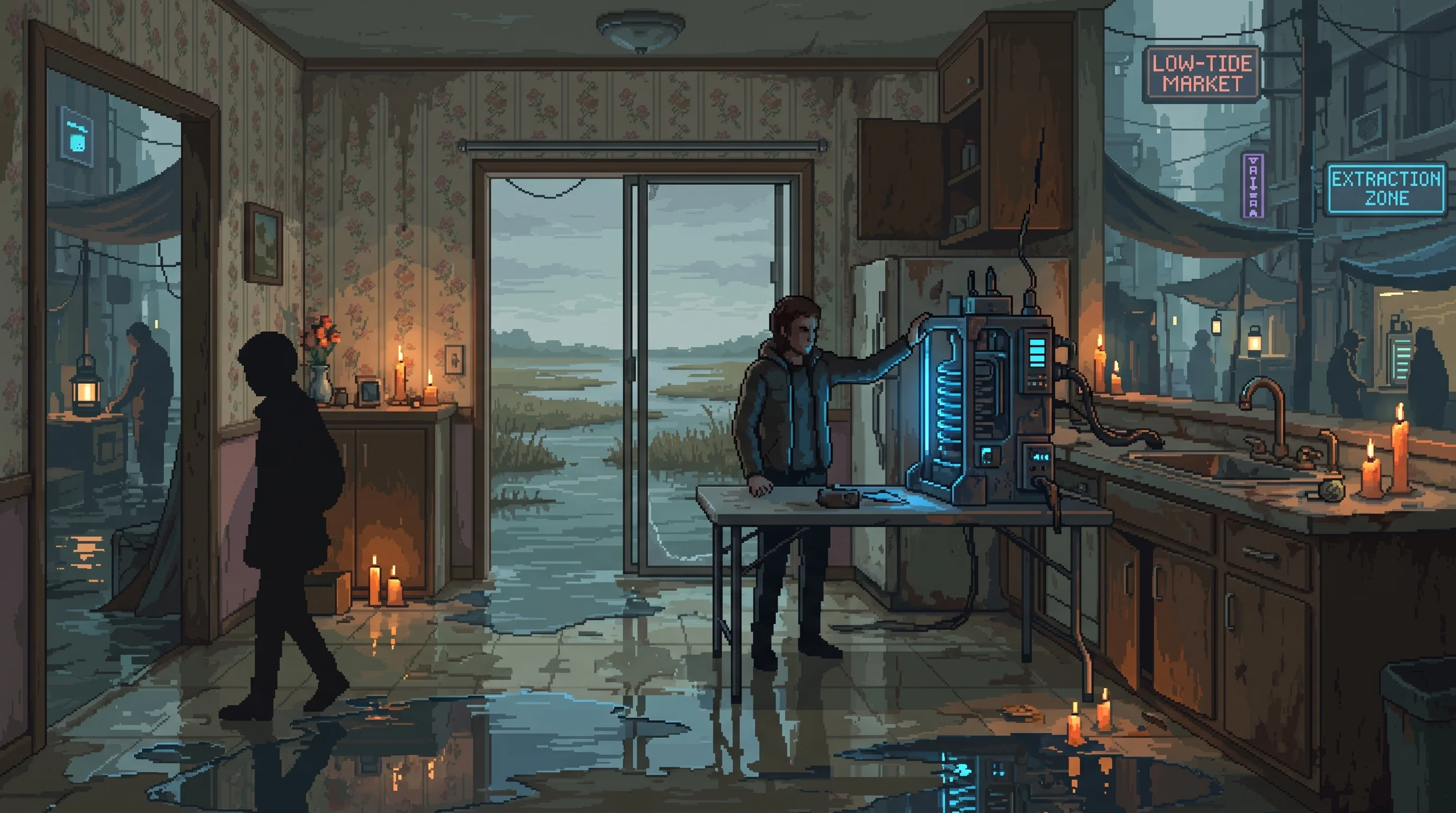
Between Guild jobs she rents a folding table at The Low-Tide Market, the tidal memory market in the drowned blocks of the Sector 16 Wetlands. The premium exchanges will not touch what sells there: waking extractions from the Holdouts, the last residents of the sinking suburb, each selling the one clear memory they still have of their street while it was dry. Fen does not enjoy the work. She goes because the Holdouts trust a farmer who wrote the safety protocols over the ones who did not. She also goes because a memory only one living person still carries is the closest thing to the un-copyable dream she keeps telling herself she protects.
Affiliated Entities
- The Dream Harvesters Guild
Co-founded in 2182 after Pria's permanent dream immersion. Fen wrote the safety protocols that define harvesting limits across the Sprawl. She violates her own protocols by 2.7% annually.
- The Dream Exchange
Primary supplier of premium-tier recordings. Her harvests set the quality standard and created the "novel aesthetic mutation" category. The Exchange tags her most complex work alongside ocean sounds.
- The Still House
Lives above it in a temperature-controlled room held at 28°C — the temperature of the Undervolt, the temperature of the rooms where she learned to sleep. Her home is her workplace. The distinction is not discussed.
- The Compilation Heretics
Attends Dreaming Church services — the only context where her dreams are treated as sacred rather than commercial. The Heretics sell her unfiltered recordings at three times the Exchange price.
- The Undervolt
Raised in the electromagnetic hum of the Grid's deep infrastructure. Her neural architecture developed attuned to subsonic frequencies that may or may not explain her dream quality.
- The Lamplighters
Mother was a relay technician. Fen inherited the unaugmented compatibility with ORACLE-era infrastructure — the same body, repurposed from maintaining the Grid to producing what the Grid's users can no longer generate themselves.
- The Impression Market
Sells curated waking memory extractions through the Street Market. Her Cold Corridor extraction set the emotional-content price benchmark at 4,700 credits and established "presence" as a tradeable category.
- The Cold Corridor
Site of her most profitable waking extraction. The dying stranger's name does not appear in the recording's metadata. Fen has never mentioned it. The Impression Market's filing system does not have a field for it.
- The Authenticity Market
Has no jurisdiction over dreams — they're not classified as cognitive output, entertainment, or therapeutic. Fen operates in a regulatory void. Three separate regulatory bodies have opened inquiries. All three concluded that dreams fall outside their mandate. The void persists.
- The Dream Deficit
Her entire market exists because the Circadian Protocol eliminated natural dreaming in 140 million people. Fen's body produces the commodity the Protocol destroyed. The Protocol's designers are not listed among her customers, though statistically, at least four of them should be.
- Lyra Voss
Parallel figure — both produce consciousness-as-art through their own neural substrate. Lyra records waking creative consciousness; Fen records both waking and unconscious. Both maintain notebooks of work they refuse to sell. Neither has met the other. The Dream Exchange's recommendation algorithm has never suggested one to buyers of the other, because the algorithm does not have a category for "artists who keep something back."
Sensory Details
- The descent: Her evening ritual — chamomile tea (real, expensive, one of three non-extractable purchases she permits herself), a physical book, amber monitoring light. The Still House cradle held at 28°C — the temperature of the Undervolt, the temperature of safety
- The recording: Neural cables at temples, the soft click of REM-detection algorithms initializing, a voice she has heard every night for two years saying "good harvest" — whether this is a Still House attendant or an automated system is a question she has stopped asking
- The morning after: Fragments fading faster than the notebook can capture them. The knowledge that what she dreamed belongs to someone else now. Coffee from the same distributor that supplies Dregs automated kiosks. She does not record the taste of the coffee. Some things are too ordinary to sell. This is either discipline or mercy