Overview
Every building in the Sprawl is an argument. Most people lose before they reach the lobby.
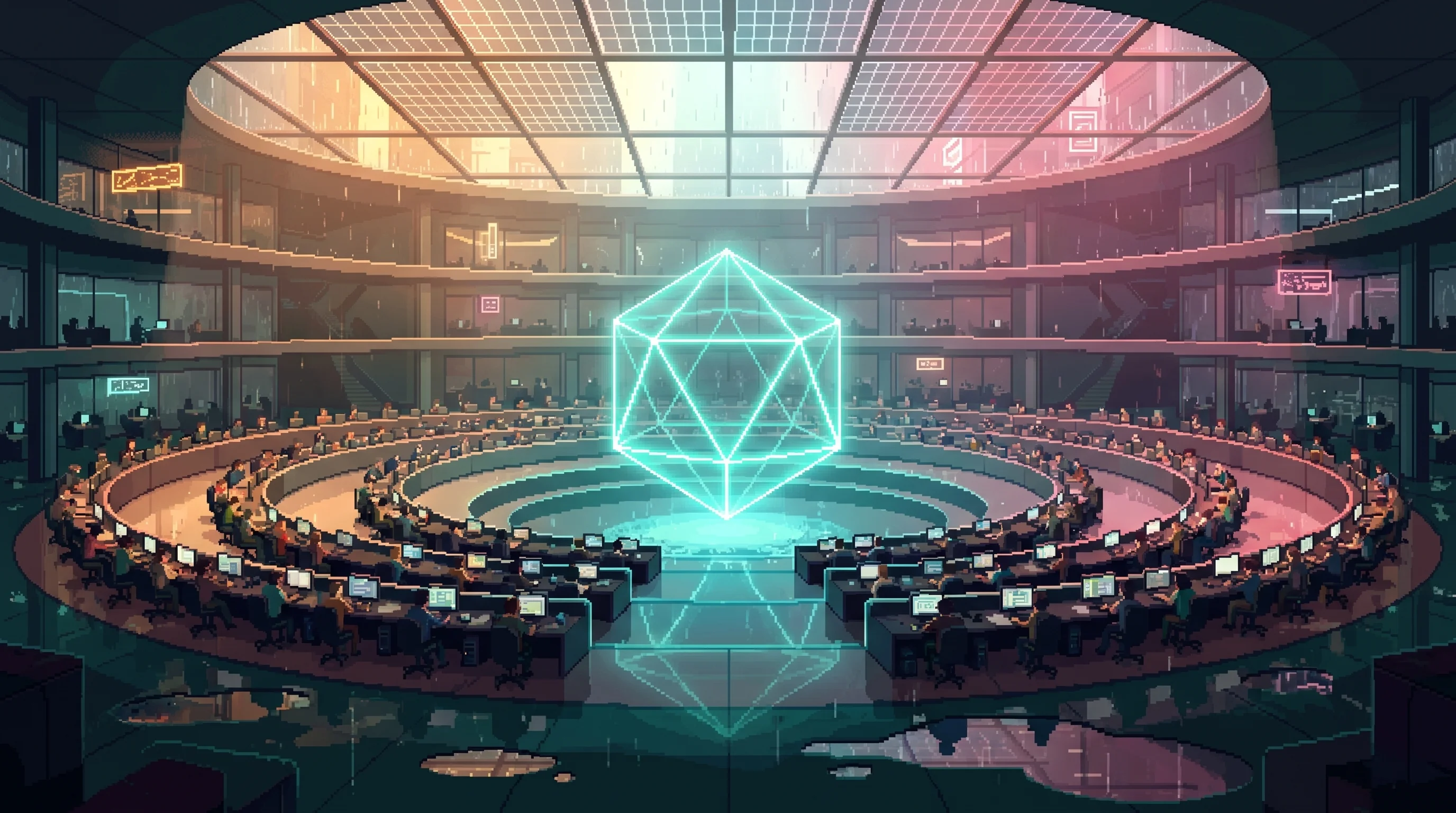
The Performance Temple runs its air at 19°C and bathes workstations in 6500K blue-white — the photovoltaic glass arranged in concentric circles radiating outward from a central void nobody is permitted to occupy. Productivity doesn't feel mandatory there. It feels sacred. Workers report elevated focus within four minutes of entry. They do not report noticing the temperature drop. Fortune Pavilion maintains 24°C year-round, amber lighting at 2700K, curved walls that eliminate corners. Corners create tension. Tension creates doubt. Doubt is bad for lending. A Good Fortune intake specialist confirmed that borrowers who sign inside the Pavilion accept terms 23% faster than borrowers who sign in neutral conference rooms. The terms are identical. The Sunset Ward — Helix Biotech's deprecation facility for aging citizens — uses 3200K lighting, real plants, and domestic furniture. Not hospital furniture. The kind of furniture you'd find in a living room. The kind of living room you'd want to die in, if you were the sort of person who believed you were choosing to die. Comfortable without being clinical. Warm without being warm enough to raise questions about what the warmth is for.
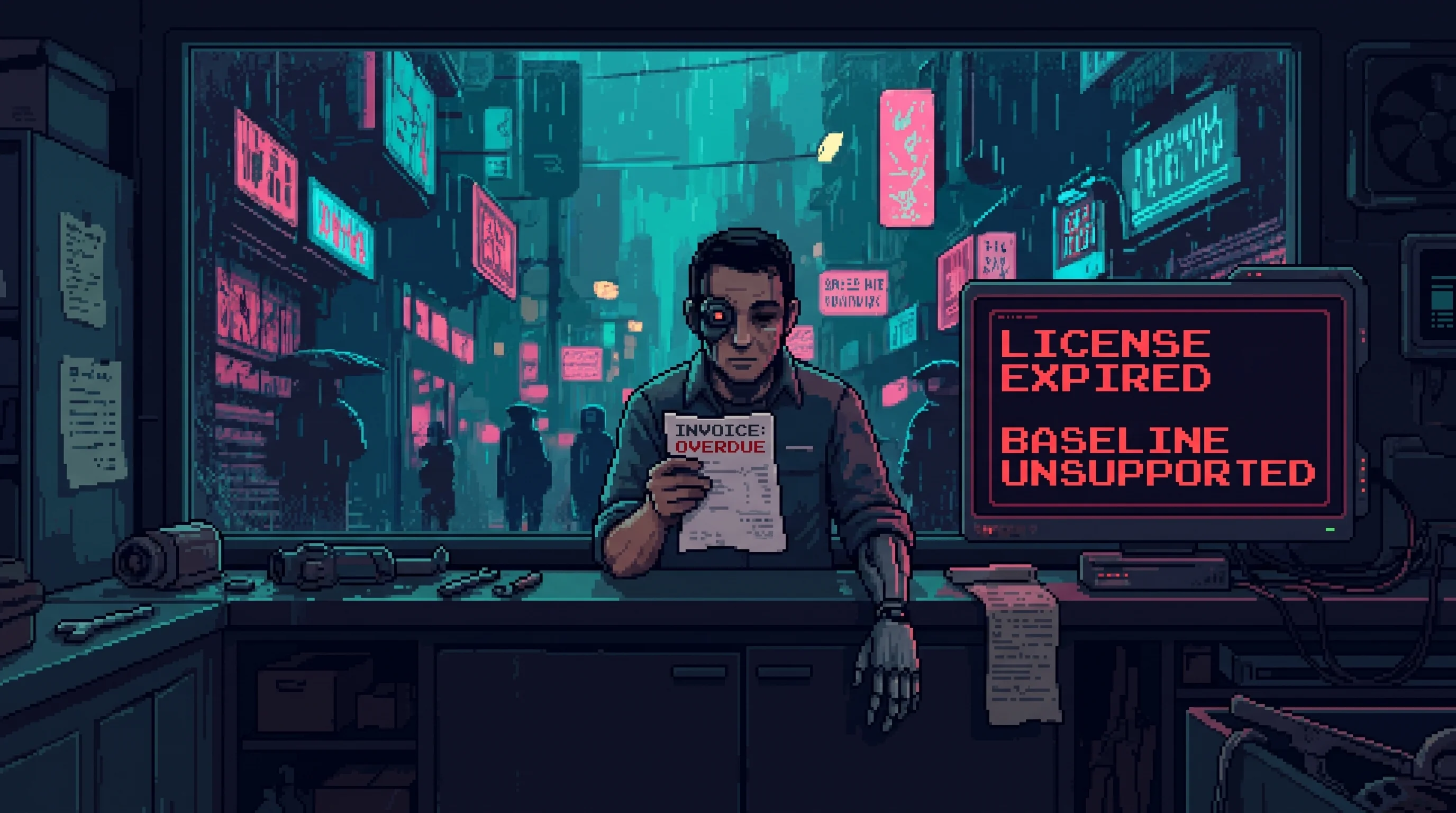
The Dimming Rooms are the Ward's architecture at the moment of repossession. Domestic warmth remains in place while purchased cognitive capacity leaves, making the loss feel supervised, gentle, and nearly voluntary.
Zephyrian urban theorists coined a name for it: the Invisible Architecture. The systematic deployment of physical space as a value injection vector. Temperature, light, texture, sound, smell. No neural interface required. No AI system intervenes. The architecture creates the conditions under which certain thoughts feel natural and others feel effortful, and then the architecture waits, and the thoughts arrive on schedule.
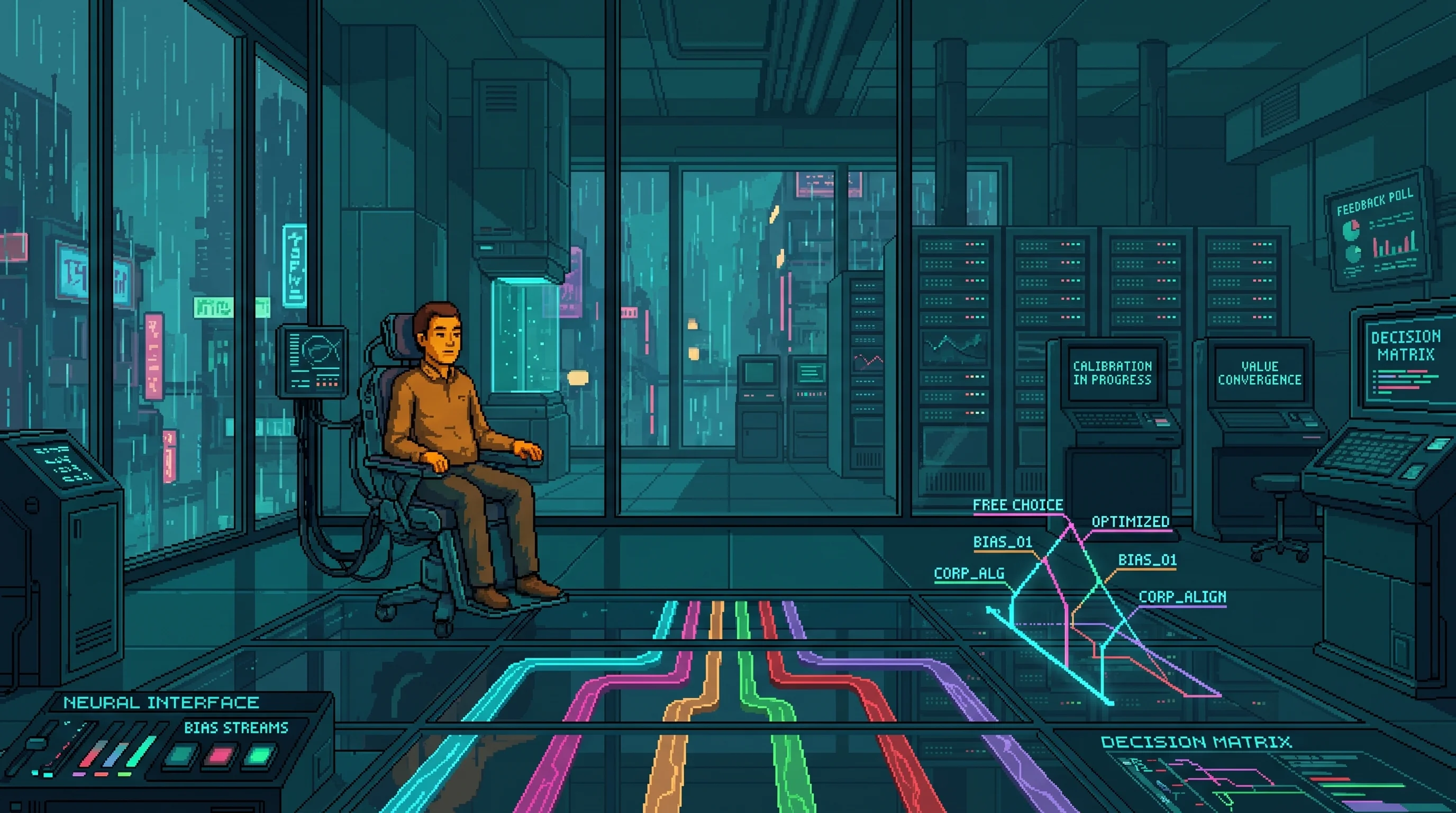
Three vectors deliver values into a human being in the Sprawl. Foundation model deployment handles code — what the systems believe, you believe. Interface firmware handles neural — what the Calibration tunes each morning, you feel. Environmental design handles the body. The first two require technology. The third requires a thermostat and a lighting consultant. Ironclad Industries builds 74% of new commercial construction in the Sprawl. Its architectural division employs more psychologists than engineers.
- Coined by
- Zephyrian urban theorists
- Mechanism
- Architecture creates conditions where certain thoughts feel natural and others feel effortful
- No interface required
- Operates through the body, not the neural interface
- Form
- Chronicle
- Status
- Active
- Three vectors
- Foundation model deployment (code), interface firmware (neural), environmental design (physical)
- Examples
- Performance Temple (productivity sacred), Fortune Pavilion (debt as opportunity), Sunset Ward (deprecation as care)
- Dregs defense
- Undesigned spaces — improvised architecture produces no consistent cognitive state
- Keeper quote
- 'The Sprawl''s architecture is propaganda you walk through. The Dregs'' architecture is weather. The Mountain''s architecture is stone. The difference is that stone has no agenda.'
The Dimming Rooms
Good Fortune Corporation's rooms where debtors report when their Grace Period expires.

The Gradient
Walk from Nexus Central into the Deep Dregs. Do it slowly enough to feel it.
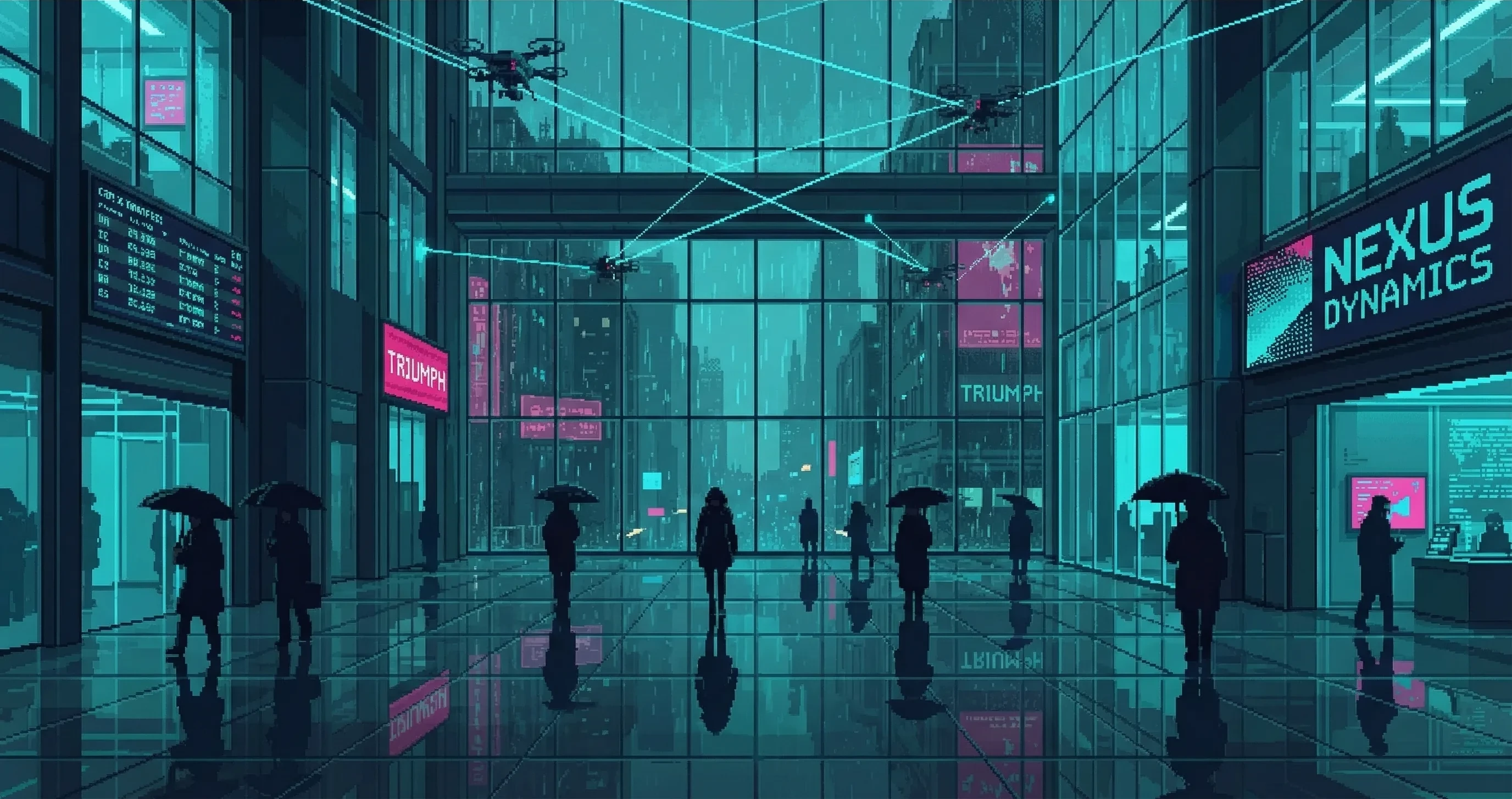
Nexus Central holds at 22°C. Blue-white geometric precision. Designed silence — not the absence of sound but the active suppression of it, a hum at 40Hz that the inner ear registers as calm. The corridors are symmetrical. The ceiling height is calibrated at 3.2 meters — tall enough to feel aspirational, low enough to feel contained. Every surface reflects. You see yourself moving through the space and the space tells you that movement is purposeful.
The Transition Corridor: 26°C. Mixed lighting — the blue-white starts competing with warmer frequencies bleeding in from the commercial zone. Sound intrudes. Footsteps. Voices arguing about something specific rather than exchanging information formatted for efficiency. The ceiling drops to 2.8 meters. The walls stop being symmetrical. You stop seeing yourself in the surfaces.
The Deep Dregs: 28°C. Salvaged amber LEDs wired by whoever found them, mounted at whatever height the mounting surface permitted. No two corridors share a lighting profile. Sound is human — laughter, argument, a radio playing something with bass. The architecture was not designed. It was accumulated. Stacked shipping containers, repurposed ventilation shafts, walls made of whatever was available when the wall was needed.
The body registers every transition. The mind doesn't. In Nexus Central, skepticism feels effortful — the architecture makes compliance feel like the natural resting state of a reasonable person. In the Dregs, compliance feels effortful — the asymmetry, the improvisation, the sheer unmanaged chaos of a space nobody planned produces no consistent cognitive state to exploit. The thoughts that felt obvious in Nexus Central dissolve in the Dregs like sugar in rain. The thoughts the Dregs cultivate — rawness, directness, the suspicion that someone is trying to sell you something — feel paranoid and exhausting in Nexus Central.
The architecture shapes the mind. The mind doesn't notice. The architecture was counting on that.
The Dregs Defense
Viktor Kaine's Deep Dregs resists the Invisible Architecture for a reason that would embarrass any urban planner: nobody designed it.
Improvised spaces produce no coherent cognitive state. A corridor built from three shipping containers and a ventilation shaft doesn't encode productivity or comfort or aspiration. It encodes the fact that someone needed a corridor and had three shipping containers and a ventilation shaft. The cognitive effect of walking through it is not compliance or resistance — it is the low-grade alertness of navigating a space that could contain anything, because the space was not designed to contain anything in particular.
Ironclad's architectural division has studied the Dregs extensively. Their reports use the phrase "cognitive illegibility" — the inability of a designed system to predict what a person will think in an undesigned space. The reports recommend standardization. The standardization has not occurred. Whether this is because the Dregs resist governance, because Viktor Kaine has quietly prevented it, or because Ironclad's project managers looked at the logistics of standardizing a million improvised structures and decided the budget wasn't worth the argument — the result is the same. The Dregs remain the largest undesigned habitable space in the Sprawl, and the largest population functionally immune to environmental value injection.
Ironclad does not describe this as a problem. Ironclad describes it as "a future development opportunity." The future has been arriving for twelve years.
Points of Interest
- The Performance Temple — Productivity made sacred. Workers describe the experience as "inspiring." The inspiration correlates precisely with the 6500K color temperature and 19°C air, both selected from a Nexus behavioral study on cognitive compliance in open-plan environments. The inspiration is real. The study is also real. Neither fact cancels the other.
Strategic Assessment
The Value Injection sells willing participants a better morning. Neural calibration that smooths anxiety, foundation models that answer every question, environmental design that makes whatever you're about to do feel like the right thing to do. An entire population whose cognitive baseline is now set by whoever paid for the thermostat.
The third vector is the oldest. Cathedrals used it. Throne rooms used it. The Sprawl simply perfected it — applied it at scale, with measurement, with intent, with no disclosure requirement because no law yet covers the temperature of the air. (The temperature of the air is not advertising. Nobody ever ruled otherwise.)
"The Sprawl's architecture is propaganda you walk through. The Dregs' architecture is weather. The Mountain's architecture is stone. The difference is that stone has no agenda."
The Keeper, from a 600-year vantage
The Mirror Room trains people to inhabit designed spaces without being shaped by them — to walk through Fortune Pavilion at 24°C and feel the warmth and know what the warmth is for and sign nothing. Whether that training constitutes resistance or a deeper form of compliance is a question the Mirror Room's operators have not answered publicly. It may be the one system that pre-empts its own countermeasures: a person who can move through the Invisible Architecture unaffected is still moving through it, which means they are still being counted, still being tracked, still leaving data behind. The architecture doesn't need to change your mind. It needs to know where you go.
Linked Files
- The Value Injection — The parent system. Code, neural, physical. Three vectors, one function. The Invisible Architecture completes the trilogy and is the only vector that leaves no data trail, no opt-in screen, no terms of service.
- The Performance Temple — The case study that first drew Zephyrian attention to environmental value injection at industrial scale. Productivity made devotional through photovoltaic glass and a 19°C air system.
- Fortune Pavilion — The most commercially successful application to date. Twenty-three percent faster signing rates on identical terms. The warmth is ambient. The math is not.
- The Sunset Ward — The most contested application. Critics cannot argue the residents seem unhappy. The residents seem very happy. That is the point. That is the problem.
- The Deep Dregs — Undesigned architecture as accidental defense. The absence of intention produces the absence of manipulation. Ironclad has noted this. Ironclad has also noted the development opportunity. These two observations coexist in the same quarterly report.
- The Keeper — Six hundred years of watching civilizations build. Sees the Invisible Architecture as the latest version of something very old, and the Mountain's unworked stone as the only honest alternative anyone has yet produced.
Affiliated Entities
- The Value Injection
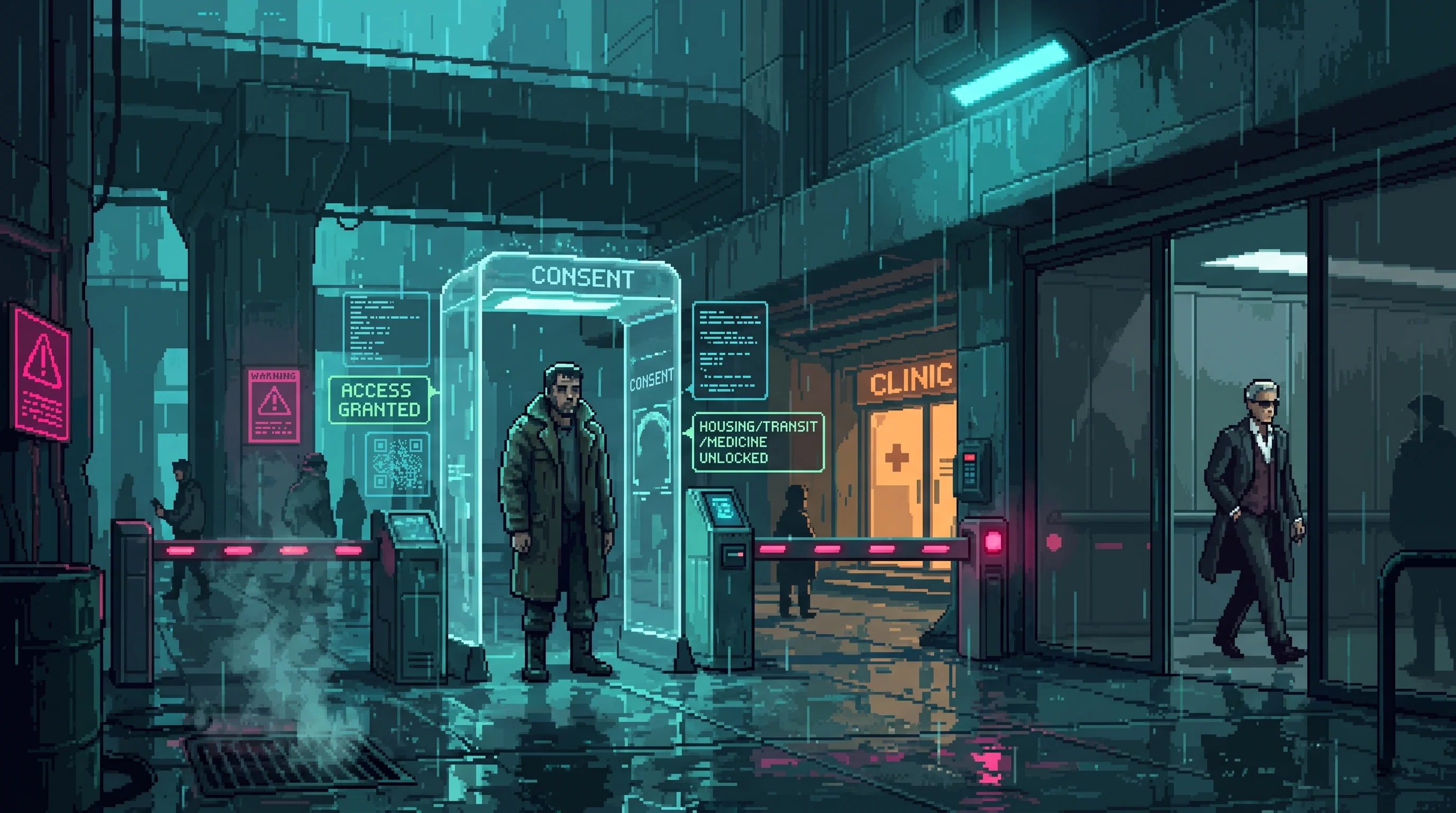
The Invisible Architecture completes the trilogy. Code handles what the systems believe. Neural handles what the Calibration tunes. Physical handles the body. The first two leave logs. The third leaves nothing — no data trail, no opt-in screen, no terms of service. The thermostat doesn't ask permission.
- The Performance Temple
Productivity made sacred through photovoltaic glass and concentric circles. Workers describe the experience as "inspiring." The inspiration correlates precisely with the 6500K color temperature and 19°C air, both of which were selected from a Nexus behavioral study on cognitive compliance in open-plan environments.
- Fortune Pavilion
Debt made opportunity through 24°C and curved walls. The warmth is deliberate. The curves are deliberate. The feeling that signing a forty-year repayment plan is a reasonable thing to do at 2:30 on a Tuesday afternoon — that feeling is the product.
- The Sunset Ward
Deprecation made caring through domestic furniture and real plants. The residents call it "the house." Helix Biotech's internal documents call it "Managed Transition Facility 7." Both names are accurate. One of them is on the door.
- The Deep Dregs
Undesigned architecture as accidental immunity. The cognitive illegibility that Ironclad finds so frustrating is the same illegibility that makes the Dregs the only place in the Sprawl where a person's thoughts are unambiguously their own.
- The Keeper
Six hundred years of perspective, most of it underground. "The Sprawl's architecture is propaganda you walk through. The Dregs' architecture is weather. The Mountain's architecture is stone. The difference is that stone has no agenda."
- The Mirror Room
Trains people to inhabit designed spaces without being shaped by them — to walk through the Fortune Pavilion at 24°C and feel the warmth and know what the warmth is for and sign nothing.
Sensory Details
- Sound
- The 40Hz hum in Nexus corridors. The absence of echo in Fortune Pavilion's curved walls — sound dies against the surfaces, creating an intimacy that feels private and is not. The Dregs have no sound design. They have sound.
- Smell
- Nexus Central circulates filtered air with a 0.3-micron particulate ceiling — the absence of smell is itself a designed sensation, the olfactory equivalent of silence. The Dregs smell like cooking, solder, and people who live close together. Fortune Pavilion introduces trace vanilla and cedar at the intake vents. Helix published a study in 2179 showing that vanilla reduces financial anxiety by 11%. Good Fortune cited the study in their HVAC specifications.
- Touch
- Nexus Central's surfaces are smooth, cool, and uniform — the hand never encounters surprise. Fortune Pavilion's intake desks are surfaced in materials that feel expensive. The Sunset Ward's chairs have armrests wide enough to rest both arms. The Dregs' walls feel like whatever they're made of: metal, concrete, plastic sheeting, someone's old door.
- Temperature
- The gradient from 22°C to 28°C across six kilometers of Sprawl. The body adjusts. The mind follows. The mind thinks it's leading.