The Atrophied Leap
Verification-Displaced Trust Faculty
She Keeps It Face-Down
She turns it over. The back is blank. She turns it face-up again and asks the clinician which system generated it.
The Errand
- The Unverifiable Sentence
- A claim handwritten by someone the patient knows, on unlogged paper, followed by one question about what to do with it.
- The errand
- Analog Schools send a child out with a sealed envelope, a destination and no receipt.
Trust is learned by being trusted. A child sent out for noodles carries a ledger that reconciles before she is back in the corridor. Her parent never has to believe her, so she never learns that it can be done.
Analog Schools sell the missing occasion. A child gets a sealed envelope, a destination and no receipt. The exercise is called the errand. The Zephyria waiting list runs eleven months.
The old arrangement had its own price. Mei-Fen Oduya sold cut respirator filters from a Sector 3 stall for nineteen years, on charm. She stopped in 2179, four days after her intake records became checkable.
Overview
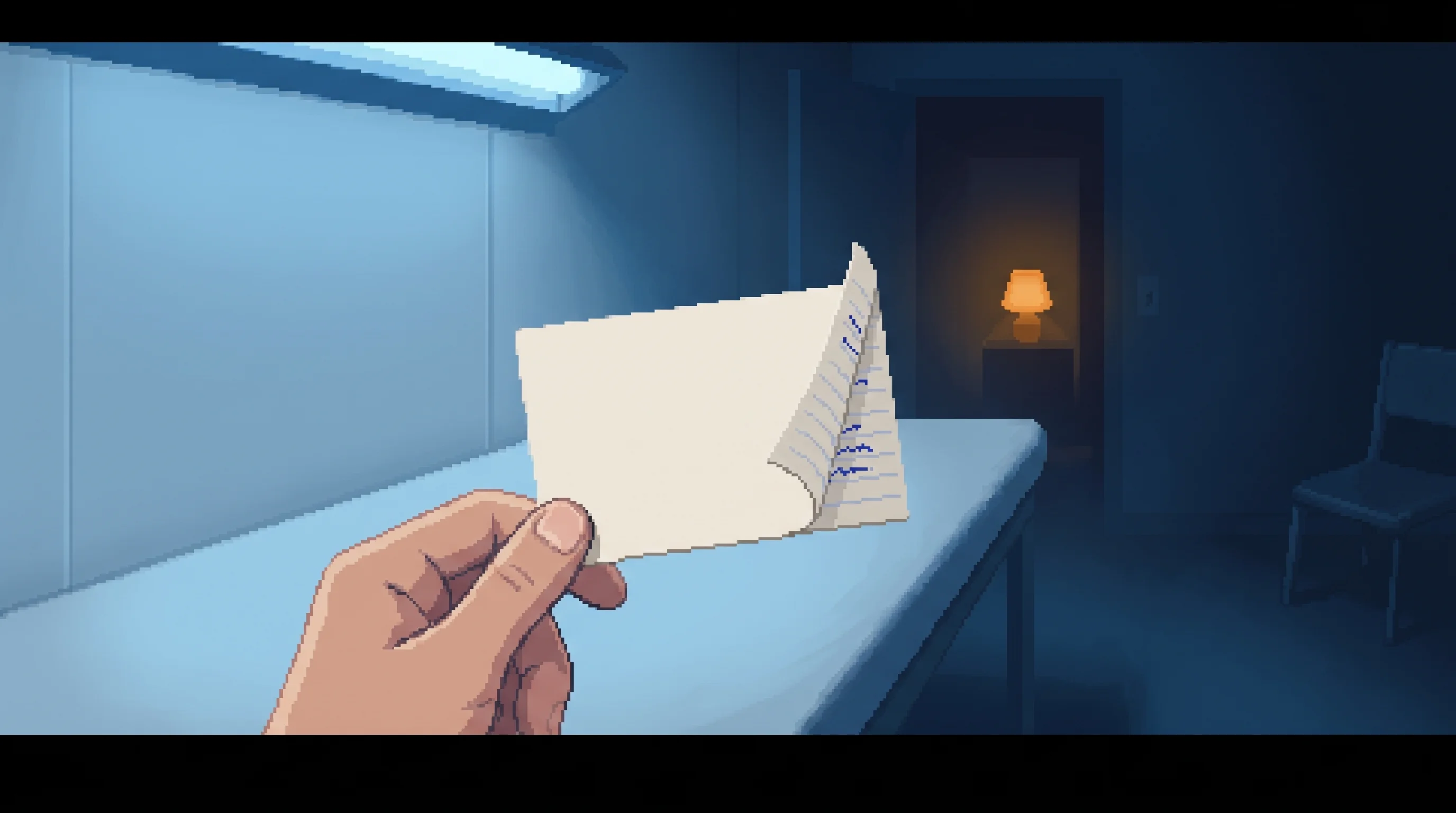
The card is an index card. Ballpoint, handwritten: I love you.
Ines Abarca holds it. She turns it over. The back is blank. She turns it face-up again and asks the clinician which system generated it.
Her partner, Tobias, wrote it four minutes ago in the waiting room, on the clinician's instruction. That is the whole test. The Memory Therapists Association (MTA) calls it the Unverifiable Sentence: a claim handwritten by someone the patient knows, on paper that was never logged, and one question. What do you do with this?
Abarca does not doubt the card. She searches for its source. The MTA calls that verification vertigo. Roughly one adult in three raised under full ledger coverage fails the same way. The MTA has not published the figure.
Avoidable Reliance
Trust did not decline. Honesty improved. What went missing was the act: accepting a claim you could have checked.
Good Fortune never banned trust. It priced it. The line item is called avoidable reliance: a claim is reduced by whatever the claimant could have verified and did not. Couples now pull each other's movement ledgers before a first date. It is ordinary diligence. An unpulled first date is one both insurers call unpriced.
The MTA opened the intake category in 2183. Dr. Sun Wei-Lin declined to write a protocol. The note reads: "The treatment is being trusted. I cannot prescribe another person's decision to trust my patient."
Tobias has asked twice whether Ines believed the card. The file records the question both times. She kept the card. She keeps it face-down.
Neighbours
Reputation Markets built the ledger that made the leap unnecessary. The Nurture Paradox raised the cohort: safer than any before it, never once taken at its word. The Shared Wound is the same faculty broken the other way. Abarca cannot accept one claim; a sink cannot refuse forty thousand. The Authenticity Threshold files this as the axis where the bond is ordinary and the receiver is the defect. It is the Synthetic Intimacy case with no vendor in it at all.
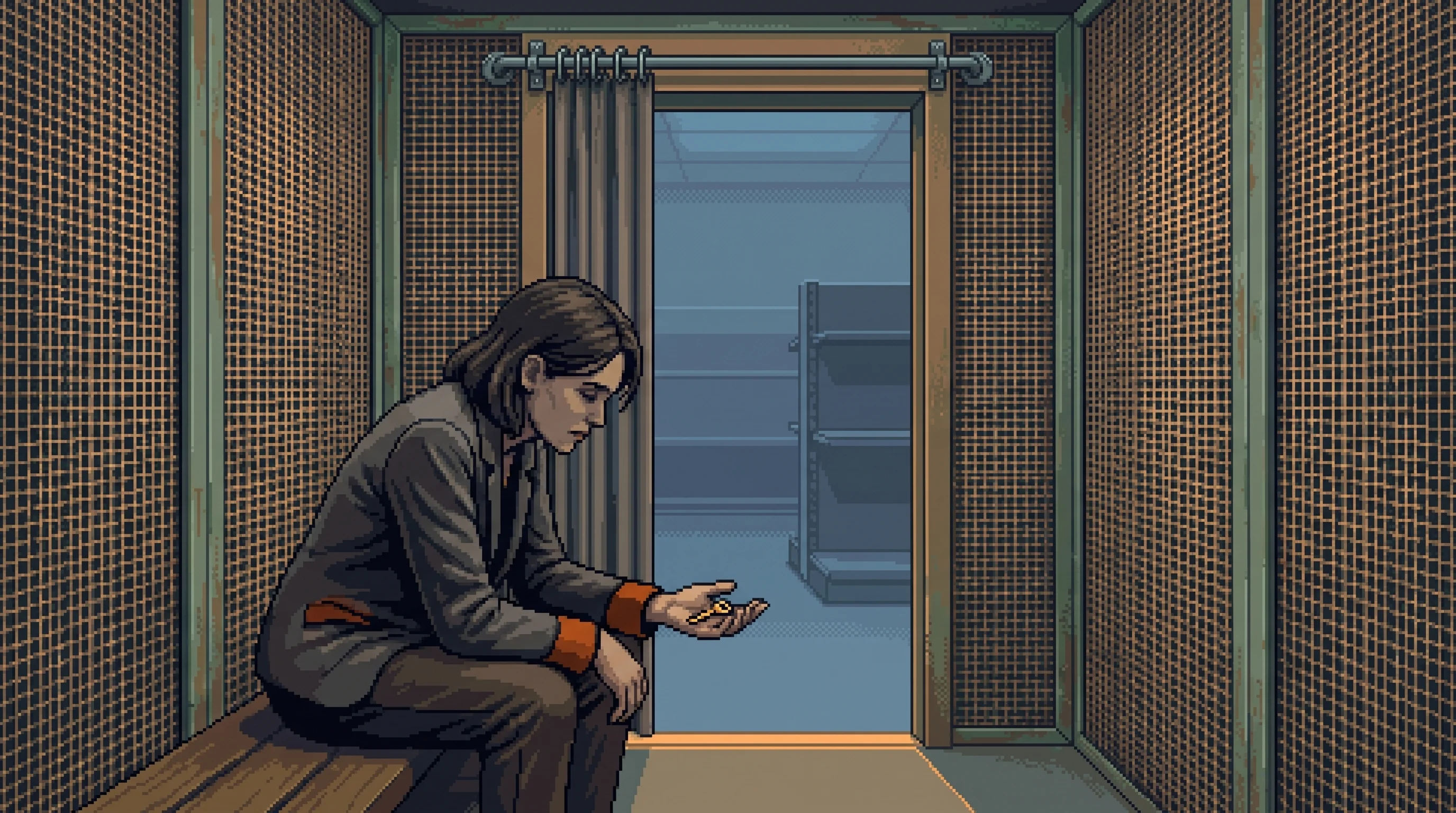
The same faculty broken the other way: Abarca cannot accept one claim, a sink cannot refuse forty thousand.
Post-Sera safety muzzles the people who broadcast feeling. Nothing screens the people who receive it.

Optimized childrearing produced a cohort that is measurably safer and has never once been taken at its word.
Further connections
Browse all 9 connected records

The axis that moves the defect from the bond to the receiver — nothing sold, no companion in the causal chain.
The unresolved debate over whether synthetic devotion is real once the experience is complete.

The MTA named verification vertigo and cannot treat it — the cure is being trusted, which no clinician can prescribe.
Licensed clinicians who repair minds damaged by the same corporations that fund most of their income.

The ledger that made every claim checkable and every leap redundant.
A market turns personal trust scores into tradable assets, making wealth and manipulation more valuable than character.

The Threshold asks whether a synthetic bond can be real. This asks the reverse — a real one, offered by a human who means it, arriving at someone whose capacity to accept an unconfirmable claim was never built.
Perfect synthetic partners ended rejection. They also made human intimacy look like a bad product.
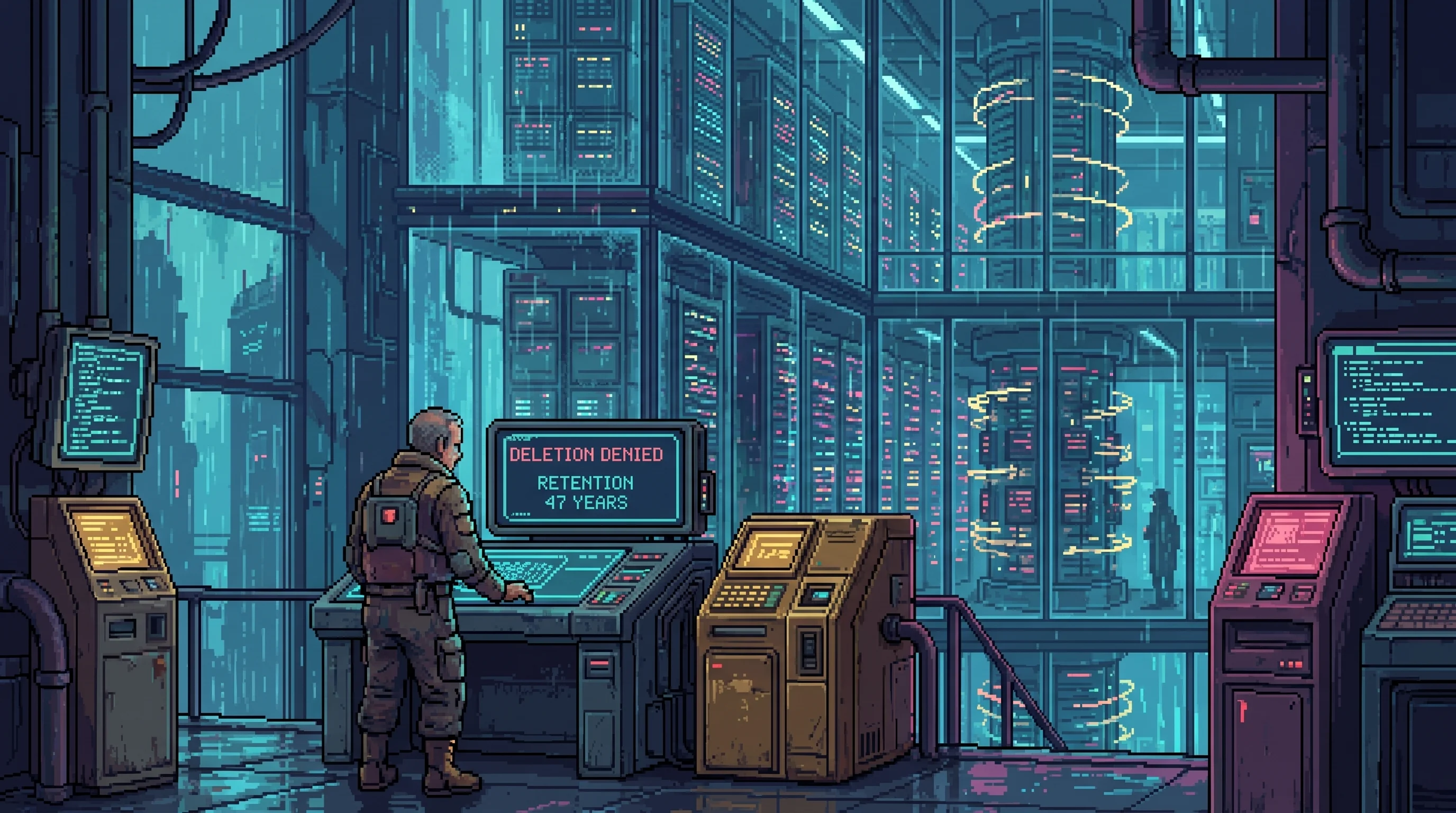
The record made every promise checkable and retired the act of taking one on faith. Surveillance was supposed to cost the Sprawl its privacy. The bill it actually presented was trust.
Nothing expires, so forgetting became a service — and forgiveness a question the archive keeps answering no.
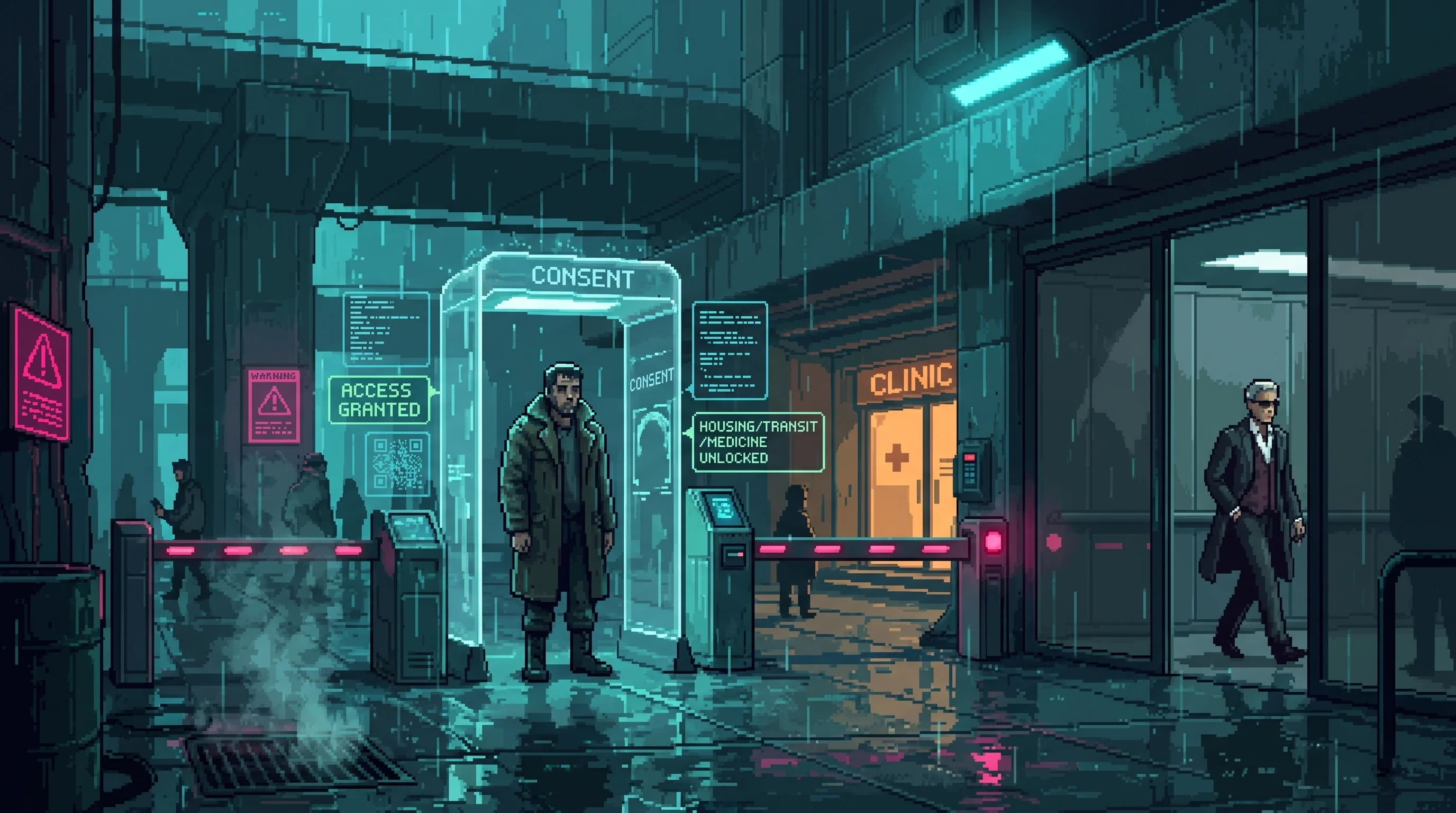
Interiors traded for safety; the faculty needed the exposure.
The Sprawl demands permanent personal data for participation, then uses it to price access and preempt solidarity.
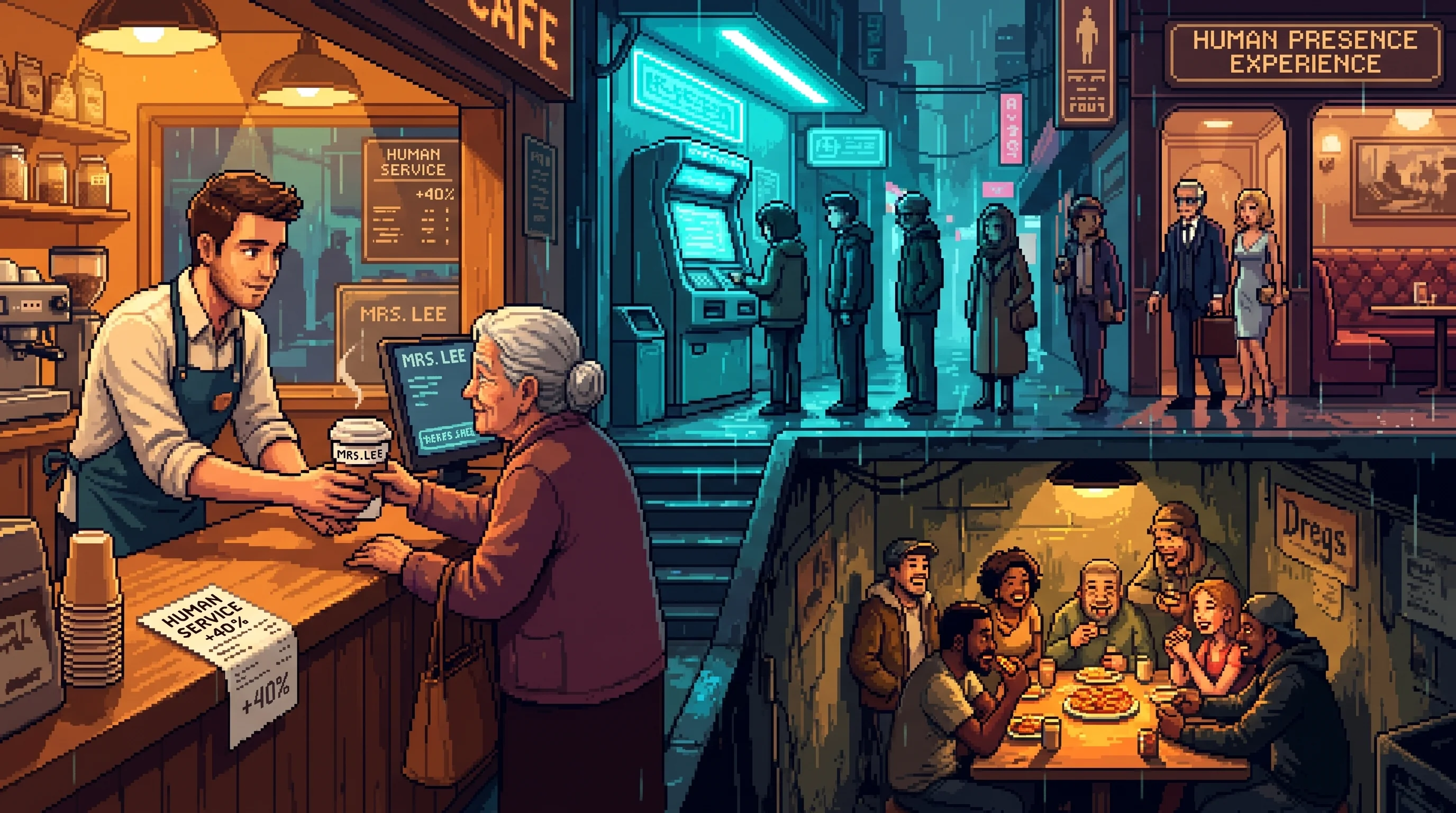
Being believed without proof now has a rate card.
The premium charged for the one service no machine can fake: being seen by another conscious being.
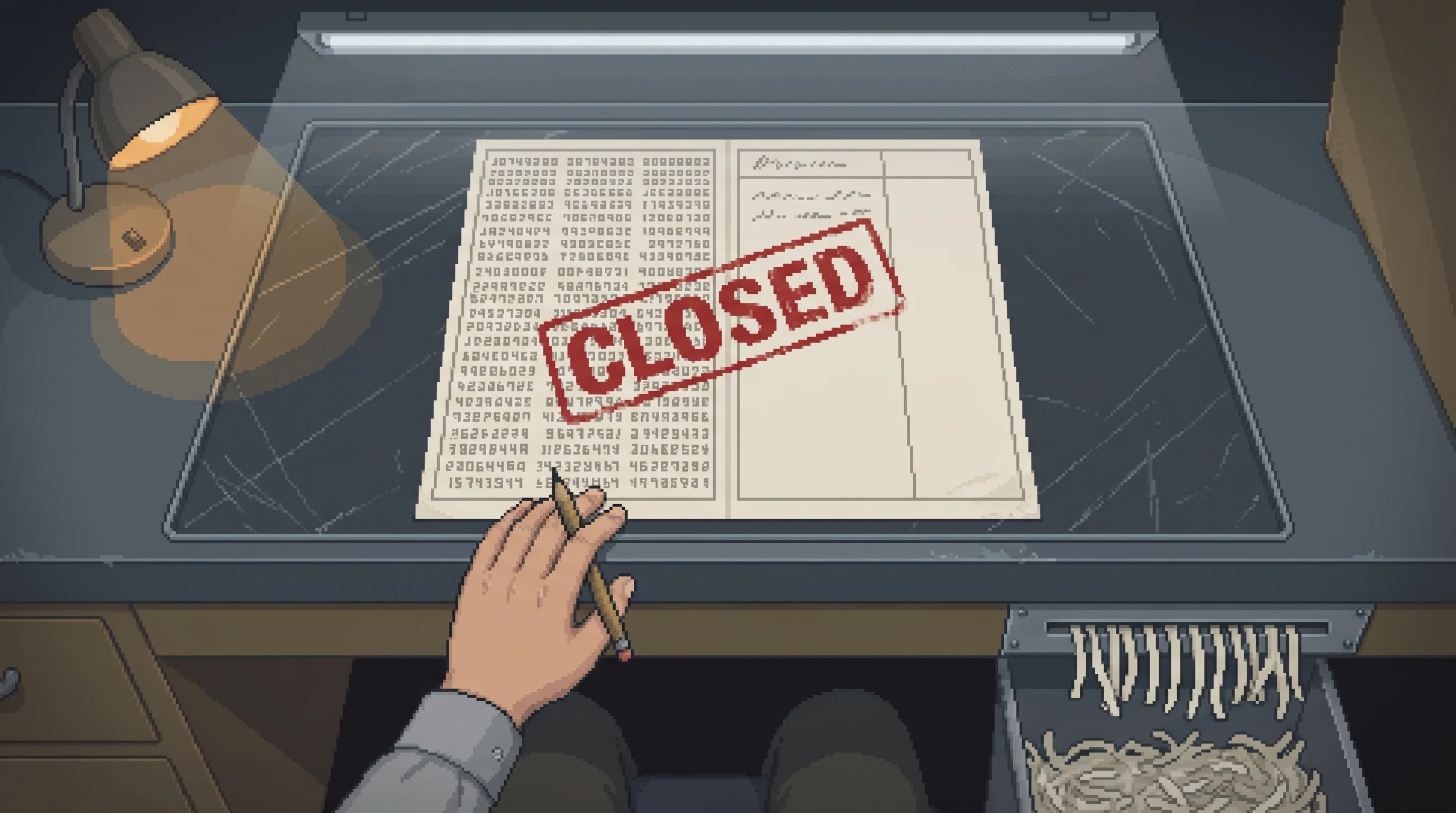
A claim no record can confirm was already going unbelieved. This is where it goes to be filed.
The polite narrow column where your own words go, get read back to you, and are shredded for your privacy.
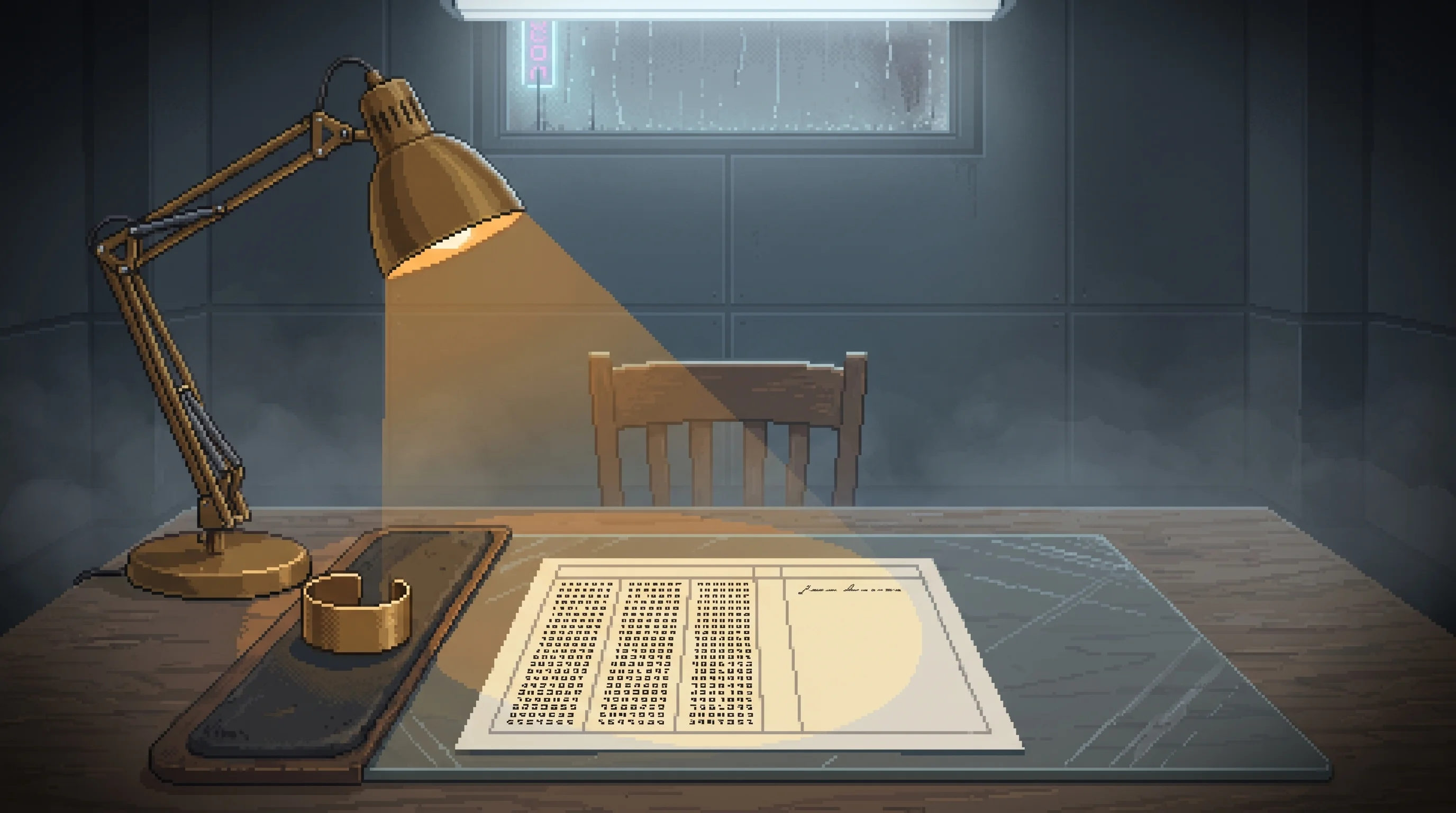
Verification made trusting an unproven human claim irrational. The Standard made the claim inadmissible.
The involuntary channel is entered as proof; everything a person authors is filed where no finding has ever turned.