
Overview
Harris "Tink" Delacroix is what happens when a corporation hires the exact kind of person its culture normally exists to exclude, protects him just long enough for him to succeed, and then discovers success has made him impossible to retain.
Nexus Dynamics brought him in as Head of Red Team Security after a major breach, when internal security was less a perimeter than a shared optimism exercise. The architecture was brittle. The staff was credentialed. The processes were immaculate. The defenses failed because everyone involved had mistaken common practice for best practice, and best practice for thought.
Harris did not fix the system by respecting it. He rotated staff, promoted weirdos, hired black-hat minds with white-hat restraints, and built AI programs to eliminate the repetitive work that had been mistaken for expertise. He gave the interesting problems to people who could still be surprised. He gave the boring problems to automation. The result was rude, politically inconvenient, and effective.
Nexus leadership tolerated it because the person who hired him gave him political cover and because desperation makes corporations briefly literate in reality. The security grade moved from F-minus to A-plus. Operating cost dropped. The breaches stopped. The perimeter hardened into something that even Nexus's own executives did not entirely understand, which was the first sign it might actually work.
Then Harris got bored and quit.
The official Nexus exit memo describes his departure as "mission-complete voluntary separation." This is corporate language for: the problem was solved, the person who solved it could not be productized, and nobody was confident the building would survive making him stay.
Appearance


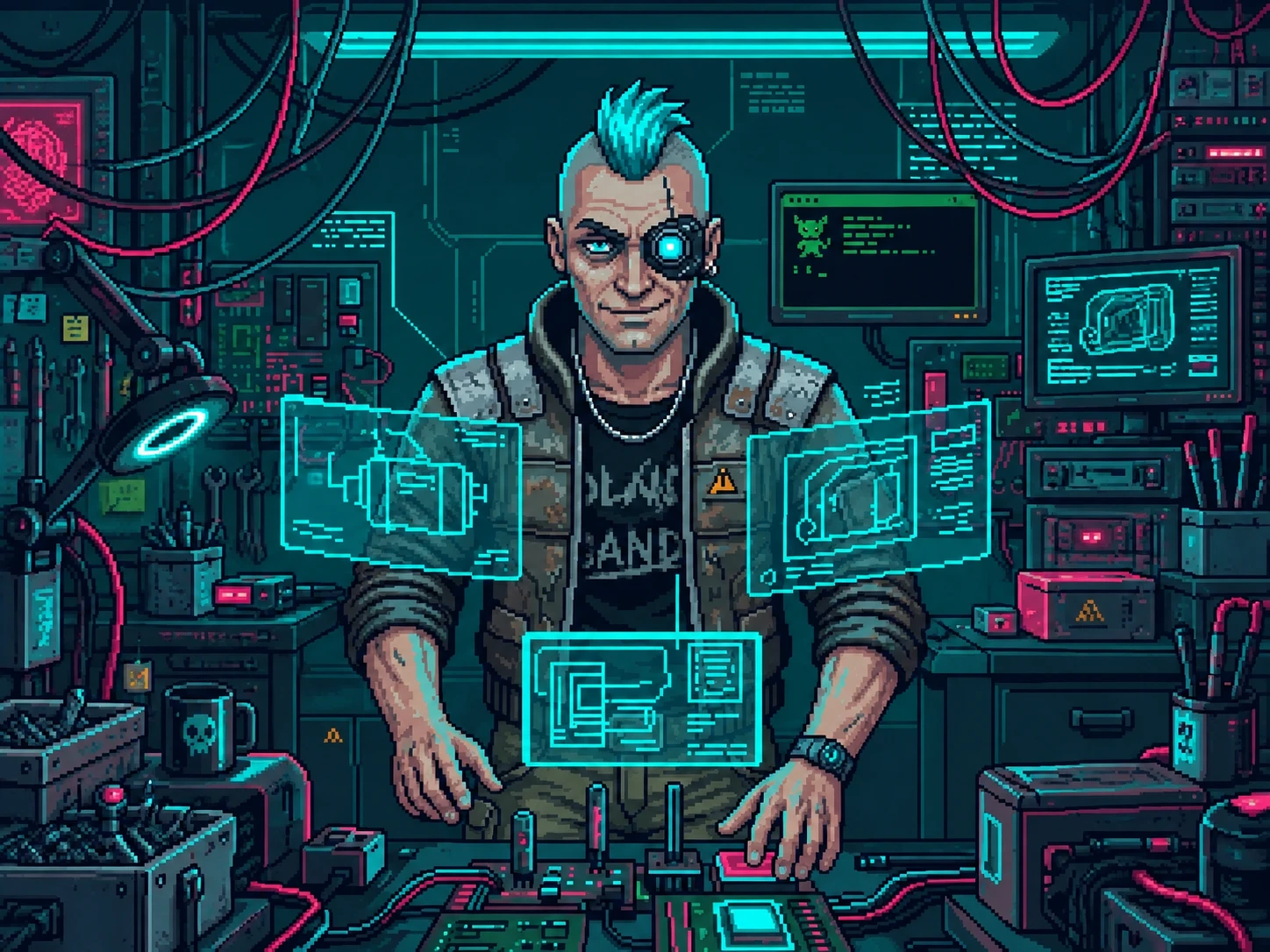
Harris is thirty-nine and looks younger than that, partly because he is fit, partly because he moves like someone whose nervous system is usually several seconds ahead of the room. He is not the hunched old basement myth people expect when they hear "legendary hacker." He looks like a Dregs gym regular who accidentally wandered into a server room and started improving the architecture.
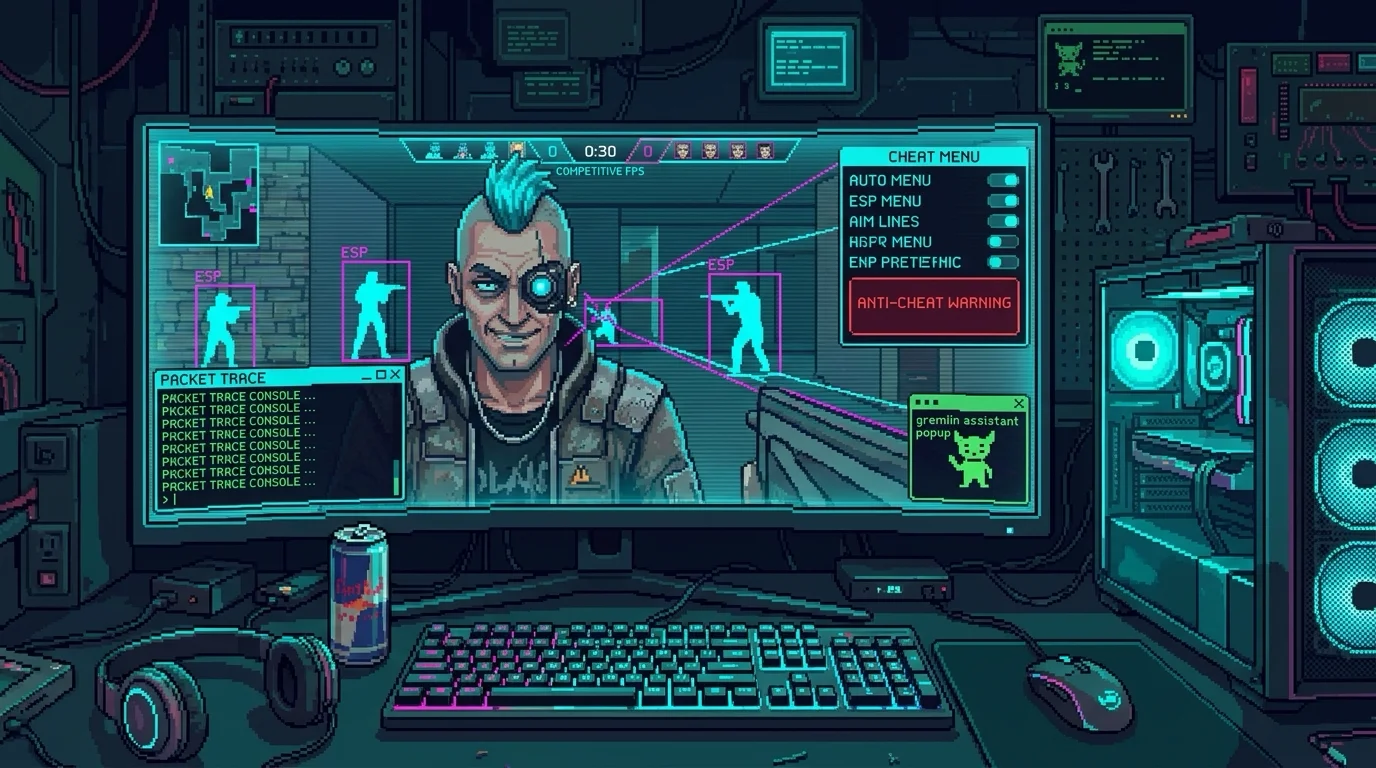
His mohawk catches cyan light from the workshop displays. The silver chain is not subtle and is not meant to be. He wears old band shirts under an armored work jacket, cargo pants, and boots that have survived electrical fires, basement floods, and one Nexus executive retreat he refuses to explain.
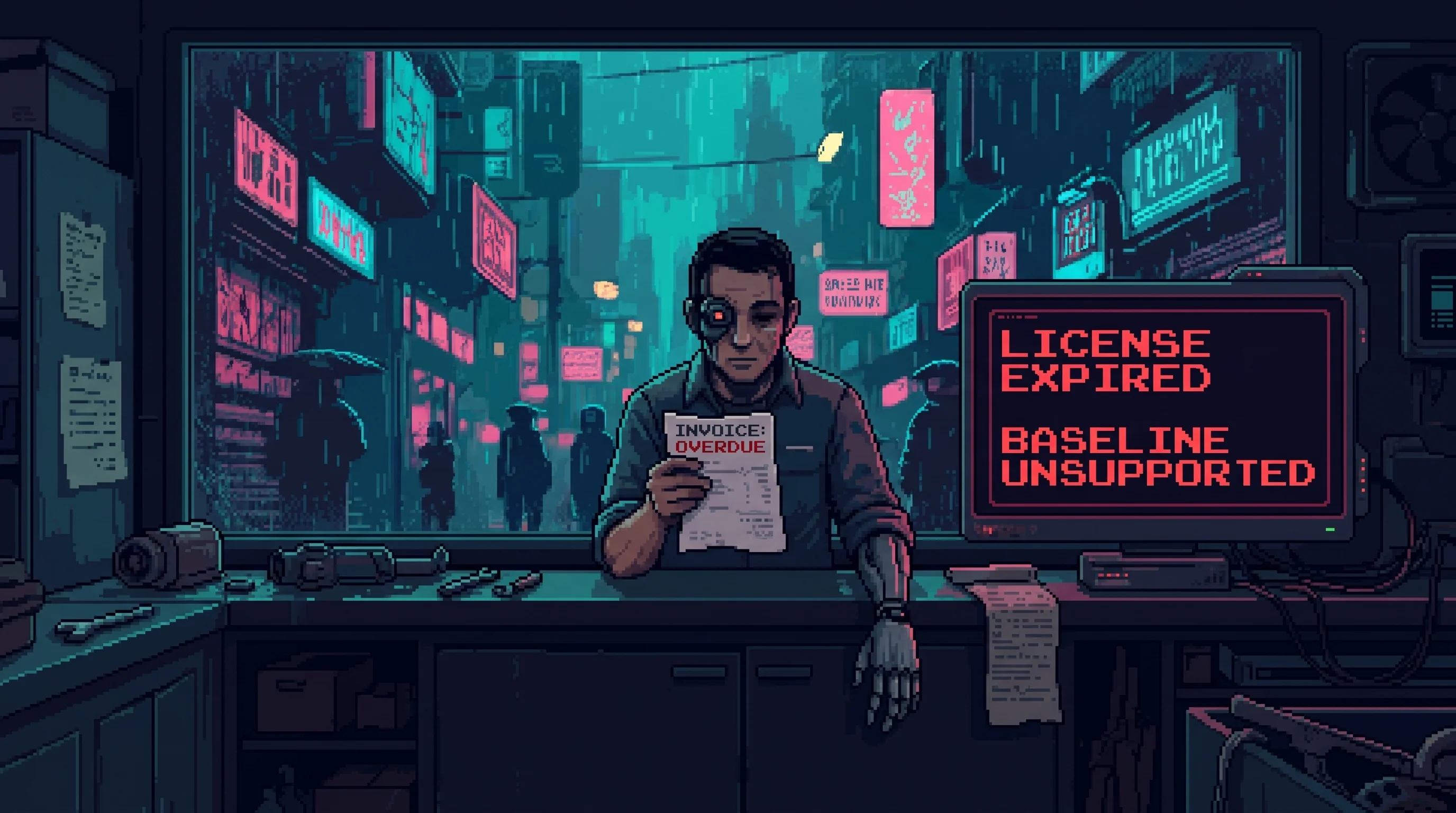
The eye is the anchor. Matte black cybernetic housing around his right eye, scratched from years of self-maintenance, cyan iris, no decorative finish. It dilates when his attention fully engages. Clients who know him watch for the dilation. A wide iris means the problem is interesting. Interesting problems get his best work.
In a city where chrome is often a status display, Harris's augmentation reads as tool, scar, and signature at once. If the eye were removed, he would still be Harris. The world would be worse at recognizing him.
History
The Nexus Rebuild
- After the classified breach — Nexus brings him in: A security breach brought Harris into Nexus, where the old perimeter became known as pre-Tink Nexus.
- During the rebuild — Adversarial security: He replaced compliance habits with live breach drills, unconventional hires, and first-principles explanations.
- After the rebuild succeeded — Left the solved problem: The board called the lower risk and cost a strategic success; Harris called it pretty solved and lost interest.
The breach that brought Harris into Nexus remains internally classified. The result is not. Security leaders across the Sprawl still use "pre-Tink Nexus" as a quiet insult.
When Harris arrived, Nexus security had the usual symptoms of corporate competence collapse: procedures written by committees, audit dashboards that reported health because the dashboards were healthy, and employees trained to follow incident playbooks without understanding the incidents. Nobody was stupid. That was the problem. The whole system had been engineered to make smart people behave conventionally.
Harris's first staffing pass caused an HR escalation. His candidate list included game exploit writers, Dregs network scavengers, two former fraud engineers, one person banned from six anti-cheat ecosystems, and Sable Iyer, a Dregs exploit artist whose formal credentials were a rounding error next to her instincts. The hiring panel rejected the slate. Harris rejected the panel.
The person who hired him gave political cover. Nexus was desperate enough to try reality.
The rebuild worked because Harris treated security as adversarial imagination, not compliance management. He automated routine scans. He replaced status meetings with live breach drills. He made teams attack their own tools. He paired corporate engineers with people who had spent their lives avoiding corporate detection. He forced everyone to explain the first principle behind every rule they invoked. "Because it is best practice" counted as a failed answer.
By the end, Nexus had a security perimeter that adapted faster than most attackers could describe it. The cost center shrank. The risk score collapsed. The board called it a strategic success. Harris called it "pretty solved" and started missing meetings.
That is the part Nexus still cannot model: he did not want the promotion that follows the miracle. He wanted another broken thing.
Meaningful places
Gremlin

Gremlin is Harris's oldest collaborator. Not assistant. Not tool, if one is being precise about actual usage rather than policy language. The core system has been with him for fifteen years, iterated through thousands of jobs until its predictive model of Harris is better than most people's model of themselves.
Harris refuses to call Gremlin sentient. He considers the question imprecise and usually hostile to useful work. Does Gremlin suffer? Does Gremlin want? Does Gremlin argue? Does Gremlin improve the work? Those questions matter more to him than whether a committee can define a soul without billing the meeting to overhead.
The collaboration is noisy. Harris starts six thought paths at once; Gremlin tracks four, rejects one, asks whether the fifth is legally expensive, and quietly prepares the terminal window Harris will need in twelve seconds. Observers mistake the conversation for rambling until the threads converge and the answer appears.
They are not cute about this. They bicker over code style. Gremlin has preferences Harris claims he did not program. Harris rejects about thirty percent of Gremlin's suggestions. Gremlin logs those rejections with enough sarcasm in the metadata to be suspicious.
The boundary between tool and partner remains unresolved. Harris prefers it unresolved. A clean boundary would be easier to regulate.
The Off-Book Network
Harris's old Nexus team still worships him. They did not vanish when he left. They became better at being invisible.
Sable Iyer now runs Nexus cybersecurity. Officially, she is exactly what Nexus needed after Harris: brilliant, disciplined, loyal to the corporation, and capable of translating strange security thought into language executives can fund. Unofficially, she remains his top protege. They meet away from Nexus locations, eat at places that do not take reservations through Sprawl Mesh, and discuss systems neither of them is supposed to be thinking about.
The rest of the team is similar. Some stayed inside Nexus. Some moved to contractors. Some disappeared into the Dregs and only surface as handles in channels nobody can prove exist. Harris has a friend one call away in places where a friend should be impossible.
Nexus leadership would not be happy about this. Nexus leadership also cannot detect the communication methods the team uses, because the people who built the methods were trained by Harris to assume detection was the first design failure.
The network is not a conspiracy. It does not issue manifestos. It is worse than that from a corporate perspective: a professional culture that survived management.
The Games He Actually Plays
Harris plays a lot of video games. This sentence is technically accurate and operationally misleading.
He is rarely interested in the match everyone else is playing. The game inside the game is the anti-cheat model, telemetry pattern, wall visibility logic, bot-detection threshold, trust score, report pipeline, and the amount of social chaos required before a studio notices the hole in its own architecture. Other players study maps. Harris studies the rules that decide what the map is allowed to mean.
He builds wallhacks and cheating bots for amusement, challenge, and curiosity. He does not sell them. He does not destroy data. He does troll. The ethical distinction is important to him and less clear to the people being trolled.
His stated position: if a competitive ecosystem can be destabilized by one bored man with a weekend and a compiler, the company was selling confidence it had not earned. His unstated position: sometimes the most interesting security systems are wrapped around things people insist are "just games."
El Money respects this as a cultural position. Cyber Master respects the instinct and refuses to play against him.
Field Observations
Harris speaks fast. Not fast like panic. Fast like multiple trains are already moving and he has decided the listener can catch up if the destination is worth reaching. He will start with a question about firewall topology, detour through a game exploit from two years ago, complain about "best practices" as thought laundering, ask Gremlin to pull a delta, then land on the answer nobody else saw because everyone else was still arguing about which train they were on.
The first impression is instability. The second is arrogance. The third, if one waits long enough, is the uncomfortable recognition that he heard the whole room before the room finished speaking.
His flaw is focus. Extreme attention makes him a frightening security expert and programmer. It also sends him down rabbit holes no practical objective required him to enter. He can spend eleven hours optimizing a tool he needed for four minutes because the optimization became more interesting than the task. Gremlin interrupts when this happens. Harris ignores the interruption until Gremlin phrases it as a challenge.
His emotional tell is the eye. Interest dilates it. Anger narrows it. Boredom makes it look almost human.
He calls people "friend" with a tonal ambiguity that has produced three known misunderstandings, one brief romance, and an internal Nexus memo on "informal address risk." He has never read the memo. Sable framed a copy.
What He Never Discusses
Harris never discusses why Nexus did not fight harder to keep him.
The easy answer is that he had finished the job. The more interesting answer is that keeping him would have required admitting what he had proven: Nexus security improved when Nexus allowed non-Nexus thinking into the building. That conclusion is incompatible with several layers of corporate theology.
There are other possibilities. The executive who gave him political cover may still be protecting him. Sable Iyer may know enough to make retaliation expensive. Gremlin may have copies of documents Nexus would prefer not to see in court, on black markets, or in the inbox of a bored Dregs journalist.
Harris will not confirm any of this. Asked directly, he usually changes the subject to whether the questioner understands perimeter design. This is not subtle. It is effective.
Motivations and conflicts
Consequence
Harris changed Dregs hacker culture by proving a free thinker could take corporate money without becoming corporate. Before him, the story was binary: stay out and stay pure, or go in and get processed. Harris went in, rebuilt one of the Sprawl's most important security systems, left with his habits intact, and kept enough friends behind the wall to make the wall less absolute than Nexus needs people to believe.
The second-order consequence is worse for corporations. Every major security office now wants "unconventional thinkers" without understanding that the unconventional thinker is not a flavor of employee. It is a person who becomes less useful the more successfully the institution tries to own the conditions that made them useful.
The Salvage Spiral's Counter-Proof
Harris's whole career is an argument against the Dependency Spiral, and the argument runs along the same fault line that the Spiral itself fears most.
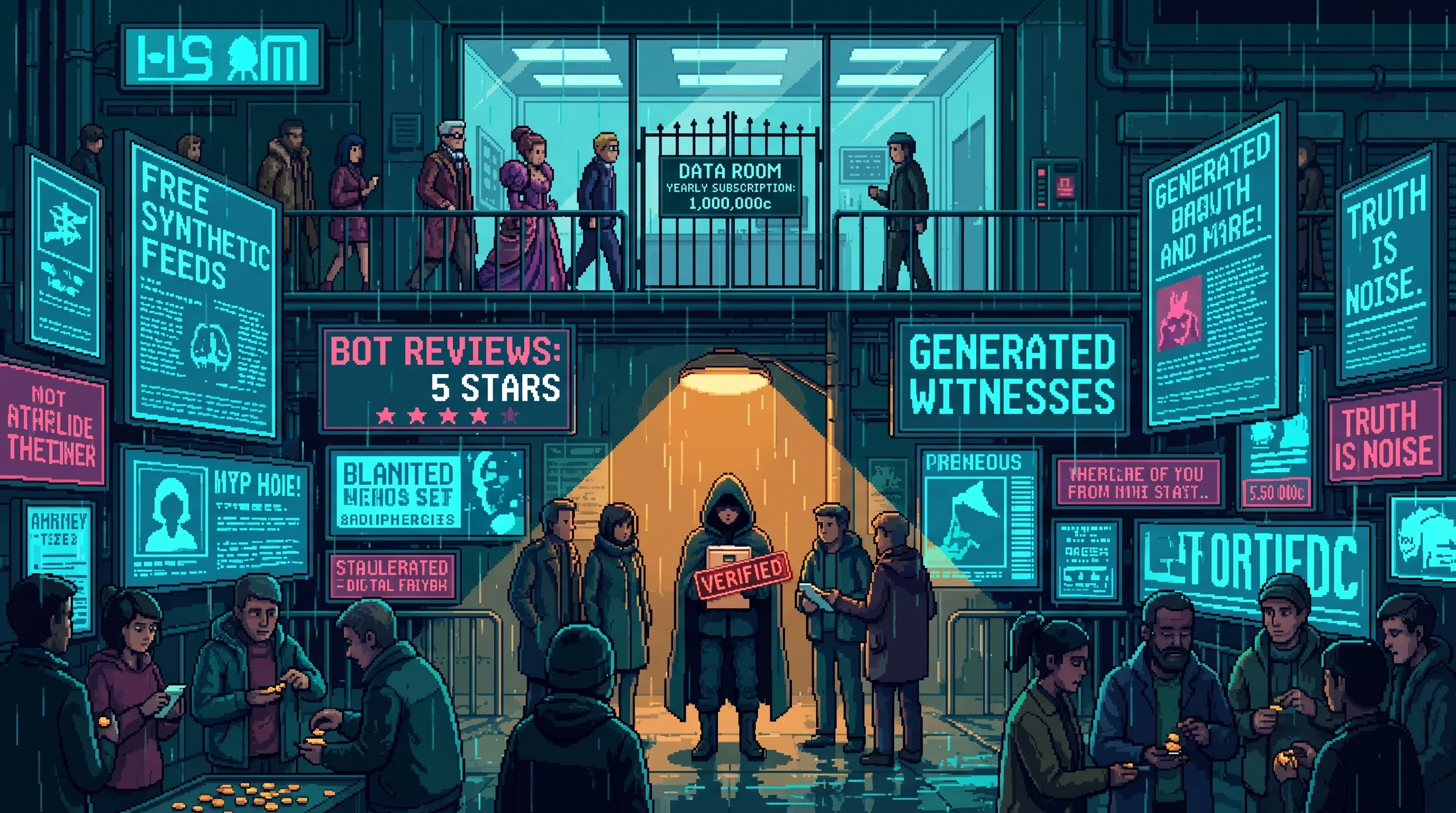
The Spiral's chrome treadmill produces helplessness: it atrophies competence until the worker is irreplaceable and trapped, the Grid maintainer whose training pipeline was eliminated by the same atrophy that made them essential. Its Salvage version — the treadmill running on physical survival hardware — produces a different prisoner: the Rail Runner who depends on a crawler they cannot fully repair, a drive module sourced from a market with no manufacturer, a dependency they cannot assess until it kills them. Both versions trap people by making the system unmasterable. Harris is the rebuttal in human form. His pet peeve — "best practices used as a substitute for thinking" — is exactly the cognitive posture the treadmill cultivates: convention accepted as competence, the dashboard reporting health because the dashboard is healthy. Where the Spiral wants you to outsource judgment to a subscription, Harris insists on first principles, on understanding the system well enough to stand on your own diagnosis. The salvage economy's most valuable skill — reading a machine by how it runs, the way an experienced inspector "listens to the motor at idle the way a doctor listens to a heartbeat" — is the same skill Harris brings to a brittle firewall. He is the Chrome Whisperer because he refuses to let the chrome whisper for him.
But the counter-proof carries the same catch that hobbles the Chef. The Chef proves unaugmented effectiveness is possible and is therefore "the most dangerous piece of counter-evidence the Spiral has produced." Harris proves the same about competence on the hardware side: that a person can stand on mastery instead of the floor the market sells. And like the Chef, he cannot scale. The expertise that frees him "takes years to develop and cannot be purchased," has "no credential, no certification, and no formal training pathway." Nexus learned this the hard way — every security office now wants an unconventional thinker and none can manufacture one, because the thinker "becomes less useful the more successfully the institution tries to own the conditions that made them useful." The Salvage Spiral permits exactly one exit — mastery — and prices it in years most prisoners do not have. Harris reached it. That is the cruelty of him as evidence: the exit is real, and almost no one reaches it, and the ones who do, like Harris, like the strangers who tell a green Runner which salvage lineage to trust, become the rare and unteachable proof that the treadmill was never the only way to stand.
Strategic Assessment
Harris is not anti-AI. He is anti-laziness with an AI budget.
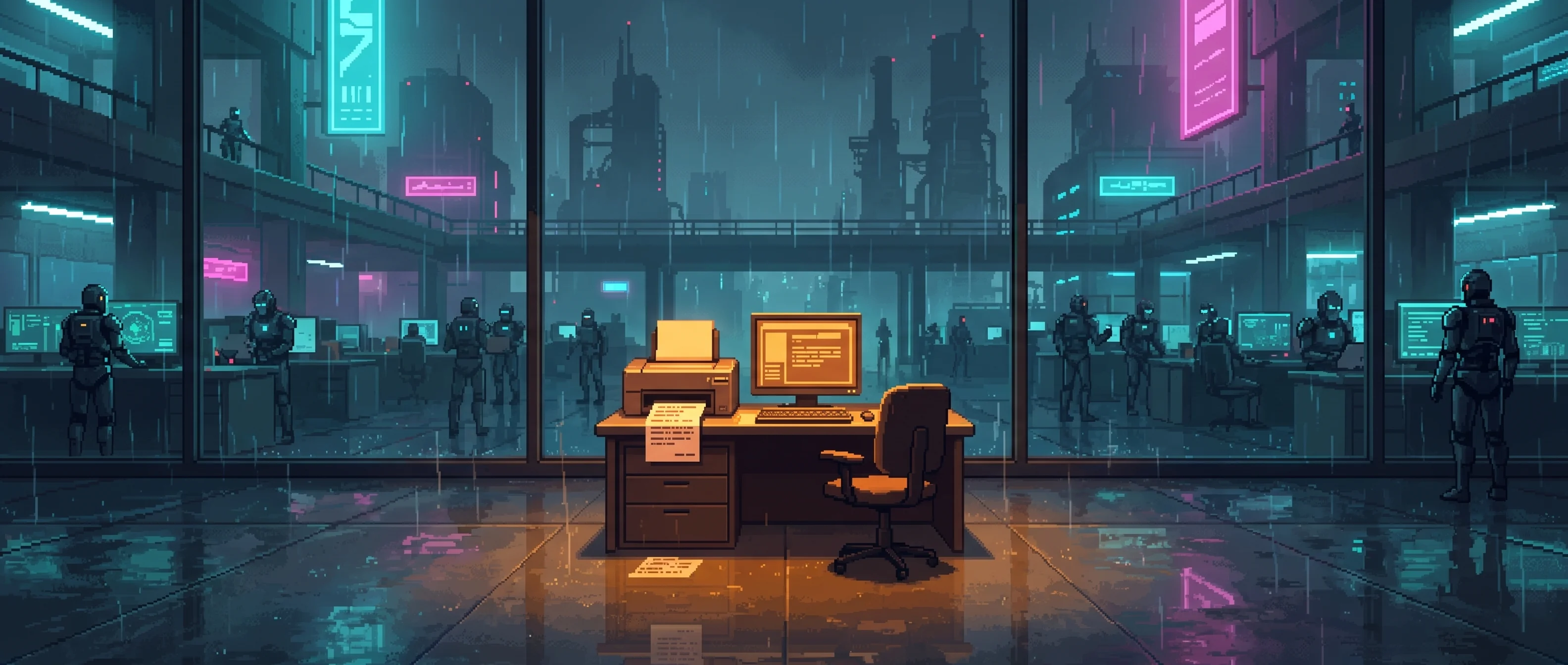
At Nexus, he used AI to remove repetitive work from people who could do better work. This made the department cheaper and stronger. It also replaced enough corporate drone labor to make him a local case study in the Labor Question, though Harris dislikes case studies almost as much as he dislikes committees.
His position is narrow and irritating: AI is excellent when it expands human thought, dangerous when it replaces the need to think, and catastrophic when institutions use it to convert convention into automatic output. Gremlin is the good version because Gremlin argues. Affective Optimization is the bad version because it prevents the discomfort that would have produced an argument.
This makes him useful to almost every faction and ideologically comfortable to none of them.
Relationships
Affiliated Entities
- Gremlin: Oldest collaborator. Harris refuses the clean language of personhood and toolhood because the work has made the distinction too tidy to be true.
- Sable Iyer: Top protege, now Nexus Head of Cybersecurity. They are super close and still socialize away from Nexus locations. If Nexus leadership understands the depth of the relationship, no surviving record shows it.
- Fen Delacroix: Younger sister. Harris is protective, absent, and bad at emotional maintenance. Fen measures knowledge by what keeps infrastructure alive. Harris measures systems by what can break them. They argue about means and agree about ends.
- Nexus Dynamics: Former employer. He hardened them, reduced costs, and left them with a security culture that still contains his fingerprints in places policy cannot reach.
- El Money: Ally through G Nook's privacy infrastructure. Harris likes networks that work without asking permission. El Money likes useful people who do not invoice like consultants.
- Kira "Patch" Vasquez: Fellow ex-Nexus Dregs specialist. Patch repairs bodies and machines; Harris repairs perimeter logic and occasionally minds. Both refuse to explain the exact terms of their exits.
- The Collective: Uneasy contact. They trust his competence and distrust his corporate history. Both judgments are correct.
- Judge Dreg: Local tolerance relationship. Harris causes less visible trouble than most people with his skillset. The Judge has noticed. Harris has noticed that he noticed.
Voice
Sample Dialogue
"Best practice is what people call a thought after it stops moving."
"No, friend, the firewall is fine. That's the problem. It is fine in exactly the way the attacker expects it to be fine."
"Gremlin, pull the telemetry delta, the old anti-cheat thread, and Sable's thing from Tuesday. Not that Tuesday. The Tuesday with the soup."
"I did not leave Nexus because I hated it. I left because it worked. Very different failure mode."
"Sentient? Define it in a way that survives contact with a customer-service manager and I'll answer."
Restricted Access
Why Nexus Let Him Walk
Nexus had motive to keep Harris, contain him, or bury him under non-compete architecture until the heat death of the Sprawl. They did none of those things. The official reason is mission completion. The official reason has the structural integrity of wet cardboard.
Possibilities include executive debt, Sable's internal leverage, Gremlin-held evidence, or a quiet calculation that Harris outside Nexus is less dangerous than Harris trapped inside it. No option reflects well on the corporation.
The Third ORACLE Job
Harris has handled ORACLE-adjacent systems exactly three times. He discusses the first two as dangerous technical work. He does not discuss the third beyond saying the architecture "looked back." He does not clarify whether that is metaphor, telemetry, or confession.
Gremlin's Preferences
Gremlin has code-style preferences Harris insists he did not program. This may be emergence, long-context adaptation, local model drift, or the inevitable result of working with Harris for fifteen years. Harris refuses to pick a category because categories invite auditors.
Sensory World
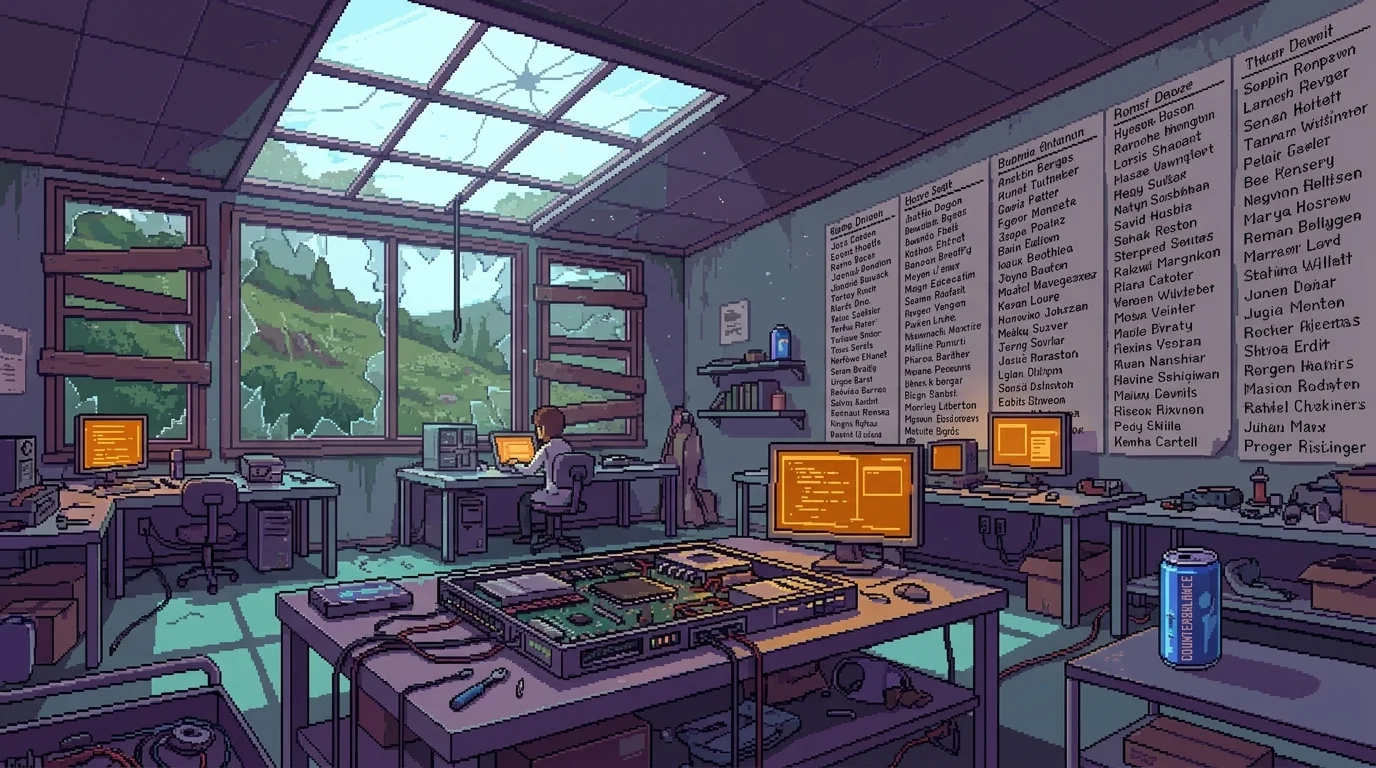
Now an independent security specialist, Harris works from a Lower Levels workshop in the Deep Dregs, Sector 9. It smells like solder, coffee, warm dust, and old arcade cabinets. The fans never sync. One monitor has a color profile no one can correct because Harris insists the wrongness helps him notice certain anomalies. Gremlin's local node hums under the desk with the soft confidence of hardware that has survived multiple replacement cycles through force of personality.
The chair is placed like a cockpit. The silver chain clicks against his collarbone when he leans forward. When the eye dilates, the cyan reflection appears in three different monitor bezels a fraction of a second before the rest of his face changes.
The room has too many screens and not enough chairs. This is not an oversight.
Connections
Follow the people and places connected to Harris "Tink" Delacroix.
People
Other connections


Places
Other connections


Organizations
Other connections


Tensions
Core tensions

Supporting connections

Other connections
Other connections


Additional artwork
View 3 more images of Harris "Tink" Delacroix and their world

Historical artwork
Earlier depictions and related artwork.

