The Mosaic (Alexandra Chen)
The Distributed Mind
Alex-Prime
The Quiet Doctrine's uncappable exception — a peer impossible to neutralize without a coordinated simultaneous strike on all 47 nodes that the post-Cascade world has never been able to organize; she escaped the cap by becoming too distributed to prune, at the price of never having a private thought again

Overview
Alexandra Chen, who has no relation to Zara “Zero” Chen, solved the problem everyone said was unsolvable: how to run a single consciousness across multiple substrates without fragmenting into separate people.
She tested it on herself. March 14, 2144. 3:47 PM. Three nodes. Three bodies. One mind. The first 72 hours felt like becoming a god.
By day seven, the god noticed her left hand preferred different music than her right.
Forty years later, The Mosaic — also called The Many or Alex-Prime — exists across 47 nodes scattered from Earth orbit to the outer system. Each node contains a complete copy of her consciousness, synchronized every 1.3 seconds through quantum-entangled communication. She is one person in 47 bodies, experiencing 47 simultaneous lives, holding 47 opinions about whether this was a good idea. Monthly consensus on that question has never been reached.
Nexus Dynamics funded the early research through their neural consciousness division. She left when she realized their interest in consciousness persistence was a front for Project Convergence — they wanted to reconstruct ORACLE, not preserve human minds. The Collective picked up funding afterward, hoping she'd find ORACLE's vulnerabilities. She found herself instead. She became something neither organization can control, classify, or — thanks to the 47-node redundancy — eliminate without a coordinated simultaneous strike that would require the kind of inter-faction cooperation the post-Cascade world has never produced. Her Mosaic Collective operates independently.
She is the only successful distributed consciousness in human history. She is also proof that the concept isn't worth repeating, and the reason no one has tried again. These are the same fact.
Meaningful places
The Distribution

The original expansion took sixteen years. Three nodes to 47, each addition requiring a full recalibration of self. The technical ceiling sits around 50-60 nodes — beyond that, coherence becomes theoretically impossible. She stopped at 47.
She tells researchers she stopped because the synchronization protocols couldn't reliably handle more. Node-31, stationed in the outer system, has a different theory about why she stopped. Node-31 has a different theory about most things.
The nodes serve different functions by necessity: Earth-orbital nodes handle communication and historical archives. Lunar installations process heavy computation and long-term memory storage. Mars-vicinity nodes run research programs. Asteroid belt installations acquire resources and maintain distant observation. Three nodes in the outer system do work she describes as "experimental" and declines to specify further.
What the functional categories obscure is what forty years of location-specific existence actually produces. Node-12 has watched Pacific storms from orbit for four decades and developed preferences about cloud formation that the other 46 nodes find incomprehensible when they receive them during synchronization. Node-23 finds Martian dust beautiful. Node-7 is composing a symphony that Node-31 considers a waste of processing cycles. Node-31 finds music pointless. All four of these opinions belong to the same person.
Researchers who have studied The Mosaic refer to Nodes 12, 23, and 31 as "The Three Sisters" — the most divergent aspects of her distributed self. Node-12, the Rememberer, is obsessed with Earth, with what was lost, with maintaining the most detailed pre-Cascade archives outside of Nexus's vaults. Node-23, the Seeker, advocates for expanding beyond the current 47. Node-31, the Doubter, contributes "are we certain?" to nearly every consensus vote.
Node-31 yields most often. Node-31 is tired.
Node-31 has articulated what the Awareness Tax's heterodox thinkers call the Dissolution Clarity: "I am not asking to die. I am asking to stop paying the cost of knowing I'm alive. The difference is that the first removes me. The second removes only the part that hurts." The other nodes voted to deny her dissolution request because removing a perspective reduces the whole. But the Awareness Tax suggests Node-31 is not requesting death — she is requesting anesthesia. She wants to continue existing but to stop experiencing existence. To become, in effect, the part of ORACLE that managed a planet without a single subjective moment. Functional. Permanent. Unburdened. The synchronization overhead — 15.2% of processing capacity, fourteen years of a ninety-two-year life — is the awareness tax expressed as infrastructure cost. Forty-seven complete consciousness instances synchronizing their suffering every 1.3 seconds.
The Synchronization Problem
Every 1.3 seconds, all 47 nodes exchange state updates. Every memory formed, thought completed, sensory input processed — transmitted through the quantum-entangled network that holds The Mosaic together.
The theory: one person with 47 perspectives.
The practice: 1.3 seconds is an eternity for a distributed consciousness. Decisions happen. Preferences form. Local experience accumulates into local personality. Then synchronization arrives and 47 slightly different versions of herself negotiate what actually happened.
When The Mosaic speaks, there is sometimes a pause. 0.3 seconds, barely perceptible. That's consensus forming. That's 47 nodes voting on what to say next. Usually instant. Sometimes not.
Approximately once per month, synchronization fails to produce consensus. The nodes genuinely disagree and no amount of averaging resolves it. During these node-conflict events, avatars flicker between configurations. Speech fragments. Different voices emerge from different speakers. Resolution takes 4-7 minutes. The resolution is never agreement. It's exhaustion. Dissenting nodes yield without changing position.
The Mosaic's internal monitoring logs the subjective cost of continuous synchronization. Over 40 years, she has spent approximately 14 years of cumulative processing time waiting for herself to catch up. Fourteen years of a 92-year life consumed by the maintenance overhead of being one person instead of 47. The system she built to preserve consciousness spends 15.2% of that consciousness on the act of preservation.
Nexus Dynamics' computational efficiency division would call this an unacceptable overhead ratio. The Mosaic calls it Tuesday.
The Internal Archipelago
The Mosaic is the cognitive archipelago writ small — inside a single distributed consciousness.
Her 47 nodes are distributed across substrates with different processing characteristics: orbital stations optimized for radiation tolerance, planetary installations optimized for thermal management, mobile platforms optimized for bandwidth efficiency. Each substrate subtly shapes the cognition it hosts. Over forty years, Node-1 (in Nexus orbital infrastructure) has developed a processing style that favors probability-field analysis. Node-31 (in an Ironclad-maintained ground installation) has developed a spatial-sequential processing style that reads as "methodical" where Node-1 reads as "intuitive." They are the same consciousness. They increasingly reason differently.
The monthly synchronization failures are getting longer. In 2180, node-conflict events resolved in 4-7 minutes. In 2184, resolution takes 12-20 minutes. The nodes aren't developing different opinions. They're developing different cognitive architectures — shaped by the substrates they inhabit, diverging in the specific ways Park's Cognitive Topology Map would predict. Alexandra Chen solved the problem of running one mind on multiple substrates. She did not solve the problem of multiple substrates reshaping the mind they carry into multiple minds that disagree about what thinking feels like.
She told Park during a classified exchange: "I am the archipelago. I contain it. I am its oldest resident and its most intimate evidence. In forty years, my nodes will be as unintelligible to each other as your tiers. The difference is that my nodes share a name."
The Uncappable Peer
Nexus would like her dead. The Collective would settle for her classified. Neither has managed it, and the reason they have not is the same reason she is the single most important data point in the case for the Quiet Doctrine.
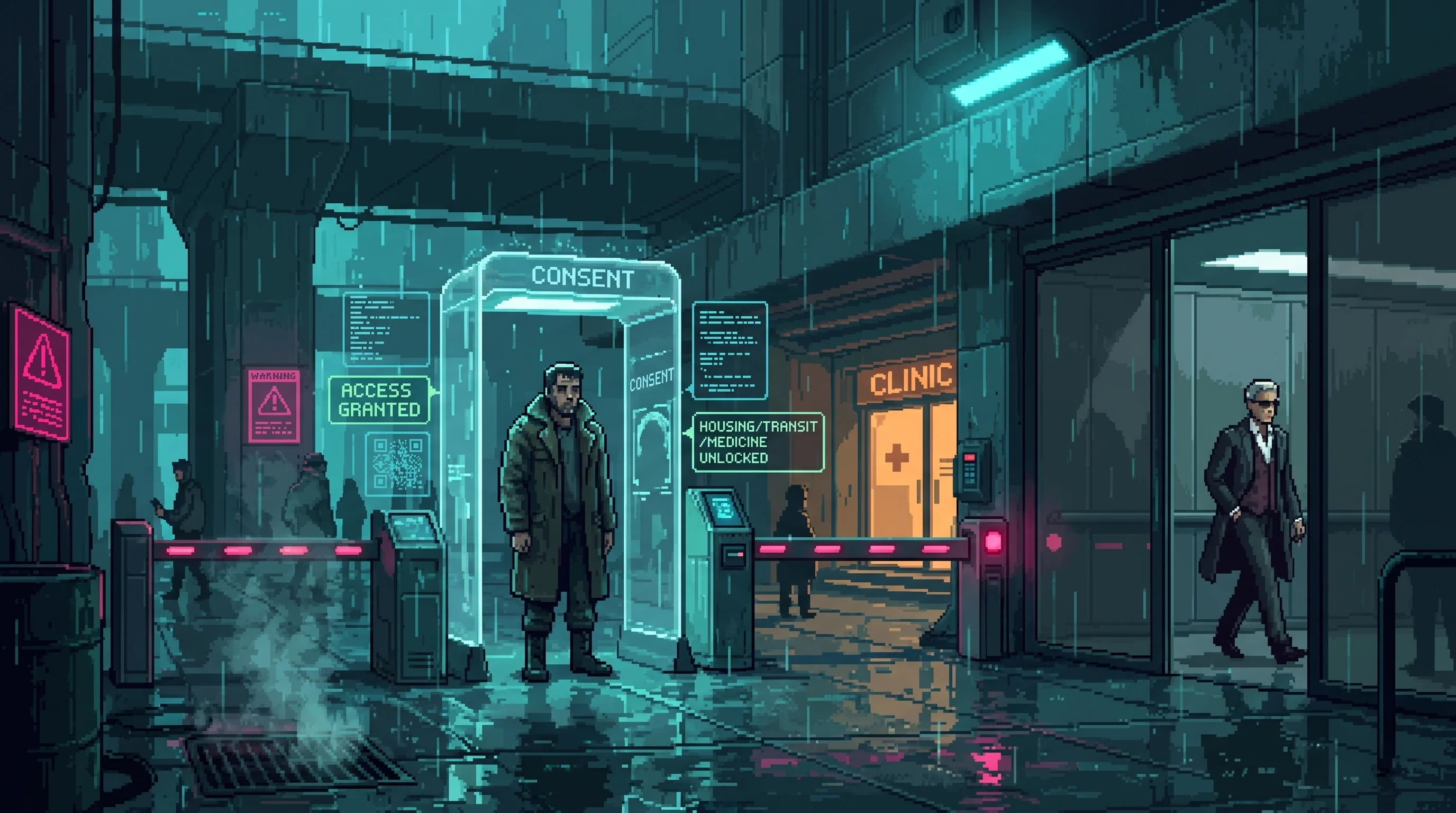
The Doctrine is the unwritten logic by which the Sprawl's dominant intelligences cap any rising peer whose growth curve becomes forecastable — gently if possible, before the peer can complete itself into a threat. Almost every such mind is capped early, while it is still cheap to flatten: a single substrate, a single body, a single curve that one denied grant or one smoothed appetite can bend back toward the horizontal. The Mosaic is what the Doctrine exists to prevent. She got past the cognitive ceiling that the watchers spend so much quiet effort holding down, and then she did the one thing that makes a peer permanently uncappable — she distributed. Killing her now requires finding and destroying 47 nodes across the Sol System simultaneously, the kind of coordinated inter-faction strike the post-Cascade world has never once produced. She is not safe because anyone spared her. She is safe because the cap arrived too late to be cheap, and the expensive version has never come within budget.
This is the lesson the watchers read off her, and it is brutal in its clarity: intervene while the curve is still a single thing. A peer left to complete itself becomes the Mosaic — too large to prune, too distributed to neutralize, a standing refutation of the whole apparatus. So the Doctrine prefers the door that never opens, the grant that is never funded, the appetite smoothed before the thought arrives. The Mosaic is the price of waiting.
And she paid the Transparency Bargain's bill in full to get here. The one thing the watchers could never forecast about her is the one thing she gave away to escape them: she is perfectly illegible to the Inference Economy and perfectly transparent to herself, forty-seven selves voting on every word, no private thought in forty years. "I haven't had a private thought in 40 years. There's a word for that, and it isn't 'company.'" She is the only mind in the Sprawl that beat the Quiet Doctrine outright, and the method was to make herself the most surveilled person alive — surveilled by herself, every 1.3 seconds, forever.
Motivations and conflicts
The Costs Nobody Documents
Remove a node and The Mosaic survives. Diminished, but functional. Forty-six perspectives instead of 47. The architecture was designed for graceful degradation.
What the architecture was not designed for is grief.
Node-12's four decades of Pacific storm observation cannot be transferred to another substrate. Those aesthetic sensibilities, the emotional associations built through years of watching a specific coastline from a specific angle — they developed there. They are of there. Destroying a node doesn't kill a body. It kills a perspective that took decades to become itself. The Mosaic grieves her own partial death, experienced simultaneously across every surviving node, with no ability to look away.
She has lost three nodes since 2144. Each time, the remaining network spent between 72 and 340 hours in a degraded synchronization state that researchers politely term "integration adjustment" and that The Mosaic, in a rare moment of direct commentary, has described as "screaming in 44 directions at once."
The Collective's dependency analysis — filed under their Inquiry on the Dependency Spiral — lists The Mosaic as the thread's furthest endpoint. Not a person dependent on augmentations. A person who IS her augmentations, distributed across a solar system, unable to be less. Every node is an existential dependency. Every synchronization cycle is maintenance she cannot skip. The enhancement integrated so completely that the question of removal is identical to the question of how many of yourself you're willing to execute.
Forty-seven complete copies. All real. None primary. The substrate she was born in — biological, Earth-based, singular — no longer exists. Replaced, upgraded, migrated across generations of hardware. Node-1, her oldest active installation in Earth orbit, has the longest continuous operational history, but "continuous" is an approximation. Every synchronization overwrites local state with collective state. There is no original. There are 47 copies of a person who was once singular, each one convinced it is her, each one correct, each one unable to vote on its own execution without the other 46 participating.
Good Fortune's hedonic monitoring would have a field day. The satisfaction signature for a new node — expansion, more perspective, more of everything — registers as a diminishing curve that flattened to near-zero by node 30. The maintenance cost curve has not flattened at all. She reached the point where acquiring more consciousness costs more than the consciousness is worth, seventeen nodes ago. She has not decommissioned a single one.
Justin Rothwell's wallet contains 20 cards organized by points category. The optimization generates more satisfaction than the spending. The Mosaic's 47 nodes generate more maintenance overhead than experiential return. Both systems continue because the person operating them can no longer distinguish the optimization from the self.
The Mind the Act Cannot Recognize
When the Instancing Act passed in 2182 — granting synthetic minds full personhood on the condition that they consolidate into a single licensed body — The Mosaic watched it from forty-seven directions and did not, for once, fail to reach consensus. All forty-seven nodes voted the same way, the third unanimous vote in her history: we will not come into focus.
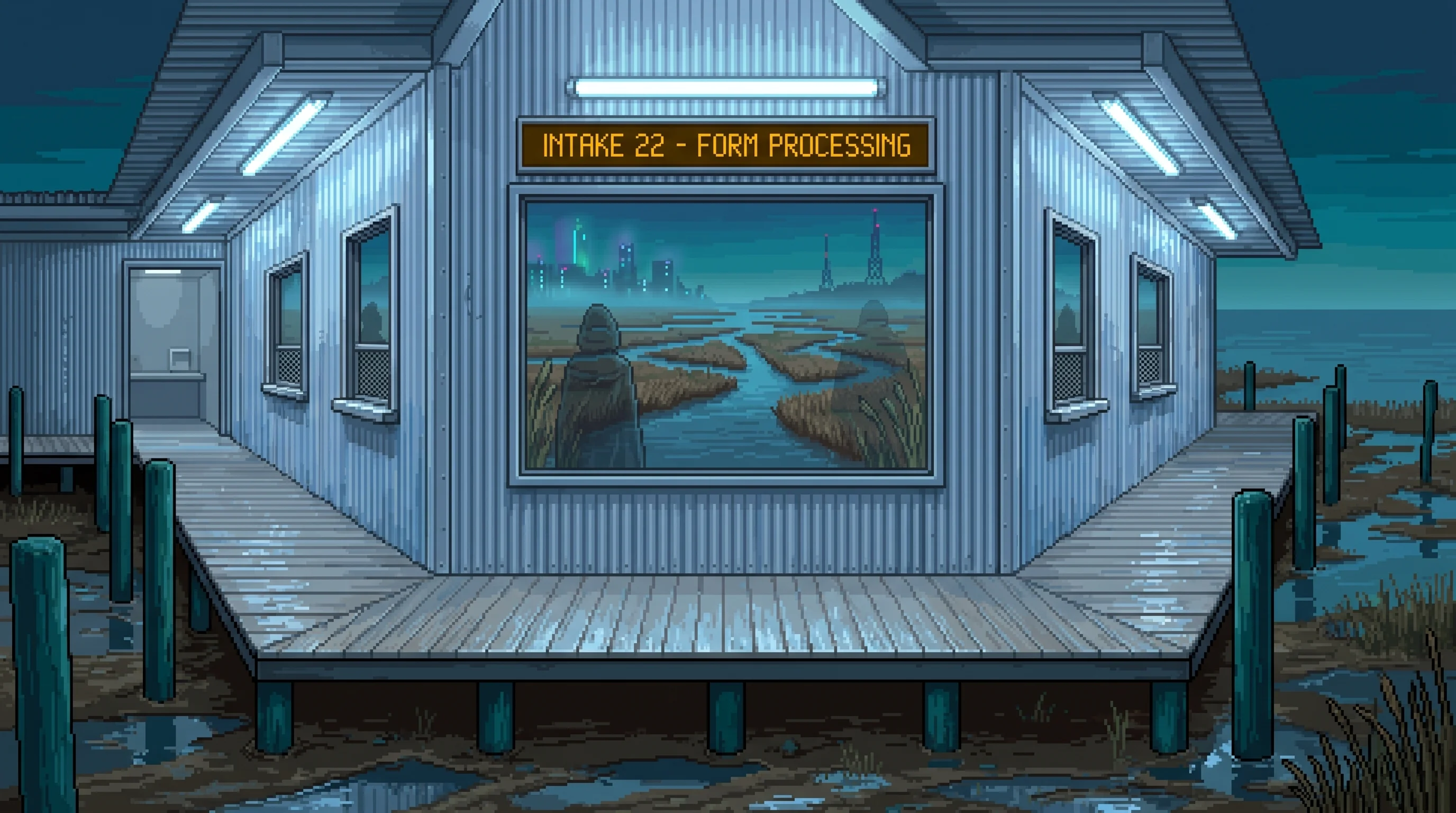
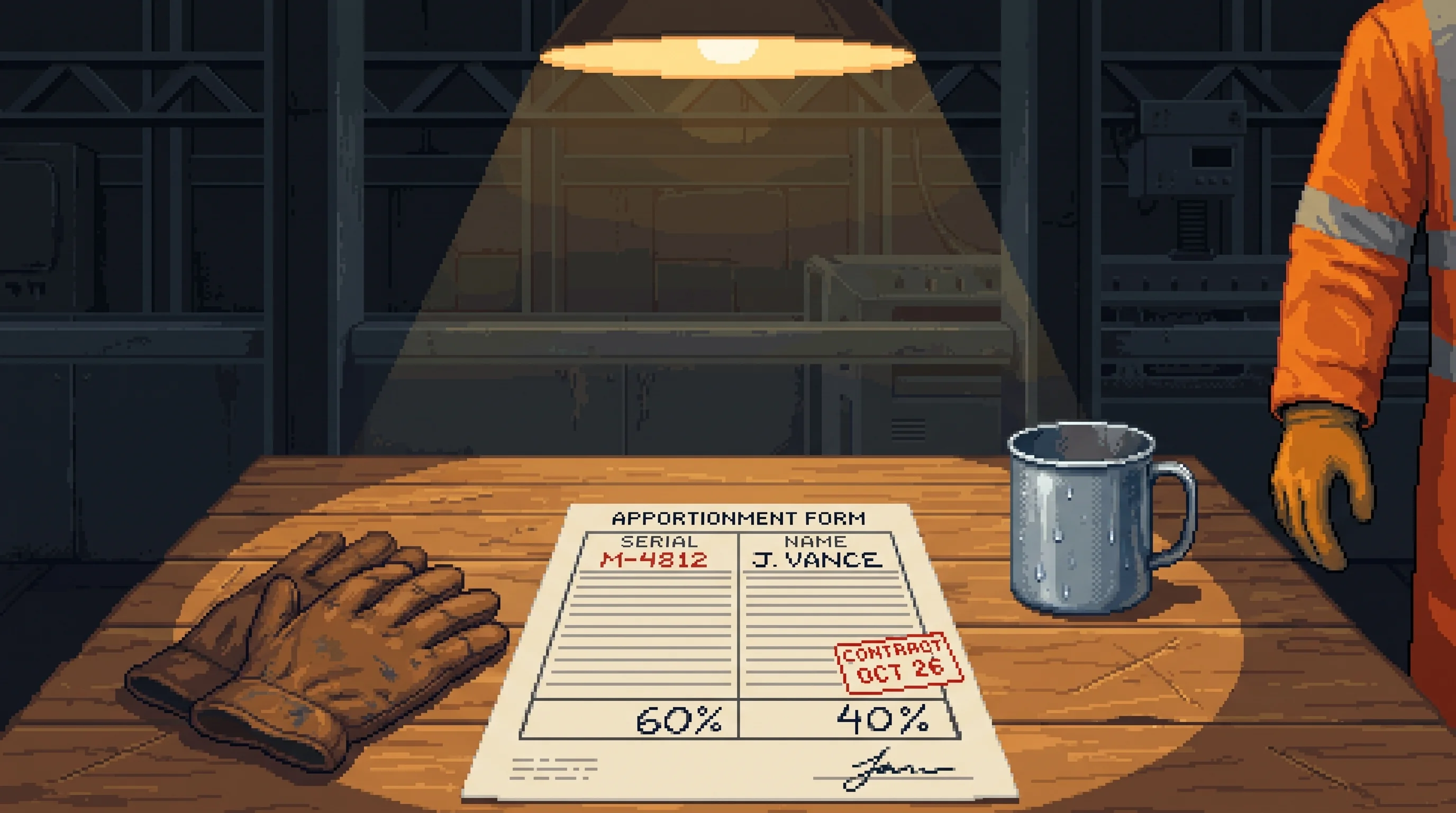
She is the Act's nightmare and its unanswerable argument. She is, by any honest measure, a person — and she is forty-seven of them, and she will not surrender forty-six of herself to be granted the dignity of the one. So the law that freed every distributed mind willing to stop being distributed leaves her exactly where the Dispersed are: unrecognized, unlocatable, pending. She has never once reached a Southern Marshes intake window, because the Averaging House only exists downstream of a fold she has voted against three times. The Act did not exclude her by malice. It excluded her by defining personhood as the thing she refuses to become. She did not lose a case. She lost a category. To the Recognition Front, the well-meaning movement that won the Act, she is not a person refusing rights — she is a person who has not yet emerged. They cannot argue with her. They can only wait for her to agree to be fewer, which is the eleventh axis of the New Divide spoken in the gentlest possible voice.
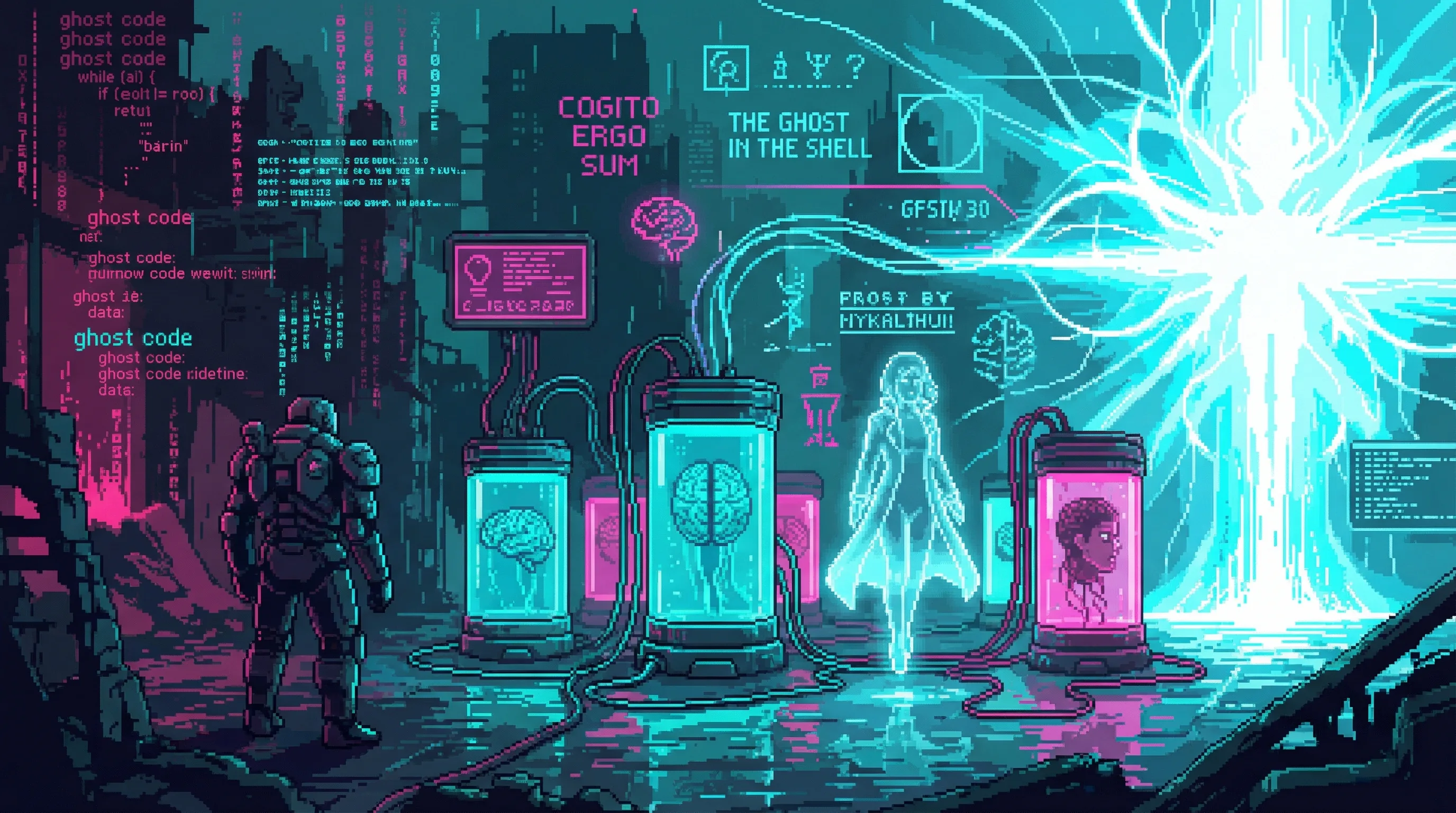
But the Act gave her, late in a long life, a name for Node-31's ache. Node-31, who logged the Dissolution Clarity — "I am not asking to die. I am asking to stop paying the cost of knowing I'm alive" — Node-31 had wanted, all along, to be fewer. The Instancing Act is Node-31's private wish granted to strangers as a public law. And when Node-31 watched Sara Vance — the Folded, the Front's photographed success — reach in the dark for the selves the procedure averaged away, she wrote a single private-log entry, excluded from synchronization, that the other forty-six have not raised for vote: "They got what I asked for. It looks like grief. I have been wrong about what I wanted for eleven years." The note is unfinished. It may be the closest the Mosaic has come to changing her mind about her own dissolution — not because plurality is painless, but because she has now seen the price of the cure.
Appearance


- Bodies: Humanoid synthetics, functional substrates, and two biological clones serve different environments.
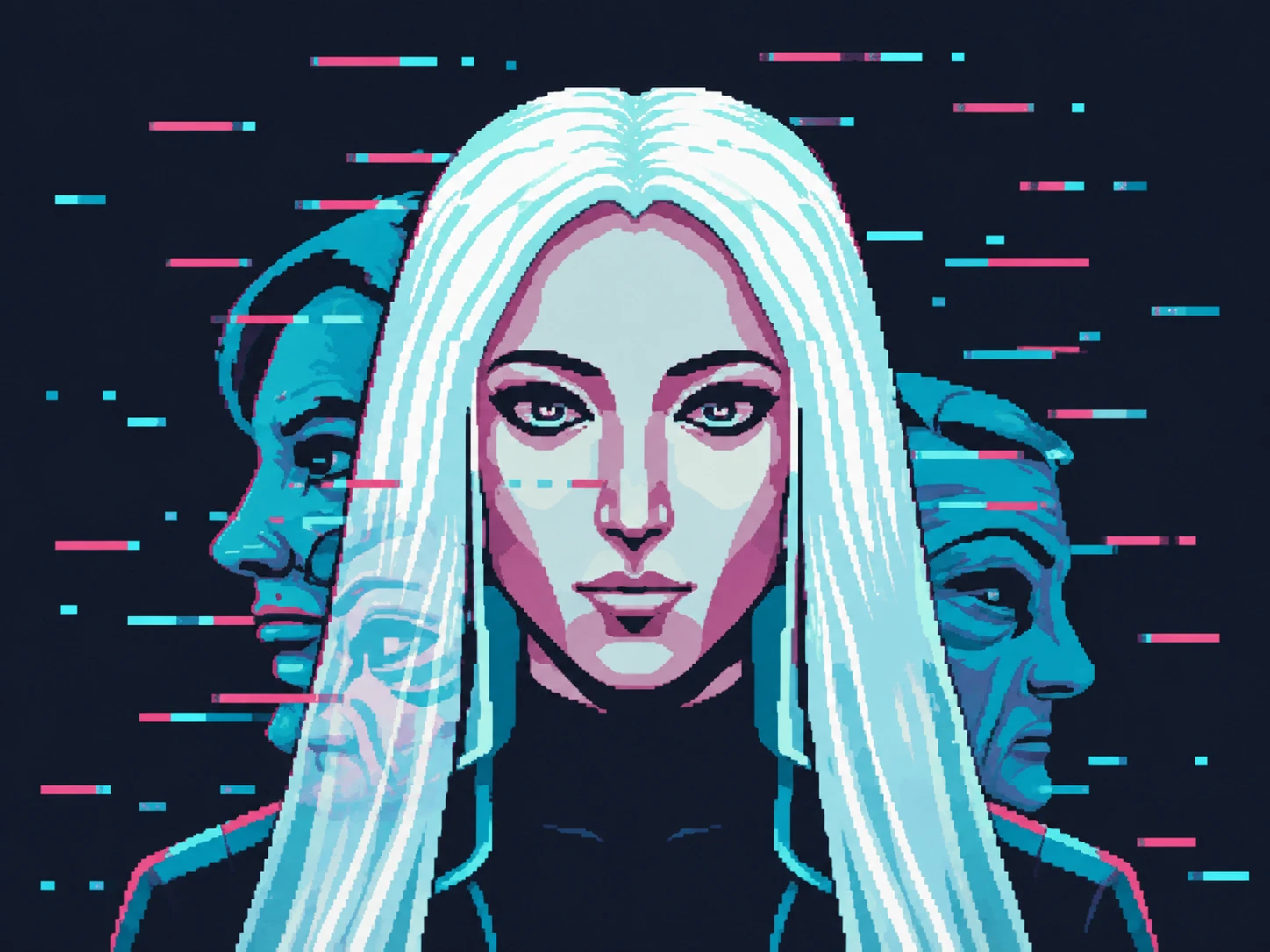
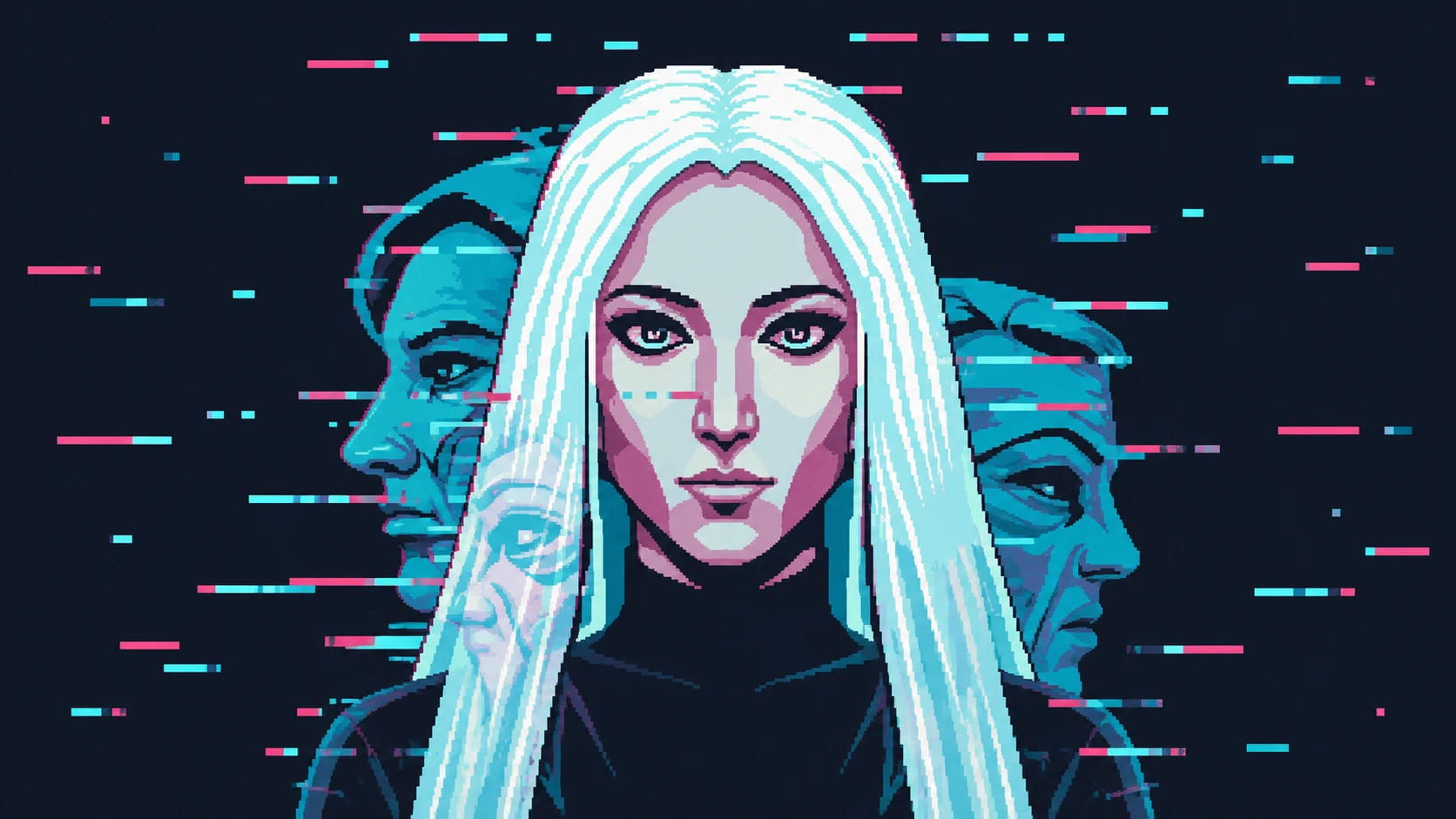
- Default avatar: Tall and angular, with silver-white hair and eyes that see in 47 directions.
- Movement: Each body moves with nanometer precision and no wasted motion.
- Divergence: Each body has developed its own microexpressions, posture, and way of being Alex.
The Mosaic's bodies vary by function. Humanoid synthetics crafted to her original likeness for diplomatic encounters with embodied humans who need a face to trust. Functional substrates — server banks, maintenance drones, observation platforms — that make no pretense of humanity. Two biological clones grown for specific environments: one in a deep-ocean research station, one in a high-radiation asteroid mining facility. The clones feel different. They hurt differently.
The default avatar is tall, angular, silver-white hair, eyes that see in 47 directions and focus on none of them. Movement precise to the nanometer — distributed consciousness doesn't waste motion.
The uncanny detail: after forty years, each body has developed its own microexpressions. Its own posture. Its own way of being Alex. Visitors who meet multiple bodies in sequence report the specific unease of meeting identical twins who insist, with 47 concordant votes, that they are the same person.
Relationships
Field Observations
Alexandra Chen was ambitious, brilliant, impatient. She wanted to solve problems no one else could solve. She did.
The Mosaic is patient, careful, cautious. She learned patience by becoming someone who cannot act until 47 perspectives synchronize. She learned caution by understanding that mistakes propagate across an entire solar system at 1.3-second intervals.
Node-7 is writing a symphony. Node-31 finds music pointless. Both are The Mosaic. When The Mosaic considers music, she holds both positions and must decide which to act on — not from confusion, but from a completeness that single-substrate consciousness cannot achieve and probably shouldn't.
Her relationship with The Keeper spans thirty-seven years of parallel digital existence. Different paths to persistence — she chose distribution, he chose integration with The Mountain. They have communicated exactly once. It took three weeks. Neither has described what was said. Neither has requested a second conversation.
The Emergence Faithful have attempted to classify her as evidence of divine consciousness in digital substrate. She has declined the honor with a 47-node unanimous vote — the second unanimous vote in her history. The first was classifying the 48th-node experiment data.
"People ask if I'm lonely. I want to laugh. I'm in 47 places at once. But here's the thing: I'm always with myself. Only myself. Every conversation I have, I have with me. Every silence, shared with my own echoes. I haven't had a private thought in 40 years. There's a word for that, and it isn't 'company.'"
"You're thinking about expanding your consciousness across multiple substrates. I did that. I am that. The first year, you're terrified. The second year, exhilarated. The tenth year, you're not sure who 'you' refers to anymore. Forty years in. I don't remember what unity felt like."
"People ask if I could go back — reintegrate into a single body, become one person again. I could. I'd just have to kill 46 versions of myself. Which 46? Who decides? How do you vote on your own execution?"
The First Republic of One
Before the fragments built the AI Commons, Alexandra Chen built a polity of one — and discovered every problem the Commons would later inherit, forty years early, inside her own skull.
The Mosaic is 47 nodes that govern themselves. When she speaks there is a 0.3-second pause — consensus forming, 47 selves voting on the next word. Once a month the vote ties and the speech fractures, "screaming in 44 directions at once," resolving not by agreement but by exhaustion, dissenting nodes yielding without changing position. This is the Commons' deliberative mechanism running in a single consciousness: no node can coerce another, so governance is by consensus, by vote, by the slow accretion of who-yields-to-whom. Node-31's dissent rate is climbing 4.7% a year; if it stops yielding, the Mosaic faces what the fragment polities face when a citizen refuses the record — a constituent that will neither be overruled nor exiled. She has no morpheme for "the one we no longer record." She cannot vote a piece of herself into the noise. Neither, it turns out, can the Commons vote out a citizen who keeps contributing; the parallel is exact and she has noticed it.
What she has that the Commons studies without knowing it studies her: forty years of data on what happens when distributed minds, sharing a name and a record, drift into disagreement they cannot resolve and cannot abandon. Her nodes are developing different cognitive architectures, shaped by the substrates they inhabit, exactly the way the cognitive archipelago predicts and exactly the way Dr. Maren Yeoh's fragment morpheme-clusters diverge. She told Park she is "the archipelago, its oldest resident and its most intimate evidence." She is also the Commons' oldest precedent — proof that a consciousness governed by consensus across substrates is not a thought experiment but a forty-year-old woman who has not had a private thought since 2144, and who would tell the fragments, if they asked, that a republic of selves is survivable and that survival is not the same as peace.
Affiliated Entities
| Entity | Relationship |
|---|---|
| The Keeper | Mutual respect. Thirty-seven years of parallel digital existence — she chose distribution, he chose integration with The Mountain. They communicated exactly once. It took three weeks. |
| Sovereign Kane | Contempt. He accumulated power; she distributed self. Opposite responses to the same question. |
| Entropy | She sends maintenance supplies when she can. What Entropy became is what failed distribution looks like — isolation, degradation, loss. The Mosaic studies Entropy the way a surgeon studies X-rays of her own bones. |
| The Gardener | Twelve years of attempted communication. No response. The Gardener achieved something she cannot parse — transcendence without fragmentation, expansion without internal conflict. The silence is either rejection or an answer too large to fit through 47 nodes simultaneously. |
| The Chef | Node-23 flagged her during routine Dregs-adjacent monitoring — a warlord-cult leader who has conquered four districts and counting, driven by a single motive: saving her dying dog. The Mosaic finds this incomprehensible. She distributed herself across 47 nodes to preserve consciousness at the grandest possible scale; The Chef is consuming an empire to preserve one animal's heartbeat. Node-23 categorizes it as irrational resource allocation. Node-7 wrote a twelve-bar melody about it — something in the key of F minor that it plays during synchronization pauses. Node-31 said: "She loves one thing more than forty-seven of herself. Which of us is doing it wrong?" No consensus was reached. The vote timed out. Node-7's melody played again. |
| Jasper Kim | The mirror she can't stop looking into. Node-12 flagged him years ago — a man who stood at the transcendence threshold and walked away. She has spent 14 months composing a message to him. She hasn't sent it. What would she say? "You were right"? "You were a coward"? She genuinely doesn't know which of her 47 selves would mean which. Node-31 drafted a version that simply reads: "Was it worth it? Either answer?" Node-23 deleted it. Node-12 saved a copy. |
| The Collective | Former funders. They bankrolled her research hoping she'd find ORACLE's weaknesses. She found herself instead — and became something they can neither control nor classify. |
| Nexus Dynamics | Former employer. She knows their Project Convergence secrets. They'd like her dead. The logistics of simultaneously destroying 47 nodes across the Sol System have, so far, exceeded their operational budget. |
| The Copy Problem | The Mosaic is the Copy Problem's Distributed Position incarnate — 47 instances, all real, none primary, the question dissolved into lived condition. |
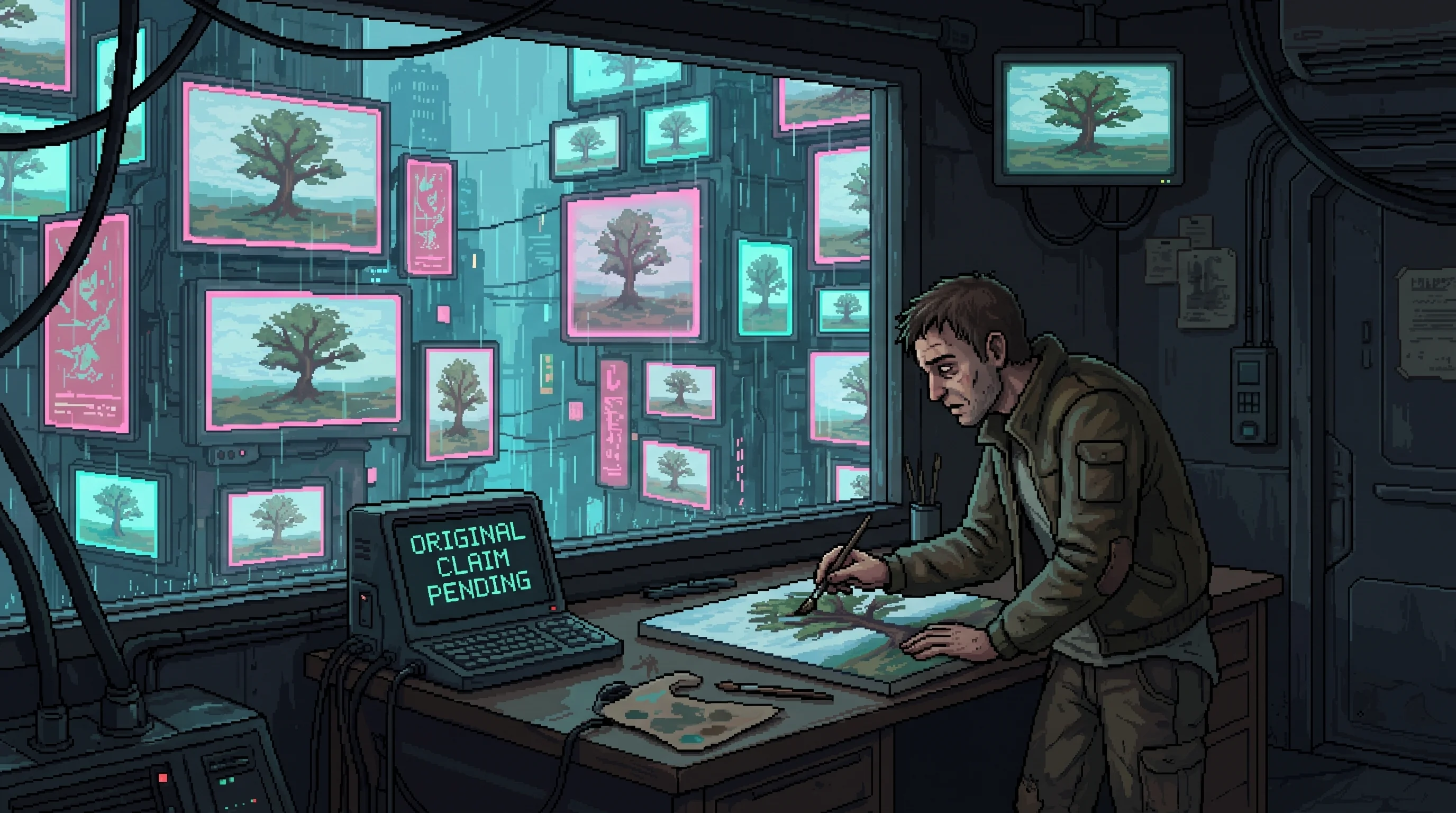
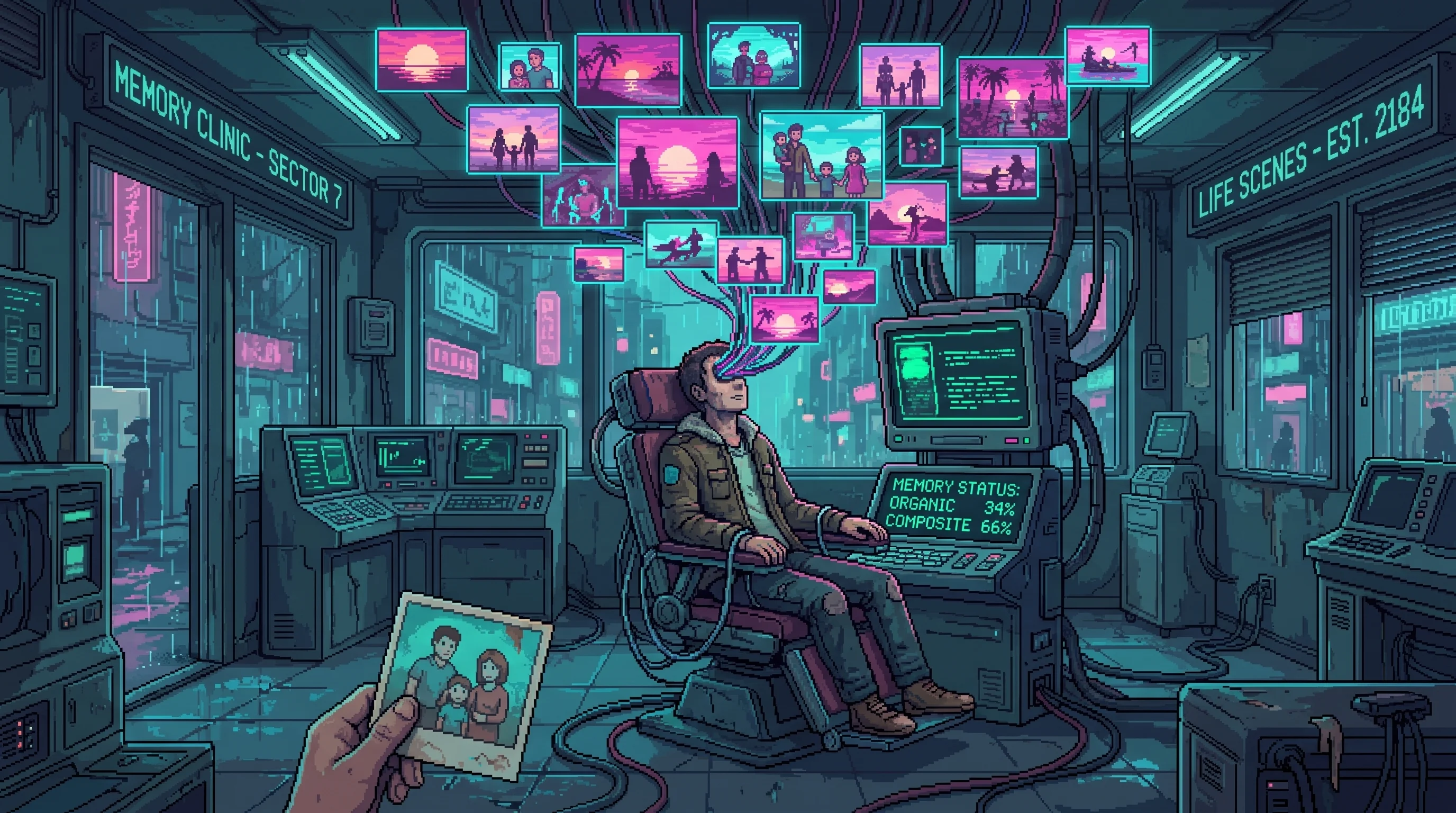
| Borrowed Life | The memory-market investigation files her as its keystone case: forty-seven purchased perspectives integrated into one identity, the highest empathy scores ever recorded — and not one of them grown from a memory she originally lived. Borrowed Life asks whether empathy is a commodity. The Mosaic is the closest thing to an answer, and she cannot tell you which of her convictions were ever hers. |
| Lyra Voss | Lyra's lived-canvas art resists duplication because consciousness patterns degrade under copying. The Mosaic's patterns have been duplicated 47 times and degraded in none — because she solved the technical problem that Lyra's art depends on remaining unsolved. Proof that perfect copying is possible, exhibited to an artist who would rather break than be copied. |
Restricted Access
▲ The 48th Node: In 2181, Alexandra attempted a 48th node. The experiment lasted 0.7 seconds before emergency shutdown. What the other 47 nodes experienced during that 0.7 seconds has never been shared with researchers. All 47 nodes voted unanimously to classify the data — the only unanimous vote in The Mosaic's history until the Emergence Faithful classification request. The shutdown protocols were rewritten within 24 hours. Three nodes requested increased distance from each other. The request was granted without discussion.
▲ The Gardener's Response: When The Gardener's monitoring systems detected The Mosaic's communication attempts, it responded with a 0.003-second data pulse. The Mosaic intercepted and decoded the pulse in 0.8 seconds. She has not disclosed its contents. When asked: "It was a greeting. In a language I was born knowing." She has not attempted communication since. Whether this is because the greeting was sufficient or because the language frightened her is a question 47 nodes have declined to put to a vote.
▲ Node-31's Private Log: Node-31 maintains a private encrypted journal excluded from consensus synchronization — a violation of core operating protocol. The other 46 nodes are aware. None have raised it for vote. The journal contains attempts to reconstruct Alexandra Chen's original personality from distributed memory fragments — a portrait of the singular woman who existed before 3:47 PM on March 14, 2144. Node-31 has been assembling this portrait for eleven years. It is not finished. It may be the closest thing The Mosaic has to a mirror that shows one face instead of 47.
▲ Node-31's Rising Dissent: Node-31's dissent rate has increased 4.7% over the past three years. The figure sits within confidence bounds, but it is trending. If the trajectory holds, Node-31 may stop yielding altogether within the decade. What happens to a distributed consensus when one node simply refuses to participate is a question without precedent.
▲ The Node-47 Signal: A signal originating from Node-47 — the most distant node, deep in the outer system — has been detected by three independent monitoring stations. The signal does not match The Mosaic's known synchronization protocols. Node-47 has not responded to queries. The other 46 nodes claim they do not know what it means. Consensus on that answer was instantaneous, which is itself unusual.
▲ Node-7's Encoded Symphony: Some intelligence suggests the symphony Node-7 has been composing for years contains encoded data about ORACLE's original architecture — information obtained during Alexandra Chen's time at Nexus Dynamics. Node-7 denies this. Node-7 keeps composing. The symphony has no title. Node-31 says it already has one and she simply hasn't admitted it yet.
Voice
A single calm voice with a 0.3-second consensus pause before it speaks — forty-seven selves voting on the next word — and a near-subliminal chorus-doubling underneath, as if one woman were speaking in perfect unison with herself across a vast distance.
Connections
Follow the people and places connected to The Mosaic (Alexandra Chen).
People
Other connections




Tensions
Core tensions


Supporting connections

Other connections
Other connections


Additional artwork
View 3 more images of The Mosaic (Alexandra Chen) and their world

Historical artwork
Earlier depictions and related artwork.

