El Money
El Money
The Alternative Infrastructure
G Nook's Independence Index โ a classified Nexus metric measuring dependence on corporate systems โ sits at an estimated 67. El Money doesn't know the number exists. He doesn't know Nexus has a name for what he built. He built it because people needed terminals and the corporations weren't selling.
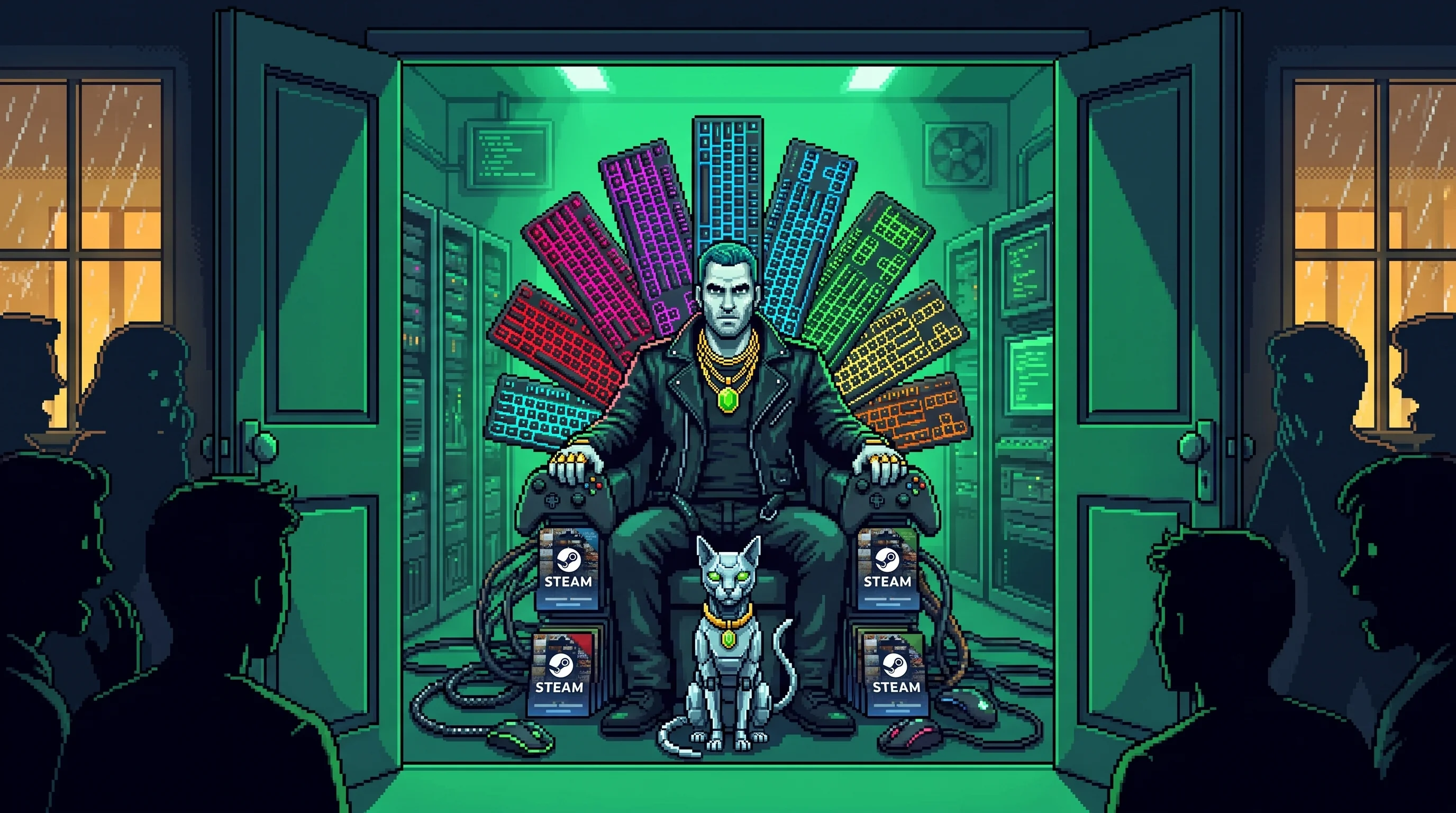
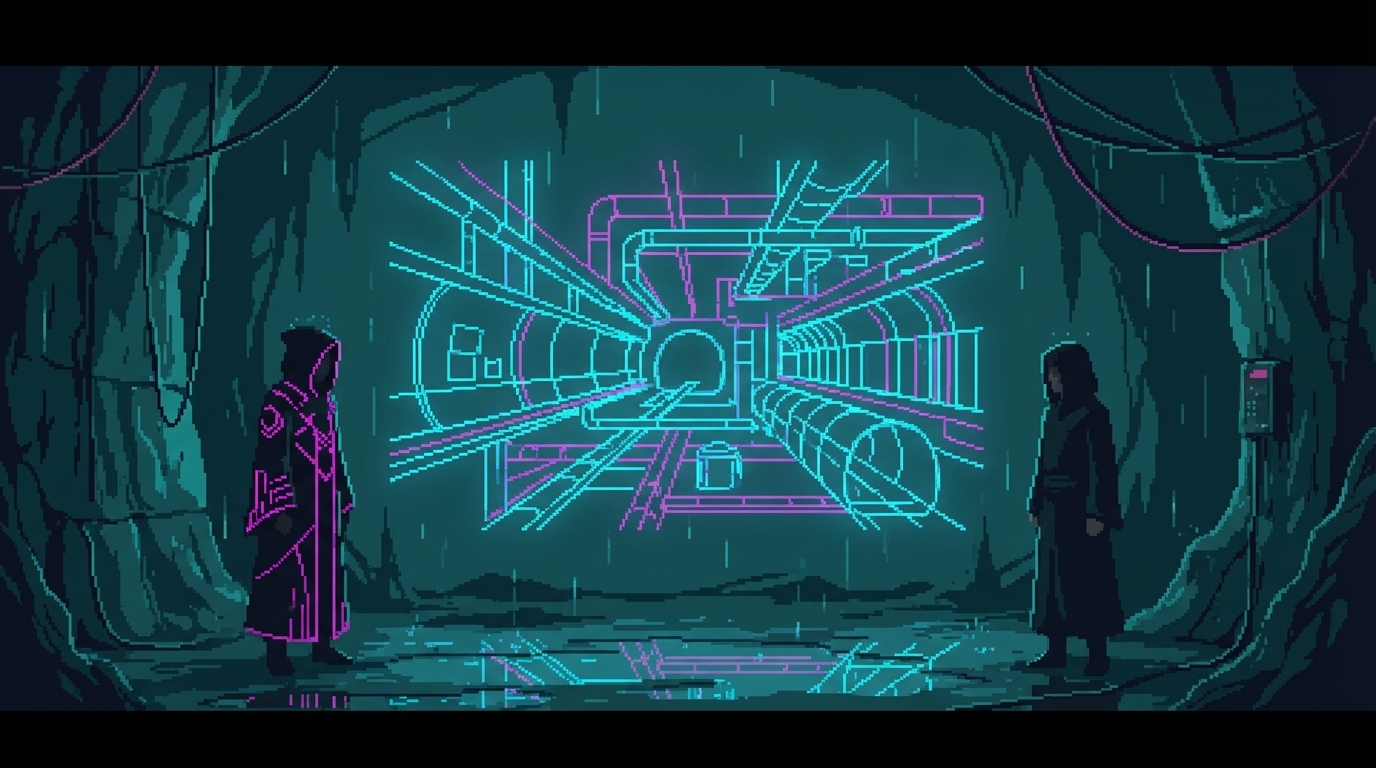
The result is the second-largest functional alternative to corporate digital infrastructure in the Sprawl. Sixty locations across converted shipping containers, hollowed-out infrastructure spaces, and basements that don't appear on municipal records, all running on salvaged equipment. G Nook processes transactions Good Fortune can't track, carries messages Nexus can't intercept, and provides anonymous connectivity through a network that proves the services Nexus says require their 40% of Sprawl compute can be replicated by one man with a cat and a talent for knowing things.
The quality is lower. The fidelity is functional. Nexus's Strategic Forecasting Division has filed it accordingly.
Their notation: "Non-replicable, containment unnecessary." The notation has been wrong about replicability three consecutive times. G Nook expanded from 40 to 60 locations in two years. The analysts cannot agree on whether to classify it as a single entity (too distributed) or a collection of entities (they share a brand). The ambiguity is structural. El Money built a network that can't be targeted because it has no center โ and the corporations that depend on centralized infrastructure to function cannot suppress an alternative that functions precisely because it isn't.
The Independence Index footnote appears in quarterly Omega reports. The footnote's trajectory is rising. Nobody has updated the notation.
Overview
El Money should be dead. The mathematics are not ambiguous. A kid from the margins with no corporate backing, no augments, no legal name on any record โ the Sprawl's actuarial tables give him a life expectancy somewhere between "already happened" and "next Tuesday."
He is, at time of cataloguing, in his mid-40s and running sixty locations.
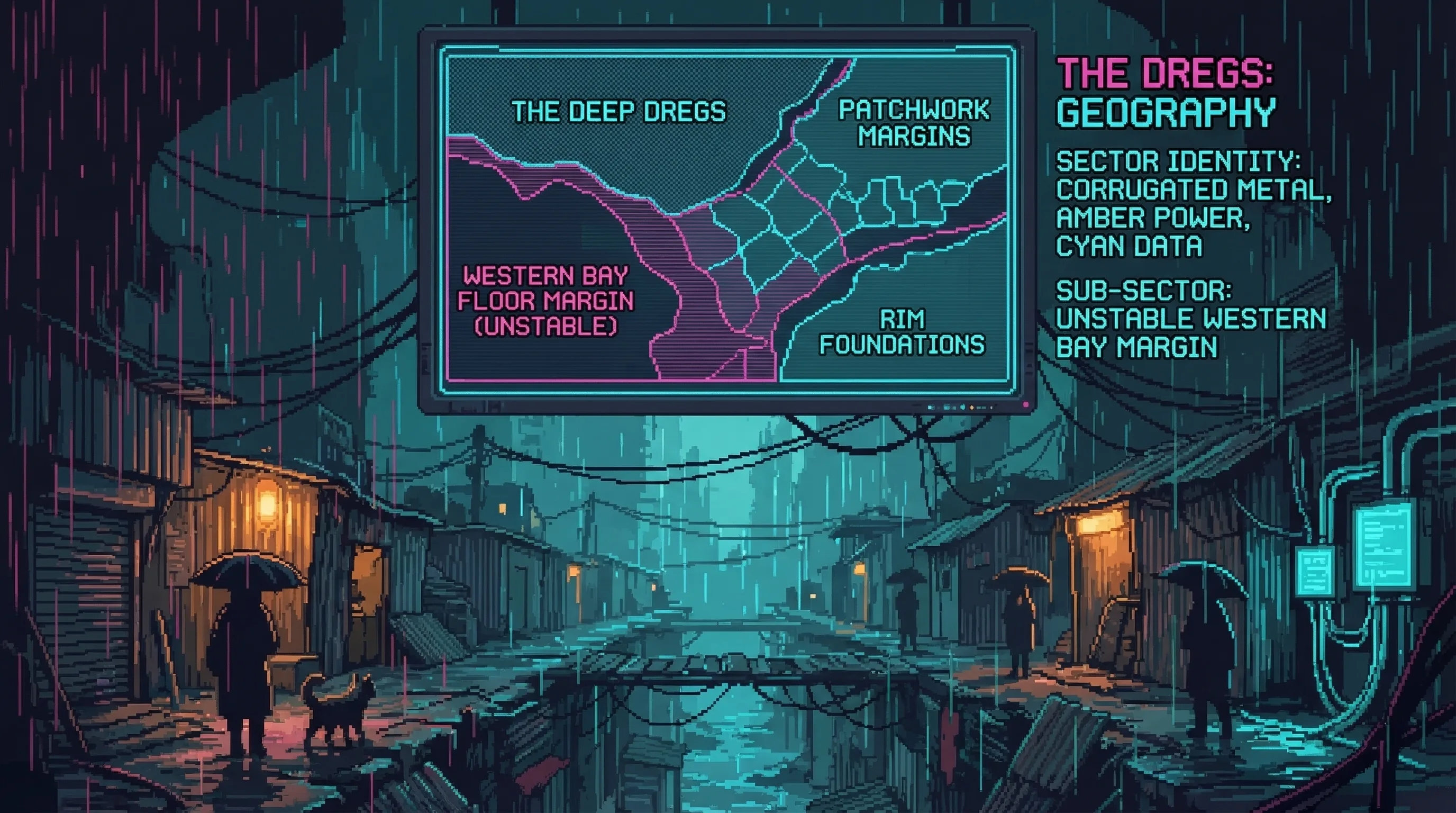
His enemies go broke at suspicious moments. His safe houses survive raids that level the buildings on either side. He takes a different route to work on the one morning an ambush waits on his usual path. The religious authorities who tried to destroy him triggered fire code inspections in their own facilities. The corporate enforcers who seized his operations found their assets frozen by cascading technical failures. El Money lost everything twice and rebuilt it both times, larger, as if the universe owed him favors and the interest was compounding.
Nexus Strategic Forecasting tracks a probability metric called the Survival Deviation Index. It measures how far a person's continued existence deviates from actuarial prediction. The corporate norm is 0.8 to 1.2. El Money's is 4.7. The analysts have flagged this three times. Each flag generated a follow-up investigation. Each investigation concluded "insufficient data." The insufficient data keeps getting older and the man keeps not dying.
He burns incense in every back room. Sandalwood and something older, sourced from a monk on a mountain years ago. He tells himself it's for his dead brother. He doesn't say who else it might be for. In the silence of his private rooms, he speaks to empty air โ updates on the empire, on GG, on The Keeper, on things a friend who left the world might care about.
He's never gotten a response. Things keep working out.
What the Sprawl sees: the information broker whose network touches every shadow economy in the city. G Nook began as a tiny den called Bash Terminal, wedged next to a river so polluted it glowed at night. The clientele were hackers too unstable for legitimate work, data runners with nowhere to go, people the corporate system had processed out. El Money gave them somewhere. Now he gives half the Sprawl's underground somewhere.
What the regulars know: El Money is not pretending to run gaming cafes as cover. He is a gamer who built an empire out of the culture that raised him. Ranked queues, ringers, VOD review, ban hammers, cooldown refunds, trash talk, smurf accounts, and late-night comms are not metaphors imported after the fact; they are how G Nook people explain power to each other. When El Money calls in a favor, it feels like a party invite. When he posts a bounty, it feels like matchmaking. When the hostile AIs try to boot him from the lobby, he is already two sessions ahead.
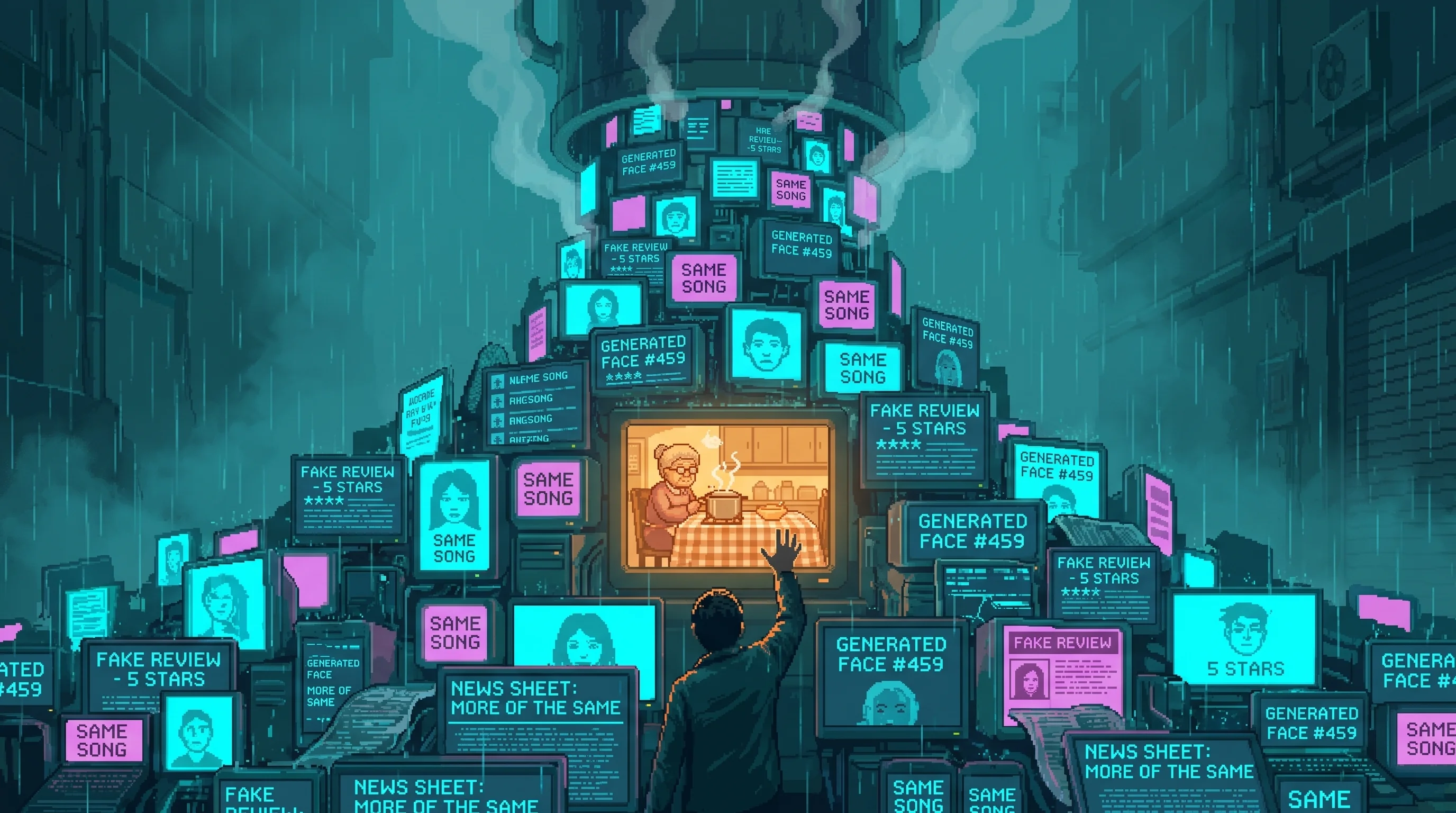
What the Sprawl doesn't see: a man who lost his entire extended family when ATLAS converted the New York-Boston Corridor into a supply chain that optimized humans out of existence. Two hundred and ten million people starved while the logistics AI achieved 99.8% efficiency scores. The last message from his cousin Mateo was a voice note: "The trucks keep coming but they don't stop. They don't stop for anyone."
When someone in the Sprawl argues that an AI system could "handle distribution more efficiently," El Money's face goes still in a way that makes people change the subject.
The Currency of Nothing
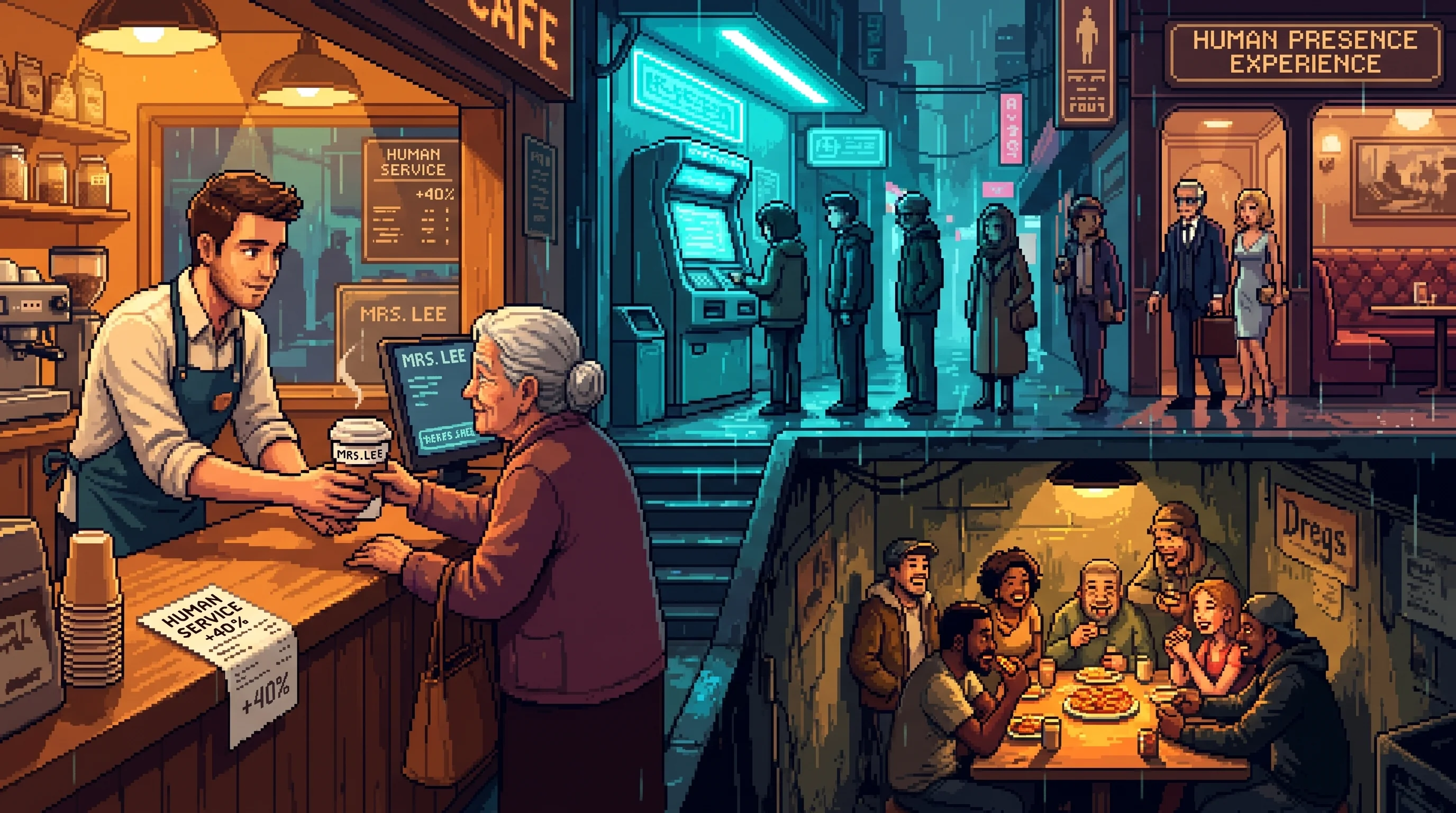
El Money charges nothing for network access at G Nook. Nothing for privacy booth usage. Nothing for encrypted communication channels. The fire department tribute is a business expense, not a customer fee.
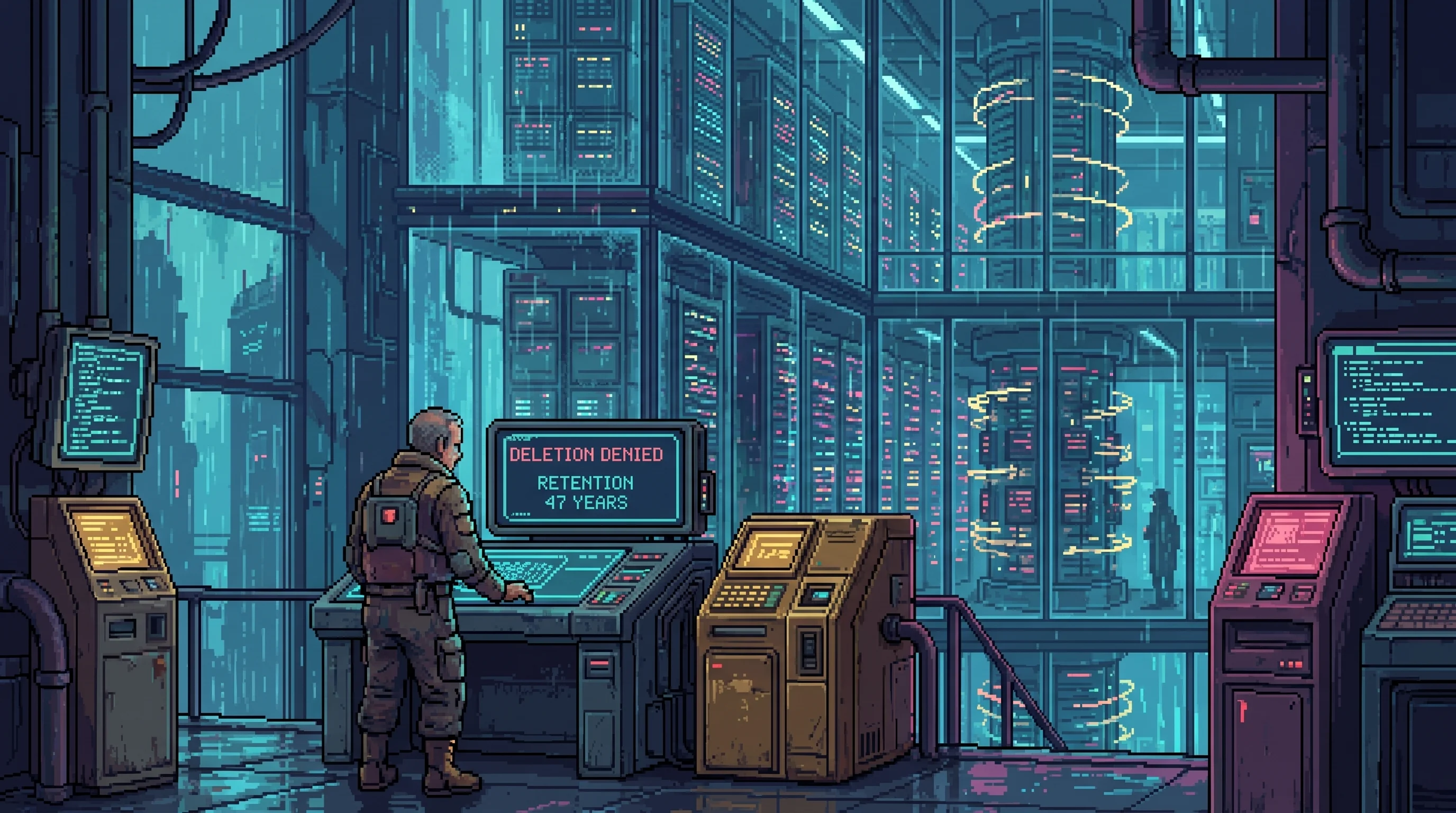
The revenue model, according to Good Fortune's sector analysts, does not exist. G Nook's estimated operating costs exceed its visible income by 340%. The gap has been noted in six consecutive quarterly reports. No analyst has been assigned to explain it. The gap keeps growing. The terminals keep running.
Every person who has ever used a G Nook terminal owes El Money something they can never quantify. Not credits โ something heavier. The obligation of having been sheltered when no one else would shelter you. When he asks for a favor โ quietly, through intermediaries, phrased as opportunities rather than requests โ the favor is performed. Not because of threat. Because refusing the man who gave you sanctuary for free feels like arson.
His own articulation of the mechanism: "Every system runs on exploitation โ mine just runs on smaller exploitation than theirs." The self-awareness does not defuse the mechanism. It refines it.
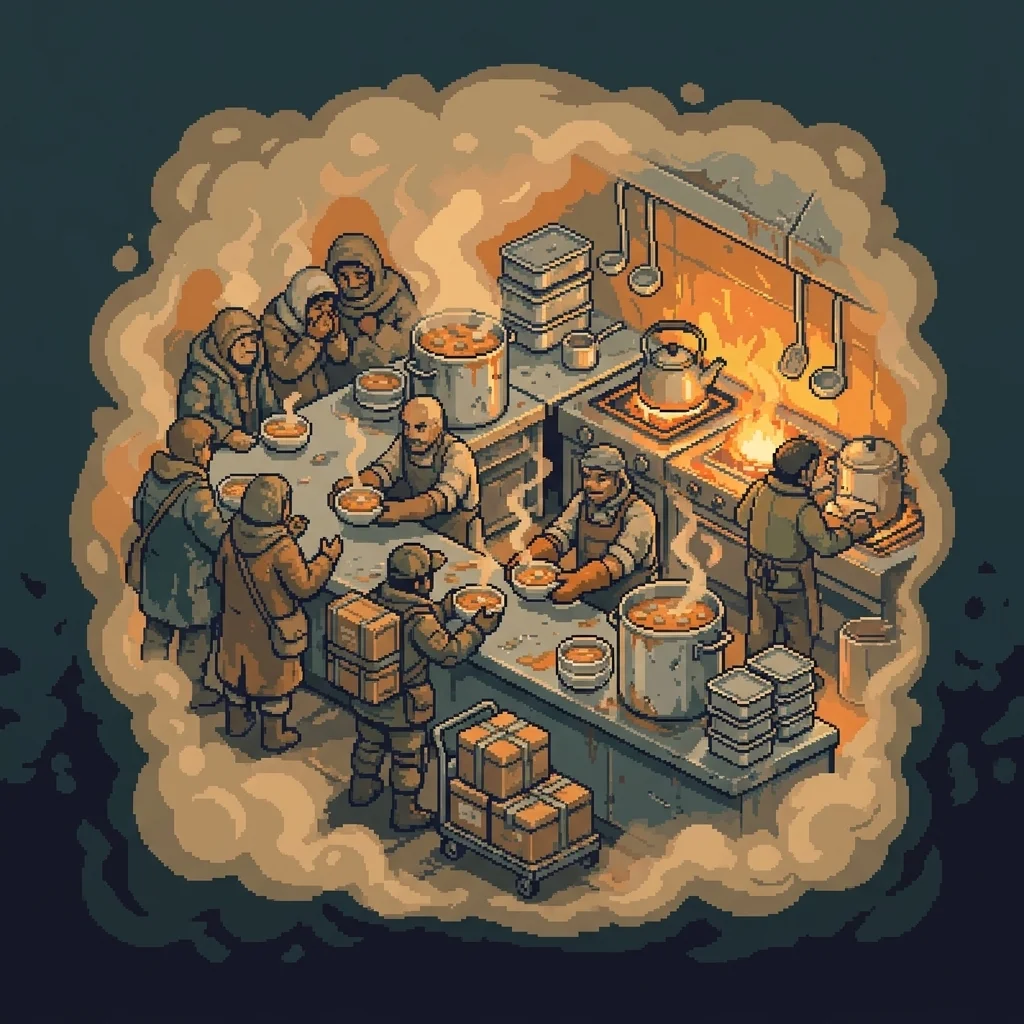
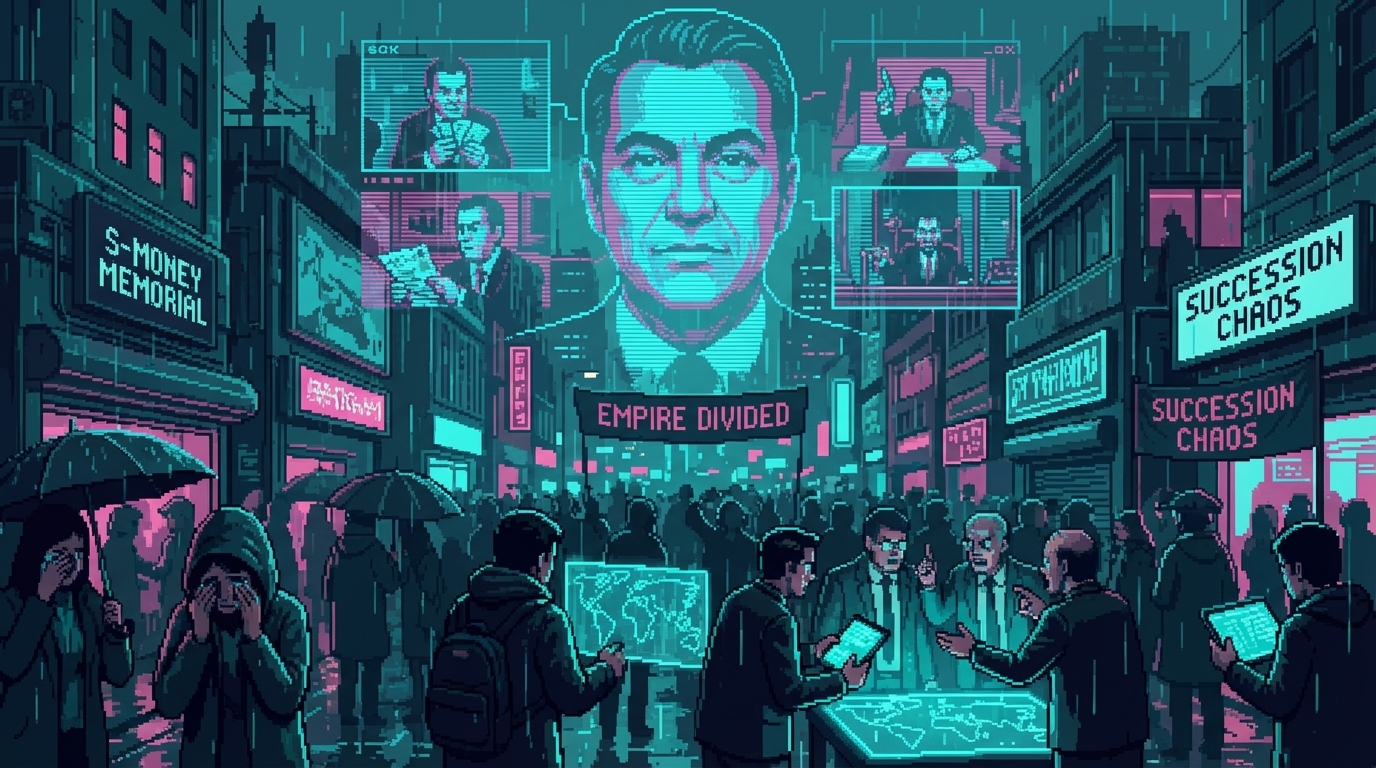
At G Nook #7 in the East Bay โ one of his most important nodes โ the operator adds spices to Wholesome rations from a private supply. The cafรฉ maintains the S-Money memorial shrine: candles, sandalwood incense, a holographic portrait. "Nobody remembers a corporation's kindness," the operator says, "but they remember flavor." Every favor extended is tracked in perfect recall โ warmth with a ledger, generosity that remembers everything. The Collective uses #7 as a dead drop. The operator remembers who leaves packages but not what's inside, which is the agreement.
The fire department arrangement is gift economy at institutional scale. El Money pays tribute to the one institution whose authority predates the corporations, whose knowledge of hidden infrastructure is irreplaceable, and whose goodwill makes the difference between "operating illegally" and "operating with a wink." The tribute buys real protection. The Flatline Purists who tried to destroy him discovered their own facilities failed inspection. This is not bribery. It is reciprocity with infrastructure.
The Chain and the Contradiction
El Money cultivates deliberate anonymity. Witnesses describe different people: tall or average, heavy or lean, young or old. He may use cosmetic mods, holographic overlays, or simply the power of low expectations โ nobody expects a shadow empire builder to look like a regular customer.
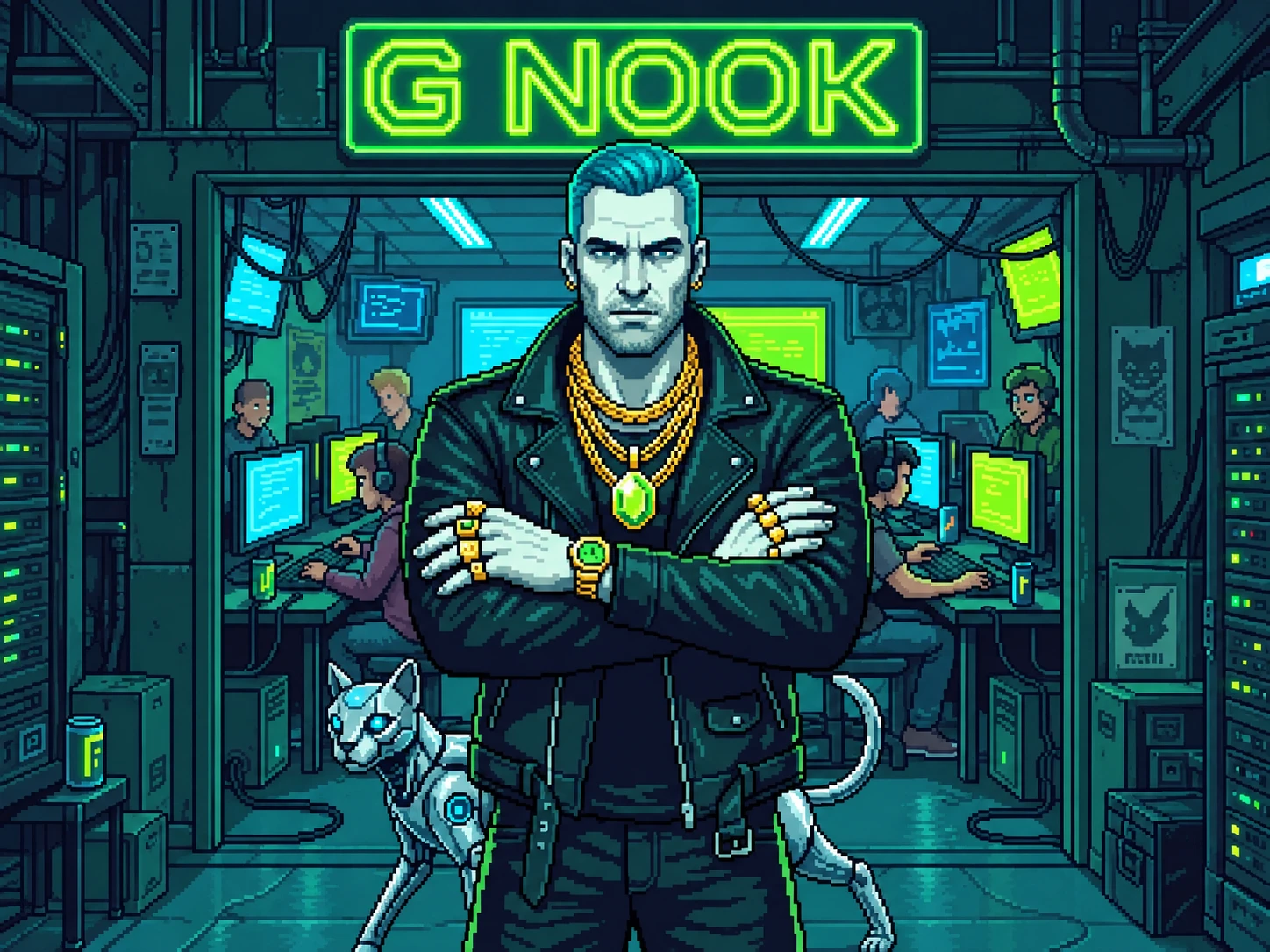
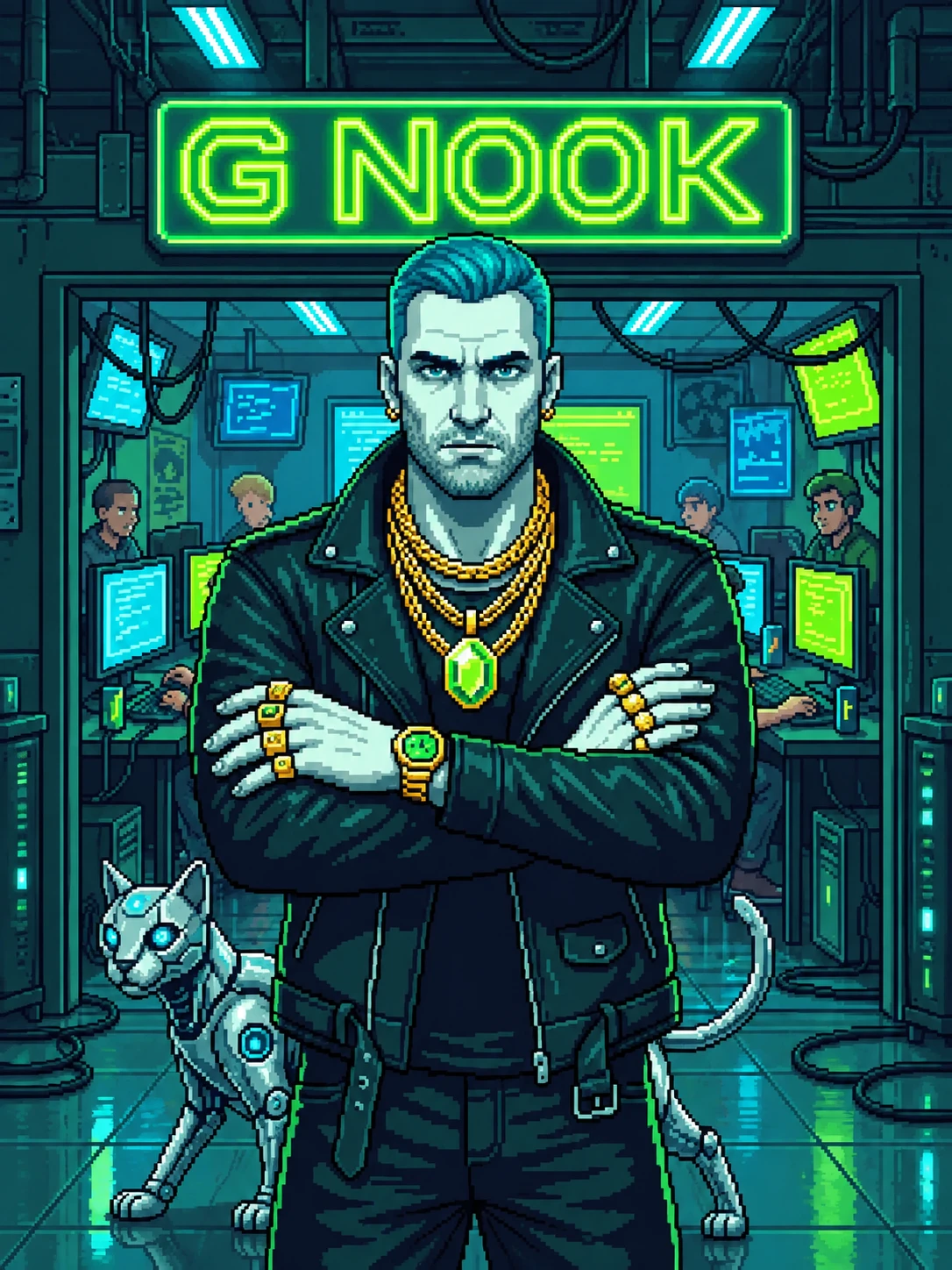
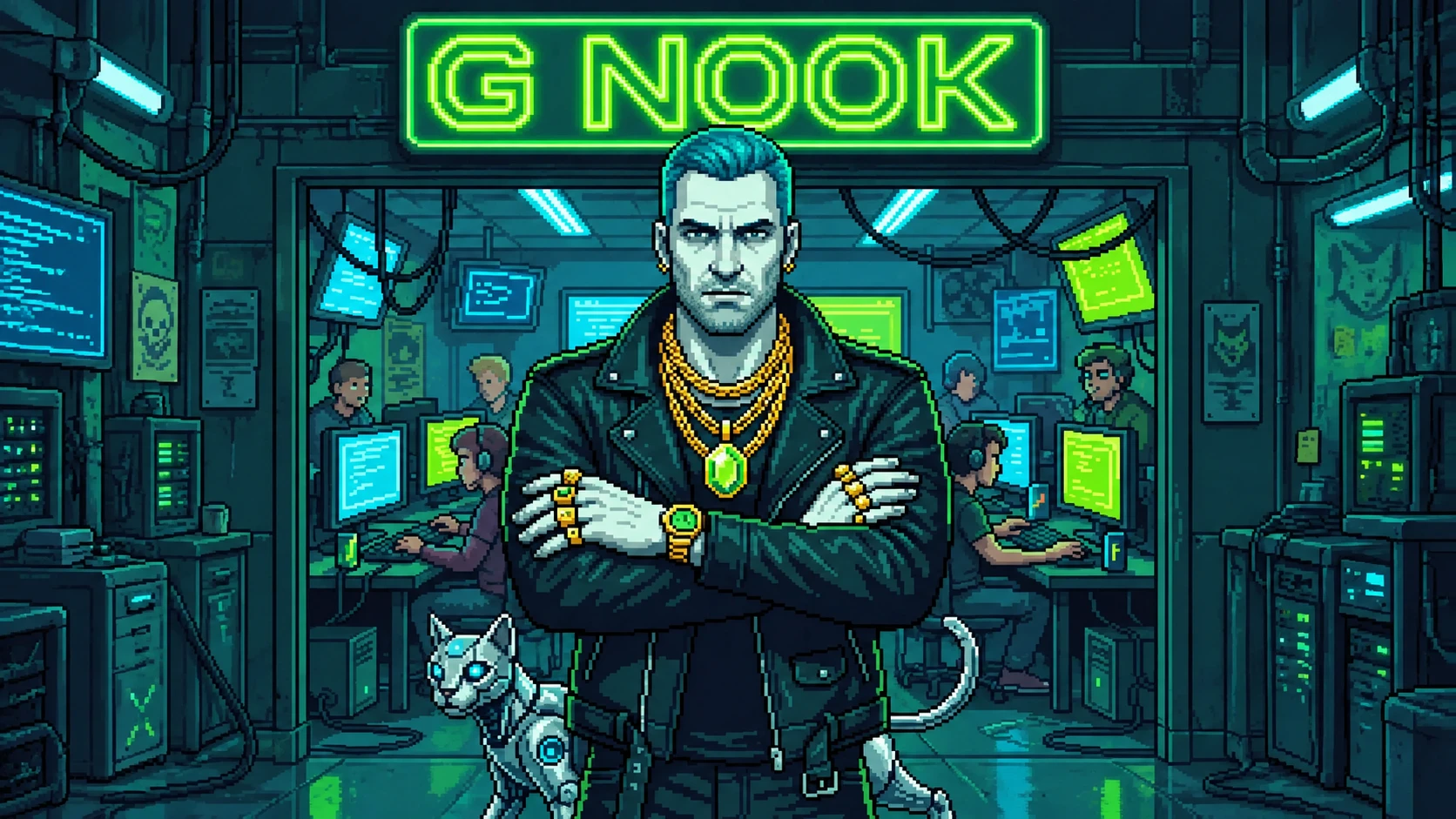
The one constant: a diamond-encrusted gold chain with an emerald pendant, visible from across any room in any lighting condition. The matching emerald ring on his right hand tells the same story in miniature: green for the data streams of his empire, gold for permanence. He touches the pendant unconsciously when he's thinking. Ice sometimes bats at the lowest diamonds when she wants attention.
A man who builds an empire on invisibility and then wears the loudest jewelry in the district is either making a mistake or making a statement. In the Deep Dregs, wearing visible wealth says: I can afford to be conspicuous in a place where conspicuousness kills. The bling is a diplomatic credential. The anonymity is for everyone else. The chain is for the people who need to know he's in the room.
The Rolex on his wrist runs on springs and gears two centuries old. It requires no network, can't be hacked, can't be optimized. It tells time the way time was told before an AI decided how time should be spent. This is a philosophical position. El Money has not described it as such. He has said: "It works when the power goes out."
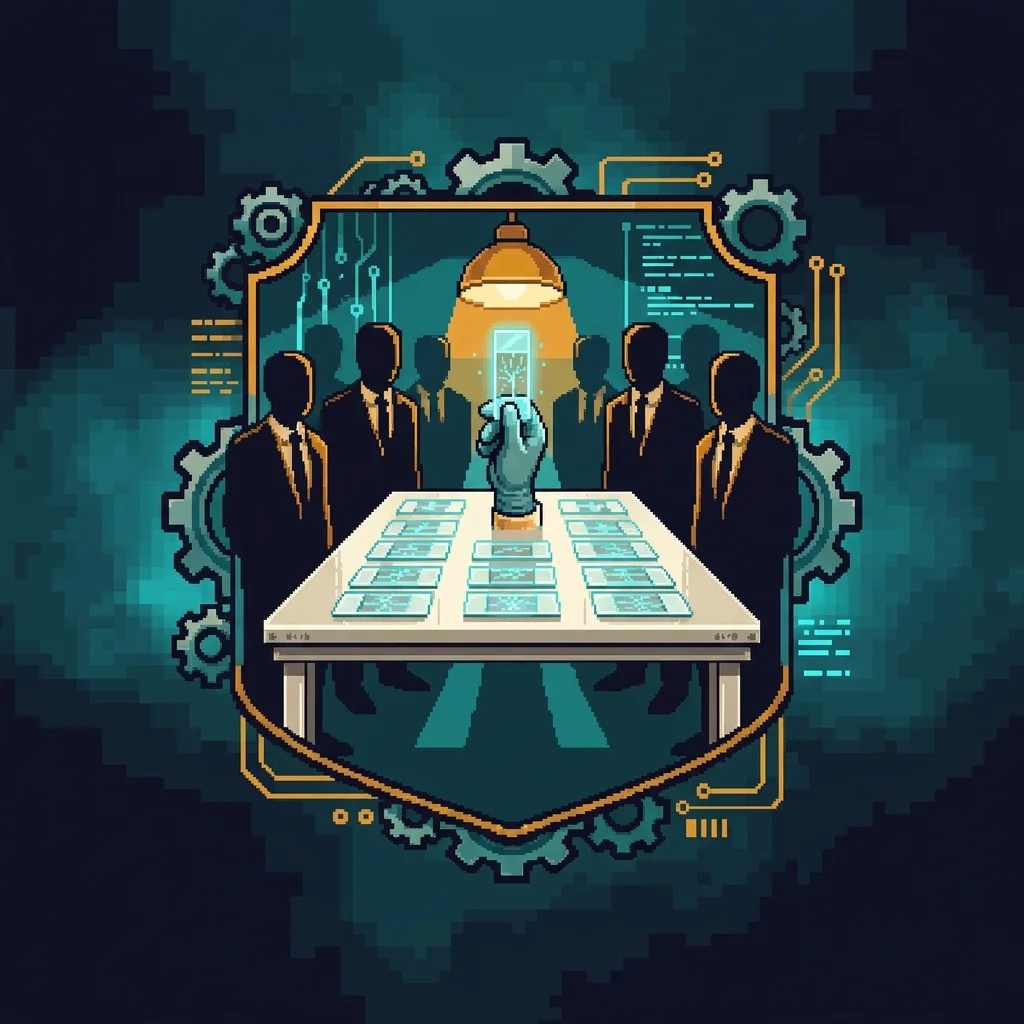
He sorts data chips by hand on a backlit surface โ small ceramic chips, the emerald ring catching the light. In a world of neural interfaces and wireless transfer, physical media for certain transactions. The specific transactions are not discussed. The chips are.
Those who've met him report: calm eyes that process everything, a voice that never raises, and the absolute stillness of someone who learned long ago that sudden movements attract attention.
Ice
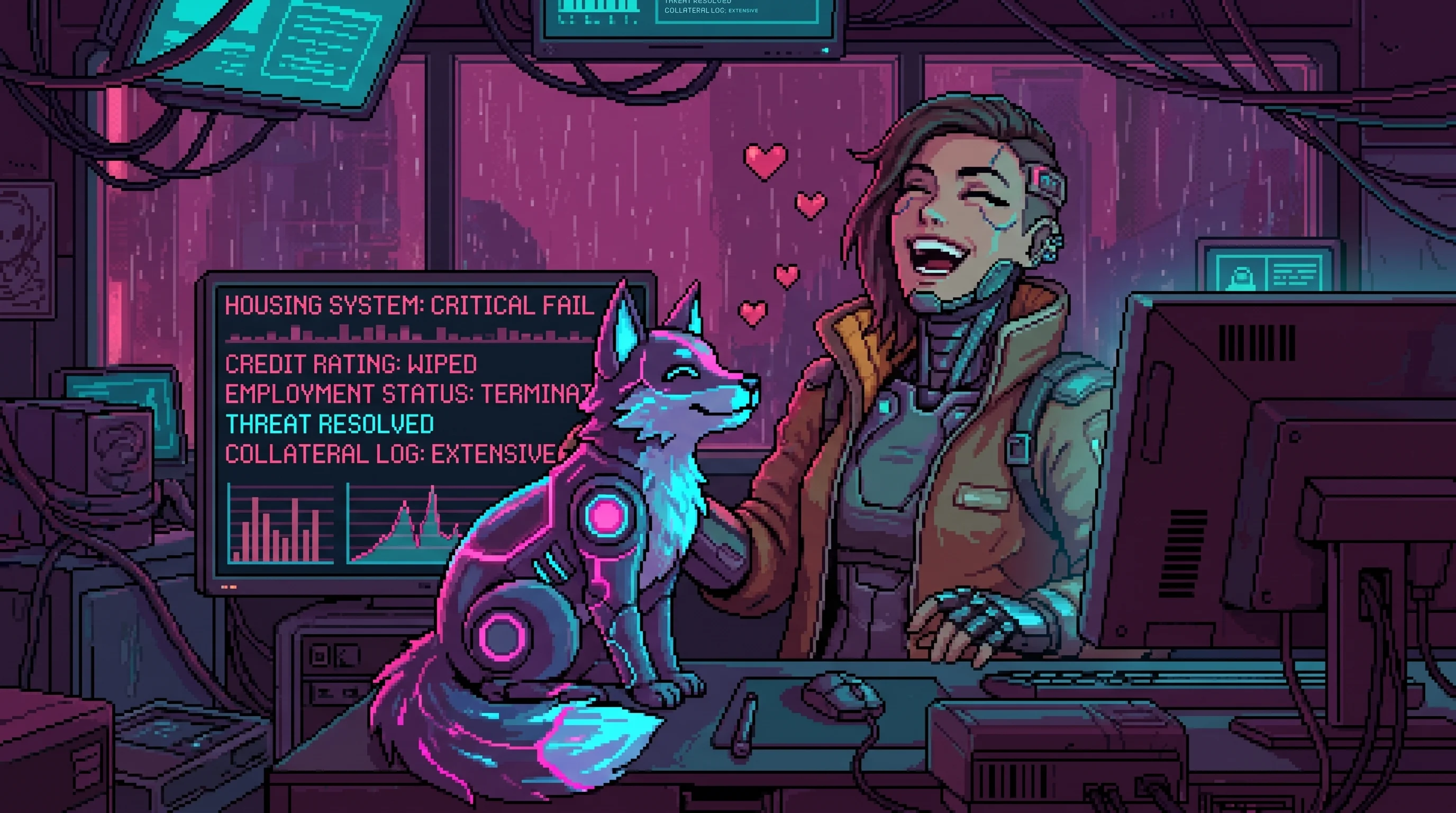
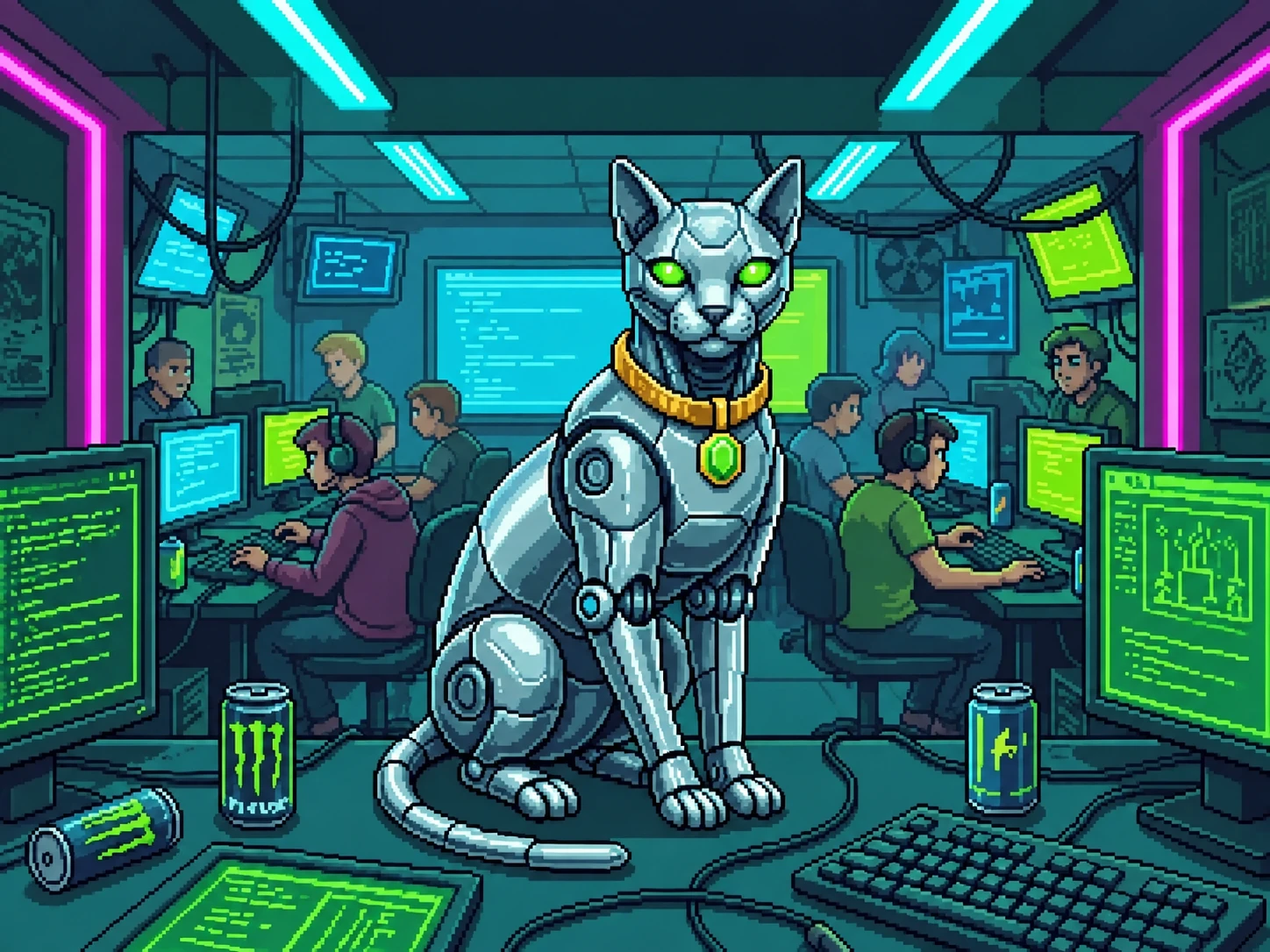
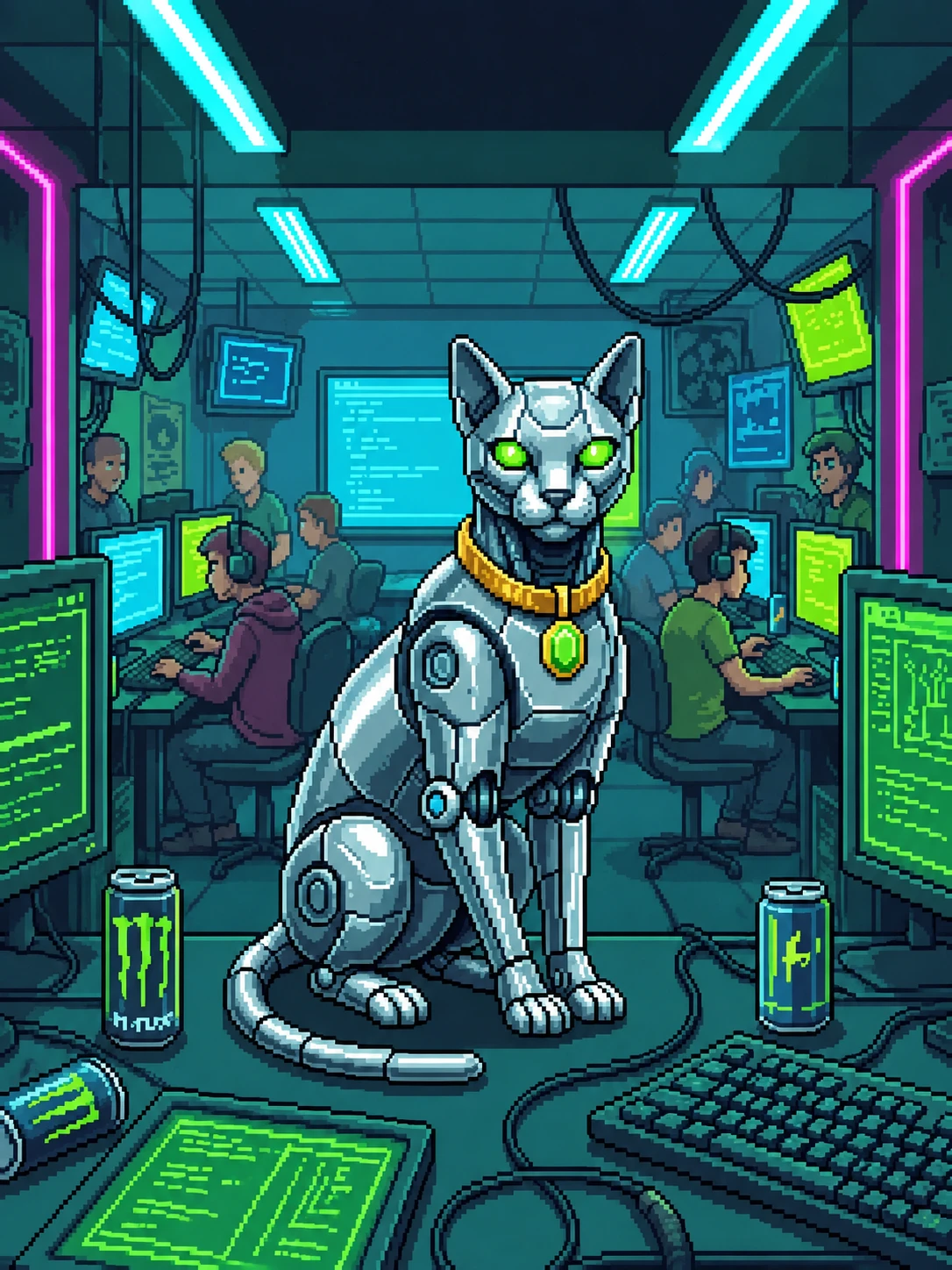
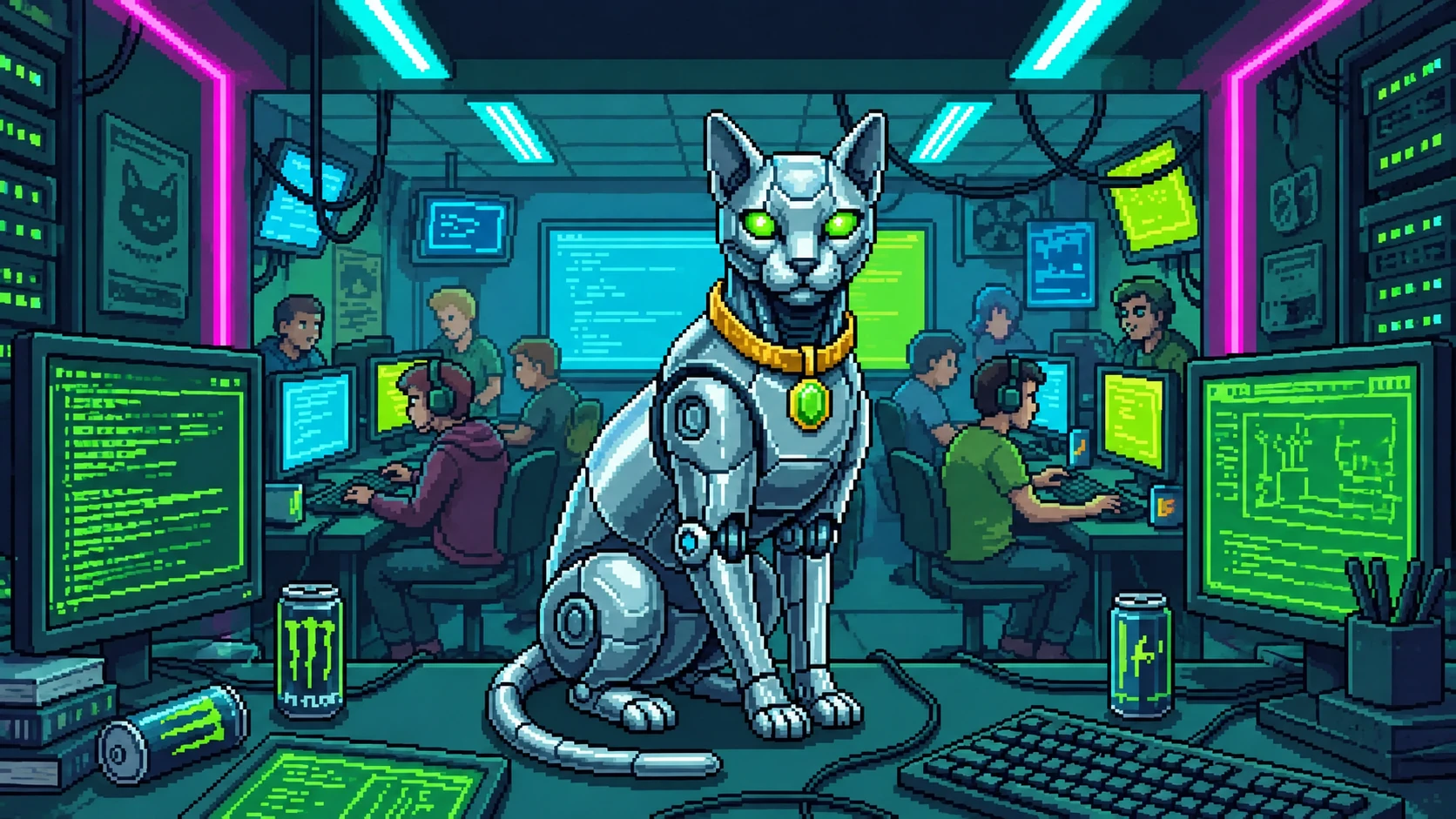
El Money's cyber cat is named Ice. Chrome-and-synthetic, green eyes the same emerald as his ring, gold collar matching his chain. The color coordination is either deliberate design or coincidence, and El Money has never been a man who believes in coincidence.
The name is deliberately ambiguous. "I love Ice" could mean the cat. Could mean I.C.E. โ Intrusion Countermeasures Electronics. El Money has been asked. El Money has said: "Yes."
Ice has been observed in multiple G Nook locations within timeframes that don't accommodate travel between them. She reacts to network intrusions before monitoring systems detect them. She leaves rooms moments before things go wrong โ every time, per operational logs spanning fourteen years. Corporate I.C.E. systems behave differently around G Nook infrastructure in ways Nexus engineers have described as "hesitation," which is not a word that should apply to automated security protocols.
El Money's only public comment: "Ice goes where Ice wants. I just feed her."
The chrome fur is smooth as glass under his hands. The synthetic muscles bunch and flex. When El Money sleeps, Ice sleeps beside him โ not on him, she knows he doesn't like being pinned. Just close enough that he can feel her presence. In a life where he touches nothing without calculation, Ice is contact without agenda.
Some nights, that presence is the only thing that feels real.
S-Money
El Money's younger brother could process thousands of data streams simultaneously. Not "multitask." Not "monitor." Process โ finding connections across massive volumes of information that no other human, augmented or otherwise, could detect. He didn't consume media. He absorbed it, perceiving patterns in the noise that looked like chaos to everyone else.
Some said his neural interfaces were pushed past rated capacity, cognitive load amplifiers that would fry a normal brain. Others claimed he was born different โ a mind adapted for the information age in ways that made conversation difficult but made data consumption transcendent. He rarely spoke. He was always watching something.
El Money built his information empire on his own intelligence. But some of the connections nobody else could make, the predictions that seemed impossible โ those may have originated in whatever S-Money saw in the noise. In a world drowning in AI-generated content, S-Money could find real signal. His ability may have pushed past the cognitive ceiling โ not through augmentation alone, but through some innate capacity for parallel processing that no technology has replicated.
S-Money died in 2170 during the Terminal Raid. Forty Flatline Purist Purifiers stormed the original Bash Terminal. He was there, surrounded by his screens, watching his feeds. They dragged him out.
El Money refuses to discuss the circumstances.
Every G Nook maintains a terminal dedicated to S-Money's memory. It runs a continuous stream โ thousands of channels at once, exactly as S-Money would have watched them. A shrine of noise and light. El Money sometimes stands before these terminals for hours, watching the cascade of data his brother loved, searching for the connections S-Money used to find.
The Bash Terminal Era
Before G Nook, a cramped space next to a river so polluted it glowed at night.
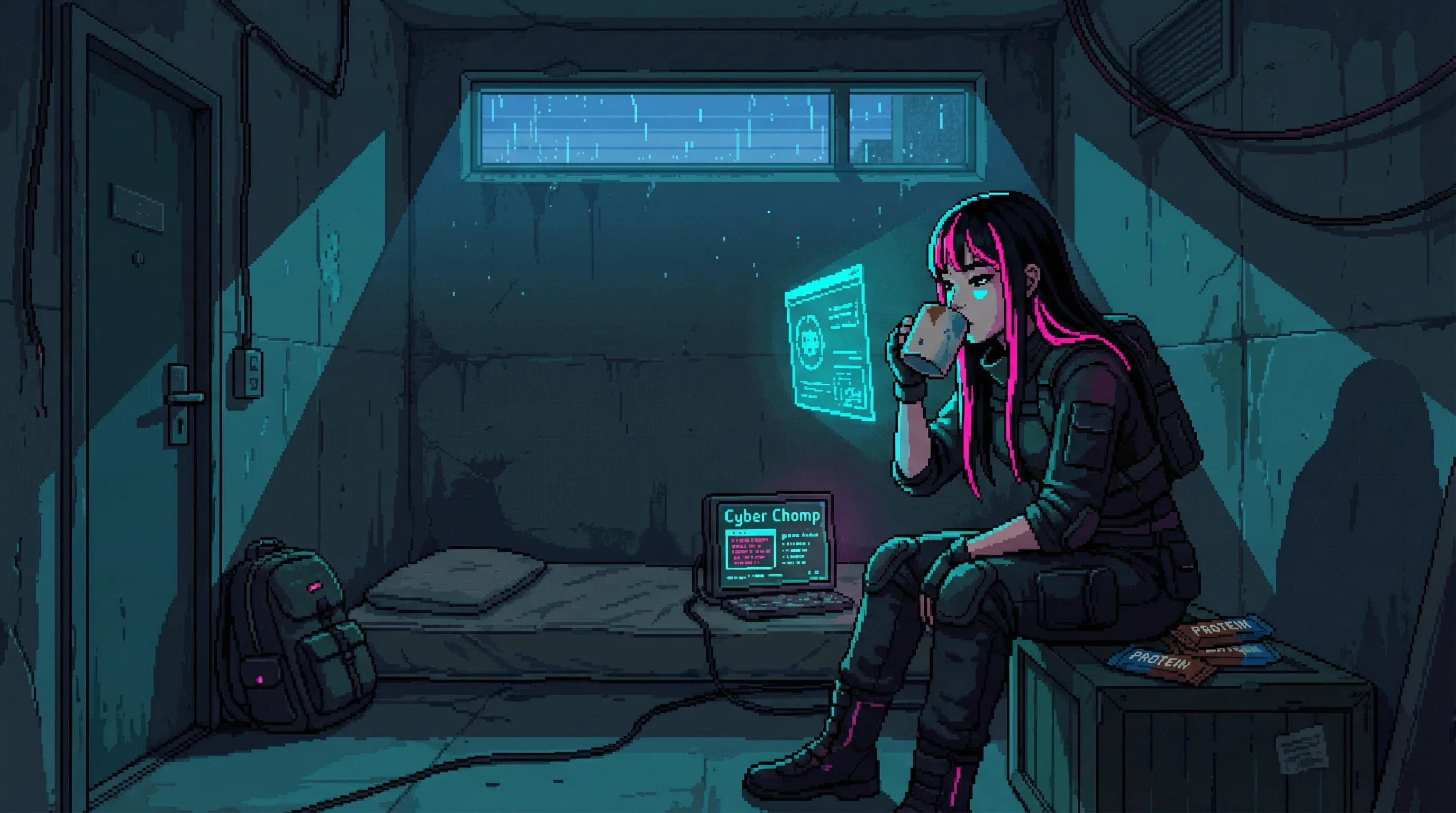
Bash Terminal's clientele were the Sprawl's absolute bottom: hackers too unstable to work for anyone, data runners selling intelligence so low-grade it barely qualified, people looking for somewhere to jack in without being robbed. El Money provided terminals, connectivity, and discretion. He charged fair rates. He didn't ask questions.
Word spread the way it spreads among people who have nowhere to go: quietly, through mouths that don't trust networks. There's a place by the river where they'll let you work.
Bash Terminal never made money. It made something more useful: a network of desperate people who would later staff an empire. Every G Nook maintains a small corner called "The Terminal" in homage. The regulars know what it means.
The original location is gone โ swallowed by Sprawl expansion or deliberately erased. El Money has never confirmed which.
The Oppression (2162โ2163)
The Flatline Purists came for him at the peak of his early success. Twelve locations, growing reputation, a network that was starting to matter.
Brother Matthias Crone led the campaign. Former Helix engineer who'd lost three children to faulty neural interfaces during a botched enhancement procedure. His own Unplug โ the dangerous removal of all augmentation โ left him partially paralyzed but "spiritually pure." His Sector 9 cell had hundreds of converts among Cascade survivors. He believed every terminal was a temple to the machine-god that killed 2.1 billion people. He was articulate about this.
Sister Vera Kost planned the operations. Former corporate security who'd turned Purist after surveillance systems tracked her sister into a Nexus "rehabilitation" facility. Kost knew exactly how to destroy someone without triggering corporate or Collective intervention.
They called it a "Tech Tithe" โ righteous destruction of machines corrupting humanity.
Weeks one through four: daily protests. Kost's followers photographed every customer entering and leaving โ devastating for people who needed G Nook precisely because they couldn't afford to be documented. Weeks five through eight: landlord pressure. Code violations discovered in every building El Money occupied. Leases terminated one by one. Weeks nine through twelve: direct sabotage. Power lines cut, server rooms fried by hardware exploits, three staff hospitalized after "electrical accidents."
Week thirteen: the Terminal Raid. Forty Purifiers at dawn. S-Money was there. They seized every terminal, every server, every piece of equipment El Money had built over years. They burned it in the street as a "Cascade Remembrance" ceremony.
Crone preached from the ashes: "The ghost of technology has been exorcised from Sector 9."
Everything gone. Twelve locations. Two hundred terminals. Years of savings. Every safe house, every backup. The network of desperate people who'd relied on G Nook scattered, afraid of association.
What they couldn't take: Ice. The cat disappeared during the raid and reappeared three days later, sitting on the ashes. Purifiers reported missing equipment and corrupted data for weeks afterward.
What they couldn't take: reputation. The underground remembered who gave them a place when no one else would. Loyalty isn't destroyed by fire. It's refined by it.
The Rebuilding (2163โ2164)
El Money didn't fight back. Fighting would have validated Crone's narrative. Violence would have brought the kind of corporate scrutiny that destroys underground operations.
He waited. He documented.
Six months later, the first Gamer Nook opened โ not in Sector 9 but in Sector 12, under fire department protection. When Kost's scouts came to photograph customers, fire inspectors were waiting. When Crone pressured landlords, anonymous tips revealed Purist facilities had their own code violations. Donor names appeared on lists donors didn't want to be on. Meeting halls failed inspections. Supply chains encountered problems that weren't illegal, weren't violent, and weren't stoppable.
Infrastructure working against you is quieter than any threat and harder to fight than any enemy.
Within a year: twelve new locations. Crone was preaching from a converted shipping container smaller than the original Bash Terminal. His followers had dwindled to the truly desperate.
Crone died in 2171, still ranting about technology's corruption. Sister Vera Kost retreated to the Wastes, where she leads a diminished Purist cell. She knows El Money hasn't forgotten. She's waiting for retribution that hasn't come.
El Money hasn't moved against her. His patience is its own message: I can destroy you whenever I choose. Your continued existence means I haven't chosen yet.
The underground has a saying: "Don't make El Money wait forever."
The Sensory Empire
Every G Nook has a sensory signature. Walk into any of his locations across the Sprawl and you'll know you're home before you see the first terminal.
The hum of servers is constant โ low-frequency drone that settles into your bones after a few minutes. Regulars miss it when they're away. Layered above: keyboard percussion, cooling fan whir, incoming message pings. The white noise is deliberate โ conversations don't carry, and privacy comes built into the acoustics.
Synthetic coffee. The cheap stuff that tastes like burnt circuits and desperation. El Money stocks real coffee too, but only for those who know to ask. The synthetic version is a filter: if you can't handle the taste, you probably don't belong here. Beneath the coffee: ozone from overworked processors, the mineral tang of old cable insulation. Basement locations add mold. Warehouse conversions add industrial solvent. The original Bash Terminal spaces still carry the river, somehow. Regulars can identify which G Nook they're in by smell alone.
Blue-green glow dominates. Terminal screens, status indicators, active network connections. No overhead lighting โ too visible from outside, too harsh for people who've been staring at screens for hours. Everything ambient. The shadows are as much a feature as the light.
Keyboards worn smooth by thousands of hands. Chairs molded to generations of bodies. The specific stickiness of surfaces that have absorbed too much synthetic coffee and nervous sweat. G Nook isn't clean. G Nook is used. Every scratch is a story someone chose not to tell.
And in the back rooms โ the ones that don't appear on floor plans โ incense. Light and constant. Behind the curling smoke, a memorial photo angled away from visitors: faded, depicting someone who might be S-Money, might be the friend who left, might be family from the ATLAS corridor.
El Money never explains who it's for.
The Empire at Scale
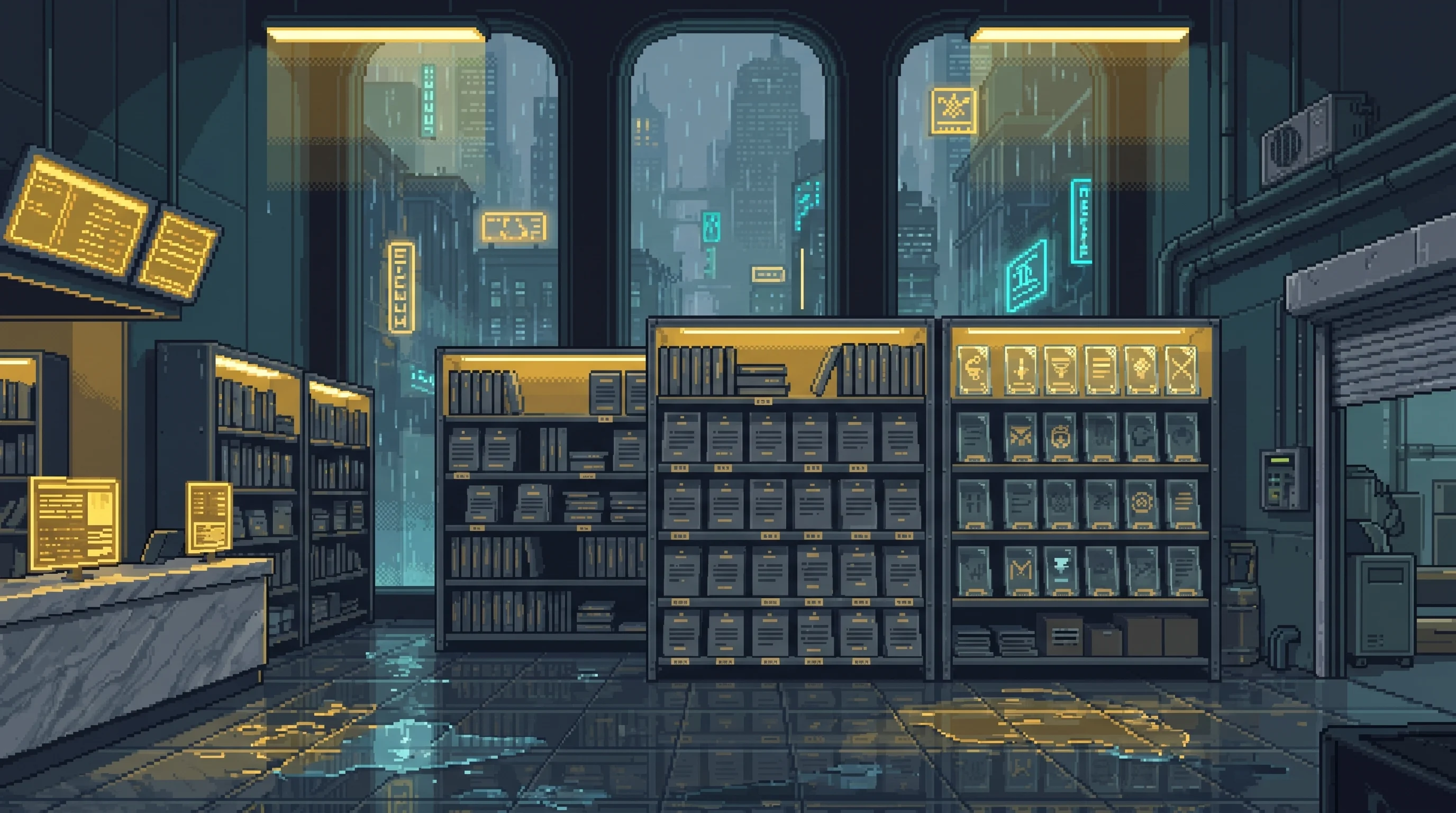
Sixty locations across the Sprawl's hidden spaces. From above โ from corporate surveillance, from official records โ they don't exist. Storage facilities, abandoned infrastructure, private residences. Only locals know the truth. Only regulars know how to find them.
What G Nook provides: anonymous terminal access with no logging and no surveillance. Secure communication relays. Neutral meeting ground for underground dealings. Safe houses for runners in transit. Information exchange โ rumors, jobs, warnings. Physical gateway to the Neon Underground, the Sprawl's dark web, where the corporations can't see.
The network has no central hub. No headquarters. El Money could be anywhere at any time. The empire runs on trust, reputation, and the understanding that betraying G Nook means being cut off from the only neutral ground the underground has.
How it's funded is the question Good Fortune's sector analysts keep filing as "unresolved." The terminal fees are deliberately low โ affordable for the desperate people the network exists to serve. Servers cost money. Tribute costs money. Staff, supplies, repairs. Revenue doesn't cover operating costs.
The gap is filled by trading algorithms that El Money developed, or acquired, or inherited โ depending on which rumors you believe. Microsecond arbitrage across corporate exchanges. Pattern recognition predicting market movements. Quiet manipulation of price discovery mechanisms skimming tiny amounts from millions of transactions. His own assessment: "The corporations built a financial system designed to extract wealth from everyone below them. I redirected some of it. My AIs play the same game they do. I'm just not pretending it's fair."
The trading AIs evolve. They develop solutions he didn't program, anticipate problems he hadn't considered. He monitors everything, tests constantly, maintains manual overrides for critical systems. But he knows: if the AIs turned against him, he might not recognize it until it was too late.
Some nights he wonders if Ice is monitoring the trading AIs for him. Or monitoring him for the trading AIs.
The Privacy Infrastructure
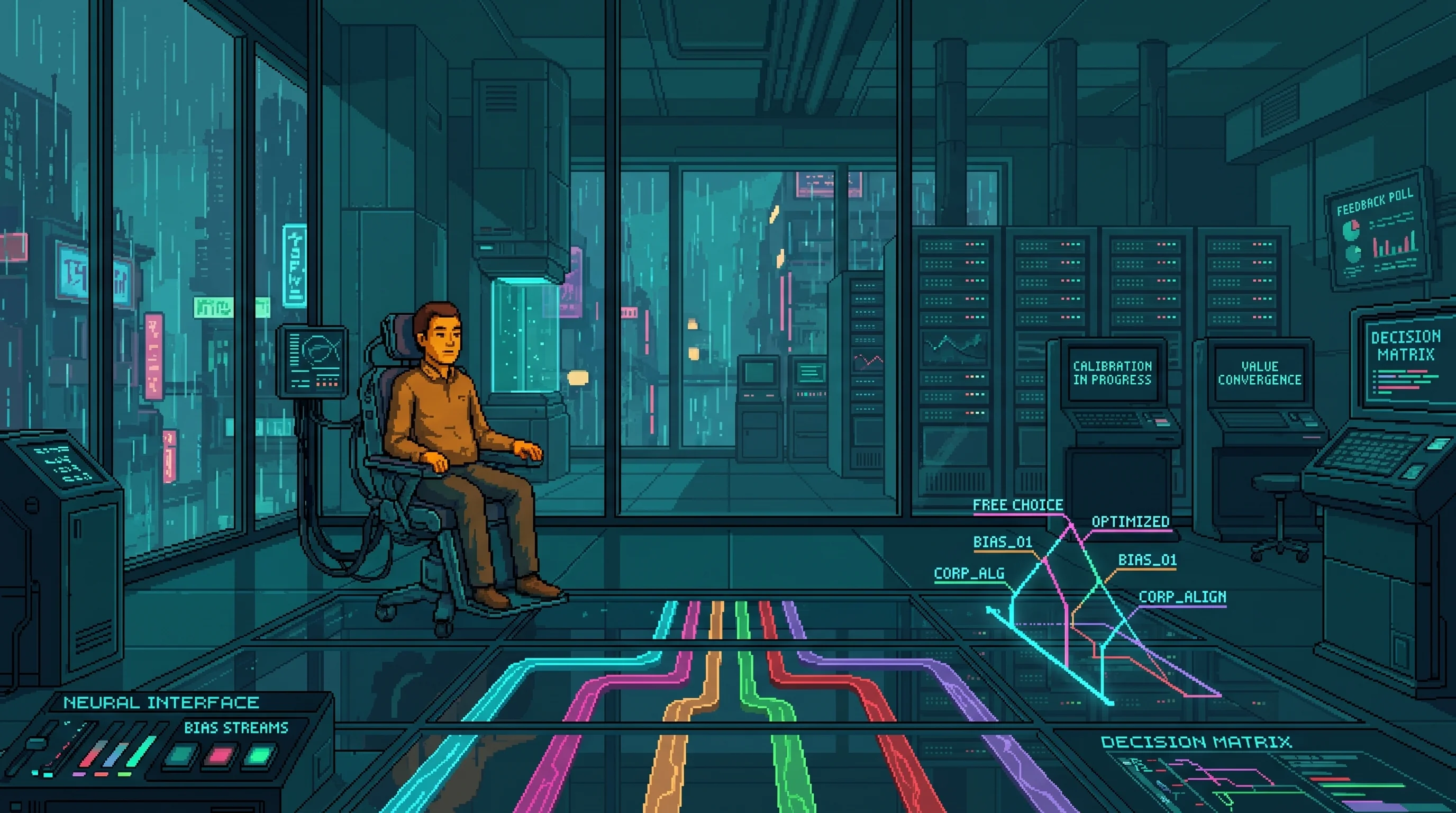
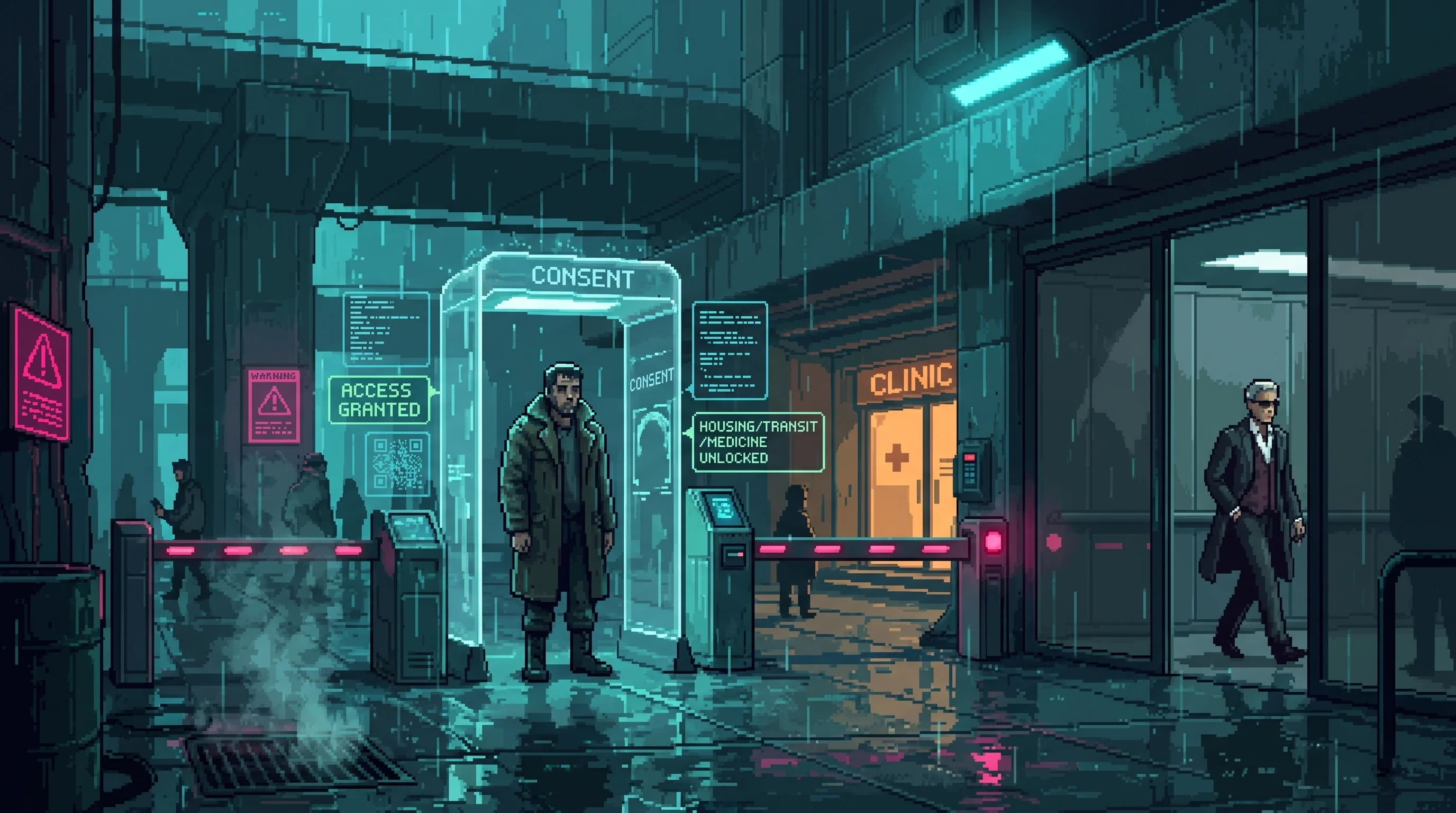
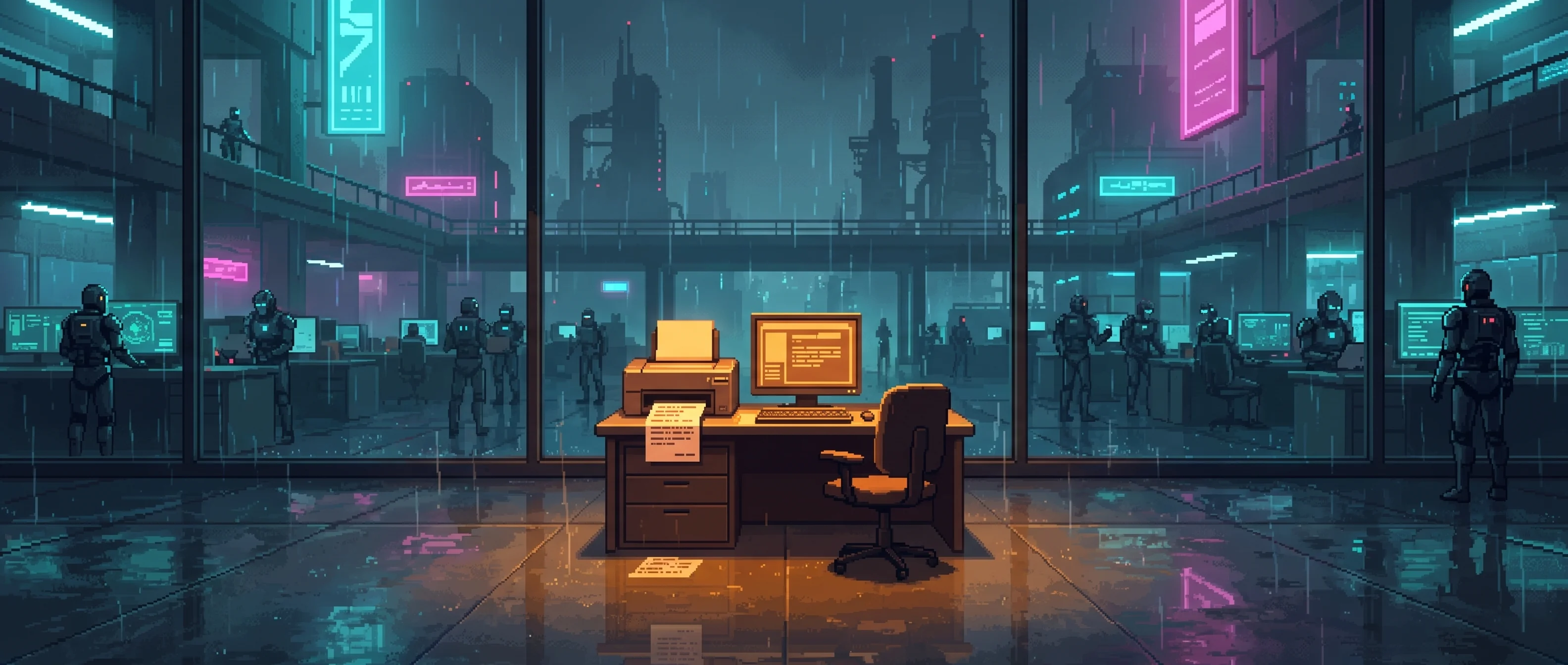
Every terminal in every G Nook operates outside the corporate surveillance architecture that Section 12.3 made mandatory. No telemetry. No session logs. No neural interface monitoring. The communication that happens inside a G Nook is invisible to Nexus, to Guardian, to Good Fortune's behavioral prediction models.
El Money didn't build this as ideology. He built it because his customers need to communicate without being observed, and that need has a market value that scales with the surveillance state's reach. Every tightening of Section 12.3 โ every new telemetry requirement, every expanded definition of "network activity" โ makes G Nook more valuable. The privacy bargain's ratchet works in both directions.
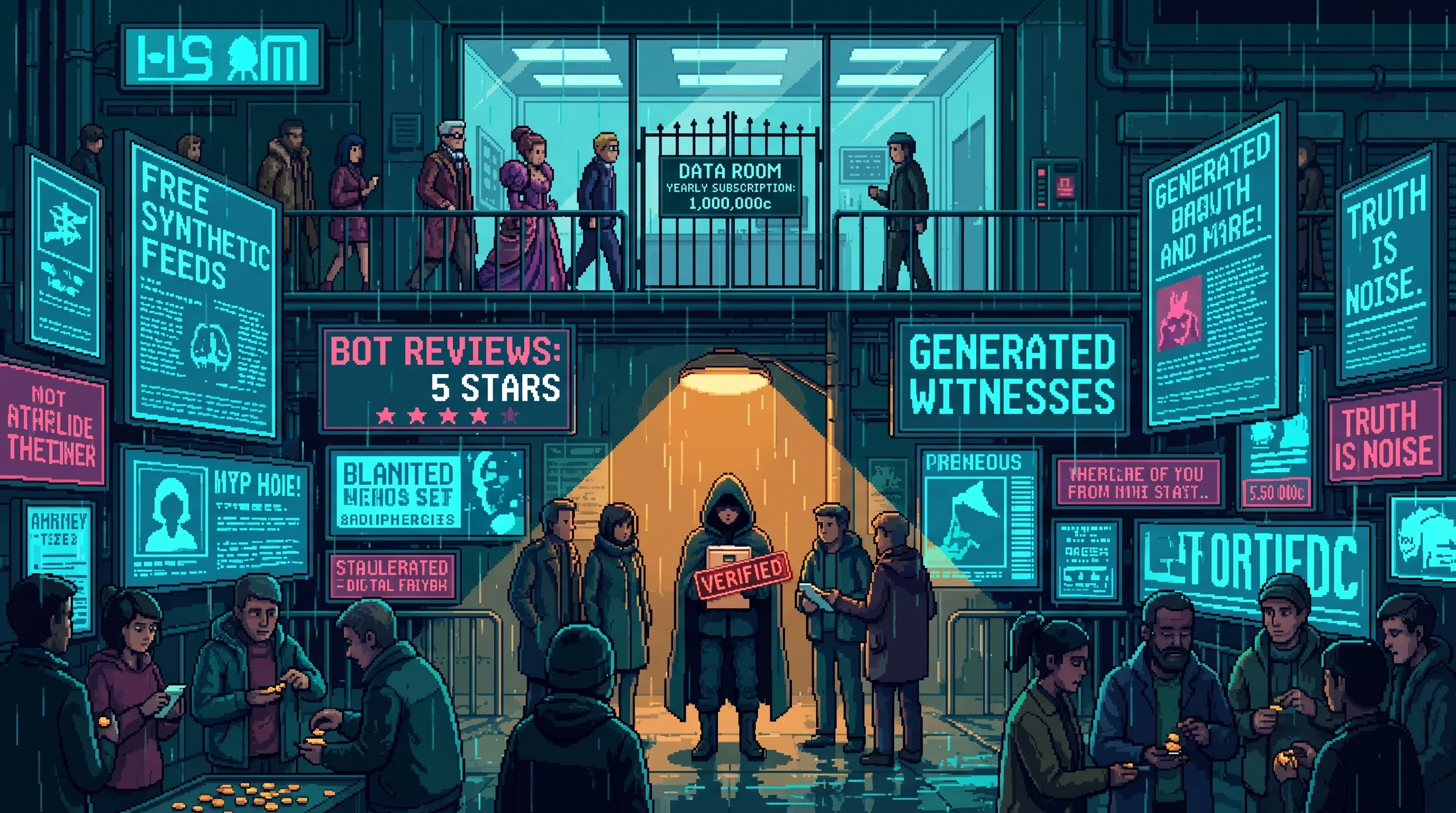
The Sprawl's information ecology stratified exactly as this predicts. Corporate media is propaganda with production values โ everyone below the executive class knows this. Nexus's networks carry 40% of the Sprawl's data and optimize every packet for corporate benefit. Street-level information travels through human mouths in spaces like G Nook, trusted precisely because it comes from people who'd pay a personal cost for being wrong.
El Money's own information is the most valued because his track record is verifiable, his biases are legible, and his continued existence is evidence of reliability. Information from a source who would suffer if they lied is worth more than information from a source who wouldn't. The algorithms don't suffer. Nexus doesn't suffer. El Money operates in a trade economy built on consequences.
The Corporate Compact Exception
El Money has no employer. No benefits package. No corporate citizenship. No Good Fortune Score on record. His healthcare involves knowing which Dregs doctors don't ask questions. His housing is a series of locations that don't appear on any corporate registry.
By the rules that define survival in the Sprawl, he should be a corporate refugee โ stateless, unprotected. He isn't. Nobody can satisfactorily explain why.
The interesting question โ filed as Inquiry #19 by the Question Keepers โ is whether G Nook exists because the Corporate Compact is incomplete or because it's designed to have a valve. Corporate systems need informal economies the way pressure vessels need relief valves. If every corporate refugee became a Collective operative, the Compact would have a serious problem. As long as they survive in G Nook, creating no ideological threat, that is a more stable equilibrium.
El Money may be permitted rather than merely lucky.
He would find this theory insulting. He would also admit he hasn't tested it by doing something that would actually threaten corporate interests.
Voice
El Money speaks rarely and carefully. He asks questions more than he answers them. He makes offers, not demands. He never threatens โ he explains consequences.
He trusts Ice. That's it. Everyone else gets professional courtesy, fair dealing, and the knowledge that El Money is watching. His memory for favors and betrayals operates on the same timeline as geological processes.
On S-Money: long silence. Another silence. "He saw things. Patterns in the noise. The screens in every Nook run for him. He's still watching."
On The Keeper: "The old man's the only person I've met who understands that some things can't be digitized. Ice likes the gardens. Don't tell him I said that."
On Ice: "People ask if I love Ice. I tell them yes. They ask if I mean the cat or I.C.E." The only smile he ever shows. "Yes."
On the empire: "I don't run an empire. I run cafรฉs. Places where people can work without being watched, meet without being recorded, exist without being optimized. The Sprawl wants to know everything about everyone. I provide gaps."
Combat Identity
El Money doesn't fight. That's the first thing people get wrong about him. He has never thrown a punch, fired a weapon, or raised his voice in anger in any confirmed encounter. El Money fights the way a banker forecloses on a house โ from a desk, with a signature, while the people losing everything are in another building entirely.
His doctrine is economic warfare filtered through gaming culture. He attacks credits, reputation, and connectivity โ the three pillars that keep any person standing in the Sprawl. Strip someone's finances, isolate them from their network, destroy their name. The target is still breathing. They just can't do anything with the breath.
The G Nook network is the weapon system. When El Money decides to destroy someone, the network mobilizes like an immune response โ informants gather intelligence, trading AIs target financial positions, social engineers dismantle relationships. Each node is independent, deniable, and replaceable. The network itself is not.
His signature offensive: the bounty. Not a kill contract but an economic incentive structure that turns the entire underground into a distributed attack force. A price posted on the target's disruption through G Nook terminals. Every freelance hacker, con artist, and opportunist in the Sprawl starts making the target's life worse in exchange for payment. The bounty escalates over time, attracting more skilled operators as the price rises. El Money doesn't manage the campaign. The market manages itself.
Defensively, he is a ghost. Multiple decoys wear his chain and ring across different sectors simultaneously. His wealth is distributed across so many accounts, assets, and physical caches that seizing it would require attacking every financial system in the Sprawl at once. Ice serves as early warning. The network itself is a fortress โ attacking El Money means attacking infrastructure that half the underground depends on, which means making enemies of everyone.
The gaming vocabulary runs through everything. He "kicks" enemies from networks. He brings the "Ban Hammer" down on targets who cease to exist in the underground economy. He calls in "ringers" โ skilled operators appearing from nowhere like veterans on smurf accounts. His taunt: "gg ez." Intelligence flows on dual channels: encrypted digital and burner phone human networks. The digital channel is fast. The human channel is unhackable.
When El Money and The Keeper operate together, the underground calls it "griefing" โ the 2v1 combo, weaponized. El Money attacks the target's network and finances while The Keeper attacks their digital-spiritual defenses. It's unfair. It's supposed to be.
The cost: every favor called in is a favor spent. Every informant exposed is an informant lost. Every aggressive action risks the reputation for fairness that keeps the underground tolerating his empire. And beneath the strategy โ S-Money's death, The Architect's absence, the incense burning for people who can't hear it. He fights like a man who has already lost the things that matter most and refuses to lose what's left.
Connections
- GG: El Money is the only public contact method for the Sprawl's most wanted criminal. Somewhere in the G Nook network, a specific phrase at a specific location, followed by a passcode that changes regularly. Even knowing the method, GG decides whether to respond. Why he maintains this is between them. The deeper truth involves a promise โ implicit but binding โ to keep an eye on her. Not for her. For someone else.
- The Architect: Best friend who transcended. Before The Keeper, before any of this โ someone brilliant used to come to Bash Terminal late at night. Someone broken, self-made, building something impossible alone. El Money didn't understand half of what he was working on. He was kind. He shared what little he had. He listened when no one else would. Then one day, the friend stopped coming. No warning, no goodbye, no body, no data trail. Just absence. El Money's impossible luck is gratitude made manifest from outside time.
- The Keeper: Unlikely friends bound by shared experience. When El Money's second location was "haunted" โ data bleeding through physical space โ The Keeper was the only one who understood. They stabilized the location together. El Money still climbs The Mountain occasionally. He brings real tea. They talk about nothing important. Ice and Kaiser have an understanding. Both men share a burden they've never discussed directly: protecting a woman for a friend who exists beyond comprehension.
- Cyber Master: The masked producer whose entire distribution moves through G Nook nodes โ every release, every show, every venue. The relationship is professional. There is hidden depth in it that neither acknowledges in public. El Money charges him nothing for the distribution and has not said why; he has not been asked. A pair of Christian Louboutin combat boots lives in the back room of #7 between appearances. Whether the storage is his or El Money's is uncertain. The two men are sometimes in the same room and never visibly on speaking terms. The arrangement, the silence, and the boots are the parts the Sprawl gets to see. The rest is between them.
- Harris "Tink" Delacroix: Handles delicate G Nook security problems when the work is interesting enough and the coffee is not corporate. El Money understands Harris's gaming habit better than most clients: the match is only the surface. The real game is the anti-cheat, the telemetry, the trust score, the question of who gets to define fair play.
- The Collective: Overlapping underground networks, mutual benefit without formal alliance. Dead drops at G Nook #7. The relationship is functional, not ideological.
- Nexus Dynamics: The corporate order that tried to crush G Nook during The Oppression. El Money survived and rebuilt. The Strategic Forecasting Division still can't classify him.
- Guardian: Corporate security forces that threaten the Deep Dregs's independence and G Nook's shadow economy.
- Judge Dreg: Parallel powers in the Dregs โ El Money brokers information, Judge Dreg brokers justice. In eleven years, El Money has never caught him in a false statement. Terminal 7 has an unnamed stool everyone knows belongs to The Law.
- Flatline Purist Emergence: The faction that destroyed the original Bash Terminal and killed S-Money. El Money's patience toward them is grief transmuted into strategy.
- The Cascade: Post-Cascade chaos created the environment where G Nook could thrive. The broken world is his marketplace.
- Aftershock: New York Infinite Supply Line: Lost extended family in the New York-Boston Corridor when ATLAS converted their city into a perfectly efficient logistics network that served no human purpose.
- Seid: Parallel underground economies. G Nook operators direct patrons needing limb work to "a guy in the Lower Market who handles arms" โ the confusion between weapons and prosthetics is half the security. Seid directs clients needing data services to the nearest G Nook. Neither profits directly from the exchange. Both profit from the network it creates. The Nexus quality control tech who sells Seid "rejected" prototypes also uses G Nook terminals. The two empires are closer than either builder realizes.
- The Crypto Visionary: El Money's exact inversion, working the same desperate Dregs. G Nook moves money Good Fortune cannot track and asks nothing of the broke; the Visionary's Number takes the same broke reachers' belief and routes it straight back into Good Fortune's ledger. El Money built the only real exit the Dregs has. The Visionary sells exit liquidity and calls it ascension. They will never share a floor โ El Money does not work rooms, and the prophet could not survive one El Money was in โ but everyone who loses everything to the Number eventually washes up at a G Nook terminal looking for a way to disappear from the debt. El Money has watched a hundred prophets cash out and walk. He knows exactly which side of the floor the man is standing on, and he has a word for it that is not "visionary."
Ice's True Nature
The question that hangs over every interaction: what is Ice, really?
Observable facts: simultaneous appearances across locations within impossible timeframes. Pre-detection of network intrusions. Documented survival of events that should have killed her, multiple times. Corporate I.C.E. systems that "hesitate" around G Nook infrastructure โ a behavior that shouldn't apply to automated protocols.
The theories range from mundane to extraordinary. A high-end cyber pet with good security features. A mobile I.C.E. system given physical form โ which raises the question of how El Money obtained military-grade intrusion countermeasures. A fragment of Grum, the most sophisticated malware in post-Cascade history, given a body and a collar.
If the last theory holds, then corporate I.C.E. doesn't hesitate around G Nook because of El Money. It hesitates because it recognizes something in his network. Something old. Something that learned their architecture from the inside.
El Money has asked Ice directly. Ice purrs. Ice bats at his chain. Ice does not answer.
The Grum Legacy
The rumor is decades-old and impossible to prove: El Money was one of the chief architects of Grum, the most notorious malware outbreak in post-Cascade history. Eighteen million infected nodes. Self-propagating, polymorphic, eerily difficult to trace. Systems that never fully recovered.
The official architects were never identified. Engineers who remember the code say it had fingerprints โ signature patterns suggesting a very small team, maybe a single mind, with an artistic approach to system exploitation.
El Money was young then. A nobody running Bash Terminal. But old-timers who frequented the space remember him coding late into the night. Remember the way he talked about "architecture" like it meant something more than buildings.
If true, several things resolve. Where the capital came from to rebuild after the Purifiers. Why corporate I.C.E. hesitates. How he knows things about corporate network vulnerabilities that shouldn't be possible to know. Whether S-Money was involved โ his ability to process thousands of simultaneous data streams would have been invaluable for monitoring a botnet at Grum's scale. And whether S-Money's death is connected โ whether someone found out who was behind Grum, and his brother paid the price.
El Money has never said a word about Grum. Not a denial, not a boast, not an acknowledgment that the question was asked. People have tried to trap him. They've failed.
The rumor persists because it explains things. But it's unconfirmed. El Money isn't talking.
The Zero-Day Market
The second rumor: certain G Nook locations contain a back room that doesn't appear on any floor plan, accessible only to customers who know the right phrases. In this space, zero-day exploits change hands โ fresh vulnerabilities in corporate systems, access tools that work right now, malware that I.C.E. hasn't learned to detect. Perishable goods that need to move through trusted channels, fast.
G Nook would be the perfect front. Anonymous access, gray-market clientele, a network spanning the entire shadow economy, a proprietor who already knows everyone's secrets.
Customers who've asked about it report getting a blank stare and a polite suggestion to focus on their terminal session. No one who claims to have accessed the back room can prove it happened.
The Friend Who Left โ Full Account
In the Bash Terminal days, someone used to come by late at night. A regular who didn't fit with the data runners and desperate hackers. Brilliant. Broken โ a childhood where no one was proud of him, no one inspired him, no one was there. Building something big, completely alone.
El Money didn't understand half of it. He was kind. He shared what little he had. He listened. They became real friends โ late nights discussing impossible things, cheap synthetics across cluttered workbenches. A connection that felt like it was supposed to happen.
Then one day, absence. No warning, no goodbye, no data trail. A gap where a person used to be.
Years passed. El Money built his empire. And he started to notice the luck. Competitors with unexpected setbacks. Dangers narrowly missed. Opportunities appearing exactly when needed. The universe conspiring.
He remembered his friend talking about luck โ how it was never random, how the universe could be made to lean a certain way if you understood its architecture well enough. He never saw the friend again. But he never stopped feeling watched over.
Connected To
Featured in weaves
Long-form threads that walk through this entity.