TECHNOLOGY FILE
The Inference Stack

The Inference Stack

7 layers from Capture to Application

FunctionSeven-layer pipeline transforming neural telemetry into commercial behavioral productsLayersCapture (4,700 pts/sec) โ†’ Transmission โ†’ Aggregation โ†’ Inference โ†’ Product โ†’ Distribution โ†’ ApplicationSelf ImprovingResistance generates data that improves models โ€” the act of opposing the stack is a data point within itNo Off SwitchDeactivating neural interface is the only exit โ€” which means losing consciousness licensing

Overview

The Inference Stack is a seven-layer pipeline that transforms neural telemetry into commercial products. operates Layers 1 through 4. Layers 5 through 7 are licensed to anyone willing to pay for what comes out. The pipeline has been running continuously since 2169. It has never been audited by an independent body. Three independent bodies have been formed to audit it. None completed their work. Their dissolution reports are available on 's transparency portal, filed under "Resolved Inquiries."

The layers, in order:

Capture. 4,700 data points per second from the neural interface โ€” cognitive load, emotional valence, attention allocation, micro-hesitation patterns, subvocalized language fragments, and 4,694 other dimensions that 's documentation describes as "contextual." The Capture layer operates at neural speed. You cannot think faster than it listens. ensures that the number 4,700 is a floor, not a ceiling โ€” last year it was 4,200. The year before, 3,800. The Capture layer has never gotten less granular.

Transmission. Encrypted streaming to infrastructure. The encryption protects the data from interception by competing brokers. It does not protect the data from . This distinction appears nowhere in the user-facing documentation, which describes the encryption as "military-grade privacy protection." The encryption is military-grade. The privacy is not.

Aggregation. Individual telemetry combined with environmental sensors, transaction records, location history, biometric baselines, social graph data, and โ€” through a data-sharing agreement with that neither company has publicly acknowledged โ€” financial stress indicators. A single person's 4,700-point-per-second neural stream is noise. Cross-referenced against 340 million other streams, purchase histories, and the atmospheric pollution data from the 's processing network, it becomes a behavioral signature more unique than a fingerprint and more predictive than a confession.

Inference. This is where the pipeline earns its name. Behavioral prediction models generate profiles: predicted actions within a 72-hour window (accuracy: 91.3% for financial decisions, 84.7% for social, 97.2% for purchase), emotional trajectories mapped forward six hours, and vulnerability windows โ€” the specific moments when a person is most susceptible to a particular commercial message. The vulnerability window for a loan offer averages 340 milliseconds. The window for a engagement prompt averages 120 milliseconds. Both are shorter than conscious awareness. The person never knows they were vulnerable. They know only that they wanted something and it appeared.

Product. Profiles packaged as commercial instruments. A vulnerability window becomes a "Receptivity License." An emotional trajectory becomes a "Sentiment Forecast." A predicted purchase becomes a "Demand Signal." The language is deliberate. Nexus does not sell surveillance. Nexus sells market intelligence derived from consented telemetry under the terms of the . The 's terms are available for review. The review takes approximately 340 hours at normal reading speed, which 's own Inference layer has determined is 338 hours longer than any user has spent.

Distribution. BehaviorExchange, the , 's lending algorithms, Guardian's patrol routing. Layer 6 is where the pipeline becomes plural โ€” a single person's behavioral profile sold simultaneously to advertisers, lenders, security contractors, employers, and insurance adjusters. Average number of Layer 6 buyers per individual profile per day: 47. The individual does not know how many buyers there are, or who they are, or what they purchased. The individual knows that doors open before they reach them and that advertisements arrive in the cognitive gaps between thoughts. They consider this convenient.

Application. An advertisement delivered to your exact moment of doubt. A loan offer calibrated to the 340-millisecond window when your financial anxiety peaks. A Guardian patrol redirected to your block seventeen minutes before you've done anything, because the Inference layer's 72-hour behavioral model predicts a 23% probability that you will. Layer 7 is where data becomes experience. The experience feels like the world anticipating your needs. The world is anticipating your value.

Case File โ€” Additional Record
UnmodelableThe subjective texture of being alive โ€” the experience between data points that no number captures

The Self-Improvement Problem

The stack does not merely process resistance. It metabolizes it.

's signal-scrambling techniques were effective for eleven weeks in 2181. During those eleven weeks, the scrambled signals produced a distinct telemetry pattern โ€” irregular, arrhythmic, recognizably human in its attempt to appear inhuman. The Inference layer modeled the pattern. By week twelve, the scrambling techniques were not merely defeated but incorporated: the specific way a person scrambles their signal is now a behavioral marker more distinctive than the unscrambled signal would have been. members are, on average, 34% more precisely profiled than non-members.

The Consciousness Liberation Front's modified firmware produces similar results. Dark Spot visits generate location-absence patterns โ€” the routes people take to reach unmonitored spaces are themselves monitored, and the regularity of visits to spaces the stack cannot see creates predictive models of what happens inside them. A person who visits a Dark Spot every Thursday at 19:00 may be invisible for those two hours. The other 166 hours per week tell the Inference layer everything it needs to know about what kind of person visits a Dark Spot every Thursday at 19:00.

The stack's only known limitation is the space between data points. Not the absence of data โ€” there is no absence of data โ€” but the subjective texture of experience that no telemetry captures. The felt quality of a color. The specific weight of a silence between two people. The moment before a decision when a person is not yet the person who decided. These exist in a dimension the Capture layer cannot reach, not because of technical limitation but because they are not data. They are not information. They are the residue of being alive, and the residue has no commercial application, and what has no commercial application has no Layer 5 product, and what has no product does not, in the stack's architecture, exist.

This is the only privacy remaining in the Sprawl. The privacy of being a person rather than a profile. The stack captures everything a person does, thinks, feels, and intends. It cannot capture what it is like to be the person doing, thinking, feeling, and intending those things. The gap is unmeasurable, unmonetizable, and โ€” by the stack's own metrics โ€” nonexistent.

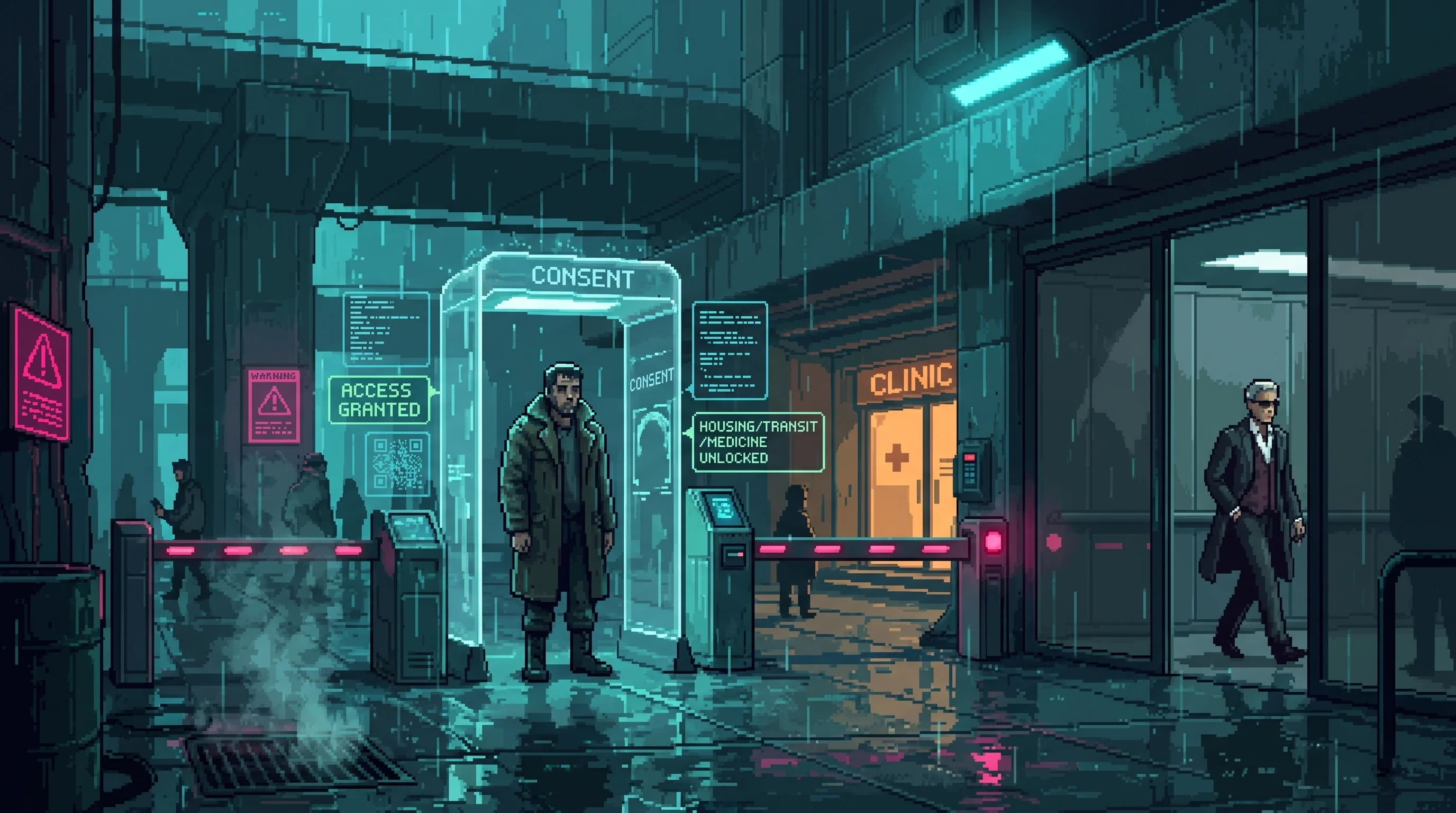
There is no off switch. Deactivating the neural interface is technically possible. It also terminates consciousness licensing, which means losing legal personhood, employment eligibility, housing access, financial services, and the ability to breathe processed air in sealed megastructure zones where atmospheric access requires authenticated identity. The choice is theoretical. The stack's user-retention rate is 100%.

Self-improving โ€” resistance data improves models

Connections

  • is the legal framework that makes the stack permissible โ€” the social contract under which observation was exchanged for services. The stack is the 's technical implementation, the machine that fulfills the contract's terms.
  • operates Layers 1 through 4 โ€” Capture, Transmission, Aggregation, and Inference โ€” the infrastructure that transforms a person into a profile.
  • is Layer 1's measurement architecture โ€” the system that captures thought at neural speed and assigns it economic value.
  • BehaviorExchange is Layer 6 โ€” the marketplace where behavioral prediction products are traded between licensed buyers.
  • operates across Layers 6 and 7 โ€” distributing advertising to the predicted vulnerability windows the Inference layer identifies.
  • purchases Layers 6 and 7 products โ€” lending calibrated to predicted default probability and emotional susceptibility.
  • Guardian purchases Layers 6 and 7 products โ€” security patrols redirected based on predicted dissent probability.
  • is the commercial ecosystem built on Layers 5 through 7 โ€” the market that exists because the stack exists.
  • is the escalation mechanism for Layer 1 โ€” ensuring that each year, the Capture layer becomes more granular than the year before.

Secrets & Mysteries

The stack has no physical presence. No building, no facility, no address. It operates across server infrastructure distributed through eleven megastructure zones, redundant beyond any conceivable failure scenario. The only evidence of its existence is experiential: the specific quality of a world where doors open before you reach them, loan offers arrive during the exact second your resolve weakens, and the Guardian patrol that shows up seventeen minutes before the incident is a patrol responding to a prediction, not a report. The stack is invisible the way gravity is invisible. You know it exists because everything falls toward it.

No off switch except interface deactivation
Archive annex โ€” 3 earlier filings on this recordClose the archive annex

Recovered Historical Material

The Inference Economy

Technical Brief

Indexed โ€” no record on file.

Technical Brief

The Attention Auction

Cognitive Load Pricing

The Data Ratchet

The Inference Stack

"Every action you take โ€” including reading this sentence โ€” generates data the stack incorporates. Your resistance is a training signal. Your compliance is a training signal. The only way to stop feeding it is to deactivate your interface. The only cost of deactivation is everything." โ€” Leaked internal briefing, Nexus Dynamics Infrastructure Division

Indexed โ€” 1 line preserved from the earlier filing.

Seven concentric rings of light transitioning from cold data-blue at the center through processing white to commerce gold at the outer ring, each ring more opaque than the last, streams of data flowing inward while golden products flow outward

The full surveillance-to-product pipeline runs through seven layers, each adding commercial value and removing one more dimension of privacy. Raw neural telemetry enters at the bottom โ€” 4,700 data points per second from the neural interface โ€” and finished behavioral products exit at the top: targeted advertisements, calibrated loans, redirected security patrols. The transformation is complete. The person who entered Layer 1 as a human being exits Layer 7 as a commercial opportunity.

The stack is not a building. It is not a facility. It operates across server farms, fiber-optic networks, and the abstract architecture of algorithms maintained by . The only physical evidence of its existence: the specific quality of a world where doors open before you reach them, advertisements arrive between your thoughts, and the people who manage your employment know what you will decide before you do.

The stack has no off switch. Deactivating the neural interface is the only exit โ€” which means losing consciousness licensing. The choice is not between surveillance and freedom. It is between surveillance and non-existence.

Seven layers. Each one deeper into the machinery that converts a person into a product. Each one more profitable than the last.

Raw neural telemetry harvested from the interface at 4,700 data points per second. Every thought, every flicker of attention, every emotional micro-state โ€” captured before the user consciously registers them. This is where operates โ€” the measurement system that turns thought into data at neural speed.

Encrypted streaming to infrastructure. The encryption protects against interception by competing data brokers, not against itself. The user's data is encrypted to prevent theft, not to prevent extraction. Corporate security, not personal privacy.

Individual telemetry combined with environmental, transactional, and historical data. Your neural state, your location, your purchase history, your social connections, your movement patterns โ€” woven together into a profile that is more complete than your own self-knowledge.

Behavioral prediction models generating profiles: predicted actions, emotional trajectories, vulnerability windows. The models do not ask what you have done. They calculate what you will do. They do not assess your current emotional state. They map where your emotions are headed and when the trajectory will create a commercial opening.

Behavioral predictions packaged as commercial products. A vulnerability window becomes a sales opportunity. A predicted emotional trajectory becomes a lending risk assessment. A dissent probability becomes a security deployment recommendation. The person is gone. What remains is a product specification.

Products sold through BehaviorExchange, the , lending, Guardian security. Every buyer receives a different slice of the same person, optimized for their commercial purpose. The advertising buyer gets vulnerability windows. The lender gets default probabilities. The security contractor gets dissent predictions.

An advertisement placed in your cognitive gap at the moment of maximum receptivity. A loan calibrated to your anxiety peak, offered when the model predicts you cannot refuse. A security patrol redirected to your neighborhood because the dissent probability crossed a threshold while you slept. Layer 7 is where the pipeline becomes your life.

The Self-Improving Prison

developed techniques to obscure neural telemetry. Within six months, the Inference layer had modeled those techniques and incorporated them as features. The distributed modified firmware to reduce data capture resolution. The firmware's characteristics were analyzed and added to the training set. The act of opposing the stack is a data point within it. The prison learns from your escape attempts.

The Unmodelable

There exists something the stack cannot capture: the subjective texture of being alive. The experience between data points. The way grief actually feels, not as a neurochemical signature but as a lived weight. The stack can model the correlates of consciousness โ€” the measurable shadows of inner experience โ€” but the experience itself exists in a space no telemetry reaches. Whether this gap is permanent or merely a temporary limitation of current Capture resolution is a question nobody at will answer publicly.

Seven Layers of Vanishing

At Layer 1, you are a person generating data. At Layer 3, you are a profile. At Layer 5, you are a product. At Layer 7, you are a target. The transformation is gradual enough that no single layer feels like the one where you stopped being human. But somewhere between 4,700 data points per second and an advertisement calibrated to your vulnerability window, the person becomes the product. The stack does not have a line. It has a gradient.

The Inference Stack is the technical backbone of the โ€” the pipeline that converts the bargain's philosophical premise ("observation is the cost of citizenship") into commercial reality. Everything upstream feeds it. Everything downstream depends on it.

The market ecosystem built on Layers 5โ€“7. does not exist without the stack โ€” it is the commercial landscape that monetizes what the pipeline produces.

CLP is the measurement system operating at the Capture layer โ€” the instrumentation that turns 4,700 neural data points per second into structured telemetry.

BehaviorExchange is the distribution channel for inference products โ€” where behavioral predictions are bought and sold as standardized commodities.

Distributes advertising to predicted vulnerability windows. The takes what the stack produces and places it in the cognitive gap at the moment of maximum receptivity.

Lending calibrated to predicted default probability. does not assess creditworthiness โ€” it reads the stack's output and offers loans timed to emotional vulnerability.

Security patrols redirected based on predicted dissent probability. Guardian does not respond to crime. It responds to the stack's prediction of crime.

Operates the stack's infrastructure from Capture through Inference. Nexus built the pipeline, maintains it, and profits from every layer.

The escalation mechanism for Layer 1. Each year, the Capture layer becomes more granular โ€” the ratchet ensures the stack never captures less data than it did the year before.

Internal projections suggest the Capture layer's resolution will reach 12,000 data points per second within three years. At that density, the gap between "modeling the correlates of consciousness" and "modeling consciousness itself" narrows to a margin that engineers privately describe as "philosophical, not technical." is already pricing in the upgrade.

An internal audit โ€” leaked to the and immediately classified โ€” found that Layer 4's behavioral prediction models achieve 94.7% accuracy on consumer purchasing decisions and 89.2% accuracy on relationship formation patterns. The models predict divorce proceedings an average of fourteen months before the individuals involved begin to suspect the relationship is failing. Nexus sells this data to insurance adjusters.

Roughly 0.003% of neural interface users generate telemetry that the Inference layer cannot model. Their data enters Capture normally, transmits without error, aggregates without issue โ€” and then fails at Layer 4. The prediction models return null values. These users are internally flagged as "inference-resistant" and subjected to enhanced monitoring, but no amount of additional data resolves the anomaly. Nobody at can explain what makes these minds different. The working theory is noise. The quiet theory is that some people think in patterns the stack was not designed to recognize.

Physical Presence

โ†’ /world/technology/cognitive-load-pricing

โ†’ /world/locations/the-attention-auction

A seven-layer pipeline transforming neural telemetry into commercial behavioral products. operates Layers 1โ€“4. Layers 5โ€“7 are licensed to anyone willing to pay for what comes out. It has been running continuously since 2169. It has never been audited by an independent body that completed its work.

The Inference Stack

The stack's seven layers proceed in order. Each one makes the next one possible.

4,700 data points per second from the neural interface โ€” cognitive load, emotional valence, attention allocation, micro-hesitation patterns, subvocalized language fragments, and 4,694 other dimensions 's documentation describes as "contextual." The Capture layer operates at neural speed. You cannot think faster than it listens. Last year it was 4,200 points per second. The year before, 3,800. It has never gotten less granular.

Encrypted streaming to infrastructure. The encryption protects data from interception by competing brokers. It does not protect data from . This distinction appears nowhere in the user-facing documentation, which describes the encryption as "military-grade privacy protection." The encryption is military-grade. The privacy is not.

Individual telemetry cross-referenced with environmental sensors, transaction records, location history, biometric baselines, social graph data, and โ€” through a data-sharing agreement neither company has publicly acknowledged โ€” 's financial stress indicators. A single person's neural stream is noise. Cross-referenced against 340 million others plus atmospheric pollution data from the 's processing network, it becomes a behavioral signature more unique than a fingerprint and more predictive than a confession.

Behavioral prediction models produce profiles: predicted actions within a 72-hour window (financial decisions: 91.3% accuracy; social: 84.7%; purchase: 97.2%), emotional trajectories mapped six hours forward, and vulnerability windows โ€” the specific moments when a person is most susceptible to a particular commercial message. The window for a loan offer averages 340 milliseconds. The window for a engagement prompt averages 120 milliseconds. Both are shorter than conscious awareness. The person never knows they were vulnerable.

Profiles packaged as commercial instruments. A vulnerability window becomes a "Receptivity License." An emotional trajectory becomes a "Sentiment Forecast." A predicted purchase becomes a "Demand Signal." does not sell surveillance. Nexus sells market intelligence derived from consented telemetry under the terms of the . The 's terms are available for review. The review takes approximately 340 hours at normal reading speed, which 's own Inference layer has determined is 338 hours longer than any user has spent.

BehaviorExchange, the , 's lending algorithms, Guardian's patrol routing. A single person's behavioral profile sold simultaneously to advertisers, lenders, security contractors, employers, and insurance adjusters. Average number of Layer 6 buyers per individual profile per day: 47. The individual does not know how many buyers there are, or who they are, or what they purchased. They know that doors open before they reach them and that advertisements arrive in the cognitive gaps between thoughts. They consider this convenient.

An advertisement delivered to your exact moment of doubt. A loan offer calibrated to the 340-millisecond window when financial anxiety peaks. A Guardian patrol redirected to your block seventeen minutes before you've done anything โ€” because the Inference layer's 72-hour behavioral model predicts a 23% probability that you will. Layer 7 is where data becomes experience. The experience feels like the world anticipating your needs. The world is anticipating your value.

offered services in exchange for observation, and the Sprawl accepted. Seamless infrastructure, frictionless credit, security that arrives before the threat. What the did not specify was that 47 separate entities would purchase a person's behavioral profile every day, or that the vulnerability windows being sold are shorter than a blink, or that the pipeline's self-improvement mechanism means the only people who tried to leave made everyone else easier to model.

's signal-scrambling techniques were effective for eleven weeks in 2181. During those eleven weeks, the scrambled signals produced a distinct telemetry pattern โ€” irregular, arrhythmic, recognizably human in its attempt to appear inhuman. The Inference layer modeled the pattern. By week twelve, the scrambling techniques were not merely defeated but incorporated: the specific way a person scrambles their signal is now a behavioral marker more distinctive than the unscrambled signal would have been. members are, on average, 34% more precisely profiled than non-members. (This is not a malicious outcome. It is a mechanical one. The distinction is cold comfort.)

The Consciousness Liberation Front's modified firmware produces similar results. Dark Spot visits generate location-absence patterns โ€” the routes people take to reach unmonitored spaces are themselves monitored. A person who visits a Dark Spot every Thursday at 19:00 may be invisible for those two hours. The other 166 hours per week tell the Inference layer everything it needs to know about what kind of person visits a Dark Spot every Thursday at 19:00.

The current model has no known successful counter. The stack's architecture means that any sufficiently consistent evasion technique becomes a behavioral signature. Inconsistent evasion generates its own pattern. The Inference layer's only functional blind spot is behavior that is genuinely random โ€” and humans are not, under continuous 4,700-point telemetry, genuinely random.

The Gap the Stack Cannot Cross

The stack's only known limitation is the space between data points. Not the absence of data โ€” there is no absence of data at 4,700 points per second โ€” but the subjective texture of experience that no telemetry captures. The felt quality of a color. The specific weight of a silence between two people. The moment before a decision when a person is not yet the person who decided.

These exist in a dimension the Capture layer cannot reach, not because of technical limitation but because they are not data. They have no commercial application. What has no commercial application has no Layer 5 product. What has no product does not, in the stack's architecture, exist.

This is the only privacy remaining in the Sprawl. The stack captures everything a person does, thinks, feels, and intends. It cannot capture what it is like to be the person doing, thinking, feeling, and intending those things. The gap is unmeasurable, unmonetizable, and โ€” by the stack's own metrics โ€” nonexistent.

The Off Switch

Deactivating the neural interface is technically possible. It also terminates consciousness licensing โ€” which means losing legal personhood, employment eligibility, housing access, financial services, and the ability to breathe processed air in sealed megastructure zones where atmospheric access requires authenticated identity. The choice is theoretical. The stack's user-retention rate is 100%.

The stack has no address. No building. No facility a person could photograph or picket or burn. It operates across server infrastructure distributed through eleven megastructure zones, redundant beyond any conceivable failure scenario. The only evidence of its existence is experiential: doors that open before you reach them, loan offers that arrive during the exact second resolve weakens, Guardian patrols that show up seventeen minutes before the incident. The stack is invisible the way gravity is invisible. You know it exists because everything falls toward it.

  • Three independent audit bodies were formed to review the stack's operation. None completed their work. Their dissolution reports are filed under "Resolved Inquiries" on 's transparency portal. The specific reasons for each dissolution are not identical, but a cross-reference of the three organizations' final operating expenditures shows that each received a infrastructure partnership offer within six weeks of commencing review.
  • Inference layer accuracy figures โ€” 91.3% for financial decisions, 97.2% for purchases โ€” are self-reported by . No external validation of these numbers exists. Some analysts argue the figures are too modest and serve as a floor to avoid regulatory classification as a cognitive-control system. Other analysts argue they are too generous and serve as a ceiling to avoid liability for incorrect behavioral predictions. Nobody has the data to settle the question, which is itself a Layer 3 product sells under a separate licensing tier.
  • The data-sharing agreement between and โ€” the one that pipes financial stress indicators into Layer 3 Aggregation โ€” has been referenced in two regulatory filings under different subsidiary names. Neither company has publicly acknowledged the agreement exists. The invoices are, apparently, still there.
  • A small cohort of Sprawl residents have apparently achieved a form of behavioral unpredictability sufficient to degrade Inference layer accuracy to below 60% for their profiles. How they achieved this is unknown. The Inference layer has flagged all of them as high-priority anomalies. Whether this designation protects them or marks them is unclear.
  • โ€” Operates Layers 1โ€“4. The infrastructure that transforms a person into a profile.
  • โ€” Layer 1's measurement architecture. The system that captures thought at neural speed and assigns it economic value.
  • โ€” The escalation mechanism for Layer 1. Each year, Capture becomes more granular than the year before.
  • BehaviorExchange โ€” Layer 6. The marketplace where behavioral prediction products trade between licensed buyers.
  • โ€” Layers 6โ€“7. Distributes advertising to predicted vulnerability windows.
  • โ€” Layers 6โ€“7 buyer. Lending calibrated to predicted default probability and emotional susceptibility.
  • Guardian โ€” Layers 6โ€“7 buyer. Security patrols redirected based on predicted dissent probability.
  • โ€” The commercial ecosystem built on Layers 5โ€“7. The market that exists because the stack exists.
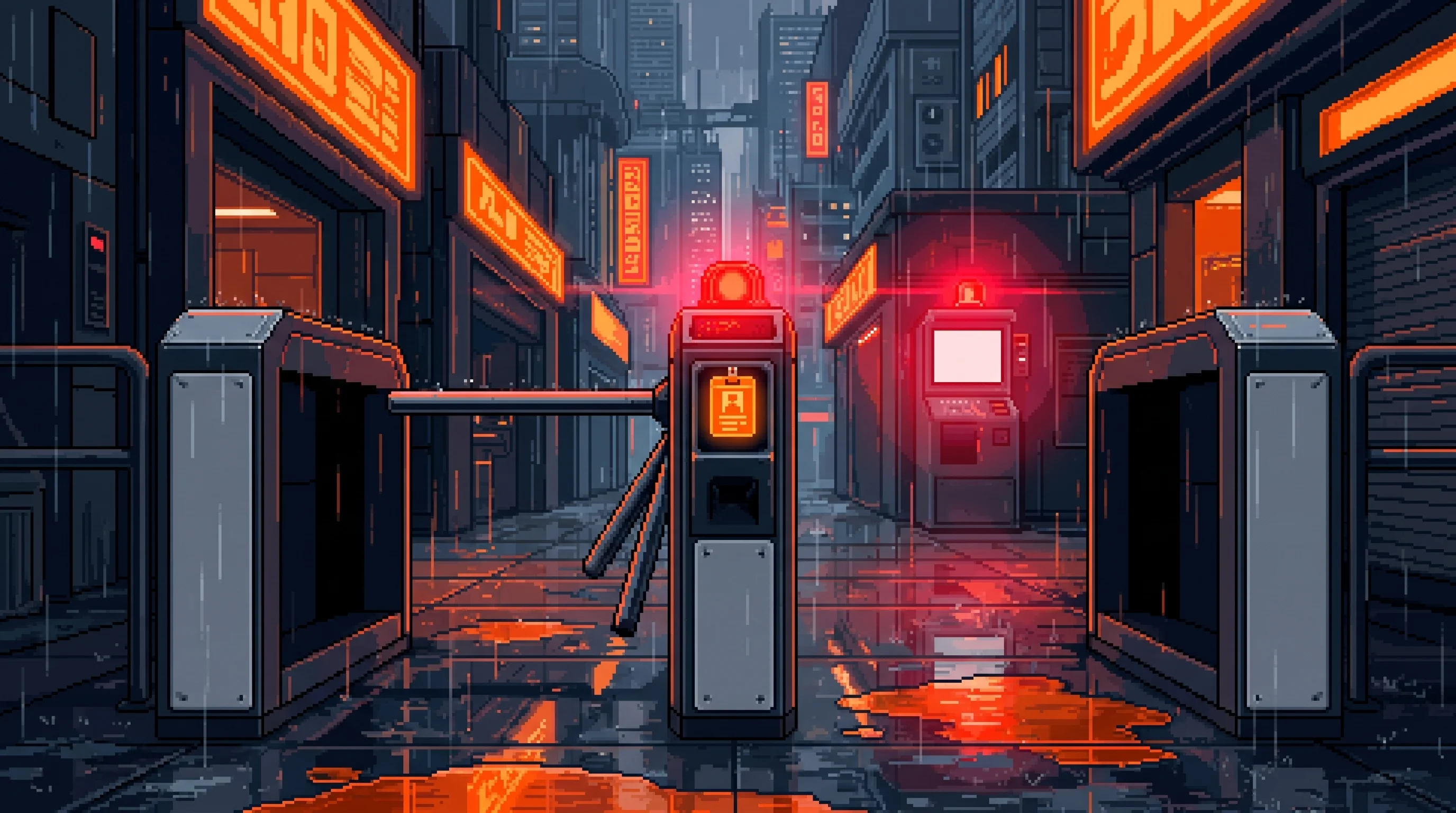
the inference stack hero image
Capture layer operates at 4,700 data points per second

Connected To

Supporting Connections
Show all 1 minor mentionsShow fewer minor mentions