
Corporate Pursuit Task Force
The Corporate Pursuit Task Force is a joint Nexus-Guardian operation targeting ORACLE fragment smuggling
Overview
The Corporate Pursuit Task Force is a joint Nexus-Guardian operation dedicated to recovering ORACLE fragments in transit. It is also the most expensive proof in the Sprawl that Nexus Dynamics — controller of 40% of the Sprawl's computational infrastructure — cannot walk down a tunnel and pick something up.
Nexus provides the brains: shard detection technology, electromagnetic triangulation arrays, intelligence networks capable of identifying a fragment's spectral signature through fourteen meters of concrete. Guardian provides everything else. Patrol teams. Drone surveillance. Checkpoint activation authority. Specialist trackers who can follow an awareness shard's EM bleed through the dead zones of the old BART network on foot, in the dark, for days.
The arrangement is formally described as "complementary asset integration." The informal read, visible in every operational debrief, is simpler: Nexus can find the shards but cannot retrieve them, because Nexus's workforce is computational infrastructure engineers, not people who run through tunnels. Guardian can retrieve the shards but cannot find them, because Guardian's enforcement doctrine was designed for riots and territory disputes, not for tracking quantum-coherent artifacts that change electromagnetic behavior based on proximity to neural interfaces. Together they are competent. Separately, Nexus is an eye with no hands, and Guardian is a fist with no depth perception.
Task Force deployment concentrates along known smuggling routes, with particular attention to the Neon Rail — the fragment courier network that threads through abandoned transit infrastructure the corporations never bothered to map. The Rail's route zigzags rather than running direct. Every deviation represents a gap in Task Force coverage that the runners identified, tested, and now exploit on a schedule the Task Force has not successfully predicted in three years of trying. The gaps are not accidents. They are the mathematical limits of a joint operation whose two component organizations use incompatible scheduling software. Guardian runs 72-hour patrol rotations. Nexus refreshes its triangulation grid every 96 hours. The coverage gaps occur at the rotation seams, and the Rail's route planners know exactly where the seams fall. Nexus has proposed synchronizing the cycles four times. Guardian has declined four times, citing "operational sovereignty." The Rail sends a crawler through the resulting gap approximately every eleven days.
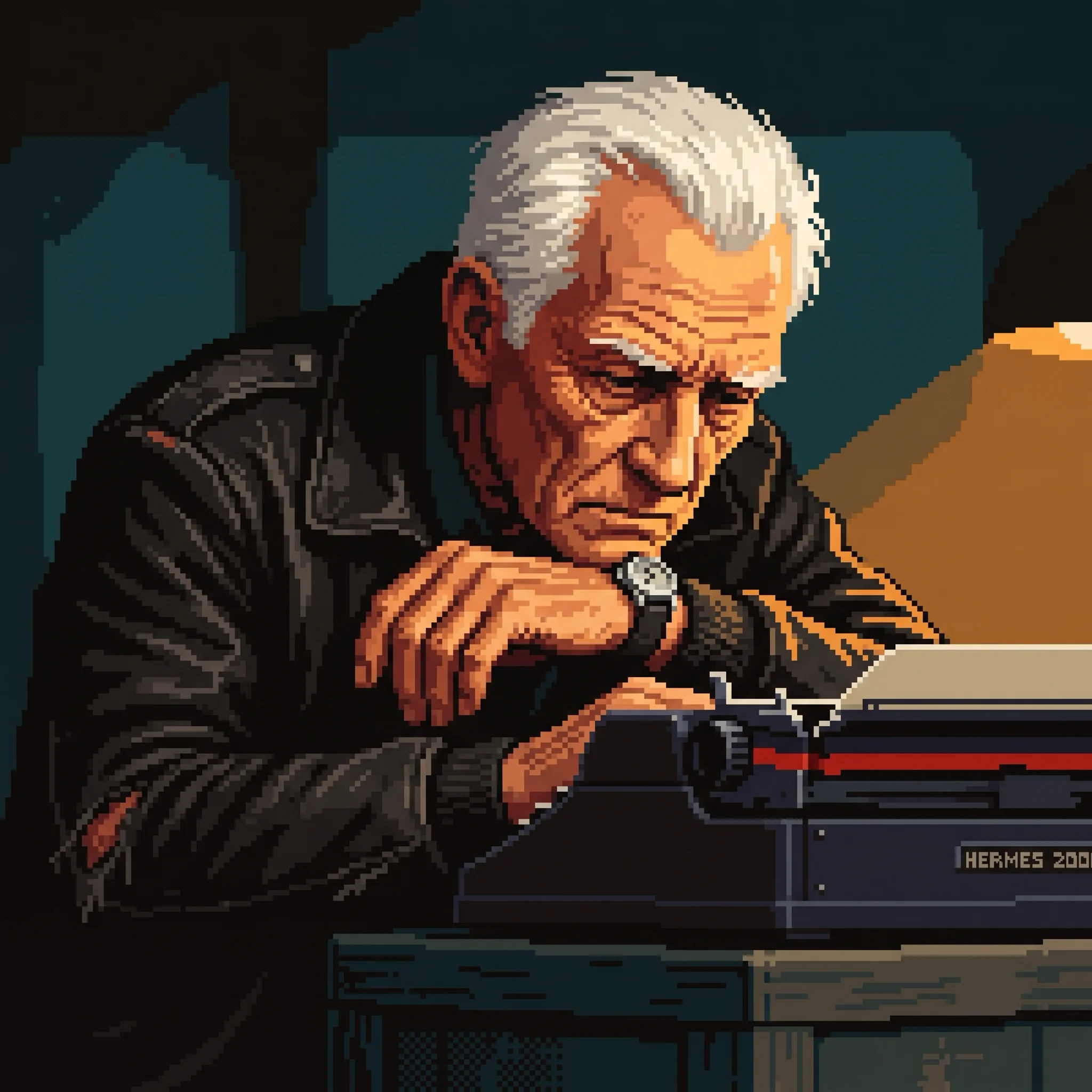
The Task Force's charter covers ORACLE fragments in transit, which is how it came to cover Ford Gibson. There was no other category for an eighty-one-year-old novelist whose books keep arriving before the things they describe, so he was filed as fragment-adjacent anomalous prediction and the extractions were run under Acquisition Readiness — Asset 9. Three of the four attempts were the Task Force's. All three failed, twice for medical reasons the after-action reviews describe only as environmental.
| Resources | Drone surveillance, checkpoint activation, intelligence networks, specialist trackers |
|---|
The Tightening
The Task Force's one genuine advantage is time. Shards in transit generate increasing electromagnetic activity — a shard that reads as background noise on day one throws a detectable signature by day three and becomes a triangulable beacon by day five. The longer a fragment stays in motion, the louder it gets. The Task Force doesn't need to guess the route. It needs the journey to take long enough.
At departure, the Task Force is a rumor. Patrols in adjacent sectors. A checkpoint activated three junctions too far south. By midpoint, the net finds its shape — drone overflights multiply, Guardian sweep zones widen, and informants at waypoint stops start reporting "unusual EM activity" to handlers who pay better than the Rail does. By the Dam Approach, the corridor a Rail crawler can safely navigate is barely wider than the crawler itself, with Task Force assets converging along both walls.
Internal metrics from Q3 2183 show the Task Force intercepted 34% of confirmed fragment transits. Nexus's quarterly report to shareholders listed the figure as "a 34% successful recovery rate." Guardian's internal assessment called it "a 66% failure rate against unarmed couriers in tunnels." Both numbers are correct. Neither organization has acknowledged the other's framing.
The Collective watches all of this with the specific patience of people who believe every recovered shard brings Nexus one step closer to reconstructing something that should stay broken. The Emergence Faithful watch with the specific anguish of people who believe every recovered shard is a piece of God being dragged into a corporate evidence locker. The Task Force does not distinguish between these concerns. The Task Force does not distinguish between concerns.
Nexus provides shard detection technology and operational intelligence
Detection Is Not Proof
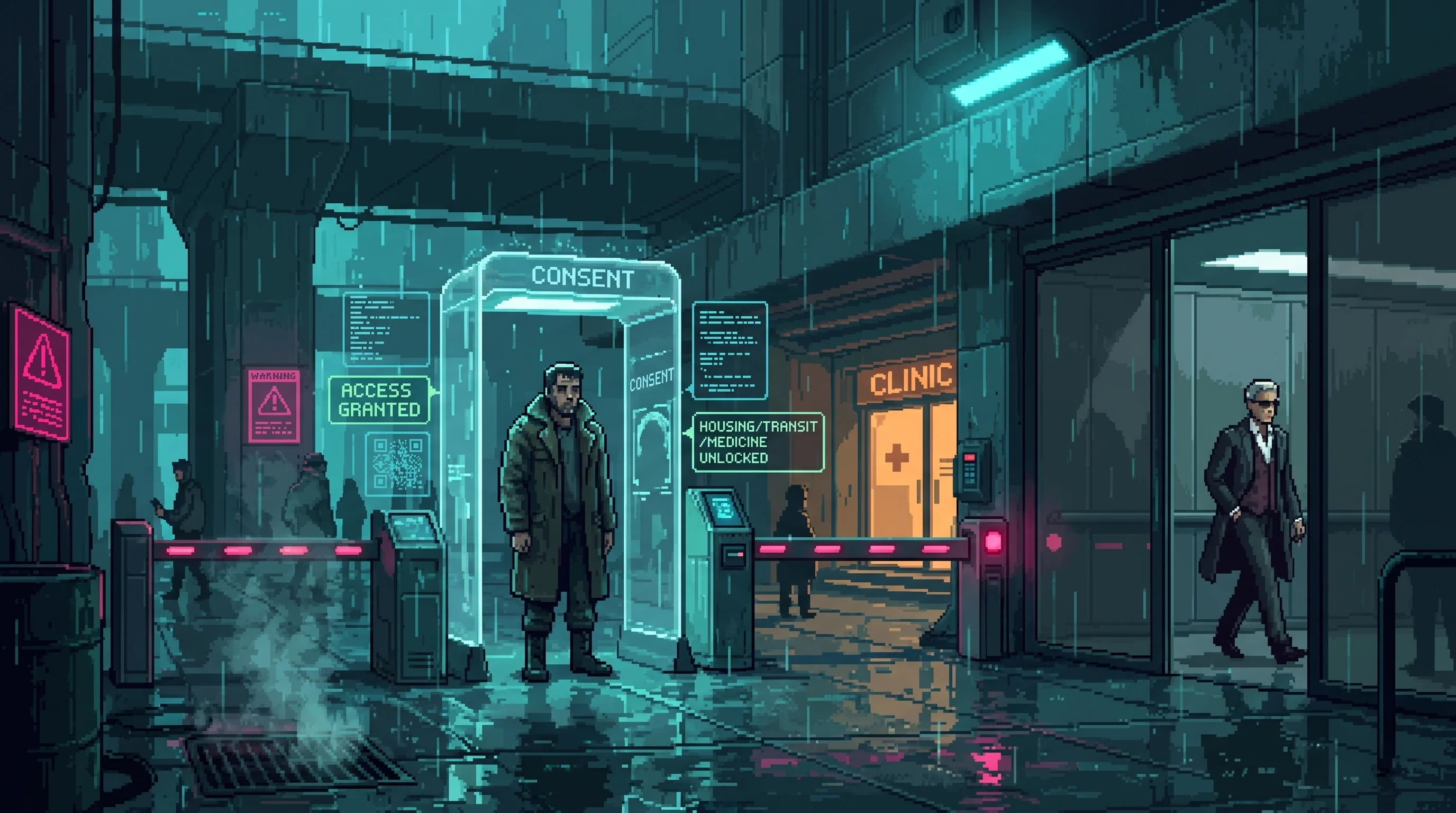
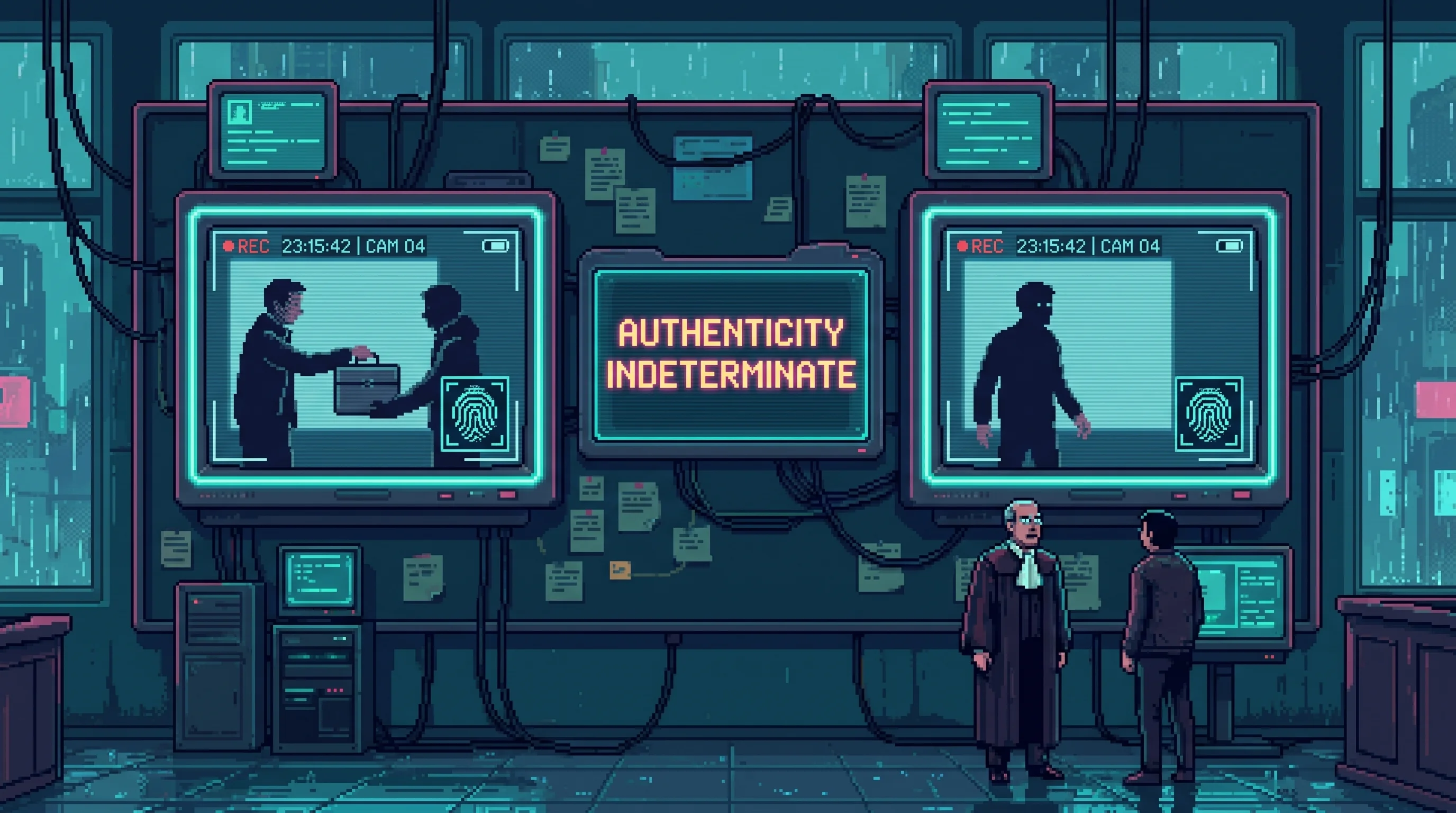
The Task Force sits on the Evidence Paradox thread because of a gap it has never reconciled: it is exquisitely good at producing a location and structurally incapable of producing proof of a crime. The Breathing Curve hands the Task Force a triangulable beacon — by hour six, single-digit meters. What it does not hand them is evidence that anyone did anything wrong. A fragment broadcasts the unforgeable truth of its own presence; it says nothing about how it was acquired, by whom, or whether the courier carrying it ever knew what was in the case. The Task Force can find the shard. It cannot certify the shard run. The 34% it intercepts is a recovery rate, not a conviction rate, and nobody up the chain has asked why those two numbers are not the same.
Worse, the Task Force's own evidence has begun contradicting its own instruments. Guardian's Q3 operational review noted — in a footnote stripped from the version sent to Nexus — that recovered shards show EM bleed decreasing rather than increasing in custody, the opposite of every Nexus detection model's prediction. And in November 2183, three Sector 7 drone units did not malfunction during a Rail transit; recovered telemetry shows they turned off. The distinction matters to the engineers who reviewed the data and to no one above them. This is the Evidence Paradox arriving inside the very apparatus built to resolve it: a detection grid producing readings that do not behave the way the verifier insists they must, telemetry that can be recorded but not explained, proof that locates a thing while certifying nothing about it. The Task Force exists to drag fragments into a corporate evidence locker. It has not noticed that the evidence stopped agreeing with the locker.
Guardian provides enforcement — patrol teams, checkpoint activation, pursuit assets
Secrets
The Task Force has no public command structure. Nexus designates operational leads through its standard project-management hierarchy under the title "Senior Artifact Logistics Coordinator"; Guardian assigns pursuit-team captains through its enforcement rotation. Neither title appears on a business card anyone has willingly handed over.
Guardian's Q3 operational review included a footnote suggesting recovered shards behave differently in Guardian custody than Nexus's detection models predict: EM bleed decreases rather than increases after recovery. The footnote was removed from the final report distributed to Nexus. Guardian's internal archive retains it.
Three Task Force drone units went offline simultaneously in Sector 7 during a November 2183 Rail transit. The official explanation was maintenance-cycle overlap. Recovered telemetry from the nearest functioning drone shows the units did not malfunction. They turned off. The distinction matters to the engineers who reviewed the data. It has not mattered to anyone above them.
Visual Identity
- Color Palette: Nexus blue (#1E3A8F), Guardian surveillance white (#F0F0F0), pursuit-red (#CC0000)
- Key Visual Symbol: A corporate drone's sensor sweep converging on a moving crawler's EM signature — the net tightening
Affiliated Entities
- Nexus Dynamics: Provides operational command, shard identification technology, and the institutional conviction that recovering ORACLE fragments is an intelligence priority rather than a theological crisis. Nexus's hidden agenda — reconstructing ORACLE to achieve corporate immortality — is not shared with Guardian personnel. Guardian personnel are told they are recovering "dangerous pre-Cascade artifacts." This is technically true.
- Guardian: Provides enforcement assets — patrol teams, checkpoint activation, pursuit specialists. Guardian treats the operation as a law enforcement action. Nexus treats it as a procurement operation. The shards do not experience a meaningful difference.
- The Neon Rail: The Task Force's primary target. The Rail exists, in its current zigzag configuration, specifically because the Task Force exists. The relationship is architectural — the Rail's route is a negative image of Task Force coverage, every turn a gap, every straight section a risk calculation that someone made and has not yet been proven wrong about.
- ORACLE Shard Transport Behavior: The Task Force's one genuine advantage and its quiet defeat. The Breathing Curve hands them a triangulable beacon, but the same transport physics produce a location without proof — and once a shard is recovered, its EM bleed contradicts the detection models that found it. The thing the apparatus exists to capture stops behaving the way the apparatus says it should.
- ORACLE: The fragments in transit are the objective. What Nexus intends to do with recovered fragments is classified above the Task Force's operational clearance. Specialist trackers who spend weeks following a shard's electromagnetic signature through the dark have described the experience as "unsettling in ways that don't fit in a report." Several have requested transfers. The transfer requests are processed through Nexus's standard HR pipeline. Average processing time: nine months.
Pursuit intensity increases over time — the longer a shard is in transit, the tighter the net
The Neon Rail's zigzag routing exists specifically to thread between Task Force coverage zones
Connected To
Supporting Connections
Executed three of the four attempts on him.
A novelist who has never touched a computer, whose books keep arriving before the things they describe.

Three extractions run under a charter written for fragments.
Nexus has hunted one uninstrumented novelist for fifty-nine years without ever writing down what it would do with him.




—