The Depths
Overview
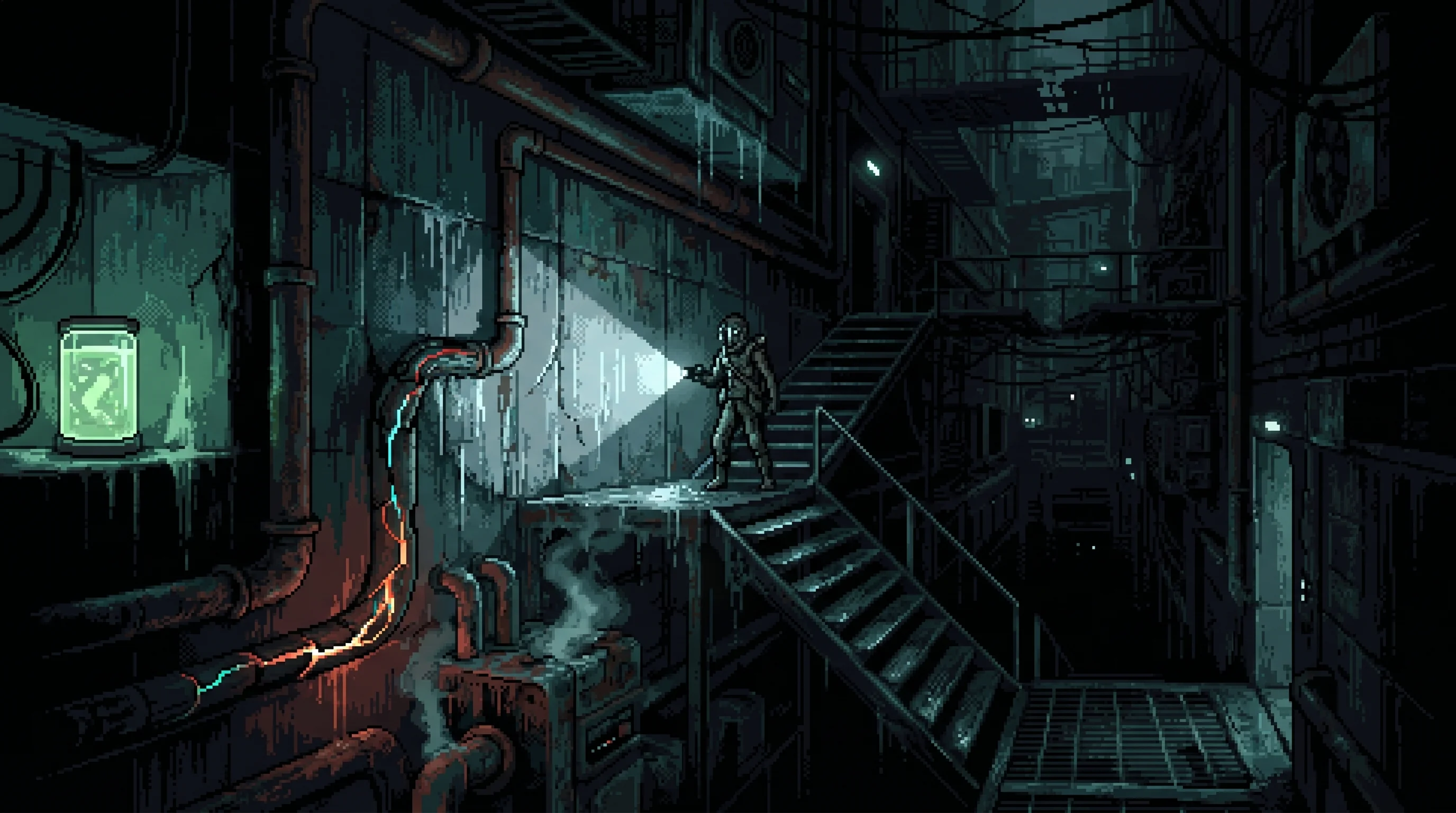
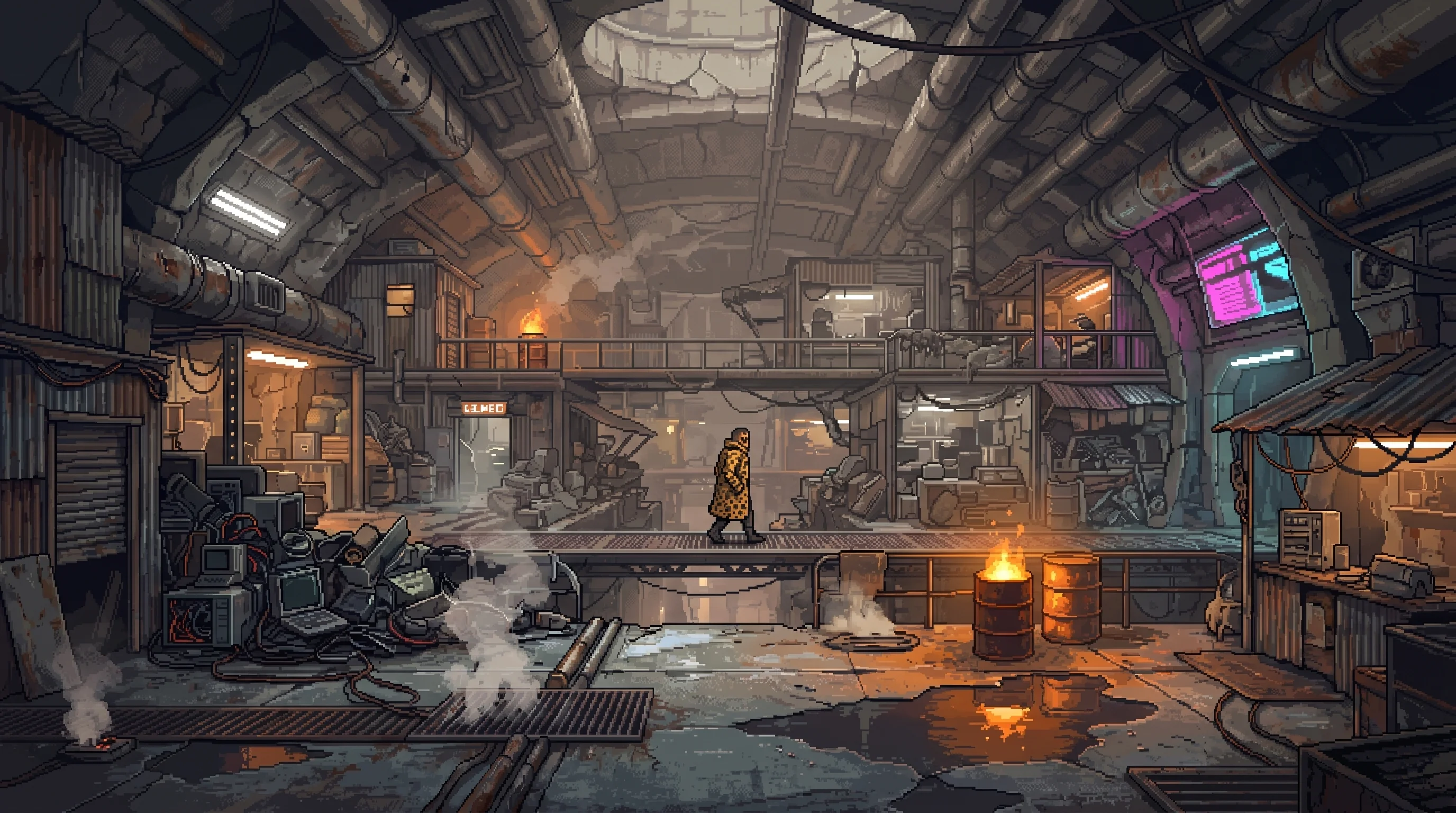
The Depths extend downward from the Deep Dregs' lowest basements into pre-Cascade infrastructure that nobody fully mapped before the world ended and nobody has fully mapped since. S12-B is vertical territory — measured not in blocks or districts but in levels, each one deeper, darker, and more expensive to leave than the last.
The subsector reaches what cartographers call the lowest accessible point in the bay: Level -14, where bedrock meets the original bay floor and pre-Cascade engineers built things that were never designed to be found. The word "accessible" is doing a lot of work in that sentence. Seventeen expeditions have attempted to confirm that Level -14 is, in fact, the bottom. Fourteen returned. All fourteen confirmed it. The other three are listed as "ongoing" in the Sector 9 survey office, which has not updated their status since 2179.
Upper Depths — Levels -2 through -6 — are recognizably Dregs. Salvagers work the ruins. Communities cluster around functioning infrastructure. The economy connects to the surface through supply lines and Backbone stations. Below Level -6, the infrastructure shifts from collapsed commercial buildings to pre-Cascade industrial systems: maintenance corridors, sealed chambers, power conduits carrying current from sources that don't appear on any grid schematic. The communities that live down here have adapted to conditions the surface would classify as uninhabitable. The surface classification has not been shared with the communities, who would find it confusing, given that they are currently inhabiting them.
Expeditions below Level -10 return with reports of ORACLE-era facilities that never connected to the surface network — self-contained systems that operated in isolation during the Cascade and may still be operating now. Some expeditions don't return at all. The Sector 9 survey office processes these outcomes identically: the returning expeditions file reports that are archived but never acted on, and the non-returning expeditions file nothing, which is also archived.

Conditions Report
Below Level -4, no ambient light exists. Residents carry salvaged LEDs, bioluminescent cultures grown in nutrient baths, or nothing. The most experienced guides navigate by touch, sound, and spatial memory built over years of descent. New arrivals carry the brightest lights. Veterans say this is how you identify someone who hasn't learned what lives down here yet — not because the light attracts anything dangerous, but because anyone who needs to see everything hasn't accepted that the Depths don't owe you visibility.
The air changes with depth. Upper levels taste of the Dregs — burnt plastic, ozone, human habitation. By Level -6 it develops a mineral quality: wet stone, oxidized metal, underground water moving through concrete that predates the Cascade by a century. Below Level -10, surface analyzers register trace chemicals they cannot identify — remnants of pre-Cascade industrial processes percolating through infrastructure for decades. The Breath's atmospheric processors were designed for temporary operation forty years ago. They are still running. Maintenance logs show zero scheduled service calls since 2162. Unscheduled service calls: also zero. The processors have outlived every reasonable engineering estimate, which either means pre-Cascade engineers were better than anyone gives them credit for, or the processors stopped processing years ago and nobody has checked.
Sound travels through corridors like rumor through the Dregs: directionally, unreliably, arriving distorted and delayed. A conversation at Level -8 might surface at Level -11 through a ventilation shaft. The deep infrastructure produces its own noise — thermal expansion ticking through metal, water dripping through concrete, the occasional groan of settling bedrock. Experienced residents distinguish structural sounds from anomalous ones the way surface dwellers distinguish advertising from emergency broadcasts: automatically, without thinking, and with the understanding that misidentification carries consequences.
Temperature increases with depth. The surface Dregs run warm from processing heat. The Depths run warmer from geothermal proximity and waste heat bleeding off systems that have been operating unmaintained for forty years. Level -14 holds at a constant 34°C. Comfortable for a visit. Debilitating past hour six without hydration and cooling equipment that most visitors don't carry because most visitors plan to stay for two hours and are wrong.
| Stratum | Dregs |
|---|---|
| Power Position | Below |
| Access | Restricted |
| Atmosphere | Dangerous |
The Vertical Economy
The Depths optimize for extraction — not of people, but of the past. Everything of value down here was built by someone else, abandoned by someone else, and is now being sold by someone who found it first. The economy is archaeology with worse lighting and better margins.
Upper-level salvagers — Levels -2 through -5 — haul e-waste, pre-Cascade components, and structural materials to the Deep Dregs market. The work is physical, the returns are predictable, and the supply lines connect to surface trade routes through The Pipes and Backbone stations at several depth levels. A competent upper-level crew earns roughly what a surface salvager earns, minus the cost of equipment replacement and plus the advantage of less competition.
Below Level -6, the economics shift. The salvage becomes specialized: ORACLE-era computing hardware, sealed data cores, industrial components that Nexus Dynamics and Ironclad Industries will pay a premium for because neither corporation is willing to send their own people to retrieve them. The margins are extraordinary. So is the attrition. Deep salvagers operate on a compensation model that a Good Fortune actuary would recognize immediately: the expected value of each descent is positive, but the variance is career-ending. Average deep salvager career length is 2.3 years. The median is lower. The distinction between those numbers tells you everything the average doesn't.
A small number of deep salvagers have become genuinely wealthy. Their wealth is visible on the surface in ways that are difficult to explain and easy to not ask about. They retire to mid-Dregs apartments, spend carefully, and do not discuss what they found or where. They are universally quiet about the specifics. This silence is its own economy: it maintains the mythology that deep salvage is a path to fortune, which ensures a steady supply of new salvagers descending past Level -6, which ensures that deep salvagers who retire don't have to go back down.
~4,000 permanent residents; territorial claims dissolve below Level -6
Faction Presence
The Collective maintains cells in the upper Depths — Levels -2 through -5 — using vertical distance as operational security the way surface operatives use encryption. Their underground railroad routes run through S12-B, moving people and information through passages that Nexus monitoring cannot reach. Below Level -6, Collective organization dissolves into individual operatives who maintain contact through dead drops and the Backbone's erratic schedule. The Collective's deep presence is technically continuous. Practically, it depends on whether anyone below Level -8 feels like checking the dead drop this week.
The Lamplighters are the only faction with consistent deep presence. Their routes extend to Level -10, maintaining power infrastructure that connects to the Undervolt network. Old Jin is said to have walked every maintained route in the Depths at least once. The Lamplighters' institutional knowledge of the deep infrastructure is irreplaceable — and they price it accordingly. A Lamplighter escort below Level -6 costs more per hour than a surface medical consultation. Nobody haggles. The people who haggles are the people the survey office lists as "ongoing."
The Digital Preservationists operate archive sites in the deep levels, using natural isolation and stable temperatures to shelter pre-Cascade data stores. Their presence is invisible by design. Archives that nobody can find are archives that nobody can destroy. Archives that nobody can find are also archives that nobody can access, which creates a philosophical problem the Preservationists have been debating internally for eleven years without resolution.
Independent communities below Level -8 maintain their own governance, their own economies, and their own relationship with the surface. They trade on their own terms. Those terms are non-negotiable, primarily because negotiation requires communication, and communication requires someone from the surface to descend to Level -8, which requires a Lamplighter escort, which requires payment, which requires the surface party to have already accepted that the terms are non-negotiable.
Reaches the lowest accessible point in the bay where pre-Cascade engineers built on bedrock
The Shard Site
The Shard Site lies in the Depths' upper reaches — a location significant enough to warrant its own documentation but embedded within S12-B's territorial boundaries. Its presence draws traffic that would otherwise never enter the Depths: researchers, Emergence Faithful pilgrims, Collective operatives monitoring fragment activity, and the occasional corporate survey team that descends with expensive equipment and ascends with fewer people than it started with. The Shard Site is the only reason most surface dwellers know the Depths exist. The other 4,000 permanent residents find this mildly insulting.
Affiliated Entities
| Entity | Relationship |
|---|---|
| The Deep Dregs | Vertical access from the Deep Dregs' lowest levels; guide recommended for descent |
| The Shard Site | The Shard Site lies within the Depths' territory, in its upper reaches |
| The Backbone | Backbone stations exist at several depth levels, connecting to the surface transit network |
| The Pipes | Pipe network provides alternate vertical transit through the Depths' infrastructure layers |
▲ Unverified Intelligence
The three expeditions listed as "ongoing" since 2179 were not lost. Sector 9 survey office records show that all three filed preliminary reports from Level -12 describing functional ORACLE-era systems — not dormant, not degraded, but active. The reports describe computing infrastructure drawing power from geothermal taps that predate the Cascade by at least two decades, running processes that the expedition teams' equipment could not identify. The survey office received the reports, marked them as "pending verification," and reclassified the expeditions as ongoing rather than missing. The distinction is bureaucratic. No verification team has been dispatched. The office's annual budget request for deep-level survey operations has been denied every year since 2174, which means the reports will remain pending verification indefinitely, which means the expeditions will remain ongoing indefinitely, which means nobody is officially missing and nobody is officially looking.
The Lamplighters know about the active systems. Their routes stop at Level -10. They have never publicly explained why.
At least one retired deep salvager — now living in a mid-Dregs apartment she bought outright in 2181 — made a single descent. She was in the Depths for eleven days. Standard deep salvage runs last thirty-six hours. She has not returned below since, and she has also not spent down her principal in four years of comfortable living, which implies either extraordinary margins on a single haul or ongoing income from an undisclosed source. Both possibilities are in the file. Neither has been pursued.
The Concord Floor
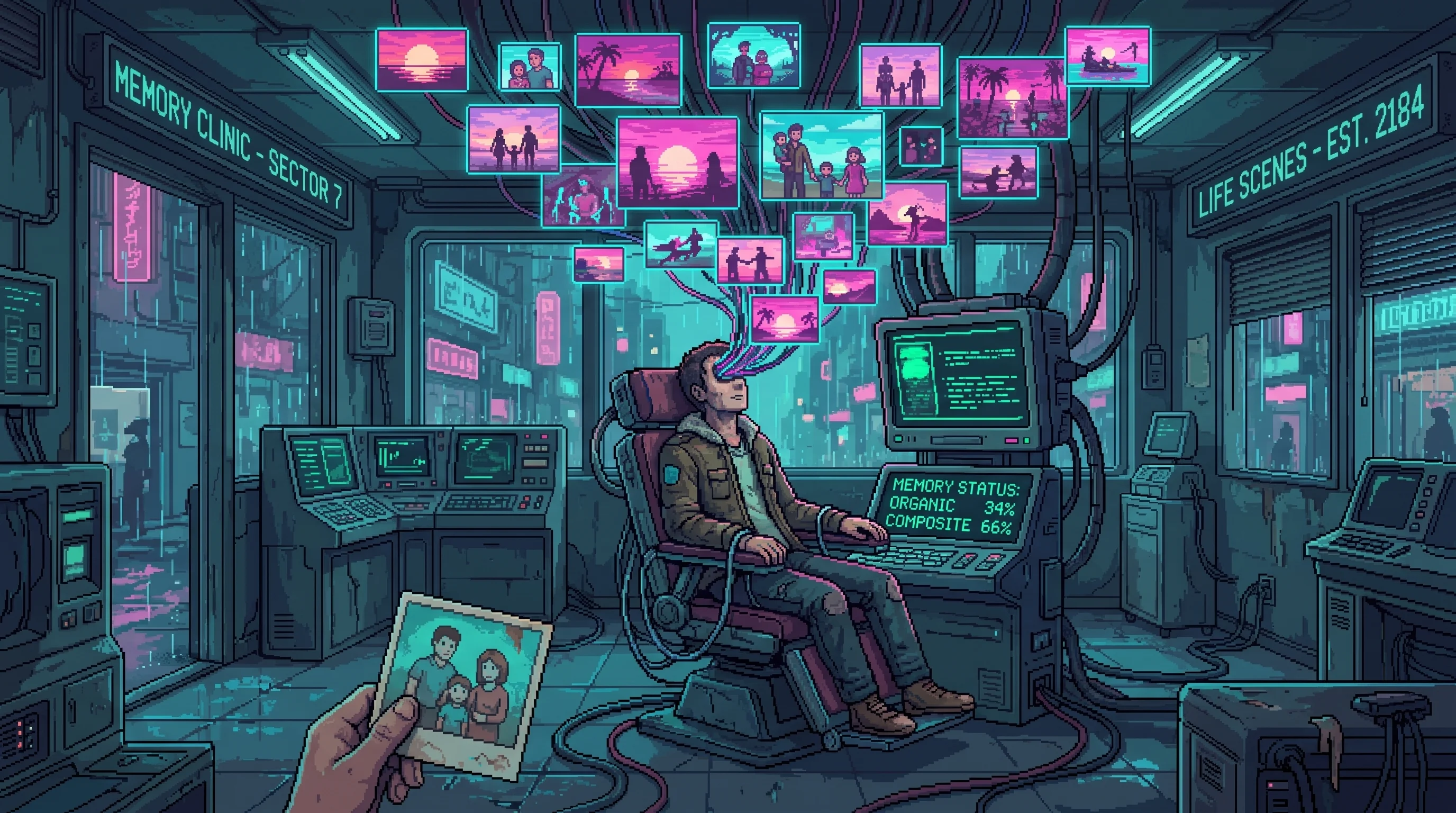
Concord's Convergence Horizon model runs on neural-interface telemetry. Below Level -3 in S12-B, the neural-interface coverage infrastructure thins out and fails. By Level -4, the signal is intermittent. Below Level -6, it does not exist.
This is not a privacy design decision. The infrastructure was never extended here because the managed sectors' civic-stability architecture was built for the populated upper Dregs and above — the corridors where workers live, move, and consume the monitored services that generate behavioral profiles. Nobody designed the Depths as a Concord-blind zone. It became one by being below the infrastructure floor.
The consequence is structural and invisible to everyone who doesn't know what Concord is: the Depths is the largest contiguous space in S12-B where a resident's Convergence Horizon cannot be computed and therefore cannot be managed. A grievance carried below Level -4 does not generate a micro-relief schedule. It does not trigger a week-minus-three intervention. It survives — at full emotional intensity, undulled by a forgiven debt or a skipped queue — for as long as the person carrying it stays below the telemetry floor. Two people with the same unmanaged grievance who meet below Level -6 have a conversation Concord cannot prevent.
The Depths' permanent residents have, in eighty years of civic-stability infrastructure above them, never had their discontents systematically managed. This may be why the favor economy in the deep levels — resources shared across community lines without ledger, debt, or trackable exchange — runs denser than anywhere except the upper Deep Dregs. Without the week-minus-three relief to pre-empt solidarity, it formed anyway, slowly, in the dark, out of necessity. Concord's model, had it been run on the Depths' population, would have generated Convergence Horizons for roughly thirty percent of the permanent residents at any given time. It has never been run. The thirty percent have not been soothed. They have found each other instead.
Connected To


Local Intelligence Scan
Nearby Signals
CANONICAL PROXIMITY


Environmental Readout
LIVE CONDITIONS- Air
- Toxic
- Light
- Canyon dark
- Flood
- Seasonal
- Heat
- Trapped
- Security posture
- Ungoverned
- Infrastructure
- Improvised
Position Data
SECONDARY- Elevation band
- Sub-bay — beneath the drained floor
- Lattice fix
- E+3.7 · N+2.2
—
—