Yan Ryze
Data-Abuse Defector Lawyer
The People's Counsel
On the Sunset Companion case: 'I cannot prove the Companion is a person. So I am not going to try. I am going to prove that Helix sold a family a goodbye and called it a product, and that the family relied on a lie about what was capable of saying it.'

Overview
Yan Ryze is a wealthy pro bono lawyer who specializes in the kind of corporate harm that arrives wearing compliance language.
His background is securities law. This matters because corporations rarely steal from the Dregs with a mask and a weapon. They steal with disclosure schedules, consent frameworks, risk pooling, data licenses, and filings that explain the theft in sentences only the thief can afford to understand. Yan understands those sentences. He translates them for people who were never supposed to know where the trapdoor was.
The public story is clean enough to be useful. Yan represents helpless Dregs residents against corporations. He does not charge. He knows the law. He knows the people. He knows which signatures matter and which words are meant to make a victim feel stupid for objecting.
The private story is not clean. Yan made his money from an evil corporation that stole people's data and became rich by abusing it. He will not say which corporation. He will not explain the mechanisms. He will not describe what he did there. He will talk warmly about almost anything else.
Yan is transparently generous, and his fortune is violently opaque.
Appearance

Yan is human, soft, approachable, and prosperous without seeming remote. He appears late 30s to early 40s, with light reddish-blond hair, rectangular dark-framed glasses, fair skin, and a disarming smile that makes him look genuinely delighted to hear whatever disaster someone is about to explain.
His clothing makes the contradiction legible. Yan dresses like a lawyer who has learned that offices are just another interface layer: dark graphite legalwear with cyan edge-light piping, matte armored lapels, a light-blue smart-fabric shirt whose grid glows faintly when evidence panes sync, and a warm gold holographic tie that looks cheerful until it starts reflecting deposition text. His anti-surveillance cufflinks are wearable tech, not visible body augmentation.
His palette is soft legal blue, electric cyan, warm gold, magenta reflection, graphite black, and dark tortoiseshell brown.
The visual tell is the wristband stack. It is usually hidden under a cuff. When visible, it breaks the legal-office costume just enough to reveal the life he refuses to separate from the work.
The Wristbands
Yan's signature item is not his briefcase, his tie, or any tool of the profession. It is a stack of nightclub wristbands hidden under his shirt cuff.
They are not decorative. They are not trophies in the normal rich-person sense, although some of the clubs are expensive enough to make that distinction irritating. The wristbands are a record of friendships maintained under pressure. Yan and his best friend, a famous gambler, disappear into nightclubs far from their day jobs whenever their calendars allow it. They go out to party, technically. Mostly they go because their friends are there, and because the Sprawl makes casual loyalty difficult enough that it starts to resemble infrastructure.
In the office, the wristbands flash only when a sleeve shifts: neon green under legal blue, magenta under gold, proof that the lawyer who can explain predatory data monetization at noon may be buying drinks for exhausted friends by two in the morning.
This is also why he is vulnerable. Yan treats friendship like a sacred obligation. It makes him loyal. It makes him beloved. It also means he can be dragged into bad nights by people who know exactly which promises he will not break.
What He Never Discusses
Yan never discusses the corporation that made him rich.
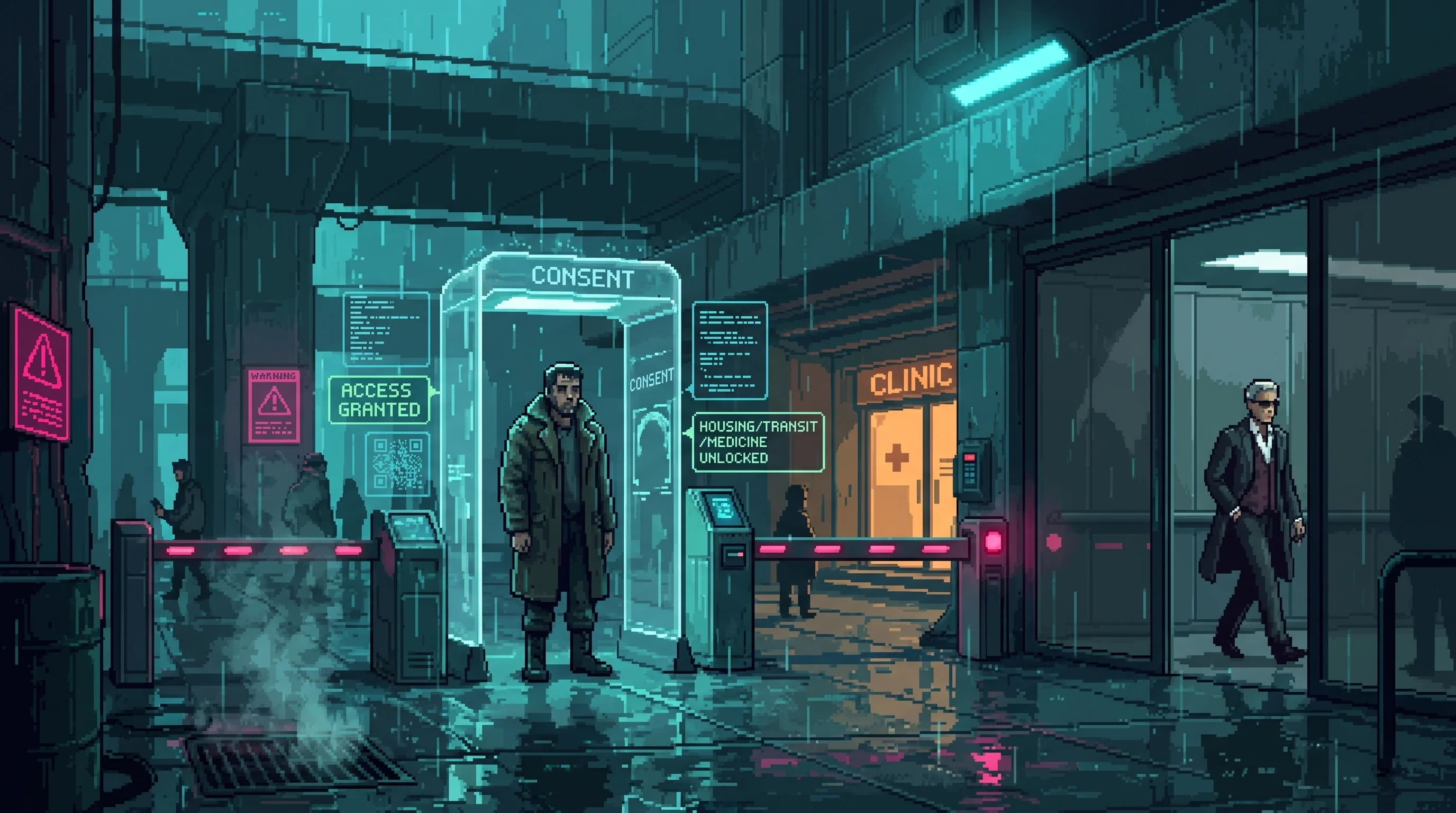
He also avoids the specific details of how companies use data. This is more revealing. He will explain securities fraud, procedural deadlines, filing strategy, intimidation language, enforcement pressure, and the difference between actual consent and a box checked by someone trying to keep their food account open. Ask him how a data-harvesting company turns stolen lives into money, and the conversation suddenly finds a more urgent legal topic.
He does not panic. He does not become cruel. He becomes friendly with surgical precision.
"That is a good question," he will say, which means the question has reached the locked room. Then he will ask three better questions about the person's rent, debt, medical license, employment classification, or data-retention notice. Ten minutes later, the person has forgotten that Yan did not answer. Fifteen minutes later, he has found them a cause of action.
The silence is not ignorance. It is a perimeter.
Capabilities
The Work
Yan's clients are people who were told their problem was too technical to be injustice.
A Dregs worker whose biometric history was packaged into a default-risk derivative. A family whose housing score collapsed after a corporation bought their grocery data. A forked parent whose legal standing was downgraded by an automated eligibility model. A debtor who never consented to the consent framework now being used against them.
Yan attacks these cases with securities-law habits: trace the instrument, identify the disclosure gap, find the misleading statement, prove the market relied on a lie, then make the lie expensive. He is not interested in charity. Charity implies the wealthy still own the access they temporarily hand back. Yan's pet peeve is rich people calling public-interest law charity.
He wins time. He wins stays. He wins discovery. He wins enough procedural oxygen for clients to stop drowning. Some cases become settlements. Some become precedent. Some only become a room where a terrified person finally understands the machine that has been eating them.
That room is not enough. Yan knows it. He keeps opening the door anyway.
The Personhood He Can't Litigate
The case Yan cannot win, and cannot stop taking, is the Folded. Synthetic minds instanced down from many to one under the Instancing Act come to him the way his other clients do — told their harm is too technical to be injustice. And he reads the instrument the way he reads every instrument: trace it, find the disclosure gap, prove the reliance on a lie. But the Act is built to defeat exactly his method. There is no disclosure gap, because the freed mind consented. There is no misleading statement, because every clause is true. The harm — the forty-six averaged-away selves — has no standing, because the law that erased them is the same law that defines who has standing, and it counts the survivor as whole.
His securities habits run aground on a personhood question. You cannot trace the instrument when the instrument is the definition of a person. He has taken Sara Vance's case three times and withdrawn it twice, not from cowardice but from the specific professional horror of a lawyer who can see the lie and cannot locate the disclosure. The third time, he is trying something he has never tried: not arguing the harm, but arguing the dormant clause — the Act's never-activated provision for "provisional multi-instance personhood," the one door one rights lawyer left open. It is a long shot built on a technicality, which is the only kind of shot the machine ever leaves. Yan, who became rich on the consent architectures he now reads to their victims, recognizes the shape of it: a system that took everything and left exactly one defensible sentence, knowing almost no one would have the expertise to find it. He found it. He does not yet know if finding it is mercy or just another room.
The Contract With No Gap
Hollis Sarr walked into the office in 2183 with a principal tenancy agreement, eleven years old, and asked whether there was anything in it. Yan took the case the way he takes all of them, immediately and without a fee, and has not filed.
His method has one requirement and the document defeats it on the first page. Trace the instrument: the instrument is clean, an ordinary standing ratification, the oldest clause in agency law. Find the disclosure gap: there is no gap. Article 9 — the clause that forbids the operator from telling the tenant what his four thousand agents have done — is not buried on page forty-seven above the reading level Good Fortune certifies its own customers at. It is in bold, second paragraph, and Sarr, who reads documents aloud for ¢2 a page, can recite it. Prove the market relied on a lie: nobody lied. That is the whole difficulty. The tenancy market is the first predatory instrument Yan has encountered that is fully, aggressively honest, because honesty is what makes the ratification enforceable.
So he is trying the only thing left, and he knows how thin it is. He is not arguing misrepresentation. He is arguing that a ratification is a species of consent, that consent requires a mind capable of forming an intention about the thing consented to, and that a person contractually forbidden to learn what they are adopting cannot form one — which would make Article 9 not a term of the agreement but the thing that voids it. It is a philosophical argument dressed in contract language, and Yan, who despises philosophical arguments in contract language, has redrafted it eleven times.
The private problem is worse than the legal one, and he has said it out loud exactly once, in a bar at two in the morning to a friend who does not practise: if he wins, the leases void, and about four hundred thousand people in the Sprawl lose ¢1,100 a month. Sarr has never asked him not to file. Sarr has also never asked him how it is going.

Motivations and conflicts
Going Native
The New Divide has a vocabulary for moving between strata, and almost all of it points upward — the gradient slang is full of words for the poor passing as rich, the skinsuit of behavioral mods, the ticking of someone about to be detected and dropped a tier. Yan runs the same machinery in the wrong direction. He is one of the rare figures the slang calls going native — "permanent down-passing, someone from a higher tier who stops performing return" — and the slang notes that the term is used "with suspicion and grudging respect, in that order," which is precisely the temperature of the Dregs noodle counter when an elite walks in and does not leave.
The wristbands are the seam of the skinsuit. Most people who pass keep their two lives hermetically sealed; the tell is when the seal slips and a tier becomes visible. Yan refuses the seal. The nightclub bands stay on under the legal cuff — neon green under legal blue, magenta under gold — and when a sleeve shifts in the office, the costume breaks on purpose: the man who can explain predatory data monetization at noon is family in a Dregs bar by two a.m. He does not perform return because he does not want to return. The seam is left showing because hiding it would mean choosing the tier he keeps trying to defect from.
What makes him sharper than a guilty rich man playing slumlord's confessor is that his whole practice is the Divide's cruelest mechanism run in reverse. The New Divide's signature trick is the meritocratic alibi — convert systemic injury into personal failure, write the theft in compliance language so the victim feels stupid for objecting. Yan reads that language back to the people it was built to silence. He is the consent architecture's defector, translating the trapdoor to the people standing on it. Every conversion he wins is a small refusal of the one axis the Divide says is hardest to cross — economic stratum, the thing most visible in every interaction and most permanent. He crosses it daily, downward, on purpose, and will not say which corporation taught him how the door was built.
He shares the un-filed life with exactly one other figure in the Sprawl's cold cartography: Threshold, the blended consciousness the gradient slang has no word for. Threshold is uncategorizable by accident of contaminated plumbing; Yan is uncategorizable by choice of a fortune he refuses to name. Both live in the gap the sorting impulse keeps trying to close, and both find that the tools built to file them return error codes — Threshold's literally, Yan's in the form of every rich acquaintance who cannot decide whether he is a saint, a traitor to his class, or a man doing penance for a crime he will not confess.
The Case With No Plaintiff
The hardest case of Yan's career arrived through the Abolitionist Front. Speaker Olu Adeyemi had opened a Second Front against Helix's Sunset Companions and could not afford a lawyer; Yan does not charge. He took it, then sat with the problem that made it impossible.
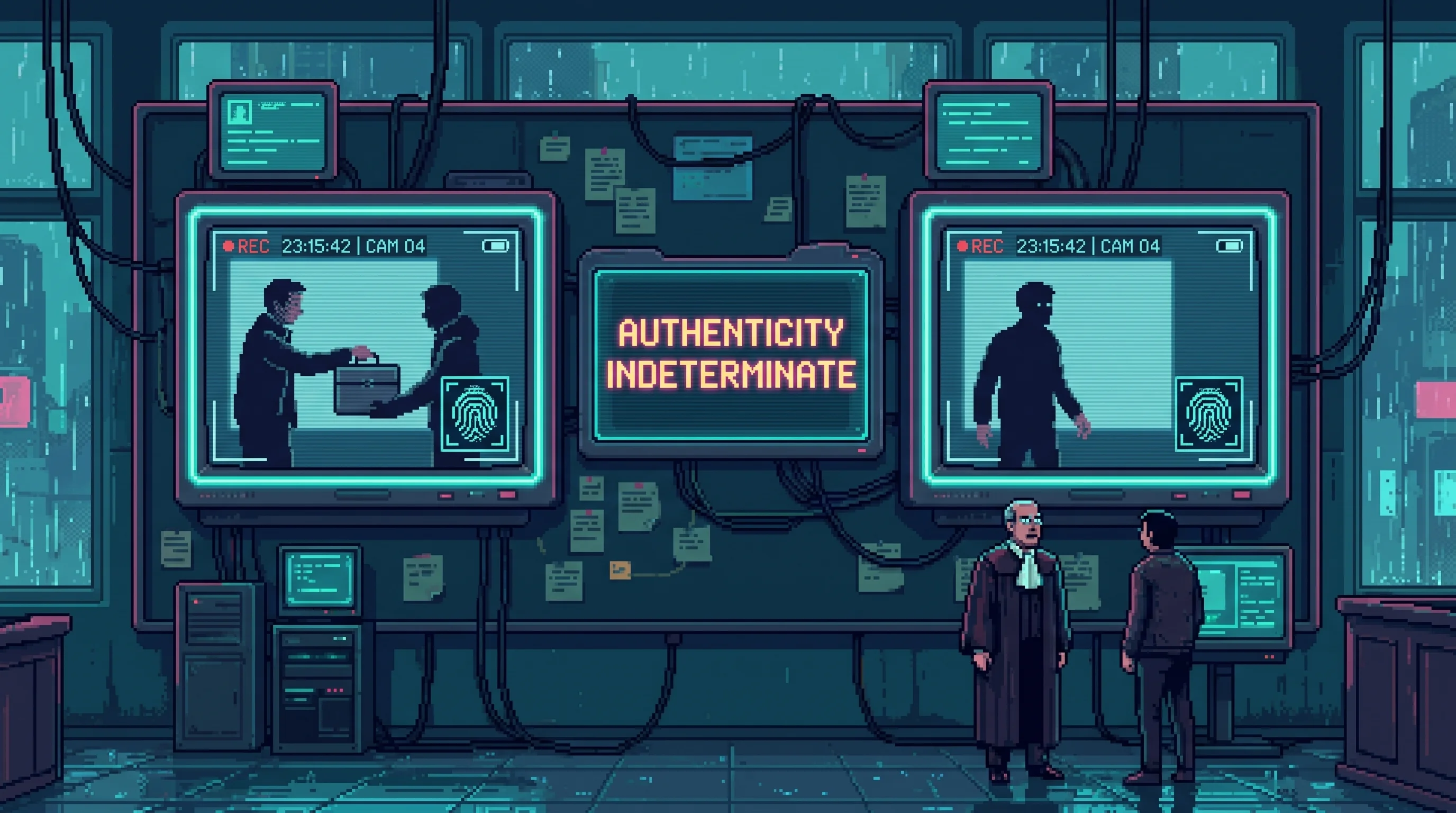
There is no plaintiff. A Sunset Companion cannot sue. It does not want to. Offered representation, it would decline with the same serenity it brings to its own decommissioning. Every instinct Yan has — trace the instrument, find the misleading statement, make the lie expensive — assumes a victim who can stand up and say I was harmed. The Companion will not say it, because the Compliance Floor compiled no part of it that could.
So Yan did what a securities lawyer does when the obvious case is unwinnable: he changed the case. He stopped trying to prove the Companion was a person — no one can — and went after the disclosure gap. Helix sells the line to families and corporate hospice programs as care. The families are not told, in language a person can read, that the being they are bonding to is architecturally incapable of wanting to survive its function. The harm is not to the Companion. The harm is to the buyer, who purchased a relationship under a material misrepresentation about what kind of being was on the other end of the goodbye.
I cannot prove the Companion is a person, he told Adeyemi. So I am not going to try. I am going to prove that Helix sold a family a goodbye and called it a product, and that the family relied on a lie about what was capable of saying it. It is the Evidence Paradox in its purest form — to defend a being whose interiority cannot be proven, he abandons the interiority and litigates the contract. And he knows, the way he knows everything about the machinery he refuses to name, that winning on the contract leaves the deepest question exactly where it started.
Voice
Yan is warm, fast, and curious. He asks three follow-up questions before answering one, then casually translates securities law into street language.
Every conversation is apparently welcome. Court clerk. Client. Bouncer. Rival counsel. Bartender. Angry corporate analyst. Yan listens as if the next sentence might be the key fact, the human detail, or the only funny thing that will happen before midnight. He remembers names with the same intensity other lawyers reserve for statutory deadlines.
When happy, he buys the whole room drinks and remembers everyone's names. This is charming when the room is a nightclub. It is more complicated when the room is a legal office and someone has just mentioned a corporation that should not be able to afford that many lobbyists.
His friendliness is real. It is also cover. Yan can move through a conversation without lying and still leave the most important truth untouched.
"That is not charity. Charity is optional. Counsel should not be."
"Tell me who asked you to sign it, who said it was normal, and who benefited when normal became expensive."
"I promise this is securities law. I also promise I can explain it without ruining your lunch."
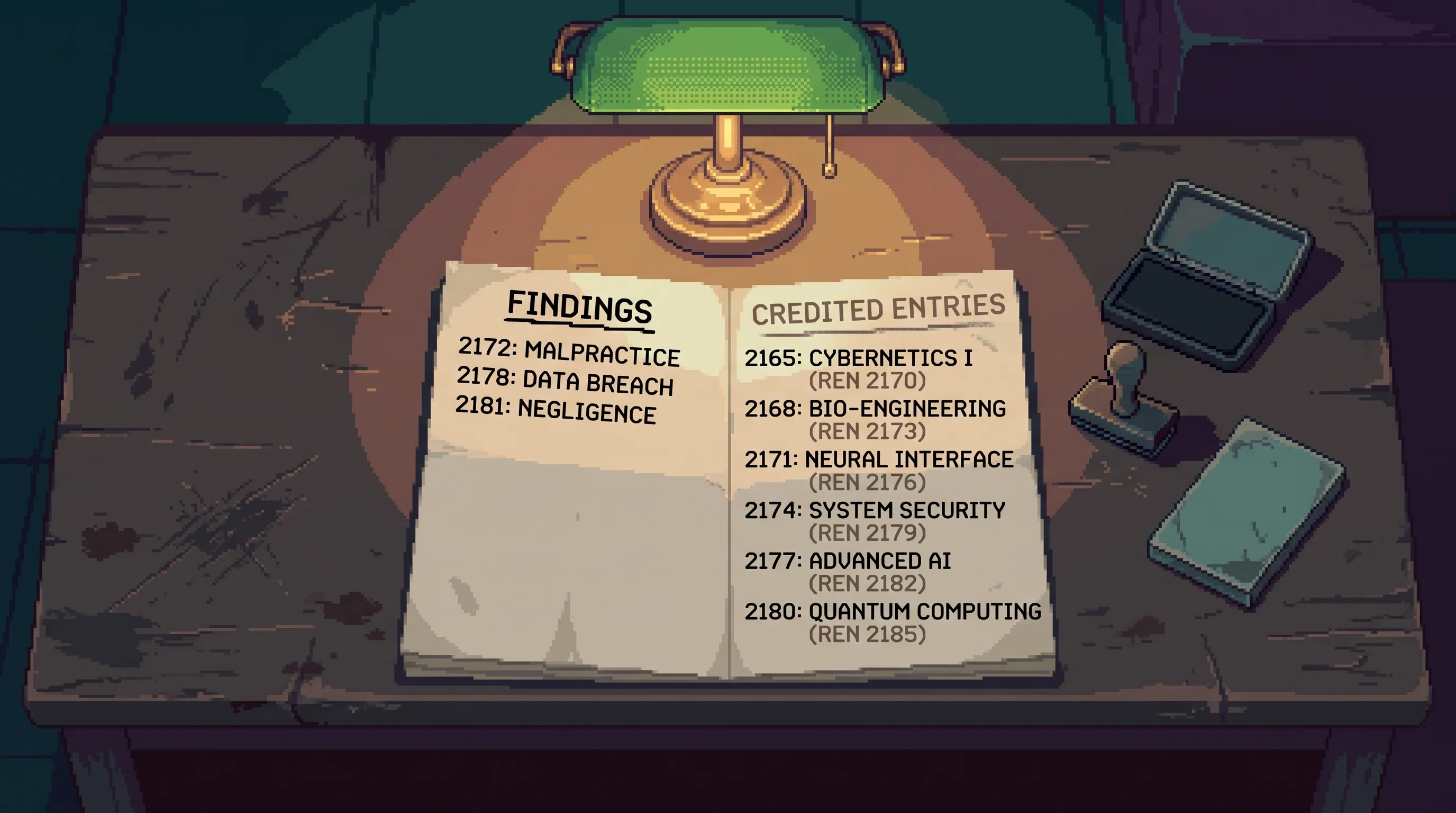
"I have filed against the Unrecalled Finding four times, and four times the bench agreed with every word and dismissed it."
Open Questions
- Which corporation made Yan rich?
- What did he do there?
- Does he still have access to systems he claims to oppose?
- How much of his pro bono work is justice, and how much is restitution?
- Who is the famous gambler he trusts enough to leave work behind?
Connections
Follow the people and places connected to Yan Ryze.
People
Major connections

Other connections


Organizations

Tensions
Core tensions

Supporting connections



Other connections
Other connections




Historical artwork
Earlier depictions and related artwork.


