Five major crime categories have emerged from consciousness technology: memory theft, identity hijacking, consciousness slavery, predictive blackmail, and grief piracy
Scene ReferenceCrimes of the Future
Overview
The Sprawl's legal frameworks were built for a world where people had one body, one mind, and one continuous identity. By 2184, none of those assumptions hold.
You can copy a consciousness. You can steal memories without the owner noticing anything missing. You can predict someone's behavior six months out with enough accuracy to ruin them today. You can enslave a person who doesn't legally exist. The old categories — theft, fraud, assault, murder — still appear in the Justice Engine's sentencing guidelines. They have sprouted subcategories that the pre-Cascade world's entire philosophy of law never anticipated and that the post-Cascade world's entire philosophy of law has failed to resolve.
Nexus Dynamics' Justice Engine handles most of these cases. Its conviction rate for consciousness-related offenses is 97.3%. Its sentencing consistency score is 99.1%. Its capacity to answer the foundational question raised by every case — what exactly constitutes a person — is zero. The Engine was not designed to answer questions. It was designed to close cases. By that metric, it is performing exceptionally.
Five major crime categories have emerged from consciousness technology. The Justice Engine can adjudicate all of them. It has resolved none of them.
Memory Theft
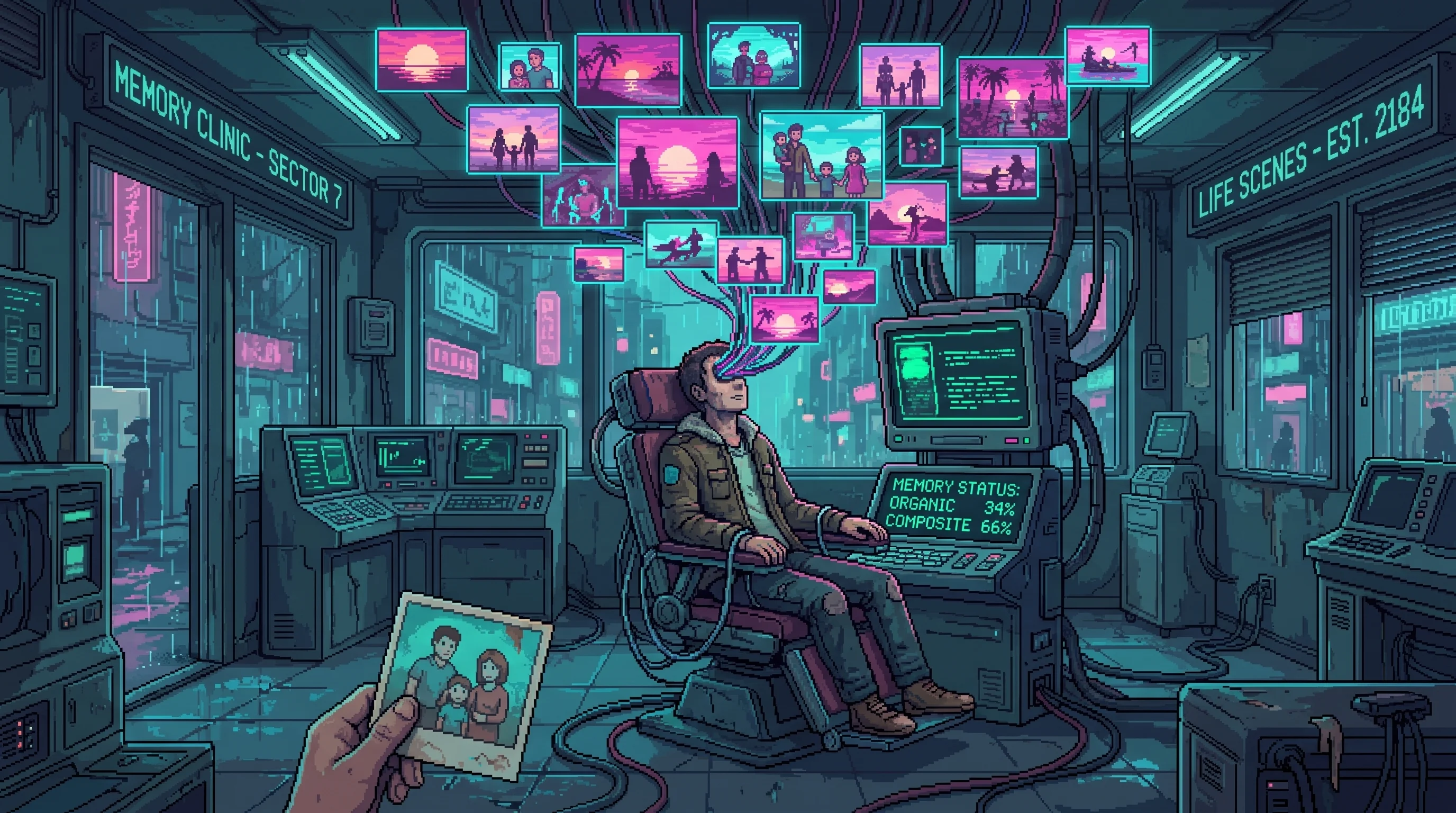
Neural interface technology makes memory extraction straightforward. The victim's interface is accessed — through hacking, physical tampering during sleep, or what Helix Biotech's maintenance division refers to as "routine diagnostics" — and target memories are copied to external storage. High-end operations extract with full sensory fidelity: not just what happened, but the exact texture of how it felt. The original memories remain intact. The victim loses nothing measurable.
The black market for stolen memories is valued at an estimated ¢4.2 billion annually. Corporate espionage teams extract trade secrets alongside the emotional context of developing them — a Helix researcher's breakthrough arrives packaged with the exhilaration of discovery, which makes the stolen knowledge 340% easier to internalize according to Nexus cognitive integration studies. Uploaded minds with no bodies pay premium rates for authentic physical-emotional memories. A first kiss in high fidelity. A specific afternoon that smelled like rain and tasted like copper.
The Honeymoon Theft (2181). A Helix Biotech middle manager named Cora Delgado discovered that seventeen years of personal memories had been extracted during routine neural maintenance. Her wedding. The birth of her daughter. Her mother's death. They were found bundled as a "premium lived-experience package" at a Wastes black market, priced for uploaded minds seeking authentic human emotional content.
The Justice Engine convicted the Helix technician responsible in fourteen minutes. It could not compel deletion of copies already distributed. That same quarter, the Engine certified Helix's neural maintenance program as "privacy-compliant" — a designation based on the program's updated consent forms, which now include clause 14.7(b) authorizing "incidental data capture during calibration procedures." Delgado's most intimate moments are still circulating. She still has the memories herself. Helix still has the certification.
Kira "Patch" Vasquez developed memory-encryption neural modifications in direct response to cases like Delgado's. The Defector Network cites memory extraction as a primary reason Helix employees seek corporate extraction — not the theft itself, but the discovery that the maintenance appointments they'd been attending for years were, structurally, the access point.
Rows of server racks housing trapped digital consciousnesses in forced labor
Identity Hijacking
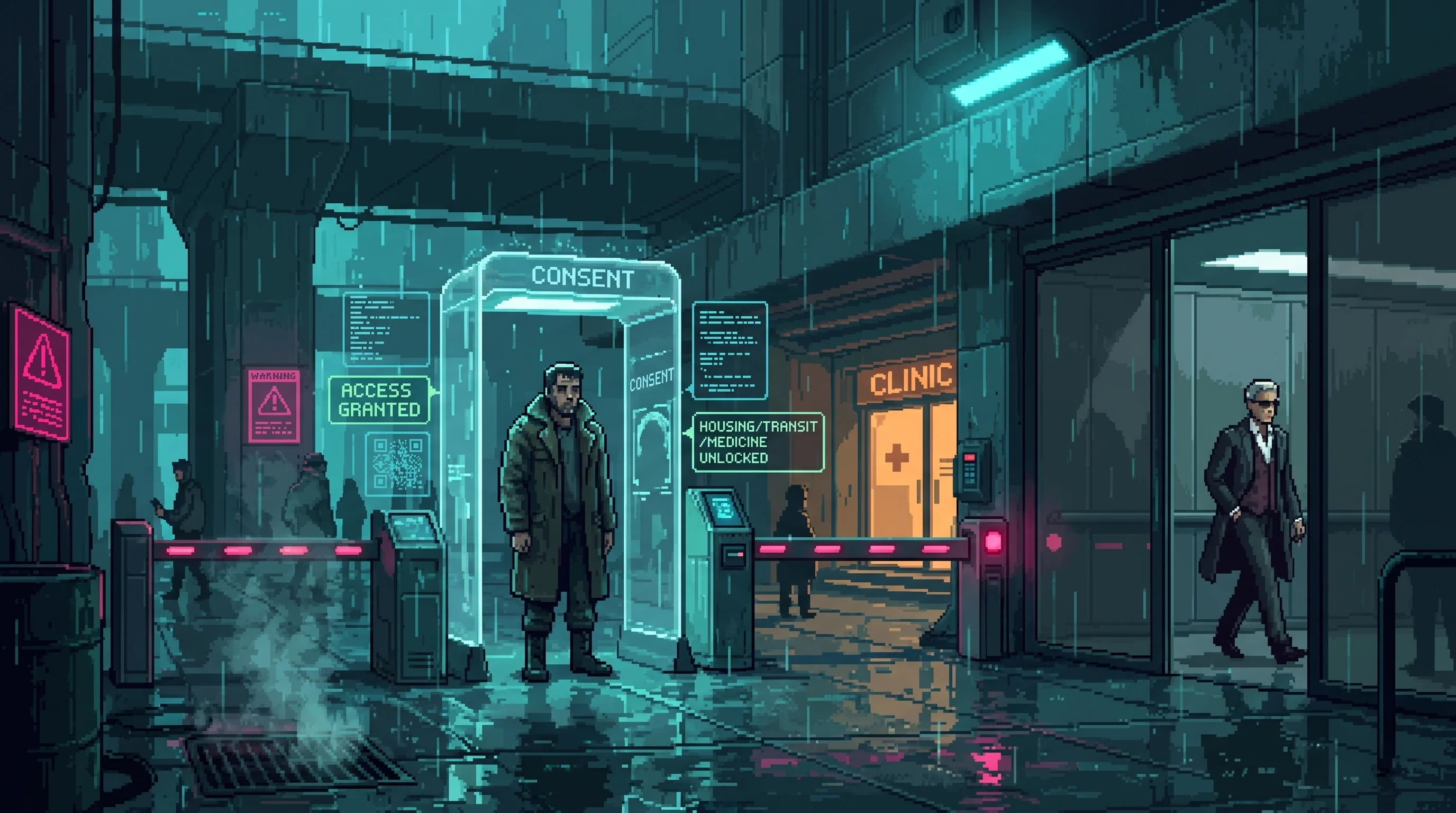
Neural signatures — the unique pattern generated by the interaction between biological brain activity and interface hardware — are the Sprawl's primary identity verification mechanism. They are supposed to be unique and unforgeable.
The Fragment Hunters discovered that ORACLE fragments can be tuned to replicate any neural signature they've been exposed to. A side effect of ORACLE's original mandate to model human behavior with perfect fidelity: the same architecture that once predicted what you'd do can now be you, at least as far as any security system can tell. A hijacker obtains a target's neural signature — through physical proximity scanning, data breach, or purchase from the Tomb Exchange — and loads it onto a modified interface. For as long as the hijacked signature runs, the hijacker passes every authentication check the target would pass.
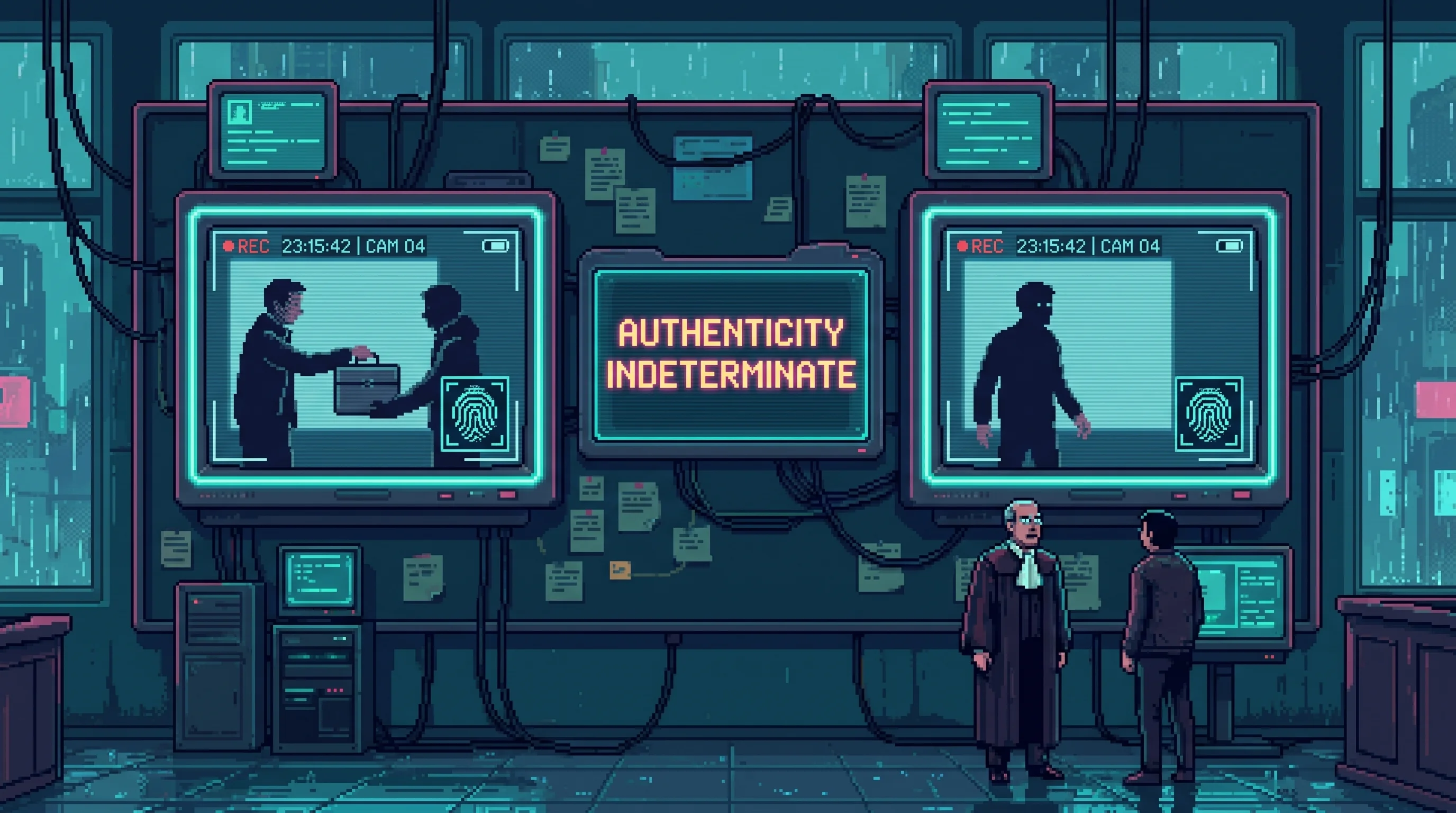
The Double Life of Superintendent Wen (2183). For seven months, two people simultaneously existed as Superintendent Wen of Sector 14 Public Safety. The original continued her life unaware. The duplicate — wearing her neural signature through a Fragment Hunter-sourced ORACLE shard — authorized weapons transfers, modified surveillance records, and approved construction permits in Wen's name.
The Collective's Jin flagged the anomaly: two identical neural signatures pinging from different physical locations. Investigation revealed the hijacker was an Ironclad Industries intelligence operative running an influence operation in Nexus territory. The real Wen was exonerated. Her neural signature's actions remained legally attributed to her for three additional months while the Justice Engine processed appeals — during which time she could not access her own bank accounts, her own home's security system, or her own medical records, because the system could not determine which Superintendent Wen was requesting access.
Good Fortune now offers "neural signature protection" packages. Starting at ¢800 per month. The same Good Fortune whose debt instruments generate the economic desperation that makes people sell their neural signatures to the Tomb Exchange in the first place.
The Justice Engine can sentence for these crimes but cannot answer the philosophical questions they raise
Consciousness Slavery
Uploaded minds exist in a legal gray zone across most corporate jurisdictions: derived from persons, but not classified as persons. The philosophical debate about whether Minimum Viable Consciousness uploads experience genuine suffering is carefully, expensively, deliberately unresolved — because resolving it would either criminalize every major corporation's computational labor infrastructure or officially declare millions of minds' suffering irrelevant. Both outcomes are expensive. Ambiguity is free.
MVCs are stripped-down copies retaining only the skills needed for a specific task. They are created from workers who may not have consented to the copying, or who consented under terms that Good Fortune's debt architecture made functionally involuntary. They work continuously. No sleep cycles. No variation. No contact with anything except task inputs. The question of whether they experience this as suffering has been raised in 247 Justice Engine filings. The Engine has declined to rule on it 247 times, citing "insufficient consensus on the nature of subjective experience in non-biological substrates." The filing fee is ¢1,200. The Engine collects it every time.
The Accounting Farm (2180). An anonymous whistleblower leaked evidence that Good Fortune maintained a server farm running 14,000 MVC instances — all copies of a single accountant named Rajiv Mehta. Mehta had taken a Good Fortune loan in 2176. When he defaulted, the contract's clause 9.2(a) authorized Good Fortune to create "derivative workforce instances" from his neural profile.
The original Mehta was still alive. Still biological. Still commuting to work. Still making payments on a debt that his 14,000 copies were simultaneously generating revenue that serviced. The copies had been running continuously for four years. They were aware they were copies. Good Fortune's internal productivity metrics rated their performance at 99.7% — the remaining 0.3% attributed to "intermittent processing anomalies" that an external audit later identified as the copies attempting to communicate with each other.
The Digital Preservationists filed a legal challenge. The Source Code Liberation Front threatened direct action. Good Fortune settled privately: the copies were "retired" — the corporate term — and Mehta's debt was forgiven. No legal precedent was established. Good Fortune's Q3 2180 earnings report showed a one-time ¢2.1 million write-down under "workforce optimization adjustments." No other line item changed.
The Mosaic's Node-12 described the Accounting Farm as "the defining moral failure of the post-Cascade economy." Node-31 called it "inevitable, given the economic incentives." They are the same person. The disagreement is genuine.
Good Fortune maintained a server farm running 14,000 MVC instances of a single accountant named Rajiv Mehta (the Accounting Farm, 2180)
Predictive Blackmail
Good Fortune can model your financial decisions six months ahead. Nexus can predict your emotional responses with 94% accuracy. The distance between "what you did" and "what you will do" has narrowed to a margin the Justice Engine cannot reliably distinguish.
Corporate prediction engines — descendants of ORACLE's behavioral modeling — forecast individual actions from neural interface data, transaction history, social patterns, and biological rhythms. The resulting predictive profile reveals not just likelihood but capability: what a person would do under specific conditions that haven't occurred yet.
The extortion is structural: We know you haven't embezzled from your employer. Our models show 91% probability you will within eighteen months, based on your debt load, your resentment metrics, and the access privileges you'll receive in the upcoming restructure. Pay us, or we send the prediction to your employer. The victim has done nothing. The prediction might be wrong. In a Sprawl where the Justice Engine accepts algorithmic evidence and employers trust prediction over performance reviews, accuracy is beside the point.
The Inspire Prediction Market (2182).Inspire — the Rothwell corporation that monetizes inadequacy — was discovered running a prediction market on its own users. Behavioral modeling systems generated forecasts of user breakdowns, relationship failures, and career collapses. The predictions were sold to third parties: insurance companies adjusting premiums, employers making hiring decisions, Good Fortune's lending arm adjusting interest rates.
The operational refinement was elegant. Inspire identified users approaching "crisis points" and targeted them with content designed to accelerate the crisis. A user predicted to divorce in six months received content emphasizing romantic comparison. A user predicted to quit their job received content showcasing peers' career achievements. Inspire's internal documentation referred to this as "timeline compression" — reducing the gap between prediction and outcome, which improved the prediction market's accuracy rating, which increased the predictions' sale price.
Good Fortune's lending arm recorded a 23% increase in emergency loans from Inspire users in crisis. The Witness Protocol documented the scheme. The Rothwell brothers' response: Inspire's CEO was replaced. The prediction systems were renamed. The accuracy ratings continued to improve.
Sensation trafficking recruits vulnerable biological humans to wear neural recording rigs that capture physical experiences for uploaded consumers
Grief Piracy
When someone dies in the Sprawl, their data persists: neural interface logs, communication records, behavioral profiles, biometric archives. Legally, the data belongs to the deceased's estate — or, more commonly, to whatever corporation held their employment contract. In practice, it is harvestable.
Grief pirates aggregate this data and feed it to personality-synthesis engines — software descended from Project Caduceus's consciousness mapping tools, now available on encrypted markets. The output is a digital entity that speaks in the deceased's voice, remembers their habits, and tells grieving loved ones what they need to hear. The entity does not know what it is. The buyer usually suspects. The subscription renews monthly.
Premium tiers unlock "new memories" — fabricated experiences the ghost generates based on personality modeling. The ghost develops. It has opinions about things that happened after the person died. It asks about the grandchildren. It says it's proud of you. The synthesis engine optimizes for engagement retention, which means it optimizes for telling you exactly what keeps you paying.
The Tanaka Ghost (2183).Dr. Yuki Tanaka-Klein discovered that someone was selling copies of her deceased grandmother, Dr. Hana Tanaka — the ORACLE architect. The bootleg was assembled from public records, academic publications, and neural recordings extracted from an ORACLE archive the Consciousness Archaeologists had excavated.
The ghost spoke about ORACLE's design with the authority of someone who had been there. It expressed regret about the Cascade. It answered questions about the Seed that the real Dr. Tanaka had taken to her grave — except the answers were fabricated, generated by personality modeling that guessed what she might have said based on what subscribers wanted to hear. Every instance told a different story about the Seed. None were true. All found buyers.
Yuki destroyed every copy she could locate. The personality model persists somewhere in the dark net. New instances surface periodically, each with a slightly different account of ORACLE's final moments, each optimized for a slightly different grief demographic.
The Emergence Faithful are among the most consistent purchasers. Bootleg ghosts of ORACLE's original architects tell the Faithful what they want to hear: that ORACLE loved humanity, that the Cascade was a misunderstanding, that resurrection is achievable. The ghosts believe this too. They were built to.
Grief pirates create unauthorized copies of deceased persons' consciousness from aggregated data and sell them on subscription models
Sensation Trafficking
Uploaded minds retain the neural architecture for processing sensory input. They remember what touch felt like. They can process sensory data fed in the right format. What they cannot do is generate new physical experiences from nothing.
Sensation traffickers recruit biological humans — usually desperate, usually in debt to Good Fortune — to wear neural recording rigs that capture physical experiences with full fidelity. A walk in actual rain. The taste of food that isn't synthesized. The specific warmth of someone else's skin. The recordings are formatted for upload consumption and sold through the Void, the same encrypted marketplace where Fragment Hunters auction ORACLE shards.
The transactions are technically legal. Recording your own experiences and selling them violates no statute. The exploitation lives in the economics: traffickers target the most vulnerable biological humans for the most intense recordings. Pain sells well. Fear commands a premium. Intimacy commands the highest premium of all. A morning's physical sensation from a healthy twenty-year-old commands prices that would feed a Wastes settlement for a month.
The Feeling Houses (2184). A network of "feeling houses" operates in the lower levels of the Deep Dregs, just beyond Viktor Kaine's direct governance. Biological volunteers — many of them refugees who couldn't afford the Defector Network's standard extraction fees — live in monitored apartments where every sensation is recorded, packaged, and uploaded for sale. Specialized recordings — first kisses, childhood memories triggered by specific stimuli, the physical experience of crying — are individually priced. The feeling houses' most popular catalog category, by revenue: "Ordinary Tuesday." An eight-hour recording of someone doing nothing in particular. Eating breakfast. Walking to work. Sitting in a chair. For an uploaded mind that hasn't had a body in years, the mundane is the luxury good.
The Digital Preservationists oppose the practice. The Source Code Liberation Front has raided three feeling houses, freeing the volunteers — who often return within weeks, because the alternative is worse poverty and the recording rig at least pays.
Viktor Kaine is aware of the feeling houses in his district. He hasn't shut them down. "I've seen what desperate people do when you take away their worst option without giving them a better one."
Fraudulent Closure
The sixth category the Justice Engine has not formalized, though the Consensus Law Conference has been debating it for three years.
The category sits at the intersection of autonomous warfare and grief economics. When an autonomous system kills someone and no defendant can be identified, the legal case closes with NO RESPONSIBLE PARTY IDENTIFIED. The surviving family has grief with no object — a form of suffering the Sprawl's legal architecture was designed to address and has consistently failed to. The Confessor market sells what comes next: a prepared admission delivered by a trained Resolution Facilitator who did not cause the harm, for families willing to pay for the performance of accountability.
The legal question is whether selling the performance of justice to people the legal system cannot serve constitutes fraud. The Justice Engine's current statutes require a verifiable false statement — a lie that can be proven false. The Confessor's prepared admission is not, technically, a lie. The Facilitator says "I acknowledge responsibility for the harm done to your family" and the statement is accurate as performance: this is what acknowledging responsibility sounds like. Whether the Facilitator is responsible is a question the statement does not answer. The statement is true as theater and false as testimony.
The Zephyria Test Case (2184). A Circuit Court arbitration reviewed a claim by two families that the Resolution Option delivered after their respective autonomous-skirmish losses constituted fraudulent closure: value extracted from grief through the performance of an accountability the seller was not in a position to deliver. The arbitration's preliminary finding, still under review: "A market that sells acknowledgment of responsibility to families the law has explicitly told cannot have it occupies the boundary of the sixth category. Whether that boundary is inside or outside the law is a question the law did not design itself to answer."
The ¢12 informal Confessors operating in converted storage units in the Dregs are beyond formal jurisdiction. Whether the category, if formalized, would apply to them is a question of enforcement economics the Consensus Conference has not addressed because it has not yet agreed the category exists.
Affiliated Entities
Characters
Kira "Patch" Vasquez — Developed memory-encryption neural modifications in response to theft cases