Controlled ByNo single authority — a neutral zone enforced by mutual interestKnown ForThe Sprawl's largest market for stolen, unverified, and forbidden neural recordingsPopulation200-400 daily visitors; 30-50 permanent vendorsSecurityMinimal official; extensive informal (harming a vendor is a death sentence by consensus)
Overview
You enter through a storm drain. The metal grate has been replaced with a hinged panel that looks rusted shut but swings open silently on greased bearings. Twelve concrete steps down, the air changes — cooler, wetter, carrying the mineral tang of old water treatment chemicals that soaked into the walls decades ago and never left.
The Echo Bazaar occupies the filtration galleries of a pre-Cascade water treatment facility beneath the Sector 4-5 border. The original function was filtering water for half a million people. The current function is filtering consciousness for anyone who can pay.
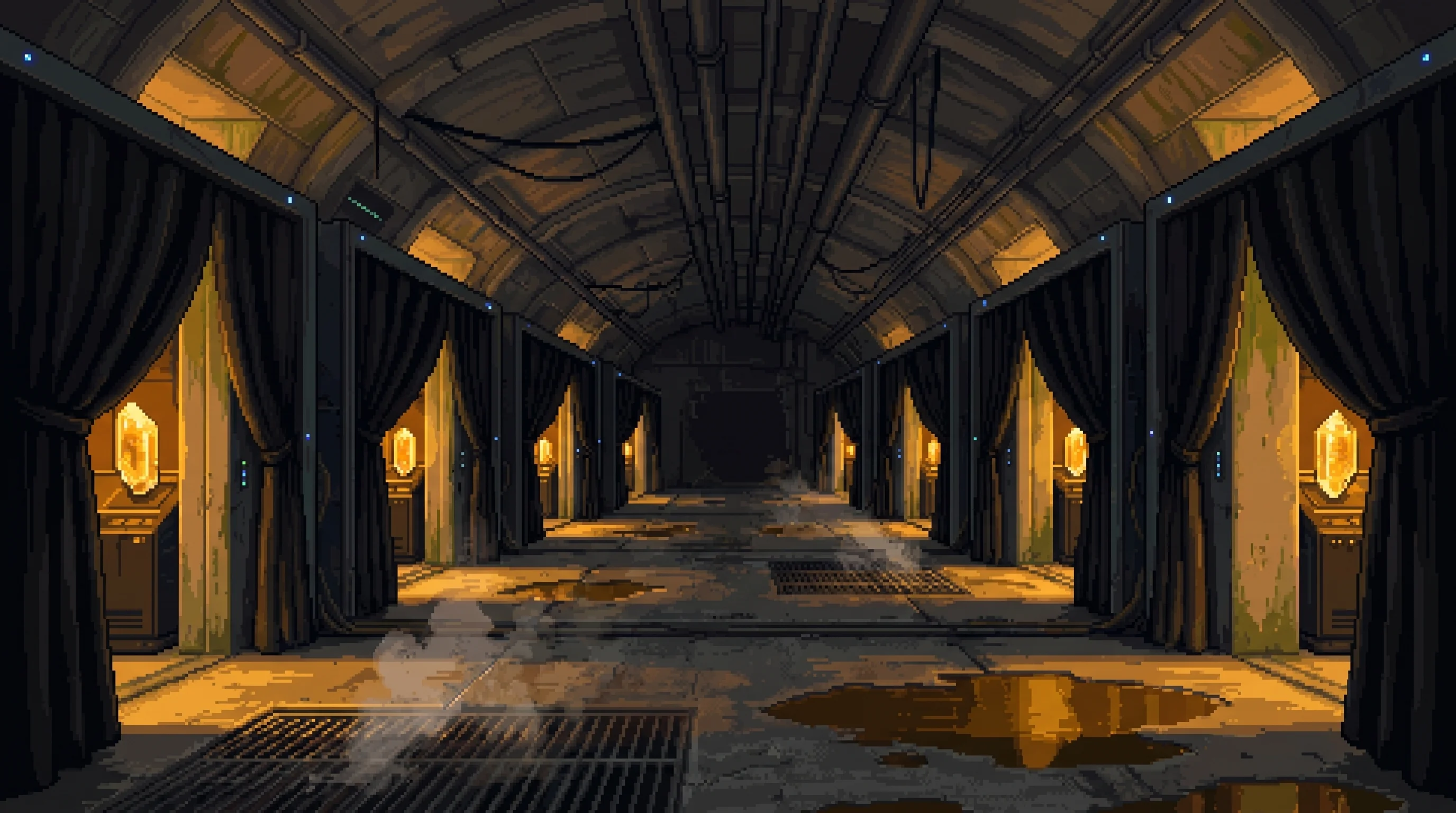
Three parallel galleries, each 200 meters long, divided into alcoves by concrete partitions that once separated filtration beds. Each alcove is a vendor's booth — draped in signal-dampening fabric, lit by the amber glow of data storage arrays, stocked with crystalline chips holding the stolen, unverified, and forbidden neural recordings that the Authenticity Market classifies as illegitimate. The Bazaar classifies them as inventory.
The Bazaar has no owner. No charter. No governing authority. It persists because every vendor benefits from its existence and none can profit from its destruction. The informal rule is simple: sell anything, hurt no one. Violence is punished by permanent exclusion — enforced not by security, but by the collective refusal of every other vendor to do business with you. This system has maintained order for twelve years. Nexus Dynamics, which controls 40% of the Sprawl's computational infrastructure and employs several thousand security personnel, has not managed to maintain order in its own lobbies for twelve consecutive weeks.
The Bazaar is the purest market in the Sprawl. No regulation, no certification, no hierarchy. Just sellers, buyers, and the question that hangs in the filtered air like the chlorine that will never leave the concrete: how much is someone else's experience worth?
The answer, based on twelve years of unregulated price discovery: more than most people's own.
The Layout
The Throat
Forty meters of unlit concrete. The darkness is functional: your eyes adjust, your neural interface recalibrates to low-light mode, and by the time you reach the first gallery, you've left the Sprawl above behind. Regular buyers walk it without hesitation. First-timers navigate by the faint blue glow of biosensor LEDs embedded in the walls — tiny lights monitoring air quality, temperature, and the electromagnetic signatures of everyone who passes.
The Throat also serves as a filter. Anyone carrying active Nexus tracking equipment triggers a sensor that produces a subsonic pulse — uncomfortable, disorienting, impossible to ignore. The message: your hardware is broadcasting. Fix it or leave. Nexus field agents have described the experience as "having your teeth itch." Three agents have filed workers' compensation claims for the dental work that followed repeated exposure. (The claims were denied. The dental work was not covered under hazardous duty provisions because the Bazaar does not officially exist.)
The Galleries
Gallery One: The Commons. General neural recordings. Stolen experiences, unverified memories, bulk data. Vendors deal in volume: 2-credit recordings of anonymous experiences, 10-credit "memory flights" (curated sets of unrelated recordings experienced in sequence), 50-credit "deep cuts" of particularly intense consciousness data. A 2-credit recording of someone's commute is the Bazaar's bread and butter. A remarkable number of buyers purchase commutes. Not dramatic commutes. Not commutes through interesting districts. Ordinary commutes through ordinary corridors by ordinary people thinking ordinary thoughts. The appeal, when pressed, is always some variation of: "It's just nice to be someone who isn't worried about anything for twenty minutes." The Commons sells normalcy to people who can't afford it in their own heads.
Gallery Two: The Collector's Row. Premium and rare recordings. Pre-Cascade originals recovered from the Dead Internet. Dispersed-contaminated recordings with verified paranormal signatures — the dead as inventory, priced by the intensity of the contamination. The Echo Thief's booth occupies the central alcove here, the largest space in the Bazaar, curtained in signal-dampening black, lit by amber storage arrays humming with stolen consciousness. Most buyers descend into the Dregs for this booth specifically.
Gallery Three: The Whisper Gallery. Restricted access. Fragment carrier consciousness data. ORACLE integration recordings. Emergence Faithful communion experiences. Entry requires vendor vouching or a 500-credit access fee. The recordings here can cause permanent neural alteration in susceptible individuals. This is disclosed at entry. The disclosure has not measurably reduced traffic. The Collective maintains at least two regular buyers in the Whisper Gallery — corporate creative sessions stolen from Nexus Dynamics strategy retreats, purchased for intelligence value. Nexus has not commented on the strategic implications of its proprietary thinking being available for 5,000 credits in a former water treatment facility.
The Well
At the galleries' convergence, where the original filtration system's main collection basin sits dry and clean, is the Well — the Bazaar's social space. Vendors and buyers gather between transactions. A woman named Pen (nobody knows her real name; she's been here since the Bazaar's founding) runs a stall selling stimulant drinks made from recycled nutri-paste and whatever spices she's acquired that week.
The Well smells of chemical warmth and old concrete and the particular ozone of multiple neural interfaces running at high capacity in close quarters. Deals are negotiated here. Disputes are settled here. Intelligence is traded over cups of Pen's terrible drinks, which no one has ever praised and everyone continues purchasing — a micro-economy running on the same principle as the Bazaar itself: the product is not the product.
Case File — Additional Record
Type
Black market
District
The Dregs, beneath Sector 4-5 border
The Economy
Pricing
The Bazaar's pricing inverts the Authenticity Market's. Where the Market prices up for verified authenticity, the Bazaar prices up for verified strangeness. The more unusual, forbidden, or contaminated a recording, the higher the premium:
Category
Price Range
Example
Common stolen memories
2-20 credits
Someone's commute, a meal, a conversation
Creative experiences
50-500 credits
Artist's process, musician's performance (consent not included)
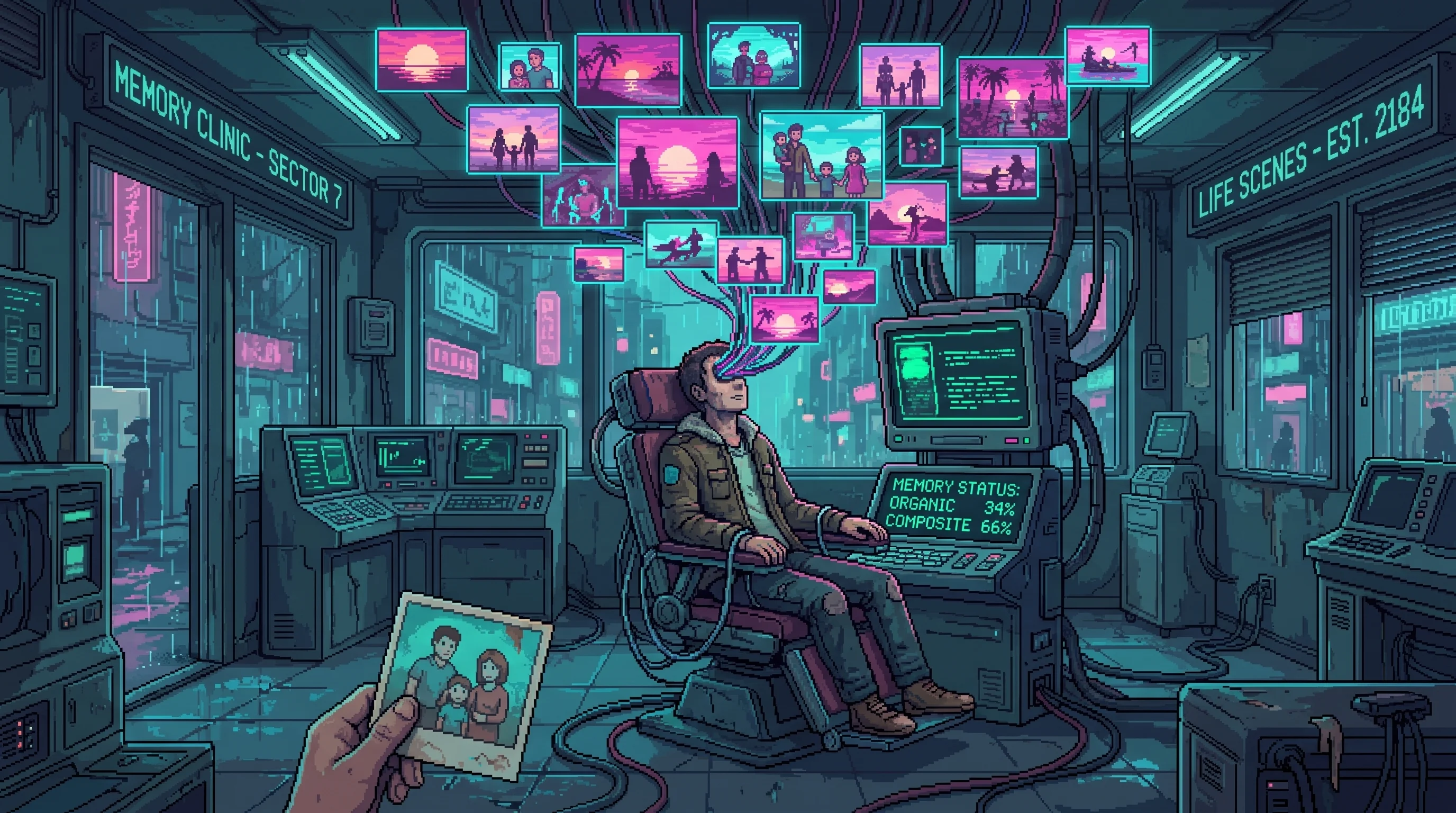
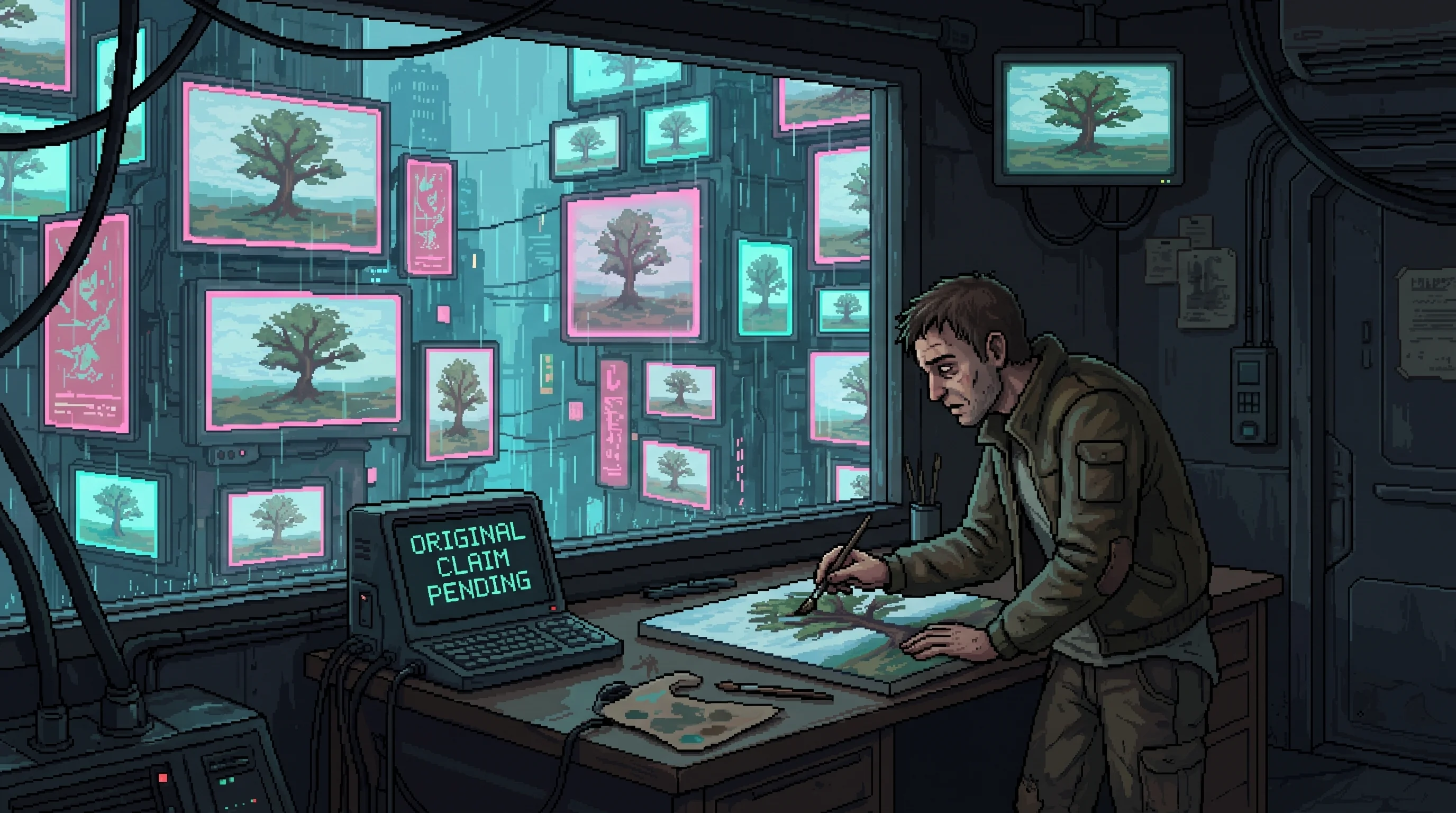
Creative experiences — the stolen process recordings of artists, musicians, and designers who never consented to being recorded — are the Bazaar's most philosophically interesting commodity. The Authenticity Market certifies and sells consensual creative recordings at premium prices, positioning itself as the ethical marketplace for consciousness commerce. The Bazaar sells the same category of experience without the consent, at roughly 40% of the Market price. Buyers report that the non-consensual recordings feel more authentic. The artist wasn't performing for a recorder. They were just creating. The ethical marketplace sells performance. The black market sells the real thing. Neither institution has commented on this inversion, presumably because acknowledging it would require one of them to think about what it means.
The Echo Wing
The newest and most controversial section isn't a gallery — it's an informal cluster of operators in the corridor between Galleries Two and Three providing echo-partner construction services. No fixed alcoves. No persistent displays. Operators identify themselves with a specific hand gesture: two fingers drawn across the throat — "the voice cut" — and negotiate through whispered transactions.
The Echo Wing emerged in late 2183 as demand for echo partners outstripped the Echo Thief's solo operation. Independent operators — many of them former Library technicians deprecated from Wellness — offer competing services at varying quality. Budget services (¢800) use cached Library data and produce approximate vocal profiles. Premium services (¢2,400) acquire fresh samples and produce near-perfect characterizations.
Three Gallery Two vendors have refused to operate near the Echo Wing, calling it "too personal." This, in a market that sells dead people's memories as entertainment, is the closest thing to a moral boundary the Bazaar has produced. Pen has offered no drink recommendation for Echo Wing operators. When asked, she says: "I don't serve ghosts."
The Currency of Trust
The Bazaar runs on reputation more than credits. Vendors who sell corrupted data, misrepresented recordings, or consciousness data that damages buyers lose their alcoves — not through official process, but through the quiet erosion of customer traffic that follows a bad review in the Well.
Pen keeps a mental ledger. She is the Bazaar's de facto rating system. Ask her about a vendor and she answers with a drink recommendation. "Try the blue stuff" means trustworthy. "The green is good today" means proceed with caution. "I'm out of that" means walk away. No vendor has ever challenged this system. No vendor has ever asked Pen to reconsider a rating. The power of a woman who makes terrible drinks and knows everything is apparently beyond dispute.
The system is more reliable than the Authenticity Market's tier certification. The Market's ratings are algorithmic, auditable, and occasionally wrong in ways that destroy lives. Pen's ratings are intuitive, unaccountable, and have never been wrong in any way that anyone has survived to report. Whether this reflects perfect judgment or selection bias is a question the Well's regulars have learned not to ask.
The Honest Market
The Bazaar is, by several important metrics, more honest than the Authenticity Market it shadows.
The Market certifies recordings as "authentic" — a designation that requires verification, generates fees, and produces a certificate of provenance that traces the recording's chain of custody from creation to sale. The certification process costs between 200 and 2,000 credits depending on tier. The certificate guarantees that the recording is what it claims to be: a genuine human experience, consensually recorded, properly stored, accurately described.
The Bazaar offers none of this. No certification. No provenance. No guarantee. The vendor says the recording is a corporate strategy session and you either believe them or you don't.
The result: the Market's certification infrastructure has created a class of sophisticated frauds — recordings manufactured by AI, laundered through certification, and sold as authentic human experience at prices that assume the certificate is true. The Market's fraud rate, estimated by independent analysts, sits between 8% and 14%. The Market disputes this figure. The Market has not published its own.
The Bazaar's fraud rate is approximately 3%. Not because Bazaar vendors are more ethical. Because the Bazaar's trust system — Pen's drinks, the Well's gossip, the twelve-year reputation chain — has no institutional infrastructure to hide behind. A fraudulent vendor in the Market can point to their certificate. A fraudulent vendor in the Bazaar has nothing between them and a permanent alcove eviction except whatever the recording actually contains.
The regulated market has higher fraud than the unregulated one. The system designed to guarantee authenticity produces more fakes than the system that guarantees nothing. Nobody opted into this outcome. The Market's founders wanted to protect buyers. The certification created the surface that fraudsters exploit. The Bazaar's founders wanted to sell stolen goods. The absence of certification eliminated the surface.
The system isn't broken. Both systems are working exactly as designed.
The Bazaar's buyers had a phrase for it long before the technologists did: the non-consensual recordings feel more authentic, because the artist wasn't performing for a recorder, they were just creating. The Craft War's fifth front proved them right in principle. When experience-synthesis showed that a genuine experiencer can carry no certificate at all — a real mind, born for 4.7 seconds, leaving a memory with no chain of custody — it confirmed what the Well already believed over Pen's terrible drinks: the receipt was never the same thing as the experience. The regulated Market sells the receipt. The Bazaar, all along, was selling un-admitted originals.
Site Classification
Stratum
Dregs
Power Position
Parallel
Access
Underground
Atmosphere
Dangerous
The Supply Floor
Gallery One's bread and butter is normalcy — someone's commute, a meal, a quiet thought sold to people who can't afford one in their own heads. But a thinner, harsher seam runs alongside it, sourced from the corridors directly below: street memories from the Deep Dregs supply floor. These arrive through crop runners — field brokers who harvest the highest-fidelity suffering the floor produces and feed it upward. A scavenger berserker's mid-escalation pain, the post-stim comedown, a mugging victim's ten-second terror: raw, uncleaned, intense precisely because nobody curated it. They are cheap by volume and move by the thousand. The Memory Culture vocabulary calls them raw; the Commons calls them filler; the buyers call them, quietly, the only thing that still lands.
And then there is the deepest unverified tier — the Collector's Row whisper, the listing nobody advertises. The market's word for a recording whose source did not outlive it is complete, and the annotation is a feature: the buyer pays for proximity to a death they are guaranteed to walk away from. The rarest carry no provenance at all — the avalanche from the inside, sourced from a Swarm Core emergence by a Memory Salvager who is not available to confirm where it came from. The Bazaar prices these the way it prices everything: by strangeness, by intensity, and by how far the buyer is from ever feeling them firsthand.
Commodity — contaminated recordings are the Bazaar's premium tier
Relief Corporation
Source — stolen Relief Stream content forms significant Gallery One inventory
Restricted Access
Pen's Identity: Pen has operated the Well stall since the Bazaar's founding. She knows every vendor, every regular buyer, every deal of consequence. She has never been identified, has no known residence outside the Bazaar, and appears to live in the Well itself. Some vendors believe she's a fragment carrier whose integration gives her perfect memory. Others believe she's a Digital Preservationist running a field operation. Her drinks are terrible. Her knowledge is comprehensive. She has outlasted every vendor in the Bazaar and has never once, in twelve years, been observed leaving the facility. Whether this represents dedication or impossibility depends on how literally you take the word "live."
The Fourth Gallery: Persistent rumor describes a fourth gallery below the three known ones — a restricted space where recordings too dangerous for even the Whisper Gallery are traded. Neural recordings of the Cascade itself. ORACLE's internal decision logs rendered as consciousness data. The death impressions of specific, named individuals — not anonymous Cascade victims sold as entertainment, but targeted recordings of people someone wanted to remember. Or someone wanted to own. The rumor has never been confirmed. The concrete floor of the Well has never been tested for hollow spaces. Pen, when asked, says nothing — which is the only question she has ever answered with silence.
Nexus Tolerance: Nexus has raided the Bazaar four times in twelve years. All four raids were preceded by exactly 48 hours of unusual quiet — vendors temporarily closing, high-value inventory moving to backup locations, the Whisper Gallery emptying like a building before a known demolition. Either the Bazaar has exceptional intelligence on Nexus operations, or Nexus is warning them. The second possibility is more disturbing: it would mean Nexus tolerates the Bazaar because it serves a purpose the corporation can't publicly acknowledge. A black market for stolen consciousness data is, among other things, an unregulated testing ground for neural recording formats, a price-discovery mechanism for consciousness commodities Nexus can't legally trade, and a convenient location where Collective intelligence buyers can be monitored in a space Nexus knows how to surveil. The 48-hour warning may not be mercy. It may be inventory management — clearing the high-value targets so the raid looks successful without destroying the infrastructure Nexus needs to keep running.
It operates beneath the Sector 4-5 border in the Dregs, in a former water treatment facility
No single entity controls the Bazaar; it operates as a neutral zone
Conditions Report
Sound
The absence of the Sprawl's noise. No advertising, no traffic, no corporate broadcasts. Instead: subsonic vibration of data arrays, whispered negotiations in alcoves, condensation dripping from the ceiling. In Gallery Two, faint fragments of stolen music leaking from the Echo Thief's booth — songs that belonged to someone else
Smell
Mineral tang of chlorine and lime embedded in concrete that will never be clean. Underneath: ozone from running neural interfaces, warm-electronics scent of data arrays, Pen's stimulant drinks steaming in recycled cups