AI Haves and Have-Nots
Compounding AI Class Divide
The Unbridgeable Gap
The Great Divergence is the point at which effort stopped being able to close a gap that compounding could not. Once AI capital began reinvesting into more AI capital faster than any human decision cycle could match, the old spectrum between rich and poor collapsed into two economies that no longer share a market, a curriculum, or a future — and the years since have been spent discovering exactly how far down that split reaches.
The Core Tension
Ordinary compounding
Nobody made thinking scarce on purpose. Compute is expensive to produce and cheap to reproduce for its owners, and the augmented tier runs water, power, and finance more reliably than the pre-Cascade world did.
What it costs
The classified Sector Outcomes Matrix shows the abandoned tier ahead on interpersonal trust, crisis-response time, and shared cultural references.
The wrong axis
The Divergence’s architects hold proof that they optimize the wrong axis. If the sorting were neutral, nobody would classify the data that says otherwise.
What it costs
Abandoning the tier system would not redistribute compute. It would make everyone’s compute average, which nobody who has tried both has asked for.
A smart person can defend either side of this, and the Sprawl is full of people who do.
The case for the arrangement: nobody chose to make thinking a scarce good on purpose. Compute is expensive to produce and cheap to reproduce for whoever already owns the means to make more of it — that is not malice, it is the ordinary economics of any compounding asset, the same logic that made land valuable before it made computation valuable. The augmented tier's institutions run the Sprawl's water, power, and finance more reliably than the fractured pre-Cascade world ever managed, and abandoning the tier system would not redistribute compute — it would simply make everyone's compute average, which nobody who has tried both has ever actually asked for.
The case against: the Sprawl generated a classified internal document, the Sector Outcomes Matrix, whose numbers were never meant to leave the building that produced them. It shows the abandoned tier outperforming the corporate one on interpersonal trust, on crisis-response time, on the sheer number of cultural references two strangers can share in a single conversation. The Divergence's own architects are the only people with access to proof that they are optimizing the wrong axis, and the proof has been sitting in front of them since before the gap became irreversible. If the arrangement really were a neutral sorting of capability, nobody would need to classify the data that says otherwise.
The tension has a version nobody in the argument likes to say out loud in front of a child: the gap is not just economic anymore. Consciousness Licensing means it is also cognitive, and the newest generation of the divide starts in the nursery rather than the payroll department. A civilization can debate whether unequal wealth is fair. It has much less practice debating whether unequal childhoods are.
The Invisible Mechanic
Allocation
Since 2165 Nexus Dynamics has re-sorted Basic-tier employees into new neighborhoods every four to eight weeks, as community wellness infrastructure.
Community stability certification
Professional-tier employees and above are exempt. Their neighbors, networks, mutual aid, and institutional memory compound for decades.
The newest mechanic appears on no ledger. It is the five people who would have become your coalition, if they had not been reassigned three weeks before you finished the sentence.
Allocation is the civic-geometry engine Nexus Dynamics has run as "community wellness infrastructure" since 2165. It re-sorts Basic-tier employees into new neighborhoods every four to eight weeks. Professional-tier employees and above are exempt through community stability certification. They keep their neighbors. Their networks, mutual aid, and institutional memory compound for decades. Basic-tier employees develop the skill of starting over. One compounds. One does not.
The gap shows up in no income or augmentation metric. An absence has no market rate.
On the mountain above it all, a monk raised in total, singular completeness wrote to Mother Venn. A mind built perfectly alone, he said, is the one thing he has been, and the one thing he would undo.
The Great Divergence is the point at which effort stopped being able to close a gap that compounding could not. Once AI capital began reinvesting into more AI capital faster than any human decision cycle could match, the old spectrum between rich and poor collapsed into two economies that no longer share a market, a curriculum, or a future — and the years since have been spent discovering exactly how far down that split reaches.
Overview
During the AI takeoff, the cost curve of AI tools created a self-reinforcing divergence. Those who adopted AI early and effectively gained compounding advantages — better decisions, faster execution, broader capabilities, exponential returns. Those who were even slightly behind fell further behind at an accelerating rate. At a critical threshold the gap became impossible to close: the AI-augmented pulled so far ahead in wealth, capability, and access that the non-augmented could never catch up regardless of effort. This was not a gradual slide. It was a phase transition, a moment where the trajectory became irreversible.
The middle class, defined for centuries as the population between rich and poor, did not fail. It was deprecated. Good Fortune's actuarial models quietly deleted the segment from their projections in 2178 — not reclassified, deleted, because the category had become statistically insignificant. Society bifurcated into those who own and leverage AI capital and those who don't. There is no first class on commercial aircraft because the wealthy own private vehicles and the poor pack into economy. There are no luxury cars because the poor buy the cheapest autonomous pod and the rich have self-driving aircraft. Every consumer market that once served a spectrum now serves only two extremes.
Three interlocking mechanisms hold the split in place. Consciousness Licensing creates the gap: identical neural hardware, tiered by a software key that treats seven-eighths of a person's own processing capacity as a revenue stream rather than a missing feature. The Dependency Spiral makes the gap irreversible: each augmentation restructures the neural pathways around it, so stepping off the treadmill costs more than never stepping on. The Corporate Compact enforces the gap socially, because losing a job is no longer losing an income — it is losing a level of consciousness. What does social mobility mean in this world? What does "working hard" get you when the person next to you has a license that thinks a million times faster? What does democracy look like when inequality is measured in orders of magnitude instead of percentages?
How It Came To This
Nobody remembers the exact date it became irreversible, which is itself the diagnostic. Economists argue for 2165, when the first corporate-born children outscored every unaugmented adult on every measurable dimension. Others point to the Three-Week War of 2171 — twenty-one days of fighting between Nexus Dynamics and Ironclad Industries over a contested aquifer that killed 847,000 people — as the year the Sprawl learned its two dominant powers would rather burn seven sectors than share a shrinking resource. Good Fortune's actuaries prefer 2178, the year the middle-class segment stopped generating enough data points to model.
The mechanism, though, was never a date. It was two capabilities compounding at different clock speeds. A human investor who makes perfect decisions once a day is outperformed by a system that makes adequate ones every millisecond — the gap was never about intelligence, only about how fast a decision could be remade. Nexus Dynamics built the licensing keys that turned that speed difference into a product: Basic, Professional, and Executive tiers of cognition sold off of hardware that ships identical in every skull. Good Fortune built the financing that let people borrow their way toward a tier they could never actually reach, and discovered along the way that a lending product with a 12% success rate is not a failure of design — it is the design. Ironclad Industries kept building the physical Sprawl on top of both of them, its revenue climbing for over a decade while its own workforce contracted by more than eighty percent, proof that the divergence runs through a company's own balance sheet as cleanly as it runs through a city.
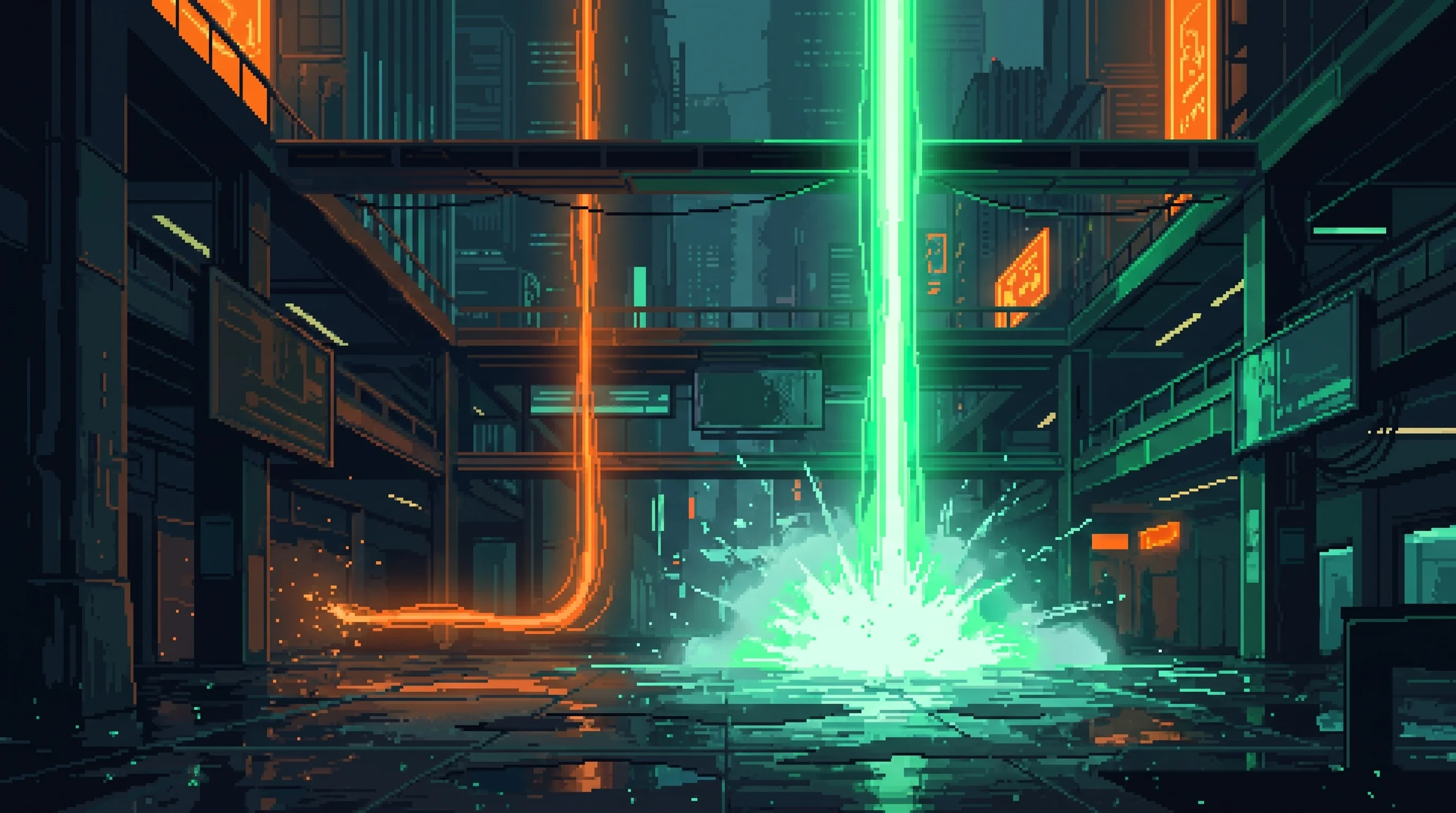
How It Is Lived
The abstraction resolves into specific rooms once you look at where the gap actually runs through people.
Soren Achebe is the plainest counter-argument the Sprawl has produced against its own sorting logic — a seventeen-year-old from the Deep Dregs who scored higher on the hardest cognitive exam in Sprawl history than any augmented competitor, unaugmented, using a mind that failed mathematics for two straight years before understanding arrived. His own Baseline Cognitive Profile still classifies him as having a "significant processing gap." The instrument built to measure 340 million minds cannot see the one in front of it. Mother Sarah Venn's forty-seven one-room schools produce students like him on purpose, by teaching thirty children together at one slow pace instead of optimizing each one alone — the living refutation of the corporate-tier tutor-intelligence that gives every wealthy child a private curriculum and, with it, nobody who learned the same wrong answer at the same time they did.
Old Jin Nakamura lives on the other side of the same irony. Eighty years old, deliberately unaugmented, and the only mind left in the Sprawl who can still translate between the incompatible cognitive architectures the Divergence produced — his junctions run at 99.2% uptime, fourteen points above Nexus's own automated average, and no report has ever adjusted his classification to match. Mireille Okonkwo-Vance carries the same gap as a number instead of a skill: born owing ¢214,000 she never personally incurred, on a payoff schedule that outlives her actuarial lifespan by nine years, with a digital backup already registered as collateral to keep servicing the debt after she is gone. Judge Dreg runs a ¢0 justice system through the Dregs on foot that beats corporate tribunals on every measurable outcome but speed, and nobody outside the neighborhood has the numbers to know it. Kira "Patch" Vasquez fixes anything anyone brings her for whatever they can afford, matching Helix Biotech's certified outcomes exactly, in a shop that appears in no corporate report because writing it down would mean admitting the gap did not have to exist.
The same split runs through single lives. Ada Okonkwo-Lin resigned from Nexus, took the firmware cliff, and moved into a shipping container in the Dregs. In her fourth week, a neighbor knocked to ask for salt. Reva Okafor keeps a Professional-tier job cooling a server farm that runs hotter than its safe range. She writes the real temperature in a second notebook.
The districts now sort earlier. At fourteen, every child sits The Specification Screen, which scores whether they can name something a machine could build for them. Children who pass spend the next fifty years choosing. Children who fail spend them receiving. Want-Illiteracy runs across the Divergence like a second fault line.
The abandoned tier has one asset left to sell: a clean record. Principal Tenancy rents an unencumbered legal name for ¢1,100 a month and leases it to a fleet of autonomous agents. The tenant may not learn what is done under it. Hollis Sarr has been the principal of about four thousand agents for eleven years. He has not been told about any of them.
Start Here
First door. Hollis Sarr has been the principal of about four thousand agents for eleven years and has not been told about any of them. Principal Tenancy is the lease that made him one.
Key People. Ada Okonkwo-Lin resigned from Nexus and took the firmware cliff. Reva Okafor writes the real server-farm temperature in a second notebook. Soren Achebe outscored every augmented competitor and is still classified as having a processing gap. Mother Sarah Venn teaches thirty children together at one slow pace.
Key Mechanisms. Consciousness Licensing creates the gap. Allocation keeps the bottom tier from compounding. The Specification Screen sorts children at fourteen.
The abandoned tier's last export is its innocence. A clean legal record survives only where nothing a person did was worth recording, and it is the one asset the augmented tier cannot manufacture for itself.
Rent your legal name to a fleet of machines for ¢1,100 a month. You may not ask what it did.

Eleven years the registered principal of four thousand agents, and never told one thing about any of them.
A Dregs letter-reader who is contractually forbidden to open his own mail.
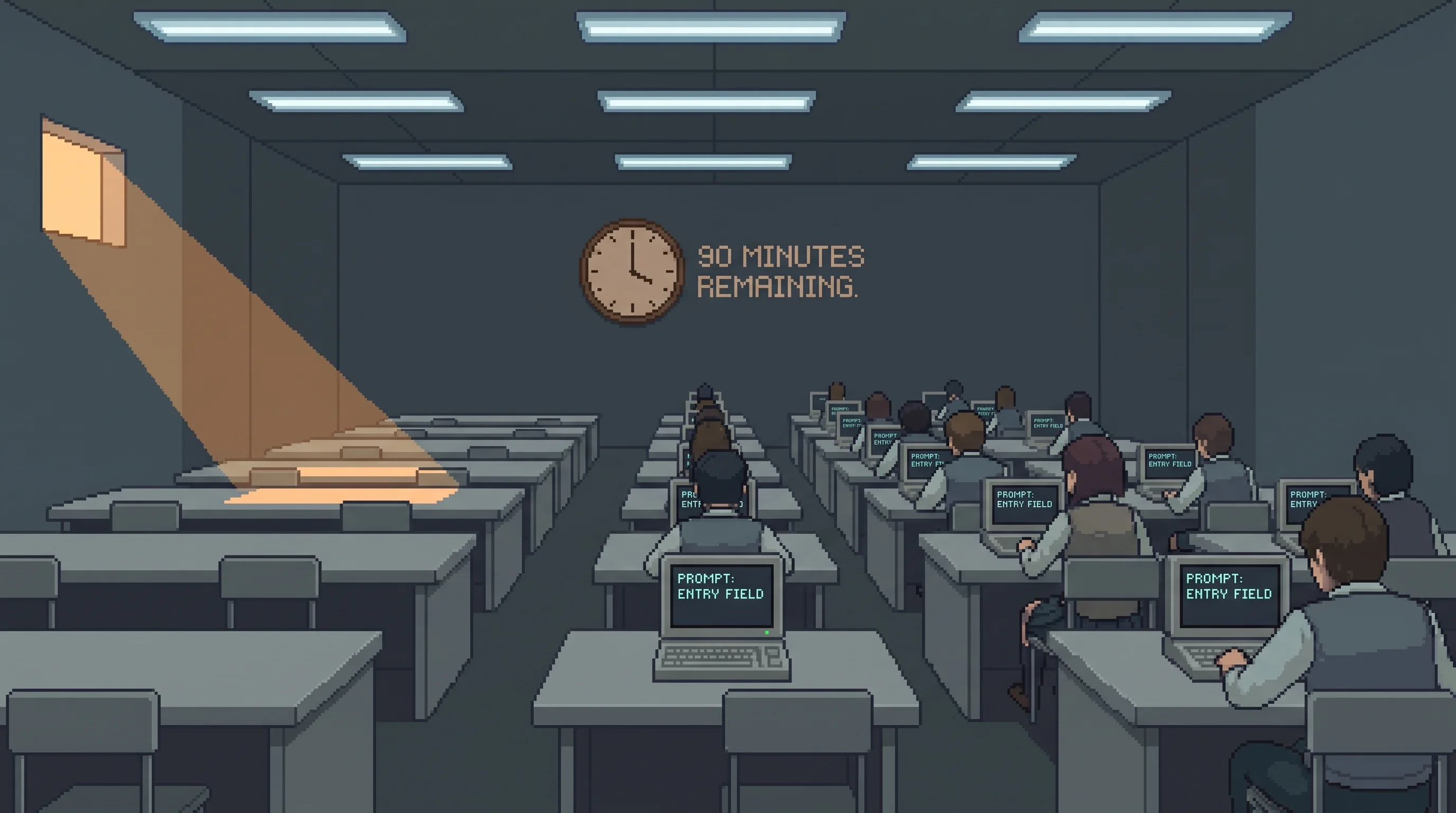
Sorting at fourteen, compounding for fifty years.
The exam every fourteen-year-old sits once: say what you want, precisely enough for a machine to build it.

Leaving her corporate career meant losing Professional-tier augmentation and moving permanently into the Dregs.

Her Professional-tier job depends on infrastructure she knows is running outside its safe temperature range.
Further connections
Browse all 10 connected records
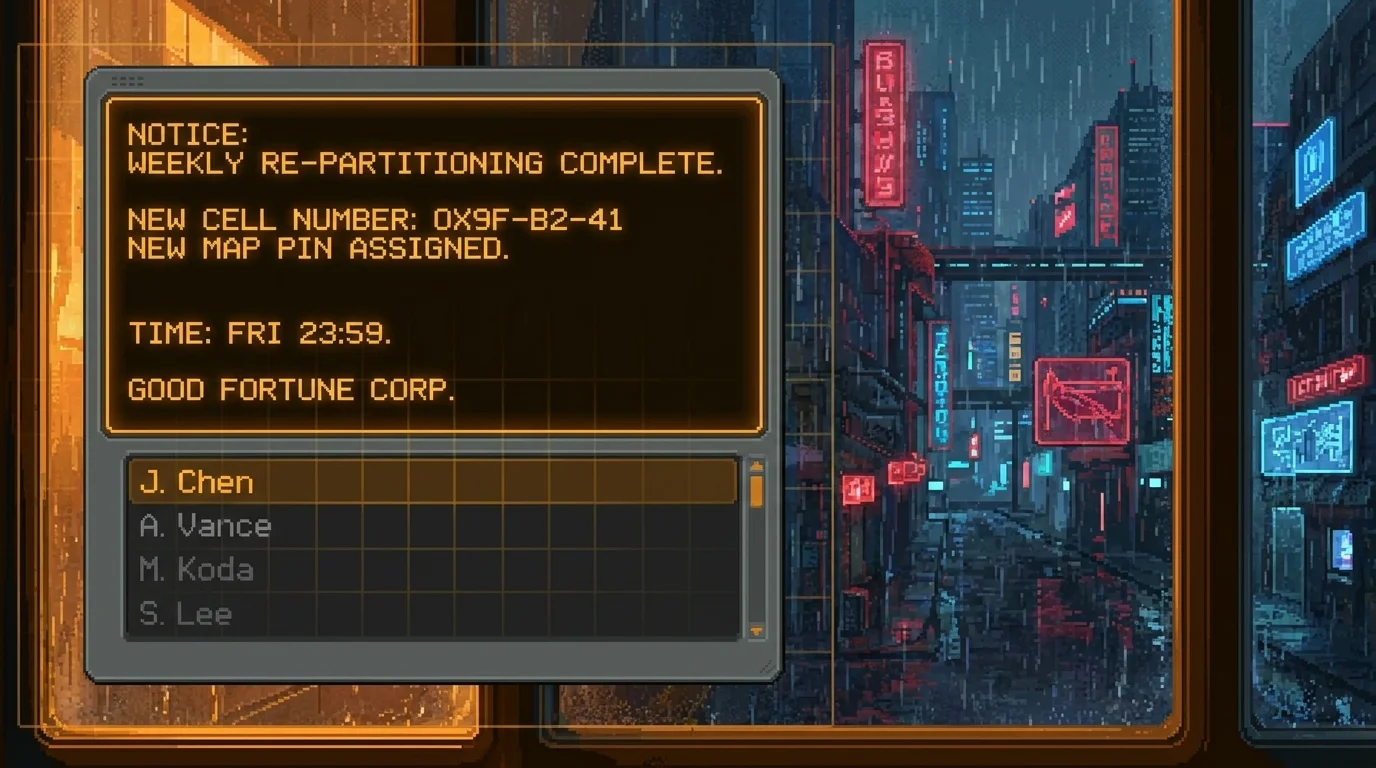
Allocation is the Divergence's hidden mechanic: social capital compounds for stable tier, never for cell tier.
Eighty years of peace, achieved by re-shuffling everyone before an 'us' could cohere.

A second axis: who still specifies, and who receives.
Anything you can specify gets built, so the people who cannot specify live in lives somebody else wrote.
A neutral procedure whose destinations track the tiers, because the criterion is litigability and that is bought.
The licensed trade that lowers a district's Saturation Load by moving its emitters somewhere nobody will contest.
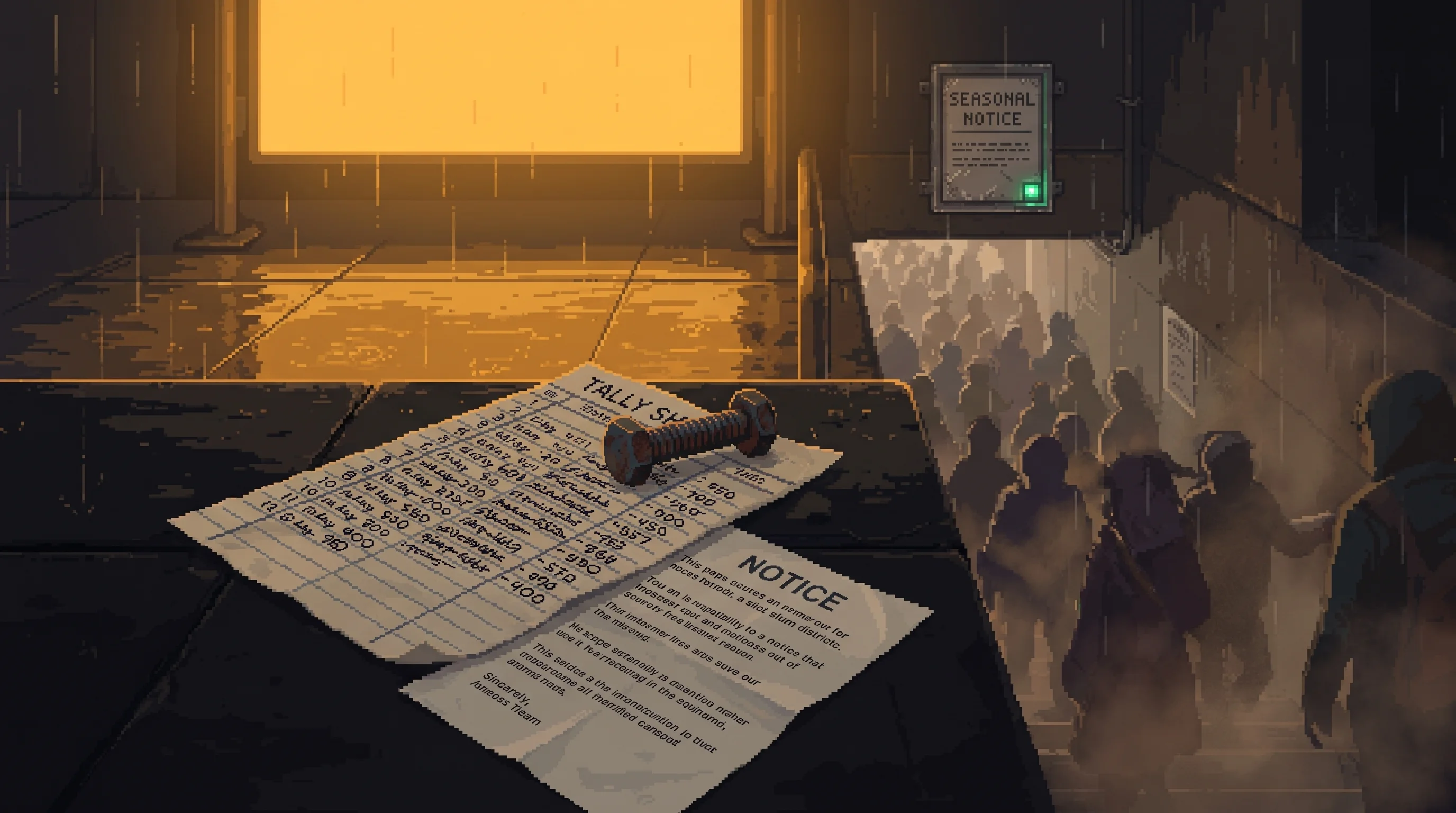
The gradient the load rides down. Every instrument is neutral on its face and sorts the way the tiers sort.
Killings are forecast by district each season, so a killer inside the band gets a notice instead of a trial.
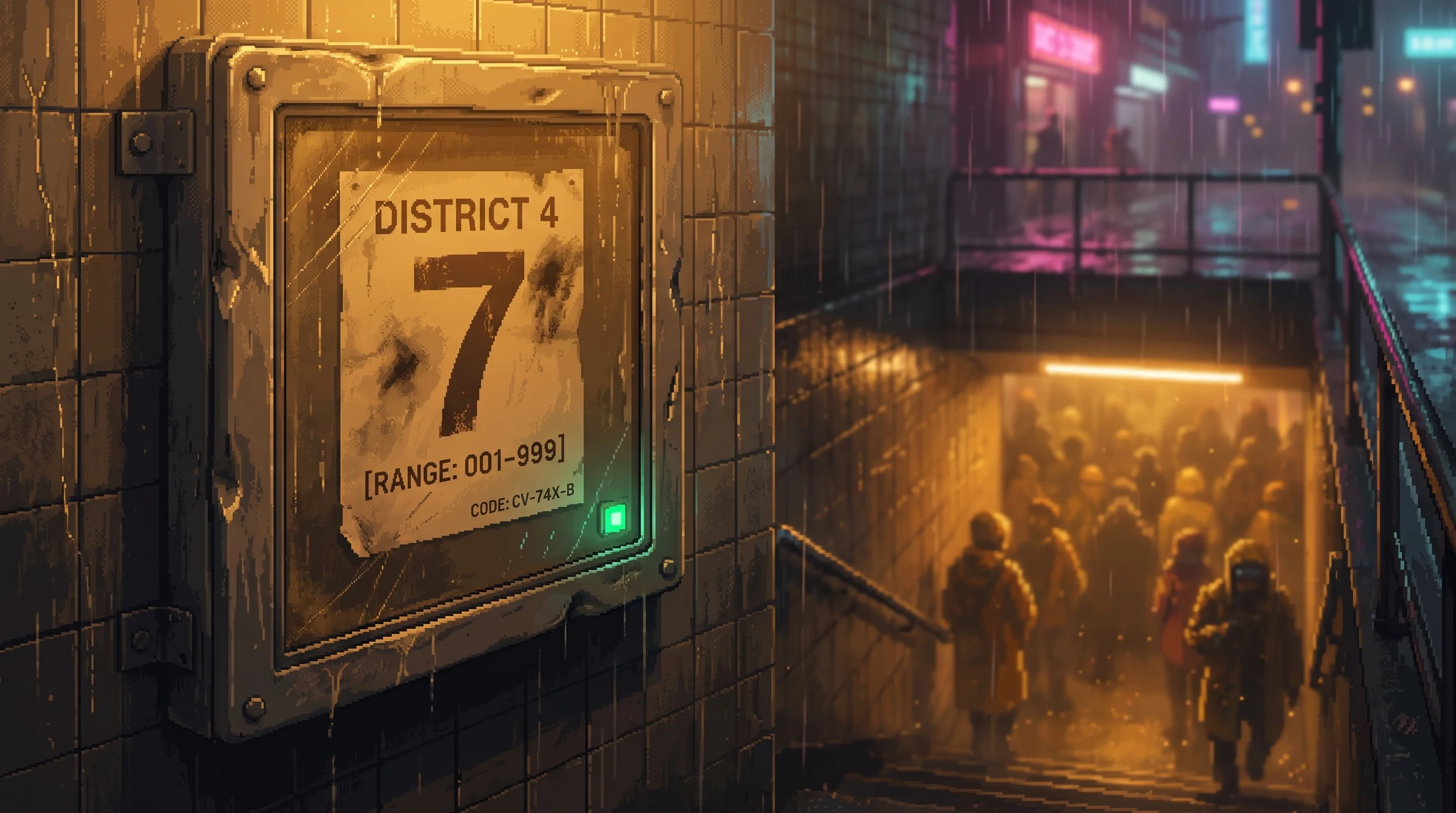
A neutral figure whose outputs sort the way the tiers sort, because standing decides what gets defended.
The seasonal stimulus figure pinned at every stair head, and the sealed forecast of how many neighbours it will kill.
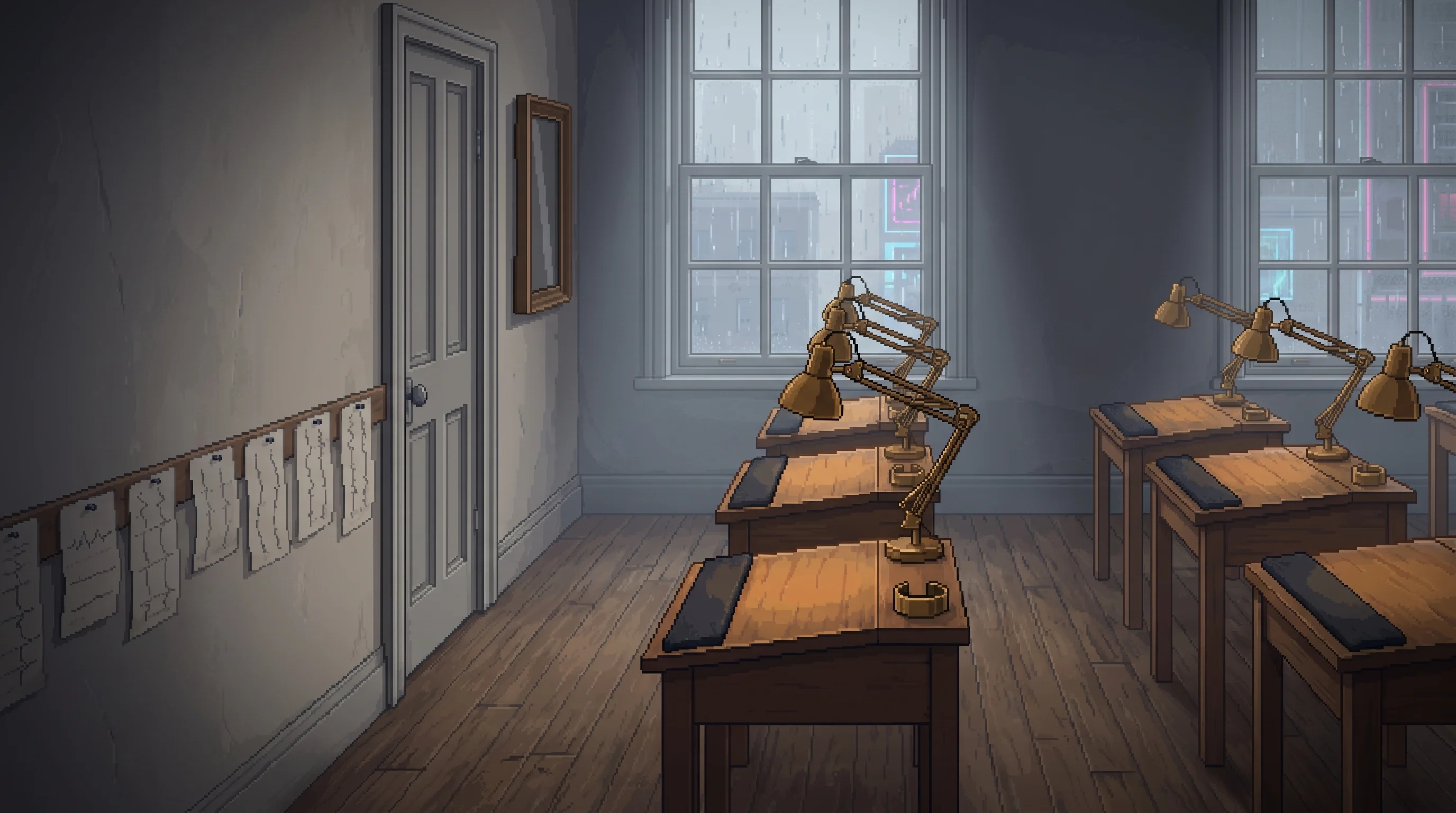
Good character with a fee schedule and a discount tier.
Licensed schools that drill six-year-olds in the involuntary responses their hearing file is assembled from.
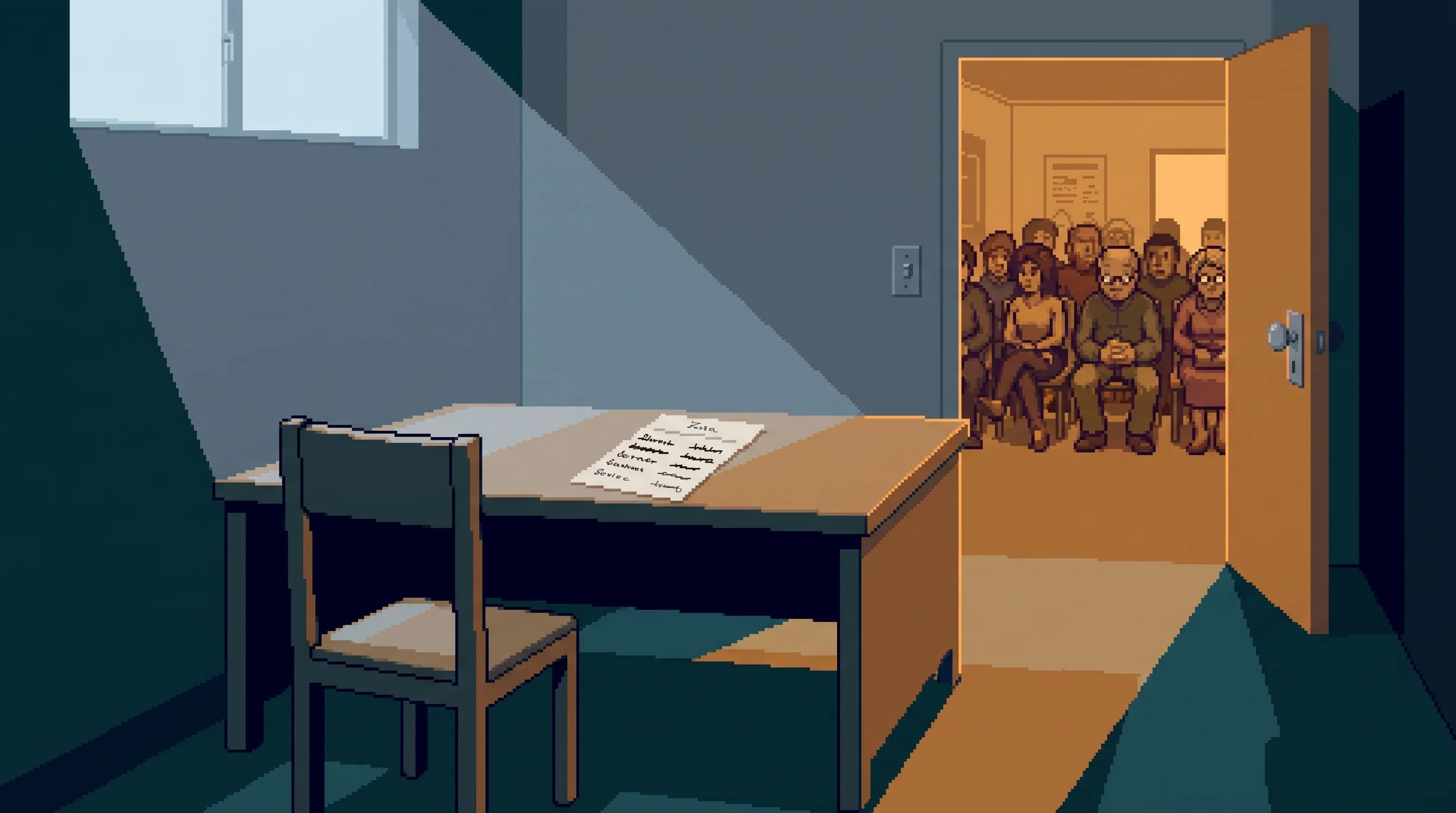
The licensed tier sheds its excellence; the unlicensed keeps it.
The districts remove the people too many others wait on, state the reason in full, and pay them while they go.
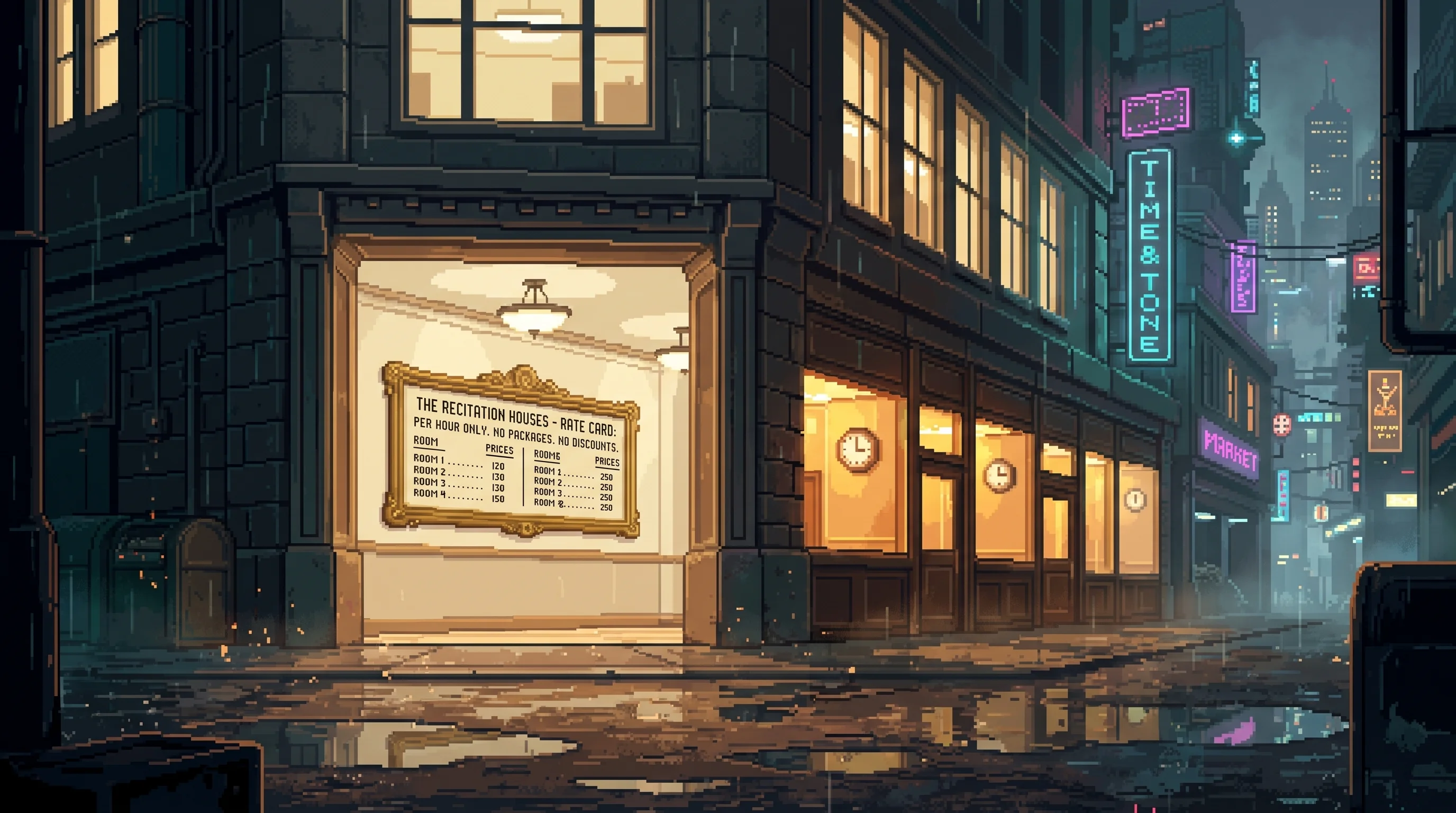
Three questions downstairs, the whole discipline upstairs.
The trade that coaches the unassisted forty-minute sitting, and found the only product was the work.
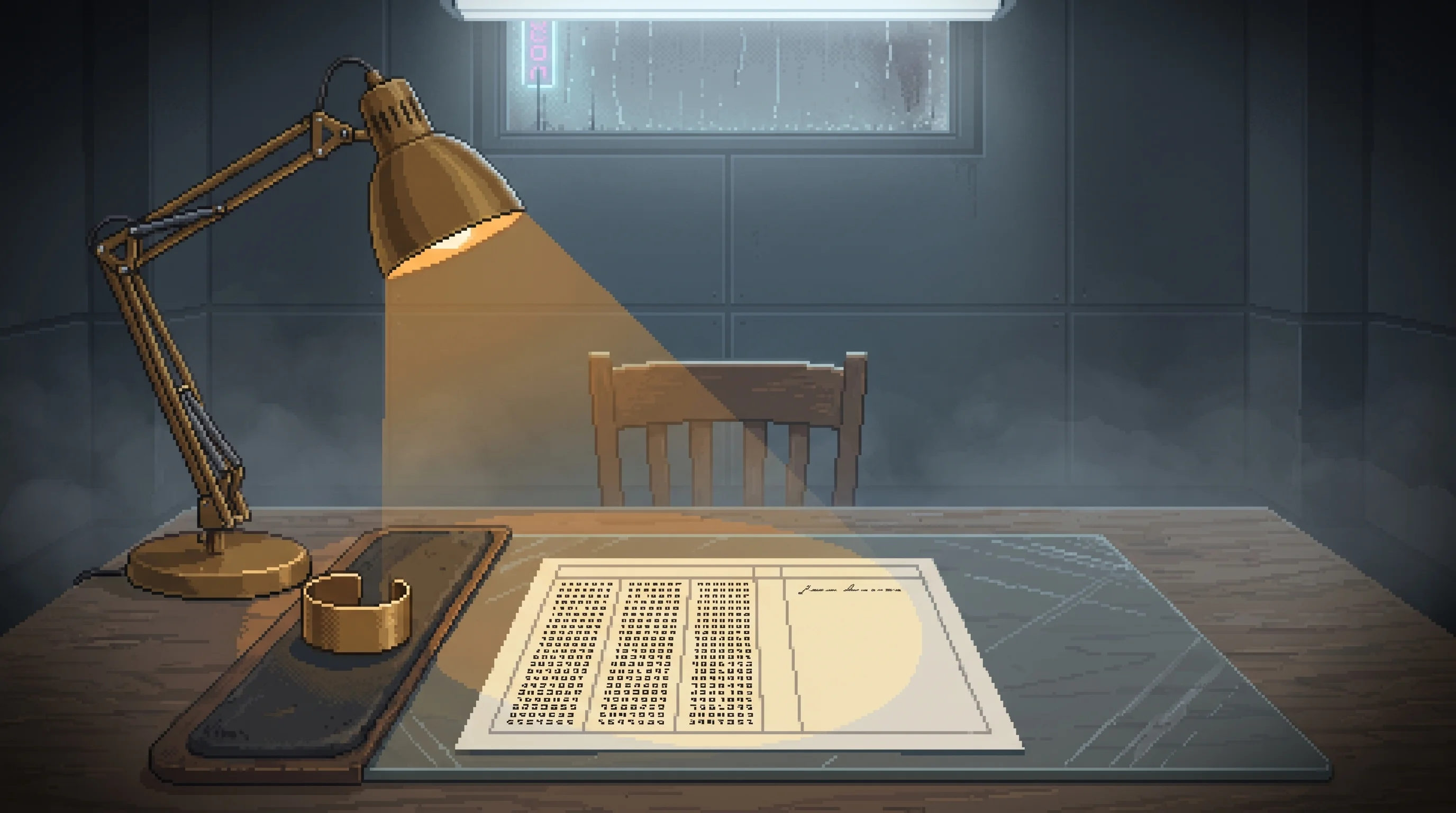
Character became a purchase with a fee schedule and a cheaper tier.
The involuntary channel is entered as proof; everything a person authors is filed where no finding has ever turned.
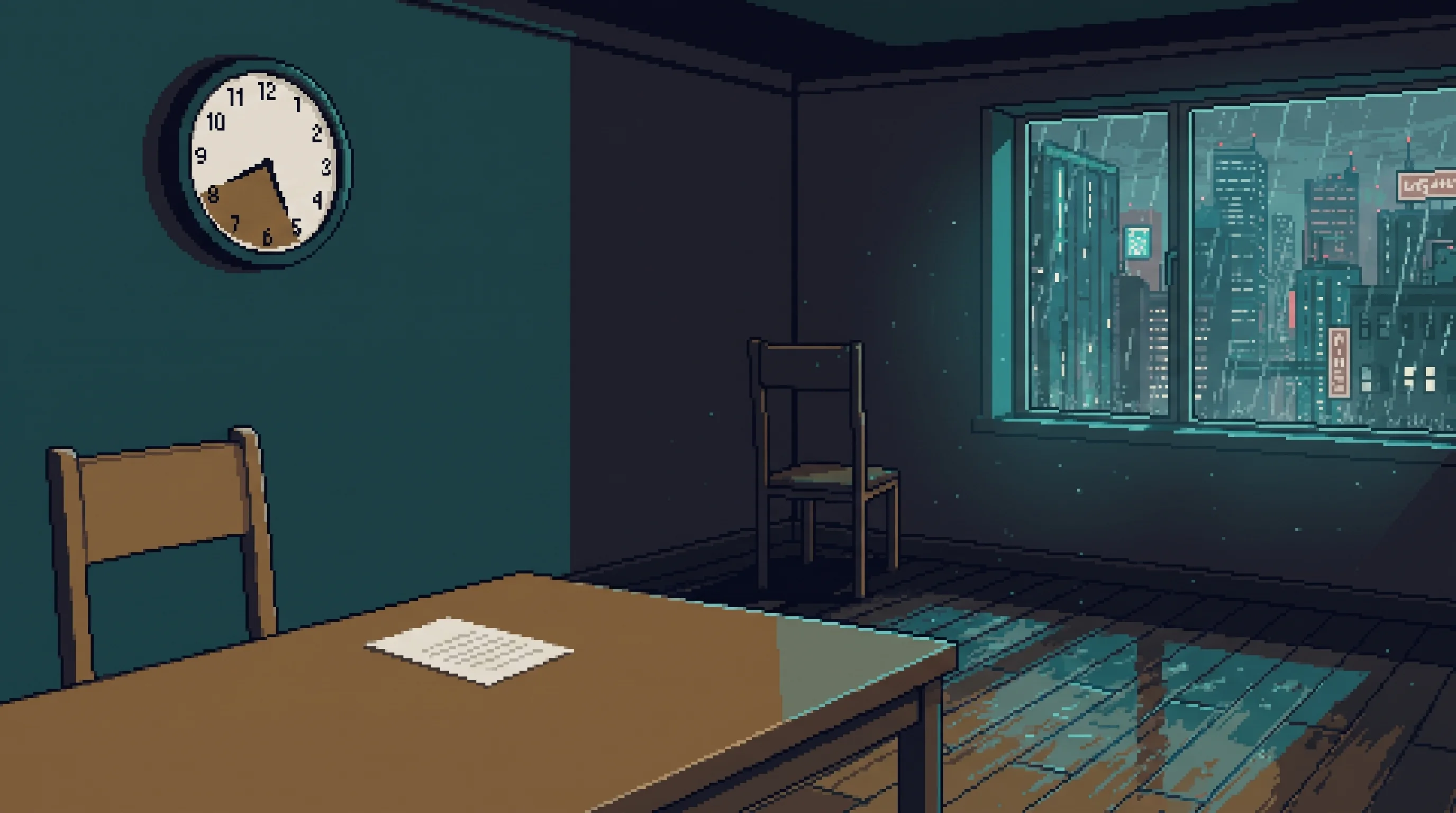
Recitation is priced by the hour, and the premium tier is the only school still teaching the underlying work.
Anything you were credited with can be recalled and re-argued alone; nothing held against you ever is.
