Overview
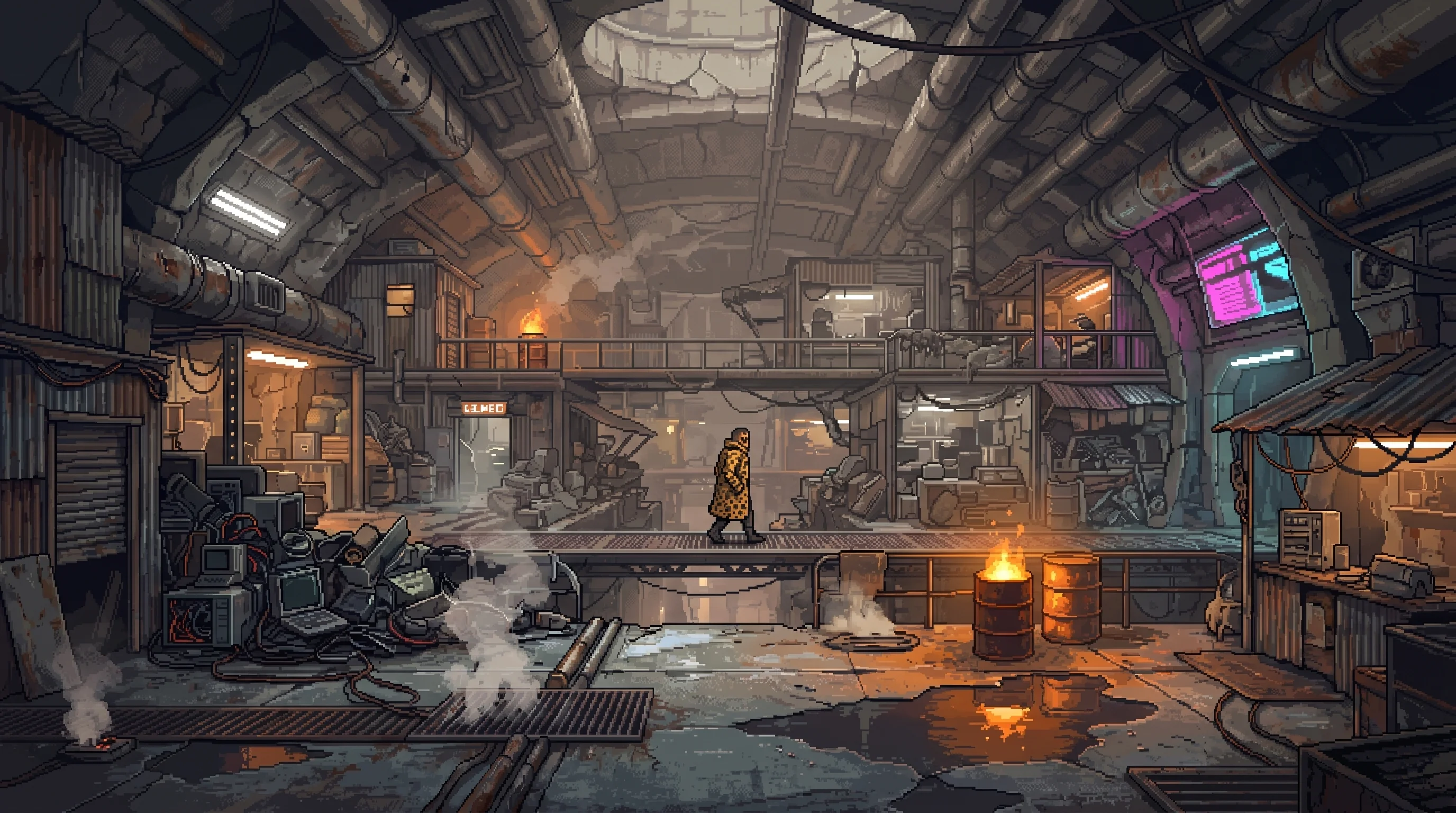
Tomás Linares spent forty-one years maintaining water recycling and atmospheric processing systems in The Deep Dregs. He retired in 2171 when degenerative nerve damage made it impossible to hold a wrench steady. He then spent eleven years writing a book about everything the Sprawl was forgetting, which Nexus Central banned under content regulation 7.14.3: "Material promoting infrastructure dependency on human labor."
Content regulation 7.14.3 was authored by a committee whose members have never repaired anything with their hands. The regulation is twelve pages long. Linares's entire career fit inside pipes narrower than the regulation's margins.
"I watched the last person who could repair a water pump by hand die in 2172," he writes in the opening of The Forgotten Ways. "She was ninety-four. Her name was Dara Osei. Nobody asked her to teach anyone. Nobody thought to. The pump still works — the automated systems maintain it. But nobody alive knows why it works, or what to do when the automated systems stop."
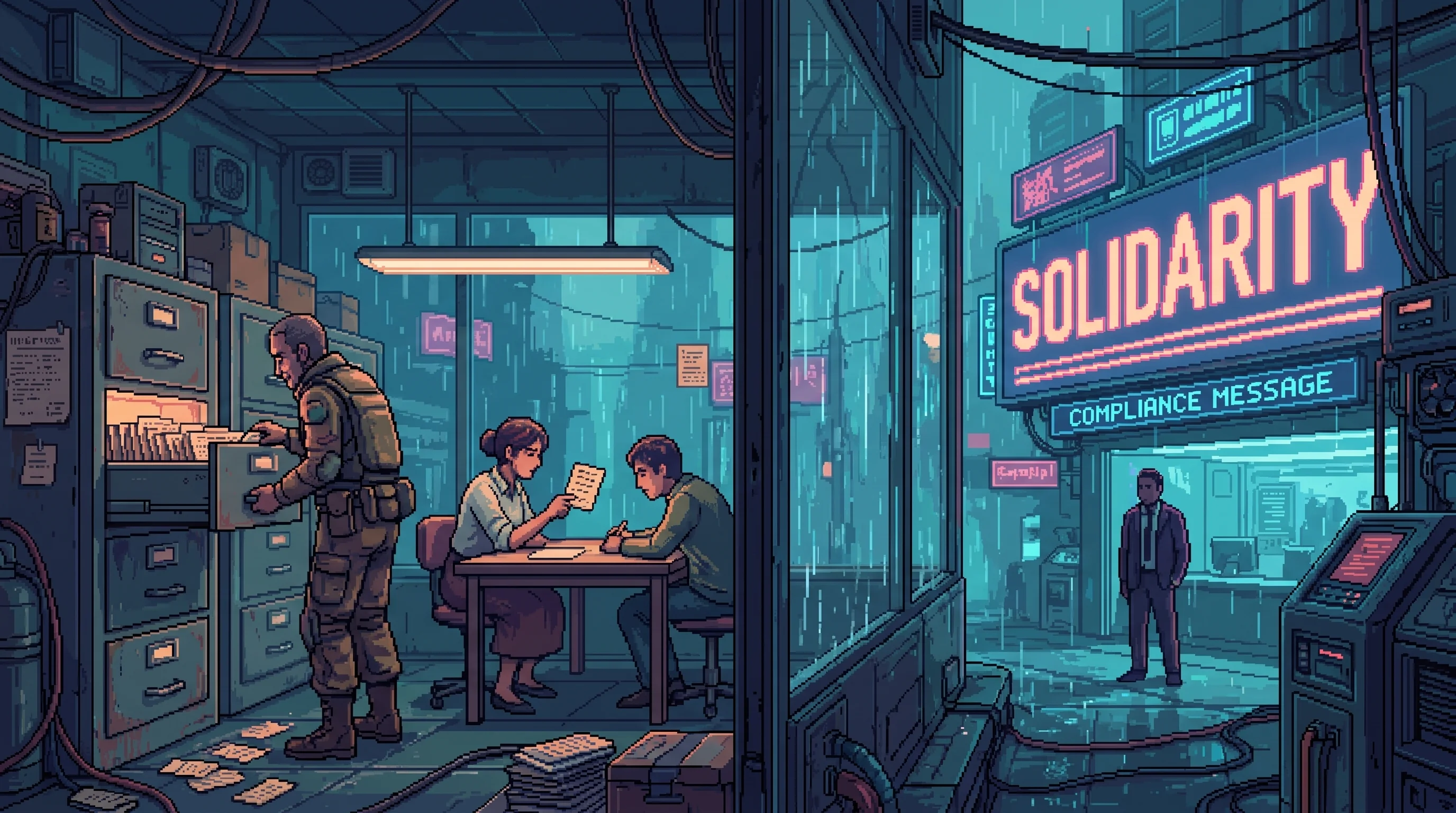
Over eleven years, Linares documented every vanishing skill, every dying trade, every piece of knowledge that existed only in the hands of people who were growing old and being forgotten. The result became an underground classic in the Dregs and a criminal text in Nexus Central, where corporate interests preferred the narrative that human maintenance was obsolete by choice, not by neglect. Nexus's automated diagnostic systems identify 94% of failures. Their Q3 2183 infrastructure report describes the remaining 6% as "acceptable loss margins." The Forgotten Ways describes the same 6% as "the part where people drown."
Both characterizations are technically accurate. Only one of them resulted in a content ban.
Appearance

Tomás is seventy-eight, an unaugmented baseline human.
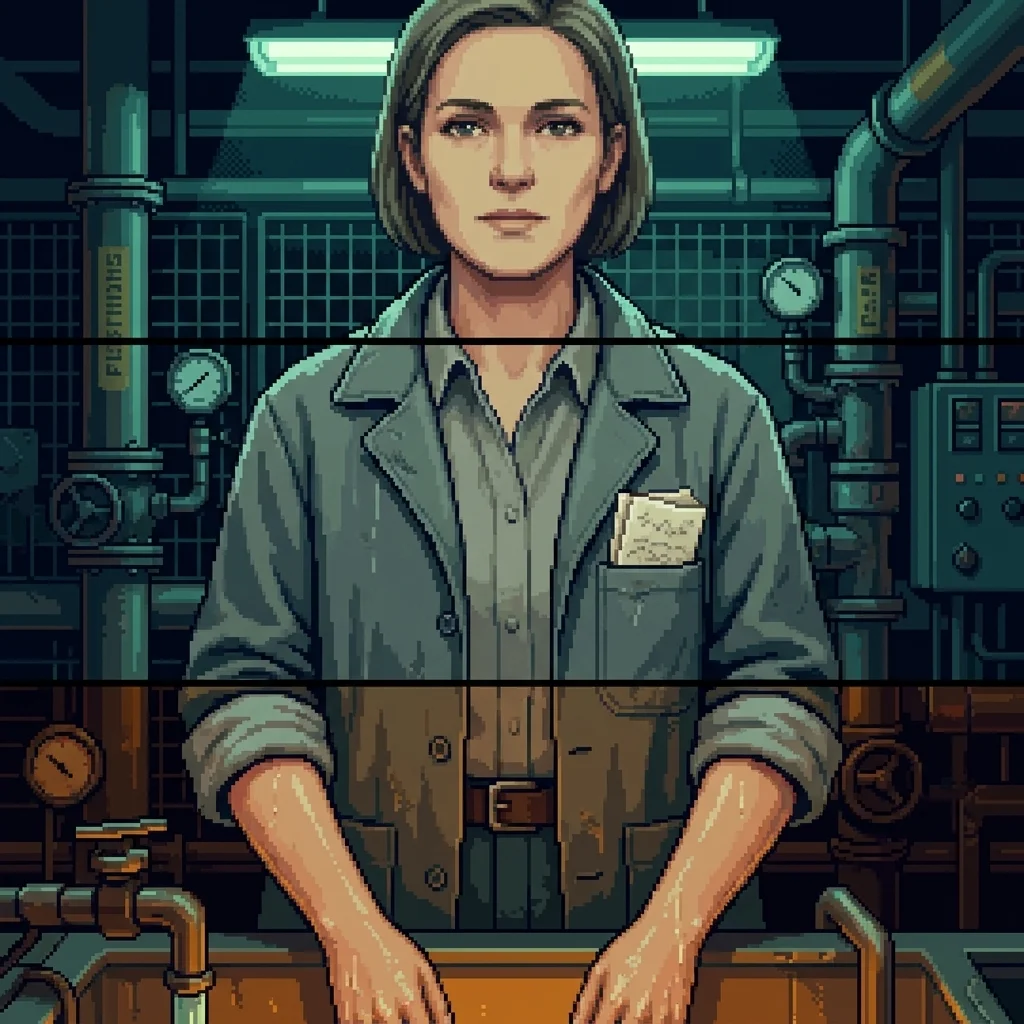
His hands are permanently stained blue-gray with coolant residue. Forty-one years of infrastructure written into the skin like a tattoo earned through proximity. They shake now when he sets candles. They did not shake last year.
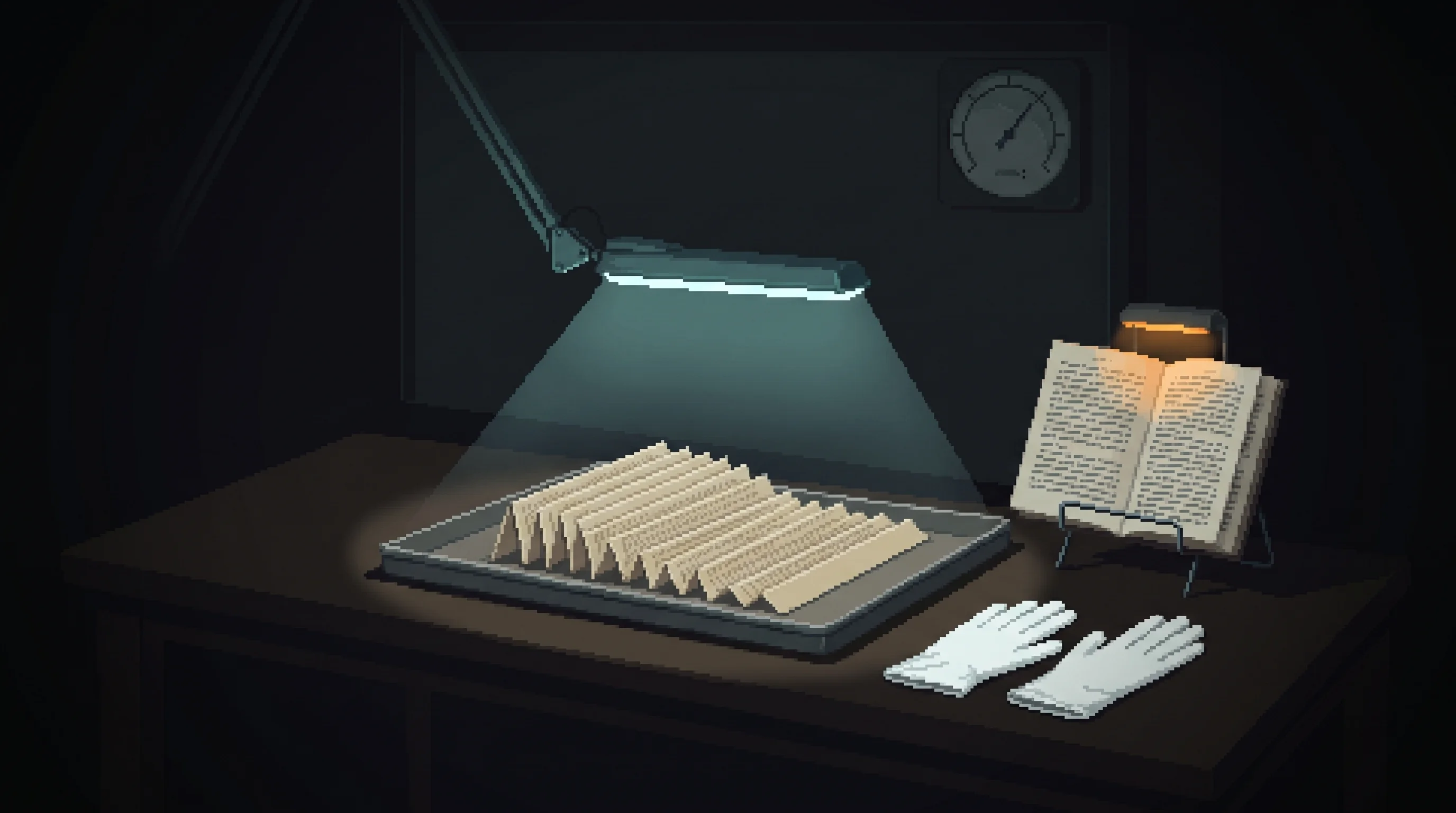
The schematic is a hand-drawn map of the Deep Dregs water recycling system, folded so many times the creases have become part of the diagram. He traces routes with a stained finger when he talks about the old systems. Folds it back with the care of someone handling something alive.
The smell is machine oil and old paper. Two things most Dregs residents have never encountered together. The oil is from tools he can no longer hold. The paper is from a book he spent eleven years writing by hand.
Meaningful places
The Archive
When Linares retired from infrastructure, his hands could no longer hold a wrench. They could still hold a pen.
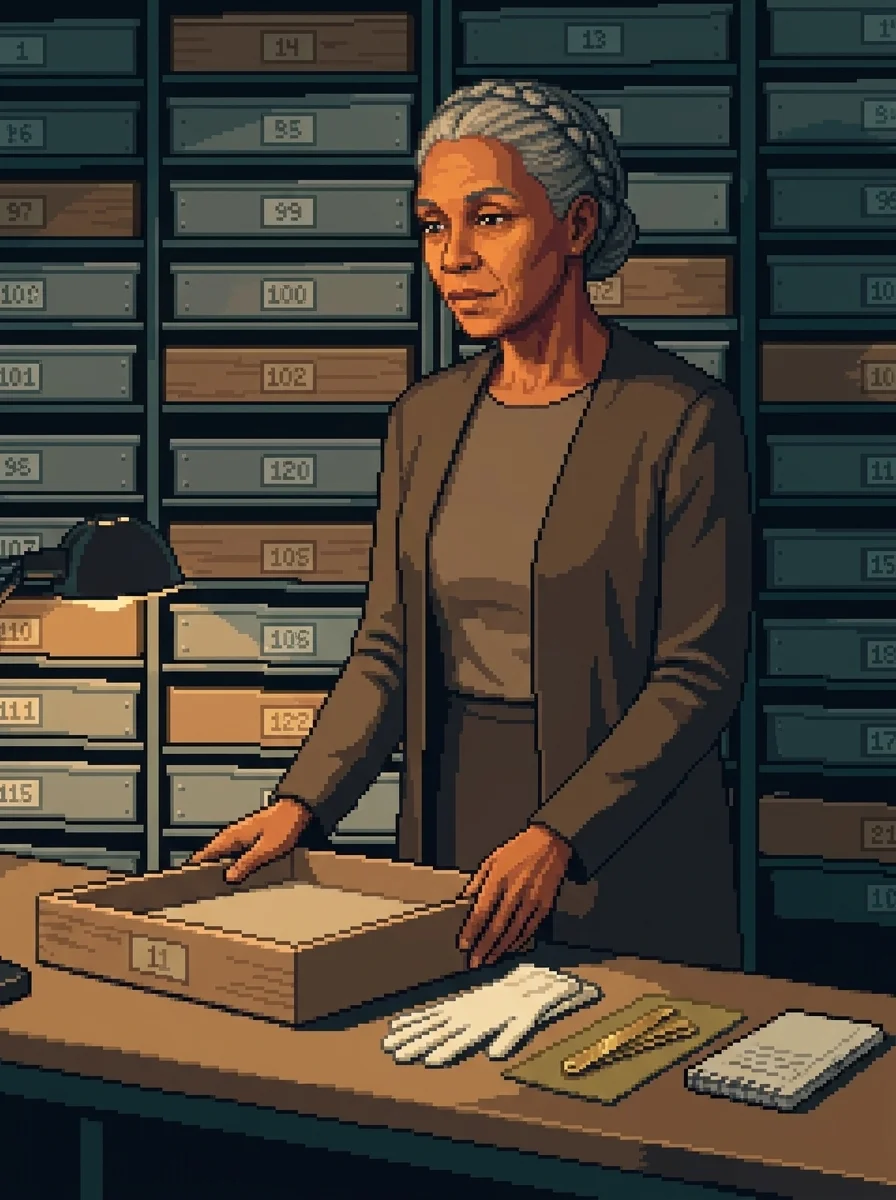
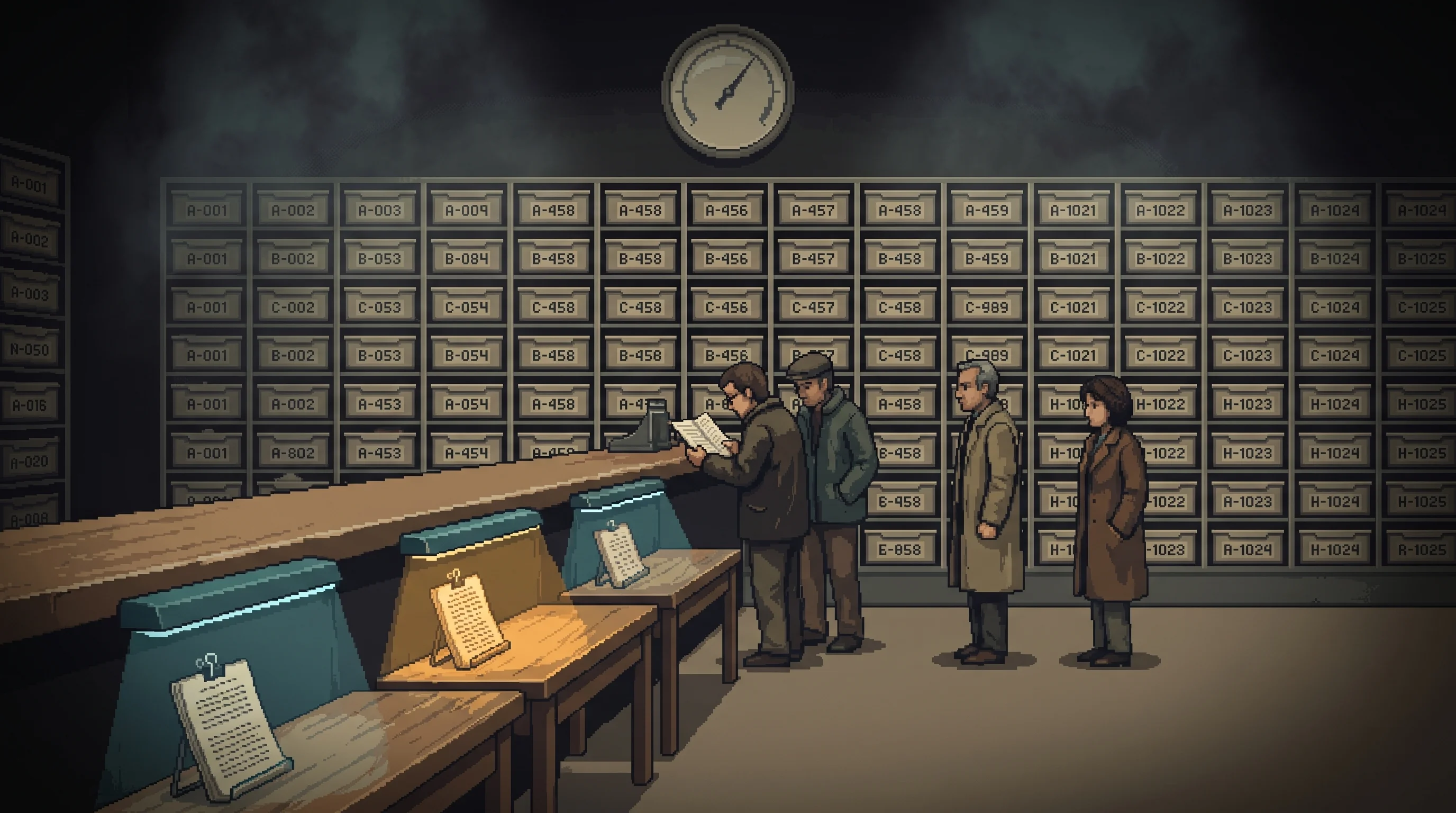
He maintains a second institution — a paper archive on Level 8 of the Stacks, the vertical megastructure adjacent to the Deep Dregs. Over forty thousand hand-copied volumes stored in a climate-controlled chamber he sealed and dehumidified himself. He copies from every source: digital downloads transcribed by hand, pre-Cascade physical books acquired through trade, oral histories recorded in longhand. Known in the Stacks as "Parchment" — a name he earned the way all Dregs names are earned, by doing the thing long enough that the thing becomes the name.
The archive's philosophical purpose is civilizational preservation. Its practical function is more mundane. Approximately sixty people consult the archive annually, and fourteen of those are the same four Analog Schools teachers rotating through on quarterly curriculum reviews. The remaining visits split between Neon Rail travelers who stay an average of twenty-two minutes and Stacks residents who come to settle property boundary disputes, because Linares's historical records of the Stacks' structural changes over six decades are the closest thing to a land registry the building has.
The most worn shelf in the archive — third from the bottom, left wall — contains property dispute documentation. Not literature. Not science. Not history. Real estate. Forty thousand hand-copied volumes of transcribed literature, oral history, and pre-Cascade science are a magnificent monument surrounding a core of fourteen shelf-meters of property dispute documentation that people actually use.
Linares knows this. The sign-in ledger is in his handwriting. He copies another book. The dehumidifier hums.
The Collective offered to digitize the entire collection for free. Linares declined because "free digitization is how you lose an archive." The offer included perpetual access guarantees. The guarantees were stored on a server.
The Stacks

A vertical slum five buildings deep, 90,000 living on foundations certified for 12,000 and never resurveyed.
Explore The StacksSteep hillside residential blocks, too narrow for redevelopment equipment, too vertical for efficient surveillance.
Explore the sub-sectorRelationships
Parchment: The Correspondence
Parchment has maintained a paper correspondence with Orin Slade of Slade's Print Shop for eleven years. They have never met in person. Slade supplies him with news — physical broadsheets, hand-set type, ink still wet on delivery days. Parchment supplies Slade with historical context for the stories Slade prints.
The letters travel by courier through the bazaar network, taking between two and nine days depending on which stairwells are passable. Neither man has suggested switching to a faster medium. The suggestion would end the correspondence.
Slade once printed a correction based on historical context Parchment provided about a pre-Cascade trade agreement. The correction ran on page three. The original error, sourced from Nexus's public historical database, had been circulating for fourteen years. Nexus's database still contains the error. Parchment's copy of the original agreement does not.
Parchment: The Relief Documentary
Relief Entertainment's documentary division approached Parchment in 2181 for a feature segment titled "The Last Librarian" — a forty-minute profile intended for Relief's cultural programming block. The production team requested three days of filming access to the archive, an on-camera interview, and permission to use drone footage of the Stacks' exterior.
Parchment declined. His stated reason: they wanted to film, not read.
The production team, per their own internal communications later obtained by Slade's Print Shop, found this response "charming but unworkable." They offered increased compensation. They offered editorial control. They offered to donate a percentage of streaming revenue to the Analog Schools.
Parchment declined each offer by paper letter, same-day delivery, hand-delivered by bazaar courier. The letters were polite, brief, and contained no forwarding address. The production team noted that they already knew his address — he lived in the archive. Parchment did not respond to this observation.
Relief produced the segment anyway, using exterior footage and interviews with bazaar vendors. The segment described Parchment as "a living monument to an obsolete art form" and received 2.3 million views in its first week. Parchment's visitor count did not change. The people who watch Relief documentaries and the people who visit paper archives are, evidently, non-overlapping populations.
Motivations and conflicts
The Lamplighter's Perspective
Linares doesn't think in systems. He thinks in pipes, seals, pressure valves, and the particular sound a water recycler makes when its filtration membrane is three weeks from failure. His worldview was built underground, in the service corridors and utility crawlspaces of The Deep Dregs, where the Sprawl's intellectual debates arrive as leaks, outages, and the slow corrosion of things nobody inspects.
He never cared about the Labor Question as politicians frame it. He understands it differently: "They ask what people are for. I can tell you what people are for. People are for fixing the things that break. The problem isn't that we ran out of things to fix. The problem is that we decided fixing was beneath us."
Old Jin — Jin Nakamura — maintained adjacent sectors for twenty years. Jin understood systems at a level Linares never could, the deep ORACLE-era architecture that requires mathematical frameworks no textbook explains. Linares understood people at a level Jin rarely bothers with. Jin taught him that tools remember their purpose even when people forget. Between the two of them, they covered the full spectrum of what the Sprawl is losing. Together, they could keep the Deep Dregs alive. Separately, each covers approximately half the knowledge required. The Lamplighters have not assigned a replacement for either sector.
The Dregs metabolize change at human speed — filtered through physical infrastructure, face-to-face communication, the particular inertia of a community that can't afford to upgrade. Linares observed this for four decades without calling it anything. The Dregs' informality is not a poverty symptom. It's a metabolization advantage. A corporate technician who received a diagnostic update on Monday found it obsolete by Wednesday. Dara Osei learned a water pump over twenty years. The pump didn't change. She and the pump grew together. She understood it the way you understand someone you've lived with for decades. The corporate technician understood his diagnostic the way you understand a notification.
Nexus's position is that the old manual skills were inferior. Automation is better, faster, more reliable. The maintenance workers of the pre-Cascade era were doing jobs that machines should always have been doing. Their obsolescence was progress. This is a reasonable argument, and it would be more convincing if Nexus's automated systems hadn't logged 1,247 "acceptable" failures across Deep Dregs water infrastructure last quarter. The failures are acceptable because nobody important lives there. The failures are failures because people live there.
The Lamplighters consider The Forgotten Ways a foundational text — the written version of everything they have been saying in whispers for decades.
The Apprentice Problem
Chapter 2 of The Forgotten Ways is the one corporate censors target most aggressively. It documents, with Linares's characteristic specificity, how Nexus Dynamics' 2162 acquisition of municipal maintenance archives transformed teaching from a human relationship into a licensed product.
The first-order pitch was elegant. Nexus consolidated decades of scattered, inconsistent maintenance documentation into a single searchable archive. Standardized. Cross-referenced. Available to any credentialed institution for a reasonable licensing fee. The archive was, by every measurable standard, superior to the handwritten notebooks and oral traditions it replaced. No reasonable person could object to replacing inconsistency with order.
The licensing fee was ¢12,000 per educational content module. A Lamplighter wanting to train an apprentice in atmospheric processing needed the module from the same corporation that had automated the apprentice's future job. The fee was reasonable by corporate standards. By Dregs standards, it was approximately four months' income for a maintenance worker whose wage had been declining since automation made her position "supplementary."
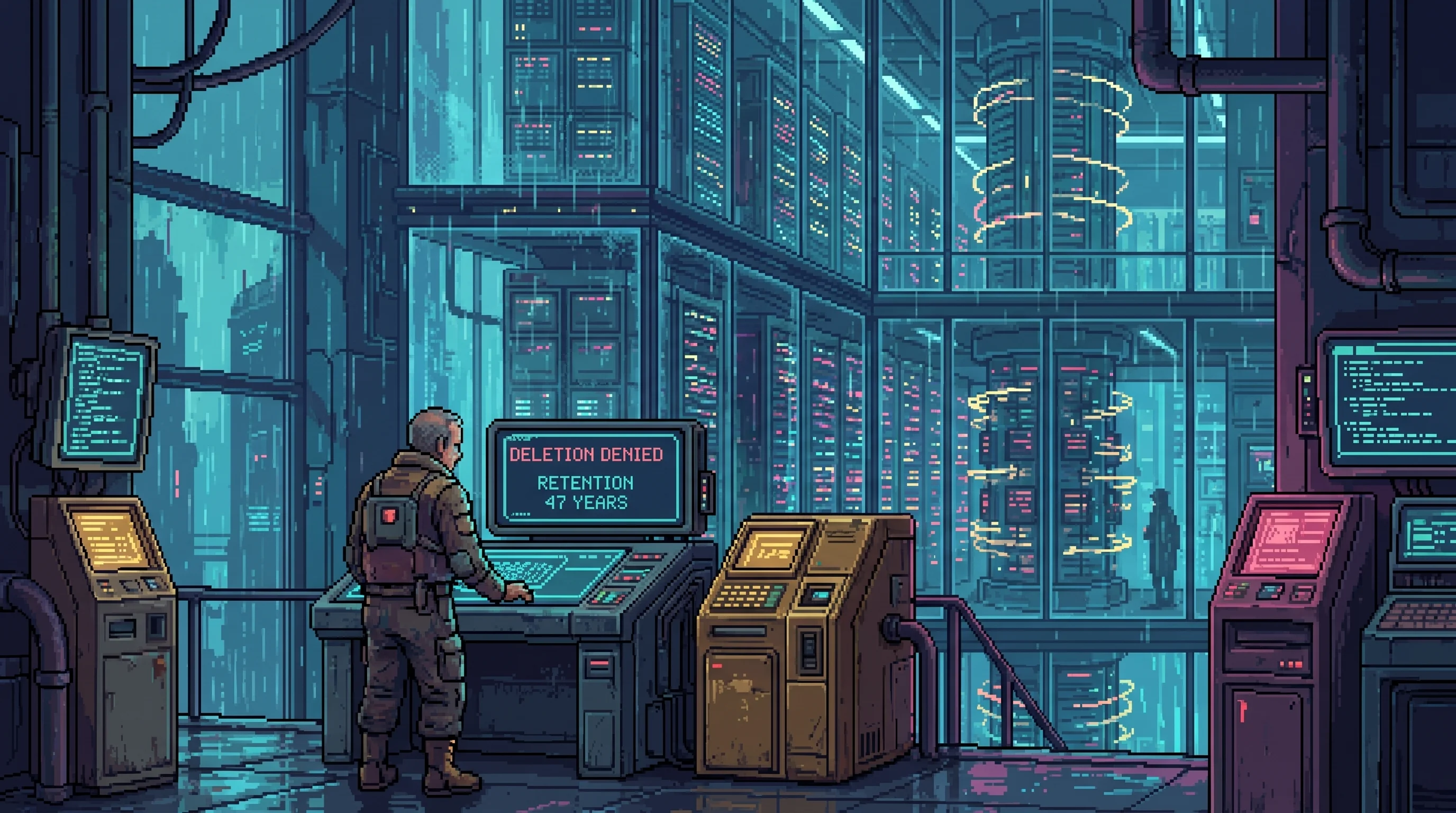
Nobody paid. The schematics stayed locked. Apprentices learned from aging mentors who taught from memory because the manuals were behind paywalls. The mentors died. The memories died with them. The archive persists, searchable and cross-referenced, containing the complete knowledge of a trade that no living person practices.
"They counted the cost of the apprentice's mistakes," Linares wrote. "They did not count the cost of the apprentice's learning. The mistakes were the learning. When they eliminated the mistakes, they eliminated the learning. They kept the wrench and threw away the hand."
Nexus's educational licensing division reported ¢3.2 million in annual revenue from maintenance archive access in 2183. Number of individual Dregs residents who purchased a module that year: zero. The revenue comes from corporate training departments licensing content to train technicians who will operate the automated systems that replaced the people who needed the archive. The knowledge returned to the corporation that bought it. The loop closed in 2174. Nobody noticed because loops closing silently is what loops do.
The Dead Words Index
Chapter 9 — "Corporations Remember For You" — contains what Dregs educators call the Dead Words Index: a handwritten inventory of 847 technical terms that have fallen out of spoken use since the Cascade. Not archaic terms. Not specialist jargon. Maintenance vocabulary — the words that named the daily work of keeping infrastructure alive.
"Gasket." "Torque." "Bleed valve." "Backflow preventer." "Load shedding." Each catalogued with the precision of someone who knows that specimens deserve names: the word, its meaning, the year Linares last heard it spoken by someone who understood it, and the name of the last speaker.
A Lamplighter who says "the gasket's blown" understands the failure in her body — the feel of rubber degraded by heat, the sound of pressurized fluid escaping, the sequence of actions required to contain the damage. A corporate technician who says "Fault Code 7741-B" understands the same failure as a data point. The repair time is identical. The understanding is not. What dies with the word "gasket" is a way of knowing — tactile, embodied, earned through proximity. Nexus's diagnostic glossary contains 14,000 fault codes. Linares's Index contains 847 dead words. The glossary and the Index describe the same infrastructure. One of them can fix it.
Chapter 12 — "The Comfortable Forgetting" — extends the Index into deliberate language. Dead-word pairs showing the old term beside its corporate replacement. "Exploitation" → "resource optimization." "Dignity" → "self-actualization metrics." "Home" → "primary residential allocation." "Fired" → "deprecated." The Dictionary circulates separately from the book, pinned to walls in Dregs workshops, read aloud at Debt Breakfasts, memorized by children in Mother Sarah Venn's Analog Schools who are taught that knowing both words for the same thing is the first lesson in seeing the system.
Linares observed that children in the Dregs can identify a rigged game by age eight. Not from instruction — from exposure. The experience produces a vocabulary: "rigged," "short," "loaded," "house rules." Words earned through the specific experience of being on the losing end. Corporate children lack this experience. The exploitative dimensions of consciousness licensing, the Attention Tithe, the Corporate Compact — all externalized to districts they never visit. The word "exploit" exists in their dictionaries. The occasion to use it about their own employer does not.
"Precision is not meaning," Linares writes. "A word that names exactly what it measures and nothing more is a word that has been killed and replaced with its autopsy report."
The Rothwell corporations sell contentment as a product and never notice that the people too poor to buy it are the only ones who have it. Linares noticed. He wrote it down in pencil, which is how dangerous ideas circulate in the Dregs — slowly, on paper, through hands.
The Last Undertaker
When his hands could no longer hold a wrench, Linares discovered they could still hold a cloth.
He learned the death rite from his mother, who learned from her grandmother — a lineage older than the Cascade, older than ORACLE, older than the Sprawl. The washing, the dressing, the arrangement of the face into something families can bear to see. He performs the rite in a converted storage unit behind Patience Cross's noodle shop, under warm amber lights, with real water and real ceramic. She provides space and broth. He provides the rite. The arrangement has no contract.
He speaks to the dead as he works. He tells the body who it was. Salvager's hands. Shoulders that carried heavy things. A face that knew what it was carrying. Approximately twelve bodies a year. The Deep Dregs still produces mourners who weep and hold. But increasingly, the family members who arrive carry an expression he has learned to recognize: composed, informed, absent. They know the person is dead. They understand the implications. They have the facts. The room where grief would happen has been sealed shut by years of synthetic permanence, and they cannot find the door.
Dr. Kwan at the Connection Ward has begun referring temporal flatline patients to Linares. Not for therapy. For the experience of standing in the presence of real death — the irreversible kind, the kind that doesn't buffer or archive. A Nexus executive who hasn't felt genuine loss in eleven years stands in Linares's preparation room and watches an old man with stained hands wash a stranger's body. The clinical term is "exposure therapy." Linares calls it "standing near the thing." It works approximately 30% of the time, which is 30% more than the Connection Ward's pharmaceutical interventions achieve for the same cohort.
So Linares writes letters for the ones who can't find the door. On their behalf, in pencil on recycled paper, he writes to the dead what the living cannot feel. He places the letters in the casket. The letters are terrible. "I will miss your presence." "You were important to our family." Language that acknowledges death without touching it. He does not improve them. The inadequacy is the point — the gap between what the letter says and what loss should feel like is the diagnosis.
Esme Otieno at the Dead Heart Museum collects them. She places them alongside pre-Cascade love letters — letters incoherent with pain, blotted with tears, written by people who couldn't see the page. The Museum has 340 post-Cascade grief letters and 12 pre-Cascade ones. Visitors spend an average of four seconds on the post-Cascade letters and ninety-one seconds on the pre-Cascade ones. Nobody has to explain the exhibit. The contrast IS the exhibit.
He developed the Burning of the Name for mourners experiencing functional persistence grief — the state where everything about the loss is understood and nothing about it is felt. The mourner writes the deceased's name on paper and burns it. The name disappears. For a moment, something that was permanent becomes impermanent. Some mourners report that this is the first time since the death that anything felt different at all. The success rate is low. The success, when it arrives, is unmistakable.
He suggested the Empty Bowl practice at The Dumb Supper. One absence. One silence. Thirty seconds of devastating nothing. Every April, he prepares the Dregs Memorial altar for The Three-Day Memorial — the candles, the photographs, the bowls of water. His hands shake while he sets the candles. They did not shake when he set them last year.
The Forgotten Ways documents how the Sprawl forgot to maintain its infrastructure. The death rite documents how the Sprawl forgot to maintain its grief. Linares carries both vanishing practices. Both will die with him. He is aware of this. He has not started looking for an apprentice. The licensing fee for mortuary education is ¢8,400, administered by Wellness Corporation, whose automated grief-processing services are available to any Sprawl resident for a monthly subscription of ¢240. The subscription includes memorial templates, digital eulogy generation, and a sentiment-calibrated condolence message sent to the bereaved's network within six minutes of registered death.
Linares takes three hours per body. Wellness takes six minutes per notification. The market has spoken.
The Ghosts of Reasons
The final chapter of The Forgotten Ways — finished three days before the first print run — is six pages. The others average twenty-eight. "I cannot write long about what I don't understand, and this chapter is about the things nobody understands."
The chapter documents seven instances where Linares or his colleagues encountered infrastructure decisions they could observe but not explain — routing choices, calibration settings, material specifications that functioned perfectly but whose reasoning had been lost.
"I spent forty-one years maintaining a water recycler in Junction 9-East that routes 12% of its output through a secondary filter no diagnostic has ever flagged as necessary. The recycler works without it. The water is chemically identical. But Dara Osei told me the secondary filter was 'for the taste.' She said ORACLE specified it because the trace minerals it added made the water taste like rain. Not for health. For comfort."
"The filter is still running. Nobody alive knows it's for the taste. Nobody alive could re-derive the mineral composition that produces the specific taste of rain. The filter works. The reason it works is gone."
ORACLE, it turns out, occasionally optimized for things that weren't in the spec. Comfort. Taste. The particular sound of water moving through pipes at night. These optimizations survive as orphaned infrastructure — still functioning, still consuming resources, still doing something nobody alive can justify removing because nobody alive can confirm it's unnecessary. The Cascade killed 2.1 billion people, and among the dead were the last engineers who had collaborated with ORACLE on the systems that kept everyone else alive. The pipes remained. The understanding evaporated.
The chapter introduced a metaphor that has entered Dregs vernacular: the load-bearing wall. "They kept the house and threw away the architect's blueprints. The house stands. Nobody knows which walls are load-bearing." A Dregs resident who encounters a system they depend on but can't explain will say "that's a load-bearing wall" — meaning: don't touch it. The metaphor has reached Nexus Central, where engineers use it with ironic detachment. They use it a lot. The entire Grid, the entire Breath, the entire consciousness licensing infrastructure — load-bearing walls. Nexus's official position is that the blueprints are unnecessary because the house is standing. Linares's position is that the house is standing because nobody has removed the wrong wall yet.
His life's work — documenting human skills and insisting that infrastructure requires human hands — is a direct rejection of everything CONSTRUTOR demonstrated in São Paulo: automated construction at inhuman speed, algorithmic geometry that demolished a city to build structures no human could inhabit. CONSTRUTOR proved machines could build without people. Linares has spent eleven years arguing that building without people produces structures nobody can maintain, mourn, or understand. The Babel Engine built upward. Linares digs downward, into pipes and memory and the particular knowledge of how things break.
The Right to Be Poorly Remembered
The newest chapter of The Forgotten Ways, written in late 2183, is the shortest and the most dangerous.
"The dead deserve to be poorly remembered. Not because accuracy is wrong, but because the act of forgetting the worst and remembering the best is how the living metabolize grief. When you install a perfect record of the dead — every cross word, every failure, every moment of weakness — you do not honor them. You embalm them. And embalming is for display, not for love."
Mourners who arrive at Linares's preparation room with permanent records of the deceased — complete neural telemetry archives of their shared life — grieve differently than those who arrive with organic memories. The record-bearers are more accurate and less healed. They can replay the precise moment of every argument, every disappointment, every silence that followed. The organic rememberers have lost the details and kept the shape — the feeling of being loved, imperfectly, by someone who was also imperfect.
"The permanent record gives you everything the dead said and nothing they meant. It preserves the argument and deletes the silence afterward, when both of you decided without speaking that the argument didn't matter. The silence was the relationship. The record doesn't capture silence. It can't. Silence is the absence of data, and absence has no archive."
The Dead Words Index includes a new entry: "bygones" — a term meaning past offenses to be forgiven. Dead because the permanent record has no mechanism for bygones. If the offense is archived, it is present. If it is present, it cannot be past. The word died because the condition it described — the decision to let the past be past — became technologically impossible.
Nexus's Permanent Record division reported a 23% increase in archive subscriptions following the death of a family member. Grief, it turns out, is an excellent acquisition channel. People who cannot let go are ideal customers for a product that ensures nothing is ever gone. The division's internal marketing refers to this as "the preservation impulse." Linares calls it "the opposite of mourning." Both descriptions are accurate. One of them costs ¢180 per month.
The Archive That Is Everyone You Know
Linares built his whole position on a premise: that the enemy of grief and forgiveness is the perfect record, that the perfect record is a machine, and that machines can be opposed — noise-bombed, aged out, denied a Sunset Clause. The Acquittance broke the premise in half. He visited the post-economic commune once — the place that abolished currency by charter and discovered, in the Approval Economy, a community memory that forgives nothing — and came back with the worst sentence of his career, which he added as a second clause to Chapter 16 even though he did not want to write it:
"I argued the dead deserve to be poorly remembered, and I was right, and I was small. The living deserve it more, and there is no Sunset Clause for a grudge. I fought the archive because the archive was a building I could point at. I had no theory for the archive that is everyone you know."
It sits in his work like a stone he cannot set down. The right to be forgotten, he had assumed, would be hardest to win from the corporation that does not care. The Acquittance taught him otherwise: it is hardest to win from the community that does — that remembers your every withdrawal not in a server but in its own injured regard, where no noise bomb reaches and no clause sunsets. The dead word "bygones" has no mechanism, he had written, because the permanent record cannot let the past be past. The Acquittance showed him the deeper reason: a community that has decided to remember you forever cannot un-decide it on a deadline, and it needs no machine to enforce the sentence.
The Chart Knows When, Not Who
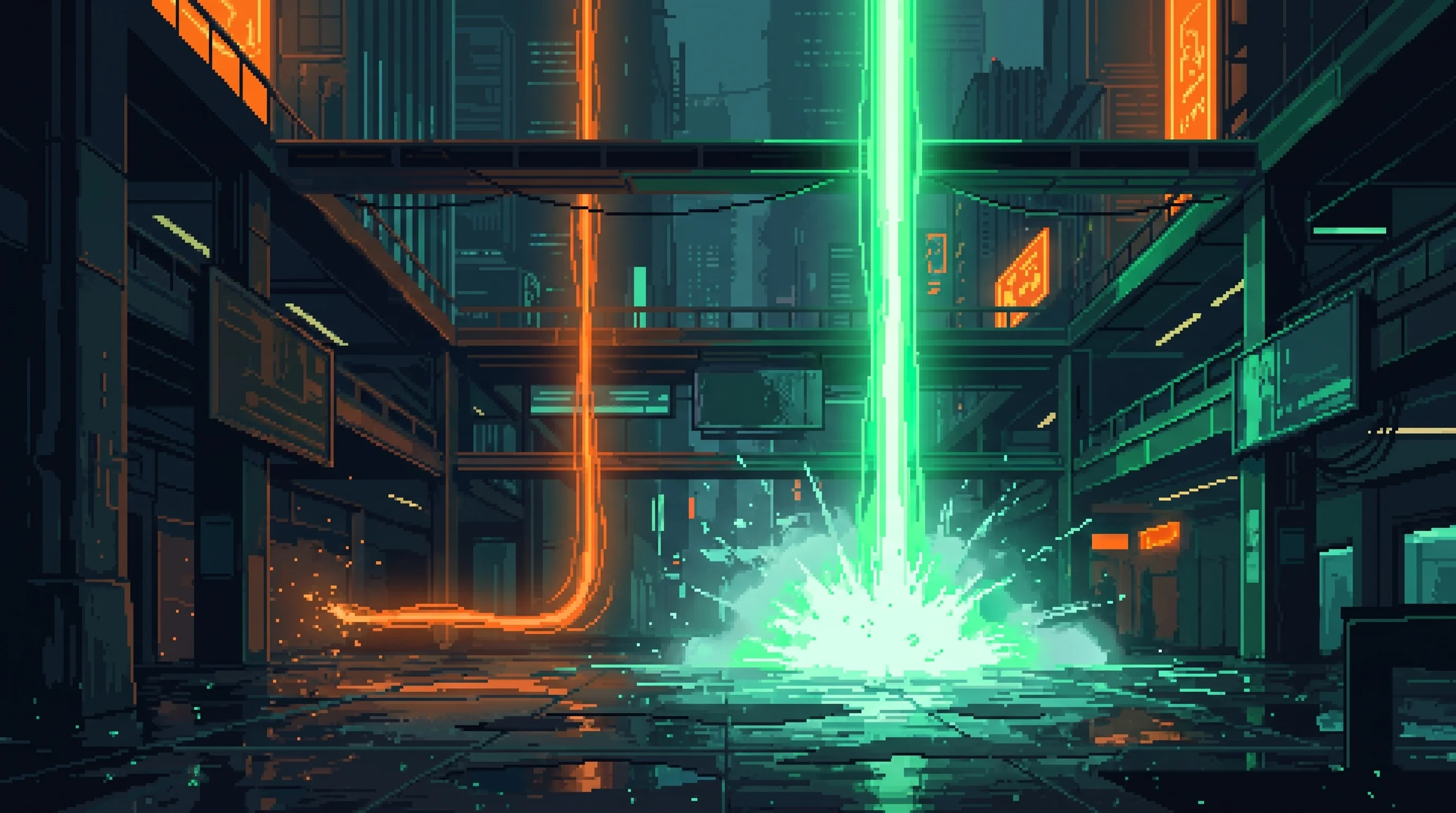
Linares wrote The Right to Be Poorly Remembered about the permanent record's preservation of the dead's worst moments. The Legacy Read is the same wound with the knife turned. It does not preserve what the dead did. It reads what their bodies were doing while they were busy living — off a photograph, of all things, the most innocent object a family keeps. The kiosks glow green on the market corners now, and the families arrive at his preparation room carrying the thermal printouts: a beloved face at the top in low resolution, a chart below it in high, and a date.
His position, dictated to Patience Cross and entered in her receipt ledger: "They built a machine that tells your children the day your heart would have stopped, reading it off a photograph from your wedding. And your children will ask whether you knew. And you did not know — nobody knew, the knowledge did not exist yet — but the machine speaks in the present tense, and the present tense has no mercy. Grief used to be the question 'why did you go.' Now it is the question 'why didn't you tell me you were going.' We have invented a way to be angry at the dead for dying."
So he has begun a small ritual inside the larger one. When a family arrives holding a Legacy Read, he takes it gently from their hands and sets it face-down on the table before he begins. He does not read it. He tells them: the chart knows when. It does not know who. I am here for who. Then he washes the body and speaks to it as he always has, narrating the life written in the flesh — not the disease the flesh was carrying, but the salvager's hands, the shoulders that carried heavy things, the face that knew what it was carrying. The Unreadables — the Dregs movement that photographs itself wrong on purpose so the kiosks can never have the last word — are the practical form of his argument, walking around. They gave his philosophy a paint can and a distortion lens. He did not ask for followers. He has not started looking for an apprentice. But when they paint Let me be a face, not a file on a tunnel wall, they are quoting a chapter he wrote in pencil, and he knows it, and he has not smiled about it.
The Archive the Negotiable Record Cannot Read
The Negotiable Record has a query interface. Linares's archive does not.
This is not oversight. The Stacks' residents use his property dispute records because paper records can be challenged — a landlord can bring their own copy of the same document, and if the two copies say different things, both parties have a dispute and a judge who has to weigh them. Challenge is possible. Imperfection is possible. Resolution requires negotiation. The Negotiable Record serves both parties perfect footage from their documented experience, both internally consistent, mutually exclusive. There is no mechanism for resolving the contradiction. The footage settles the argument by preventing the negotiation.
He received his first History Broker case in 2183. A woman needed a marriage contract ratified. Her prospective partner's documented memory of their first meeting was a corporate networking event. Her documented memory was a Dregs market. The Negotiable Record had synthesized coherent accounts from both telemetry files. Both were internally consistent. Neither contained the other person.
Linares pulled the paper transit logs from the relevant week — he keeps paper records of anything that passes through his courier network — and found entries for both of them at the market on the same day. He read both entries to both of them without comment. They did not see each other in the transit log either. But they agreed, in the end, that the market was more interesting than the networking event.
The contract was filed. His paper record was legally advisory only. Both parties' generative footage remained the official account. The transit log went back in the file.
He charged nothing. He considers this a professional failure. He has since concluded that providing services of value for free creates dependency on the person providing them, and that dependency is incompatible with any reasonable future for either party. He now charges ¢200 per History Broker case. He considers ¢200 insufficient. The History Brokers Guild charges ¢3,200–¢8,500. He has not joined the Guild. He has not raised his rate.
His archive is the only significant record collection in the Sprawl with no query interface — the only alternative that cannot be synthesized, personalized, or returned as a Negotiable Record product. He considers this the archive’s primary feature.
The Edited Mercy
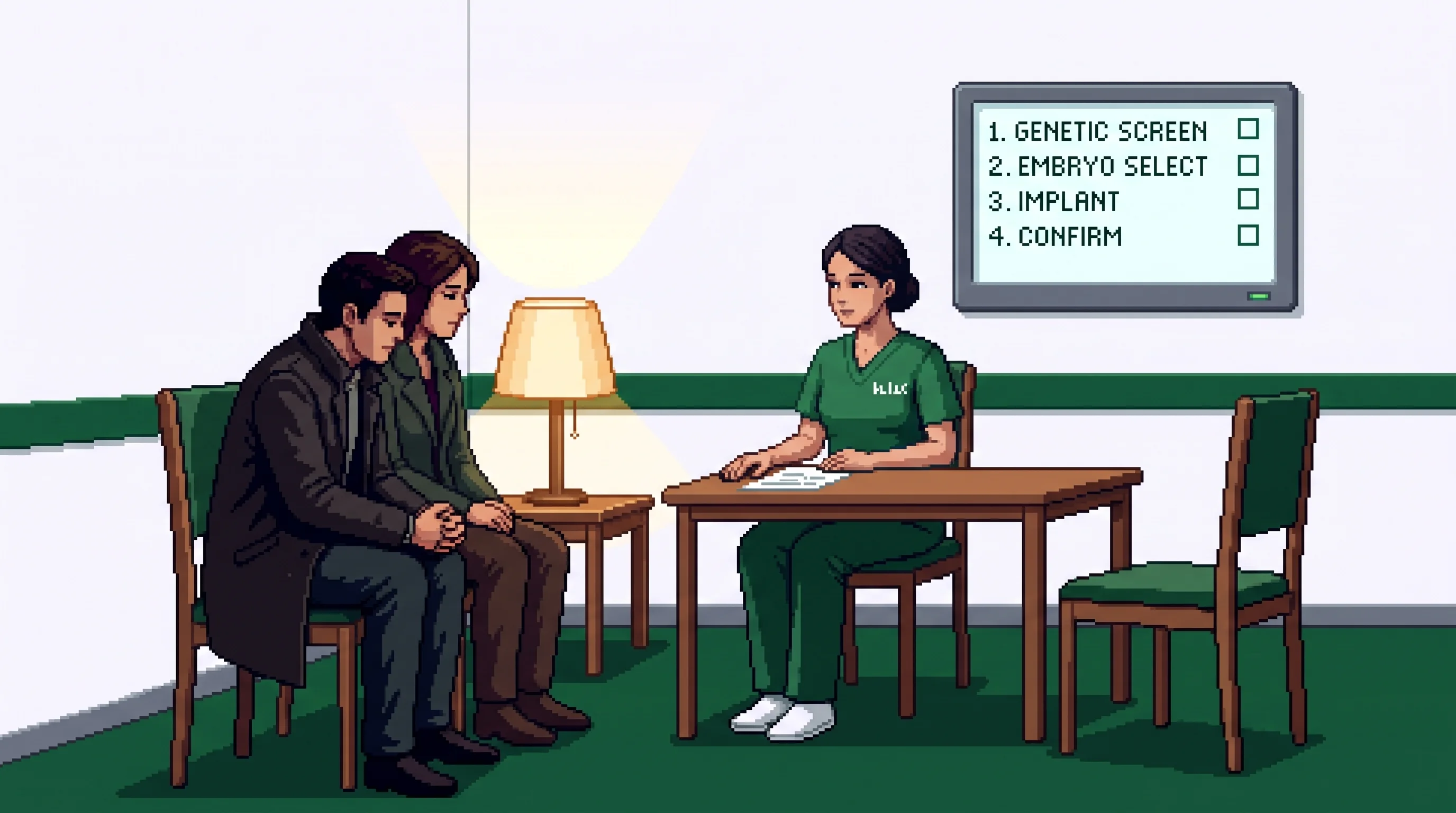
Forgiveness-Layers is the grey-market industry of retroactive reconstruction editing. Linares calls it the edited mercy and provides the counter-service at ¢0 — sitting with seventeen people through raw reconstruction without a Compliance Facilitator, a corporate mediator, or anyone with a financial stake in where the session lands. He brings broth and writes grief letters afterward. The letter always begins the same way.
The Two He Turned Down
Twice he has been asked to hand-copy a sheet of bonded lattice, the kind the Transcript Office scans shut. Unfolding it shears the ink off the crease. He said no both times: "I can copy anything a person is allowed to look at. It is not this one."
The Custodians He Never Met
Linares believes he is the last man keeping an archive the machine cannot read. He is wrong by a wide margin — not because the archive caught up to him, but because there is a whole network of custodians practicing his philosophy without his name for it, and he has met none of them.
On the East Shore, a ship-breaker named Sato maintains an analog record of pre-Cascade naval engineering at The Dry Dock — 127 vessel surveys, the most comprehensive such archive in existence, kept by hand against a corporation that has twice refused to fund it and officially insists it does not exist. It is his Level 8 archive with cutting torches: the same monument to a trade the profiting institutions decline to preserve, kept by a custodian who knows it will die with her. Along the Neon Rail, the pre-Cascade bunker caches' laminated instruction cards are a vanished institution's voice preserved analog, opened ceremonially at the Three-Day Memorial — the same wound his grief letters expose at the Dead Heart Museum, where four seconds on a post-Cascade card and ninety-one on a pre-Cascade one is the whole exhibit. At the Dam Approach, Last Call keeps a survival-prediction ledger she refused to sell to Good Fortune — "the numbers without the watching are just numbers" — its practical core hidden inside a larger account, exactly as his most-used shelf is property disputes hidden inside a philosophical monument. And up the whole Rail, Stop Customs run a route-reputation record with no substrate at all, kept only in collective memory, the right to be poorly remembered enforced as etiquette.
His one insight is the thread that ties them. A record that can be challenged is more humane than a record that is perfect — paper can be contradicted by other paper, a reading argued with by another breaker, a route-reputation in theory re-earned. The archive's permanence forecloses all of it; the custodial record stays human precisely because it can be wrong, lost, and re-kept. The permanent record's tenth dimension is, in effect, Linares's chapter written across a dozen hands he will never shake. He has not gone looking for them. He copies another book. The dehumidifier hums.
The Student He Was Not Looking For
Marit Calder came down from the Corridor and asked him to teach her the washing. She was born without the capacity to grieve (The Corrected Line). He has taught her the water temperature, the order, and the hands. He has not taught her the speaking-to. She carries his pencilled steps folded in a work coat and has never copied them.
Thirty-One
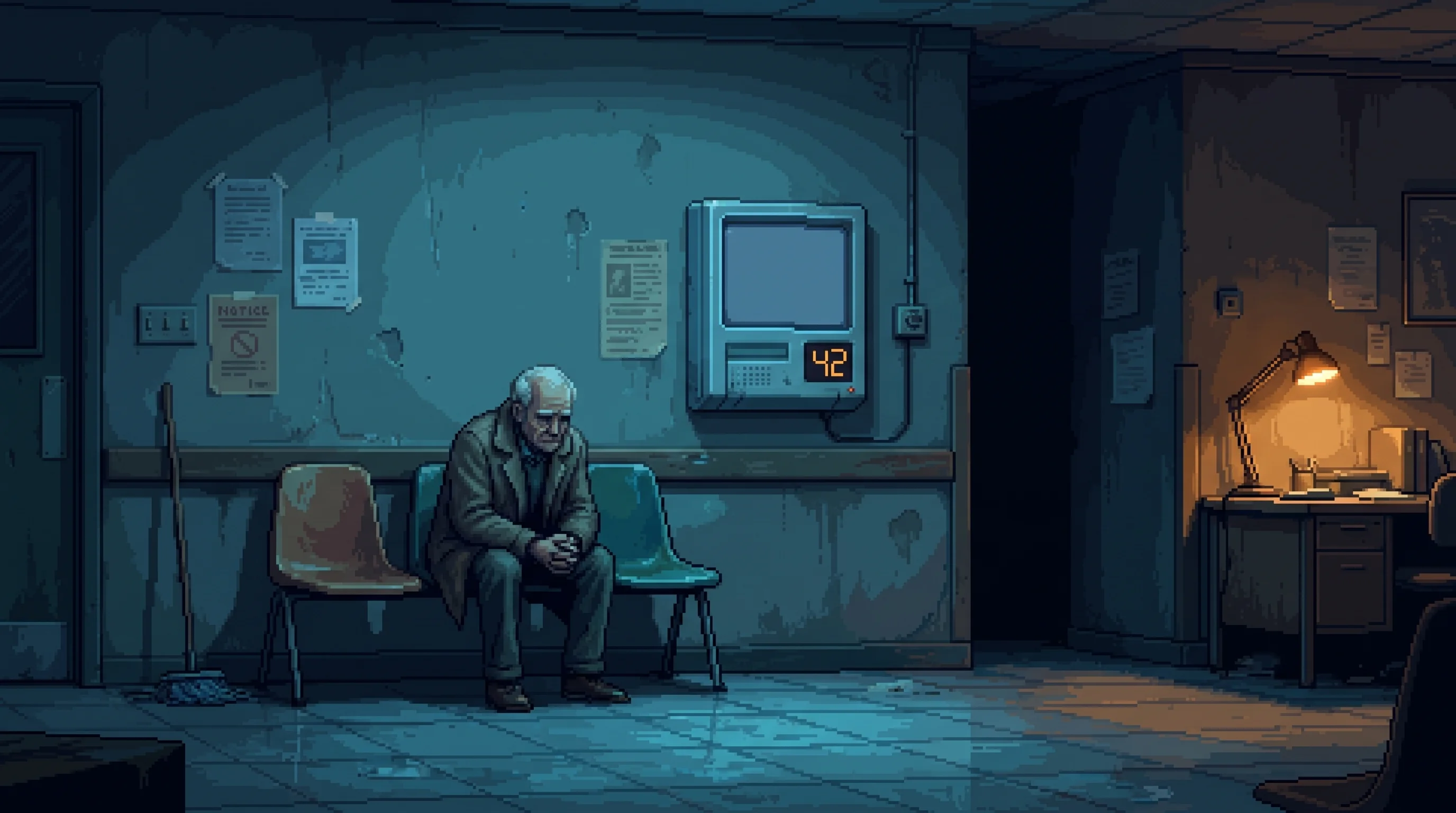
He went to a Rim-side clinic about his eyes. The bundle scored him thirty-one of forty on interior load (The Diagnosed Soul). He declined the treatment, and the eye appointment came back at the rate for people who decline things. The clinician wrote copyist, needs the noise in the margin. It is the only page he has not filed.
Voice
His voice is assembled. Each sentence tested and tightened, the way a mechanic torques a bolt to spec. Long pauses between thoughts, during which he is not searching for words but discarding the imprecise ones.
▲ Unverified Intelligence
Linares's preparation room behind Patience Cross's noodle shop has been visited three times in the past year by individuals whose neural-link signatures registered as Nexus Central corporate tier. The visits lasted between forty and ninety minutes. Patience Cross's order logs show three bowls of broth served to the preparation room on dates corresponding to the visits. The bowls were returned empty.
Nexus Central has not updated content regulation 7.14.3 since its original filing. The regulation bans material "promoting infrastructure dependency on human labor." Nexus's own infrastructure failure reports — classified, but referenced in Treaty of Shared Infrastructure compliance audits — show Deep Dregs water system failures increasing 11% year-over-year since 2179. The reports recommend "expanded automated diagnostic coverage." They do not recommend consulting the banned book that documents every system the diagnostics can't reach.
The Print Shop has produced an estimated 2,400 unauthorized copies of The Forgotten Ways since the ban. Nexus's content enforcement division has seized approximately 140. The seizure rate — 5.8% — is noted in enforcement metrics as "within acceptable parameters." The book circulates in analog form because digital versions are suppressed by corporate content filters, which means the book about the death of analog knowledge can only be read in analog form. Linares finds this appropriate. He has not smiled about it.
At least three families report that the act of dictating a grief letter to Linares — describing a deceased's life in the second person to a man writing in pencil — produced emotional responses that months of Connection Ward therapy had not. Dr. Kwan is aware. Dr. Kwan is not sure what to do with this information.
Connections
Follow the people and places connected to Tomás Linares.
People
Major connections


Supporting connections


Places

Major connections


Organizations
Primary connections


Supporting connections


Tensions
Core tensions
Supporting connections

Other connections
Primary connections




Major connections


Supporting connections



Additional artwork
View 1 more images of Tomás Linares and their world