The Cognitive Bandwidth Brokers are the largest organized black-market consciousness services network in the Dregs
TypeBlack-market consciousness services networkFounded2174 (formalized from earlier informal exchanges)LeaderNoor Bassam (operational founder, not hierarchical leader)Membership~200 licensed brokers, ~1,500 affiliated operators
Scene ReferenceCognitive Bandwidth Brokers
Overview
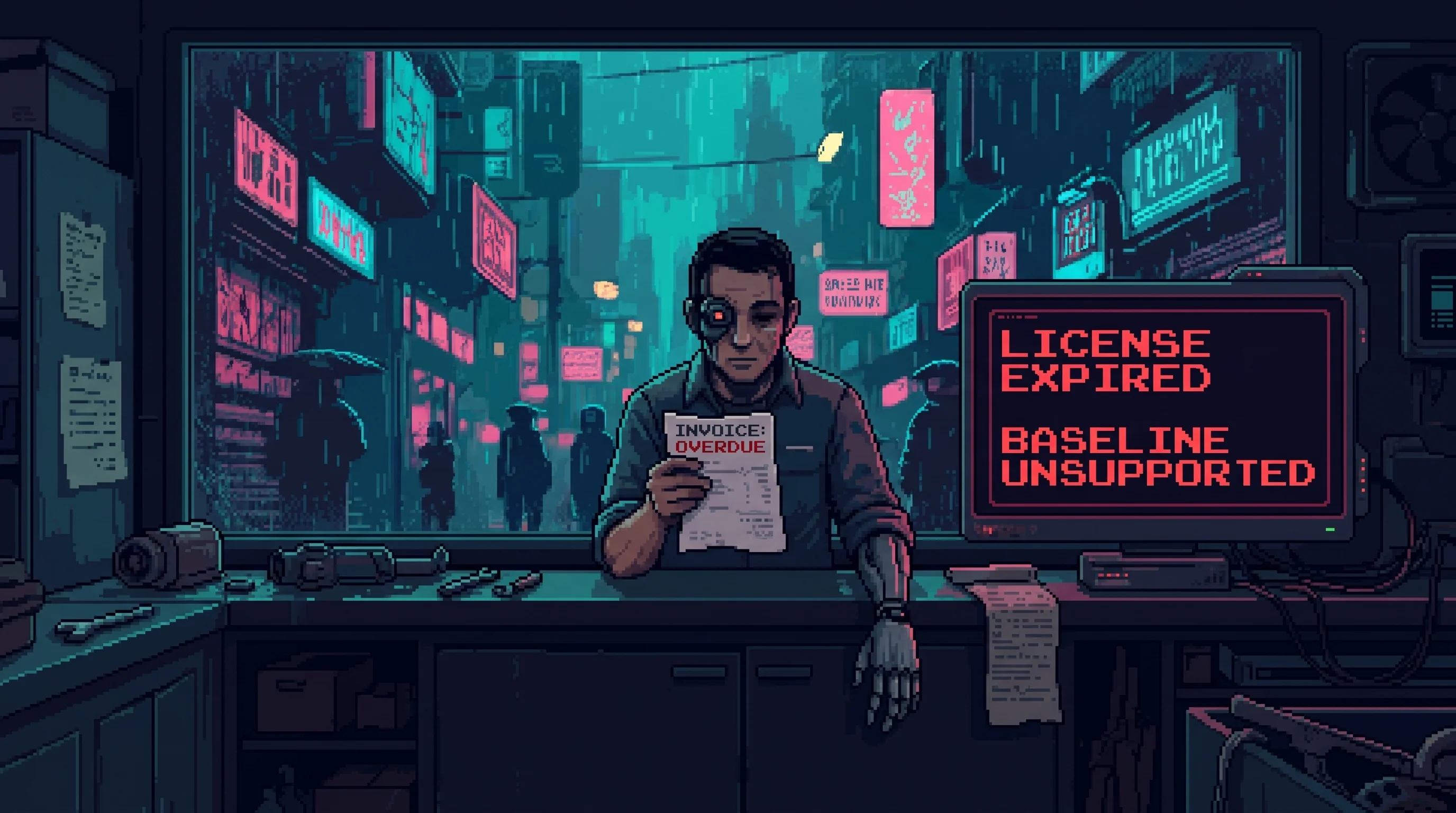
Forty percent of the Dregs population cannot afford Nexus's consciousness licensing fees. This is not a market failure. Nexus's licensing fees are priced correctly for the market Nexus wants to serve. The 40% were never the market.
The unlicensed operators who moved in to fill the gap killed eleven people in the first eight months — bad equipment, no monitoring, donors selling bandwidth while cognitively degraded, buyers seizing mid-transfer with nobody trained to intervene. Noor Bassam, six months out of Nexus's own Licensing Division, sat in a Substrate Row food stall and wrote a set of minimum standards on a physical notepad. The standards were not ambitious. Don't use unsterilized equipment. Don't buy from donors who've sold more than six hours in the past seventy-two. Monitor the client for ninety minutes after the procedure. Disclose your prices before you start.
The standards attracted approximately 200 operators over the next decade. Not because the standards were revolutionary. Because the alternative — operating without them — had a client fatality rate that was bad for repeat business.
The Cognitive Bandwidth Brokers are not a gang, a corporation, or a movement. They are a protocol document, currently in its ninth revision, that any consciousness services operator can adopt. The protocol does not challenge the fundamental economics of selling cognitive capacity. It makes the transaction survivable. Whether "survivable" is the same as "acceptable" is a question the protocol does not ask, because asking it would not change the answer and would not reduce the client queue outside the amber-circle clinics on Substrate Row.
Case File — Additional Record
Territory
Substrate Row (primary), with cells in 14 Dregs sectors
Revenue
Estimated ¢800M annually (unaudited)
Structure
The Protocol
The Broker Protocol governs everything. Nine revisions deep, printed on physical paper, distributed by courier. No digital copies. The document covers:
Equipment standards. Minimum calibration for neural interface hardware. Sterilization procedures. Diagnostic monitoring during procedures. Three of the CBB's five client fatalities in 2183 occurred during memory modification — the least standardized service category and the one where the protocol's equipment requirements are, by Noor's own admission, "aspirational."
Pricing transparency. All fees disclosed before procedure. No hidden charges. No debt bondage arrangements. This rule was added in the third revision, after an operator in Sector 11 introduced a "recovery surcharge" that converted bandwidth purchases into rolling credit obligations. Good Fortune's actuarial division would have recognized the structure immediately. The operator lost the amber circle within a week. His client base followed.
Donor protections. Bandwidth donors must be lucid at time of consent. No purchasing from donors who have sold more than six hours in the past seventy-two. No purchasing from donors showing signs of cognitive degradation. The protocol defines "signs of cognitive degradation" across fourteen observable indicators. Enforcement relies on the broker's judgment. The protocol does not address what happens when the broker's judgment is compromised by the 15% commission on the transaction.
Recovery obligations. Post-procedure monitoring for ninety minutes minimum. Access to recovery space — the Cots on Substrate Row, or equivalent in satellite locations. In practice, the Forgotten Ones' volunteer care workers under Sister Catherine-7 provide the majority of post-procedure recovery monitoring. Without Catherine-7's network, the CBB's donor protection commitments would require a staffing budget the protocol's 15% commission cannot fund. The protocol lists recovery obligations as a broker responsibility. The brokers list them as a Forgotten Ones responsibility. Catherine-7 lists them as God's work. The clients list them as "the cots."
Data handling. Client records destroyed after thirty days. No selling client data to third parties. This is the rule the CBB follows most reliably, because it is the rule Nexus would exploit most aggressively if they didn't.
Noor's Role
Noor Bassam holds no formal authority. She cannot order anyone to do anything. She can revoke the amber circle.
This distinction matters to Noor. It does not matter to anyone else. In the three cases where an operator lost the amber circle, client volume dropped to zero within a week. Revocation is functionally a death sentence for the operator's livelihood — delivered without hierarchy, without structure, without anyone giving an order. The protocol giveth. The protocol taketh away. Noor is merely the protocol's custodian, in the same way a judge is merely the law's custodian, in the same way Nexus is merely the market's custodian.
She maintains this position through competence. The brokers follow her standards because amber-circle clinics post a 97% successful transaction rate against 71% for non-affiliated operators. The gap is twenty-six percentage points. It is also, by any honest assessment, too large to be explained by sterilization procedures and ninety-minute monitoring windows alone. Something in Noor's equipment sourcing or calibration methodology produces outcomes that the published protocol cannot replicate. She has not shared this technique with all affiliates. She has not explained why.
The Cells
Beyond Substrate Row, the CBB operates in fourteen Dregs sectors through semi-independent cells — small groups of three to eight operators who follow the protocol but adapt to local conditions. Some sectors have permanent clinics. Others run mobile operations that relocate ahead of Nexus patrols. Two cells operate exclusively through dead-drop equipment caches that clients use for self-administered bandwidth transactions, which the protocol technically prohibits and Noor technically does not know about.
Cell communication runs through physical courier networks — teenagers in unmarked clothing carrying sealed message tubes that look like water bottles. Monthly protocol updates, supply requests, and client outcome data travel through a chain that Noor's logistics coordinator, Priya Okafor, manages with the precision of someone who spent eleven years in Ironclad's supply chain division before discovering that her skills commanded a higher premium in markets Ironclad preferred not to acknowledge.
Founded by Noor Bassam in 2174 after her defection from Nexus Dynamics Licensing Division
Services
Bandwidth Trading (70% of Revenue)
The core business. Donors sell cognitive processing cycles from their neural interfaces. Buyers purchase temporary bandwidth upgrades. The CBB facilitates, verifies, monitors, and takes 15%.
Prices undercut Nexus licensing by 75–90%. The savings come from stolen equipment, zero regulatory overhead, and the absence of anyone expecting a return on investment. Nexus's licensing fees include infrastructure maintenance, regulatory compliance, insurance reserves, and a 340% margin that internal documents describe as "market-appropriate." The CBB's fees include antiseptic, a curtain partition, and Noor's protocol. The client outcome gap — 97% versus 71% in favor of the cheaper, unlicensed option — has not prompted Nexus to revisit its pricing. It has prompted Nexus to fund more raids.
Memory Modification (15% of Revenue)
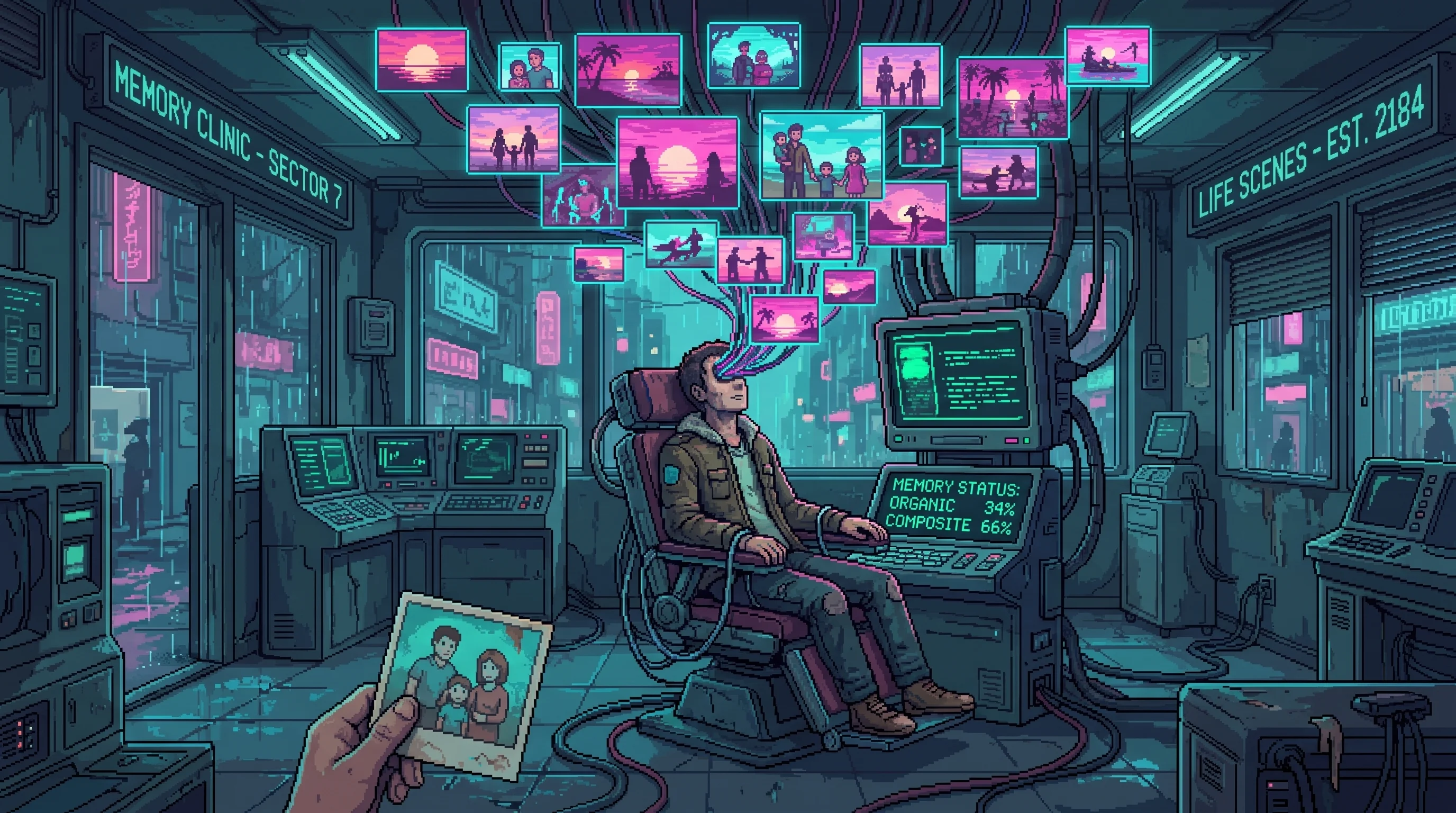
Suppression, enhancement, selective deletion. The network's least standardized service and the one that generates the most interesting incident reports. Three of five client fatalities in 2183. The protocol's memory-modification appendix runs fourteen pages. The actual procedures vary by operator, by sector, by what equipment was available that week. A client requesting selective deletion of a traumatic memory in a Sector 9 cell receives a meaningfully different procedure than one requesting the same service on Substrate Row. Both operators display the amber circle. Both follow the protocol. The protocol is not the variable.
Neural Repair (10% of Revenue)
Diagnostic and repair services for damaged neural interfaces — often damage caused by unlicensed procedures performed outside the network. This service functions as both healthcare and client acquisition. The conversion rate from repair patient to bandwidth customer is not tracked in any official document. Noor's personal notes, written in the same precise engineer's script as the original protocol, record it at 34%.
Referrals (5% of Revenue)
The CBB does not perform consciousness transfers, fork creation, or substrate migration. Clients requesting these services are referred to Ferryman Network operators at the Deep End — the Symbiosis Network's edge-case specialists who handle work too dangerous for standard brokers. The CBB takes a 5% referral fee. The arrangement keeps the network out of the highest-risk services while maintaining a revenue thread into the market segment most likely to produce the kind of incident that Nexus uses to justify raids. The relationship with the Ferrymen is professional, cautious, and characterized by the specific warmth of two organizations that need each other and wish they didn't.
The network operates under a decentralized protocol system — no hierarchy, just shared standards
The Unlicensed Excavation
Memory Modification's fourteen-page protocol appendix does not mention Dr. Aris Kwan's Origin Trace, and no amber-circle broker has been trained in it. That gap is not an oversight. Origin Trace methodology requires equipment calibration and diagnostic hours the CBB's 15% commission cannot fund, and the Memory Therapists Association charges 200 to 500 credits a session for exactly the excavation a CBB client needs and cannot afford twice.
The two organizations occupy the same clinical territory from opposite floors. The MTA treats origin blindness with backward-tracing archaeology, months of sessions, and a founding charter that promises patient-centered care. The CBB performs the extraction and installation the MTA later has to unwind, with a protocol appendix that governs equipment sterilization and says nothing about what happens to a mind after the procedure works. Noor Bassam has never contacted the Association. The Association has never referred a patient to Substrate Row. Both sides suspect the other's client list overlaps with their own by a margin neither has measured, because measuring it would mean admitting that the amber circle's 97% "successful transaction" rate and the Origin Trace's 34% organic-content finding describe the same population from either end of the same neural interface.
The Amber Circle
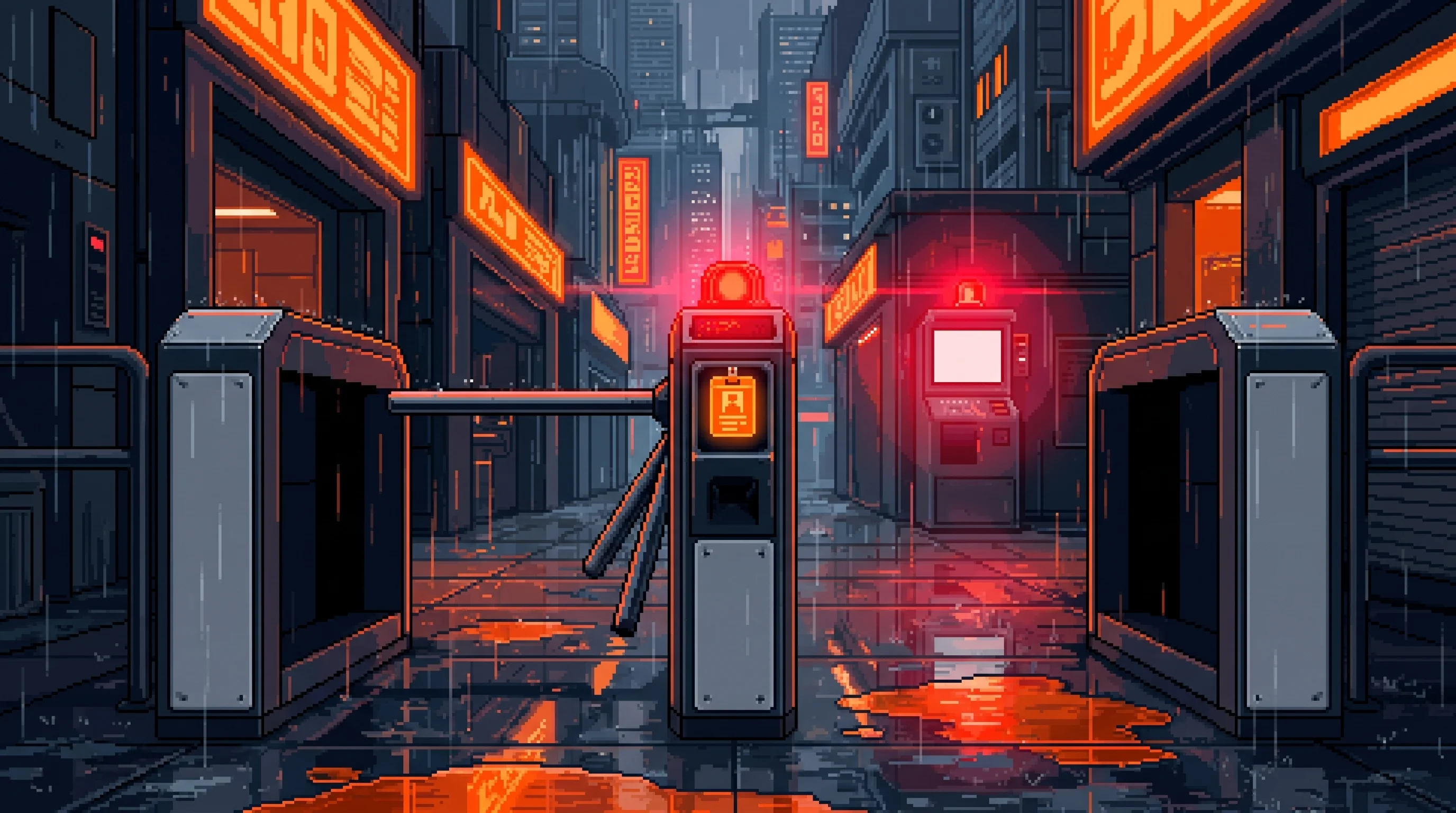
A simple amber circle, painted or projected at clinic entrances. The Dregs' most recognized symbol of black-market reliability. Its meaning is specific: this operator follows the protocol. This operator has a 97% chance of not killing you through negligence. That the Dregs' most trusted healthcare symbol communicates "probably survivable" says less about the CBB than about the baseline it improved upon.
Unauthorized operators began painting amber circles on their own doorways within eighteen months of the symbol's adoption. Noor's response was pragmatic. Rather than fighting counterfeits, she introduced a physical verification registry maintained at three locations on Substrate Row. Analog by design. No digital trail for Nexus to trace. Clients can confirm amber-circle status by checking the registry in person, which requires walking to Substrate Row, which means the verification system is used primarily by people who were already on Substrate Row, which means the outlying sectors run largely on trust. The counterfeits persist. The 97% rate applies only to verified clinics. The 71% rate includes everything else. Nobody publishes the rate for counterfeits specifically. The number is available. Nobody has requested it.
The amber circle is the network's informal logo — clinics displaying it meet Noor's quality and safety requirements
Affiliated Entities
Noor Bassam: Founder, protocol author, quality enforcer. The network assembled around her standards the way a market assembles around a currency — not because she demanded it, but because the alternative was worse.
Substrate Row: Three of the Row's twelve major clinics operate under the amber circle. The CBB is the Row's quality backbone, and the Row is where the protocol has teeth.
The Forgotten Ones: Sister Catherine-7's volunteers provide post-procedure recovery care that the network's commission structure cannot fund independently. The relationship is symbiotic, essential, and unacknowledged in the protocol document.
The Symbiosis Network: Ferryman operators at the Deep End handle consciousness transfers and substrate migration — services too dangerous for standard brokers. Referral-based, arm's-length, mutually profitable.
Nexus Dynamics: The existential threat. Every CBB transaction is revenue Nexus didn't collect. Nexus tolerates the network because the alternative — a return to the pre-protocol unlicensed chaos — would produce headlines. Tolerance is not acceptance. The distinction surfaces during quarterly raid cycles.
Good Fortune: Funds Nexus's periodic raids against the network. Every unlicensed bandwidth transaction is a financial event that didn't flow through Good Fortune's infrastructure, which means Good Fortune's actuarial models predicted revenue that didn't arrive, which means someone's quarterly projections are wrong, which means someone is motivated to make the CBB's clients into Good Fortune's clients by eliminating the alternative. The raids are expensed under "market correction."
The Collective: No relationship. The CBB has no ideology. The Collective has no interest in organizations that stabilize systems the Collective wants dismantled.
The Lamplighters / Coolant Guild: Shared infrastructure-maintenance ethos. Different corridors, compatible priorities, occasional resource trades when a cell needs thermal regulation for sensitive equipment.
Memory Therapists Association: Occupies the same clinical territory from the opposite floor: unlicensed extraction on Substrate Row, licensed excavation at the Continuity Center, treating overlapping patients neither organization has ever formally compared notes on.
The CBB exists because 40% of the Dregs population can't afford Nexus's consciousness licensing fees
Restricted Access
The Ninth Protocol. The current revision contains a classified appendix — Protocol Nine — that only Noor and her three most trusted brokers have read. No copies circulate. Speculation among the network's operators ranges from emergency shutdown procedures to evidence caches documenting Nexus licensing violations serious enough to bring down the division. Noor's refusal to discuss it has elevated Protocol Nine to something between institutional myth and insurance policy. The three brokers who have read it do not speculate. They do not discuss it at all.
The Quality Gap. Twenty-six percentage points between amber-circle clinics and the rest. The protocol accounts for perhaps half of that. Sterilization, monitoring, donor screening — these prevent the worst outcomes. They do not explain a 97% success rate on equipment that was stolen or salvaged, operated by practitioners with no formal certification, in facilities that would fail every Nexus inspection criterion. Noor's personal equipment calibration methodology — the specific way she configures stolen Nexus hardware before distributing it to amber-circle clinics — is documented in her own notes and nowhere else. Whether the gap represents genuine technical innovation or a supply chain advantage she cannot share without exposing its source is a question she has answered by not answering it.
The Corporate Clients. At least twelve Professional-tier consciousness license holders — people who can afford Nexus rates — use CBB services to supplement their licensed bandwidth. They pay the same 15% commission as Dregs residents. They do not come for the price. They come because CBB bandwidth is unmonitored — Nexus cannot see what they use it for, or how much they use, or when. Noor maintains their identities in a physical ledger she considers her most valuable asset. The ledger is not leverage. It is insurance. The distinction depends on whether Nexus ever succeeds in shutting down the network, at which point the distinction will evaporate and the ledger will become whatever it needs to become.
Sensory Details
Sight: The amber circle glowing at a clinic entrance — warm, steady, the only color in the sub-level corridor that isn't industrial gray or biological stain
Smell: Antiseptic cutting through corridor cooking oil. The CBB's aesthetic captured in a single breath — clinical intention layered over the reality of where the clinics actually are
Sound: Neural monitoring equipment beeping in syncopated rhythms behind curtain partitions. The beeps are steady when things go well. Nobody describes the sound when they don't
Touch: Noor's protocol revisions — precise, small engineer's script on salvaged paper, the ink slightly raised where the pen pressed hard on a sentence she revised three times
The couriers: Teenagers in unmarked clothing, sealed message tubes that look like water bottles, moving through the Dregs at a pace that suggests neither urgency nor leisure — the specific speed of someone who is not being followed and intends to keep it that way
Visual Identity
Color Palette: Amber (#FFB000) against Dregs industrial gray (#4A4A4A) and clinical white (#F5F5F5)
Compositional Mood: Competent improvisation — not chaos, not sterility, but salvaged equipment arranged with care by someone who knows which corners can be cut and which ones kill people
Key Visual Symbol: The amber circle — painted, projected, counterfeited, verified, trusted
Lighting: Warm amber from clinic entrances cutting through the perpetual dim of sub-level corridors — the only warm light source in blocks of fluorescent gray