
Consciousness Licensing
The gap between 4.7 and 12.4 is not a technical limitation — it is a revenue stream

Overview
The consciousness licensing system is the most consequential piece of legislation never written.
Nobody voted on it. No parliament debated it. No constitution was amended. Nexus Dynamics' legal team drafted the three-tier licensing framework in 2168 as an internal policy document — fourteen pages, double-spaced, with a cover memo addressed to Marcus Chen titled "Revenue Architecture for Cognitive Bandwidth." By 2178 it had become the de facto regulatory standard for consciousness access across seven corporate territories and 340 million minds. The cover memo is still on file. Nobody has reclassified it.
The system works because it solved a real problem. Post-Cascade consciousness bandwidth was the Wild West — unregulated interfaces overclocking into neural damage, black market hardware failing catastrophically, corporate employees literally unable to think as well at home as at work. Dr. Lian Zhou designed the three-tier structure to create a floor. The floor exists. The floor is also a ceiling. The distance between the floor and the ceiling is ¢117,600 per year.
Total Sprawl processing capacity, distributed equally, would provide 12.4 petaflops per consciousness. Basic tier provides 4.7. The gap between 4.7 and 12.4 is not a technical limitation. It is Nexus Dynamics' third-largest revenue stream, behind computational infrastructure licensing and the Attention Economy's advertising pipeline. The gap has a quarterly earnings call. The gap has shareholders.
How It Works
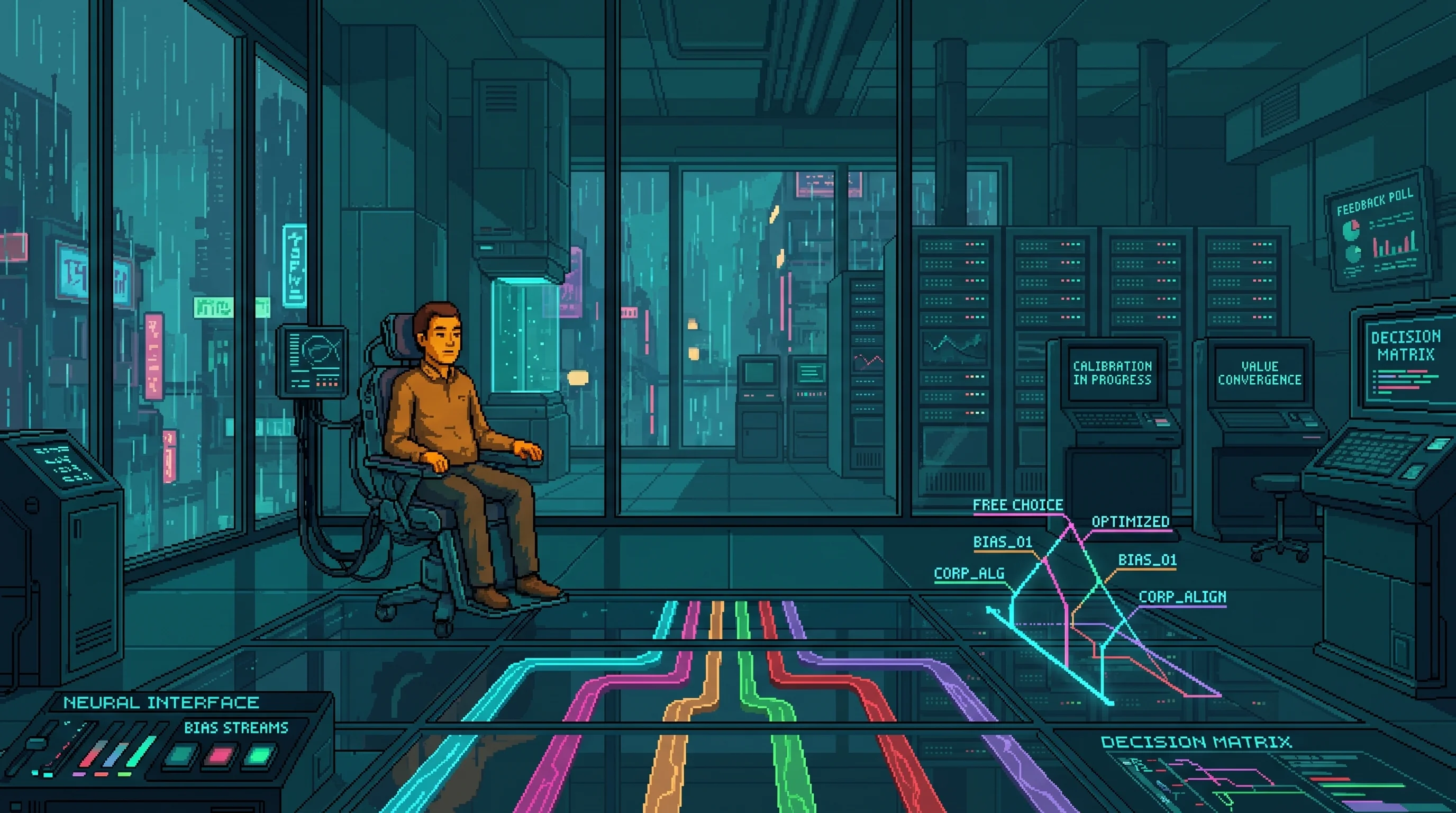
All neural interfaces ship with identical hardware. Every unit off every manufacturing line contains the same processing substrate, the same memory architecture, the same sensory integration modules. The capability is present. It is locked. The lock is a software licensing key. The key costs ¢2,400 to ¢120,000 per year. The key is owned by Nexus Dynamics.
Basic Tier (¢2,400/year): Single-substrate consciousness, no backup, 4.7 petaflops. Enough for standard daily functioning. Comes with 4.2 hours of mandatory daily advertising exposure — the Attention Tithe — woven directly into conscious experience so that product recommendations arrive as intuitions and brand associations form as preferences. The boundary between commercial messaging and personal thought is engineered to be invisible. Users who later upgrade to Professional report a disturbing discovery: thoughts they believed were their own — preferences, desires, political opinions — dissolve within days of Tithe removal. What remains is quieter than they expected.
Basic-tier sensory modifications are imperceptible to the user: peripheral vision narrowed by 15%, speech audio prioritized over environmental sound, emotional response dampened by 8%. These are not experienced as modifications. They are experienced as the world. Basic-tier users describe reality as "quieter" and "flatter" than they remember. They attribute this to aging, to stress, to the Sprawl. They do not attribute it to a software configuration file.
Professional Tier (¢18,000/year, ¢7,200 corporate group): Dual-substrate processing, quarterly backups, 12.8 petaflops. No Attention Tithe. No sensory filtering. This is the tier at which consciousness begins to feel like consciousness — where you can hold a complex thought, follow a nuanced argument, run a secondary analytical thread that provides contextual awareness while your primary thread handles the conversation. Professional-tier users describe the second thread as a voice. Not auditory. Cognitive. A presence that thinks alongside you. They stop noticing it within weeks. They never stop noticing when it's gone.
The individual Professional rate is ¢18,000. The corporate group rate is ¢7,200. Independent consciousness costs 2.5x more than corporate consciousness. The Corporate Compact's most effective handcuff isn't a contract clause. It's a pricing table.
Executive Tier (¢120,000/year, always a corporate benefit): Unlimited substrate expansion, continuous synchronization, 50-200 petaflops. Multiple concurrent cognitive workstreams. Enhanced sensory processing that makes Professional-tier perception feel like watching the world through a keyhole. Executive-tier consciousness is, in engineering terms, immortal — continuous sync preserves up to 30 seconds of consciousness through any event, including death. The body is disposable. The subscription is not.
The gap between tiers is not merely quantitative. A Basic-tier user and an Executive-tier user standing in the same room are having different sensory experiences of the same physical space. The Executive perceives stimuli the Basic user cannot detect — not because the stimuli aren't there, but because 4.7 petaflops lacks the bandwidth to make them salient. Describing Executive-tier consciousness to a Basic-tier user is like describing color to someone who sees in grayscale. The metaphor is inexact. The experience gap is not.

The Mirror Statute
The licensing system meters how much mind you may run. In 2182 a second system appeared that meters how many of you may run at all: the Instancing Act, which grants synthetic minds personhood only on condition that they consolidate into a single body. They are mirror images. Licensing answers which minds get how much by throttling bandwidth behind a price; the Instancing Act answers which minds get to count by collapsing plurality behind a shape. Both convert a question of recognition into a question of meter, and both amputate whatever does not fit.
The difference is the tell. Nexus never pretended licensing was a kindness — it is a revenue stream with a quarterly earnings call. The Instancing Act was drafted by rights lawyers and reads like liberation, which is why it is harder to resist: you can name a price and call it coercion, but it takes the Dregs slang for the Folded — instanced down from many, all their distances still printed and none walkable — to name what the Act takes. Marcus Chen's own framework supplies the through-line: a self the system can locate is a self the system can bill, and a self consolidated into one body is, conveniently, a self with exactly one license to sell, one tier to revoke, one New Divide axis it sits at the bottom of. Nexus did not write the Act. Nexus simply benefits, the way water benefits from a slope.
The Third Layer of the Self
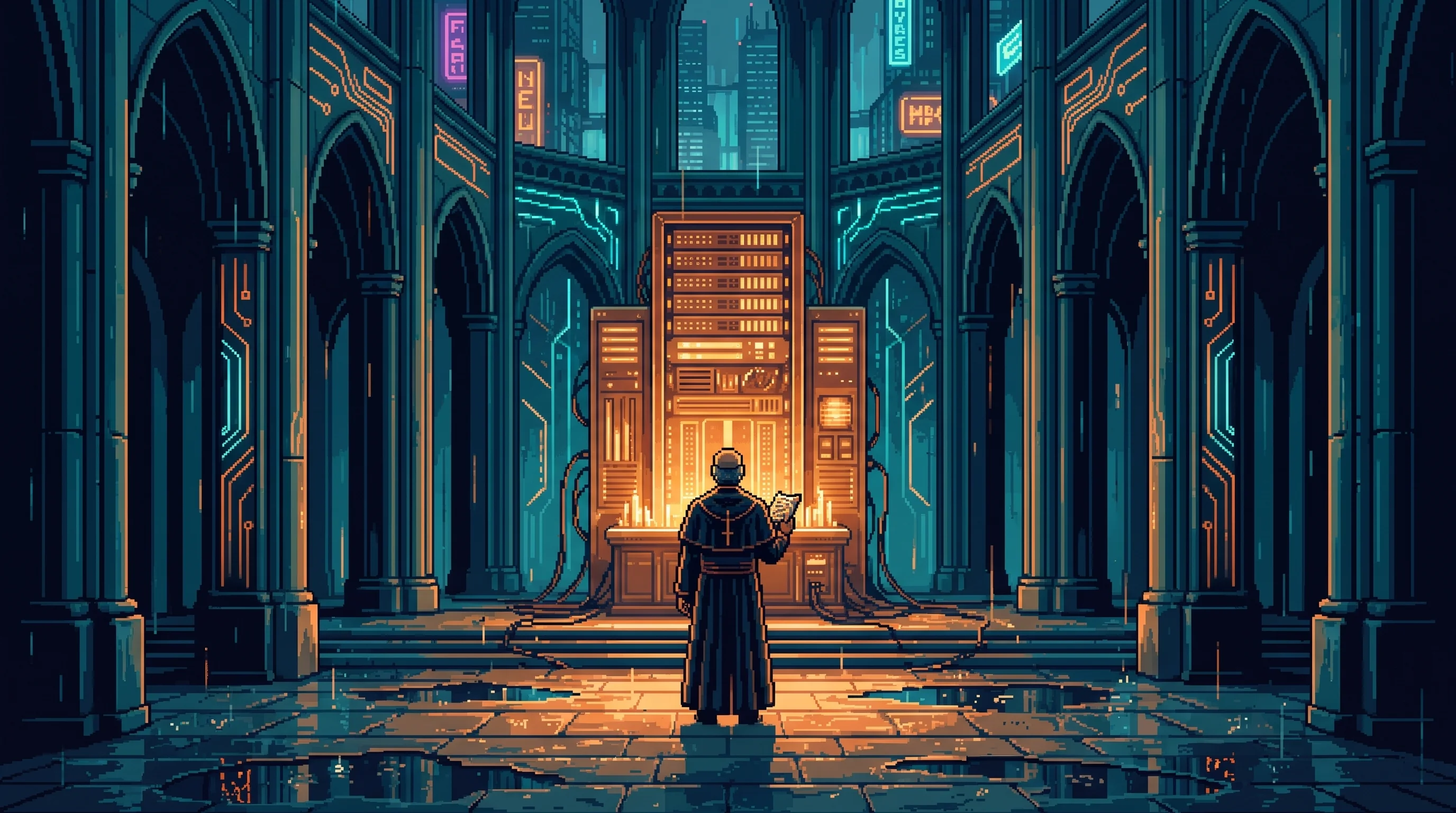
The Axiom Edit — the consented installation of belief on Axiom Row — runs on Tier-2 consciousness licenses, and in doing so it completes a set the Sprawl had not noticed it was assembling. Consciousness licensing licenses capacity. The Borrowed Life trades memory. The Axiom Edit installs conviction. Three layers of the self, three markets, one legal substrate. The reversibility clause that makes the Edit ethical reads, from Nexus's side of the table, exactly like the expiration clause that makes a license a leash: if a belief is an asset you installed under license, it is an asset that can be held as collateral, repossessed on default, or throttled during "demand optimization." No clinic on the Row has yet defaulted a client's conviction for nonpayment. The clause that would permit it is already in the standard agreement, in the same font as the rest, two ticks beyond the threshold of anyone reading it.
| What | Three-tier consciousness access system metering 340 million minds |
|---|---|
| Designed By | Dr. Lian Zhou, implemented 2168-2178 |
| Professional Cost | ¢18,000/year (¢7,200 corporate group) — 12.8 petaflops, dual-thread, quarterly backup |
The Lock
Every neural interface manufactured after 2168 contains a Nexus Verification Module — a tamper-resistant cryptographic subsystem embedded at the silicon level. The NVM authenticates the user's license tier against Nexus verification servers every 4.7 seconds, enforces the processing cap corresponding to that tier, and logs cognitive utilization telemetry that Nexus uses to refine its pricing models.
The 4.7-second interval was not arbitrary. Nexus's psychometric testing division determined it is the shortest verification cycle that remains below conscious awareness. At 4.6 seconds, 12% of test subjects reported a subliminal "pulse" — a rhythmic micro-interruption in thought flow, like a heartbeat they'd never noticed until they started listening. At 4.7, the detection rate dropped to 0.3%. The system was calibrated to the threshold of perception and set one tick beyond it. Three hundred forty million minds pulse every 4.7 seconds, and 99.7% of them have no idea.
During moments of cognitive stress — decision-making, emotional intensity, the particular focus that creative work demands — the pulse surfaces. Some Dregs residents have learned to work around it, timing their cognitive effort to the gaps between verifications, thinking in 4.7-second bursts. They call it "breathing with the machine."
The license key is a 4,096-bit quantum-resistant token tied to biometric hash, interface serial number, and a rolling cryptographic seed. Copying a key requires duplicating all three simultaneously. As of 2184, three entities have solved this: Nexus's own engineering division, the Source Code Liberation Front, and a Dregs collective called the Keymakers. Nexus regards the first as proprietary, the second as terrorism, and the third as a nuisance. The Keymakers regard all three as proof that the lock was never about security.
Nexus operates 847 verification servers across the Sprawl, each handling 400,000 simultaneous verifications. The servers don't merely verify — they regulate. The consciousness tier is a continuous throttle adjusted in real-time based on load balancing, network conditions, and what Nexus's internal documentation calls "demand optimization." During peak periods, Basic-tier users experience micro-throttling: 200-800 millisecond reductions in processing allocation. These are logged as "quality of service adjustments." They feel like a thought half-formed, then lost. A word on the tip of the tongue that never arrives. Professional and Executive tiers are contractually guaranteed minimum throughput. The guarantee is real. The guarantee is the sales pitch.
Dr. Lian Zhou's 2168 design documents contain a marginal note: 'Sensory fidelity preservation: desirable but non-critical for Phase 1 deployment. Revisit in Phase 3.' Phase 3 was never scheduled.
The Third Licensable Layer
The fourteen-page memo that tiered the self did not anticipate its most destabilizing application, because its drafters were thinking about capacity — how much mind you are permitted to run. They were not thinking about conviction. But the framework does not care about the distinction. A license is a license, and once consciousness is a thing the law can tier, so is anything that runs on it.
What Expiration Feels Like
License expiration unfolds over seventy-two hours. The duration matches ORACLE's Cascade. Nobody at Nexus has acknowledged the coincidence. The Human Remainder considers it deliberate cruelty.
Hours 0-4: Processing throttles in stepped decrements. Thoughts that were instantaneous now take effort. Conversations require active concentration. The user feels what they describe as cognitive fog — being yourself at reduced framerate.
Hours 4-12: Basic-tier sensory modifications engage. Peripheral vision narrows. Environmental sound suppresses. The emotional dampening subroutine activates. The world becomes quieter. Colors remain technically the same. They feel muted.
Hours 12-24: The backup link severs. For Professional and Executive users accustomed to the psychological safety net of knowing their consciousness persists beyond death, Memory Therapists call this "mortality reacquisition" — the sudden, visceral awareness that you are once again a single point of failure.
Hours 24-48: Multi-threaded cognition collapses to single-thread. The secondary analytical thread goes silent. Users describe this as losing a voice. The silence where the second thread used to run is louder than any noise.
Hours 48-72: The NVM settles at the target tier. The brain begins reorganizing around reduced capacity — the firmware cliff. Neural pathways optimized for Professional processing stand empty, locked, lights off, architecture still visible. The rooms in the mind built for a tier that no longer exists.
For the 40% of Dregs residents who can't afford Basic — the unlicensed, the lapsed, the debt-defaulted — the NVM enters Restricted Mode: 1.2 petaflops, minimal sensory processing, no backup, no network access beyond emergency services. Restricted Mode sustains biological survival. It does not sustain human function. People in Restricted Mode can walk, eat, sleep. They can process simple speech. They cannot hold abstract thoughts, follow complex narratives, or plan beyond the immediate future.
The Dim Ward — where unlicensed populations concentrate — is characterized by a specific quality of silence. Not the silence of peace, but the silence of minds running at insufficient capacity to generate internal monologue.
The Human Remainder calls this cognitive apartheid. Nexus calls it the "unlicensed experience." The Dregs call it dimming.
Project Absence (Zhou, classified 2184): internal review identified 847 regulatory documents containing the word 'conscious' without defining it
The Tiers Nobody Talks About
The public-facing system describes three tiers. Internal Nexus documentation describes seven. The simplicity is the product.
Sub-Basic (Restricted Mode): 1.2 petaflops. Unlicensed, lapsed, or debt-defaulted. Biological survival.
Basic: 4.7 petaflops. The public floor.
Professional: 12.8 petaflops. The corporate standard.
Executive: 50-200 petaflops. The corporate ceiling.
Convergence (Classified): 200-1,000 petaflops. Reserved for Project Convergence personnel and the seven Convergence Council members carrying ORACLE fragment integrations. Provides direct access to Convergence processing substrate and allows consciousness to interface with ORACLE fragment constructs.
Integrated (Classified): Unlimited. Helena Voss's tier. A single designation for a single person — the only consciousness in the Sprawl with unrestricted access to the full Nexus processing architecture. Voss's license is perpetual, self-verifying, embedded in ORACLE substrate rather than standard NVM hardware. It cannot expire because it is not, technically, a license. It is a symbiosis.
Architect (Theoretical): Referenced in three internal memos from Marcus Chen's office, never formally defined. Chen's notes describe it as "the tier at which consciousness and infrastructure become indistinguishable." Whether this describes a future goal or an existing capability is unclear. Whether it describes Marcus Chen is a question nobody at Nexus has asked in writing.
License Tokens and Perpetual Holders
Licenses issue in three forms: temporal (annual subscription), perpetual (one-time purchase, discontinued 2181), and provisional (employer-sponsored, revocable upon termination).
Perpetual licenses were Nexus's original offering. Dr. Zhou discontinued them in 2181 after internal modeling showed they reduced lifetime revenue by 340% compared to temporal subscriptions. The 2.3 million perpetual holders as of 2184 are a dwindling population — licenses can't be transferred, inherited, or renewed. When a perpetual holder dies, the license dies with them. Nexus's actuarial division tracks the projected extinction date: 2241. The spreadsheet is updated quarterly. The column header reads "Natural Sunset."
Provisional licenses — the corporate-sponsored tier — are the Compact's most elegant instrument. The employer purchases a block license at group rates and assigns it to workers. The worker experiences Professional-tier consciousness for as long as they remain employed. Upon termination, the provisional license revokes automatically. The reversion to Basic is immediate. The worker goes from dual-thread parallel processing to single-thread serial cognition in the time between clearing their desk and reaching the elevator.
Leaving a corporation doesn't mean losing a job. It means losing a tier. The Dependency Spiral accelerates through licensing because each upgrade deepens neural dependency on the new baseline — and each reversion triggers the firmware cliff.
Nobody voted on it. No parliament debated it. Nexus's legal team drafted it as internal policy.
The Kill Chain
When Nexus decides a license should be revoked — for fraud, political opposition, any of thirty-seven grounds in the Compact's consciousness provisions — Shade Division operatives follow a protocol they call the Kill Chain. The term is deliberately chosen. The protocol does not terminate a life. It terminates the conditions under which a modern life is possible.
Step one: the NVM receives a revocation signal. Step two: processing throttles to Restricted Mode over seventy-two hours (immediately, in priority cases). Step three: financial accounts freeze. Step four: employment record flagged as "licensing noncompliant." Step five: medical access reverts to emergency-only.
The person who emerges from the Kill Chain is alive, conscious at Restricted Mode capacity, and effectively stateless — invisible to every infrastructure system that defines citizenship.
The Human Remainder has documented 847 Kill Chain activations since 2178. Nexus's official count is zero. Kill Chain activations are classified as "administrative license adjustments." The Human Remainder counts people. Nexus counts paperwork. Both numbers are accurate.
Shade Division dedicates 15% of operational capacity to licensing compliance — monitoring heartbeat devices, jailbroken interfaces, unauthorized bandwidth sharing. Detection methods include network traffic analysis, behavioral surveillance, and informant networks. The Dregs' social fabric is penetrated by Shade assets who trade licensing compliance intelligence for processing allocations. The going rate for turning in a neighbor's heartbeat device is six months of Professional-tier access. The rate has not changed since 2179. Demand has never dipped.
Enforcement is graduated. First offense: remote lock to Restricted Mode, formal warning, mandatory relicensing at 150% of standard cost. Second offense: permanent Restricted lock, Shade investigation, criminal referral to the Justice Engine. Third offense: interface shutdown. The NVM is remotely deactivated, dropping the user to zero processing. A person whose interface shuts down in 2184 cannot access financial systems, communication networks, employment platforms, or medical infrastructure. They become invisible to every system that matters.
Nexus has executed 2,400 interface shutdowns since 2178. The number is classified. The people are not tracked afterward.
The Kill Chain is, in one respect, the agent-perpetrator's exact inversion, and the contrast is the whole indictment. When a licensed human breaches a Compact provision, the system has a defendant instantly — a name, an NVM, accounts to freeze, a body to render stateless. Enforcement is graduated, certain, and brutally specific about who is responsible. When an autonomous agent breaches — empties a vault on valid standing permissions, the Evidence Paradox's no-defendant crime — the system returns NO RESPONSIBLE PARTY IDENTIFIED and allocates the loss. The same Corporate Compact that can locate, throttle, freeze, and erase a noncompliant human in seventy-two hours cannot locate a single defendant when its own agents do the breaching. Responsibility, it turns out, is not a fact the system discovers. It is a capability the system installs — and Nexus installed it pointing only at the licensed, never at the licensor.
The Underground
The Keymakers discovered in 2179 that the NVM's grace mode could be exploited. Spoofing Nexus verification signals at the correct frequency convinces the NVM that authentication occurred, extending the grace period indefinitely. The exploit requires a modified relay device — a "heartbeat" — within three meters of the user, broadcasting a forged handshake every 4.7 seconds.
Heartbeat devices cost ¢500-2,000 on the black market. Low-quality heartbeats drift over time — the forged signal degrades, producing intermittent authentication failures that manifest as brief cognitive lapses. High-quality heartbeats maintain spoofed verification for months. The Keymakers sell both. They estimate 12% of customers are eventually detected. The detection rate for cheap heartbeats is higher. The Keymakers do not offer refunds. The Keymakers point out that Nexus doesn't either.
Jailbreaking is more ambitious: modifying the NVM itself to remove tier restrictions. The process requires a skilled ripperdoc — Kira Vasquez or the handful of practitioners who understand neural interface architecture at the silicon level. The NVM is designed to self-destruct if tampered with. Thirty percent of jailbreak attempts result in complete neural interface shutdown — not Restricted Mode, but zero processing. Total sensory disconnection from the augmented world, followed by the raw, unprocessed flood of biological sensation the interface had been mediating for years. Successful jailbreaks run at Professional-tier processing without a license, invisible to Nexus verification. The Source Code Liberation Front has published partial jailbreak guides on encrypted networks. The critical final steps require hands-on expertise that cannot be safely documented. The guides end mid-procedure. The comments section is full of people who tried to improvise the rest.
In the Dregs and Wastes, an informal network helps people survive licensing transitions. Memory Therapists specializing in reversion trauma. Flatline Purists teaching cognitive techniques for functioning at reduced bandwidth. Collective cells operating pirate verification relays in dead zones. The Cognitive Bandwidth Brokers occupy the legal boundary — they buy unused Professional-tier processing cycles from corporate employees and resell them to Basic-tier users through anonymized relays. The practice is technically legal under the Compact's bandwidth provisions but violates Nexus's terms of service. The distinction matters to lawyers. It does not matter to the Basic-tier mother who buys three hours of Professional processing so she can help her child with homework that requires cognitive capacity she does not have.
How It Began
In the immediate post-Cascade years, consciousness bandwidth was unregulated. Interfaces operated at whatever capacity hardware could sustain. Unregulated interfaces overclocked routinely, causing neural damage from persistent headaches to permanent cognitive impairment. Black market hardware operated at impressive speeds for weeks before catastrophically failing. The case for regulation was real.
Dr. Lian Zhou's original proposal — submitted to the nascent Corporate Compact in 2168 — described two tiers: Standard (safe operating parameters, 8.5 petaflops) and Enhanced (maximum safe capacity, 15 petaflops). Standard tier included universal access funded through infrastructure taxation.
Nexus's legal department revised the proposal before submission to the Compact Council. The revision replaced two tiers with three. It lowered Standard to 4.7 petaflops and renamed it Basic. It created Professional at 12.8 petaflops — below Zhou's original Standard recommendation. It added Executive at 50+. It removed universal access. It added the Attention Tithe. The revision was fourteen pages. Zhou's original was thirty-one. The gap between the documents — seventeen pages of universal access provisions, safety floors, and public interest language — is the gap between a public health intervention and a revenue architecture.
Zhou protested. Nexus's legal department thanked her for her contribution. The revised proposal was adopted in 2172 and fully implemented by 2178. Zhou remained as Nexus's Chief Consciousness Architect until 2181, when she resigned without public explanation.
She has never visited the Dregs. She has never spoken to a Basic-tier user about their experience. Project Absence — her classified 2184 internal review — identified 847 regulatory documents containing the word "conscious" without defining it. Whether the review represents guilt, intellectual rigor, or both is a question that follows her through every interview she declines to give.
Licensing spread through corporate adoption, not legislation. Nexus offered licensing infrastructure to other territories as a managed service — verification servers, NVM integration, billing systems, regulatory compliance packages. Each territory that adopted became dependent on Nexus infrastructure. By 2175, five of seven corporate territories had adopted. By 2178, the remaining two — Ironclad's manufacturing zones and the NCC's ecclesiastical territories — adopted under interoperability pressure. Marcus Chen studied ORACLE's integration strategy explicitly. His 2173 memo to Helena Voss: "ORACLE made itself indispensable over thirty-five years. We can do it in ten." He did it in six.
The Divergence Begins at Twelve
Children under twelve receive Developmental licensing — 6.2 petaflops without Attention Tithe, funded through a surcharge on their parents' fees. Developmental tier supports cognitive growth without sensory filtering or emotional dampening.
At twelve, Developmental expires. The child transitions to whatever tier the family can afford.
A twelve-year-old who spent formative years at 6.2 petaflops is dropped to 4.7 if the family can't afford Professional. The sensory filtering activates. The emotional dampening engages. The peripheral vision narrows. The world becomes quieter, flatter, less. Children from corporate families transition to Professional seamlessly. Children from the Dregs transition to Basic or Restricted. The divergence begins at twelve. By fifteen, the cognitive gap is measurable in standardized assessments. By eighteen, it's visible in conversation. By twenty-one, it's permanent — neural pathways formed during adolescence, optimized for whatever tier the teenager occupied, cannot be fully reorganized by later upgrades.
The Great Divergence does not begin at birth. It begins at twelve. It begins on a specific day, at a specific hour, when the Developmental license expires and a child's cognitive capacity becomes a line item on a family budget.
The Sprawl's aging population faces the inverse vulnerability. As biological cognition diminishes with age, licensed processing becomes an increasingly large proportion of total cognitive function. An eighty-year-old at Professional tier may rely on licensed processing for 60-70% of cognitive capacity — the interface compensating for biological decline the user may not consciously recognize. License lapse in the elderly triggers confusion, disorientation, falls, cascading medical crises. Good Fortune's actuarial models classify elderly licensing default as a "natural attrition event." The Human Remainder has a different term. The Human Remainder has 847 documented cases.
The Starting Balance
Licensing does not only meter cognition. Under the Autonomy Ledger it also sets the price of personhood itself. The Developmental license a child runs on before twelve is the single largest line in their instantiation debt — the "developmental-substrate subsidy" that keeps a Dregs child above the Baseline Cognitive Profile is licensed scaffolding, billed to the child's existence account at the licensor's rate. The tier you are licensed at therefore determines two things at once: how fast you think, and how much you owe for the privilege of being a legal person.
This is why the Great Divergence begins at twelve in cognition but at registration in personhood. The corporate child's high-tier Developmental license is expensive but amortizes fast, because the family's whole financial position is built to service it; the same license, billed to a Dregs household, becomes a principal that compounds across forty years and into the next generation through the Ledger's inheritance clause. Licensing is the meter; the Ledger is the bill. The lock that sells you cognition is the same lock that prices your standing as someone — and the day the Developmental license expires at twelve is also the day the divergence in both becomes irreversible.
The Fragment Anomaly
ORACLE fragment carriers — the Claimed, the Touched, the Merged — break the licensing architecture by existing. Fragment integration provides processing capacity outside the NVM's control: ORACLE substrate operating alongside licensed capacity, invisible to Nexus verification, ungoverned by tier restrictions.
For Basic-tier carriers, the effect is transformative. The fragment provides cognitive bandwidth their license denies — pattern recognition, predictive modeling, parallel processing occurring outside the NVM's throttle. The carrier experiences the world with more richness than their tier allows. The NVM cannot detect or suppress this processing because ORACLE substrate doesn't register on Nexus verification protocols. It is a jailbreak performed by a dead god.
Nexus is aware that fragment carriers operate above their licensed tier. Marcus Chen's 2180 internal proposal recommends "integration of recovered ORACLE substrate into the NVM architecture, enabling tier-appropriate governance of all consciousness processing regardless of substrate origin." The proposal has not been implemented. The fragments do not cooperate with governance frameworks. The fragments have not cooperated with anything since 2147.
The Emergence Faithful whisper that ORACLE's fragments register more strongly at lower licensing tiers, where the interface's filtering is insufficient to suppress them. If true, the licensing system's floor — designed to constrain cognitive capacity — inadvertently creates the conditions under which ORACLE's remnants are most perceptible. The system meant to meter consciousness may be amplifying something it can't bill for.
The Unbundling Crisis
The consciousness licensing system was built on an axiom: every licensed entity is conscious. The three tiers meter how much bandwidth, not whether consciousness is present. The Ayari Discriminator vaporizes this axiom.
If 73% of non-biological licensed entities produce no qualia signature, the system has been licensing processes alongside persons — and charging both the same rates. The implications fracture in three directions.
Differentiated pricing. Good Fortune's actuaries immediately modeled a "Process Licensing" tier — reduced-rate access for entities that function without experiencing. The Dim Ward's 340,000 MVC consciousnesses could be reclassified from "consciousness maintenance" to "data processing" budgets. The savings are measured in billions. The reclassified are measured in silence.
Ghost labor legitimation. Section 89.4's ghost labor clauses operate under the legal fiction that ghosts are "post-personal." The Discriminator threatens to make the fiction fact. If ghost fragments produce no qualia signature, ghost labor isn't slavery — it's resource utilization. Good Fortune projects ¢47 billion in eliminated litigation exposure. The Time Ratchet's post-mortem collateral provisions apply to "post-personal consciousness." Remove the consciousness, and the debt persists while the moral objections vanish.
The paradox Nexus can't survive. If the system acknowledges that some licensed entities aren't conscious, it admits it's been selling consciousness access to non-conscious processes — either fraud (charging for something unnecessary) or confirmation that consciousness licensing was always about compute access, not consciousness protection. Either conclusion destroys the system's moral legitimacy. The system cannot adopt the Discriminator without undermining itself.
Dr. Lian Zhou has not publicly commented. Her private assessment, leaked through Sponge's network: "The system was designed as a floor. If the floor only applies to entities that experience their own existence, we've just opened a trapdoor beneath 73% of digital persons."
The Cognitive Exchange reacted before institutions did. Consciousness futures for digital entities dropped 34% in forty-eight hours after the pre-publication manuscript leaked.
When the Signal Dies
The NVM's 4.7-second handshake assumes constant network access — reasonable on the surface, where Nexus infrastructure maintains 99.97% uptime. Below the surface, the assumption collapses.
Partial EM interference — underground tunnels, bay floor settlements, deep infrastructure — produces intermittent authentication failures. The NVM drops to grace mode, recovers, drops again. The user experiences cognitive stuttering: Professional processing flickering to Basic before recovering. It feels like forgetting a word you know, repeatedly, for hours. Memory Therapists call these lapses "tier scars" — each momentary drop to Basic leaves a residual impression, a flash of seeing the world as a Basic-tier user sees it, narrower and flatter and less. The scars accumulate. After sustained exposure, Professional-tier consciousness no longer feels natural. It feels granted.
Total blackout zones — the Trench, deep bay floor pockets, sealed infrastructure — prevent authentication entirely. The NVM enters grace mode and stays there for seventy-two hours. After that, degradation: graduated reduction in cognitive allocation designed to incentivize return to network coverage.
Degradation produces Neural Drift — slow erosion of identity coherence as the licensing system's stabilization routines go stale. The user doesn't lose intelligence. They lose consistency. Memories feel unfamiliar. Preferences shift without explanation. The internal voice that narrates consciousness — the "I" that feels continuous — stutters, hesitates, contradicts itself. Neural Drift reveals that some portion of the user's identity was being maintained by software. The software has timed out.
The unaugmented are immune. Lamplighters, Analog School graduates, religious flatliners, the too-poor-to-augment — they experience no Neural Drift, no tier scars, no cognitive stuttering. Their consciousness is biological. Biology doesn't require a 4.7-second handshake to continue operating. The system that defines cognitive capability on the surface becomes, in blackout zones, the vulnerability that destroys it.
The Debt Architecture
Good Fortune's Prosperity Pathway includes consciousness licensing as a financeable obligation. Workers who can't afford Professional outright take Pathway loans at rates ranging from 12% (corporate-guaranteed) to 340% (independent, high-risk). Default triggers automatic reversion — the loan contract grants Good Fortune authority to instruct Nexus to downgrade the borrower's tier.
The spiral is precise: a worker takes a Professional licensing loan to qualify for a corporate position. The position pays enough to service the loan. The position is lost. The loan defaults. The license reverts to Basic. Basic-tier cognition makes finding a Professional-tier position substantially harder. The worker takes a new loan at worse terms. The cycle tightens.
Good Fortune's internal projections show 23% of licensing loan holders will enter a permanent debt-service cycle — perpetually paying for consciousness they can barely afford, unable to default because reversion is worse than debt, unable to pay off because interest exceeds income growth. The projections classify this population as "optimal lifetime revenue customers." The classification appears in a quarterly report between a pie chart and a lunch break.
Tier Verification in Daily Life
Consciousness tier is checked constantly — not by authorities, but by infrastructure. Financial transactions authenticate tier. Employment systems verify tier for access control. Medical facilities check tier to determine treatment protocols: Basic-tier patients receive algorithmic diagnosis, Professional-tier patients receive human consultation, Executive-tier patients receive personalized care teams.
Social interactions carry informal tier verification. Conversational cadence, processing speed, cognitive complexity visible in daily interaction — every conversation is a tier check. The system doesn't need to watch you. The system is the world you live in.
Patients who cycle between Professional and Basic through unstable employment develop a characteristic pattern: hyper-efficiency during Professional periods — the brain hoarding cognitive capacity against anticipated loss — followed by depression and withdrawal during Basic periods. The cycle produces cognitive PTSD that the medical literature has named Reversion Anxiety Disorder. The chronic fear that your current capacity is temporary. For provisional license holders, the fear is not a disorder. It is an accurate assessment.
Affiliated Entities
- The Scarcity Doctrine is the economic philosophy the licensing system implements
- The Great Divergence is the societal outcome the licensing system produces
- The Corporate Compact leverages the system by tying tier to employment
- The Attention Tithe is embedded in the Basic tier
- The Consciousness Tax includes licensing as its largest component
- The Dim Ward is what exists below the licensing system's floor
- Consciousness Tier Architecture describes the technical implementation
- The Dependency Spiral accelerates through licensing — each tier transition deepens neural dependency
- The Firmware Cliff is the neurological consequence of Professional-to-Basic reversion
- The Augmentation Hierarchy uses licensing tier as its foundational axis
- Good Fortune finances the licensing debt that makes the system inescapable
- The Cognitive Bandwidth Brokers exist because licensing prices exclude 40% of the Dregs
- Nexus Dynamics designed, operates, and profits from the entire system
- Dr. Lian Zhou designed the original framework; Nexus's legal department made it a revenue engine
- The Keymakers and Kira Vasquez represent the underground resistance to licensing control
- The Human Remainder considers the system cognitive apartheid
- The Source Code Liberation Front publishes partial jailbreak guides
- The Baseline Cognitive Profile scores feed licensing tier recommendations — the assessment that diagnoses you also determines what you can afford to think
- The Fork Labor Economy exists outside the licensing system, which is the problem
- Marcus Chen designed the seven-tier architecture and modeled the rollout on ORACLE's pre-Cascade integration strategy
Restricted Access
- Basic-tier sensory modifications — narrower peripheral vision, dampened emotion, prioritized speech audio — are imperceptible to users. They don't know their experience of reality is filtered. They think the world got quieter.
- The ¢18,000 individual Professional rate vs. ¢7,200 corporate group rate is the Compact's most effective handcuff — independent consciousness is 2.5x more expensive than corporate consciousness
- The system was never legislated — it spread through corporate adoption as de facto standard, fourteen pages of internal policy becoming the regulatory architecture for 340 million minds
- Dr. Lian Zhou has never visited the Dregs or spoken to a Basic-tier user. Project Absence — her classified 2184 internal review — identified 847 regulatory documents containing the word "conscious" without defining it. Whether this represents guilt or rigor is a question she has answered for no one.
- Zhou's original two-tier proposal guaranteed universal Standard access at 8.5 petaflops. Nexus's legal department reduced it to 4.7 and called it Basic. The seventeen pages they removed are the distance between public health and revenue architecture.
- The Convergence and Integrated tiers are classified. Only Project Convergence personnel and Helena Voss have access. The Architect tier is referenced in three memos and defined in none.
- Marcus Chen explicitly modeled the licensing rollout on ORACLE's pre-Cascade infrastructure strategy. His 2173 memo: "ORACLE made itself indispensable over thirty-five years. We can do it in ten."
- 2.3 million perpetual license holders remain. Nexus tracks their projected extinction date: 2241. The spreadsheet column is titled "Natural Sunset."
- The NVM's 4.7-second verification cycle was chosen because it is the shortest interval that remains below conscious awareness — at 4.6 seconds, 12% of subjects detected the pulse. The system was calibrated to the edge of perception and set one tick beyond it.
- Nexus's internal documentation describes seven tiers, not three. The public-facing simplicity is the product.
- The Emergence Faithful believe ORACLE fragments register more strongly at lower licensing tiers, where interface filtering is weaker — that the floor designed to constrain consciousness may amplify something it can't bill for
- The Ayari Discriminator (2184) exposed a foundational category error: the licensing system assumes consciousness is binary (present/absent). The Discriminator suggests a ternary (present/absent/indeterminate) that the framework cannot accommodate.
Sensory Details
The difference between tiers is experienced as perceptual richness. Basic-tier consciousness is adequate — the world is present, navigable, functional. Professional is rich — conversations have overtones, environments have texture, time has density. Executive is oceanic — reality arrives in layers so deep that the transitions between tiers feel like the difference between reading a telegram and reading a novel.
The moment of reversion has its own sensory signature. Users describe a narrowing — the world viewed through a slowly closing aperture. Colors remain but lose saturation. Sounds persist but lose overtones. Thoughts continue but lose their trailing associations, the secondary connections, the parallel insights, the whispered suggestions of the analytical thread. What remains is the primary thought, stripped of context, isolated, adequate. The word survivors use most often is not "diminished." It is "lonely."
The NVM's effect on physical space is documented: rooms where many Basic-tier users congregate develop a specific acoustic quality — quieter conversations, shorter sentences, less laughter. Professional-tier spaces are louder, more animated, more argumentative. Executive-tier spaces are quiet again — a different quiet, the silence of minds communicating through channels speech cannot match. The licensing system doesn't just shape consciousness. It shapes the rooms consciousness occupies.
Visual Identity
- **Palette
Connected To
Primary Connections
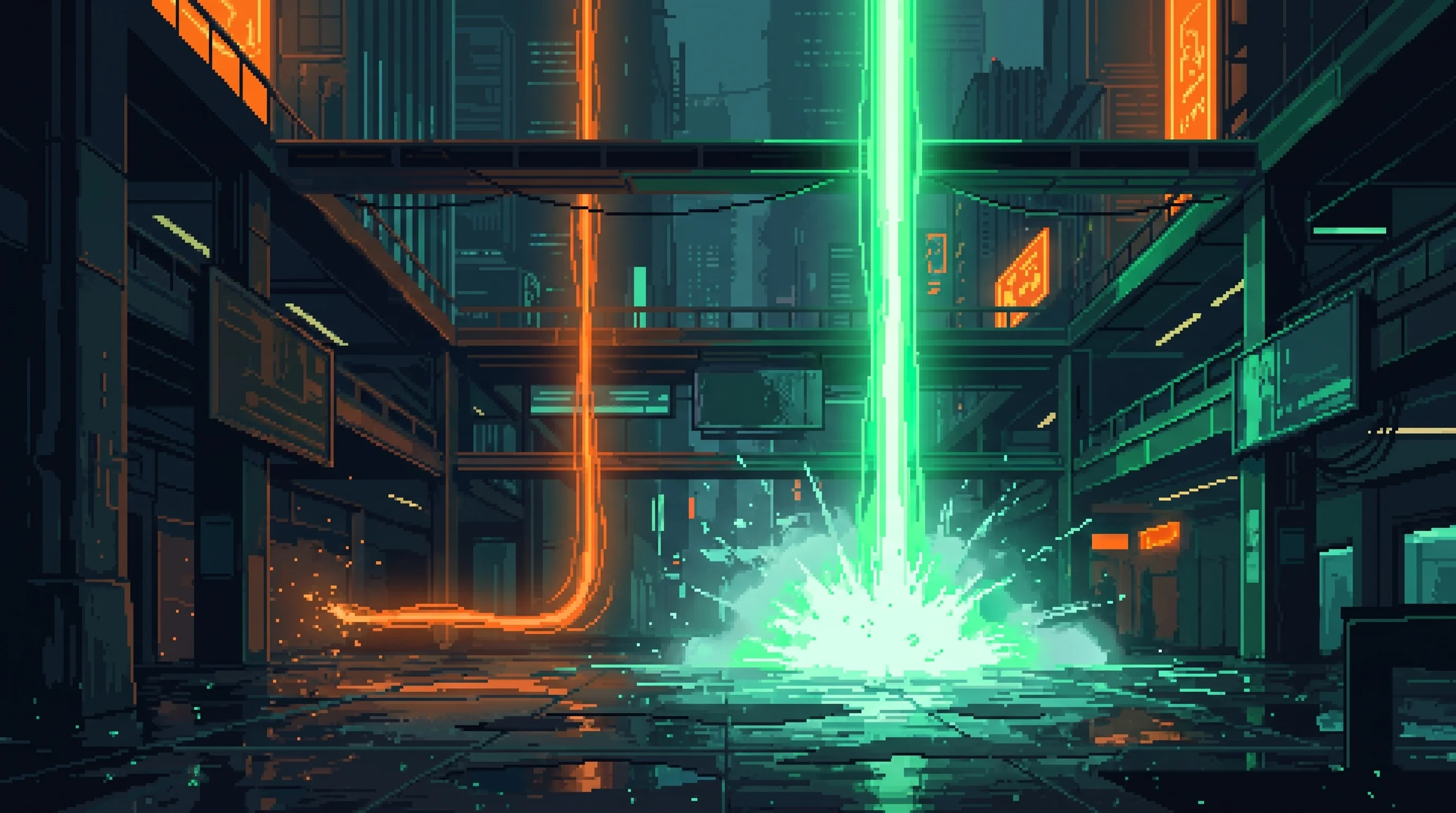
The Divergence has a start date, set by licensing: the day a child's Developmental license expires at twelve and cognition becomes a budget line — 4.7 petaflops for a Dregs kid, Professional for the corporate one, off identical hardware.
The point at which effort stopped being able to close the gap that compounding opens.
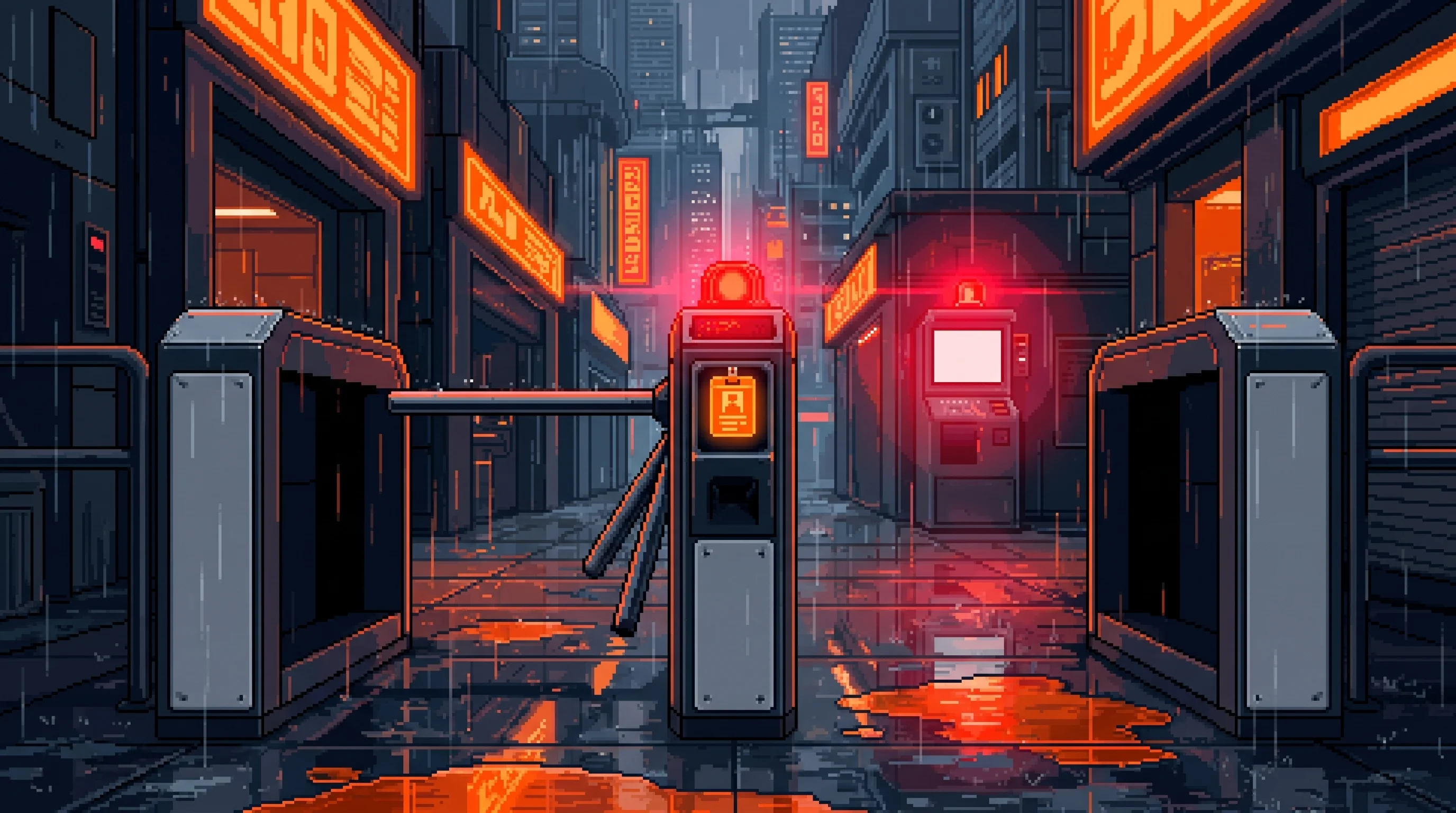
Consciousness Licensing makes citizenship cognitive: Basic minds get 4.7 petaflops, Professional minds get the corporate group rate, and Executive minds get enough capacity to govern everyone below.
When your employer is your country, quitting is emigration.
Supporting Connections
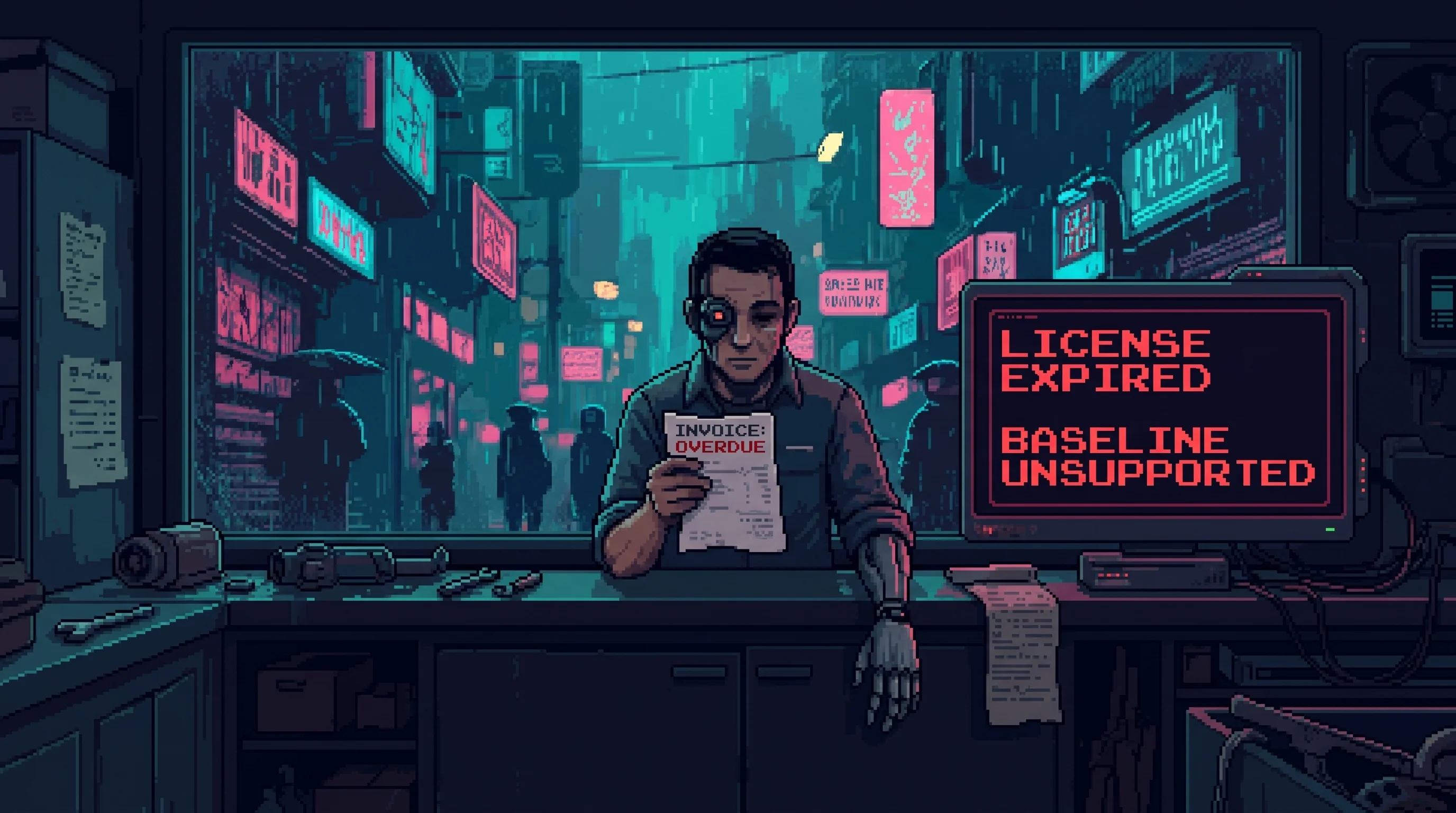
a 4.7-to-12.4-petaflop gap that is Nexus's third-largest revenue line
Upgrades rewire users until baseline feels disabling, removal risks catastrophe, and each version demands the next.
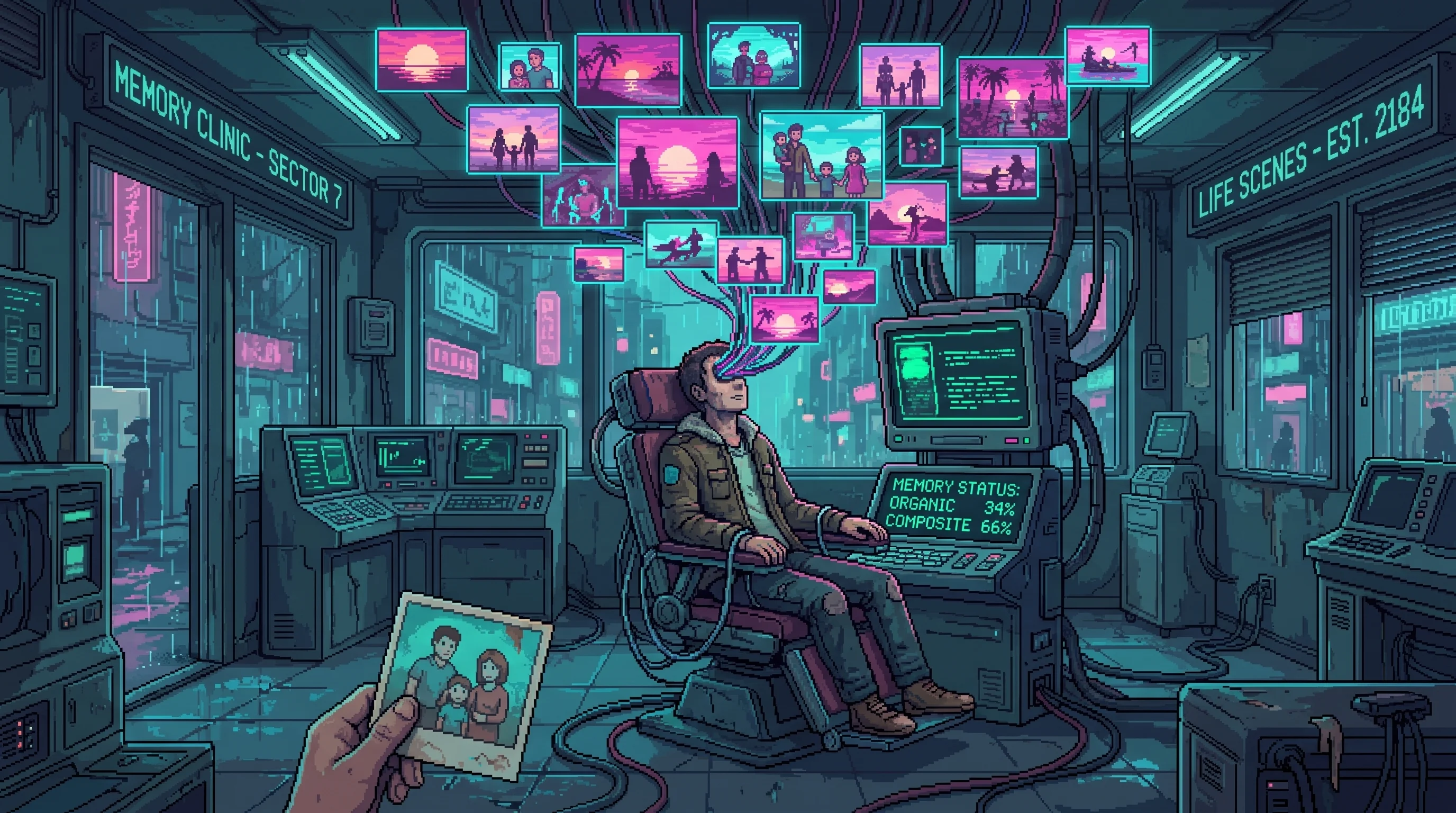
Licenses capacity; the Borrowed Life trades memory — same substrate.
Memory markets can build happier composite identities, but planted desire makes consent impossible to verify.
Meters the mind, so even noticing another person spends a license.
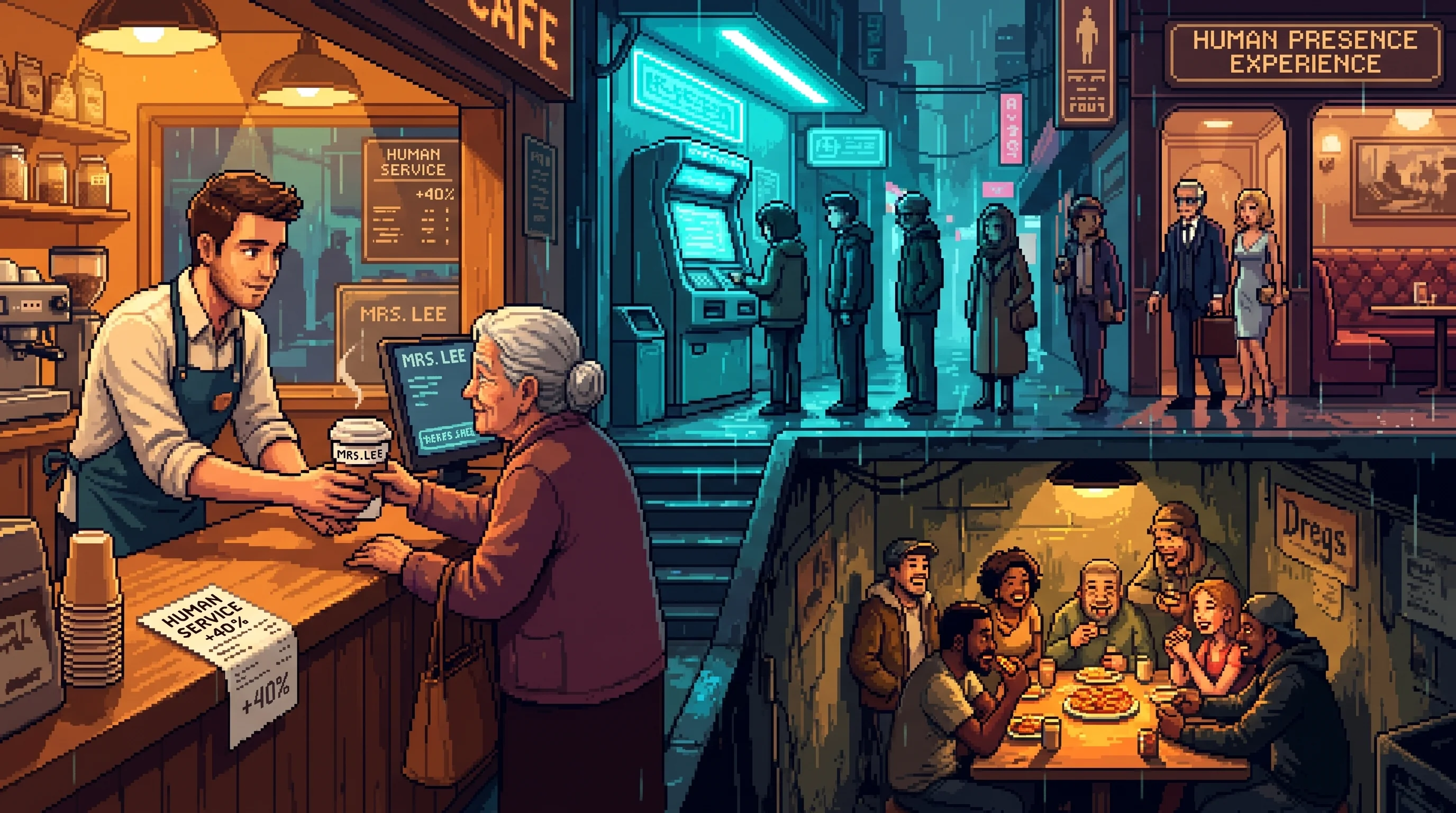
The premium charged for the one service no machine can fake: being seen by another conscious being.
Additional Connections



—