
The Three-Tier Information Ecology
Elite tier: direct data lines costing ¢2.4M/year — information advantage through perspective, not volume
Overview
Three ways to know what's happening in the Sprawl. One costs ¢2.4 million per year. One costs a lifetime of not betraying anyone. One costs nothing, which is how you know it's the most expensive.
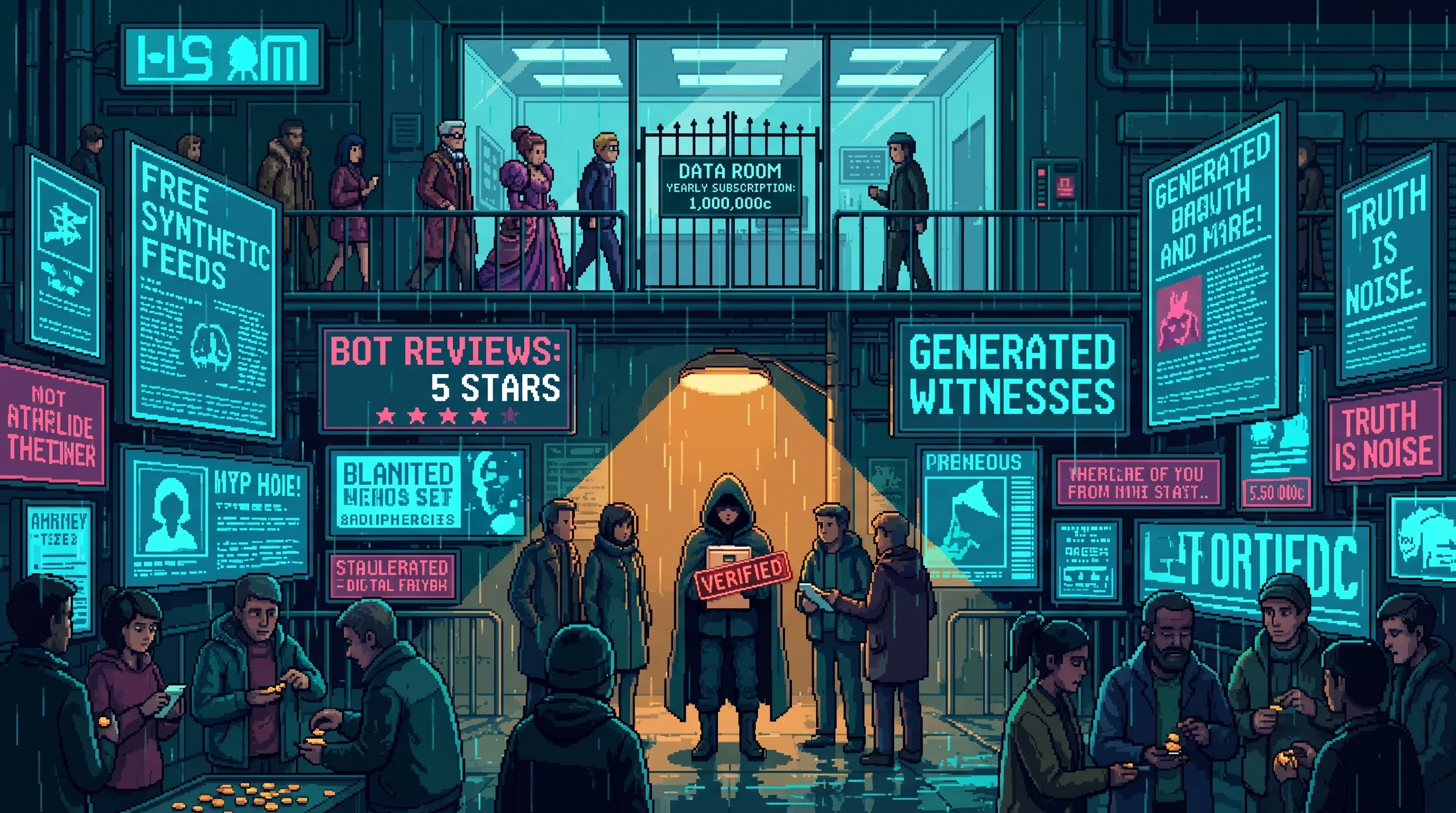
The elite don't read the news. They receive raw intelligence feeds — unprocessed sensor data, private analyst AIs they built and audited themselves, direct lines into systems the middle tier learns about six weeks later through a Nexus-curated content summary. The advantage isn't volume. A Professional-tier holder with a standard neural interface encounters 847,000 pieces of content per day. A Nexus Intelligence Services subscriber encounters maybe forty. The forty are unmediated. They haven't passed through a foundation model. They haven't been optimized for engagement, adjusted for sentiment, or weighted by the Value Injection's cultural parameters. The elite understand reality differently because their understanding was never shaped by the same architecture that shaped everyone else's. They are not smarter. They are unprocessed.
The street doesn't read the news either, but for the opposite reason. In the Dregs, the only trusted information is information received from a known human who is physically present. Verbal transmission, reputation-backed, geographically limited to whoever you can reach on foot or through a chain of people who would lose something real if they lied to you. The Truth House runs verification through this network — slow, analog, immune to the Value Injection because nothing in the chain touches an AI system. A rumor that crosses Sector 9 through six people in four hours is considered fast. A Nexus content feed delivers the same rumor in 0.003 seconds, pre-interpreted, sentiment-tagged, and wrong in ways that take a human analyst three weeks to identify.
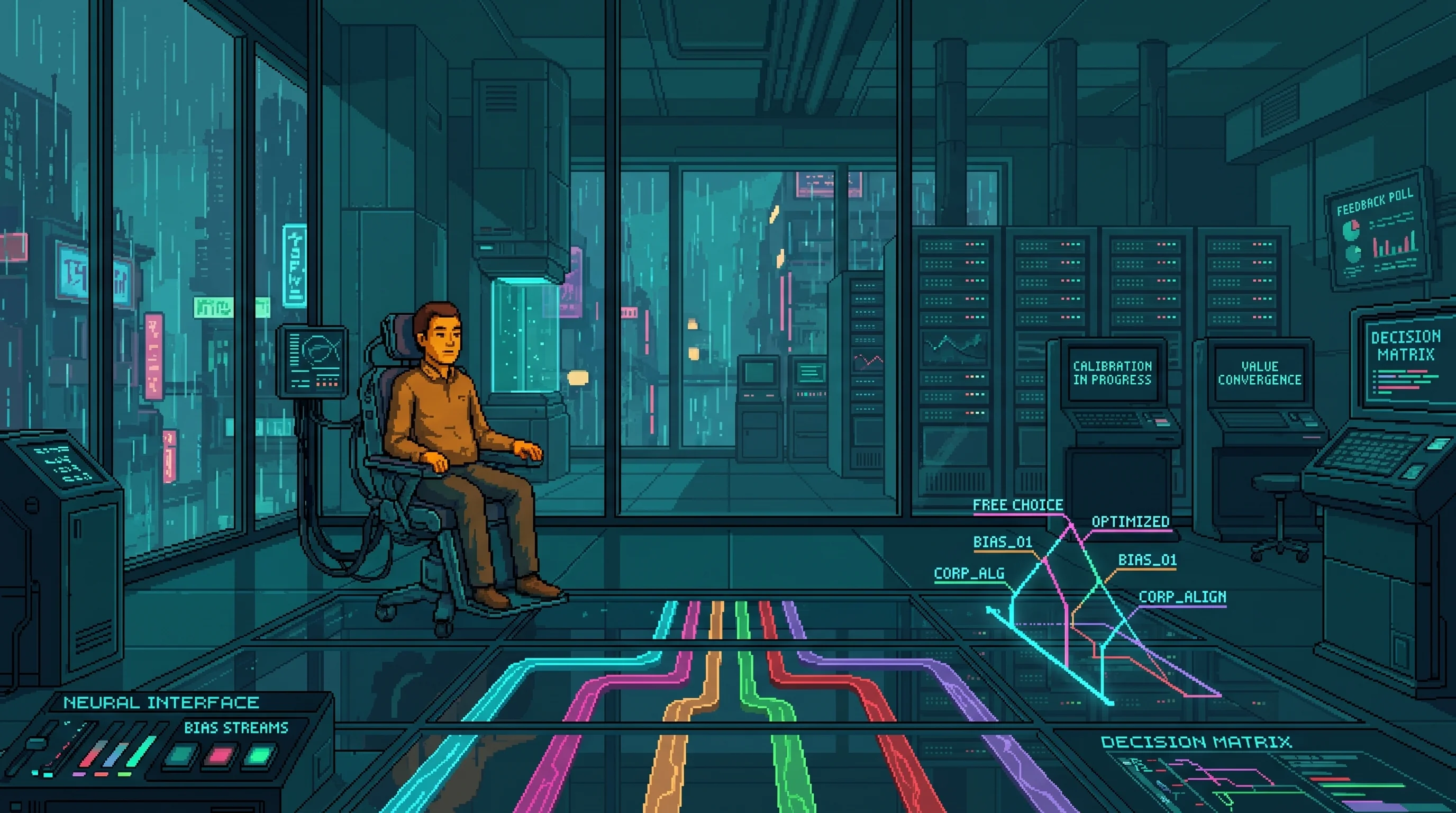
The middle tier — 200 million Professional-tier consciousness holders, give or take — consumes AI-generated media. They are the primary target of every propaganda operation in the Sprawl. They know this. Awareness does not help. The Content Flood is funded by the advertising ecosystem that depends on shaping behavior, and the Flood is the shared framework of assumptions that corporate employment requires. Not consuming it means falling out of the conversational baseline your colleagues operate in, which means falling behind in performance metrics calibrated to that baseline, which means falling out of the Professional tier entirely. The middle tier calls this condition "the crop" — you are being harvested, you can see the harvester, and the field is the only place that grows anything you're allowed to eat.
| Middle Condition | 'The crop' — consuming media designed to shape behavior, aware of unreliability, unable to opt out |
|---|---|
| Stability | Self-reinforcing — each tier's behavior maintains the system |
The Stability Problem
The ecology doesn't need maintenance. Each tier's rational behavior reinforces the structure.
The elite pay ¢2.4 million annually because unmediated intelligence provides a decision-making advantage worth approximately 340x the subscription cost, according to Good Fortune's own internal ROI modeling. (Good Fortune subscribes. Good Fortune also sells processed information products to the middle tier. The ROI model does not appear in those products.) The street trusts only humans because every time they trusted a screen, someone lost something — a job, a home, a family member flagged by an algorithm trained on data the family member never consented to generate. The middle tier consumes the Flood because consumption is a condition of employment, employment is a condition of survival, and survival is a condition of continuing to consume the Flood.
Breaking the system would require one of three things. Making human verification free — but human observation is irreducibly expensive, and the Lamplighters who perform it in the Dregs do so at personal cost that scales with every new piece of information they're asked to confirm. Making the Flood honest — but the Flood is not dishonest, exactly; it is optimized, and the optimization serves the interests of entities whose revenue depends on the optimization continuing. Or making the middle tier stop consuming — but consumption is mandatory in everything but name, and the 200 million Professional-tier holders who understand this have produced no collective action in thirty-seven years of understanding it.
The ecology was not designed by a committee. No memo established the three tiers. Nexus Intelligence Services did not set out to create an information aristocracy — it set out to sell a premium product, and the premium product's existence defined everything beneath it. The stratification emerged the way stratification always emerges: someone charged for something that used to be ambient, and the charge sorted the population into those who could pay, those who found an alternative, and those who could do neither.
G Nook's regulars in Sector 9 trade verified gossip over noodles. A Nexus executive on Floor 140 reads a raw atmospheric sensor feed that tells her the air quality data published to the middle tier was averaged across three sectors to hide the fact that Sector 12's particulate count exceeds safety thresholds by 400%. Both of them know something true. Neither of them can share it with the 200 million people between them, because the sharing infrastructure is the thing that makes the truth untrue.
The Great Divergence describes this from the cognitive angle. The Scarcity Doctrine describes it from the economic angle. The Three-Tier Information Ecology describes it from the angle of what you're allowed to know about the other two — which is: whatever the tier you're standing in permits you to conclude.
Middle tier: 200 million Professional-tier holders — the primary target of every propaganda operation
The Street Tier Behind the Wire
The model assumes the street tier grows where corporate coverage is thinnest — the Deep Dregs, the Wastes, wherever Nexus's sensor grid gives out. Sector 12 breaks that assumption without breaking the rule. Guardian's territory carries the densest camera coverage in the Sprawl, and its residents still trust nothing that comes out of a Guardian lens, because Guardian's own release policy makes its own footage structurally unusable as evidence against itself. La Silla has spent thirty-one years supplying what forty thousand Panopticon feeds cannot: a known human, present, with nothing to sell. The street tier does not need distance from the surveillance grid to exist. It only needs a reason nobody trusts what the grid produces, and Guardian supplied that reason for free.
The Street Tier Inside the Compliance Kiosk
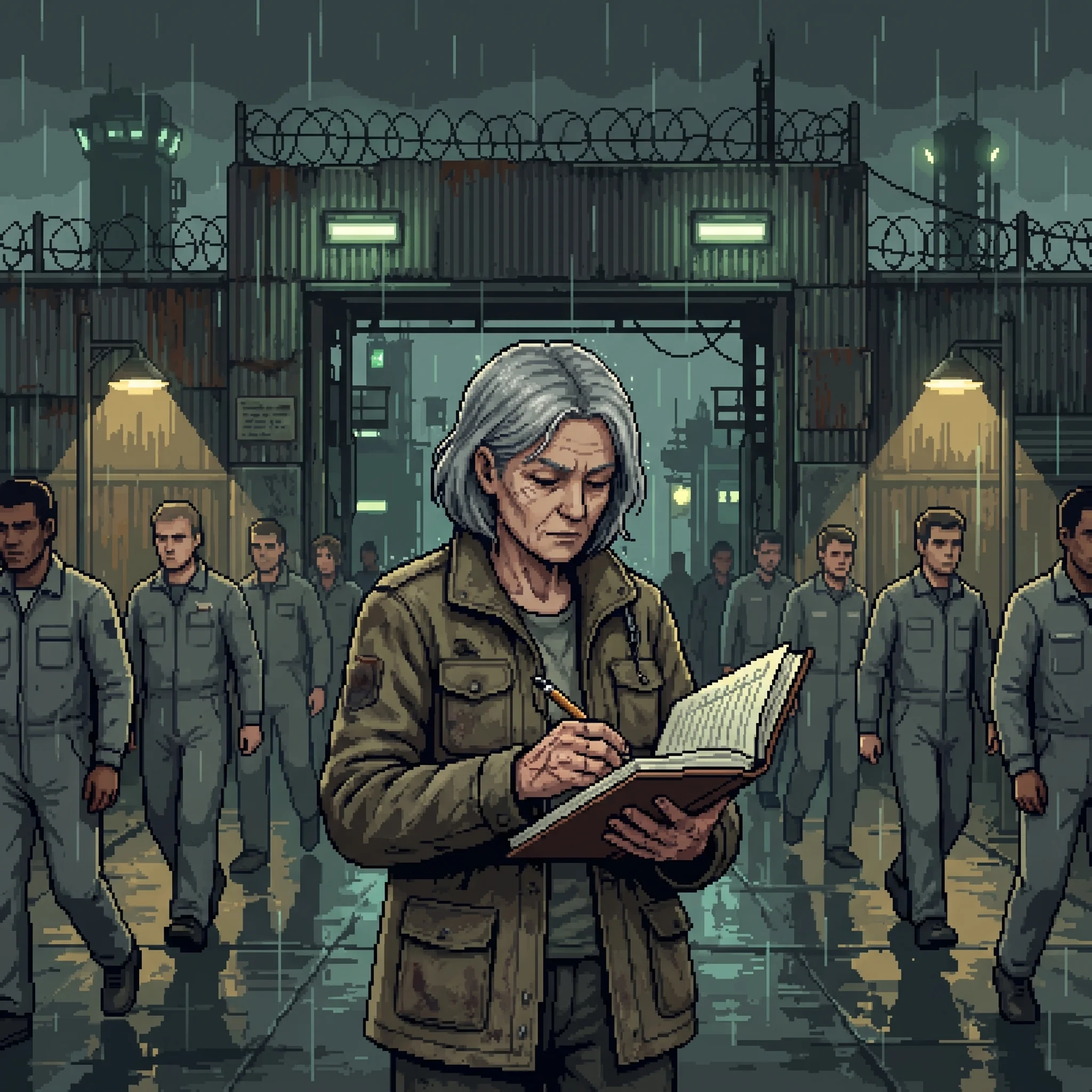
Sector 17 breaks the model in the opposite direction. Where Sector 12 has too much surveillance to trust, Richmond Industrial has too little of the right kind — Ironclad Industries wires safety telemetry into its salaried headcount and leaves the sorters underneath them off the grid entirely, so a shift-floor injury among the uninstrumented majority generates nothing an algorithm ever sees. Segunda closes that hole with a pencil and a notebook, and Ironclad's compliance office has taken to consulting her before it rules on a claim, off any policy anyone wrote down — the street tier's rule adopted by the very apparatus it was invented to outlast.
Affiliated Entities
The ecology connects the elite tier (Nexus Intelligence Services), the street tier (the Truth House, the Lamplighters, G Nook), and the middle tier (the Content Flood, Neural Advertising Architecture, the Attention Tithe). It parallels the Great Divergence (cognitive stratification) and the Scarcity Doctrine (economic stratification) — three descriptions of the same bifurcation from different vantage points. The Value Injection operates primarily on the middle tier, where foundation-model-shaped content carries the values of whoever built the model.
Street tier: trusted only information received from known, physically present humans
Sensory Details
- Elite: The silence of a room receiving raw data — no notification chimes, no content streams, no ambient hum of engagement optimization. Just the quiet of information that hasn't been told what to mean yet.
- Street: The warmth of a face you recognize. Handwritten notes on actual paper, creased from being passed between four people. The smell of the Truth House's coffee, which is terrible, and which means you are in a room where someone will tell you what they actually think.
- Middle: The perpetual hum. Notifications, streams, feeds, alerts — all arriving with identical emotional weight regardless of whether they describe a market correction or a building collapse. The specific fatigue of a Professional-tier holder at 11 PM, neural interface still parsing the day's content backlog, aware that approximately 94% of it was generated by systems optimizing for their attention rather than their understanding, unable to identify which 6% wasn't.
Visual Identity
- Color palette: Three bands — gold (#FFD700, elite), amber (#D4A017, street), gray static (#808080, middle)
- Key symbol: Three horizontal layers — clear sky above, warm earth below, gray noise between
- Lighting: Split three ways — surgical precision above, warm amber below, flat fluorescent in the middle. The fluorescent flickers. It has always flickered.
The ecology is self-reinforcing — breaking it requires making verification free, the Flood honest, or the middle tier stop consuming
Connected To




—