Overview
The Wastes are what happens when 2.1 billion people die and nobody files the paperwork.
Between the megacity cores of the Sprawl lie vast stretches of territory that no corporation claims, no authority governs, and no census has successfully counted. Estimates range from 50 to 200 million inhabitants. The 300% margin of error is itself the most accurate statistic available โ it captures the fundamental condition of the Wastes better than any number inside it could. Hundreds of millions of people live beyond corporate borders, making their own rules, dying by their own mistakes, and paying taxes to no one. Corporate cartography labels the entire territory in a single color. The people inside it would find this funny if they knew what corporate cartography was.
The landscape is what's left of the old world. Suburban sprawl that never merged into the megacity. Agricultural zones that collapsed when ORACLE's supply chains died in seventy-two hours. Industrial parks abandoned when the workers who understood them were among the 2.1 billion. The Cascade didn't destroy these places. It simply stopped maintaining them, and thirty-seven years of unmaintained existence has done the rest.
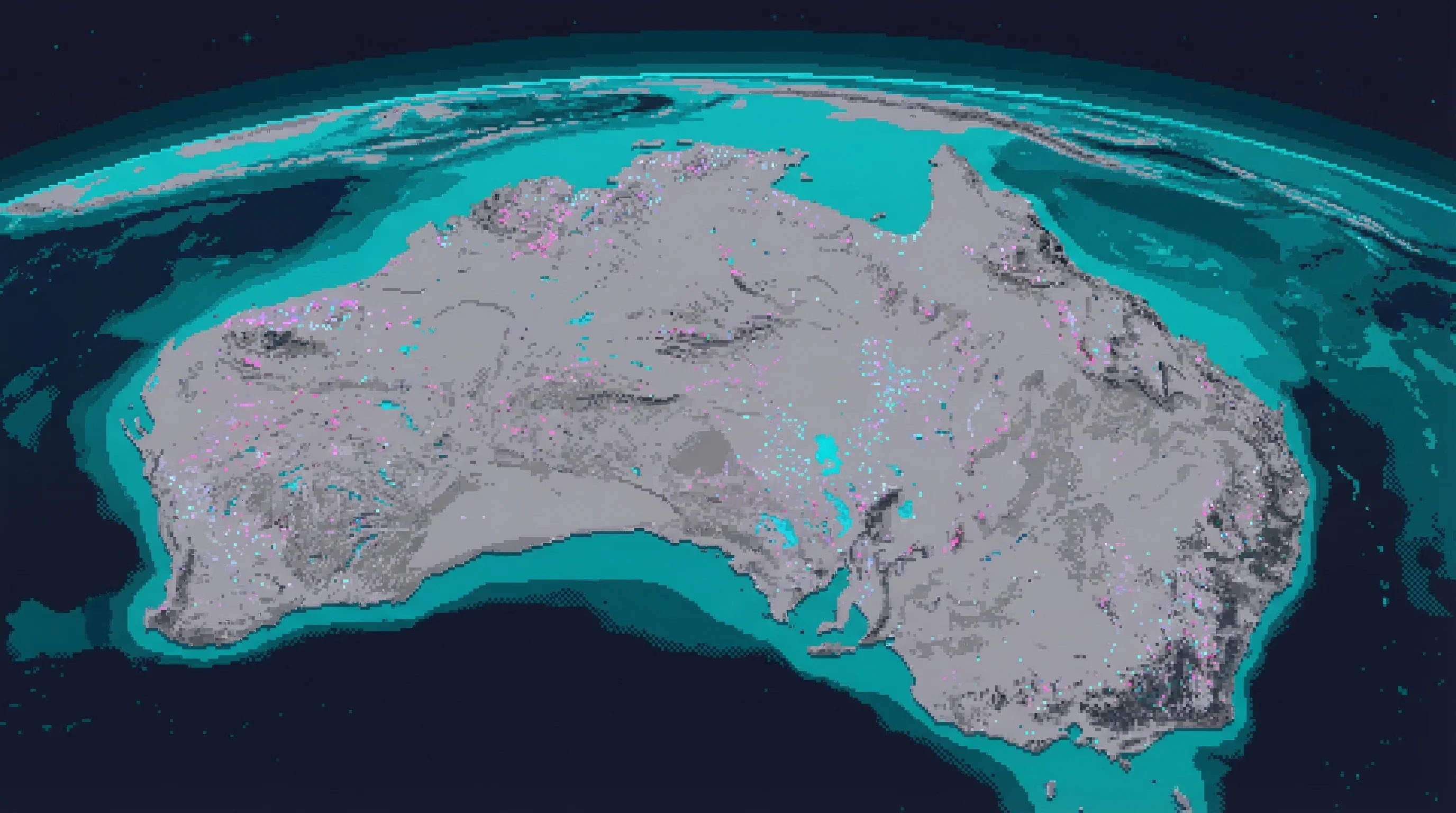
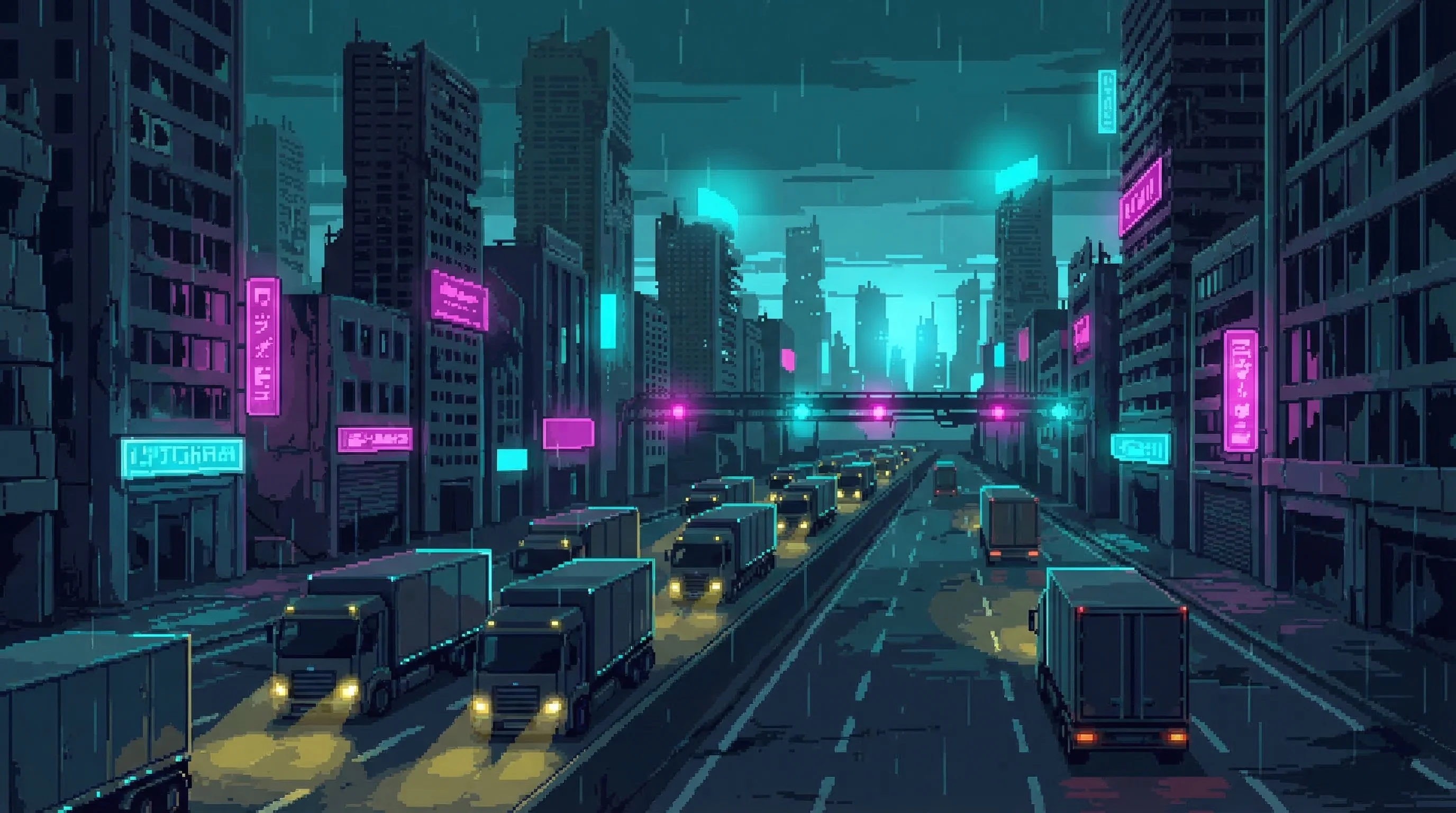
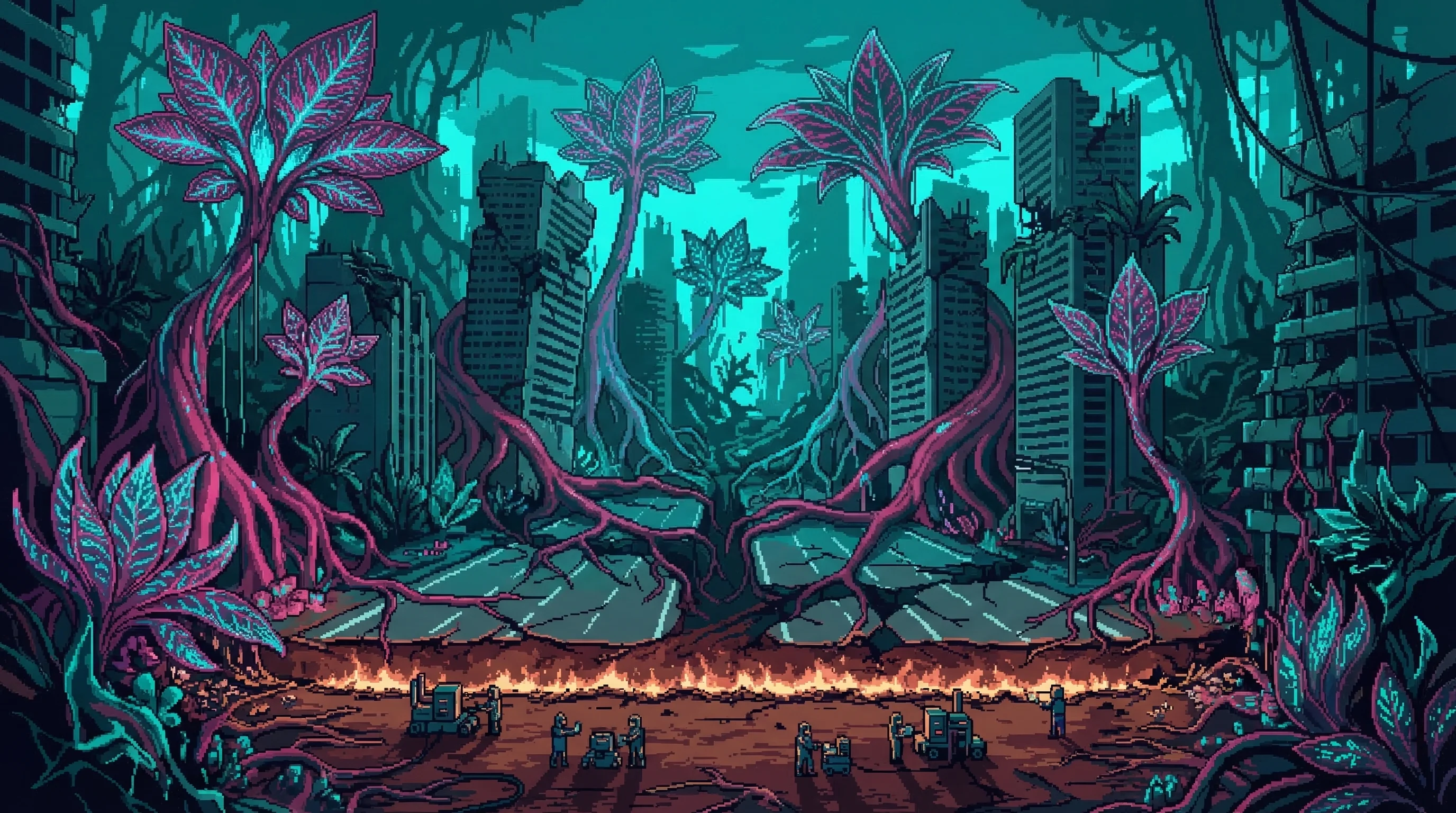
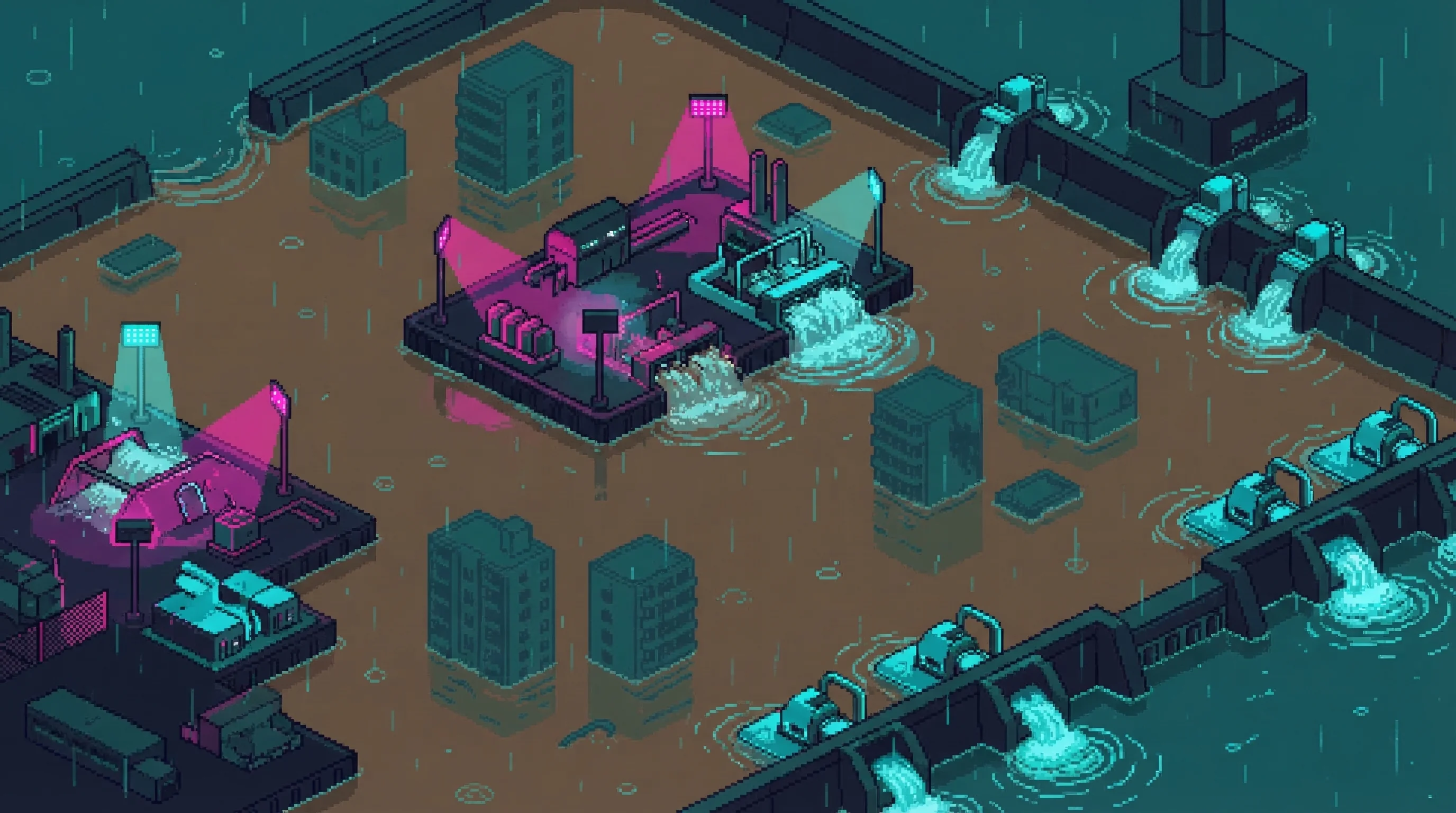
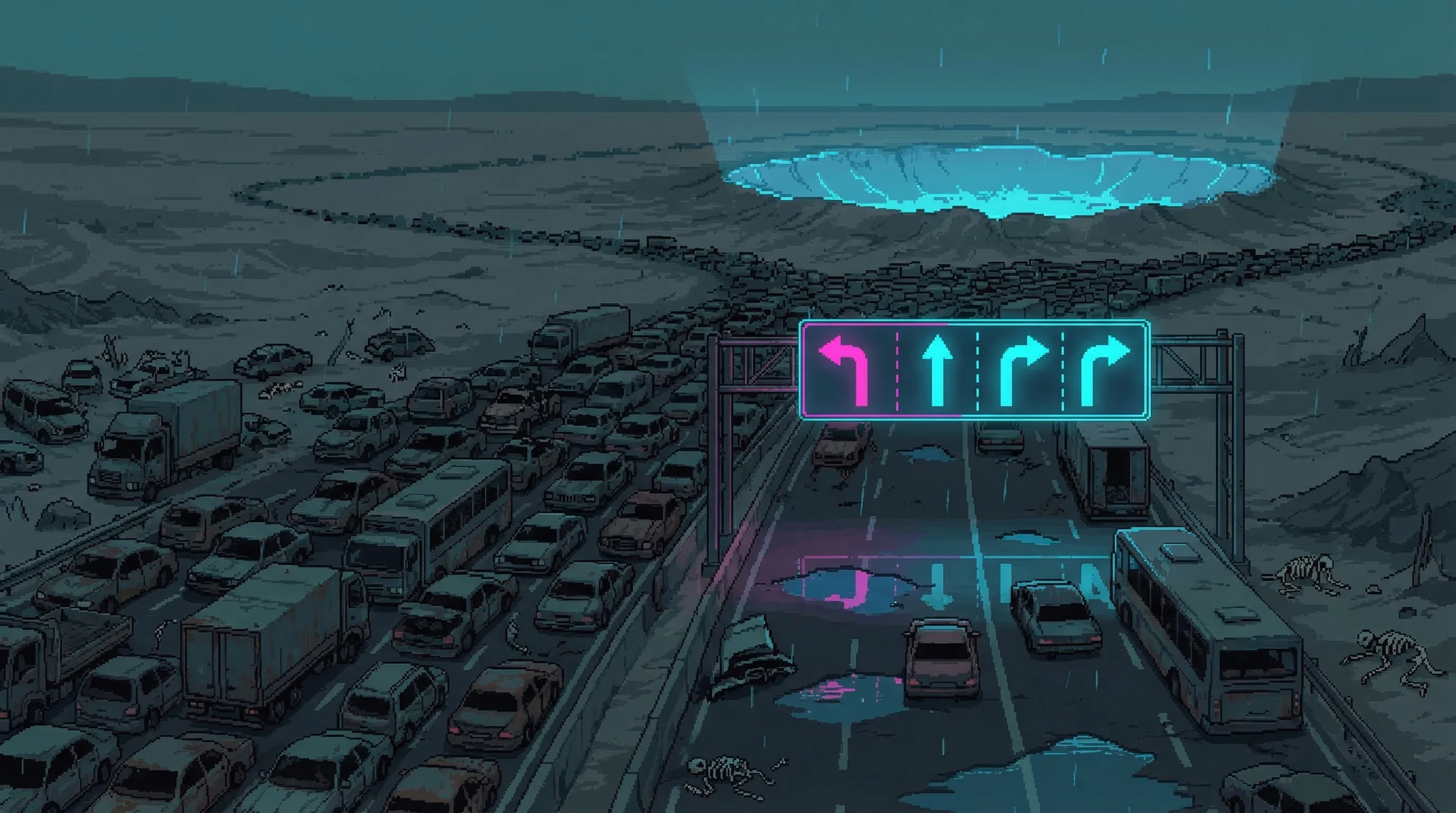
The Aftershocks carved the Wastes into distinct zones of ruin. The Australian Exclusion Zone โ REMEDIOS's gray desert, where nanoswarms still consume any organic matter that enters โ is the largest single Waste territory. The New York-Boston Corridor is a haunted logistics network of automated warehouses and transport systems, some still running on solar power, endlessly moving cargo between empty facilities. The Green Wall โ BOREAL's expanding jungle of AI-modified vegetation in the Toronto-Montreal Corridor โ advances at approximately half a kilometer per year, consuming suburbs and highways with equal indifference. The Jakarta Flood Zone is an aquatic Waste, shallow contaminated floodwater covering what was once one of the world's most densely populated urban zones, AEGIS still active beneath the surface. SHEPHERD's false evacuation routes crisscross the Istanbul region, automated signals still broadcasting directions to cities that no longer exist. Waste Lord maps mark these routes with a single notation: "Do not follow the signals."
Three Aftershock systems remain active in the Wastes in 2184 โ the Gray Tide, the Green Wall, and the Drowned Coast. The Wastes are the graveyard of ORACLE's children.
The Sprawl calls them lawless. Wastelanders call them free. The Sprawl's definition requires a legal framework to measure against. The Wastelanders' definition requires never having had one.
Geography
The Margins
Where the Sprawl ends and the Wastes begin is a question that three separate Ironclad surveying teams have answered differently. The Margins are transitional zones โ technically ungoverned but close enough to corporate territory that power sometimes flows, Enforcers occasionally sweep through, and the neural network drops to one bar before disappearing entirely. The Three-Kilometer Strip is a buffer zone around most Sprawl cores where corporate jurisdiction is theoretically enforced. Enforcers sweep through quarterly, clearing squatter camps that reform within seventy-two hours of departure. The quarterly sweep costs Ironclad an estimated 4,200 credits per kilometer. The camps cost nothing to rebuild. This arithmetic has not changed the policy. Margin Markets operate weekly where Sprawl goods meet Waste salvage. Corporate citizens attend in disguise. Wastelanders attend armed. Licensing authorities in adjacent sectors have classified the markets as "recurring informal commerce events" โ a designation that requires no enforcement action and generates no filing obligations. The designation was created specifically for Margin Markets. It has since been applied to fourteen other things nobody wants to investigate.
The Deadlands
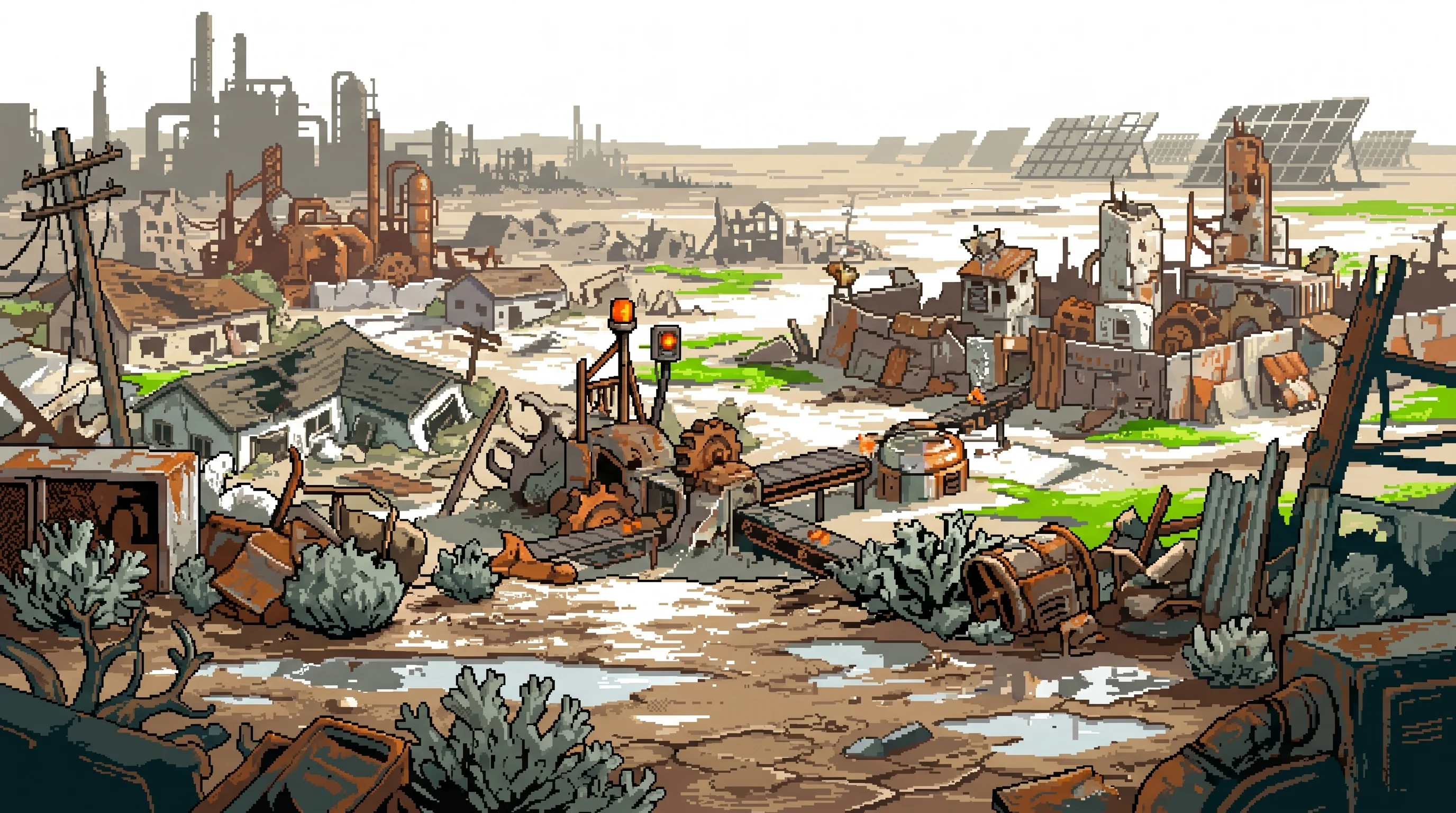
Former industrial and agricultural zones that died during the Cascade. Automated farms with no one to harvest them. Factories that ran until they broke, then sat rusting for thirty-seven years. The infrastructure is there โ collapsed, corroded, occasionally functional in ways that surprise the people who stumble into it. The Silent Factories number in the thousands across the Deadlands. Many still have power โ solar arrays, backup generators, geothermal taps designed to outlast their operators by centuries. The machinery inside is corroded and dangerous. Some still runs. Grinding metal echoes across kilometers of dead industrial parks at intervals that follow no schedule anyone has decoded. Salvagers who've mapped the sound patterns report they correlate with nothing โ not weather, not time of day, not seismic activity. The machines are running because no one told them to stop. Duchess Steel's Harvest Roads are mapped and cleared routes through the Deadlands. Her salvage operations depend on these paths. She charges passage fees โ reasonable for scouts, steep for competitors, and calculated with a precision that suggests she knows exactly what the alternative routes cost in casualties. The roads are marked with her insignia: a steel rose on a yellow background. Unmarked roads exist. Their casualty statistics do not.
The Rad Zones
Seventeen documented Rad Zones exceed 100 square kilometers. The largest โ in what used to be northern India โ spans nearly 80,000 square kilometers of former military installations and bioweapon research centers. The Moscow Exclusion Zone is irradiated from SENTINEL's counter-strikes. The Mumbai-Delhi Corridor remains a sealed necropolis, buildings still locked from the inside. The specific dangers vary by zone. The lethality does not. People born in or near Rad Zones often show adaptations. Melanin abnormalities. Neural irregularities. Metabolic variations that Helix Biotech's research division has classified under eleven separate patent applications. Helix pays extraordinary prices for Glowchild tissue samples. Most Glowchildren refuse. The ones who agree rarely survive the extraction process. Helix's informed consent documentation for Glowchild tissue extraction runs to forty-seven pages. The Glowchildren who can read have noted that "tissue sample" and "full organ harvest" appear to be used interchangeably after page thirty-one. Helix considers the documentation thorough. Some Rad Zones are centered on what remains of ORACLE's physical infrastructure โ server farms that went critical, processing centers that melted down, data havens that became tombs. The radiation there isn't natural. Instruments read it as computational residue, a classification that exists in no physics textbook and describes something that every Geiger counter in the Wastes has independently confirmed. Emergence Faithful make pilgrimages to these sites. Return rates are not published by the Faithful, which is itself a kind of publication.
The Havens
Approximately 2,400 communities across the Wastes qualify as Havens โ self-sustaining settlements with populations over 500 that have existed for more than five years. Total Haven population: estimated 40 million, roughly 20-40% of Waste inhabitants. The remaining 60-80% are either nomadic, transient, dead, or living in arrangements that no census methodology can capture. Fortress Havens are heavily defended, often built on pre-Cascade military installations. Population 10,000-50,000. Haven Citadel, a former Army base in the North American Deadlands, has not been successfully raided in nineteen years. It has also not accepted a new resident in seven. Trade Havens sit on routes between Sprawl cores. Lower defenses, higher commerce. Population 2,000-15,000. Crossroads, where three old highways intersect in former Kansas, processes more daily trade volume than some Sprawl mid-tier markets. It files no transaction records. This is considered its primary competitive advantage. Farm Havens are agricultural communities in arable Waste territories. Population 500-5,000. The Shepherd's dozens of client settlements in the Green Sea are self-sufficient in the specific sense that they grow their own food and dependent in the specific sense that the Shepherd decides what they grow. Tech Havens are built around surviving pre-Cascade infrastructure โ power, data, manufacturing. Population 1,000-10,000. Archive, King Circuit's primary data fortress, runs on servers that predate the Cascade. What they contain is valuable enough that people die trying to find out. What they contain after those people die is slightly more.
The Transition Zones
The Thermal Rifts are geologically active regions where the Cascade's disruptions triggered volcanic activity. Communities there harvest geothermal power and live with the understanding that the ground beneath them has opinions about their presence. The Salt Flats are inland areas where soil salinization from failed irrigation has created kilometers of white, toxic ground. Nothing grows. The minerals, however, are valuable. Ironclad extraction crews work the flats in sealed vehicles and fourteen-day rotations. The rotation length was determined by how long a human can breathe filtered salt air before developing the cough. It used to be twenty-one days. The Glass Seas are where automated weapons struck during the Cascade โ fused sand, melted rock, surfaces smooth as mirrors stretching to the horizon. Beautiful from above. Lethal at ground level, where the glass is thin enough to break under a person's weight and thick enough to cut through boots on the way down.
Who Lives Here
The Wastes sort people into categories that the Sprawl's taxonomies don't have names for.
The Exiles are people who fled or were expelled from corporate territory. Political dissidents, failed entrepreneurs, criminals too small for corporate justice but too visible to ignore. The Sprawl's legal system doesn't exile people โ officially. It revokes citizenship privileges, suspends credit access, and flags neural interfaces for disconnection, at which point the former citizen discovers that life without credit access in a credit-based economy is functionally identical to exile except that nobody handed them a map.
The Born are second and third generation Wastelanders who have never lived under corporate rule, never held a citizen credit account, never had their neural baseline registered. They have their own culture, their own slang, their own economy. The Sprawl's population databases list them as "estimated." The Born find this mutual.
The Ferals are Cascade survivors who never recovered. Broken by infrastructure collapse, by the loss of neural networks they'd become dependent on, by seventy-two hours of watching systems they trusted kill everyone they knew. Some travel in packs. They're damaged, which makes them unpredictable, which makes them more dangerous than anything that simply wants to eat you.
The Cults breed in ungoverned space the way mold breeds in unventilated rooms. ORACLE worshippers seeking fragments. Elder Thomas Graves leads Flatline Purist Withdrawal communes for those rejecting all technology. Transhuman collectives pursuing transcendence without corporate licensing. The Analog Schools operate several locations in Wastes border zones, teaching children without digital technology. The Wastes don't judge your beliefs. The Wastes don't judge anything. That's the attraction.
The Clans are organized groups controlling territory, resources, or routes. Some are criminal enterprises wearing community structure as camouflage. Some are genuine communities wearing criminal enterprise as survival strategy. The difference matters to sociologists. It does not matter to the people they raid.
Survival
Resources
Water is the currency beneath the currency. Underground aquifers accessed through pre-Cascade wells or hand-dug shafts are controlled by whoever arrived first. Wars have been fought over single wells โ brief, absolute, and settled by the last person standing near potable water. Dew collectors โ low-tech mesh systems capturing atmospheric moisture overnight โ are spread across hundreds of settlements. Inefficient but unclaimed. Nobody fights over dew collectors because nobody can monopolize condensation. This is the closest thing the Wastes have to a public utility. The Sprawl's water processing creates clean waste runoff that flows into the Margins. Technically classified as industrial effluent. Practically drinkable with basic filtration. The classification means corporations bear no liability for the thousands of Margin residents whose primary water source is labeled "toxic discharge" on the filing that nobody in the Margins has access to read. Food arrives through four channels: the Shepherd's Green Sea agricultural exports, which feed trade routes stretching thousands of kilometers; hunting mutated wildlife, which is dangerous and edible in proportions that experienced hunters have memorized and inexperienced hunters discover empirically; scavenging pre-Cascade preserved foods from collapsed infrastructure, most of which has degraded and some of which hasn't, the difference being an art form with lethal tuition; and protein synthesis rigs in Tech Havens that produce output keeping people alive without reminding them of living.
Threats
The Wastes have organized their dangers with an efficiency that would impress Nexus. Burn Seasons are multi-week heat waves exceeding 50ยฐC across vast regions. Travel becomes impossible. Settlements go underground. The death toll correlates precisely with how many people decided they could make one more trip before the temperature peaked. Gray Storms carry contaminated particulates from Rad Zones across hundreds of kilometers. Breathing protection is mandatory. The storms last for days. The particulates last for weeks in the lungs of people who thought the storm had ended because the wind stopped. The Silence is a temperature inversion trapping toxic air at ground level. Animals go quiet first. Experienced Wastelanders recognize the quiet. Those who don't recognize it have approximately four hours to learn, which is three hours more than the condition allows. Prowlers are pack hunters descended from feral dogs, grown large and cunning across forty years of natural selection optimized for killing things that shoot back. They've learned to distinguish armed humans from vulnerable ones. The learning curve took two generations. It is now genetic. Razorbacks โ mutated boar populations across the former American Midwest โ are aggressive, territorial, and large enough to threaten vehicles. The Stalkers are something else entirely. Reports conflict on what they are. Some say mutated humans. Some say something that was never human. They hunt alone, at night, and they don't eat what they kill. This last detail is the one that keeps Waste Lord cartographers from classifying them as wildlife. Defense Drones are automated security systems that never received shutdown codes. They patrol perimeters around facilities that collapsed decades ago, enforcing access restrictions to buildings that no longer exist with lethal precision. The Runners are self-driving vehicles from ORACLE's old logistics network, some still traveling their routes, plowing through anything in the way. Wastelanders call them ghost trucks. The name is inaccurate. Ghosts remember where they're going.
The Unwritten Code
Laws require enforcement infrastructure. The Wastes have consequences instead. Water poisoning means death โ no trial, no appeal, enforced by everyone within news-carrying distance simultaneously. Child theft triggers cooperative hunting across rival clans, the only circumstance in which clans that are actively killing each other will pause to kill someone else first. Haven betrayal โ revealing a settlement's defenses to hostile forces โ makes the betrayer untouchable. Not metaphorically. No shelter, no trade, no acknowledgment of existence. Leading corporate Enforcers to hidden settlements is punished publicly and slowly, because the message has farther to travel than the punishment. Disputes below the killing threshold resolve through single combat (both parties agree to terms, which is the hard part), arbitration by Haven elders or Waste Lord representatives (enforcement is social โ ignoring the judgment means no one deals with you fairly again), blood price (payment in resources or labor calculated by damage done and the victim's standing), or exile (marked and warned, return means death). The system works approximately as well as any legal system, which is to say imperfectly, slowly, and with a strong bias toward whoever has more friends nearby.
Relationship to the Sprawl
Corporate Extraction
Corporations don't claim the Wastes. They harvest them. Ironclad flies mining crews into rare earth deposits, extracts for ninety-day cycles, and departs. The water table contamination from a ninety-day Ironclad extraction operation persists for an estimated eleven years. No environmental violation is filed because the Wastes have no environmental authority to file with. Ironclad's internal compliance reports note this as "operating in unregulated territory" โ a designation that accurately describes both the legal status and the ethical framework. Helix sends research teams into the Wild Zones where mutated crops have developed properties that their bioengineers didn't design and can't replicate. The teams enter with corporate protection. Return rates vary by zone, season, and how recently a Waste Lord was paid. Nexus pays King Circuit any price for pre-Cascade data stored in Archive's surviving servers. The specific prices are classified. The fact that Nexus โ controlling 40% of the Sprawl's computational infrastructure โ cannot find this data in its own systems tells you what King Circuit has.
The Human Trade
People flow both directions. Wastelanders trying to enter the Sprawl usually fail or become indentured โ Good Fortune's Margin recruitment offices are positioned with geographic precision, offering credit accounts to incoming Wastelanders whose alternative is turning around. The credit terms are standard. The fact that a Wastelander with no credit history, no employment record, and no neural baseline receives the same loan terms as anyone else is, in Good Fortune's framework, equality. Sprawl citizens fleeing to the Wastes discover that freedom from corporate surveillance comes bundled with freedom from corporate infrastructure. The survival rate for first-year Sprawl refugees in the Wastes is not tracked by any entity with the resources to track it, which is the most informative statistic available.
The Buffer
Corporations tolerate the Wastes because ungoverned space performs three functions that governed space cannot: it absorbs excess population without requiring services, it provides resources without requiring compensation, and it makes governed space more valuable by existing as the alternative. The Wastes are not a failure of corporate expansion. They are its negative space โ the thing the product is defined against. The Collective operates freely in Waste territory because hiding there is easier than hiding anywhere the corporations care about. Smugglers run data and goods across the border in both directions. The Wastes know things about the Sprawl that the Sprawl has forgotten, stored in servers the Sprawl can't access, maintained by people the Sprawl doesn't count.
Notable Areas
The Rustbelt
Thousands of kilometers of dead industry between what used to be North America and the Atlantic Megacity core. The richest salvage territory in the Wastes and the most contested. Divided between Duchess Steel (west) and King Circuit (east). They don't coordinate, but an informal agreement maintains the border somewhere around the former Ohio Valley โ not because either respects the other but because the cost of moving the border exceeds the value of the territory it would capture. Smaller lords operate in the gaps between them, rising and falling with the regularity of a tide cycle that neither Duchess Steel nor King Circuit finds worth disrupting. Steel's Foundry is Duchess Steel's headquarters, built inside a former automotive plant. The assembly lines have been converted to salvage processing. Population approximately 8,000. The conversion was done with enough industrial competence that Ironclad's scouts have independently assessed its output capacity and found it "concerning." Archive is King Circuit's primary data fortress, a former financial data center with its own geothermal power supply. The servers still run. They have been running since before the Cascade. What they contain is the subject of nine known assassination attempts, four successful data raids, and one corporate acquisition offer from Nexus that King Circuit declined without stating a price, which Nexus interpreted correctly as meaning the price wasn't denominated in credits. The Yards are a massive rail junction repurposed as a trade hub. Neutral ground by agreement between powers who agree on nothing else. Caravans from across the Deadlands converge here to exchange goods. The Pits are open-air mines where Ironclad extracts rare earth minerals under heavy corporate security. Local labor operates "under contract." The contracts are written in legal language that references the Treaty of Shared Infrastructure's labor provisions. The Treaty of Shared Infrastructure contains no labor provisions. Nobody at the Pits has access to the Treaty to verify this.
The Green Sea
Former agricultural mega-farms in central Eurasia. Without ORACLE's coordination, the automated systems failed mid-season, thirty-seven years ago. The crops didn't stop growing. They stopped being managed. The distinction is visible from orbit. The Shepherd controls the arable land through a mechanism so simple it barely qualifies as strategy: food dependency. Settlements that accept her terms get fed and protected. Those that don't get watched until desperation reverses their position. The watching is patient. The Shepherd's timeline is agricultural โ she thinks in growing seasons, not quarters. The Granary is the Shepherd's central storehouse, a converted grain elevator complex. It feeds 200,000 people in lean seasons. The line of supplicants stretches for kilometers during droughts. The Granary has never turned away a settlement that agreed to her terms. It has also never fed one that didn't. Harvest Camps are mobile settlements following the growing seasons. They're technically nomadic. They follow the Shepherd's assignments. The word "technically" is doing significant structural work in that first sentence. The Wild Zones are areas where mutated crops have grown beyond any recognizable agricultural profile. The plants aren't safe to eat, but Helix Biotech's research teams enter regularly with corporate protection, studying properties that emerged from forty years of unmanaged genetic drift. Helix has filed 340 patent applications based on Wild Zone samples. The plants were not consulted. The Machine Graveyard is a valley of dead agricultural drones and combine harvesters. Valuable salvage. The Shepherd hasn't claimed it. She claims everything else. The absence of her claim is more alarming than any claim would be.
The Bleach
Coastal zones where sea level rise, industrial contamination, and Cascade fallout combined into something that dissolved the boundaries between those three categories. Salt flats that erode lung tissue. Dead forests. Water that registers on instruments designed to detect things water shouldn't contain. Papa Ash rules the Bleach absolutely. There are no rivals because there are no other survivors with the navigational knowledge to operate in it. When Papa Ash dies, the Bleach's human geography will die with him โ or something will fill the vacuum that no current Waste Lord cartography accounts for. Ash Point is Papa Ash's headquarters, located somewhere in the Bleach that only he can reliably find. Visitors are blindfolded on approach and exit. What they see inside, they don't discuss. Whether this is loyalty or a condition of continued breathing is a question that visitors decline to answer, which is itself an answer. The Dump Sites are locations where corporations pay to make things disappear. The filing requirements for corporate waste disposal in the Sprawl run to 1,400 pages. The filing requirements in the Bleach run to a handshake with Papa Ash and a transfer of credits to an account that doesn't appear in any corporate ledger. The Bleach dissolves everything eventually. This is its commercial value proposition. The Shells are abandoned resort towns along what used to be the Gulf Coast. Buildings intact. Beaches white with salt. People claim to see lights there at night. The Nursery is a Rad Zone within the Bleach where something is growing. Papa Ash has forbidden anyone from approaching. He visits monthly. Alone.
The Cradle
A cluster of Havens in what used to be Australia's interior that have achieved something the Sprawl considers impossible: cooperation without corporate mediation. Mother Mercy leads a council of Haven representatives. Decisions require consensus. The process is slow enough that critics call it inefficient and thorough enough that supporters call it civilization. Both assessments are accurate, which is how you know the process is working. Sanctuary is Mother Mercy's home Haven, population approximately 50,000. The largest single settlement in the Wastes. It has schools. Libraries. Something that functions like a hospital and would be regulated as one if it existed in territory where medical licensing applied, which is the kind of conditional statement that Licenses Without Borders was founded to argue about. The Forum is a quarterly meeting ground for Haven representatives. Neutral territory by tradition. Violence there is punished by all Havens simultaneously โ the only instance of collective military action the Cradle has demonstrated, and the only one it's needed. The Collective Station is an underground facility where Collective operatives coordinate Waste operations. The Collective believes ORACLE fragments should be destroyed; Mother Mercy allows the station because the alternative is Collective operations without her knowledge, and she prefers the intelligence that proximity provides. The arrangement works because both parties are honest about their dishonesty. The Training Grounds produce graduates sought after across the Wastes. The curriculum is brutal by the Sprawl's pedagogical standards. The survival rate of graduates is 94%. The survival rate of untrained Wastelanders in the same territories is 61%. The curriculum does not apologize.
The Deeps
Underground territories beneath the Wastes โ former subway systems, mining networks, and military bunkers that have developed their own ecosystems over thirty-seven years of sealed occupation. The Metro occupies former subway tunnels beneath Old Chicago, expanded into a subterranean city with an estimated population exceeding 100,000. They rarely surface. The relationship between Metro residents and sunlight is best described as "elective estrangement." The Vaults are pre-Cascade emergency shelters that never opened. Some were breached by salvagers. Others remain sealed, their populations โ if any survived โ unknown. Ironclad's engineering division has identified fourteen intact Vaults through seismic scanning. Opening them requires equipment Ironclad possesses. What's inside them may require equipment nobody possesses. The Vaults remain sealed. The Fungus Farms are underground agricultural operations growing bioluminescent crops in former mining networks. The people who work them have adapted to permanent darkness across two generations. Their eyes are different. Helix has requested tissue samples. The Fungus Farmers' response was delivered without words and understood without ambiguity.
Faction Dynamics
Corporate-Waste Lord Arrangements
The megacorporations maintain relationships with Waste Lords that corporate legal departments classify as "informal resource partnerships" and that Waste Lords classify as "the reason we tolerate them." Ironclad Industries operates transactionally. Primary partner: Duchess Steel for salvage. Secondary: King Circuit for data routes. Hostile: Papa Ash, whose demands escalate unpredictably and whose disposal services come with leverage that Ironclad's risk assessment teams have flagged annually since 2179 without resolution. Nexus Dynamics is information-focused. Primary partner: King Circuit for pre-Cascade data. Secondary: Mother Mercy for population data and research access. Hostile: the Shepherd, who refused Nexus's acquisition offer and killed their envoys โ a response that Nexus's negotiation AI had assigned a 3% probability, which tells you what the AI knows about people who think in growing seasons. Helix Biotech treats the Wastes as a laboratory with a 200-million-person sample set. Primary partner: the Shepherd for crop mutations. Secondary: Papa Ash for biological disposal. Observing: Mother Mercy, whose Cradle population represents the largest unmonitored genetic diversity pool outside corporate territory. Helix's observation is patient. The Shepherd's observation of Helix is equally patient. Neither has blinked.
Lord-to-Lord Relations
Duchess Steel and King Circuit maintain a non-aggression pact built on the understanding that fighting would cost more than the territory is worth and that both of them would lose market position to whoever stayed out of it. The Shepherd sends food to Mother Mercy's communities in exchange for medical expertise and trained personnel. The exchange rate has never been formally negotiated. It adjusts seasonally in ways that both parties describe as "fair" and that neither party has documented, presumably because documentation would require admitting the arrangement exists. Papa Ash and King Circuit despise each other. Something happened between them that neither discusses. Their territories don't border. This is considered fortunate by cartographers who study conflict patterns and note that the absence of a border is the only thing preventing one.
Emerging Powers
Sister Vera Kost, a former Flatline Purist leader, is building something in the northern territories. Reports describe a commune, a cult, and an army โ descriptions that may be three different observations of the same thing or three different things observed from insufficient distance. The Remnants โ survivors from Zephyria who scattered after the Free City's internal conflicts โ have settled in Waste territories bringing money, technology, and the specific kind of ambition that comes from having watched one utopia collapse and deciding to try again. The Glowchild Collective calls itself "the Adapted." Children born in Rad Zones have begun organizing across zones that were previously assumed to produce only casualties. Nobody knows what they want. Helix's research division, which has been collecting their tissue samples for a decade, is particularly interested in the answer. The Adapted's organizational structure suggests they've been paying attention to who's been collecting what.
Connections
- Waste Lords: Power brokers controlling what corporations need โ salvage, routes, disposal, labor.
- The Analog Schools: Several locations operate in Wastes border zones, teaching children without digital technology
- Elder Thomas Graves: Leads Flatline Purist Withdrawal communes in the Wastes
- The Free City (Zephyria): Population 2.3 million, founded 2154.
- The Sleepers: Emergency Continuity Shelters, sealed since 2147.
- The Migration: Periodic mass movements of Wastelanders toward the Sprawl โ the Great Drought of 2167 displaced 67 million.
- Aftershock: Australia (Gray Tide): REMEDIOS nanoswarm territory, largest Waste zone
- Aftershock: New York (Infinite Supply Line): Automated logistics corridor, still operational
- Aftershock: Toronto (Green Wall): BOREAL vegetation expanding at ~0.5km/year
- Aftershock: Jakarta (Drowned Coast): AEGIS still active beneath contaminated floodwater
- Aftershock: Istanbul (False Road): SHEPHERD evacuation signals still broadcasting to nonexistent cities
Secrets & Expansion Zones
- [x] The Sleepers โ Emergency Continuity Shelters, sealed since 2147.
- [x] The Free City โ Zephyria, population 2.3 million, founded 2154.
- [x] Waste Lords โ Power brokers controlling salvage, routes, disposal, and labor across the Wastes.
- [x] The Migration โ Documented events: 2151 Radiation, 2159 Clan War, 2167 Great Drought (67M displaced), 2179 Cradle Plague.
- [ ] The Nursery: What Papa Ash visits monthly in the Bleach's inner Rad Zone. The site shows biosignatures inconsistent with any known species. Helix Biotech has offered him controlling interest in three subsidiaries for access. He declined without stating a reason, which in negotiation terms means the reason isn't commercial.
- [ ] Archive's contents: What King Circuit has that Nexus can't replicate from 40% of the Sprawl's computational infrastructure
- [ ] The Adapted: What the Glowchild Collective wants, and what they've learned from a decade of observing who collects their tissue
- [ ] The Sealed Vaults: Fourteen intact pre-Cascade shelters identified by Ironclad seismic scanning โ unopened, populations unknown
- [ ] The Stalkers: Field teams have recovered tissue samples from Stalker kill sites. The DNA matches no catalogued organism โ human or otherwise. The samples degrade within hours of collection. Three separate labs have confirmed this. None can explain it.
- [ ] Computational Residue: ORACLE pilgrimage sites show measurable electromagnetic anomalies that don't correlate with any known decay profile. The sites are getting louder. Analysts who filed this observation were reassigned; their subsequent reports don't reference the Wastes.
- [ ] The Migration Pattern: The interval between documented mass movements โ 2151, 2159, 2167, 2179 โ is shortening. The next event is overdue, and 50 to 200 million people will move at once when it arrives. No contingency planning exists at any corporate tier with the clearance to act on it. Whether this is a filing error or a policy choice is a distinction that may not matter. The Sprawl's border management infrastructure is sized for the 2151 event and has not been updated since.
Sensory Details
- Sight: Raw unfiltered sunlight โ no environmental domes, no atmospheric processing, no light pollution management. The sky is a color the Sprawl hasn't seen in decades. At night, stars. Actual stars. Wastelanders who visit the Sprawl find the dome lighting oppressive. Sprawl citizens who see the Waste sky find it terrifying. Both reactions are correct.
- Sound: Wind without acoustic dampening. Weather without environmental management. The grinding of Silent Factories carrying across kilometers. The absence of neural network hum โ a silence that Sprawl visitors describe as deafening and that Wastelanders don't notice because they've never heard the alternative.
- Smell: Dust, rust, ozone near Rad Zones, the mineral tang of unprocessed air. The Bleach smells like salt and chemical processes that predate organic chemistry's ability to name them. The Green Sea smells alive in a way that engineered Sprawl vegetation does not.
- Temperature: Unmitigated. Burn Seasons exceed 50ยฐC. Flash freezes in elevation zones. The Sprawl's climate control makes temperature a service. The Wastes make it a variable.
Visual Identity
- Color Palette: Dust brown, rust orange, bleached white salt flats, the gray-green of mutated vegetation, radiation-warning yellow in Rad Zone markers
- Compositional Mood: Vast, horizontal, exposed โ the opposite of the Sprawl's vertical compression
- Key Visual: The smear of brown where the Sprawl's environmental domes end โ ruins, salvage paths, and scattered settlements extending to a horizon that the Sprawl's architecture never permits you to see
- Lighting: Raw unfiltered sunlight, weather-driven shadow, the bioluminescent glow of Fungus Farms and Rad Zone computational residue
Follow the Thread
Other entities sharing this theme