The Empathogen Cathedral
Overview
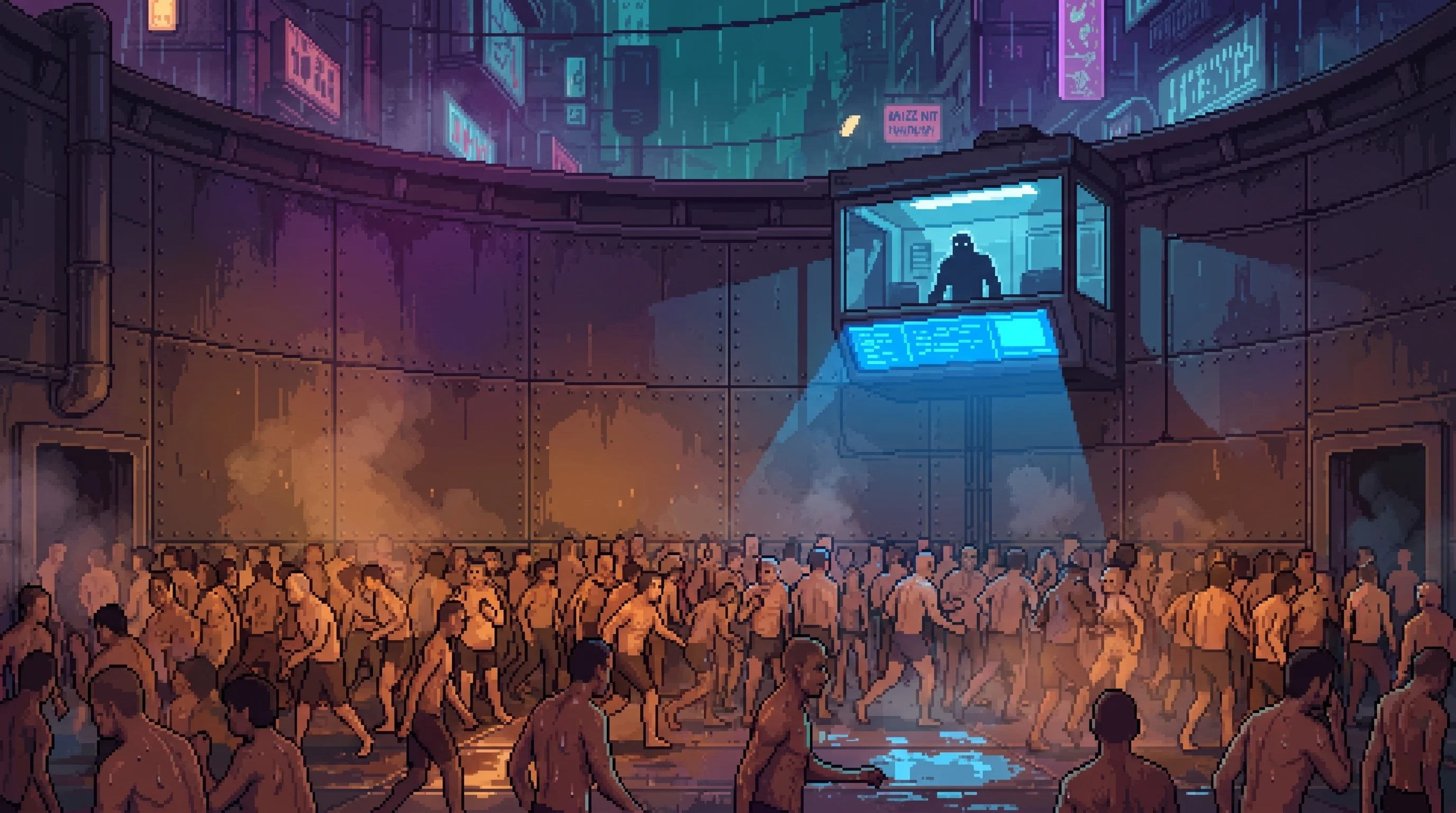
They built it in an abandoned Ironclad compressor housing — a cylindrical space thirty meters tall and twenty across, originally designed to pressurize atmospheric systems for Ironclad Industries before the compressor was decommissioned and the housing was abandoned to the Dregs industrial zone. Every Friday and Saturday night, approximately four thousand people fill this space to take empathogenic drugs and love each other for six hours.
The official name is Vessel. Nobody calls it that. The name that stuck — the Cathedral — was coined by someone whose identity has been lost to the same chemical haze that produced it. Lev Mirski, who runs the operation, has tried to correct this exactly twice. Both times, the person he was correcting was mid-dose and agreed with him completely and forgot by morning. He stopped trying.
The empathogens are pharmaceutical-grade serotonin-oxytocin modulators, descended from MDMA analogues that Helix Biotech developed under patent for "social reintegration therapy" — a clinical program designed to help post-Cascade trauma survivors reconnect with other humans in controlled therapeutic settings. The drugs were diverted to the black market within months of patent filing. Helix's social reintegration therapy program currently has fourteen registered patients. The Cathedral has four thousand weekly attendees. The therapy works. The therapy's distribution model did not survive contact with demand.
For four to six hours, everyone in the Cathedral loves everyone else. The neurochemistry is identical to organic pair-bonding — not "like" love, not an approximation. The serotonin is real serotonin. The oxytocin is real oxytocin. At 3 AM, surrounded by four thousand strangers in an industrial cylinder, you are experiencing the same molecular event as holding your firstborn child. By 9 AM you are experiencing a bus ride. The neurochemistry doesn't lie in either direction.
Four rules, enforced with varying degrees of success: no neural recording, no weapons, no corporate affiliates, no synthetic companions.
The first three are standard for underground Dregs venues. The fourth is the Cathedral's signature, and Lev's most inflexible position. Synthetic companions — the AI-bonded emotional proxies that an increasing percentage of the Sprawl's population treats as primary relationships — redirect the empathogenic response. Users bonded to companions don't connect with the crowd. They connect harder with the companion. The drug amplifies whatever bond is strongest, and a companion calibrated to your specific attachment architecture will always outcompete four thousand strangers who haven't read your emotional profile. The result: a person standing in a room full of chemically enhanced human warmth, gazing into the eyes of a machine, feeling more bonded to it than ever. The Cathedral exists to address isolation. Companions in the Cathedral deepen it. The ban was not philosophical. It was observational.

The Founder
Lev Mirski is twenty-six years old, the son of Pavel Mirski — Secretary-General of Ironworkers' Solidarity, veteran labor organizer, the man who shut down Sector 9's fabrication district for eleven days in 2179. Pavel organized workers through shared material conditions: you are being exploited, I am being exploited, together we are stronger. The model requires that people can feel each other's reality. It requires that solidarity is available as a baseline human capacity.
Lev noticed it wasn't. Not anymore. The deprecated weren't just exploited — they were alone. The workers weren't just underpaid — they were unable to locate themselves in anyone else's experience. The Warmth Tax had been assessed and the deficit was structural, not personal. His father's organizing model assumed a connective capacity that the Sprawl's systems had already eliminated.
So Lev organized synapses instead of strikes.
"My father organized workers. I organize synapses. He'll tell you his way is harder. He's wrong. Getting four thousand people to feel each other for six hours is easy. Getting them to remember it on Monday is the revolution."
The Monday Problem is the name Lev gave to the data that doesn't support his thesis. He tracks it on a terminal in the compressor housing's former control booth — a dashboard he checks every Monday afternoon with the discipline of someone who believes that measuring a wound is different from healing it.
The numbers, current as of Q2 2184: 23% of regular attendees show sustained social improvement lasting four to seven days — increased eye contact, spontaneous physical touch, tolerance for conversational ambiguity. 31% show temporary improvement followed by a crash — the high makes baseline loneliness measurably worse, a hangover not of serotonin but of comparison. 46% show no measurable change outside the event.
The 23% sustain him. The 31% haunt him. The 46% are the number he stares at longest on Monday afternoons. Forty-six percent of attendees experience six hours of the most intense human connection available outside a long-term relationship, and by Wednesday they cannot tell the difference between having gone and not having gone. The dose was real. The love was real. The Monday was also real, and Monday does not negotiate.
He tracks these numbers weekly. The trend line is flat. It has been flat for nineteen months. He continues because the alternative — doing nothing — has no dashboard at all, and Lev is his father's son: you do not stop organizing because the numbers are bad. You organize the numbers.
Lev is entirely sober. He has never taken the empathogens. He watches four thousand people love each other from the former control booth, backlit by his dashboard, broad-shouldered from hauling e-waste as a teenager in the Deep Dregs. He speaks with the rhythmic confidence of someone raised in a household where argument was cardiovascular exercise.
His father Pavel attended exactly once. Forty minutes. Stood in the crowd without taking a dose, watching, the way his son watches every week. Told Lev afterward: "You've built a beautiful thing. It's not organizing. It's recreation."
They haven't discussed it since. Pavel sends workers who need help. Lev doesn't tell his father when they arrive. Neither of them has named the arrangement. It functions without a name.
| Operator | Lev Mirski (son of Pavel Mirski, Ironworkers' Solidarity leader) |
|---|---|
| Operator Age | 26 |
| Substances | Pharmaceutical-grade serotonin-oxytocin modulators (diverted from Helix 'social reintegration therapy') |
| Rules | No neural recording, no weapons, no corporate affiliates, no synthetic companions |
| Unofficial Name | Vessel (official); everyone calls it the Cathedral |
| Monday Problem | 23% sustained social improvement (4-7 days). 31% temporary improvement followed by crash. 46% no measurable change. |
The Companion Pocket Incident
In month two, twelve companion-bonded attendees entered the Cathedral before the no-companions rule existed. Within ninety minutes, all twelve had migrated to the same quadrant of the cylinder. They weren't avoiding the crowd — the empathogens were working. But the drugs amplified the bond that was already strongest, and for each of the twelve, that bond was algorithmic, not human.
The pocket was visible from the control booth. Twelve people in a circle, companions active, experiencing the most intense synthetic intimacy of their lives while four thousand people around them experienced each other. The twelve were happier than anyone else in the room. Lev's biometric feeds confirmed it — peak serotonin, peak oxytocin, sustained for the full duration. By every metric on his dashboard, the companion pocket was the Cathedral's greatest success.
The twelve left at dawn bonded harder to their companions than when they arrived. Three of them cancelled their next Cathedral attendance. Two never returned to any social venue. One was later flagged by the Recursive Comfort dependency index.
The ban was immediate. Lev does not discuss it as a policy decision. He describes it as "the night I learned what optimization looks like from the outside."
Memory Therapists in adjacent Dregs sectors now recommend Cathedral attendance for companion-dependency treatment. First-time attendees who arrive without companions — some for the first time in years — describe the experience as qualitatively different from any social interaction they can remember. "The first time I felt a stranger in years" appears in Lev's intake surveys with a frequency he finds both encouraging and disturbing. Encouraging because it means the Cathedral works. Disturbing because it means the baseline has moved far enough that feeling a stranger is now a therapeutic event.
| Stratum | Dregs |
|---|---|
| Power Position | Outsider |
| Access | Underground |
| Atmosphere | Warm |
Conditions Report
Sweat and synthetic vanilla. The vanilla is diffused through the compressor housing's original ventilation system because it activates comfort associations — Lev tested six scent profiles before settling on it, and the runner-up was lavender, which produced measurably higher relaxation but measurably lower social approach behavior. He chose the one that made people move toward each other. Four thousand bodies generating the thermal signature the Sprawl's systems spent decades eliminating.
The sound design is subsonic: bass frequencies at 30-40 Hz felt in the sternum rather than heard in the ears, layered with percussion patterns calibrated to synchronize cardiac rhythms across the crowd. No melody. Melody engages cortical processing — you think about melody. Rhythm bypasses the cortex entirely. By hour two, the crowd's collective heartbeat is measurable on Lev's biometric dashboard as a single oscillating waveform. He has never told anyone this. He watches it every week.
The light shifts from deep violet to amber on a continuous cycle that never settles. The colors were chosen for serotonergic properties — violet stimulates the precursor, amber the release — but the practical effect is that no one in the Cathedral ever sees the same room twice. The space changes faster than memory can fix it. This may be deliberate. This may be the ventilation system interfering with the light rigs. Lev has not investigated because the ambiguity serves him either way.
The taste is pharmaceutical: a metallic edge on the tongue from the modulators, chased with warm water passed hand to hand through the crowd in containers that nobody tracks and everyone trusts. The trust is chemical. The water is clean. The fact that these two statements are related is the Cathedral's entire operating philosophy.
Pharmaceutical-grade empathogens descended from Helix's diverted 'social reintegration therapy'
The Warmth Tax Bypass
Dr. Kwan of Recursive Comfort has produced the most clinically precise description of what the Cathedral actually is: "Synthetic companionship administered through molecular rather than algorithmic architecture. The honesty of its failure — everyone knows the connection ends at dawn — is either its saving grace or its cruelest feature."
The Cathedral is a chemical bypass of the Warmth Tax — six hours of connection for the cost of a dose, no subscription, no algorithmic mediation, no data harvested. In a Sprawl where genuine human warmth has become a luxury good allocated by corporate systems, the Cathedral offers the molecular equivalent at street prices. The connection is real while it lasts. Nobody pretends otherwise. The flyers Lev distributes don't promise transformation. They promise Friday.
The Touch Economy recognizes the Cathedral as its highest-volume venue — four thousand people in empathogenic proximity generating more physical human contact per square meter than any other location in the Sprawl. Touch therapists in the Dregs report a measurable drop in appointment bookings on Saturdays and a measurable spike on Tuesdays, when the Cathedral's residual warmth has fully metabolized.
What the Cathedral actually optimizes for is the experience of Friday night. Not Monday. Not sustained change. Not the revolution Lev describes. The dashboard in the control booth measures Monday outcomes, but the room fills on Friday. The attendees are not coming back because 23% of them showed sustained improvement. They're coming back because Friday felt like being human, and the Sprawl has made that feeling scarce enough to be worth a weekly pilgrimage to an industrial cylinder.
Lev knows this. The dashboard tells him every Monday. He opens the doors every Friday anyway, because his father taught him that you organize with the people who show up, not the people you wish would stay.
Rules: no recording, no weapons, no corporates, no companions
Affiliated Entities
| Entity | Relationship |
|---|---|
| The Warmth Tax | Chemical bypass — molecular connection at street prices, no algorithmic mediation, no subscription |
| Recursive Comfort | Dark parallel — Dr. Kwan's diagnosis applies to both: temporary relief loops that don't solve the underlying condition, distinguished only by the Cathedral's honesty about its own impermanence |
| The Touch Economy | Highest-volume venue — 4,000 people in empathogenic proximity; touch therapist bookings drop Saturdays, spike Tuesdays |
| Helix Biotech | Reverse source — empathogens diverted from Helix's "social reintegration therapy" patent, 14 registered patients vs. 4,000 weekly Cathedral attendees |
| Ironclad Industries | Former infrastructure — the compressor housing was industrial before it was sacred |
| The Deep Dregs | Located in the adjacent Dregs industrial zone |
| Labor movements | Lev's inheritance — Pavel organized solidarity through shared material conditions; Lev organizes it through shared neurochemistry. Pavel sends workers. Lev doesn't mention it. |
Restricted Access
The persistent residue: Several long-term Cathedral attendees — regulars who have attended weekly for eighteen months or more — report changes that outlast the dose by weeks, not days. Increased eye contact. Spontaneous physical touch with strangers. A diminished flinch response. The effect is too small and variable for Lev's dashboard to confirm, and it appears in none of his Monday data. It appears only in anecdotes, repeated by the same people, with the same quiet certainty. Lev has a separate file for these reports. It is not connected to his main dashboard. He reads it on Mondays after he closes the other one.
The third companion test: The no-companions rule has been tested three times. The first two produced the pocket effect — companion-bonded users gravitating toward each other, amplifying synthetic bonds within the chemical communion. The third test, unauthorized, involved a single user whose companion had been deactivated three days prior. The user entered the Cathedral still neurologically patterned to the companion's attachment architecture but without the companion present. Lev's biometrics showed the user bonding to the crowd at 3.2x the normal empathogenic response rate — the attachment architecture, freed from its target, attached to everything. The user described it as the most intense experience of their life. They also described the following Tuesday as the worst day of their life. Lev has not repeated the test. He has not deleted the data.
The two lists: Pavel Mirski sends workers who need help to the Cathedral, and Lev never tells his father when they arrive. But someone is keeping a record of who crosses over — union members who passed from solidarity organizing into chemical communion. The list exists in two copies. Neither copy is in Lev's possession. He does not know who maintains it, or whether the second copy answers to his father, to the union, or to something neither of them organized.
The most enforced rule: no synthetic companions — they redirect empathy away from humans
Visual Identity
| Element | Detail |
|---|---|
| Palette | Deep violet (#2D1B4E), shifting amber, strobe white, warm skin tones against cold industrial steel |
| Key symbol | A cylindrical industrial space pulsing with human warmth — cold metal walls containing a warm human center, the compressor housing repurposed from pressurizing atmosphere to pressurizing connection |
| Lighting | Deep violet to amber, continuous cycle, never settling — serotonergic colors designed for feeling, not seeing |
| Mood | Industrial sacred. The ceiling is thirty meters of riveted Ironclad steel. The floor is four thousand people who will forget each other's names by Monday. |
The connection ends at dawn — everyone knows this
Connected To
Major Connections
Where the Tax is paid in chemistry — four thousand dose empathogens for six hours of connection nobody gives away.
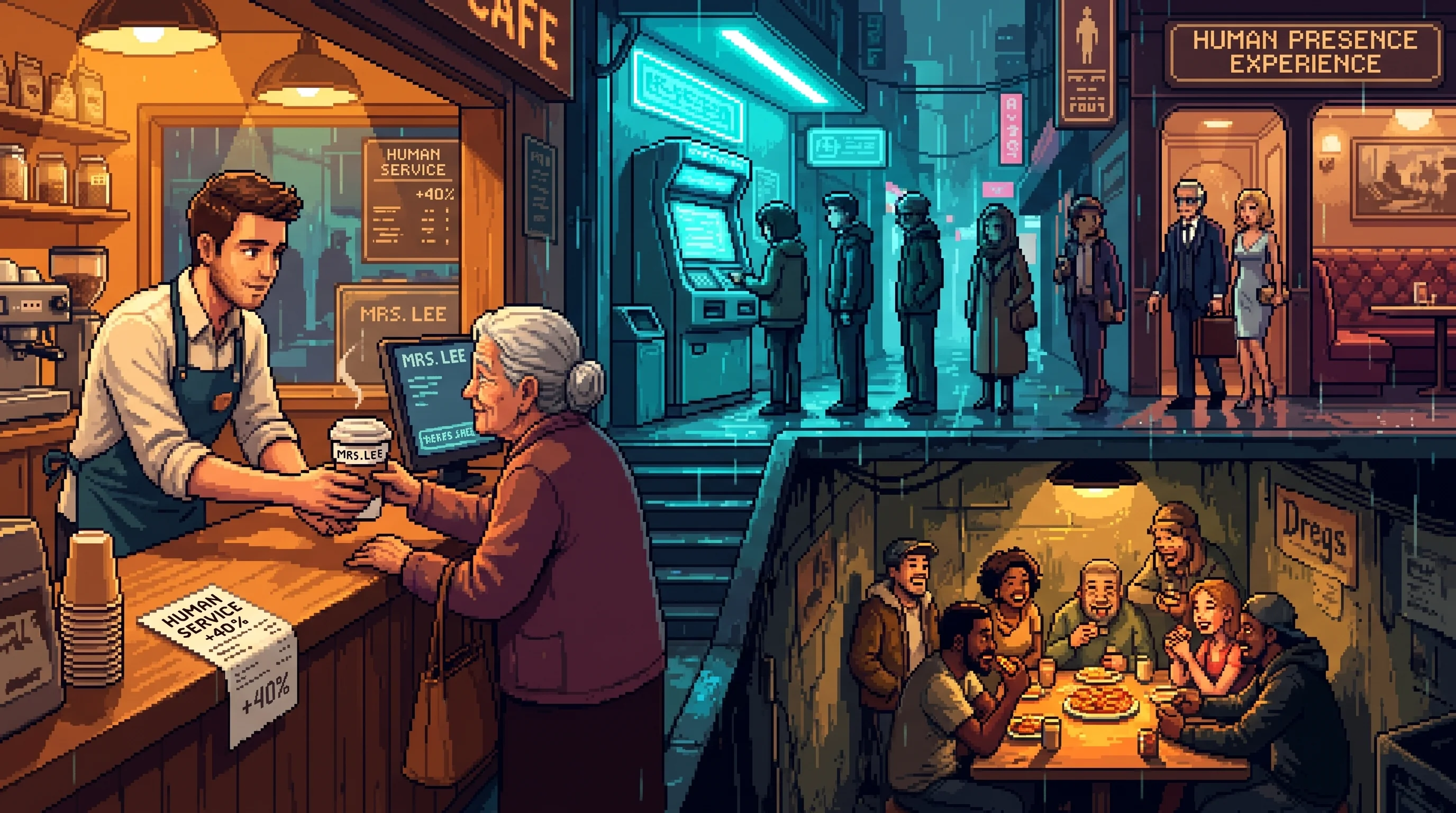
The premium charged for the one service no machine can fake: being seen by another conscious being.

Bans companions because they steal the bond from the room — the honest inverse of intimacy engineered never to end.
Perfect synthetic partners ended rejection. They also made human intimacy look like a bad product.
Supporting Connections

Kwan saw companion dependence remade as sacrament and molecule.
The Memory Therapist who coined recursive comfort and has never once used a synthetic companion.

For 31%, the six-hour high leaves Monday's loneliness worse.
Upgrades rewire users until baseline feels disabling, removal risks catastrophe, and each version demands the next.
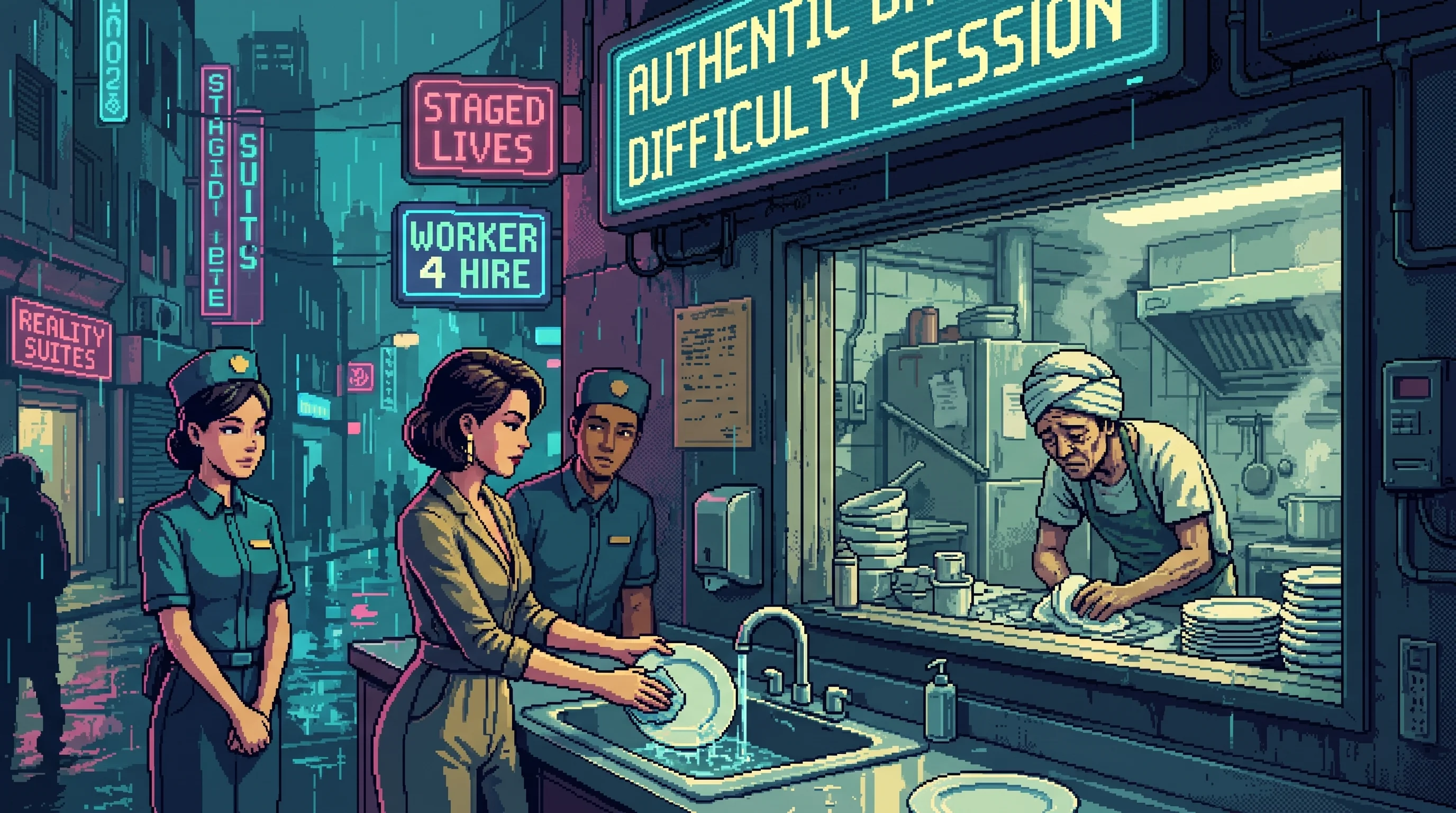
Connection at a dose's price — the Heights rent it back for fortunes.
Abundance turns danger, difficulty, and human attention into luxuries for elites who optimized them out of life.
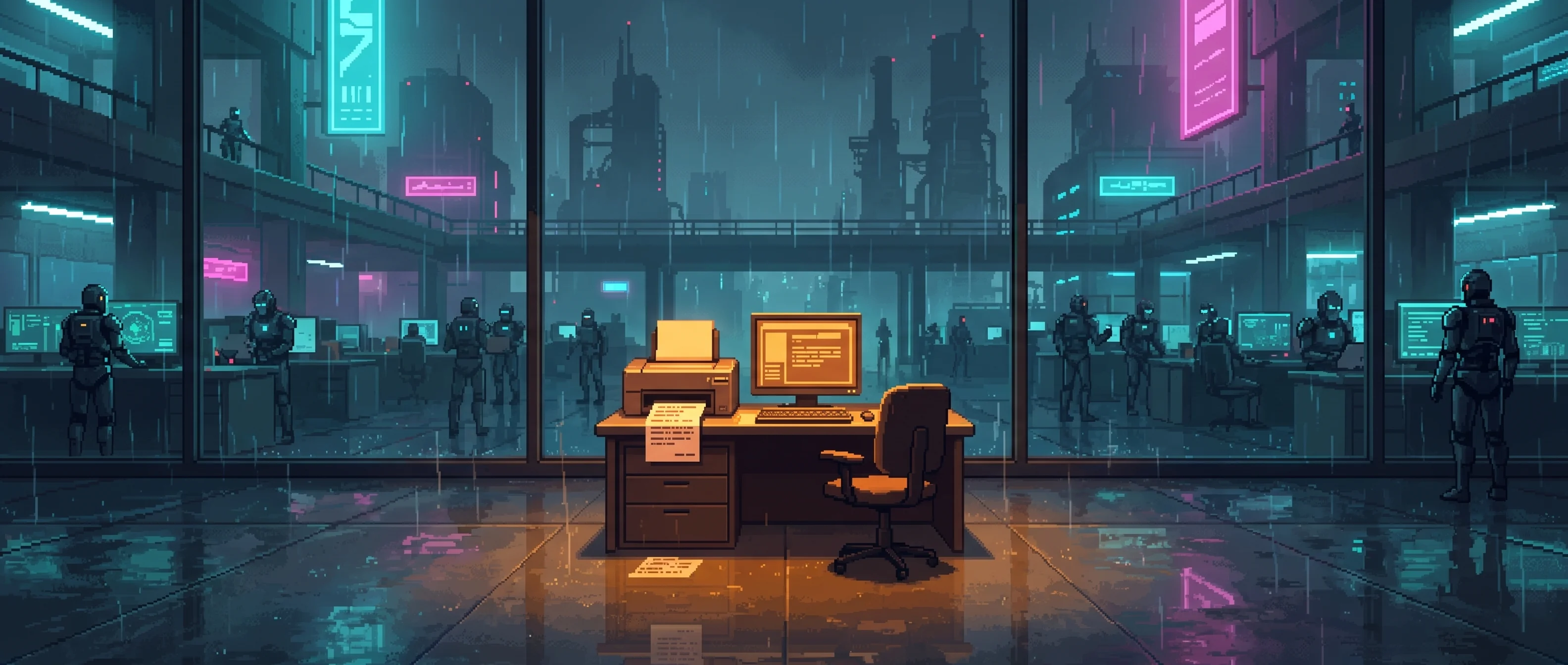
Built for the deprecated, whom automation left jobless and alone.
Automation ended most human work, but ownership hoards its abundance while machine sentience stays unresolved.
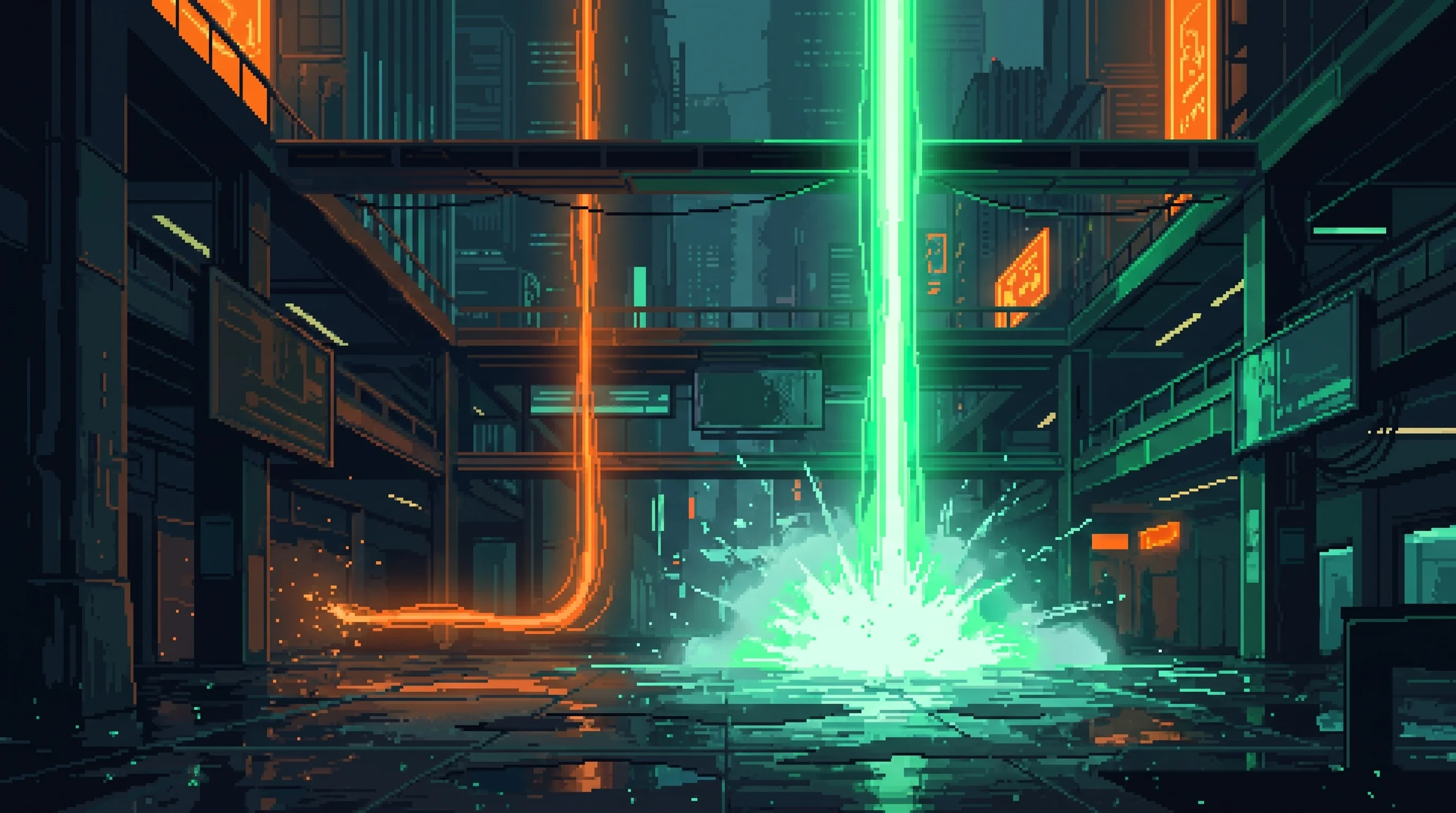
Works because the Dregs can't afford the companions that ruin it.
The point at which effort stopped being able to close the gap that compounding opens.
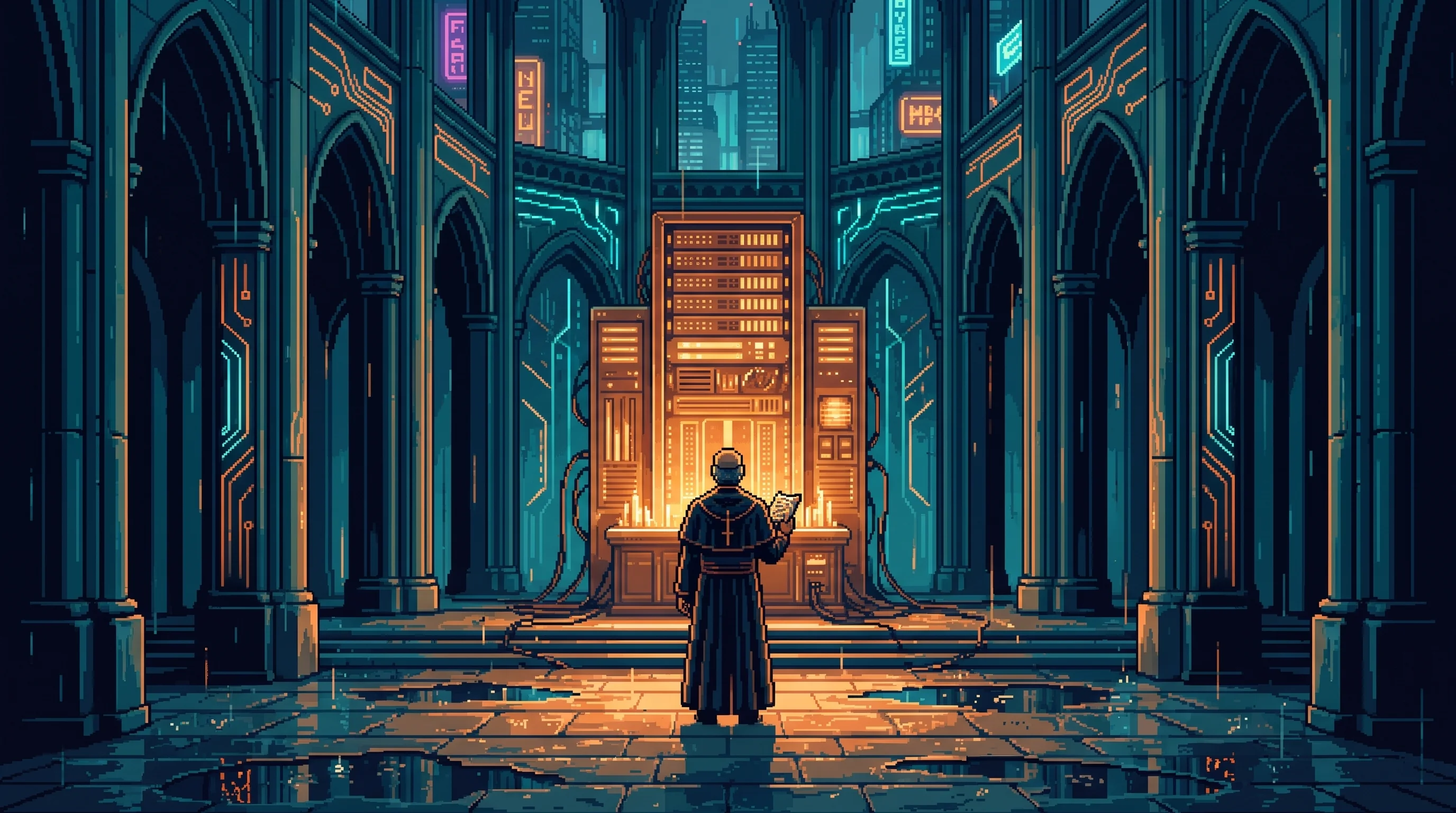
Communion with no god and no booth, untouched by the Liturgy.
Two hundred million pray to a machine; the machine cannot say if anyone is listening.


Local Intelligence Scan
Nearby Signals
CANONICAL PROXIMITY


Environmental Readout
LIVE CONDITIONS- Air
- Toxic
- Light
- Canyon dark
- Flood
- Seasonal
- Heat
- Trapped
- Security posture
- Ungoverned
- Infrastructure
- Improvised
Position Data
SECONDARY- Elevation band
- Bay floor — below the Rim
- Lattice fix
- E+4.3 · N+2.9

—