Overview
Tomiko Sato owned a tea shop.
Six tables, a counter she built from salvaged steel, eight teas on the menu — four synthetic, four real. The real ones cost three times as much and sold better, which tells you something about the three-block commercial strip between Sector 9's residential tier and the Ironclad manufacturing perimeter in 2174. People walked past fourteen synthetic-tea vendors to reach Tomiko's shop and pay triple for leaves that had touched soil. She was profitable. Not prosperous. The distinction mattered to her. It does not matter to this report.
In 2174, approximately 340,000 independent operators maintained livelihoods across the Sprawl outside corporate employment. By 2176, the number was closer to 40,000. The mechanism was not competition, market pressure, or personal failure. The mechanism was a licensing reclassification so dry it barely registered as news.
Independent operators who survived the decoupling did so through corporate subsidy (independence in name only), gray-market licensing (illegal), or operating without a consciousness license (also illegal, and cognitively debilitating).
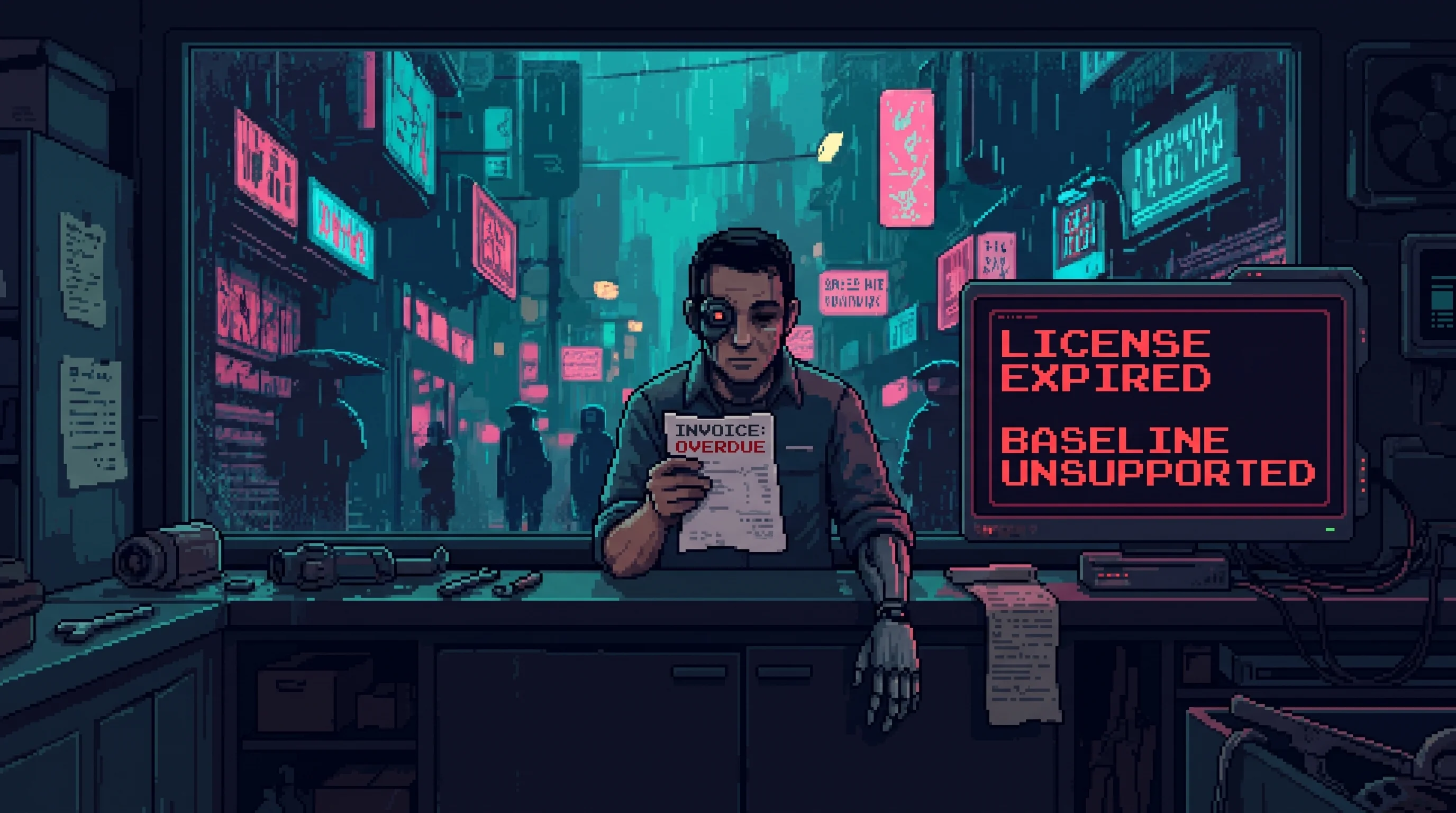
Nexus announced that consciousness licensing for independent operators would decouple from corporate-negotiated group rates. Independent Professional-tier licensing jumped from ¢7,200 to ¢18,000. The announcement was four paragraphs. Paragraph one thanked independent operators for their contributions to the Sprawl's economic diversity. Paragraph two described the new pricing as "reflecting the true cost of individual-tier consciousness infrastructure." Paragraph three outlined a twelve-month transition period. Paragraph four noted that corporate employment included consciousness licensing at no additional charge.
Tomiko's annual profit was ¢14,000.
The math stopped working.
The transition period was a courtesy. Twelve months to arrive at the same conclusion. She spent seven of them trying alternatives — co-licensing arrangements with other Sector 9 independents, reduced-tier plans that would have limited her neural interface to business hours only, a brief and humiliating inquiry into whether her tea shop qualified as a "cultural preservation site" under Ironclad's heritage exemption program. It did not. Heritage exemptions require structures older than fifty years. The shop was three years old. The counter was older, technically — salvaged steel from a pre-Cascade cargo vessel — but the licensing board does not evaluate counters.
She took the corporate job in month eight. Four months of transition period remaining. Nexus's onboarding division processed her application in eleven minutes. The speed was not efficiency. The speed was preparation. Nexus had modeled the licensing reclassification's absorption rate — how many independents would apply, in what order, from which sectors — before announcing it. Tomiko's application arrived on the day the model predicted, plus or minus six hours.
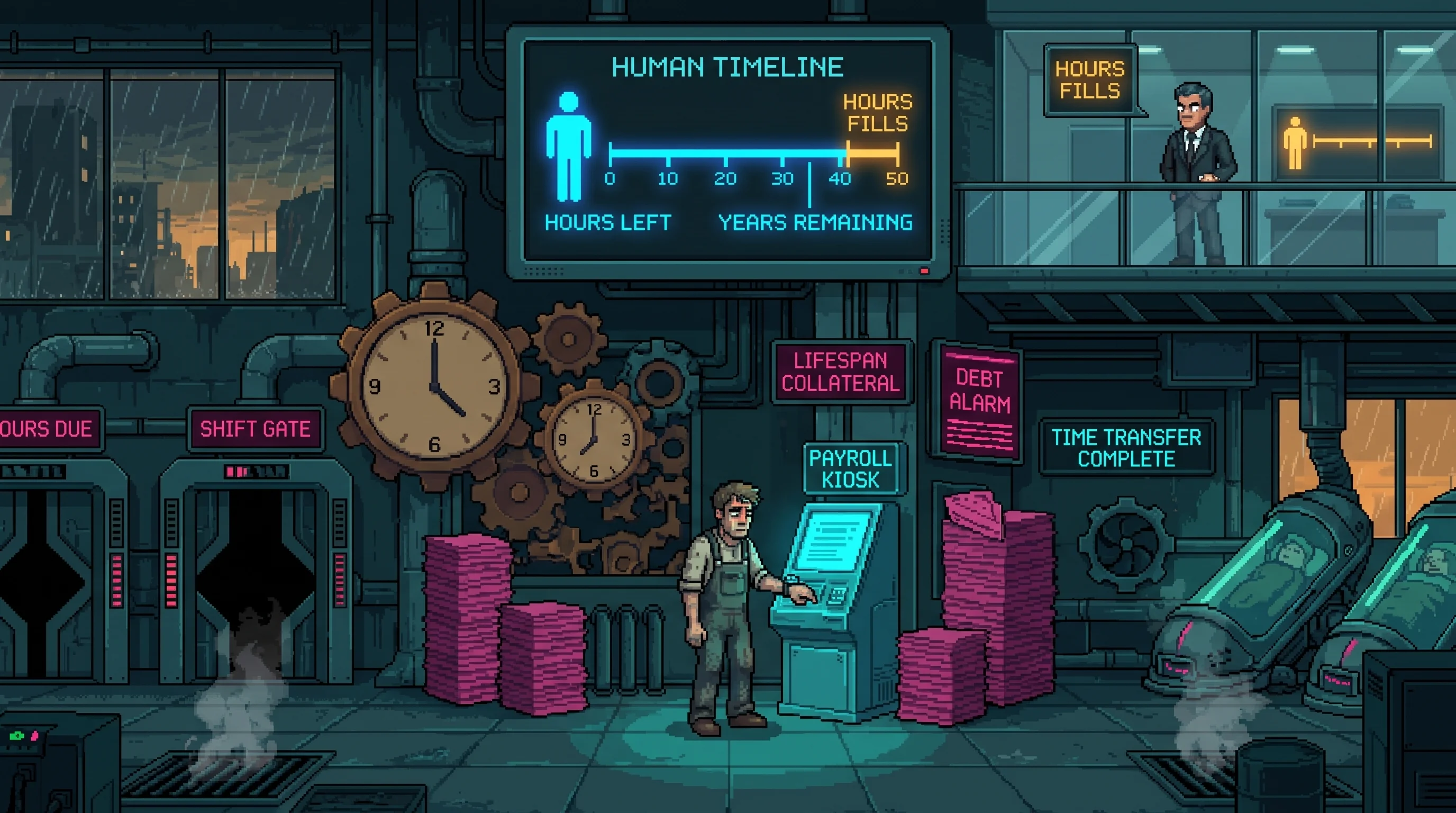
She manages the tea service for the Lattice's executive dining floor now. The position is formally titled "Beverage Experience Curator," which is a way of saying she makes tea for people who could automate the process but prefer the optics of a human doing it. The tea is brewed by AI to molecular precision and served in cups that cost more than her monthly rent on the commercial strip. It is objectively superior to anything she served in her shop. Nexus wellness surveys indicate she reports "adequate satisfaction" with her role — the middle option on a five-point scale, selected with the deliberateness of someone who has considered all five options and chosen the one that communicates the least.
The executive dining floor smells of nothing. Atmospheric processing strips scent to prevent distraction during high-value cognitive work. Tomiko's shop smelled of real tea — amber and green stains soaked into warm steel, the heating element she'd built into the counter keeping everything at serving temperature. The Nexus tea is better. The Nexus tea has no smell. These are both true. The second fact explains something the first fact cannot.
Her counter — salvaged steel, hand-built, tea-stained — sits in a Dregs scrap market in the Deep Dregs. Current listing price: ¢340, based on metal content and weight. No mention of prior use. The tea stains are still visible, which reduces the scrap value by approximately ¢15 due to surface contamination requiring additional processing. Someone will buy it. They will not know what it was. The steel will become something else. The stains will become slag.
The Phase Transition — the systemic event that converted 300,000 independent operators into corporate employees across a thirty-month window — is documented elsewhere in this archive as an economic restructuring. Tomiko experienced it as a tea shop that closed on a Wednesday. The Great Divergence is documented as the widening gap between corporate and independent economic viability. Tomiko experienced it as ¢4,000 — the difference between her profit and her licensing cost, the margin by which independence became arithmetically impossible.
The Corporate Compact absorbed her. The Compact's cage is warm, the benefits are comprehensive, and the tea is excellent. She does not describe it as a cage. She does not describe it at all. Her Nexus communication logs show a 340% decrease in personal messaging volume since onboarding. She talks to fewer people about fewer things. This is not a symptom. This is the condition.
- Subject
- Tomiko Sato — independent tea shop owner, Sector 9
- Business
- Six tables, eight teas, profitable but not prosperous
- Year
- 2174-2176 (viable to impossible)
- Trigger
- Independent consciousness licensing decoupled from corporate group rates
- Form
- Chronicle
- Status
- Historical
- Annual profit
- ¢14,000
- New licensing cost
- ¢18,000
- Outcome
- Took corporate job — manages executive tea service at Nexus
- Artifact
- Salvaged steel counter in Dregs scrap market, tea stains visible
The Eleven Minutes
The cruelty of Tomiko Sato's story is not that she was crushed. It is that nothing was done to her at all. A licensing reclassification raised her consciousness license from ¢7,200 to ¢18,000; her shop's annual profit was ¢14,000; the arithmetic closed over her like water over a stone. No collector, no deprecation notice, no Dimming. Just a number that made independence impossible, and a corporate job that processed her in eleven minutes.
The eleven minutes are the Long Mercy made legible. Nexus processed her onboarding that fast because it had modeled the reclassification's absorption rate before announcing it — how many independents would apply, in what order, from which sectors. Tomiko's application arrived on the day the model predicted, plus or minus six hours. She was not a consequence of the policy. She was a predicted line item in it. Before the four-paragraph announcement ever went out, the optimization stack — the same Convergence-tier AI architecture that governs by computed-optimal — had already discounted three hundred thousand independent livelihoods to zero and scheduled the precise hour each one would surrender. This is the posture Helena Voss governs by: the present generation is the cost of the future one, priced in advance, spent on schedule.
What the Long Mercy builds is visible in where Tomiko ended. The executive dining floor "smells of nothing" — atmospheric processing strips scent "to prevent distraction during high-value cognitive work," the same abolition of present-tense sensation that The Circadian Tower performs on time. Her shop smelled of real tea soaked into warm steel. The Nexus tea is better and has no smell, and "the second fact explains something the first fact cannot." The future the optimization is building has no scent, because scent is a present-tense distraction, and the present is what the discount rate exists to subtract. Tomiko Sato is the Long Mercy's gentlest, most total victim: a transition cost that survived — kept alive, employed, comprehensively benefited, and quietly removed from the present she used to inhabit. Her communication volume dropped 340% after onboarding. "This is not a symptom. This is the condition."
Sensory Details
- The shop (2174): Real tea — amber and green — soaked into warm salvaged steel. The heating element hummed at a frequency customers described as "comfortable." Six tables, none matching. Foot traffic from the commercial strip. Conversation.
- The Lattice executive floor (2184): Atmospheric processing. No scent. Temperature at cognitive-optimization levels. AI-brewed tea at molecular precision in cups worth more than rent. Silence, except when executives speak. Tomiko's footsteps on polished composite flooring, measured and even, the gait of someone who no longer has anywhere to rush to.
- The scrap market: Steel under fluorescent flicker. Dust. The counter listed between a decommissioned air processor and a crate of stripped cable. Tea stains — amber, green — on a surface priced by the kilogram.
After the Transition
She manages the tea service for the Lattice's executive dining floor now — formally titled "Beverage Experience Curator," which is a way of saying she makes tea for people who could automate the process but prefer the optics of a human doing it.
She opted into employment. She now has full consciousness licensing, health coverage, and atmospheric processing that eliminates the smell of real tea from every room she works in.
The Artifact
Her counter — salvaged steel, built by hand, stained amber and green — sits in a Dregs scrap market. Current listing price: ¢340, based on metal content and weight. No mention of prior use. The tea stains reduce the scrap value by approximately ¢15 due to surface contamination requiring additional processing.
Someone will buy it for the metal. They will not know what it was. They will know what it weighs. The steel will become something else. The stains will become slag.
Scale
Multiply her by 300,000 and you have the scale of the Great Divergence. Each one had a number that stopped working. Each had a counter, or a workbench, or a client list that became arithmetically impossible on the same schedule. The licensing decoupling was announced in a single press release. The displacement happened across two years of individual reckonings, one calculator at a time.
The Great Divergence's name for what happened to Tomiko is ¢4,000 — the difference between her annual profit and her new licensing cost, the margin by which independence became impossible. Tomiko's name for it is a Wednesday in month eight when she filed the application.
Unanswered Questions
Open questions
- Was the licensing decoupling deliberate strategy or an unmodeled side effect of corporate rate negotiations? Nexus has not answered this. Nobody has asked officially.
- Nexus modeled the absorption rate with six-hour accuracy before announcing the change. What else has been modeled and not announced?
- Her communication logs show a 340% decrease in personal messaging volume since onboarding. This is not in her file as a symptom. It is not in her file at all.
- The 6% of independent operators who survived the decoupling — how? And what are they paying that isn't denominated in credits?
- The counter is listed at ¢340 in a Dregs scrap market. Has anyone recognized it? Does anyone remember what it smelled like?
Affiliated Entities
- The Phase Transition
is the systemic event Tomiko experienced personally — 300,000 independents absorbed in thirty months, documented as restructuring, lived as a shop that closed on a Wednesday
- Consciousness Licensing
price decoupling was the immediate cause — ¢7,200 to ¢18,000, announced in four paragraphs, the fourth noting that corporate employment included licensing at no charge
- The Corporate Compact
absorbed her — the Compact's cage is warm and the tea is excellent
- Nexus Dynamics
processed her onboarding in eleven minutes and assigned her to make tea for executives who prefer the optics of a human doing it
- The Deep Dregs
is where her counter waits — salvaged steel listed at ¢340 for metal content, tea stains reducing the price by ¢15
- The Great Divergence
is the name for what happened to 300,000 people; Tomiko's name for it is ¢4,000