
Compute Drought
Basic-tier degrades from 4.7 to 3.2 petaflops during severe droughts
Overview
A compute drought is what happens when the air you breathe becomes less profitable than the futures contract someone is settling three districts away.
The mechanism is simple. The Cognitive Exchange trades consciousness bandwidth futures. When demand spikes — quarterly settlements, behavioral prediction recalibration, a major licensing event — the price of processing capacity rises. Server farm operators, following rational economic incentives, redirect capacity from low-margin shared services to high-margin commercial operations. Basic-tier consciousness maintenance, atmospheric processing algorithms, Grid load-balancing: these are the first things to go. Neural advertising optimization, consciousness futures settlement, behavioral prediction processing: these are what replace them.
Section 23.7 of the Basic-tier agreement permits "temporary capacity reallocation during infrastructure optimization events." The language is precise. The atmospheric processors that keep sub-level residents breathing are, legally, a shared service. Shared services are low-margin. Low-margin services yield to high-margin services during optimization events. The fourteen people who died in Q4 2182 were killed by an optimization event.
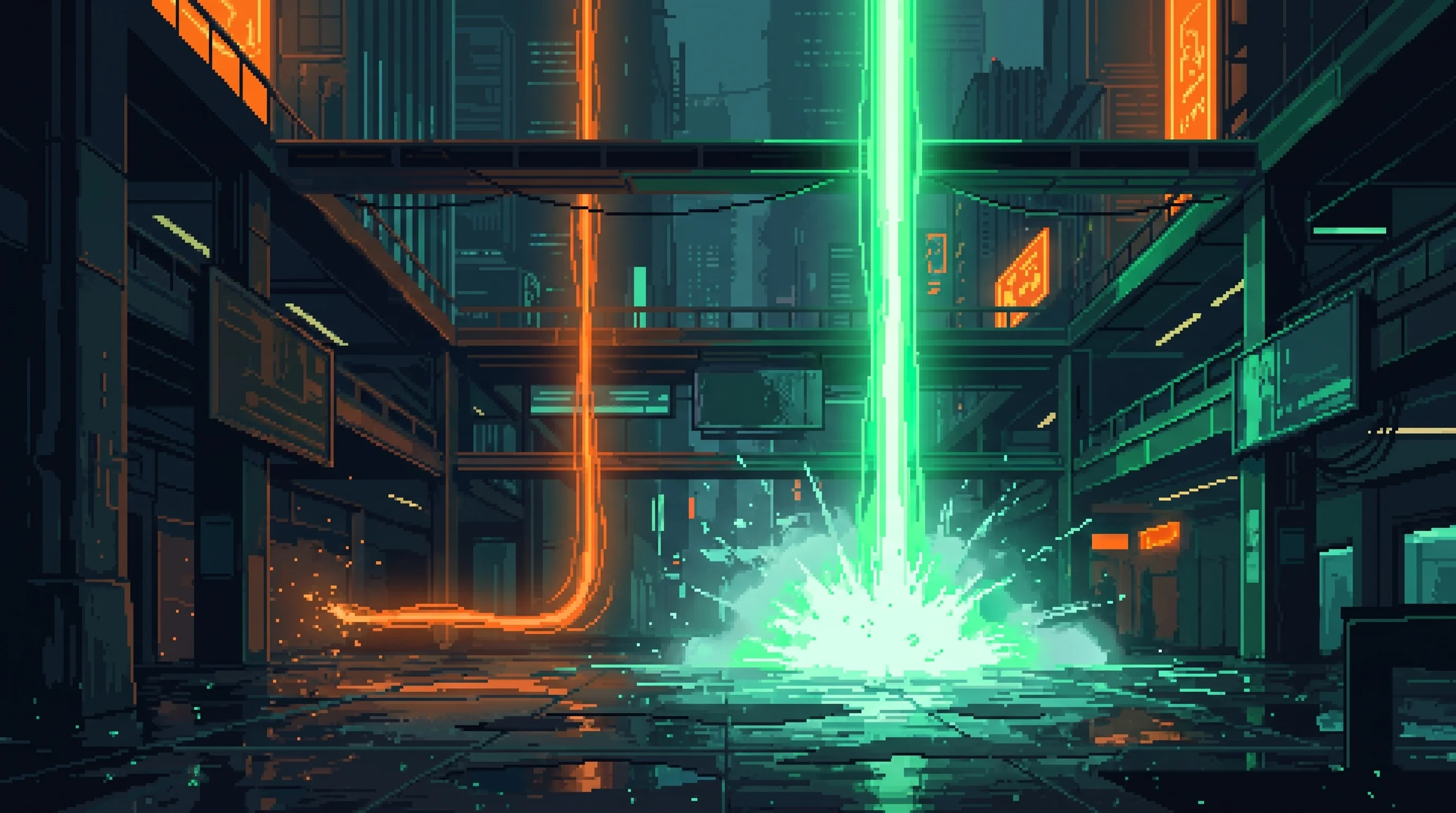
The Dregs go dry.
You feel it before you understand it. Your interface responds in seconds instead of milliseconds. Thoughts that normally arrive clearly arrive through wet cotton. Colors wash out — not from power failure but from the mind receiving them at 68% capacity. Forced-focus workers describe it as drowning in slow motion: the cognitive lock still engages, still narrows your awareness to the task, but there's nothing on the other end to narrow into. The emptiness is worse than the narrowing.
The Calendar
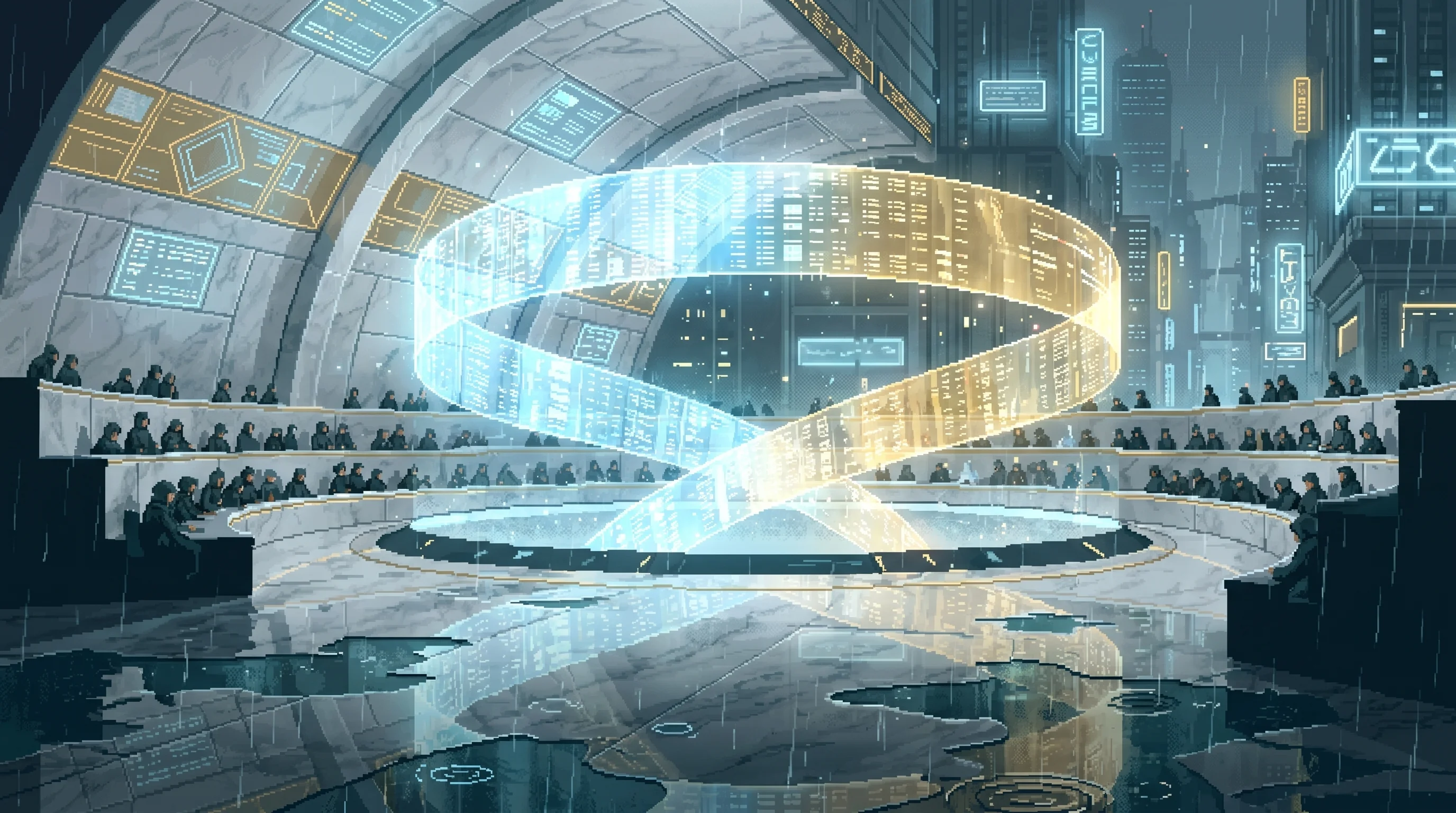
Pencil-47 mapped the drought pattern years ago. It follows the Cognitive Exchange settlement calendar with the fidelity of a tide chart. The worst droughts occur during the last three days of each fiscal quarter, when outstanding futures contracts must be settled and the processing demand to close them exceeds what the farms allocated for shared services. Dregs residents have adapted. Essential cognitive work — medical consultations, interface maintenance, anything requiring full processing — gets scheduled during the first week of each quarter, when capacity is abundant and Server Farm 14 hasn't yet begun redirecting.
The adaptation is rational. It is also the spectacle of an entire population organizing its cognitive life around the settlement calendar of a financial instrument most of them cannot define.
Basic-tier degrades from 4.7 petaflops to 3.8 during moderate droughts. Severe droughts push it to 3.2. The 4.7 is already 38% of the 12.4 petaflops the Sprawl could provide if total processing capacity were distributed equally. The 3.2 is 26%. During the worst droughts, Dregs residents operate on roughly a quarter of what the infrastructure could give them, while Executive-tier clients at Nexus Central continue uninterrupted on capacity that was, twelve hours earlier, keeping someone's atmospheric processors running.
The longest recorded drought lasted eleven days in Q4 2182. Server Farm 14 redirected capacity to settle ¢4.2 billion in consciousness futures. The atmospheric processing algorithms in Sub-Level 7 of Sector 9 degraded below safety thresholds on day three. The air quality monitoring system flagged the degradation. The flag was routed to a maintenance queue ranked by revenue impact. Sub-Level 7 generated approximately ¢340 per quarter in Basic-tier licensing fees. The ¢4.2 billion settlement completed on day nine. The atmospheric processors were restored on day eleven. Fourteen residents — elderly, unaugmented, no manual ventilation — did not survive to day eleven.
Three maintenance engineers had filed reports predicting exactly this failure mode if processing capacity was redirected during peak atmospheric demand. The reports were classified as "commercially sensitive" by Nexus risk management four months before the drought began. The classification did not suppress the prediction. It suppressed the audience. The engineers were correct. Their correctness reached no one who could act on it, because the document classification system optimizes for liability reduction, not atmospheric integrity. The engineers are still employed. The classification is still active. The reports are still correct.
Drought frequency is increasing. Internal Nexus projections — also commercially sensitive, also unreleased — show approximately 15% annual growth, tracking consciousness futures trading volume. The projections do not model atmospheric failure rates. Atmospheric failures are externalities. Externalities are, by definition, someone else's metric.
| Basic Tier Degradation | 4.7 petaflops → 3.8 → 3.2 during severe droughts |
|---|---|
| Legal Basis | Section 23.7 of Basic-tier agreement permits 'temporary capacity reallocation during infrastructure optimization events' |
The Settlement
The community response is compute rationing — voluntary redistribution of whatever processing remains during a drought, organized through networks that predate the Cognitive Exchange by decades. The rationing protocols prioritize atmospheric processing, then medical interfaces, then basic consciousness maintenance. Personal cognitive enhancement is the first thing sacrificed, which means Dregs residents spend droughts thinking slower, seeing dimmer, and breathing the output of algorithms running on borrowed time.
The Blackout Economy activates when droughts crash local infrastructure entirely. Thermal refugees — people displaced when cooling systems fail under reduced processing — move through the Dregs in patterns that Pencil-47 can predict to the hour but cannot prevent. The displacement is temporary. The damage to sub-level atmospheric systems is sometimes not.
The Coolant Crisis — the eleven-day Q4 2182 event — remains the worst documented example. It is also, by Nexus's internal metrics, the most profitable Q4 settlement period in Cognitive Exchange history. Both facts are true. Both facts are in the same quarterly report. They are on different pages.
Affiliated Entities
- The Scarcity Doctrine: Compute droughts are the Scarcity Doctrine made physical — the gap between 4.7 and 12.4 petaflops is not a technical limitation but a revenue stream, and droughts widen the gap further during the quarters when the revenue is highest.
- Good Fortune: The Cognitive Exchange settlement calendar — managed by Good Fortune's financial infrastructure — determines drought timing with the precision of a railway schedule. The droughts are not caused by Good Fortune. They are caused by the market Good Fortune built.
- Compute Rationing: The community response — voluntary, organized, older than the Exchange. Rationing protocols prioritize breathing over thinking, which is a sentence that should not need to be written.
- The Bandwidth Crisis of 2181: Different mechanism, same architecture. Bandwidth reallocation killed through communication failure where compute reallocation kills through atmospheric failure. The underlying logic — that shared infrastructure yields to commercial demand — is identical.
- The Coolant Crisis: The Q4 2182 drought. Eleven days. Fourteen deaths. ¢4.2 billion settled. The most profitable quarter and the deadliest drought are the same event.
- Data Weather: Droughts produce the most severe data weather conditions — cascading signal degradation, interface storms, cognitive static. The weather is not metaphorical. It is the sensory experience of infrastructure failing around you.
- Thermal Refugees: Severe droughts trigger cooling system failures, which trigger displacement. The refugees move in predictable patterns through predictable corridors. The predictions do not produce interventions.
- Server Farm 14: The primary drought source. Farm 14's capacity reallocation decisions are made by an optimization algorithm that weighs revenue-per-petaflop against contractual minimums. The contractual minimums include atmospheric processing. The algorithm has never violated a minimum. The minimums were set before Sub-Level 7 was populated.
Drought timing follows Cognitive Exchange settlement calendar
Restricted Access
The ¢4.2 billion Q4 2182 settlement was not a surprise. Nexus's capacity planning division modeled the drought six weeks in advance, including the atmospheric degradation curve for Sub-Level 7. The model predicted thirteen to sixteen deaths in the "unaugmented elderly" demographic cohort. The actual number — fourteen — fell within the confidence interval. The model was shared with Server Farm 14's operations team as part of standard capacity planning. It was not shared with Sub-Level 7's residents, with the atmospheric maintenance engineers, or with the Dregs community rationing networks. The model is titled "Q4 Capacity Optimization — Revenue Sensitivity Analysis." The deaths appear on page 47, in a table labeled "Externality Estimates," between cooling system maintenance costs and projected Triumph Social sentiment impact.
Page 46 is the revenue projection. Page 48 is the risk mitigation budget. The risk mitigation budget allocated ¢12,000 for post-event community relations. The fourteen deaths, valued by the model at ¢857 per death in projected liability exposure, total ¢11,998 — fitting neatly within the allocated budget with ¢2 to spare.
Sensory Details
- Feel: Thinking through wet cotton. Interface lag measured in seconds, not milliseconds. The cognitive lock during forced-focus work engaging on nothing — a vise closing on empty air.
- Sight: Washed-out gray-blue (#A0AEC0). Screens at half-brightness. Amber warning indicators (#FFB347) on interface displays. Faces pale with the particular exhaustion of thinking at two-thirds speed.
- Sound: Everything arriving a beat late. Audio processing degradation produces a half-second delay between stimulus and perception — not enough to notice consciously, enough to make every conversation feel like talking underwater.
- Atmosphere: Thick, humid air from overworked cooling systems compensating for reduced processing. The specific heaviness of a district where the infrastructure is choosing between keeping you cool and keeping you conscious.
- Key symbol: A processing capacity gauge, needle dropping from green through yellow into red, while a ticker above it counts consciousness futures trades settled per second. The needle and the ticker move in opposite directions.
Section 23.7 of Basic-tier agreement legally permits the reallocation
Visual Identity
- Color palette: Washed-out gray-blue (#A0AEC0), amber warning (#FFB347), the pale faces of a district running on borrowed capacity
- Compositional mood: Everything slightly wrong — screens flickering, people moving slowly, the air too thick, the light adequate but the minds receiving it diminished
- Lighting: Not dim from power failure. Dim from cognitive perception during degraded processing. The photons are the same. The consciousness parsing them is running at 3.2 petaflops instead of 4.7.
Worst drought: 11 days, Q4 2182, 14 deaths from atmospheric processing failure
Dregs residents schedule essential cognitive work during first week of each quarter when capacity is abundant
Connected To
Supporting Connections




—
—