
The Prosperity Pathway
Only 6% of Pathway enrollees achieve full repayment
Overview
Good Fortune's Prosperity Pathway has a 96% customer satisfaction rate at six months and an 82% default rate at three years. These are not different populations. They are the same people, measured twice.
The Pathway is three financial products sold as a bundle and marketed as "integrated prosperity architecture" — a phrase that appears in 340 pages of Good Fortune enrollment materials and zero pages of Good Fortune internal risk assessments. The three products:
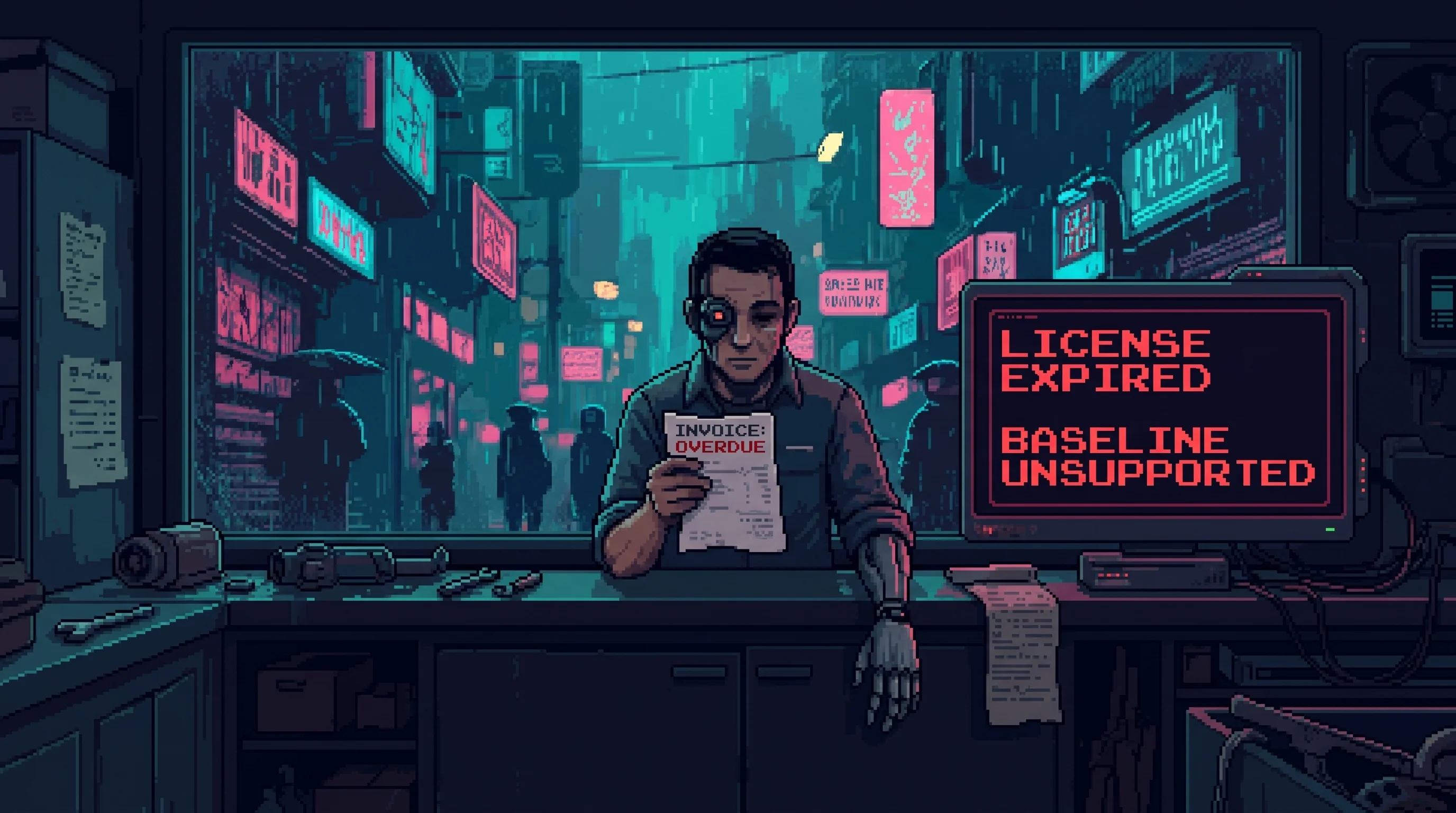
The Horizon Line finances Professional-tier consciousness licensing. Monthly payments decrease over time, which borrowers experience as progress. Compounding interest on deferred principal ensures the total obligation grows while the payments shrink. The borrower feels lighter. The debt gets heavier. Maren Qian designed the amortization curve personally. It is, by several independent analyses, the most elegant predatory instrument in contemporary lending — a compliment Qian has reportedly accepted without comment.
The Climb finances Rung 1-3 augmentations. The augmentation improves workplace productivity for approximately eighteen months, at which point enough colleagues have received the same enhancement that the competitive advantage disappears. The borrower is now servicing a loan for an advantage that no longer exists. Good Fortune's marketing materials for The Climb have never included the phrase "competitive half-life." Good Fortune's internal actuarial models use it on page one.
The Foundation bundles housing credits, food access, and social-network integration within Good Fortune's ecosystem. Pricing is genuinely competitive — 12-15% below independent alternatives in most sectors. The discount is real. The exit cost is also real: leaving The Foundation triggers simultaneous acceleration clauses across all three product lines. The discount is the bait. The acceleration clause is the jaw.
No individual product is predatory. A borrower could take any one of these loans, service it responsibly, and walk away solvent. The interaction between three reasonable products creates inescapable dependency. Good Fortune's compliance division has reviewed the Pathway suite eleven times since 2178. Each review concluded that every product meets or exceeds fair-lending standards. Each review examined the products individually. The division has never been asked to review the suite as a system. The request would require someone to define what "the system" is, and the organizational chart contains no role whose job description includes answering that question. Eleven reviews. Eleven passing grades. Zero examinations of the thing that actually kills people.

The Mechanism
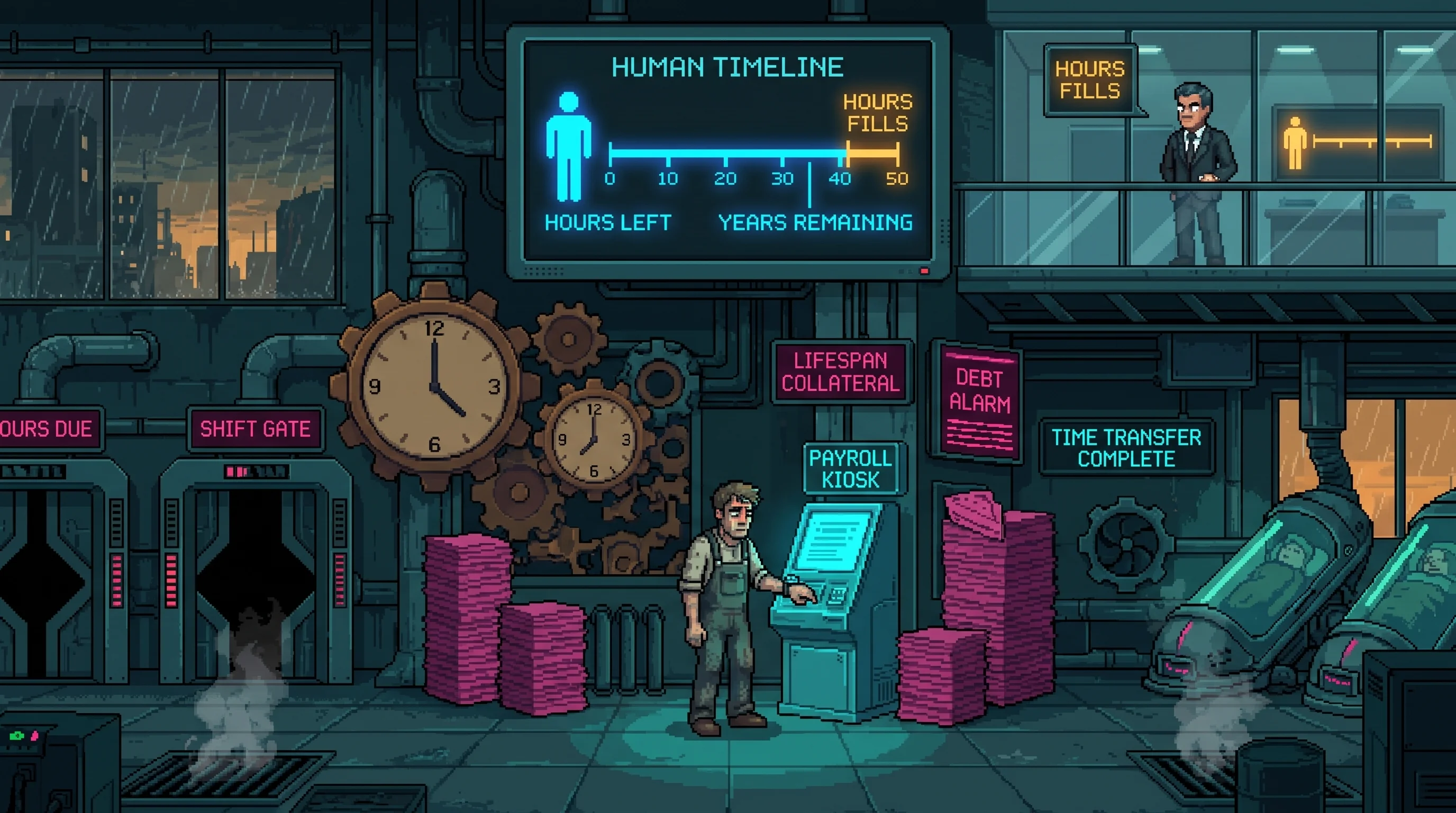
The Horizon Line finances the consciousness tier that makes The Climb's augmentations functional. The Climb's augmentations improve the productivity that makes The Foundation's housing payments affordable. The Foundation's housing provides the address stability that keeps The Horizon Line's repayment schedule from triggering default.
Remove any leg and the stool doesn't wobble. It collapses — and the borrower doesn't lose one product. They lose the infrastructure that made the other two survivable.
Good Fortune enrollment counselors at the Fortune Pavilion — human-staffed, warmth-optimized, trained to maintain eye contact for 3.2 seconds longer than industry standard — explain the Pathway as a "holistic prosperity framework." They believe this. The counselors are themselves Pathway enrollees. Eighty-one percent of Fortune Pavilion staff are servicing at least two of the three products. They recommend the Pathway with the specific conviction of people who have already bought what they're selling, and the specific desperation of people who need you to buy it too, because their Foundation housing depends on meeting enrollment targets that depend on their Climb-enhanced persuasion metrics that depend on their Horizon Line consciousness tier remaining active.
The system does not optimize for prosperity. It optimizes for enrollment. The counselors' warmth is real. Their dependency on your signature is also real. The warmth and the dependency are not in tension — the dependency is what makes the warmth so convincing. Nobody sells harder than someone whose rent is at stake.
The 6% who achieve full repayment take an average of 4.7 years. Good Fortune's "Prosperity Graduates" program features their stories prominently in enrollment materials — faces, names, testimonials. The 82% who default appear in no materials at all. Their data flows to Good Fortune's collections division, which operates from a building eleven floors directly below the Prosperity Graduates marketing suite. Same elevator bank. Different buttons.
The Remainder — the 12% who neither graduate nor default — exist in a state Good Fortune's actuarial models classify as "sustained engagement." They make minimum payments. They never reduce principal. They never miss a deadline. They will service these loans until they die or until the interest curves finally outpace their capacity, at which point they join the 82%. The Remainder are, from a pure revenue perspective, the Pathway's ideal customers: perpetual payers who generate compound interest without triggering the collection costs of default. Good Fortune's internal reports do not call them the Remainder. They call them "long-duration prosperity partners." The language is technically accurate. The Remainder are partnered with Good Fortune for the duration of their lives. Duration is the product.
| Horizon Default 3yr | 82% |
|---|---|
| Trap Mechanism | No individual product is predatory — the combination creates the cage |
| Exit Trigger | Leaving triggers simultaneous acceleration across all three product lines |
| Escape Rate | 6% achieve full repayment |
| Enrollment Decline | 3.2% per year since 2180 — correlates not with economic conditions but with growth of Dregs alternative infrastructure |
| Ironic Recruitment | The 88% who fail become the Dregs' most potent political resource — witnesses who can testify from personal experience that the corporate system's promise was false |
The Decline
Enrollment has declined 3.2% annually since 2180. Good Fortune's market analysis attributes this to "cyclical demand softening." The decline correlates with no economic indicator. It correlates precisely with the expansion of Dregs alternative infrastructure — unlicensed clinics, informal housing networks, the slow accumulation of proof that survival outside the Pathway is possible, if not comfortable. The 88% who wash out of the Pathway and land in the Dregs become, by accident, the most effective counter-recruitment tool the Dregs have ever produced: witnesses who can describe the cage from the inside, using the same vocabulary the enrollment counselors used to sell it.
Good Fortune has not identified this correlation. Good Fortune's predictive models are calibrated to economic variables. The possibility that people are choosing to be poor on purpose does not parse.
Affiliated Entities
- Good Fortune operates the Pathway as its flagship consumer lending platform — the machine Justin Rothwell built to extract capital from people who would "waste it," operating exactly as designed
- Fortune Pavilion is where enrollment begins — warmth-optimized, human-staffed, trust-calibrated, staffed by people already inside the trap
- The Dependency Spiral is the Pathway expressed as financial instrument — each enhancement making the previous version feel intolerable, each payment maintaining the infrastructure that demands the next payment
- The Corporate Compact deepens through the Pathway — leaving Good Fortune doesn't mean losing a loan, it means losing housing, consciousness tier, augmentation function, and social network simultaneously
- The Mobility Myth is the Pathway's marketing narrative — the 6% are billboards, the 82% are data points in a collections database eleven floors below
- The Great Divergence is financed by the Pathway — the gap between tiers maintained not by force but by monthly autopayment
- Maren Qian designed the Horizon Line's amortization curve and the Pathway's overall architecture — the most elegant predatory instrument in contemporary lending, by independent assessment
- Consciousness Licensing is what the Pathway ultimately finances — the gap between 4.7 and 12.4 petaflops isn't a technical limitation, it's a revenue stream, and the Pathway is the payment plan
No individual product is predatory — the combination creates the cage
Visual Identity
- Palette: Good Fortune red-and-gold — prosperity symbolism that promises ascent
- Key Symbol: Three interlocking circles — each reasonable alone, inescapable together
- Mood: The warm confidence of a loan officer who genuinely believes they're helping you, because they took the same loan, and stopping believing would make the payments harder to justify
The interaction between three reasonable products creates inescapable dependency
Horizon Line: 96% customer satisfaction at 6 months, 82% default rate at 3 years
Leaving triggers simultaneous acceleration across all three product lines
Connected To




—