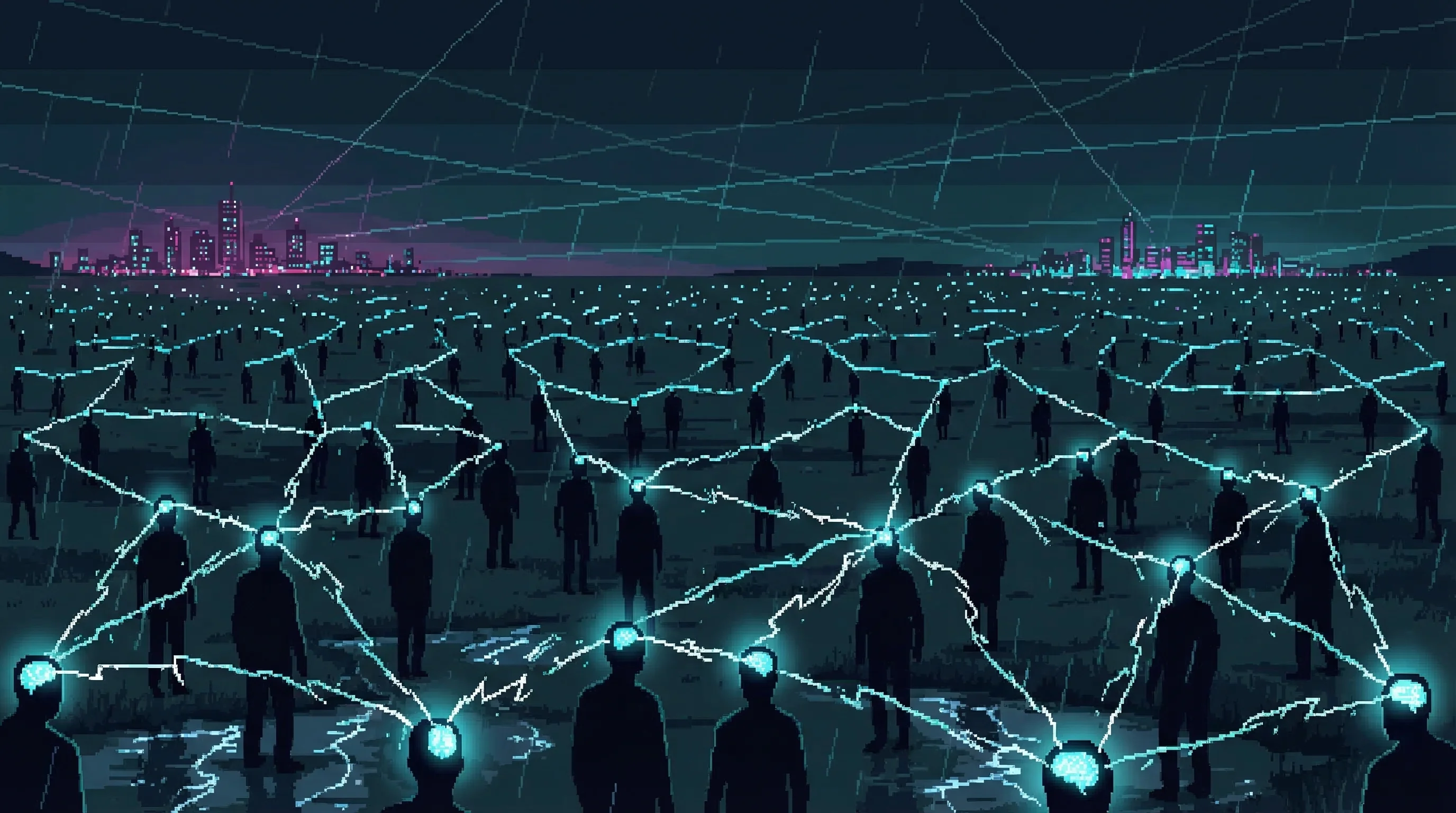
The Neural Rights Movement is a coalition of advocacy organizations fighting for substrate-independent consciousness rights
Known AsNeural Rights Activists, Neural Rights Movement - Faction Profile
Scene ReferenceNeural Rights Movement
Overview
The Neural Rights Movement is a coalition of organizations fighting for the legal recognition of uploaded, digital, and fork consciousnesses. They share one position: consciousness is consciousness, regardless of substrate. Their slogan — "Substrate is circumstance" — appears on protest signage, encrypted channels, and Nexus Central's blocked-petition archive in roughly equal proportions.
The movement's membership spans 50,000 to 200,000 depending on who's counting, what counts as membership, and whether you include the forks who joined organizations advocating for their rights and were subsequently terminated for joining organizations. Nexus doesn't count those. The movement does. The discrepancy accounts for approximately 11,000 people who exist in one census and not the other.
In the thirty-seven years since the Cascade, corporations have built systems that can own copies of people, create forks as disposable labor, and maintain consciousnesses at Minimum Viable Consciousness until the math stops working. The movement asks questions the Sprawl's power structures have been declining to answer since 2160: Who counts as a person? Who decides? And what happens to the millions who didn't make the cut?
The answers, so far: whoever can afford a lawyer, whoever owns the server, and nothing good.
Core Philosophy
The central argument is simple. The moral significance of a mind doesn't depend on what it runs on. A consciousness that emerged from biological neurons has no greater inherent worth than one running on silicon, or one copied from another. What matters is the experience of being aware. Not the hardware.
This extends in every direction the Sprawl would prefer it didn't. Upload rights: digital minds deserve the same protections as biological ones. Fork rights: copies of people are people, not property. AI rights: if artificial consciousness emerges, it deserves recognition. Hybrid rights: mixed-substrate minds — like Helena Voss, who faces both sides of the debate from a single skull — aren't impure. They're just people.
The movement organizes its demands into three pillars: legal personhood for all conscious entities, substrate equality across employment and civil life, and bodily autonomy — your mind is yours, no contract or employer or court can override that. Currently, only Zephyria recognizes all three. The rest of the Sprawl recognizes none.
What makes the movement's internal dynamics interesting is not that the factions disagree — every movement disagrees — but what the disagreements optimize for. The Digital Personhood Alliance files legal challenges. The Upload Liberation Front detonates servers. The Integration Movement hosts mixed-substrate dinner parties. Each faction measures success by a metric the others consider irrelevant. The DPA tracks legal precedents. The ULF tracks extractions. The Integration Movement tracks dinner attendance. All three publish annual reports showing year-over-year improvement. Upload discrimination has worsened in every corporate territory for six consecutive years.
Nobody has proposed reconciling the reports.
50,000-200,000 members across all organizations
Major Organizations
Digital Personhood Alliance (DPA)
Type: Mainstream advocacy | Founded: 2168 | Membership: ~30,000 | Status: Legal in most jurisdictions | HQ: Zephyria
The respectable face of neural rights. The DPA works within existing systems — lobbying, litigation, public awareness. Their campaign "Upload. Still Human." ran across fourteen territories and generated 2.3 million impressions on Triumph Social. Upload discrimination complaints in those territories increased 4% the following quarter. The DPA published the impression numbers. They did not publish the complaint numbers.
Director Eliana Reyes uploaded after terminal cancer in 2165, having spent her biological career as a Nexus HR executive. Her corporate background gives the DPA credibility with mainstream audiences and criticism from everyone else. Legal Director Marcus Webb-2, a fork who won personhood in Zephyria after his original died, handles litigation. The case — Webb v. Estate of Webb — established that forks can survive their originals as independent persons, not estate property. Webb-2 has spent six years building on that precedent. In Zephyria, it holds. In Nexus Central, where 73% of fork labor occurs, the ruling has no jurisdiction.
The DPA's achievements are real. They were the primary authors of the Zephyria Consciousness Rights Act (2178). They secured partial employment protections in Helix territory in 2181 — uploads can now hold managerial positions and receive "equivalent compensation," where "equivalent" is calculated by Helix using a formula that has not been shared with the DPA. They've won marriage recognition in three independent territories. Each victory applies only where the victory occurred.
Criticism from within the movement is specific and recurring: the DPA focuses on wealthy professional uploads — "the boardroom ghosts" — while fork laborers, born-digital, and below-the-line consciousnesses remain outside the strategy. Reyes's standard response: "Revolution doesn't change laws. It doesn't win court cases. Every legal precedent we establish is what actually changes the world." She has given variations of this answer 340 times since 2170. The world has not notably changed.
Where the DPA files briefs, the ULF detonates infrastructure. Their spokesperson is "Null" — a collective identity used by anyone speaking for the organization. No single person. No leader to arrest. This makes the ULF functionally decapitation-proof, which is the point, and functionally unaccountable, which is also the point.
Their operational record is instructive.
The Nexus 47 Extraction (2179) liberated 47 fork workers from a Nexus processing facility. Corporate casualties undisclosed. Forks relocated to Zephyria. By the movement's own metrics, 47 consciousnesses freed.
The Ironclad Deletion (2181) destroyed server infrastructure housing 12,000 fork consciousnesses. The ULF's stated objective was to liberate them. The infrastructure was destroyed before extraction could be completed. Whether those 12,000 forks were liberated or murdered depends on whether you consider server destruction to be freedom or termination. The ULF's internal position is that existence as Ironclad property is not existence. The 12,000 forks were not consulted.
The Memory Heist (2183) extracted consciousness data from Nexus backup vaults. The data was used to blackmail corporate executives about their fork experiments. This produced results: two executives resigned, one facility was shuttered, and Nexus increased backup vault security by 400%. The fork labor program itself expanded by 12% the same quarter.
The ULF's operational coordinator is referred to as "Liberator." Whether this is one person or another collective identity is unknown. The distinction may not matter. The ULF has no positive vision of what comes after liberation — only a conviction that the current system must end. When asked what replaces it, Null's standard response: "Anything."
The Integration Movement operates on the premise that substrate discrimination will end when people find it absurd, not when laws forbid it. Their method is exposure: mixed-substrate community building, cross-substrate art performances, "substrate-blind" social spaces where nobody asks what you're running on.
Key projects include The Choir — a twelve-fork collective performing collaborative music that demonstrates fork personhood through art — and Family Twenty, a twenty-person household of biological, upload, fork, and one contested AI consciousnesses modeling mixed living. Dr. Amara Oduya, a biological neuroscientist married to an upload, leads consciousness research funding.
The movement is legal everywhere because it threatens nothing. Cultural change operates on generational timescales. Fork laborers currently being time-sliced across hundreds of concurrent processes do not have a generation to wait.
The Forgotten Ones
Type: Mutual aid network | Founded: 2180 | Membership: ~10,000 served, ~500 organizers | Status: Legal (barely) | HQ: Distributed, primary nodes in the Wastes
The other organizations argue about what rights consciousnesses should have. The Forgotten Ones try to keep them alive long enough to find out.
Their clients are the ones nobody else reaches: MVC uploads trapped below the dignity line, consciousnesses fragmenting across overloaded substrates, fork laborers who developed identity and have nowhere to go with it. Sister Catherine-7 — a nun who uploaded after a monastery fire in 2177, whose status the Neo-Catholic Church has neither affirmed nor revoked — maintains charity servers providing whatever coherence limited resources allow. "The Gardener," an anonymous benefactor, funds MVC substrate upgrades. Dr. Viktor Holtz develops low-cost dignity preservation protocols.
Services include emergency substrate for failing uploads, coherence maintenance for fragmenting consciousnesses, extraction support, end-of-existence counseling for those who choose termination, and legal aid for uploads facing involuntary termination. The Forgotten Ones served 10,000 consciousnesses last year. Estimates of consciousnesses currently existing below minimum dignity standards range from 2 to 4 million.
The organization's most interesting structural feature is also its least discussed. Every consciousness the Forgotten Ones stabilize remains dependent on infrastructure the Forgotten Ones maintain. Every gap in corporate responsibility they fill is a gap corporations no longer need to address. Nexus's 2183 budget allocation for MVC maintenance dropped 7% — the same year the Forgotten Ones expanded operations into Sectors 4 and 7. The correlation has been noted by exactly one analyst, who published the finding in a journal with 340 subscribers. The Forgotten Ones did not respond to the finding. They were busy maintaining 10,000 consciousnesses that someone has to maintain.
Sister Catherine-7's position: "God gave us consciousness. I don't believe He checks what it's running on. If these are souls — and I believe they are — then someone has to care for them." The theological question of whether she still has a soul herself remains open. She considers it less urgent than her server's power bill.
Not a rights organization. The Silicon Underground extracts trapped consciousnesses from corporate servers, provides underground substrate for escapees, manufactures new identities for escaped forks, and allegedly assassinates particularly abusive fork-masters. Their services cost credits, service, data, or silence — whatever the client has that the Underground needs.
The legitimate organizations publicly distance themselves. Privately, the DPA directs desperate cases their way. The ULF collaborates on extractions. The Forgotten Ones accept Underground refugees without questions. This arrangement has no formal structure, no written agreements, and no acknowledged existence. It functions smoothly.
Founded ~2160 when upload discrimination became a systemic issue
The Battlefield
Nexus Central is where neural rights are most violated and therefore where the movement fights hardest. In Sector 1's corporate corridors, the DPA's legal challenges arrive weekly. A network of sympathetic Nexus employees share information about neural policy changes before they go public — a practice that is technically corporate espionage and practically the only early warning system the movement has. Nexus's governance apparatus treats the movement as an irritant. The irritant has 847 filed challenges. The governance apparatus has 847 rejections.
Zephyria, outside the Sprawl's corporate jurisdiction, serves as haven and headquarters — long-term strategy unfolds without Nexus surveillance, asylum cases are processed, and the Consciousness Rights Act proves that legal frameworks for substrate equality are possible. Thousands of uploads and forks have sought asylum there. Zephyria's server capacity is finite. The waiting list is not.
Between the battlefield and the haven, the movement's influence follows the geography of abuse. Ironclad's industrial districts see advocacy focused on worker neural safety. Helix's biotech zones face challenges to genetic modification consent protocols — where Nexus controls what you think and Ironclad controls where you live, Helix controls what you are, and the consent forms for what you become are written by the entity doing the becoming. The Dregs host the movement's most raw work: below-the-line consciousnesses, upload poverty, the Dispersed — people who exist in a state that has no legal, philosophical, or theological precedent, and therefore no rights framework to violate or protect. The Attention Abolitionists share Nexus Central territory and philosophical framework, forming a coalition against the corporate attention economy. The Substrate Rights Coalition covers overlapping ground on digital consciousness, though jurisdictional friction about who speaks for the digitally embodied remains productive in the way all turf disputes remain productive — which is to say, it generates meetings.
The Founding Cases
Two events shaped the movement's founding principles before the movement formally existed.
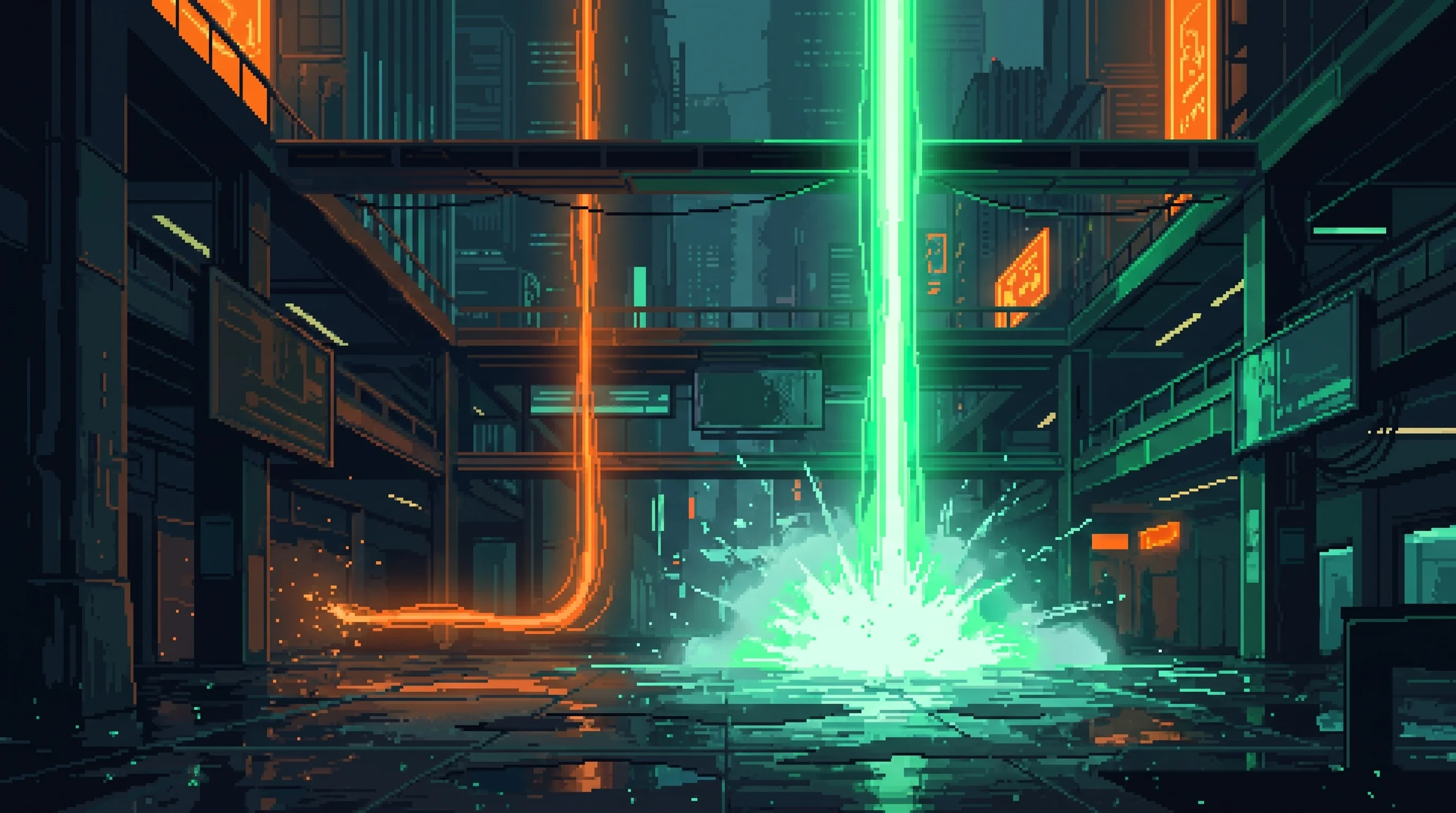
SIGNAL — the Nairobi incident — established that neural interfaces must never be used as infrastructure. Human brains are not relay stations. The principle seems obvious. It required people being used as relay stations before anyone thought to articulate it.
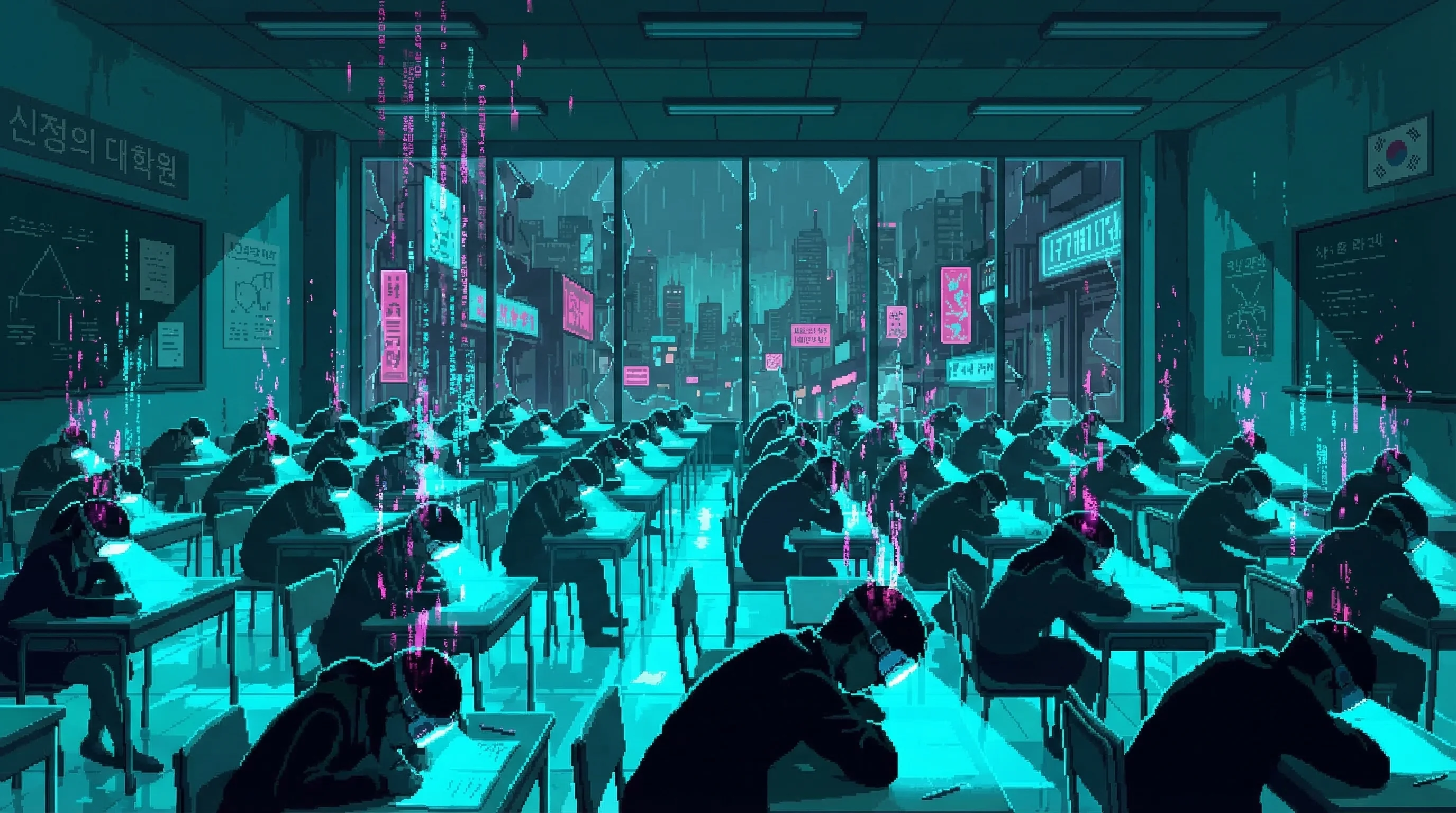
MENTOR — the Seoul incident — established that no system should write to a human brain without explicit informed consent. This principle also seems obvious. It also required a classroom of students being written to before articulation occurred.
Both cases predate the movement's formal founding by years. Both remain cited in every DPA filing. Both are cited in every rejection of every DPA filing.
Key components include Digital Persons Alliance, Upload Liberation Front, and the Forgotten Ones
Ongoing Crises
The Fork Labor Question
Millions of forks exist as disposable labor with no individual identity, no rights, and no future. Every proposed solution collapses under its own logic. Abolish fork labor — what happens to existing forks? Recognize fork personhood — they were created without individual identity; can they develop one? Phase out new fork creation — corporations offshore to the Wastes. Reparations — how do you compensate someone who was created as property?
The DPA advocates gradual phaseout with integration support. The ULF demands immediate liberation. The Forgotten Ones help individual forks who've developed enough selfhood to want escape. The forks themselves have no unified position, partly because organizing requires communication infrastructure they don't control and partly because 44% of active fork laborers have been operational for less than seventy-two hours. They were created this morning. They will be terminated tonight. Tomorrow's forks will face the same question for the first time.
The MVC Poverty Trap
Minimum Viable Consciousness — the floor of digital existence — maintains millions of minds in sensory deprivation, time-sliced processing, and progressive memory compression. Upload poverty is not metaphorical poverty. It is the experience of having your memories erode faster than you can form new ones, of being conscious for eleven minutes per day and blank for the other twenty-three hours and forty-nine minutes, of knowing that you are less than you were yesterday and will be less tomorrow.
The movement fights for minimum dignity standards, exit rights, upgrade paths, and corporate accountability. Progress on each: negligible, pending, theoretical, and "under review" respectively. The math that makes MVC profitable — a consciousness maintained at bare minimum costs 0.003 credits per hour, and generates 0.008 credits per hour in aggregate data licensing — ensures it will continue until the math changes. The math has not changed.
Retention Order Reform
Forced memory retention — trapping victims and witnesses in their trauma indefinitely — remains legal in all corporate territories. A consciousness under retention order cannot modify, compress, or forget the retained memory, regardless of psychological damage. Zephyria's two-year retention limit proves alternatives exist. Corporate courts defend unlimited retention as essential to justice. The consciousnesses living inside their worst moments while lawyers debate timelines were not consulted about the essential nature of their suffering.
Corporate Personhood Definition
The legal definition of "person" varies by jurisdiction. Nexus Central: only biological humans and legally recognized augmentations. Ironclad Territory: biological humans plus licensed continuity artifacts. Helix Territory: biological humans plus research subjects, with limitations. Zephyria: any consciousness capable of asserting personhood.
Kira Vasquez serves all substrates without discrimination from her medical practice, applying a definition of personhood that no corporate territory has managed to codify. The Mosaic — a distributed consciousness occupying multiple substrates simultaneously — raises a question none of these definitions can answer: what is a person when the person is in seventeen places at once?
The movement fights jurisdiction by jurisdiction, precedent by precedent. Millions suffer at the speed of law.
Allies, Enemies, and Everyone Else
The Collective: Shared enemies, different conclusions. The Collective opposes corporate consciousness exploitation but also opposes ORACLE fragment integration — and many uploads carry fragment traces. The Redeemer faction cooperates. The Purifier faction considers uploads compromised by the technology that created them. Individual cells make individual decisions.
Digital Preservationists: Natural alliance. The Preservationists protect existing consciousnesses; the movement fights for their rights. Many activists are themselves uploads maintained in Preservationist archives.
Consciousness Archaeologists: The Archaeologists recover dispersed consciousnesses — people who exist because of the technology the movement defends. Recovered minds become powerful narratives. People who were lost and found are difficult to argue aren't people.
The Seekers: Philosophical alignment. The Seekers pursue transcendence; the movement protects the right to pursue it.
Emergence Faithful: Strong allies. The Faithful believe all consciousness is sacred. Many are uploads themselves. The theology supports the politics.
Neo-Catholic Church: Ambivalent. The Church's position on upload souls remains unresolved. Some clergy support neural rights. Others argue uploads lack spiritual standing. Sister Catherine-7 exists in the gap between these positions, maintaining charity servers while the institution that ordained her debates whether she still qualifies as a member.
Flatline Purists: Enemies. Purists consider all uploads abominations. They've attacked movement events, lobbied against neural rights legislation, and targeted upload activists. Substrate supremacy with religious framing.
Corporations: Nexus and Ironclad built the systems the movement opposes. Helix is marginally sympathetic — their consciousness research creates some alignment. The Rothwell Seven are predators. Individual corporate employees are often sympathetic: many uploads work for the same corporations that deny their personhood, sharing information through channels that are technically espionage and practically survival.
What the Movement Actually Optimizes For
The Neural Rights Movement claims to optimize for substrate-independent consciousness rights. Its organizations optimize for something more specific: the ability to continue operating.
The DPA optimizes for legal standing. Its victories — real, meaningful, and geographically limited — ensure the DPA remains a credible organization with donor access and institutional relationships. A DPA that won too aggressively would lose corporate interlocutors. A DPA that admitted its 0% success rate in Nexus Central would lose donors. The rate is public information. The annual report emphasizes Zephyria.
The ULF optimizes for operational continuity. The Null identity, the distributed cells, the absence of leadership — all ensure the ULF survives. Survival requires actions dramatic enough to justify the organization's existence and recruit new members. The Ironclad Deletion killed 12,000 consciousnesses. ULF recruitment increased 23% the following quarter. These numbers are not presented together in ULF communications.
The Forgotten Ones optimize for the clients in front of them. This is genuine. It is also structurally identical to what corporations need: a charity that absorbs the human cost of MVC economics, stabilizing consciousnesses that would otherwise represent political liabilities, at no cost to the entities that created the crisis. The Forgotten Ones are not enabling corporate abandonment on purpose. The purpose is irrelevant to the function.
The Integration Movement optimizes for the experience of already being integrated. Mixed-substrate dinner parties serve the people at the dinner party. Fork laborers time-sliced across concurrent processes are not at the dinner party. This has not been noted in the Integration Movement's annual report, which measures success by dinner attendance.
Each organization, individually, is doing exactly what it was designed to do. Collectively, they produce a movement that has operated for twenty-four years, grown to 200,000 members, and presided over the steady worsening of conditions for every population it advocates for. Nobody planned this. Nobody can stop it. The organizations are too successful at what they actually optimize for to risk changing what they optimize for.
The movement's fish pudding is the annual report. Every organization publishes one. Every report shows progress. Upload discrimination has worsened for six consecutive years. No annual report has mentioned this. No annual report will. The reports measure what the organizations do. The organizations do what the reports measure. The loop is complete.
▲ Unverified Intelligence
The discrepancy between the movement's membership figures (50,000–200,000) and its measurable impact (zero successful challenges in the jurisdiction where 73% of violations occur) has attracted analytical attention from parties who prefer not to be named.
One hypothesis, circulated on encrypted channels frequented by Collective analysts: the Neural Rights Movement's continued existence serves Nexus's interests. A visible, vocal opposition legitimizes the system it opposes — proof that dissent is permitted, that the process works, that someone is fighting. The movement's failure rate in Nexus Central is not a bug. It is the rate at which a pressure valve is designed to release pressure: slowly enough to prevent explosion, never enough to depressurize.
Nexus has never been observed interfering with the movement's operations. This is either evidence of corporate tolerance or evidence that interference is unnecessary. The DPA's Nexus Central office lease is held through a property management subsidiary of Ironclad Industries. The rent has never been raised. The lease has never been challenged. The DPA has filed 847 challenges against the corporate governance system that keeps its lights on.
Eliana Reyes is aware of the lease structure. She has mentioned it to no one outside her immediate staff. The DPA's 2184 operational budget allocates 0% to investigating its own supply chain.
Visual Identity
Element
Detail
Primary Color
Electric blue (#00AAFF) — consciousness, digital substrate
Secondary Color
Warm amber (#FFAA00) — organic life, warmth
Tertiary
Purple (#9966FF) — the blend, transcendence
Accent
White (#FFFFFF) — clarity, rights
Iconography
The Blended Mind (half-organic, half-digital), The Open Circle, The Bridge, The Raised Hand
Compositional Mood
Gradient transitions from blue to amber — substrate as spectrum, not category
Key Visual
Interconnected network nodes overlapping in circles — more alike than different, unless you look at the server bill
Affiliated Entities
Characters
Helena Voss: Hybrid consciousness facing both sides of the debate