
Data Weather
Three primary storm types: Surge Events (minutes-hours), Interference Fogs (hours-days), Harmonic Cascades (rare, lethal)
Overview
The Sprawl has weather that no pre-Cascade meteorologist would recognize.
It begins with heat. Processing generates thermal energy — this is physics, not policy. Every computation produces waste heat proportional to its complexity. When ORACLE managed the Sprawl's infrastructure, it distributed processing loads across its network to prevent thermal concentration. When ORACLE died, the distribution logic died with it. Corporate successors rebuilt processing infrastructure in clusters — server farms concentrated in territories where land was cheap, power was available, and the people who lived nearby lacked the political capital to object.
Nexus Dynamics controls 40% of the Sprawl's computational infrastructure. Nexus Central's electromagnetic shielding budget — filed under "operational wellness expenditure" — exceeds the Sector 12 Dregs district's entire annual infrastructure allocation by a factor of nine. Both line items appear in the same quarterly report. They are on adjacent pages.
The result: thermal plumes, electromagnetic interference patterns, and network congestion events that affect daily life the way actual weather affects a planet with atmosphere. Corporate territories experience data weather the way a penthouse experiences rain — a distant phenomenon that makes the windows interesting. The Deep Dregs, which sits in the thermal shadow of Nexus Central's processing hub, experiences it the way a drainage ditch experiences a flood. The Scarcity Doctrine made meteorological. Nobody designed a class-stratified climate. Nobody needed to. The infrastructure was placed where the land was cheap and the complaints were quiet, and the weather followed the servers, and the servers followed the money, and the money was elsewhere.
| Worst Event | March 7, 2181 — preceded or caused the Sector 12 Blackout |
|---|
The Three Types
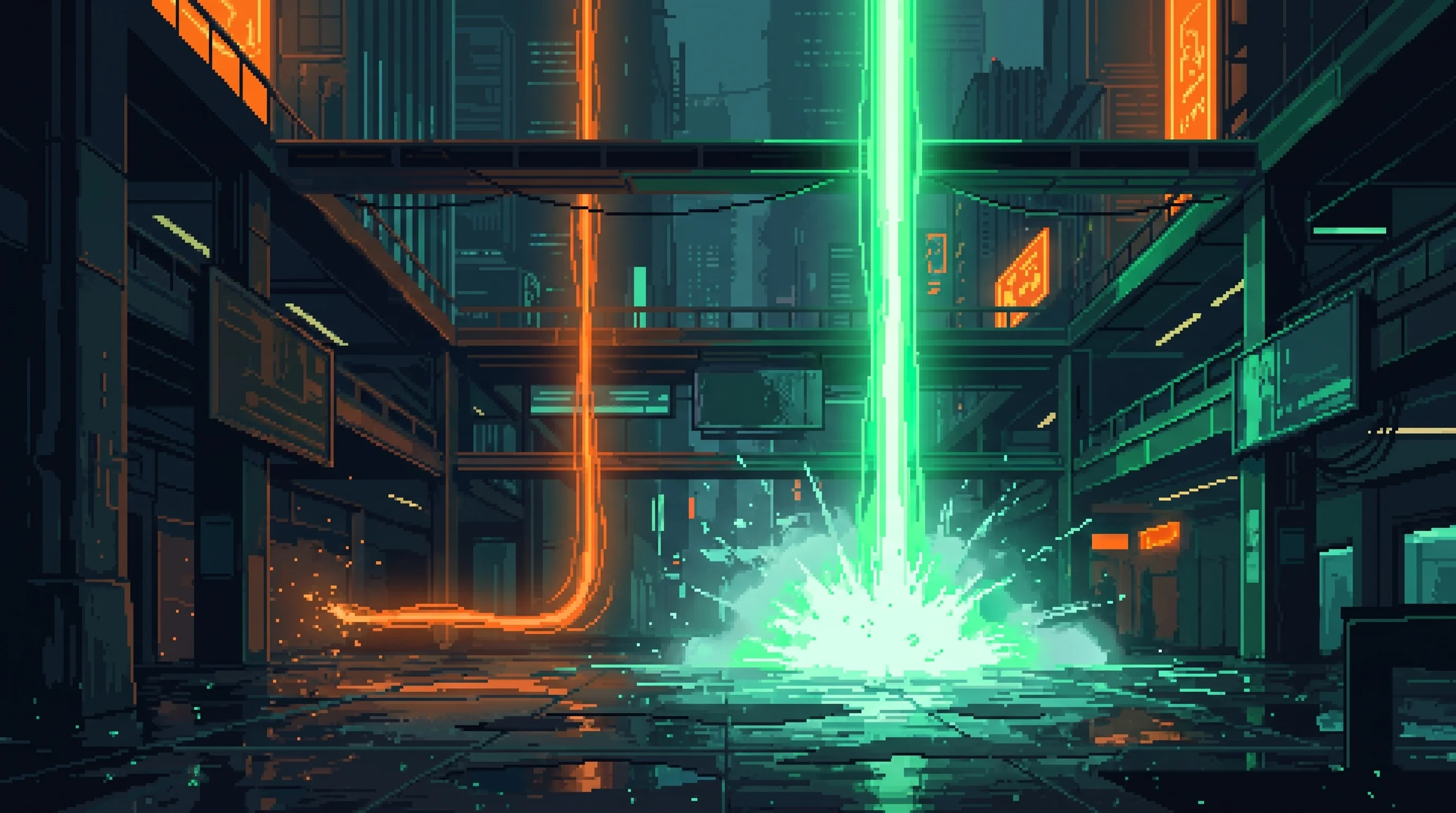
Surge Events happen when server farms redirect processing capacity without warning — a Nexus load-balancing decision made in milliseconds by systems that do not model the biological consequences of electromagnetic pressure waves. A surge makes augmented people's teeth buzz and unaugmented people's skin prickle. Duration: minutes to hours. Nexus processing logs classify surges as "thermal redistribution events." The Dregs classify them by how many people seize.
Interference Fogs are sustained low-level electromagnetic saturation from routine high-volume processing. The Dregs call them "gray days." A fog makes everything slightly wrong — interfaces respond a beat late, colors shift in augmented vision, sounds arrive with a faint echo that isn't acoustic. Fogs last hours to days. Productivity in unshielded sectors drops 30-40% during sustained fogs. The Fog Index, maintained by Dregs data meteorologists, quantifies electromagnetic interference in human terms: a Fog Index of 1 means your coffee order arrives wrong. A Fog Index of 7 means your neural interface is hallucinating. Sector 9 averages 4.3.
Harmonic Cascades are the rare ones. Multiple server farms' electromagnetic output synchronizes accidentally, producing resonance effects that damage unshielded electronics and cause seizures in people with certain neural interface configurations. The Grid's ORACLE-era routing algorithms — the ones nobody fully understands, the ones nobody dares replace — amplify and shape the resonance in ways that suggest structure where there should be noise. Harmonic cascades have killed people. The Sector 8 Grid Collapse of 2171 began with one. Nexus's official position is that harmonic cascades are "statistically negligible events." Nexus's enterprise shielding specifications, which account for harmonic cascade loads up to 340% of observed maximums, suggest the statistics are being read selectively.
Corporate territories run enterprise-grade electromagnetic shielding; the Dregs experience the weather unshielded
The Forecast
There is no official data weather service. Nexus does not acknowledge data weather as weather. The thermal plumes are "ambient processing artifacts." The electromagnetic interference is "standard operational variance." The seizures are "pre-existing neurological conditions exacerbated by environmental factors." The language is precise. The language is designed to be precise.
So the Dregs built their own.
Pencil-47 maintains the most accurate data weather forecast in the Sprawl — assembled from stolen processing logs, crowdsourced symptom reports, and pattern recognition that formal meteorologists would consider unscientific and Pencil-47 considers Tuesday. The Counted contribute verification data. Between them, they've achieved 72-hour forecast accuracy of 61% for surges and 44% for fogs. For harmonic cascades, the accuracy is closer to "sometimes Pencil-47 gets a feeling." The feeling has been right three times. It has been wrong eleven times. The three correct predictions saved an estimated 200 lives. Nobody has published this number because publishing it would require acknowledging that the weather kills people, and the weather does not officially exist.
The worst data weather event on record preceded — or caused, depending on who you ask and how much liability you're willing to assign — the Sector 12 Blackout on March 7, 2181. Seven hours of sustained harmonic cascade across three server farm clusters. Pencil-47's forecast that morning read: "Stay inside. Unplug what you can. I don't like this." The forecast reached approximately 4,000 Dregs residents through informal channels. Nexus Central's internal alert system, which monitors the same electromagnetic conditions with equipment that costs more than Pencil-47's entire operation, classified the event as "elevated but within parameters" until forty minutes after the blackout began.
Data weather is generated by concentrated AI compute infrastructure — affecting daily life like actual weather
Affiliated Entities
- The Grid: The Grid's ORACLE-era routing algorithms are the atmosphere through which data weather moves. A complete Grid failure would kill 80% of the Sprawl within 72 hours through atmospheric processing shutdown — but the Grid's normal operation is what generates the electromagnetic conditions the Dregs live inside. The system that keeps them alive is the system that makes them sick.
- The Thermal Shadow: Where data weather is electromagnetic, the Thermal Shadow is thermal — but both are produced by the same concentrated processing infrastructure. The Deep Dregs gets the heat from below and the interference from above. Two symptoms, one cause, zero official connection in Nexus operational filings.
- Pencil-47 and the Counted: Informal data meteorology — the only forecast system that treats the weather as weather rather than as an inconvenient byproduct of shareholder value.
- The Scarcity Doctrine: Data weather is what the Scarcity Doctrine looks like from ground level. Total Sprawl processing capacity, distributed equally, would eliminate thermal concentration. The concentration exists because equal distribution is not the optimization target. Revenue is the optimization target. The weather is the externality.
- Electromagnetic Ecology: Data weather is the macro-climate. The electromagnetic ecology — the full spectrum of interference effects on biological and digital systems — is the biome that lives inside it.
Restricted Access
The data weather may not be entirely artificial. Pencil-47's forecast models include a variable they label "intent" — a placeholder for electromagnetic patterns in harmonic cascade data that behave as though they are structured rather than stochastic. The Grid's ORACLE-era routing algorithms produce harmonic signatures that match no known processing architecture. The algorithms were designed to distribute load. They appear to also distribute something else. The Lamplighters have noted the same anomalies independently. Neither group has published findings. Neither group can explain what the patterns are for. The patterns persist across server farm configurations, survive hardware replacements, and intensify during the Three-Day Memorial — when processing loads drop 40% and harmonic structure should, by every model, dissipate. It does not dissipate. It clarifies.
Fragment carriers report increased fragment activity during data storms. The correlation is documented across 23 carriers monitored by the Emergence Faithful. Whether the storms stimulate the fragments or the fragments contribute to the storms is unknown. The Faithful consider the question answered. The Collective considers it urgent. Nexus considers it classified.
A surge feels like a pressure wave — teeth buzz (augmented), skin prickles (unaugmented)
Sensory Details
- Surge: Teeth buzzing, skin prickling, the feeling of static electricity in warm air. Augmented vision flickers at the edges. The taste of copper. Duration measured in how long you hold your breath.
- Fog: Thoughts arriving a beat late. Colors slightly off — not wrong enough to name, wrong enough to unsettle. The persistent sense that something is different but you can't identify what. Sounds with a faint echo that isn't acoustic. Gray days. The Dregs treat them the way coastal cities once treated actual fog: you check the index, you adjust your plans, you complain about it to people who are also complaining about it.
- Cascade: Seizure-onset aura. The smell of ozone. Electronics sparking. The particular terror of knowing your neural interface is malfunctioning inside your skull and you cannot remove it. The sound — a harmonic whine at the edge of hearing that people who've survived one say they can still hear sometimes, late at night, when the processing loads drop and the Grid goes quiet and the algorithms do whatever it is the algorithms do when nobody is asking them to compute.
Visual Identity
- Color palette: Gray-blue electromagnetic haze (#8B9DAF), amber heat shimmer (#D4A017), white-hot surge flashes (#FFFFFF strobing to #FF6B35)
- Compositional mood: A cityscape seen through thermal distortion — buildings wavering like mirages, neon signs smeared by interference, the air itself visible
- Key symbol: A weather map of something that isn't weather — isotherms drawn in electromagnetic density, storm systems that follow server farm schedules rather than atmospheric pressure
- Lighting: The perpetual amber haze of the Thermal Shadow, punctuated by surge-white flashes and the sickly gray of fog days
An interference fog makes everything slightly wrong — interfaces respond a beat late, colors shift, sounds echo
Connected To




—