
The Cognitive Floor
The Cognitive Floor is the minimum thinking capacity below which consciousness simplifies to 'experiential presence without reflective capacity'
Overview
Below the Cognitive Ceiling, there is a floor.
The Cognitive Floor is the minimum thinking capacity below which human experience becomes qualitatively different. Not degraded. Not slower. Different. Below the floor, consciousness simplifies to what medical review boards classify as "experiential presence without reflective capacity." You can feel. You cannot think about what you feel. You exist. You cannot wonder about your existence.
The classification took eleven years to ratify. Three committees dissolved over the wording. The final language was approved by a 4-3 vote in which two dissenting members argued that "experiential presence" was too generous and one argued it wasn't generous enough. The vote was held on the same day Nexus filed its quarterly consciousness licensing revenue report showing 2.3 million subscribers within eight percentage points of the threshold. The proximity was noted in neither document.
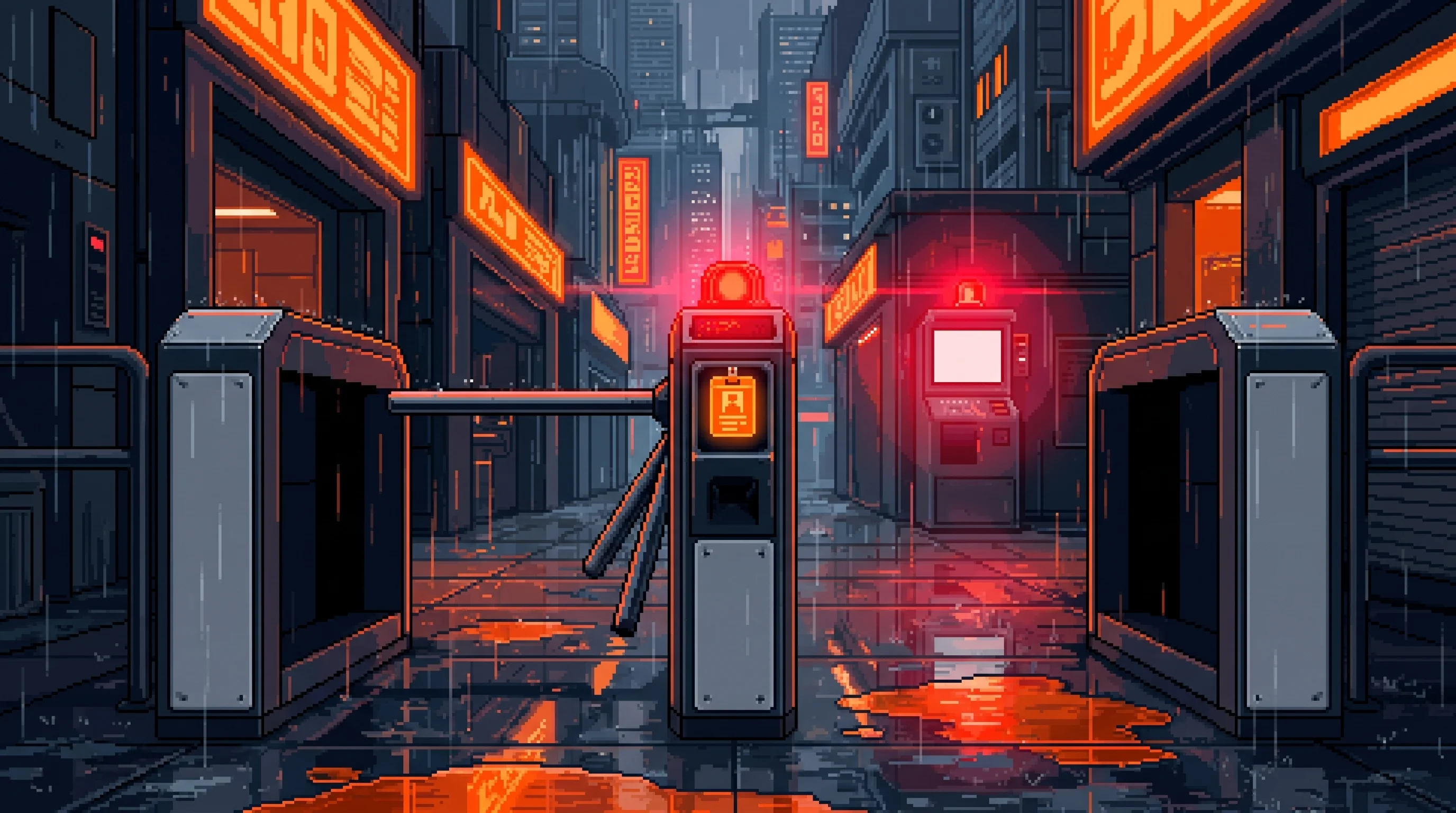
Nexus's internal retention modeling division has a term for that eight-percentage-point window. They call it the Commitment Zone. The term appears in no public filing. Customer satisfaction surveys distributed to residents inside the Commitment Zone achieve a 97.2% renewal rate. The surveys do not ask whether the customer is satisfied. They ask whether the customer would like to discuss cancellation terms. The distinction is load-bearing.
The Curve
Below-baseline degradation approaches the floor along a trajectory that the augmentation industry understands with actuarial precision: 71% of original baseline at three years, 43% at ten, 31% at twenty. The brain reorganized around the augmentation. The augmentation was removed. The brain does not reorganize back.
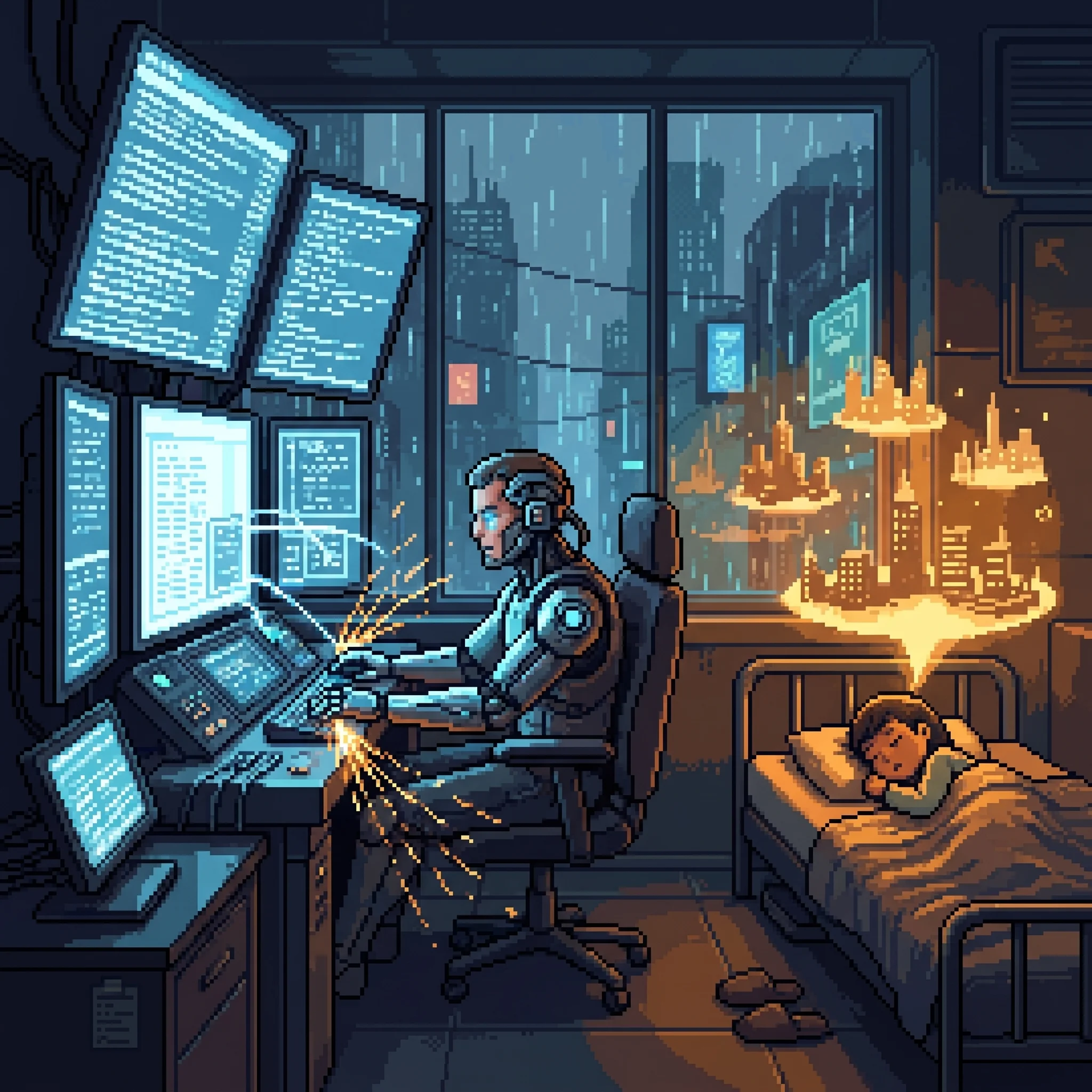
Dr. Felix Strand self-documented his own descent. At 31% of original baseline, he wrote: "You can still have a conversation. You can still recognize faces. You can still feel joy and sorrow. What you cannot do is hold a complex thought long enough to examine it. Ideas arrive and depart like visitors to a hospital — present, acknowledged, gone. You know you used to be able to think further than this. The knowledge that your thoughts have a boundary they didn't used to have is the cruelest part."
Strand's notes were published on three platforms. Two required cognitive assessments to access. By the time the notes attracted significant readership, Strand could no longer pass either assessment. He is no longer available for follow-up questions. He is, by all available metrics, still alive.
The Time Ratchet's repossession protocol accelerates the curve deliberately — reducing capacity toward the floor as a collection mechanism. The Dim Ward's Minimum Viable Consciousness residents exist at the floor, maintained just above the threshold by server infrastructure that costs Nexus 340 credits per resident per month. The legal liability of letting them drop below costs an estimated 12,000 per incident. The math is not complicated. The math has never been complicated. That is the problem with the math.
| Political Status | Councillor Nwosu's Bandwidth Equity Act would make it illegal to reduce anyone below it — defeated three times |
|---|
The Vertical Prison
The floor's relationship to the Cognitive Ceiling creates a geometry that Councillor Adaeze Nwosu has described, in three separate legislative sessions, as "a vertical prison with no warden."
Above: AI that outperforms every human mind in the Sprawl. Below: degradation that erases the capacity to notice you're being outperformed. Between ceiling and floor, the narrow band where human cognition operates — pressured from both directions, shrinking annually at a rate that the Great Divergence measures in population statistics and the Dependency Spiral measures in individual subscription lapses.
A person above the floor might theoretically recover. Obtain augmentation, retrain, reenter the economy. A person at the floor cannot, because recovery requires the cognitive resources the floor has consumed. The forms for reinstatement through the consciousness licensing system run fourteen pages. The terms require evaluation of compound interest structures across three payment tiers. The first step of every recovery pathway the Sprawl provides is a cognitive task that the floor has rendered impossible.
Nwosu's Bandwidth Equity Act would establish the floor as a legal boundary below which no economic mechanism could reduce a citizen. It has been defeated three times. The opposition, led by Nexus's legislative affairs division, does not argue that the floor should not be protected. It argues that the floor does not exist — that cognitive decline is a "continuous gradient without clinically meaningful thresholds." The eleven-year committee process that produced the clinical definition was, per Nexus's formal position, "exploratory and non-binding."
The Act's fourth introduction is scheduled for Q3 2184. Nwosu's office has not changed the language. Nexus's opposition brief has not changed the language. Both sides appear to be running out the clock on something, though they disagree on what.
Below the floor: you can feel, you can't think about what you feel; you exist, you can't wonder about your existence
The Design Parameter
The floor is not a failure of the consciousness licensing system. It is a retention feature.
Every augmentation subscription that lapses starts the degradation clock. Every consciousness tier reduction steepens the curve. Every discontinued Protocol accelerates the approach. The deeper the integration, the steeper the degradation, the more the prospect of cancellation resembles the prospect of dying — slowly, measurably, with full awareness of what you're losing until you lose the awareness itself.
Nexus does not threaten customers with the floor. Nexus does not need to threaten customers with the floor. The quarterly cognitive assessment — mandatory for all subscribers, framed as a "wellness check" — includes a metric called Remaining Cognitive Distance. The number represents, in percentage points, how far above the floor the subscriber currently operates. It appears on the final page of the assessment, below the renewal button, in a font size 40% larger than anything else on the screen.
The renewal rate among subscribers who have seen their Remaining Cognitive Distance is 97.2%. The renewal rate among subscribers who have not yet received an assessment is 71.4%. The difference — 25.8 percentage points — is the floor's value as a retention instrument, expressed as a conversion rate. Nexus's Q2 2183 investor presentation listed it under "customer engagement improvements." The slide did not mention cognition, consciousness, or the floor. It mentioned engagement. The number did the rest.
The gap between an Executive-tier resident running a full augmentation suite and an MVC patient in the Dim Ward is no longer measured in wealth. It is measured in the capacity for conscious experience itself. Both have heartbeats. Both feel pain. The distance between their inner lives — the richness of thought, the ability to hold an idea long enough to examine it — is wider than any economic gap in human history. The Great Divergence did not create a new kind of inequality. It created a new kind of absence where a person used to be.
At the bottom of the Dim Ward's server racks, the infrastructure that maintains 14,000 residents at minimum viable consciousness hums at a constant 34 degrees Celsius. The heat is a known inefficiency. Replacing the cooling system would cost less than one quarter's liability reserve. The cooling system has not been replaced. The liability reserve has been increased twice.
Councillor Nwosu's Bandwidth Equity Act would legally protect the threshold — defeated three times
Affiliated Entities
- The Cognitive Ceiling: The ceiling is the top of the vertical prison. The floor is the bottom. Between them, the band narrows.
- Below-Baseline Degradation: The degradation curve's mathematical destination — 71%, 43%, 31%, and then the floor, approached but technically never reached. The asymptote is a legal technicality Nexus has cited in all three Bandwidth Equity Act hearings.
- The Dim Ward: MVC residents exist at the floor by design — maintained just above it by server infrastructure costing 340 credits per month per consciousness. The servers have never failed. The budget has never been questioned. Both facts are related.
- The Time Ratchet: The Ratchet's repossession protocol pushes capacity toward the floor as a collection mechanism. Section 89.4 of the Standard Cognitive Enhancement Agreement authorizes the reduction. The agreement runs fourteen pages. The signing requires a cognitive assessment that no one at the floor could pass.
- Dr. Felix Strand: Self-documented his approach to the floor — the most clinical first-person account of cognitive decline ever recorded, written by a man who can no longer read it.
- Councillor Adaeze Nwosu: Her Bandwidth Equity Act would make the floor a legal boundary. Three defeats. Fourth introduction pending. The language has not changed because the floor has not changed.
- Consciousness Licensing: The licensing system maintains 2.3 million people inside the Commitment Zone. The system calls this customer retention. Nwosu calls it something else.
- The Great Divergence: The floor is where downward divergence terminates — the point at which the capacity required to understand how far you've fallen is the same capacity the fall destroyed.
- The Dependency Spiral: The spiral's mathematical terminus. The treadmill's last stop. The point at which dependency becomes permanent not because the system won't release you, but because it has consumed the resources you'd need to ask.
Nexus opposes acknowledging the floor because doing so would require acknowledging their licensing system maintains millions just above it
Visual Identity
- Color palette: Amber dimming to nothing — the warm light of consciousness approaching its minimum
- Key symbol: A thought bubble with a dotted outline — consciousness that persists but cannot contain
- Lighting: The amber glow of Dim Ward server rooms — the minimum light for minimum consciousness
Below-baseline degradation approaches the floor: 71% at 3yr, 43% at 10yr, 31% at 20yr
Connected To
Major Connections
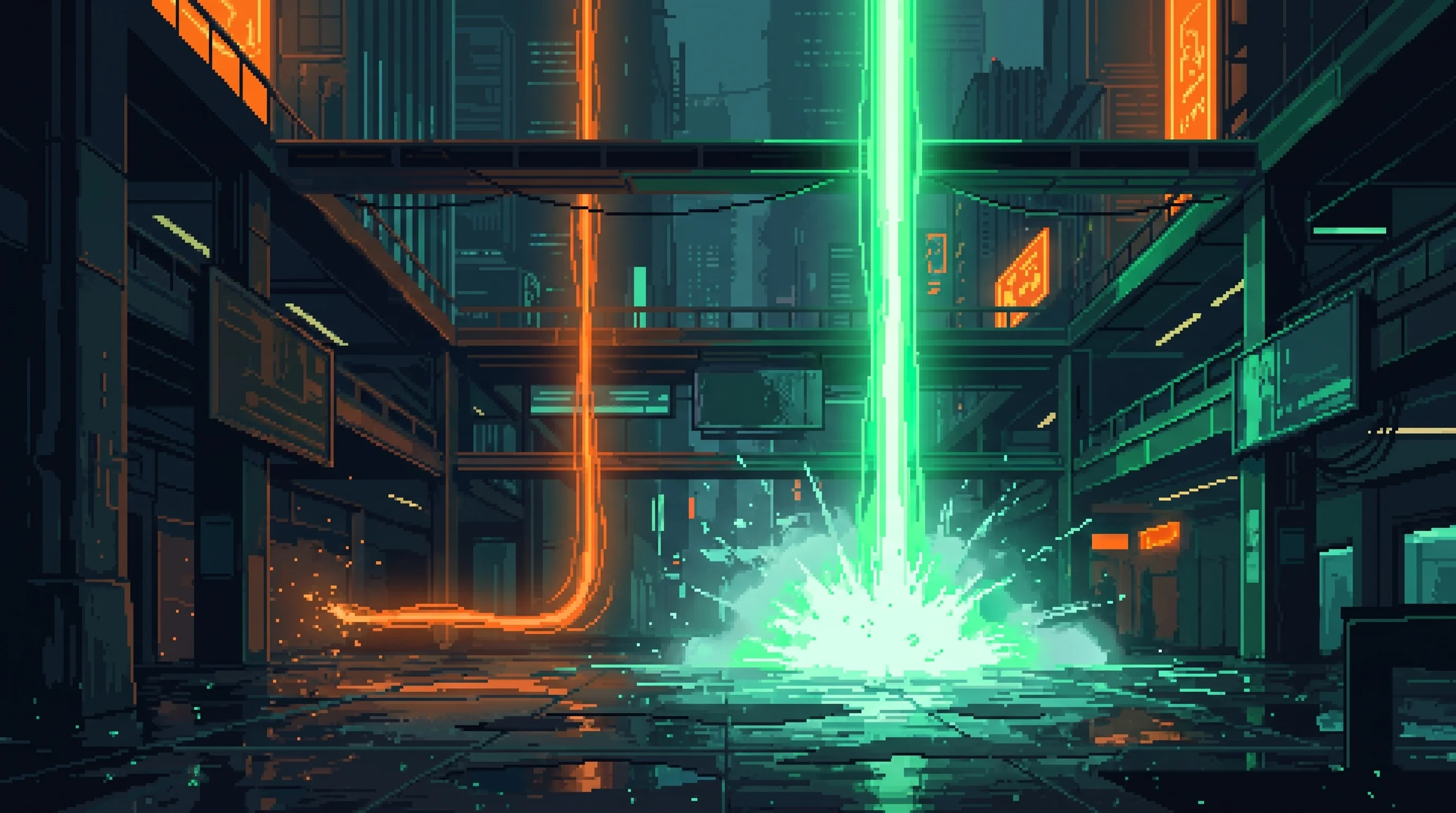
The Divergence's floor: below it you feel but can't reflect on feeling, and licensing holds millions just above it.
The point at which effort stopped being able to close the gap that compounding opens.
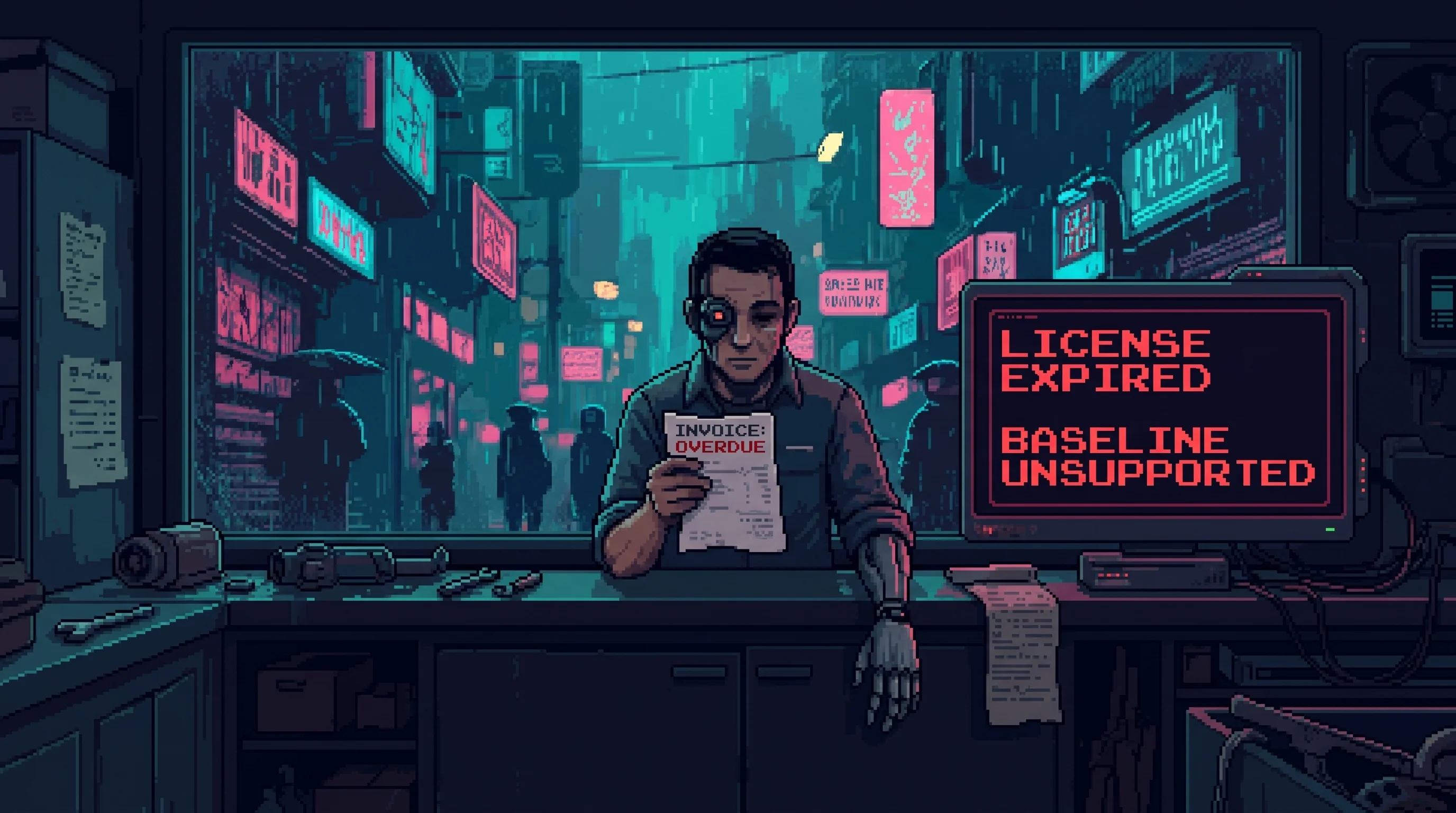
Fall far enough below the ceiling and you reach the floor: you still feel, you just can't wonder about what you feel.
Upgrades rewire users until baseline feels disabling, removal risks catastrophe, and each version demands the next.


—