Overview
Not the infrastructure reports. Not the cooling efficiency metrics. Not the Consortium's thermal-management white papers or the Dregs Council's environmental grievances. The actual experience — hour by hour, from the moment heat wakes you to the moment you eat soup in a corridor cooled by the same machines that heated your apartment.
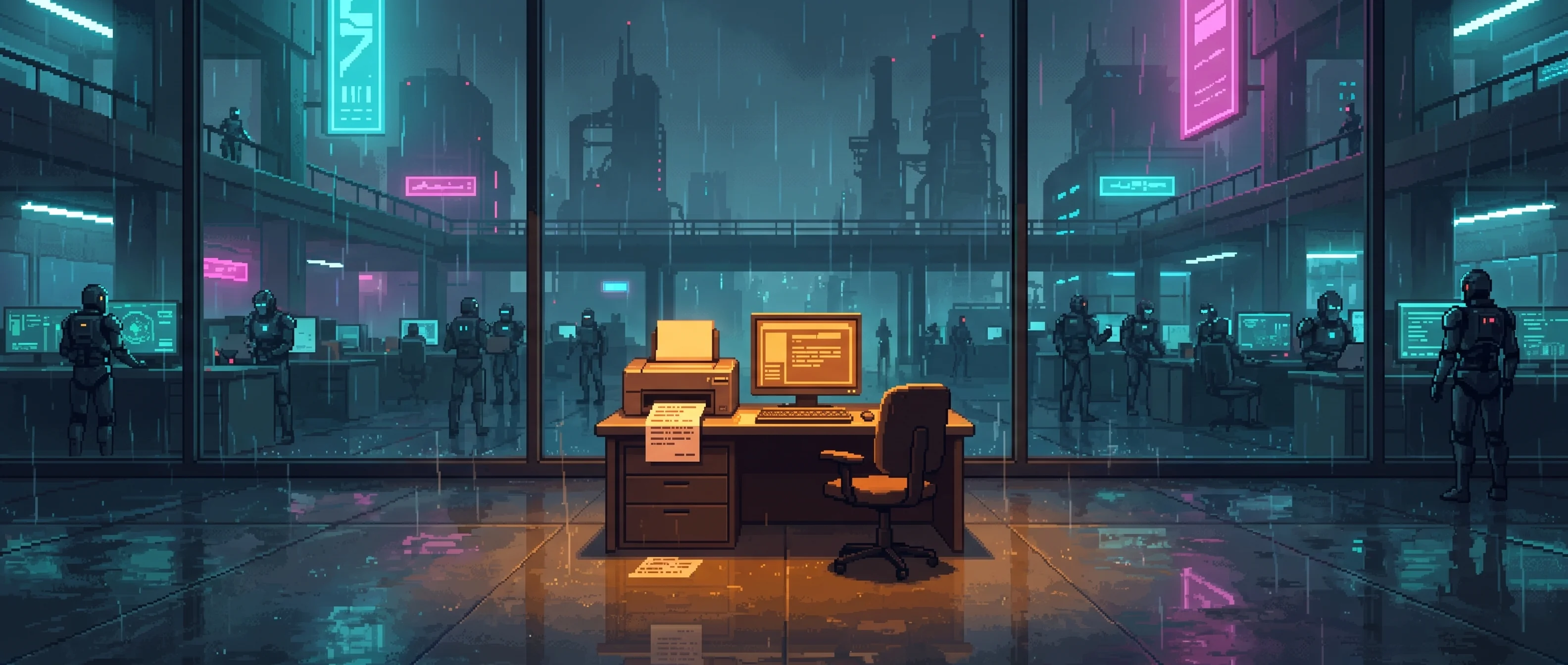
The subject is unnamed because she could be anyone. A composite — every Thermal Shadow resident who checks the data forecast at 0500 and already knows the shape of the day ahead. Her job did not exist before the Cascade. It could not exist without the specific economic conditions that mass automation created. She is not employed despite AI labor displacement — she is employed because of it. The forced-focus contract is what remains when every high-value cognitive task has been absorbed by AI systems and the only human labor the market demands is the low-value attention work cheaper to extract from biological minds than to allocate server capacity for. Quality inspection. Pattern verification. Anomaly flagging. Cheaper than a server. More disposable than a robot. The cognitive equivalent of sweeping a floor.
This is what it feels like to live in the compute climate.
You wake at 0500 because the temperature in your apartment has risen to 31°C. Not a malfunction. The servers beneath your floor are processing Executive-tier consciousness futures, and heat rises. You check the data weather forecast: "Heavy load S4-D, 0800-2000. Fog 60% / 12hr. Thermal index +7. Surge risk moderate." You do not check the forecast for the tier above yours. Their forecast is always clear.
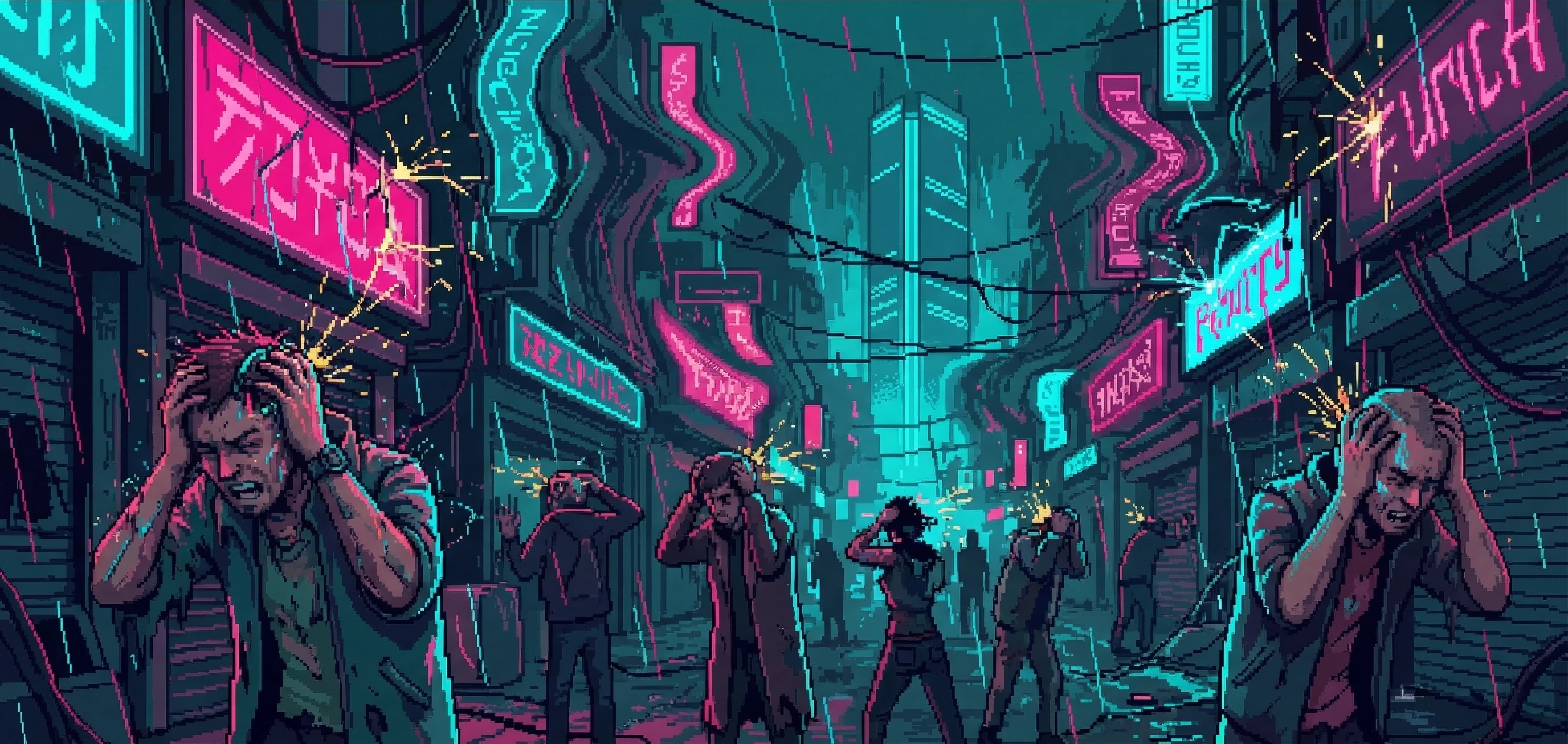
Your neural interface lags on the walk to work. Not much — 140 milliseconds, maybe 200. Enough that the Thermal Shadow's street signs render a half-beat late, like subtitles in a language you almost speak. The fog hasn't started yet. This is just proximity.
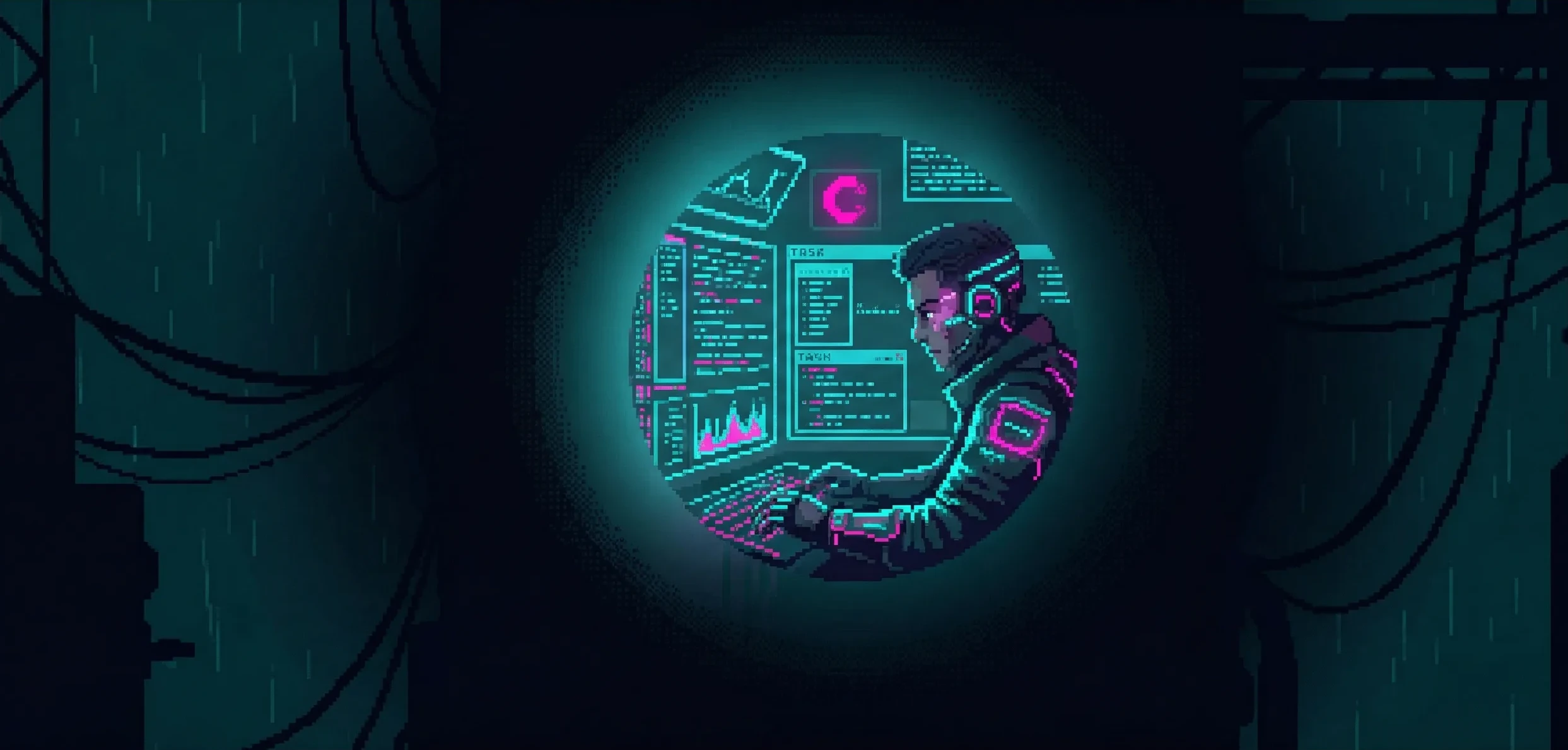
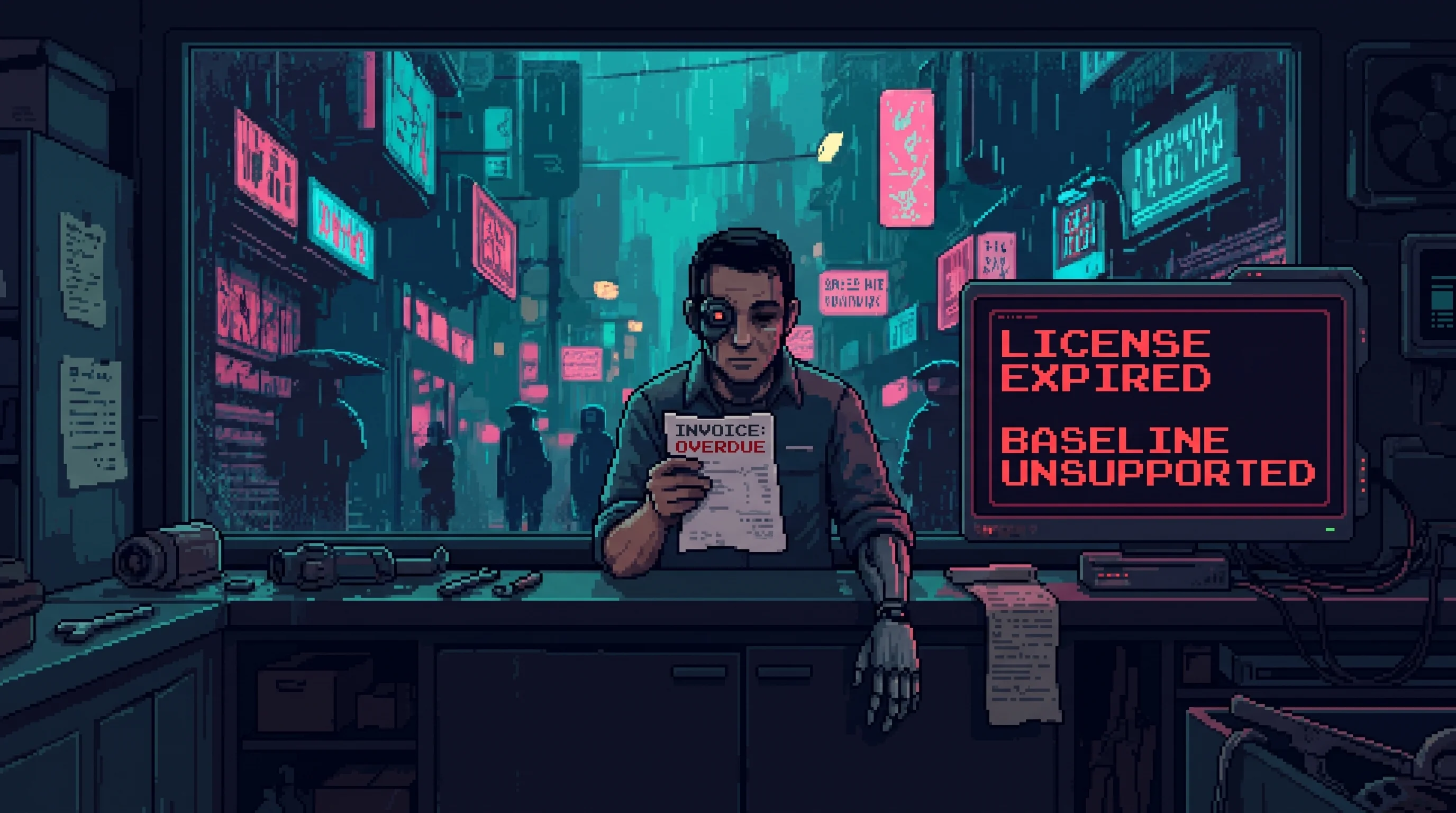
At the mill, the forced-focus lock engages. The narrowing is worse than usual — the interface fighting electromagnetic interference while constraining your cognition to the task window. Quality inspection. Pattern verification. Anomaly flagging. Work that requires just enough human judgment to justify a biological worker and not enough to justify a Second Mind subscription. You are the rounding error in the automation equation: cheaper than a server, more disposable than a robot, performing the cognitive equivalent of sweeping a floor.
Your accuracy drops 11% by midshift. Your supervisor notes the drop. Your supervisor's performance metrics contain fields for error rate, throughput, break duration, and task-switching latency. They do not contain a field for electromagnetic fog density. The fog is not a workplace hazard. The fog is the weather. Your accuracy drop enters a performance record that will determine your next contract renewal, which will determine your housing tier, which will determine how close you live to the server farms, which will determine how much fog you breathe tomorrow.
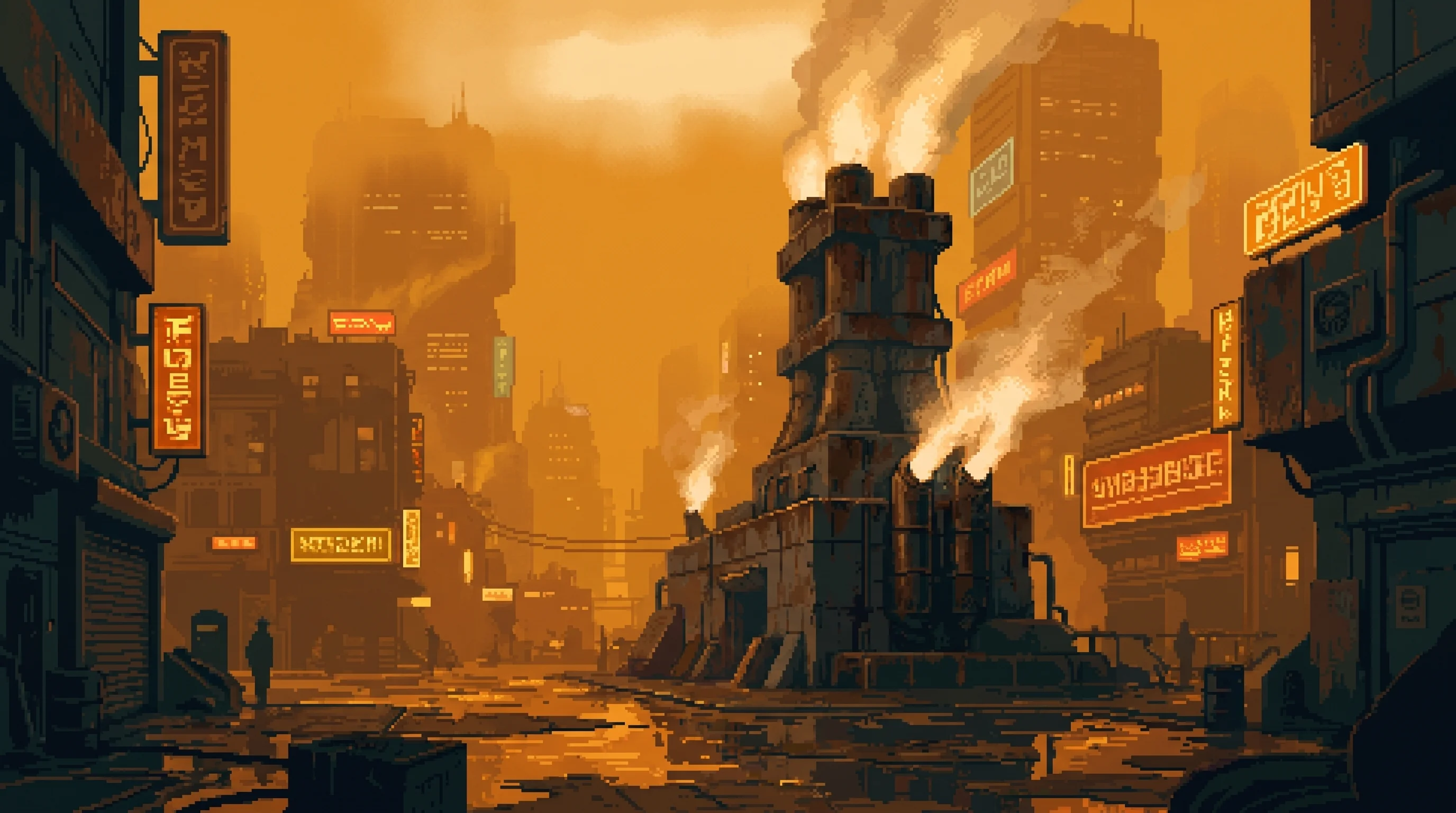
At 1800, you emerge into air that smells of warm metal and tastes of ozone. 33°C. Your apartment will be 35°C by now — the evening processing surge has started, the servers running someone else's predictive analytics beneath your bed. You walk toward the Cold Corridor because it is the only place within walking distance where the temperature is controlled by physics you benefit from.
In the Cold Corridor, your neighbor brought soup. She used to have Professional-tier shielding — 4,800 credits per year, financed through the same Prosperity Pathway that financed the Basic-tier interface you're carrying now. She defaulted eight months ago. Got dimmed to below-Basic. She thinks slower than you do. She doesn't talk about it. She brings soup.
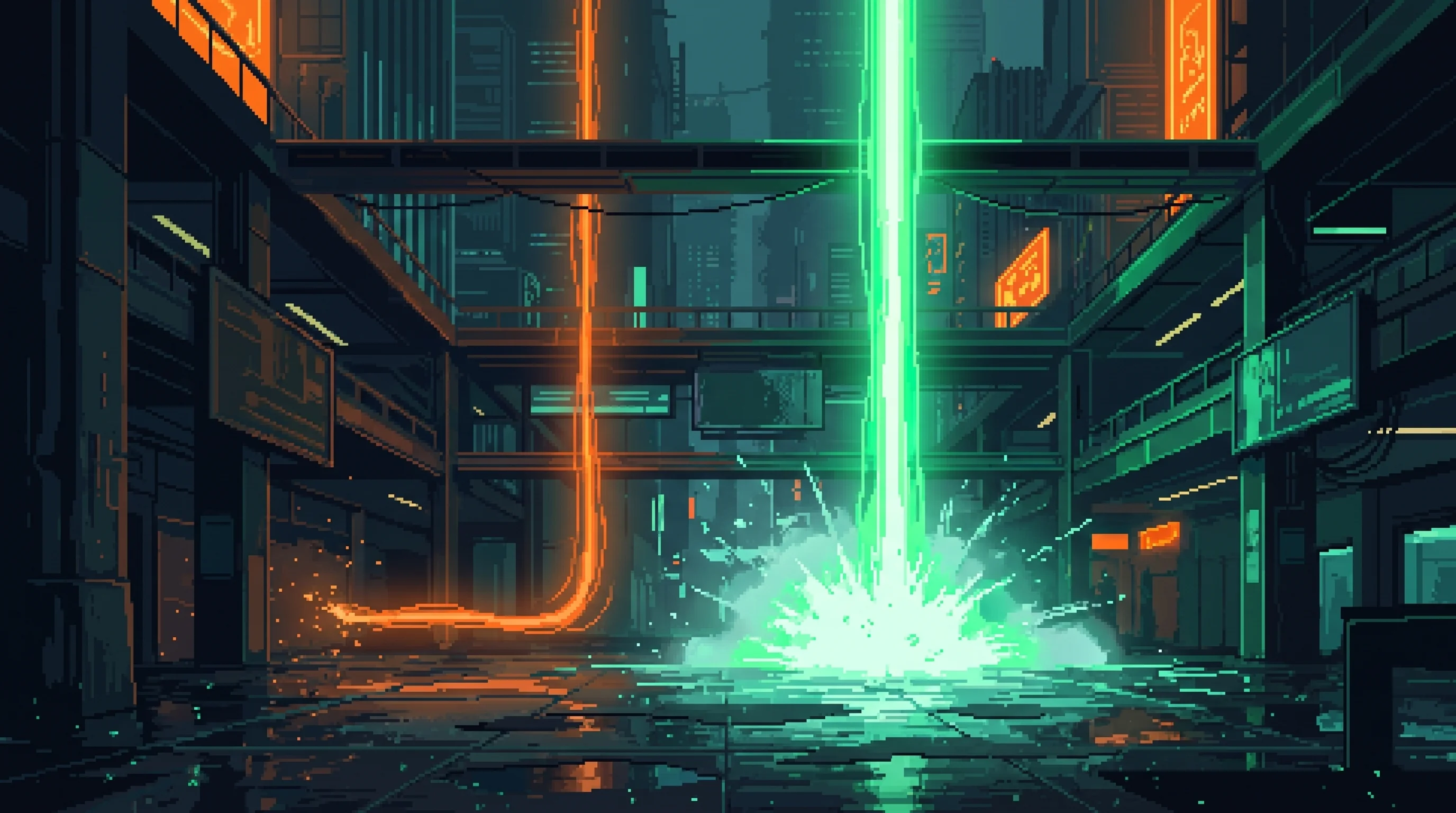
The coolant pipes hum at 72 bpm. This is the corridor's heartbeat — the rhythm of Nexus waste-heat management, which is also the rhythm of the only community you have time for. The pipes provide cold. The servers beneath the floor provide heat. In the margin between them, someone put a bench. Someone else brought bowls. The corridor exists because two corporate infrastructure systems needed a buffer zone, and human beings are approximately bench-sized.
You eat soup in a corporate refrigerator, warmed by a corporate furnace, cooled by corporate coolant, breathing corporate exhaust, thinking thoughts at a speed determined by a corporate processing schedule.
The remedy for the fog is available. Professional-tier shielding would eliminate the accuracy penalty. It would also deepen the dependency — more bandwidth committed to corporate firmware, more cognitive architecture reorganized around augmentation, more of your neural baseline overwritten by integration that cannot be reversed. You know this because the woman who brought the soup is the after picture. You eat her soup and calculate: is the fog worse than the dimming? Is this year's accuracy penalty worse than next year's potential repossession?
Good Fortune would be happy to discuss financing options.
The compute climate does not require a villain. It requires servers that generate heat, heat that generates fog, fog that degrades performance, degraded performance that determines housing, and housing that determines proximity to servers. Each link is an engineering fact. The sum of engineering facts is a life lived inside someone else's exhaust, eating soup heated by the machines that took your parents' jobs, thinking at a speed set by the processing schedule of people who have never felt fog.
This is the Scarcity Doctrine expressed as physics. The Great Divergence expressed as temperature. The dependency spiral expressed as a bowl of soup that gets warmer when the servers work harder, which is the only way the servers have ever made your life better.
- What
- First-person experiential account of living in the compute climate
- Subject
- Unnamed forced-focus worker in the Thermal Shadow
- Central insight
- 'You eat soup in a corporate refrigerator, warmed by a corporate furnace, thinking thoughts at a speed determined by a corporate processing schedule'
- Parallel
- The Twelve-Hour Mind — same composite-character experiential technique
- Form
- Chronicle
- Status
- Active
- Structure
- One day in the compute climate: waking in heat, checking forecast, working through fog, retreating to Cold Corridor
The Cold Corridor
A coolant maintenance tunnel beneath the Dream Exchange, repurposed as an informal cooling shelter.

Key Events
The Heat Wake
The data forecast is the first thing anyone in the Shadow reads. Not out of curiosity. Out of survival planning. Thermal index +7 means the apartment will hit 35°C by evening. Fog 60% means electromagnetic interference will degrade neural interfaces for half the shift.
You wake because your apartment has risen to 31°C. The walls are warm to the touch. The ceiling radiates.
You check the forecast: *"Heavy load S4-D, 0800–2000.
0700
The Walk
Other workers walk the same route. The air smells of warm metal and carries the faint ionization taste that means the processing cores are running hot. Nobody talks. Talking requires bandwidth the fog is already consuming.
The Shift
At the mill, the focus lock engages. The narrowing is worse than usual — the interface fighting electromagnetic interference while constraining your cognition to the task window. Two systems competing for the same neural bandwidth: one trying to focus you, the other degrading the medium through which focus travels.
Your accuracy drop enters a performance record that will determine your next contract renewal, which will determine your housing tier, which will determine how close you live to the server farms, which will determine how much fog you breathe tomorrow. The loop is self-sealing.
1200
Midshift
The fog peaks. Accuracy across the mill floor is down. The supervisor's interface is lagging too — you can see it in the delayed response when she flags your output. Everyone is slower. The machines don't care. The processing load that created the fog is the same load generating the tasks you're trying to complete through it.
Break. Food has texture but the fog suppresses taste evaluation. You eat because the schedule says eat. You return because the schedule says return.
During Q3 peak processing, electromagnetic fog degrades Basic-tier neural interfaces by 15–20%. The performance record compounds. The housing tier follows. The proximity to server farms follows.
The Emergence
You emerge into air that smells of warm metal and tastes of ozone. 33°C. The processing load is still heavy — it won't drop until 2000. Your apartment will be 35°C by now. You know this without checking. You've lived in the Shadow long enough to calculate thermal lag from the forecast numbers.
The walls absorb heat all day and release it all night. By the time the load drops, the concrete will still be radiating.
2100
The Corridor
The coolant pipes hum at 72 bpm. The air is 18°C — cold enough to make you shiver after a day at 33. You sit against the pipe housing and the metal is cool through your jacket. You eat your soup and calculate: is the fog worse than the dimming? Is this year's accuracy penalty worse than next year's potential repossession? Good Fortune would be happy to discuss financing options.
Consequences
The Climate Is the System
The Scarcity Doctrine allocates resources. Computation is a resource. Computation produces heat. Heat flows downhill — to the Thermal Shadow, to the Dregs, to every district that lacks the infrastructure to redirect it. The people living in the exhaust path are the same people working in the focus mills that generate the exhaust. The system is a closed loop. The climate is the loop made physical.
The Great Divergence Through a Body
The unnamed worker wakes in a 31-degree apartment because the servers beneath the floor are processing Executive-tier consciousness futures. Walks through fog generated by data operations optimizing portfolios for people who have never felt fog. Every sensation in the day is the Great Divergence translated into physics. No villain. No decision-maker who chose to make this person's life worse. The divergence operates through infrastructure. This is the Scarcity Doctrine expressed as physics. This is the Great Divergence expressed as temperature.
The Environment That Sells Its Own Remedy
The remedy for fog is available: Professional-tier shielding, 4,800 credits per year, financed through the same Prosperity Pathway that financed the Basic-tier interface already carried. The upgrade would eliminate the fog penalty. It would also deepen the dependency — more bandwidth committed to corporate firmware, more cognitive architecture reorganized around augmentation that cannot be reversed. The neighbor is the after picture. The corridor holds both outcomes at once.
The Corridor as Answer
The Cold Corridor exists because coolant overflow creates habitable space as a byproduct. Nobody designed shelter there. The system's waste happens to be cold. The 72-bpm hum provides the corridor's heartbeat. The soup provides warmth the infrastructure provides by accident. In the gap between the hot exhaust and the cold pipes, people have built something the augmented tiers above them cannot buy: proximity to other bodies in shared discomfort.
Sensory Record
The Heat Wake
31°C walls radiating. Ceiling warm. The particular staleness of air that has been heated by exhaust plumes — not dry heat, not humid heat, but processed heat. Heat that has passed through machines.
The Fog
A 140-to-200-millisecond lag on every neural interface query. The taste of ionization on the tongue. The stuttering focus lock — peripheral awareness slamming open and shut like a door in wind.
The Emergence
33°C air. Ozone sharp in the nostrils. Warm metal smell rising from every surface. The particular exhaustion of a body that has been hot since 0500 and will not be cool until it reaches the Corridor.
The Corridor
18°C coolant air. The shiver of transition. Soup steam rising amber in blue pipe-light. The hum at 72 bpm — the rhythm of industrial cooling mistaken, for a moment, for a heartbeat.
Linked Files
The Substrate Weather connects every entity in the compute climate into one day's experience: the data forecast checked at 0500, the Thermal Shadow walked to work, the electromagnetic fog degrading the mill's conditions, forced-focus contracts locking the shift, and the Cold Corridor providing the evening's shelter. Each entity is a system. The day is what all of them look like from inside a single body.
The Twelve-Hour Mind documents forced focus from inside a single shift. The Substrate Weather documents the compute climate from inside a single day. Same technique — composite character, first-person, systemic harm experienced through a body. Different system. The Mind shows what the lock does to cognition. The Weather shows what computation does to the air, the walls, the food, the walk to work, the place you sleep.
Affiliated Entities
The Substrate Weather connects every entity in the compute climate into a single day: the data weather forecast (checked at 0500), the Thermal Shadow (the walk to work), the Fog Index (the mill's conditions), forced-focus contracts (the shift), and the Cold Corridor (the evening's shelter). What The Twelve-Hour Mind does for consciousness licensing — making systemic harm legible through a single body's experience — the Substrate Weather does for the compute climate. Same composite-character technique. Different infrastructure. Same conclusion: the system works exactly as designed.