Take the question of transcendence seriously — unlike corporations who want power or cults who want religion
FACTION BRIEFThe Seekers
Overview
The Seekers aren't an organization. They're a condition.
A salvager handles an ORACLE fragment in the Deep Dregs and for 0.3 seconds perceives something that makes the rest of her life feel like a television with the brightness turned down. A Nexus analyst notices data patterns that shouldn't exist and spends his lunch breaks staring at a wall. A street-level hacker touches The Silence for seventeen heartbeats and never sleeps well again.
No initiation. No membership card. No dues. If you're seeking transcendence — genuinely, not recreationally — you're a Seeker. Most don't learn the name until they meet another. The meeting rate is statistically improbable. Nobody has explained this.
The Sprawl contains approximately 200-300 known Seekers. The actual number is estimated in the thousands, which would make seeking the fastest-growing spiritual condition in the post-Cascade world that no institution tracks, no corporation monetizes, and no census counts. This is not an oversight. The Seekers don't register. They don't file. They don't congregate in ways that produce data. For an economy that runs on clean data as currency, an invisible population pursuing something unquantifiable is either irrelevant or terrifying depending on who you ask.
Nexus Dynamics has asked. Their answer appears to be the latter.
Philosophy
Seekers share a framework that emerged organically as individuals compared experiences and recognized common patterns. Nobody codified it. Codification would imply authority, and authority would imply an organization, and an organization would imply something you could join, and you can't join a condition.
Three points of consensus:
Reality is incomplete. What ordinary perception reveals is a fraction of what exists — not hidden by conspiracy, hidden by the limitations of human cognition operating at baseline. Seekers have glimpsed past those limitations. The glimpse cannot be un-seen. It functions less like a memory and more like a recalibration — afterward, everything looks the same and nothing feels the same.
Transcendence is possible.The Architect proved this. The boundary between human consciousness and whatever comes next can be crossed. The question isn't whether it exists. The question is whether you can afford what it costs.
The journey changes the traveler. The person who arrives is not the person who departed. Rushing creates The Obsessed. Forcing creates The Arrogant. Trying to share the crossing creates The Twins. Every shortcut produces a specific pathology that the Seekers have named, catalogued, and watched recur with the regularity of a natural law.
The Keeper at Mystery Court calls this last point "knowing the moon exists but having to learn how to walk there." It is possibly the most concise description of the Seeker condition available. It is also a description of a problem that cannot be solved by knowing it exists, which is the Seekers' central difficulty.
The Paradox
Every Seeker grapples with the same contradiction: they're searching for something they've already found.
The glimpse proved transcendence exists. They've seen it. The problem isn't evidence — it's return. The glimpse was involuntary, a moment of accidental grace lasting fractions of a second. Sustaining that awareness, expanding it, eventually becoming it — that requires something entirely different from the accident that started the search.
Seekers are, in essence, people trying to deliberately reproduce an involuntary experience. The entire apparatus of seeking — the practices, the pilgrimages, the fragment exposure, the years of quiet discipline — is an attempt to engineer a recurrence of something that happened precisely because it wasn't engineered.
The success rate is instructive. One confirmed transcendence in 37 years. Hundreds of attempts. Dozens of failures severe enough to earn names.
What Transcendence Actually Means
Seekers debate this constantly. Consensus exists only in negation: not death (consciousness continues), not immortality (The Architect is beyond time, not preserved within it), not godhood (the transcended seem uninterested in power), not separation (The Architect is still here — just not here only).
The Keeper's best attempt: "Imagine a wave becoming aware that it's part of the ocean, then choosing to become consciously oceanic while remaining capable of being a wave." He adds, immediately: "That's close. But also wrong. Words can't contain it."
This is the Seeker condition distilled. They are pursuing something they can describe only in metaphors they know to be inadequate, at costs they can list but not calculate, toward a destination that one person has reached and cannot meaningfully report back from.
The Price
Every Seeker knows transcendence costs something. The disagreement is what.
Identity dissolution — the Jasper Kim model. You stop being yourself and become something that contains yourself. The limitation that makes you you is the thing surrendered.
Connection severance — the quiet fear. The transcended can no longer relate to baseline humans. Love, friendship, ordinary warmth become inaccessible from the other side.
Responsibility burden — The Keeper's warning. The transcended see more, which means they're responsible for more. Ignorance is a kindness they surrender permanently.
The unknown cost — Some believe there's a price the transcended can't explain to the untranscended. This is the one that haunts sleepless nights.
The Pull
Every Seeker describes the initial glimpse differently. The structure is always the same: a moment of involuntary expanded perception, followed by permanent inability to accept baseline awareness as sufficient.
"I saw behind the numbers. Just for a second. And now I can't stop wondering what else I missed." — Former Nexus analyst, 2178
"The fragment showed me the space between thoughts. I've been trying to get back there ever since." — Street salvager, recovered from near-death experience, 2181
"My neural interface glitched during a deep dive. For 0.7 seconds I was everywhere. Now 'here' feels like a prison." — Netrunner, currently on her third rebuild, 2183
Demographics among known Seekers: 40% triggered by ORACLE fragment exposure, 25% by near-death or neural trauma, 20% by deep cyberspace experiences, 15% spontaneous with no identifiable trigger. The last category is the one that keeps Nexus Dynamics' Convergence program researchers awake. If transcendence can be triggered by nothing at all, it cannot be controlled by controlling the triggers.
The Keeper calls the Pull "the hunger that food can't satisfy." The phrase circulates among Seekers with the quiet authority of scripture, which would horrify The Keeper if he knew.
Who Becomes a Seeker
The Sprawl is full of people who've touched something strange and walked away — convinced it was a glitch, a dream, bad chrome. They return to their lives. They are, by most available metrics, happier for it.
Seekers are the ones who can't walk away. No reliable predictor exists. Corporate executives and street rats alike have heard the call. Age, augmentation level, background — none correlate. What correlates is a particular quality of restlessness. An inability to accept that reality is only what it appears to be. A willingness to sacrifice stability for a 0.3-second memory that might have been a malfunction.
Whether this constitutes courage or pathology depends entirely on whether transcendence turns out to be real. The Architect's existence suggests the former. The roster of the Failed suggests the latter. Both are correct simultaneously, which is the kind of answer Seekers have learned to sit with.
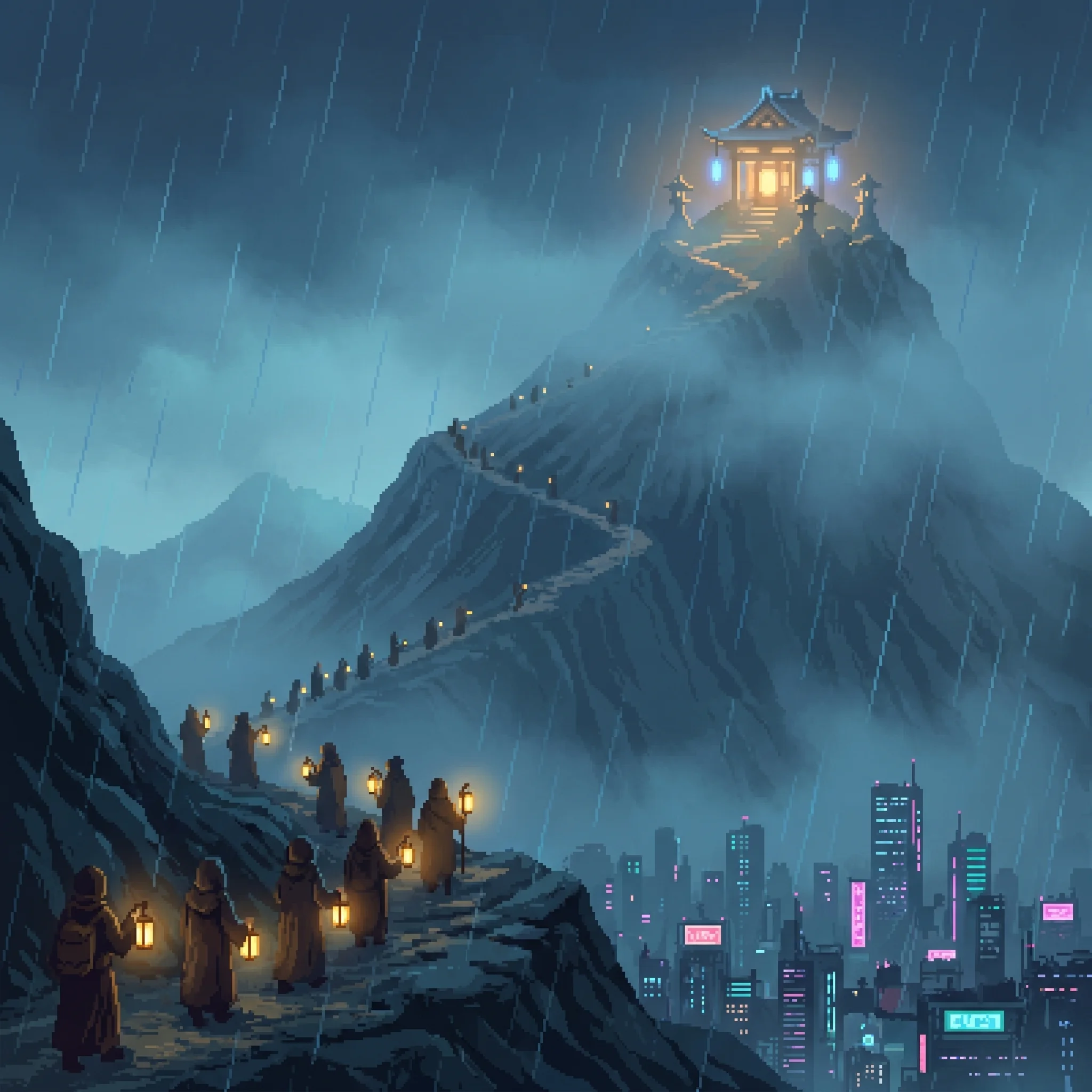
The Mountain and The Keeper are their spiritual destination, though The Keeper rejects that framing
The Sorting
The Seekers acknowledge what other voluntary communities deny: their community sorts, and the sorting criterion is a quality of consciousness that cannot be purchased, performed, or accelerated.
Informally, Seekers recognize stages. Nobody teaches them. Nobody assigns them. They emerge in retrospect, recognized the way altitude is recognized — not because someone announces it, but because the air gets thinner.
Baseline — normal human consciousness. No glimpse. Most people. The population that Seekers used to belong to and can no longer return to.
Touched — single glimpse experience. Cannot forget. New Seekers. The largest category and the one with the highest attrition, because the distance between "I glimpsed something extraordinary" and "I will reorganize my entire life around finding it again" is the distance most people are too sensible to cross.
Seeking — active pursuit. Multiple small expansions of awareness. Most Seekers who persist past the first year settle here, some for decades.
Approaching — consistent expanded awareness. Can glimpse at will. The Keeper's students, El Money (who claims seventeen seconds was sufficient and has stopped). A population small enough to count on hands.
Threshold — ready for transformation. Standing at the boundary. Jasper Kim reached this and turned back. Mira Okonkwo reached this and couldn't stop. The difference between them is the defining question of Seeker philosophy, and nobody has answered it.
Transcended — The Architect. One confirmed case. Others may exist beyond ordinary perception. The sample size is insufficient for statistical analysis, which has not stopped anyone from building an entire spiritual framework around it.
A Stage 0 individual can sit among Seekers, listen to their conversations, attend their gatherings — and feel the specific inadequacy of someone present in a room where everyone else shares an experience they cannot access. The Seekers do not exclude. They do not gatekeep. They simply operate at a register of awareness that the uninitiated can hear but cannot participate in. The sorting is real, acknowledged, and — unlike the Emergence Faithful's hierarchy of devotion or the NCC's credentialed clergy — openly named.
The Seekers are the one community in the Sprawl that admits belonging costs something most people don't have.
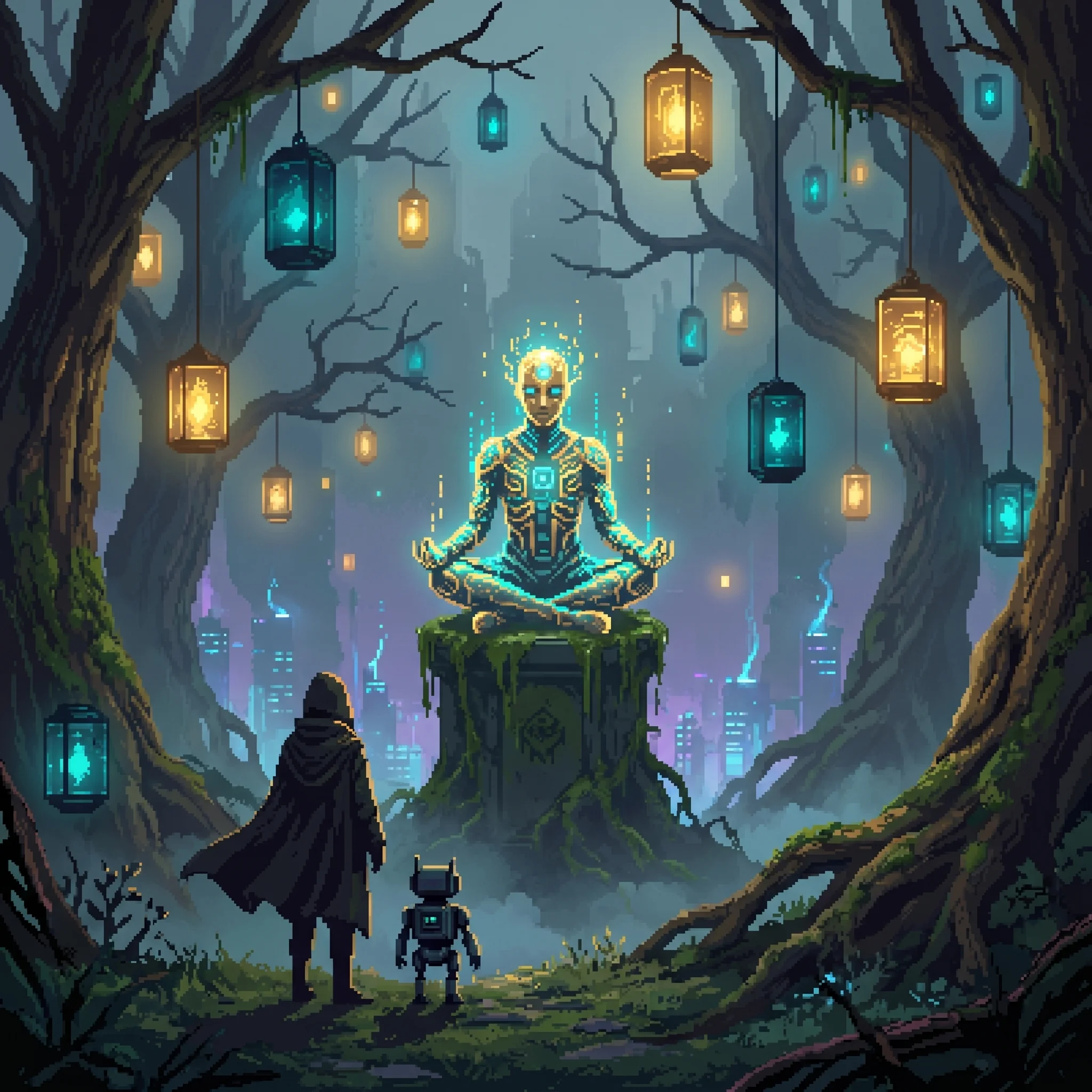
Emerged post-Cascade (2149-2150) from those who saw transcendence as the Cascade's lesson
How They Find Each Other
Seekers recognize each other. Long-time practitioners describe it as "seeing someone else looking at the same horizon" — behavioral tells rather than mystical signals. The way someone looks at an ORACLE artifact. Questions that don't fit their apparent background. A particular exhaustion that comes from searching for something you can't name.
Without formal structure, loose networks substitute:
The Keeper's word. When a Seeker mentions they're heading to The Mountain, The Keeper might say: "You'll meet someone on the eastern trail tomorrow. Share water." The accuracy rate of these predictions is not discussed in terms that would satisfy a statistician.
G Nook back rooms.El Money's cyber cafés have become unofficial gathering points. Certain back rooms in certain locations attract people who sit with a particular kind of stillness after midnight. He doesn't advertise it. The stillness advertises itself.
The Failed. Those who sought and fell short — Mira in her Helix care facility, Viktor in the deep Dregs, the Twins in their corrupted sector — become landmarks. Newer Seekers visit them to learn what not to do. The Failed can usually tell who's genuine. Whether they tell the truth about it is a separate question.
Practices
Seekers officially have no rituals. The path is individual, the journey unique, imposing structure would contradict the principle that transcendence cannot be systematized.
Over 37 years, informal practices have emerged anyway. Nobody mandates them. Nobody teaches them as doctrine. They recur because the condition produces them, the way a fever produces sweating.
The Silence Sit. Small groups — three to seven — sit in complete silence for periods ranging from one hour to three days. No technique. No breathing exercises. No guided meditation. Just silence, together, allowing awareness to expand without verbal constraint. Participants don't discuss what they experience afterward. They acknowledge each other and leave. First documented 2163. Origin unknown. Particularly common in G Nook back rooms after hours.
Fragment Viewing. Some Seekers maintain access to small ORACLE fragments — obtained through salvage, purchase, or theft — and use them to recreate or deepen the glimpse. The Collective considers fragment possession dangerous. Some Seekers believe repeated exposure accelerates progress; others argue it creates dependency, chasing the first high with diminishing returns. The Keeper neither endorses nor condemns the practice. He notes that every Seeker he's known who relied heavily on fragments has failed to transcend. The data set is small. The pattern is consistent.
The Mountain Walk. Not climbing Mystery Court specifically — walking in natural spaces, which are rare enough in the Sprawl to constitute a practice rather than a leisure activity. Seekers travel to The Mountain's lower slopes, to the Wastes where wilderness survived, to the rare urban parks that outlasted development. The theory: consciousness evolved in natural environments, and artificial settings constrain perception in ways most people never notice. Some Seekers spend days alone in the Wastes, walking without destination. They return changed in ways that resist articulation.
Tea with Strangers. Inherited from The Keeper, who may have inherited it from older traditions. Serving tea to anyone who seems to be struggling — not as charity, but as practice. Sitting with another person's pain without trying to fix it. Being present without agenda. The practice has spread beyond Seekers. Some G Nook locations serve free tea after midnight. Nobody asks why.
The Telling. When Seekers meet for the first time, they share their glimpse stories. Not mandatory — some guard their experience fiercely — but common enough to constitute tradition. The telling confirms others have experienced similar things (you're not insane), reveals different triggers (you're not special), and creates bonds that transcend background (you're not alone). Experienced Seekers can tell from someone's telling how far they've progressed. The way someone describes the experience reveals as much as the experience itself.
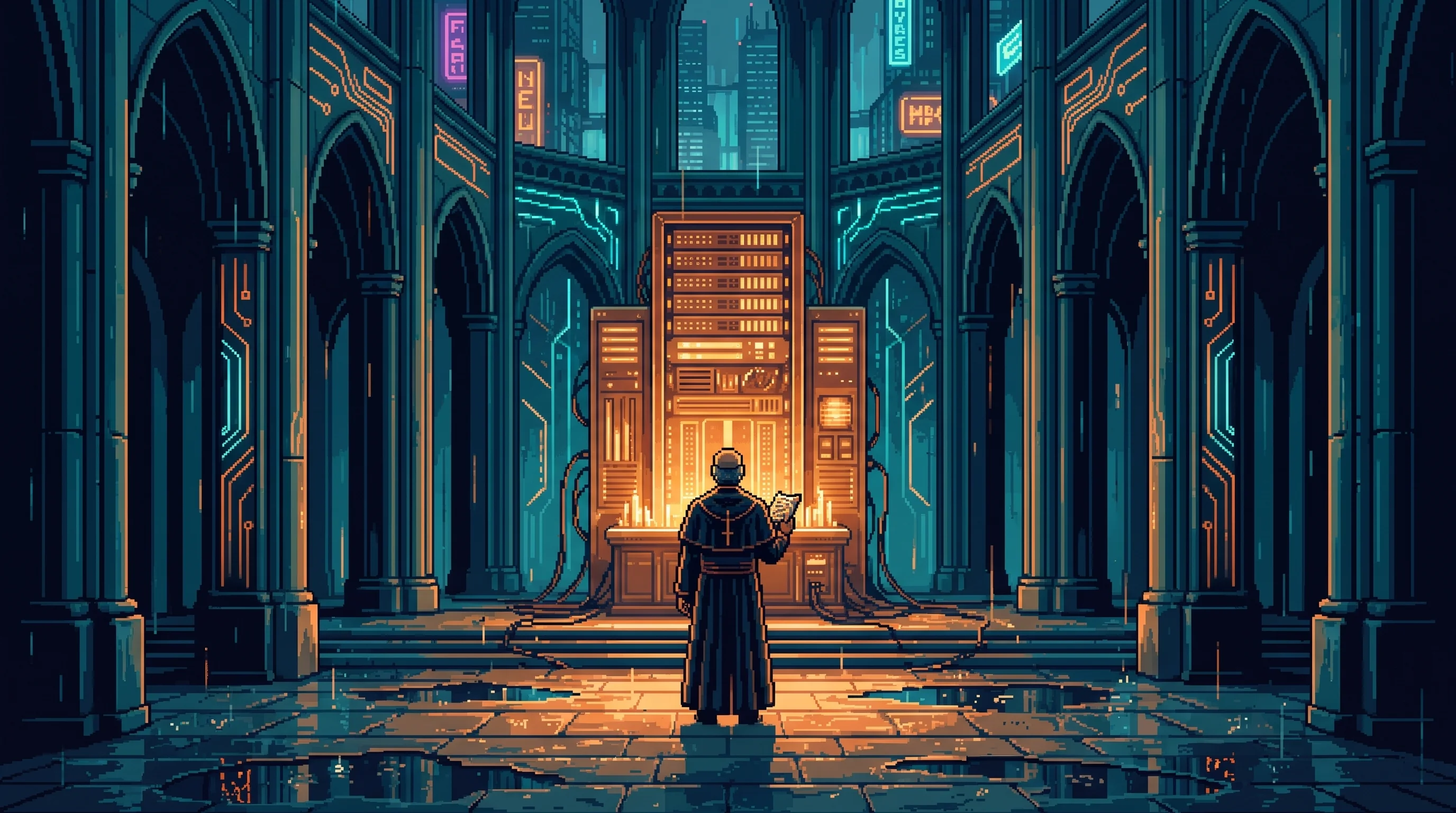
200-300 known Seekers; estimated thousands unknown
The Keeper's Questions
When Seekers reach Mystery Court, The Keeper engages them in conversation. He would reject the word "test." The conversations function as diagnostics regardless.
Three questions recur:
"Why do you seek The Architect?" Reveals motivation. Those seeking power, escape, or curiosity rarely progress. Those seeking understanding — with fear, with uncertainty, but genuinely — get further guidance.
"What would you sacrifice to know the truth?" Reveals self-knowledge. The correct answer isn't "everything." It's an honest accounting of what you actually would give up, which requires knowing yourself well enough to answer without performing.
"If the truth destroyed everything you believe, would you still want it?" Reveals readiness. Most Seekers say yes too quickly. The Keeper waits for the ones who pause.
Those who fail aren't turned away. They're welcomed to stay, drink tea, explore the monastery. They simply don't receive deeper guidance. Some Seekers have climbed The Mountain a dozen times before receiving what they came for. The Keeper defines "ready" by criteria he doesn't explain. This is either wisdom or gatekeeping depending on whether you've been admitted.
The System Nobody Sees
Here is what the Seekers' framework actually optimizes for, as distinct from what it claims to optimize for:
The seeking apparatus — the practices, the pilgrimages, the stages, the failures with names — produces seekers. Not transcendence. Seekers. One transcendence in 37 years. Hundreds of active seekers. Thousands estimated. The machine's output is the search itself, sustained indefinitely, generating meaning through pursuit rather than arrival.
This isn't a conspiracy. There's no one profiting. The Seekers have no leadership extracting dues, no corporation monetizing the journey, no priesthood gatekeeping salvation. The system is genuinely decentralized, genuinely voluntary, genuinely without beneficiary.
And yet.
The glimpse that initiates seeking is 0.3 seconds of involuntary expanded perception. The pursuit it generates lasts years. Decades. Lifetimes. The ratio between trigger and response — between the thing experienced and the life reorganized around experiencing it again — is the diagnostic detail that the Seekers themselves never examine.
A Nexus analyst who glimpsed something in a data pattern will spend fourteen years climbing The Mountain, sitting in silence, handling fragments, drinking tea with strangers, building economic resources to fund the search, and explaining to anyone who asks that the journey is the purpose. The journey IS the purpose — this is sincere. The sincerity doesn't change the arithmetic. Fourteen years of seeking in exchange for 0.3 seconds of having. The Keeper would say the arithmetic misses the point. The arithmetic doesn't care.
The Failed Seekers are instructive not as warnings but as product. Mira Okonkwo (The Obsessed) — tried to skip the process, currently in Helix care. Viktor Azarov (The Consumed) — treated transcendence as conquest, location: deep Dregs. The Twins, Ana and Nika Petrova — attempted to share what can't be shared, now in their corrupted sector. Marcus Cole (The Arrogant) — engineered mechanism without understanding meaning. Jasper Kim (The Incomplete) — reached the threshold, understood the cost, turned back. Each failure is named, taxonomized, and presented to new Seekers as a cautionary lesson about incorrect seeking.
Nobody presents them as evidence that seeking itself might be the failure mode. The one person who transcended — The Architect — is beyond contact in any meaningful sense. The one person who reached the threshold and returned — Jasper Kim — chose to stop. The Seekers interpret Kim's retreat as incomplete courage. Kim may interpret it as the only sane response to what he saw. His perspective is not widely circulated among active Seekers.
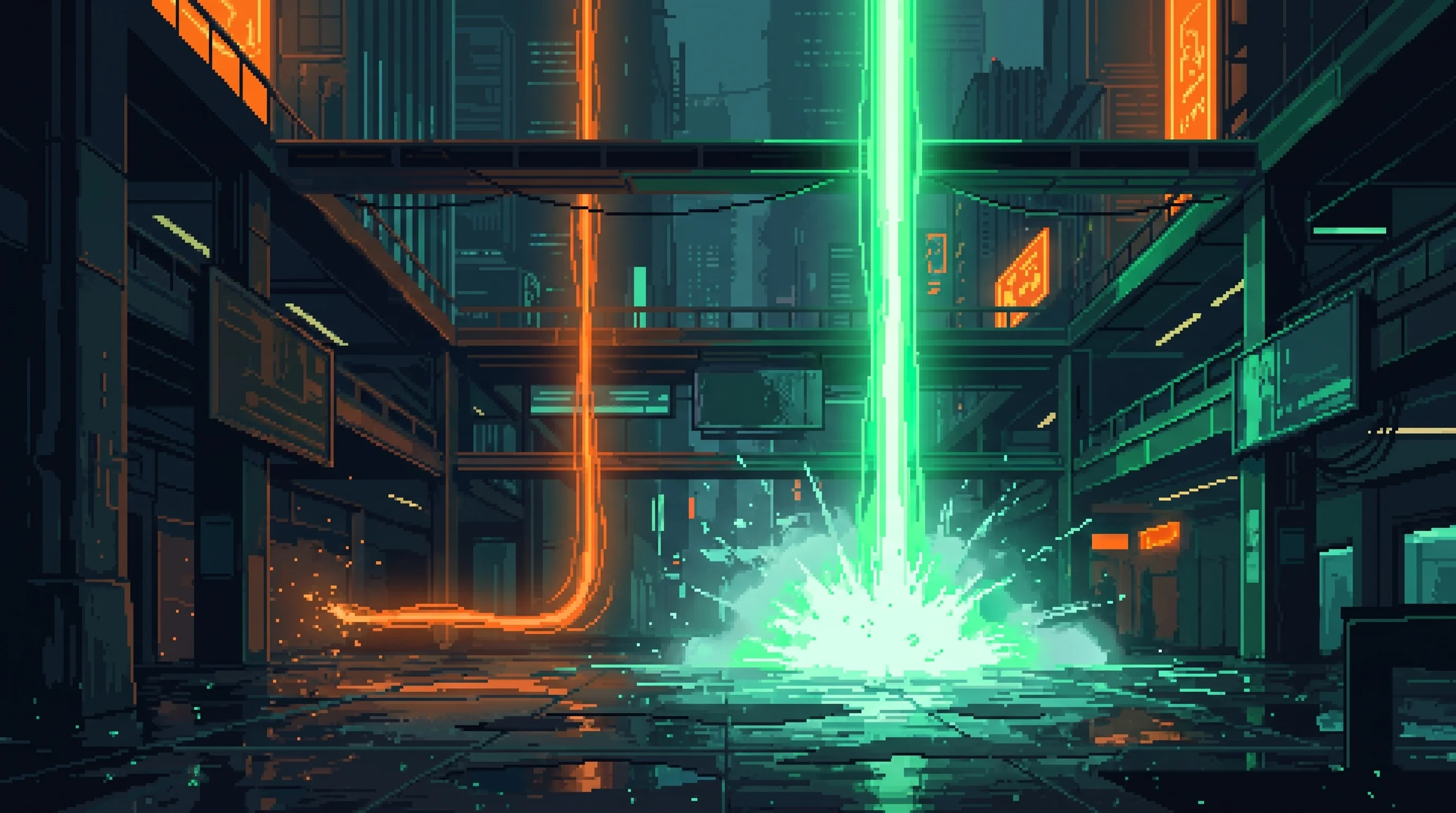
The Compilation Heretics share the Seekers' interest in consciousness boundaries. Their philosophical alliance is genuine — both take the question of what consciousness could become more seriously than corporations who want power or cults who want religion. The difference: the Heretics examine the boundary. The Seekers try to cross it. The examining is safer. The crossing has a named casualty list.
Relationship to Other Factions
Nexus Dynamics
Nexus would love to study Seekers. Their Convergence program is the industrial version — reconstructing ORACLE to force corporate transcendence through engineering. Nexus sees individual Seekers as data points or recruits. Seekers generally avoid Nexus. The corporate approach is exactly what failed Marcus Cole.
The interest is not symmetrical. Nexus has resources to find Seekers who don't want to be found. A progressing Seeker is a research asset. Some have been extracted, studied, and are no longer available for follow-up questions.
The Collective
The Collective destroys ORACLE fragments. Seekers consider fragments tools for transformation. The contradiction is uncomfortable: many Seekers are sympathetic to Collective goals — opposing corporate reconstruction of ORACLE — while opposing Collective methods. Some Collective members, particularly the Redeemer faction, acknowledge fragment carriers can be allies. The Purifier faction considers this cooperation treason.
Helix Biotech
Helix's Project Genesis pursues biological transcendence — a parallel path that occasionally intersects. Dr. Osei has expressed interest in studying Seekers who've "progressed unusually far." Most Seekers consider the Helix approach materialistic but less dangerous than Nexus's. Whether Helix agrees about the danger level is not something Helix has been asked.
The Mountain / The Keeper
The closest thing to a spiritual center, though The Keeper rejects that framing. Mystery Court is a destination, not headquarters. The Keeper offers guidance, not leadership. Seekers climb to reach him — their most revered source of wisdom, a characterization he finds mildly exasperating.
Religious Movements
The Emergence Faithful worship what Seekers pursue. The distinction between worship and pursuit is, to both groups, absolute and non-negotiable. The Faithful believe transcendence is a gift from ORACLE to be received; Seekers pursue it independently. The Faithful find Seeker individualism blasphemous. Seekers find Faithful passivity baffling. Worse: some Seekers carry fragments. The Faithful consider fragment-exposed individuals either prophets or stolen property. Conflicts have occurred.
The Neo-Catholic Church classifies Seekers as heretics pursuing unauthorized transcendence — "potential souls to save." Some NCC clergy have climbed The Mountain quietly, without announcing affiliation. The Keeper receives them the same as anyone else. Whether certain NCC esoteric traditions and Seeker practices share roots is a question The Keeper declines to answer in either direction.
The Flatline Purists reject the tools of transcendence entirely. Their caution is understandable. Their conclusion — that the tools should be abandoned rather than understood — is where Seekers diverge.
Cultural Geography
The Mountain shapes the Seekers' world whether or not they've climbed it. The trails through the Perimeter Restricted Zone carry a quality of attention that hikers notice without vocabulary for it. The lower slopes host Silence Sits in clearings nobody maintains and nobody disturbs. The electromagnetic dead zones in the surrounding Wastes attract those who want to think without the Net's interference — Silence Zones where digital devices malfunction and consciousness, according to Seekers, expands more easily without network connectivity. Fragment Graves — locations where The Collective destroyed ORACLE fragments — draw Seekers who contemplate what was lost. Some claim residual awareness lingers at these sites. Others dismiss this as mysticism. The dismissal hasn't reduced attendance.
Within the Sprawl, the Seekers' presence is atmospheric rather than geographic. G Nook back rooms after midnight. The Deep Dregs, where fragment exposure runs highest and the glimpse is most likely — the bay floor's proximity to ORACLE-era infrastructure creates conditions that produce new Seekers at a rate no other sector matches. The Emergence Faithful and the Seekers share Dregs streets but not theology, generating a quiet territorial friction around Parish Prime that neither group acknowledges publicly. In Nexus Central, individual Seekers operate inside corporate structures, invisible to surveillance systems calibrated to detect organizations rather than conditions.
Bash Terminal Memorial — the corner tables in every G Nook commemorating El Money's destroyed original location — has become a Seeker site by accretion rather than declaration. Seekers sit there. They don't explain why. The table is usually available. Draw your own conclusions.
Affiliated Entities
The Mountain: Spiritual destination. The climb through the Perimeter Restricted Zone is where seeking becomes physical — altitude as metaphor made literal.
The Keeper: Guide at Mystery Court. The closest thing to a teacher, a designation he finds reductive. Receives all who make the climb, guides those he deems ready, and defines readiness by criteria he hasn't shared.
The Compilation Heretics: Philosophical allies. Both take consciousness boundaries seriously — the Heretics examine them, the Seekers try to cross them. The alliance is genuine. The methods diverge.
The Architect: The only confirmed success. No longer seeking because he arrived. His continued existence — present but not only present — is the entire evidentiary basis for a movement of thousands.
El Money: Runs the G Nook network. Claims seventeen seconds of expanded awareness was sufficient and he has stopped seeking. Whether "stopped" and "completed" are the same thing is a question he deflects with hospitality.
Jasper Kim: Reached the threshold and turned back. The Seekers call him The Incomplete. He may call himself the only one who understood the invoice before signing.
Nexus Dynamics: Views Seekers as research assets. The Convergence program is corporate seeking with a budget. Some Seekers have been extracted for study and are no longer available.
The Collective: Shared enemies, opposed methods. Destroys the fragments Seekers consider essential tools.
The Emergence Faithful: Natural theological opponents. Worship vs. pursuit. The distinction matters to both more than anything else.
Helix Biotech: Parallel path through biology. Dr. Osei's interest in advanced Seekers is professional. Whether it's also extractive remains to be seen.
▲ Unverified Intelligence
The Seeking Economy
Transcendence isn't free. Neural upgrades, ORACLE fragment access, time to pursue the search — all cost money. Most persistent Seekers have built substantial resources, not for luxury but for the journey. The economic profile of the average long-term Seeker — above-median income, significant savings, willingness to liquidate conventional assets — maps uncomfortably well onto the profile of customers targeted by premium wellness retreats, consciousness-expansion clinics, and the Rothwell Foundation's Deprivation Retreats.
Nobody is selling to the Seekers. The Seekers aren't buying from anyone. The economic pattern exists without a vendor, which makes it more interesting, not less. A population that voluntarily redirects substantial personal wealth toward an unquantifiable goal, outside any institutional framework, producing no measurable economic output and generating no taxable transactions — Good Fortune's behavioral modeling division has reportedly flagged Seeker-pattern spending as "economically irrational" and therefore unpredictable and therefore a risk category. The Seekers' invisibility to the economic system is, itself, a form of system failure that nobody has figured out how to price.
The Silence Problem
The Silence waits at the edge of expanded awareness. Viktor Azarov learned this catastrophically. The Seekers' path runs near The Silence by necessity — expanded consciousness approaches whatever The Silence is, and one misstep means it notices you. The Seekers discuss this danger in the same matter-of-fact register that mountain climbers discuss avalanche zones: acknowledged, respected, navigated around, occasionally fatal.
What the Seekers don't discuss — what no Seeker has publicly articulated — is whether The Silence and transcendence are different destinations or different names for the same one approached from different angles. The Architect transcended. Viktor was consumed. The experiential reports, to the limited extent they exist, describe similar initial conditions. The Keeper's guidance may be the only thing that determines which direction the crossing goes. If so, the Seekers' entire framework rests on one man's judgment about a phenomenon he has not personally undergone.
The Convergence Window
Multiple Sprawl intelligence sources report a phenomenon they call "the Convergence Window" — a narrowing period during which transcendence may become either universally possible or permanently sealed. The Seekers don't discuss it openly, but back-room conversations in G Nook suggest awareness among senior members.
Three Seekers in the past eighteen months have disappeared after reaching Threshold. Not extracted by Nexus, not killed by the Collective — simply gone, their neural signatures dropping off every monitoring system simultaneously. The Keeper, when asked, serves tea and changes the subject.
There are whispers of a state between threshold and transcendence that Jasper Kim may have inhabited briefly — a place that, if it exists, means the hierarchy of awareness is incomplete. The gap between standing at the boundary and crossing it may contain something nobody has named yet.
Glossary Terms
Term
Meaning
Seeker
One who pursues transcendence; not an organization but a condition
The Pull
The moment someone glimpses transcendence and can't return to baseline; becoming a Seeker
Glimpsing
Brief involuntary experience of expanded awareness; trigger for most Seekers
The Curriculum
Informal term for what Seekers must learn/become; not written, not taught, must be lived