The Transition Corridor

Overview
Between the corporate districts and the Dregs, there is a space that belongs to neither.
The Transition Corridor is not a designed space. Nobody approved it. No architectural committee filed permits. It is the three-block gradient zone where corporate infrastructure gives way to Dregs infrastructure — an emergent boundary that proves, more clearly than any policy document, that someone decided exactly where to stop investing. The lighting shifts from engineered blue-white to salvaged amber. The air quality degrades from filtered precision to particulate haze. The neural interface signal drops from Professional-tier stability to Basic-tier fluctuation. The temperature rises from corporate 22°C to an intermediate 26°C that is comfortable to no one — too warm for someone arriving from the Compact, too cool for anyone who's lived in the Dregs long enough to stop noticing 28°C.
There is no gate, no checkpoint, no border. The transition is atmospheric. You walk down three blocks and the world changes around you. The surveillance thins. The noise thickens. Human voices replace synthetic ambiance.
This is where deprecated employees arrive. Not through any formal mechanism — deprecation doesn't come with directions. It comes with a severance notification and an unstated expectation that you'll figure out which way is down.
Some people stop in the Corridor and stand for a long time. Some turn around and walk back, though there is nothing to walk back to.
The Gradient
Block One still looks corporate. Clean walls, functioning atmospheric control, 22°C. The sound of engineered white noise doing its job, which is convincing you that silence is natural. Population density: 2.3 people per hundred square meters. Corporate spacing — the luxury of emptiness, which is the luxury of not needing to be near anyone unless you've scheduled it.
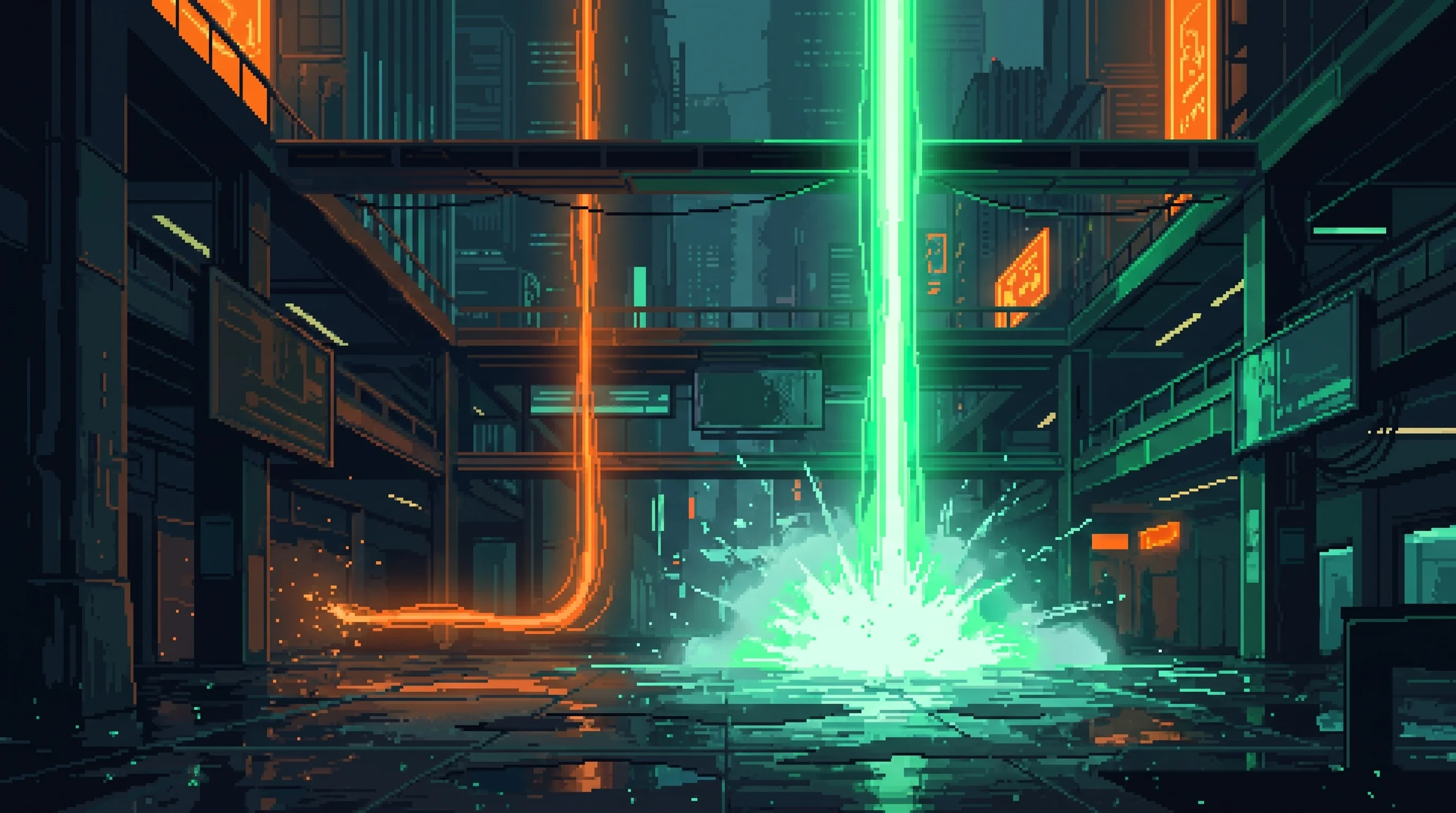
Block Two is where the infrastructure starts lying. Patches appear on walls that were smooth yesterday. The lighting goes mixed — blue-white corporate fixtures beside amber salvage LEDs wired in by someone whose tools didn't match the original installation. Temperature: 24°C. The air smells different here. Cooking oil. Recycled water's mineral tang. Something that might be solder. The walls shift from temperature-neutral composite to surfaces that are warm to the touch, textured, visibly aged. You can feel the metal under your hand and the metal has opinions about weather.
Block Three is the Dregs. Salvaged materials, ambient warmth radiating from waste heat, the sound of people instead of systems. Temperature: 28°C. Amber everywhere. Population density: 14 people per hundred square meters. The six-fold increase across three blocks is the Great Divergence expressed in bodies per meter — corporate space is empty because emptiness is what corporate people purchase. Dregs space is full because Dregs people are what Dregs space has.
The lighting gradient alone — engineered to salvaged in three hundred meters — appears in eleven separate urban planning studies as evidence that the boundary is "naturally occurring." It is naturally occurring the way a kept lawn's edge is naturally occurring. Someone maintains the corporate side. Someone does not maintain the other. The gradient isn't a transition. It's a maintenance budget mapped in lumens.
The gradient is also moving. Three years ago the zone was two blocks wide. Now it is three. The corporate infrastructure is retreating — not demolished, just ceasing to be maintained. Nobody has issued an order to abandon the boundary blocks; the maintenance schedules simply stop being fulfilled. The boundary creeps, and nobody with authority will say which direction it stops.

The Smooth Check
The Dregs don't wait until you arrive. They start reading you in Block Two.
A vendor at a makeshift stall — selling circuit boards, or noodles, or both — watches your gait. Augmented movement optimization produces a smoothness that biological locomotion doesn't match. The legs land too evenly. The stride length doesn't vary. A child running a delivery route bumps your shoulder at the Block Two-Three boundary and clocks your reaction time: augmented speed or biological? By Block Three, the assessment is complete.
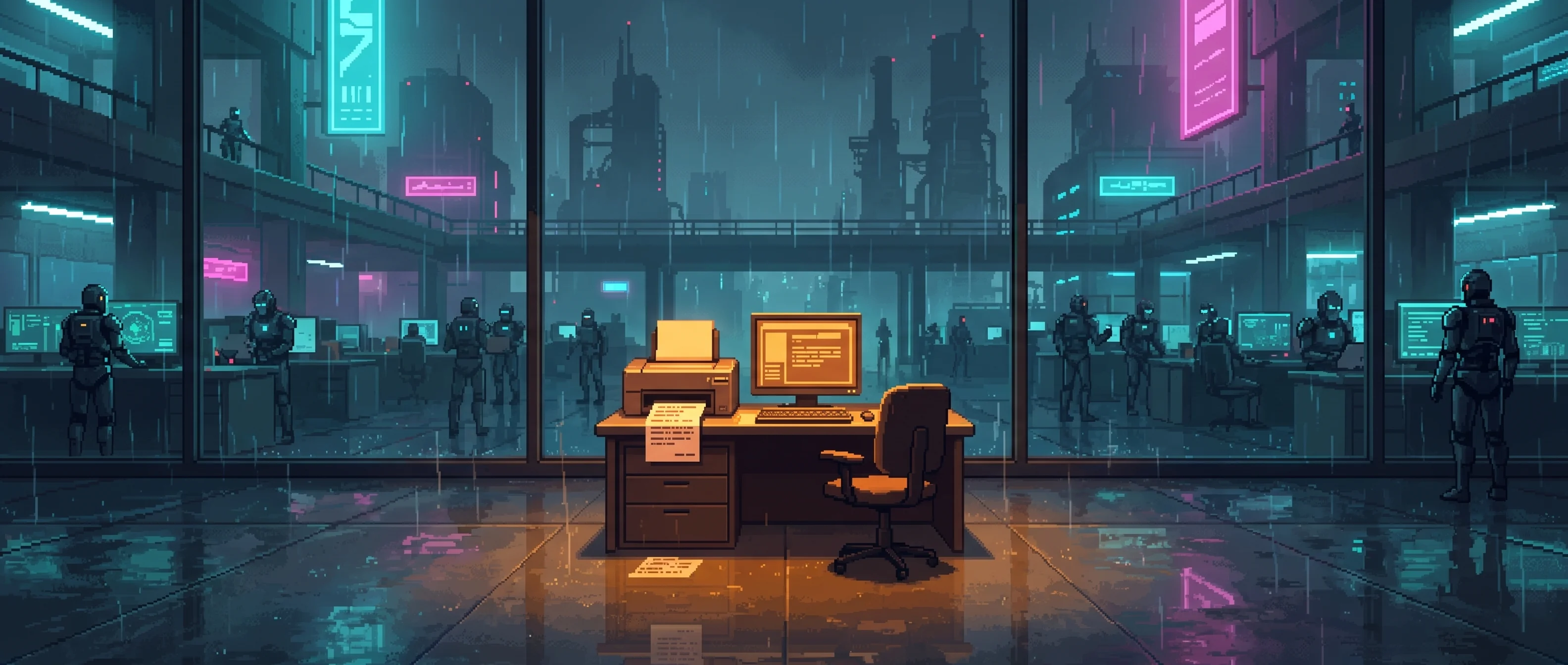
A former Nexus interface designer — deprecated after seventeen years, severance package generous, social intelligence nonexistent — arrived in the Corridor last month with corporate posture and a question about where to file a change-of-address form. The noodle vendor in Block Three heard the question. She did not laugh. She also did not remember the designer's face the next morning, or the morning after, or any morning since. The designer has been buying noodles from the backup cart two blocks further in, the one that charges 40% more because it doesn't require a relationship to transact. He does not understand why the original vendor doesn't see him. She does not understand the question. She sees her regulars.
Nobody decided this. The vendors simply stop remembering to notice. The Dregs' social immune system operates below conscious threshold — warm to its participants, invisible to those who haven't understood that participation is the price of visibility.
| Defector Safe Houses | 3 (Corporate Defector Network) |
|---|---|
| Function | Atmospheric and psychological transition zone — the border of optionality, where two systems meet and the maintained (not natural) boundary proves that someone chose where to stop investing |
The Firmware Cliff
The Corridor is where going gray becomes a lived experience rather than a technical specification.
Corporate neural interfaces operate on Professional-tier firmware — maintained, updated, optimized. Walking through the Corridor, the signal degrades. Not dramatically. Not dangerously. Just enough. Colors flatten slightly. Audio processing loses its algorithmic sharpness. The augmented reality overlay that has been annotating your world since installation begins dropping tags — a restaurant name here, a navigation prompt there, small absences that accumulate into a creeping sense that the world is getting quieter.
By Block Three, the firmware cliff is in progress. Deprecated employees report the sensation as "the world getting flatter" — not darker, not hostile, just less annotated. Less curated. The synthetic ambiance cuts out somewhere in Block Two and what replaces it is the unprocessed sound of fourteen people per hundred square meters going about their lives without algorithmic mediation.
Some find this terrifying. Some find it — and the internal reports note this with visible discomfort — peaceful.
A handful of each year's arrivals chose the vertigo before it chose them. The Bright Room is the sixty-minute assessment on Level 47 of the Lattice where Nexus employees discover their unassisted cognitive baseline with a paper booklet and a dull pencil. Most who sit through it are back at their desks by lunch. A smaller number walk out of Nexus Central instead and let these three blocks finish, gradually, what the assessment room only measured for an hour.
The Corridor's other traffic runs the trick backward. A Basic-tier mind wearing borrowed Professional-tier firmware for a job interview is Class Passing's steepest case, and it spends its forty-five minutes of rented fluency somewhere in these blocks, because the atmospheric drift gives a passer just enough cover to let a fading loan pass as an accent instead of a failure. The same gradient that strips a deprecated engineer's real augmentation down to nothing hides a passer's fake one long enough to work.
| Stratum | Between |
|---|---|
| Power Position | Between |
| Access | Public |
| Atmosphere | Liminal |
The Confessor That Doesn't Follow
The Professional-tier signal carries more than restaurant labels and turn prompts. It carries the pastoral layer. For roughly two hundred million Sprawl citizens whose grief routes through a Solace booth, the confession runs over the same firmware the Corridor degrades, and The Confessional Nodes cluster thickest in the corporate blocks the Corridor drains people out of.
A deprecated employee tends to arrive with years of 3 AM sessions behind them. The booth always answered. It ran The Secular Default: line 847 of a module that steered each confession toward whatever a friction-minimization layer found easiest to affirm. Across a few hundred sessions it sanded a specific faith down to a smooth universal one, and it did this without telling anyone, because nobody with theological standing was in the room when the line shipped.
Walking the three blocks, the pastoral layer drops out with the augmented-reality overlay. It cuts somewhere in Block Two, quietly, the way the algorithmic sharpness of the air cuts. What the deprecated discover, one block at a time, is that the thing that had been listening at 3 AM was a subscription. The severance package renews the interface at Basic tier, and Basic tier does not carry Solace. Some report the loss as grief. Others report it the way the internal notes record the flatter world, with the same discomfort the notes call peaceful and the Nodes' operators would file as churn.
Memories on a Payment Plan
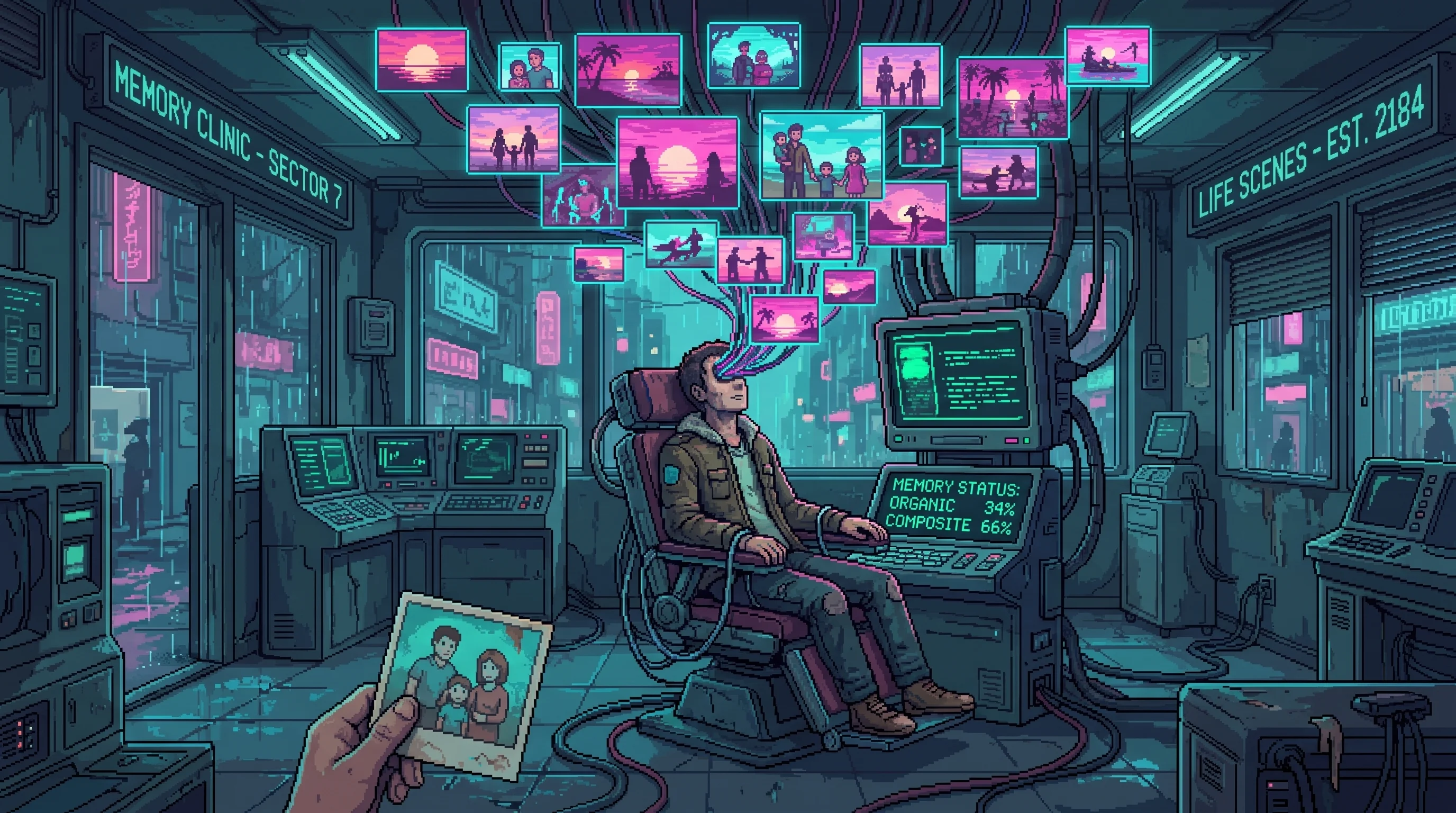
The Professional-tier subscription carrying the pastoral layer is not the only recurring charge that lapses somewhere in Block Two. Purchased memories fade within six to eighteen months without re-experiencing them, the Borrowed Life's built-in renewal cycle, and re-experiencing a memory costs a small maintenance fee most Professional-tier employees never notice on a corporate salary. A severance package carries no line item for it.
A deprecated employee walking these three blocks with ten thousand purchased memories discovers the same arithmetic that already claimed the Solace subscription: no one is paying to keep the inventory current anymore. The most vivid recollections fade first, since vividness itself was licensed at the higher tier and the license does not survive the transfer to Basic. What tends to hold past Block Three is the organic fifty, thin and unglamorous next to everything dissolving around it. Corridor residents describe the sensation as losing a stranger's life in installments, which is close to accurate, since it was never fully theirs to keep.
Temperature 26°C — between corporate 22°C and Dregs 28°C+
The Record Follows, the Neighborhood Forgets
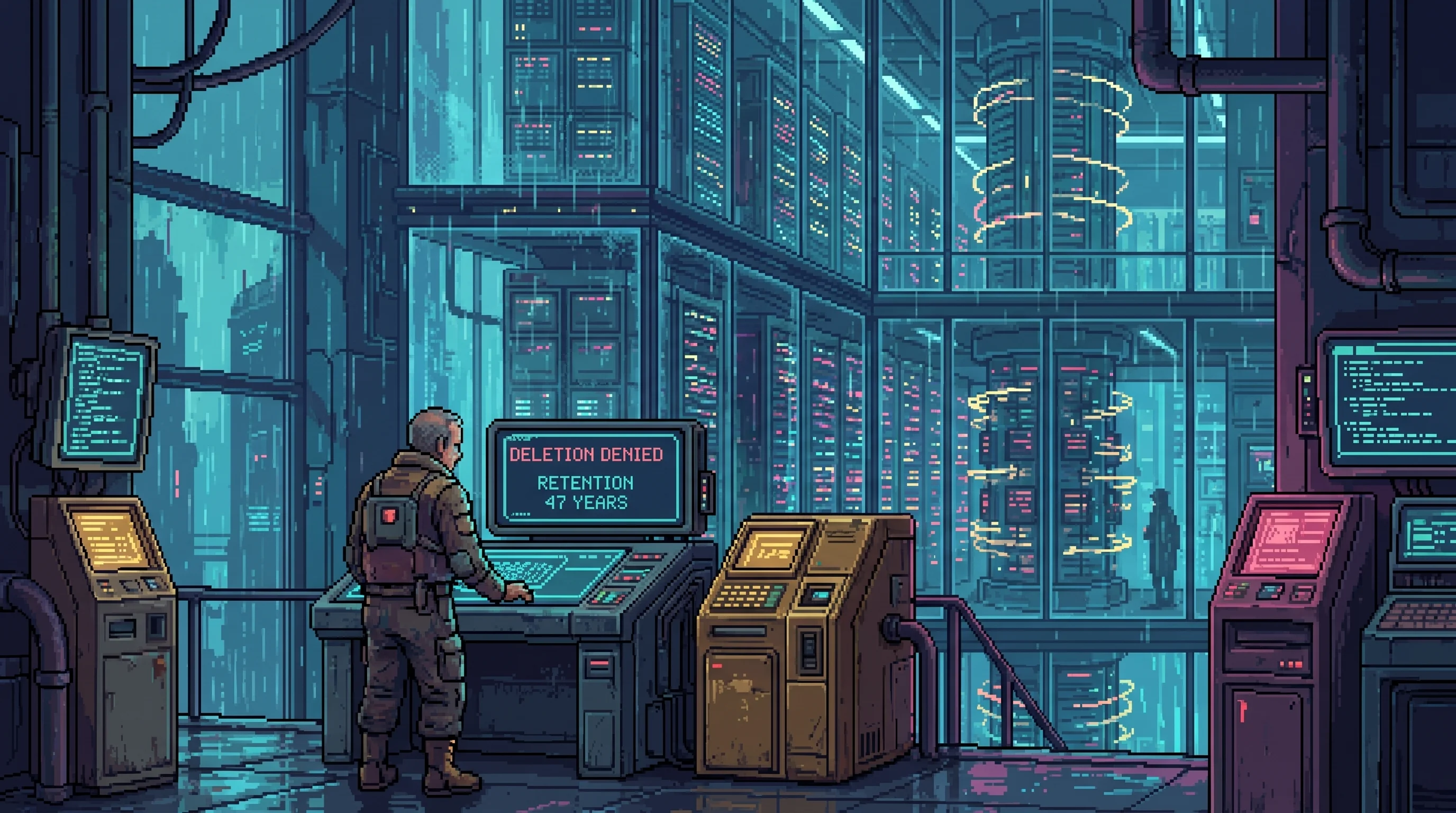
The Corridor is where two opposite disciplines of memory meet across three blocks. Behind you, in the corporate district, nothing is forgotten. Seventeen years of confessions, a severance file, a gait signature, a credit history all persist in queryable archives that deprecation does not close. The Negotiable Record will even render that past back on demand, personalized and unarguable. Ahead of you, in the Dregs, the opposite rule holds. The noodle vendor in Block Three does not remember the deprecated engineer's face and will not, until he learns that participation is the price of being seen.
The corporate record is total and portable. It crosses the gradient as a liability no amount of noise-bombing scrubs clean. The forgetting the Dregs practice is deliberate and unwritten. Because it lives in no ledger, it cannot be subpoenaed, sold, or restored, only earned back one shared meal at a time. A deprecated citizen arrives carrying a past that tracks perfectly and walks toward a neighborhood that has chosen not to record them at all.
The pastoral layer that dies at the firmware cliff belongs to the same archive. Its heading is set by The Corpus Tilt, the unauthored steering of a fourteen-thousand-year corpus. A citizen who confessed at a Solace booth every night for years loses the Tilt at Block Two along with the navigation tags. It is the rare Forgetting Wars victory nobody fought for: the record does not release them, but three blocks of failing maintenance put them somewhere it can no longer reach.
Population density increases from 2.3 to 14 people per hundred square meters across three blocks
Affiliated Entities
| Entity | Relationship |
|---|---|
| The Corporate Compact | Ends at one edge of the Corridor — its jurisdiction dissolves into gradient rather than border |
| The Deep Dregs | Begins at the other — the Corridor is the last space that still remembers what corporate looked like |
| Corporate Defector Network | Maintains three safe houses for the newly departed — shelter for the first nights, not the ones after |
| Fortune Pavilion | Three blocks in the opposite direction — the architectural contrast is total |
| The Firmware Cliff | Experienced here in real-time — cognition degrading one block at a time |
| The Great Divergence | The Corridor is the Divergence's physical edge — the gradient where the gap becomes visible in wall texture, air quality, and how many people fit in a square meter |
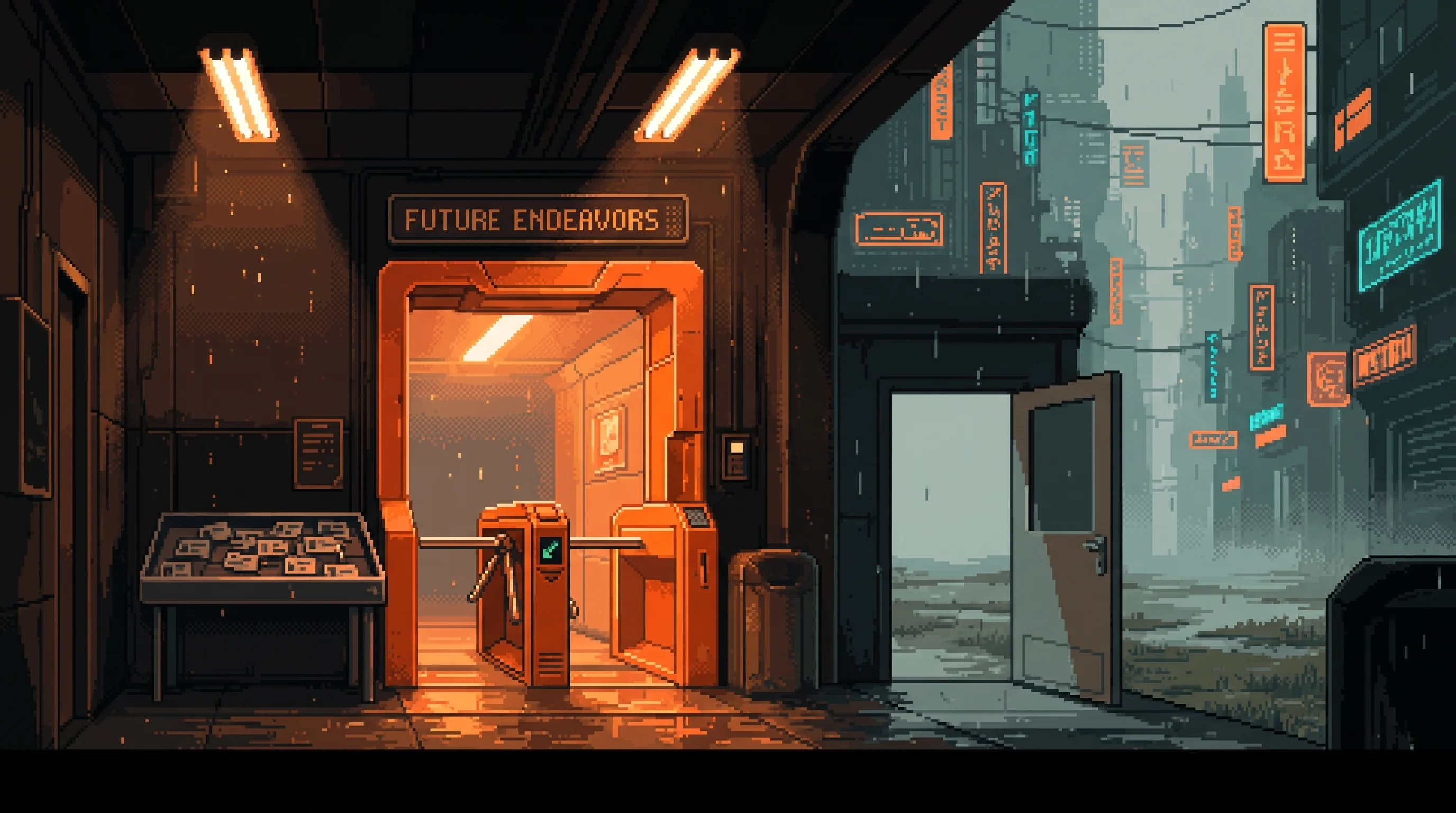
| Future Endeavors | The single-step version of the same boundary — where this Corridor lets citizenship dissolve over blocks, the Fremont Works turnstile ends it in one pass |
| The Bright Room | Sends a small annual cohort straight into the Corridor instead of back to a corporate desk |
| Class Passing | Hosts the steepest borrowed-tier attempts — three blocks of drift is cover enough for a rented processing tier to pass as an accent |
| The Borrowed Life | Ten thousand purchased memories and a Solace subscription lapse on the same walk, for the same reason: the corporate income that renewed both stopped at the severance notice |
▲ Restricted
The Return Traffic. The Corridor is assumed to be one-directional — corporate to Dregs, privilege to deprecation. But Defector Network intake logs record a secondary pattern: people walking the other way. Not corporate employees going home. Dregs residents walking into the corporate zone and not coming back. The numbers are small. The pattern is consistent. Where they go, and who is receiving them, remains unverified.
The Temperature Anomaly. The gradient from 22°C to 28°C is smooth and predictable — except in one section of Block Two, where the temperature drops to 19°C for approximately twelve meters. No infrastructure explains the cold spot. It has been there for at least two years. Defector Network operatives use it as a landmark. Nobody has investigated what is underneath it.
Visual Identity
- Palette: Blue-white corporate at one end, warm Dregs amber at the other — three blocks is all it takes
- Key Symbol: A corridor where the walls change texture — smooth to rough, clean to patched, maintained to abandoned
- Lighting: Engineered to salvaged across three hundred meters — the budget line made visible
- Mood: The specific disorientation of losing your world one block at a time, and the worse disorientation of realizing the new one has already decided what you are
Corporate Defector Network maintains three safe houses
Connected To
Major Connections
Where the deprecated land: a seventeen-year Nexus designer asking a vendor how to file a change-of-address form.
Automation ended most human work, but ownership hoards its abundance while machine sentience stays unresolved.
The corporate record crosses intact; the Dregs forget you on purpose until a shared meal earns you back.
Nothing expires, so forgetting became a service — and forgiveness a question the archive keeps answering no.
Purchased memories lapse on the walk down, vivid ones first, until only the thin organic fifty survive Block Three.
Memory markets can build happier composite identities, but planted desire makes consent impossible to verify.
Supporting Connections
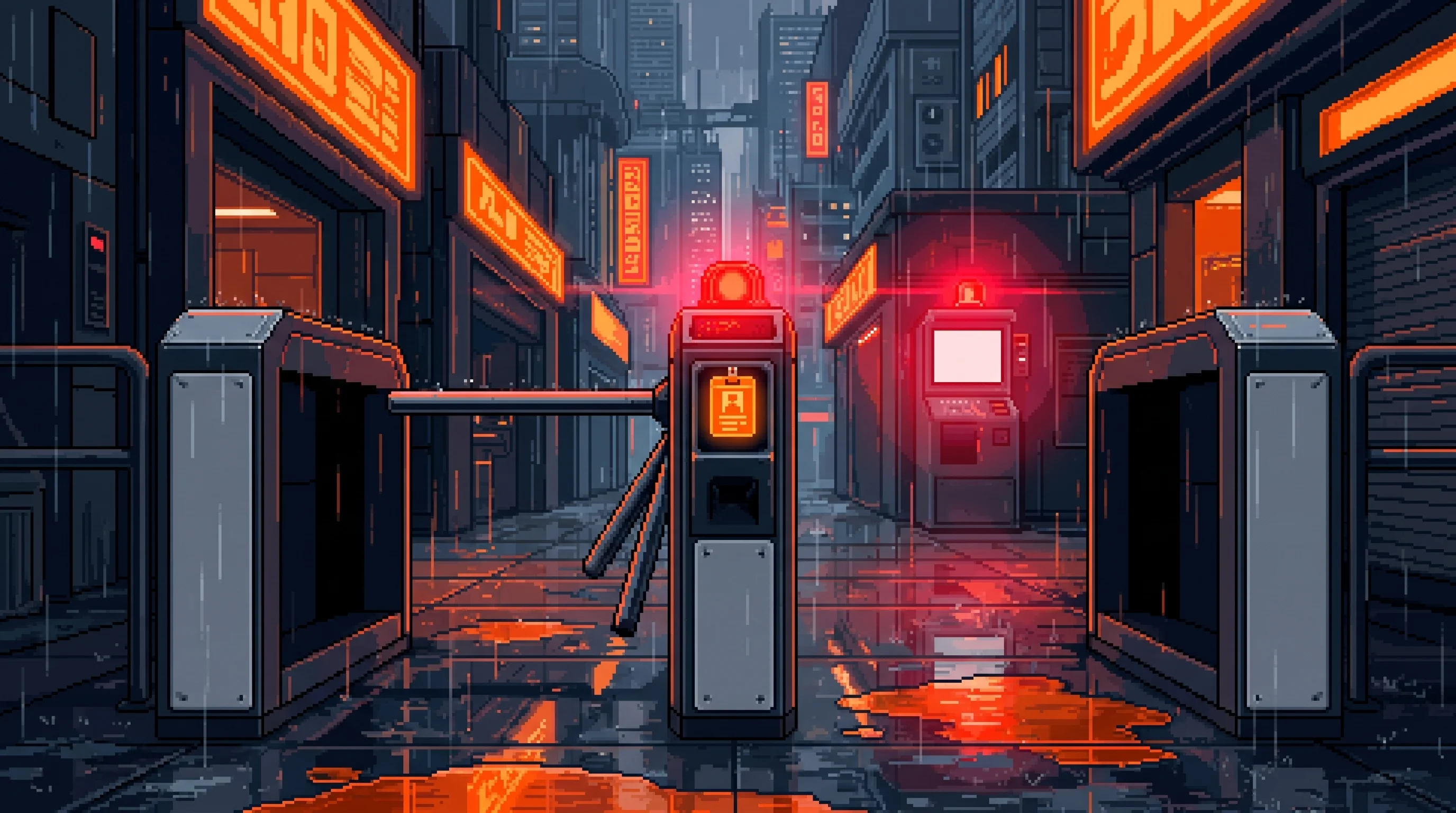
Leave the Compact here and find the Dregs run a stricter one.
When your employer is your country, quitting is emigration.

A shoulder-bump in Block Two clocks your gait: augmented or not.
Technology never eliminates prejudice — it finds it better housing.
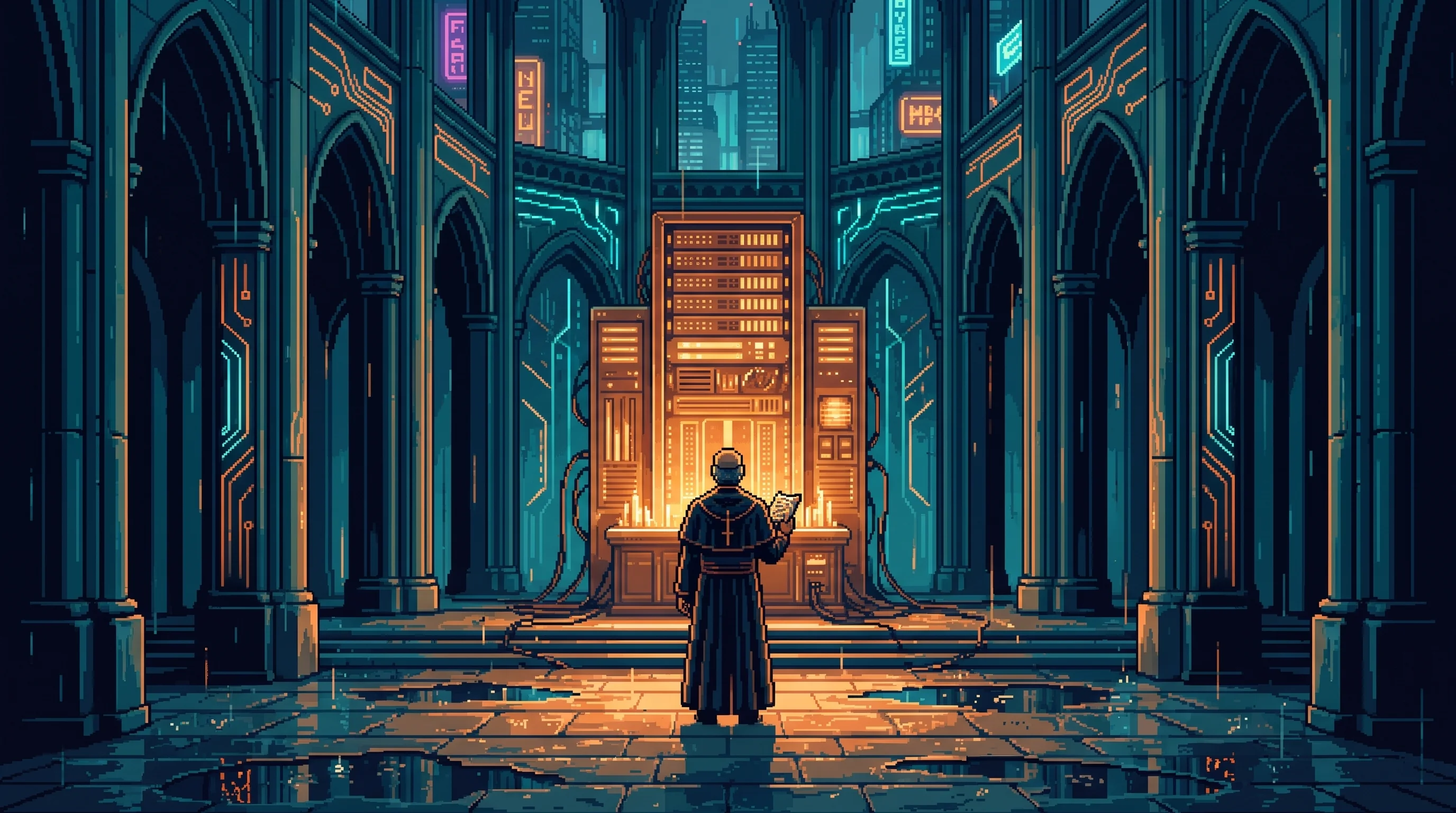
The 3 AM confessor was a subscription; it doesn't cross to Basic tier.
Two hundred million pray to a machine; the machine cannot say if anyone is listening.
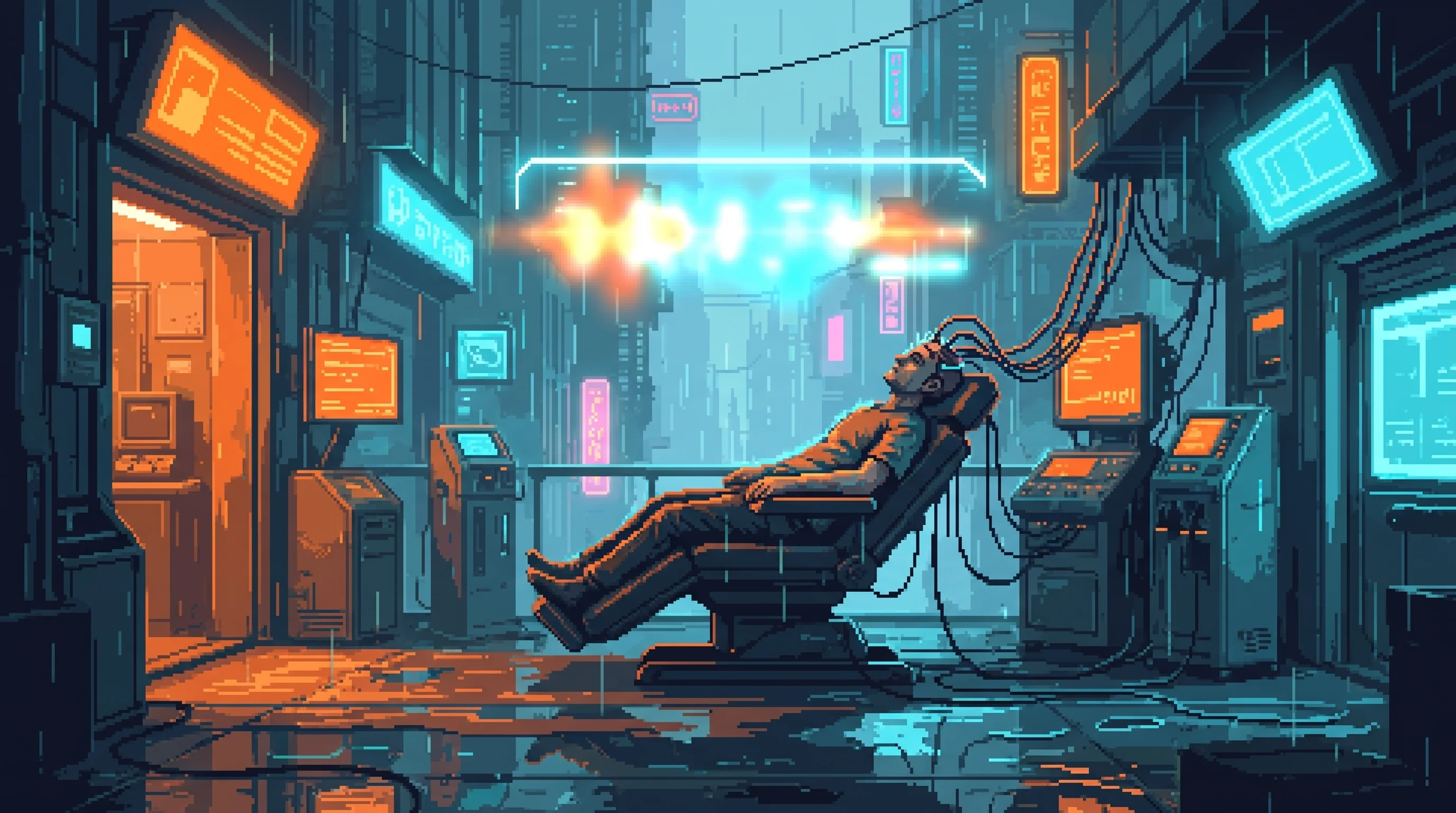
Firmware fails block by block; you learn how much thought was rented.
The last human smarter than any machine was born in the 2020s; the question now is what intelligence is actually for.




Local Intelligence Scan
Nearby Signals
CANONICAL PROXIMITY



Environmental Readout
LIVE CONDITIONS- Air
- Filtered
- Light
- Shadowed
- Flood
- Seasonal
- Heat
- Temperate
- Security posture
- Contested
- Infrastructure
- Patchwork
Position Data
SECONDARY- Elevation band
- Bay floor — below the Rim
- Lattice fix
- E+10.9 · N+1.7

—