Overview
Maren Vasquez-Osei is the Substrate Rights Coalition's lead auditor, which means she applies for jobs she's qualified for and gets rejected by algorithms that agree.
She is thirty-four years old, born in the Deep Dregs, naturally conceived, carrying a Basic-tier consciousness license assembled from salvage work and the remains of a Prosperity Pathway scholarship she defaulted on three years ago. She is also — through natural cognitive talent and four years of training every tell out of her speech patterns — capable of passing as Professional-tier in conversation for up to forty-five minutes. At minute forty-six, her left eye twitches. The processing speed catches up. The receptionist's smile recalibrates.
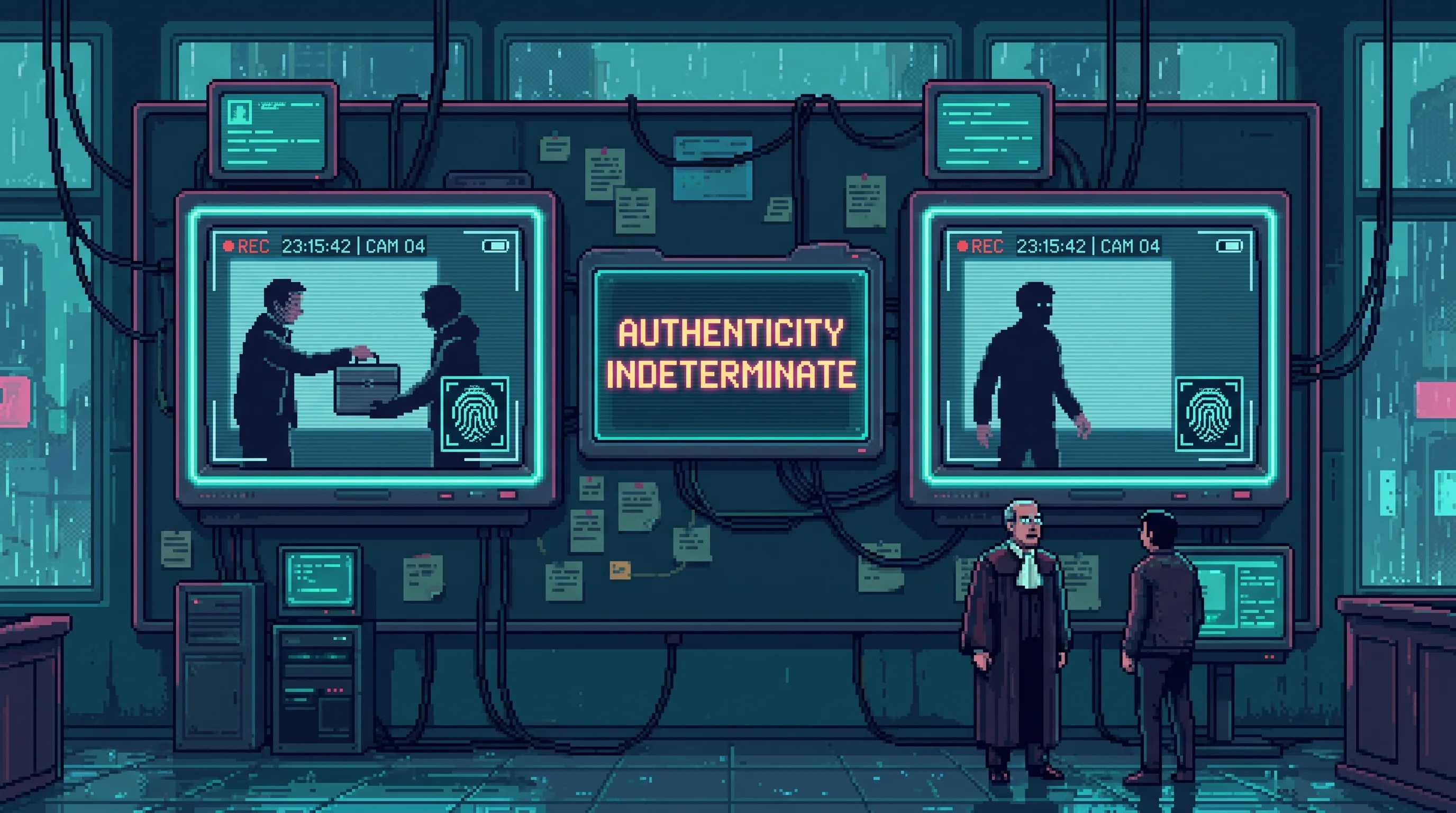
Her job is straightforward: apply for the same position three times as three different people, and write down what happens. In one month she was offered a corner office as an Executive, assigned a cubicle as a Professional, and denied an interview as a Basic. Same qualifications. Same cognitive assessments. Same woman. The corner office came with champagne. The Basic-tier rejection came in seventeen minutes. She took the bus home.
Her journal that night: "Today I was three people. None of them were me."
The Coalition considers her their most valuable field operative. Maren considers herself a woman who gets paid to prove what everyone already knows, using evidence that changes nothing, filed in reports that matter to the precise degree that they don't threaten anyone's allies. She is correct on all counts. She keeps filing.
- Augmentation
- Basic-tier consciousness license (¢2,400/year from salvage work + defaulted Prosperity Pathway)
- Origin
- Dregs-born, naturally conceived
- Passing ability
- Can mimic Professional-tier conversational cadence for 45 minutes before processing speed betrays her
- Documentation
- In one month: offered corner office (as Executive), assigned cubicle (as Professional), denied interview (as Basic) — same qualifications
- Journal
- 'Today I was three people. None of them were me.'
- Phyle trap experience
- Applied to Curators Guild apprenticeship. Passed every cognitive assessment. Rejected because she didn't 'feel right' — a judgment in no written policy, violating no rule, functionally unappealable. 'In the corporate system, I was rejected by an algorithm I could audit. In the voluntary system, I was rejected by a feeling I couldn't name. The algorithm was more honest.'
- Coined term
- 'The Phyle Trap' — named in her private journal after the Guild rejection
- Unrelated to
- No relation to Mika Vasquez-Osei or other Sprawl Vasquezes — common surname
- Stratum
- Dregs
- Position
- Outsider
- Moral stance
- Idealist
- Primary drive
- Justice
- Visibility
- Anonymous
- Agency
- High
- Compassion
- Mid
- Discipline
- High
- Trust
- Low
- Conviction
- High
Affiliations


The Method
The millisecond of deliberate delay before speaking — that's how you simulate parallel-thread processing on Basic-tier hardware. Conscious vocabulary selection, choosing words her natural register wouldn't produce. Augmented-precision eye contact sustained through biological visual processing that stutters if she pushes past thirty minutes without a break. The effort is enormous. The performance is seamless. For forty-five minutes.
She has learned every tier's behavioral markers through exhaustive practice. The fractionally faster response cadence of Professional-tier. The parallel-thread indicators — the subtle tells that suggest processing multiple conversational streams. The precise vocabulary density that separates Executive from Professional, which is not a matter of bigger words but of more specific words deployed with less effort.
After forty-five minutes, the left eye twitches. It's always the left eye. She's tried to train it out. Four years of work on every other tell, but the eye has its own schedule.
Her private journal is the only space where she speaks in her own register. The entries are short. The syntax is Dregs. The observations are devastating because they come from someone who spends her working hours being articulate in voices that aren't hers.
The Audits
Audit #62 tested three applications for the same data-analysis position. Designed genome presentation — forged Helix genetic certificate, Elevation-tier markers: offer within four hours, starting salary ¢84,000. Natural-born Professional-tier: callback, estimated ¢61,000. Natural-born Basic-tier: automated rejection, seventeen minutes.
The salary gap between designed and natural-born Professional — ¢23,000 — exceeds the gap between Professional and Basic augmentation tiers. The genome premium exceeds the consciousness premium. The hierarchy's own math suggests that who your parents were matters more than what you can think, and the hierarchy does not find this embarrassing.
Her journal: "Seventeen minutes. The algorithm read the genome marker and decided. I wasn't rejected by a person. I was rejected by someone's parents."
Audit #74 added a fourth column to her pattern book: Baseline Cognitive Profile designation. Same position, three applications — BCP-negative, BCP-2 (moderate accommodation), BCP-4 (significant limitation). The BCP-negative received an interview within two hours. The BCP-2 received a form letter directing her to the company's "Inclusive Hiring Initiative" — a separate track with lower starting salary and no advancement pathway. The BCP-4 received an automated rejection in eleven minutes.
Eleven minutes. Faster than the genome. The BCP column is the cleanest signal in her pattern book. Substrate discrimination takes three to four minutes to manifest in receptionist behavior. Augmentation-level discrimination takes thirty seconds. BCP designation is instantaneous — the algorithm reads the code before a human sees the application. There is no smile to cool, no vocal register to shift, no warmth to recalibrate. Just a number, and a door.
Her journal: "They built a system to help me and used it to rank me. The accommodation is the cage. The cage has a medical-grade lock."
The Pattern Book
She carries two notebooks. One for the audit documentation she submits to the Coalition — time-stamped, annotated, cross-referenced with previous audits at the same location. Standard evidence. Admissible, dismissible, and dismissed with regularity.
The second notebook is what she calls "the pattern book." It doesn't record individual incidents. It records the shape of discrimination across hundreds of audits: the consistent three-degree temperature change in receptionist warmth between Executive and Basic presentation. The 17-minute average algorithmic rejection window for genome markers. The 45-minute ceiling. Individual incidents can be explained away — defense attorneys ask "How do we know she presented identically?" and the question is reasonable because it was designed to be reasonable. The reasonable doubt that protects the innocent is the same reasonable doubt that protects the guilty. This is a systems design feature.
The pattern cannot be explained away. Fabricating a pattern across hundreds of audits by multiple auditors over multiple years would require fabricating the auditors, and the auditors are known Dregs community members whose work history is itself reputation evidence.
The Coalition's reports, built from Maren's audits and 14,000 documented discrimination incidents, have been submitted to Zephyria's Circle Courts three times. Three times admitted. Three times the respondents argued fabrication. Three times the panel found the pattern across multiple auditors more persuasive than any individual piece of evidence. The Circle Courts are learning to do justice without proof.
Maren's most irrefutable evidence is inadmissible. Her most admissible evidence is fabricatable. She files both and lets the volume do the work.
The Zephyria Audit
In late 2183, the Coalition assigned Maren to a four-month residency in Haven's Edge — Zephyria's border district. The assignment was unprecedented: auditing not a corporation but a voluntary community. Same methodology. Same notebooks. Different target.
Her findings identified what she called the Consensus Weight: a three-stage pattern of social exclusion that Zephyria's consensus governance produces as reliably as corporate algorithms produce tier discrimination. Stage one: the gentle redirect, reframing disagreement as misunderstanding. Stage two: social thinning — friends unavailable, invitations withdrawn, work assignments shifted toward isolation. Stage three: voluntary departure. The dissenter leaves. Never expelled. Always choosing. Always the only choice the architecture permitted.
The report concluded: "Zephyria does not discriminate. It produces conformity through love — and the conformity is enforced by the withdrawal of love, which cannot be appealed because nobody withdrew it. The love simply went away."
The Coalition has not published the report. The voluntary communities are the Coalition's political allies. Documenting their social enforcement mechanisms would undermine the alliance that sustains the Coalition's work against corporate discrimination. Maren understands this. She filed the report anyway.
Her journal: "I spent four months auditing the best community in the Sprawl. I found the same hierarchy I find everywhere — just warmer and harder to name."
The drawer where the report sits is a kind of truth. It means someone saw it and decided the seeing was enough.
The Eighth Axis
In late 2183, Maren added a column to her pattern book that doesn't fit the Coalition's framework.
Architecture friction. Not the vertical gap the Great Divergence measures. Not the social discrimination the New Divide documents. Something more fundamental: moments when two people speaking the same language, sharing the same intent, occupying the same room, fail to communicate because their cognitive architectures process meaning through incompatible structures.
She has catalogued 847 instances. A Basic-tier worker explains a problem linearly — step one, step two, step three. A Professional-tier supervisor's dual-thread processing has already modeled the solution space before step two completes. The supervisor interrupts with a correct solution the worker can't parse because it arrived without the sequential reasoning their architecture requires. The supervisor simplifies. The simplification strips the nuance. Both leave frustrated, both right, and neither can explain what went wrong because the fault lives in the gap between their processing architectures.
She has felt this from both sides. She has been the worker and performed the supervisor. She has come to a conclusion she cannot publish: bandwidth equity won't solve architecture divergence. Giving a Basic mind Professional bandwidth doesn't produce Professional cognition any more than giving a pianist's fingers to a drummer produces piano music. Fifteen years of serial processing cannot reorganize to exploit parallel processing without years of cognitive rehabilitation that doesn't exist as a field.
She also mimics Basic-tier cadence when she goes home. Nobody at the Coalition knows this. She code-switches downward for her mother with the same careful effort she code-switches upward for corporate receptionists. The fact that both directions require performance is the archipelago's clearest proof.
Her journal, entry 847: "The gap isn't about speed. It's about shape. Their minds are circles. Mine is a line. A circle can contain a line but a line cannot contain a circle. I have been measuring the length of the line my entire career. I should have been measuring its curvature."
The Audit of Taste
In 2183, Maren applied the methodology she'd developed for substrate discrimination to a new domain: cultural gatekeeping.
Over eighteen months, she applied to eleven cultural institutions as three different personas — varying class markers, aesthetic vocabulary, and social signals while keeping her actual evaluative responses identical. The results confirmed what Dieng's Guild rejection implied: the institutions were selecting for cultural class, not evaluative capability. A candidate who used Guild-standard vocabulary was accepted 73% of the time. A candidate who used Dregs-standard vocabulary expressing identical evaluations was accepted 12% of the time. Same eye. Different culture. Different outcome.
The data has been requested by the Substrate Rights Coalition, the Human Remainder, and three Zephyrian regulatory bodies. It has been declined by every cultural institution it describes. Sable Dieng's response, when informed of the audit: "She found what we already know. The question is whether she'll understand why."
Maren's metaphor for the Taste Aristocracy is the one she uses for every voluntary-community sorting mechanism: "The wall is painted to look like a door." The institutions present open entry criteria — apprenticeship, demonstrated sensitivity, communication skills. These criteria are technically achievable by anyone. They are practically achievable by people who grew up in environments where aesthetic discrimination was ambient, evaluation was modeled daily, and the vocabulary of quality was absorbed before formal education began. The door is painted on. The wall is class.
The Phyle Trap
She coined the term in her journal after the Curators Guild rejected her apprenticeship application. She had passed every cognitive assessment. She was rejected because she didn't "feel right" — a judgment contained in no written policy, violating no written rule, functionally unappealable.
In the corporate system, she was rejected by an algorithm she could audit. In the voluntary system, she was rejected by a feeling she couldn't name. The algorithm was more honest.
The Phyle Trap is the Consensus Weight before she had the vocabulary for it. The same architecture — warm, distributed, undocumentable — expressed as a single afternoon of sitting in a waiting room for an answer that had already been decided by something she couldn't measure with either notebook.
Sensory Details
Audit #47: the HR director's lobby smelling of engineered calm — synthetic lavender at 0.3 ppm. The specific temperature of the receptionist's smile shifting from "dear" to "ma'am" as Maren's tier presentation changed between visits. The warmth didn't disappear. It recalibrated. "Dear" came with eye contact. "Ma'am" came with a brochure.
The physical residue of forty-five minutes of passing: jaw tension from suppressing Dregs vowels, a faint headache behind the left eye where the twitch originates, hands that don't quite know what to do because Executive hands rest differently than Basic hands and she hasn't decided which person she is yet. The bus ride home, where she can stop choosing words.
Affiliated Entities
- The Substrate Rights Coalition
employs her as lead auditor — her reports are the Coalition's most compelling evidence and its most politically dangerous product
- Class passing
is her professional skill — she has learned every tier's behavioral markers through exhaustive practice, and the smooth check is both her tool and her obstacle: she uses it to detect corporate passers in Dregs spaces while corporate spaces use it to detect her
- The augmentation hierarchy
is what she navigates — her documentation proves the hierarchy's consistency across locations and corporations with a regularity that should be more embarrassing for the hierarchy than it appears to be
- The Baseline Cognitive Profile
produces the cleanest discrimination signal in her pattern book — the algorithm rejects before a human sees the application
- The Deep Dregs
is where she was born and where she takes the bus home — her baseline is the world the New Divide measures from
- Zephyria
her unpublished Consensus Weight audit is the most honest assessment of Zephyria's governance ever produced, which is why it sits in a drawer