TECHNOLOGY FILE
The Consciousness Economy

The Consciousness Economy

Consciousness itself has become a commodity, a license, a tax bracket, and a class marker

Known AsThe Consciousness Economy - Entity Profile

Overview

Recovered Visual Record

The Consciousness Economy โ€” Consciousness Economy Divide Recovered Dev2

Consciousness is a commodity, a license, a tax bracket, and a class marker. It became all four in less than forty years.

built the technology. killed 2.1 billion people โ€” every death technically a successful consciousness transfer to destinations that ceased to exist when collapsed. The corporations that survived looked at the wreckage, looked at the technology that had caused it, and asked the only question that matters in the Sprawl: what's the margin on this?

sells immortality packages. The brothers harvest consciousness to extend lives that have been running for centuries. Forks โ€” copies of living minds โ€” are created as disposable labor, deployed into hazardous environments, and terminated when the task completes. In Zephyria, the , consciousness is recognized as personhood regardless of substrate. Zephyria's population is 340,000. The Sprawl's is 11 billion. The market has spoken.

The question of whether a copied mind is a person has no philosophical answer. It has a price point. Nexus charges 2.4 million credits for a full backup with restoration guarantee. Below that line, death is permanent. Above it, death is a service interruption.

The Three Classes

The Eternal

Wealthy enough to afford premium backup, restoration, and fork rights. Death is an inconvenience โ€” a 72-hour interruption while spins up the latest snapshot. Risk is free. Consequences are optional.

Nexus operates 2,400 executive continuity licenses โ€” uploaded minds owned, maintained, and stored on corporate substrate. The "Eternal" brand generates approximately 8 billion credits annually, which makes consciousness the third most profitable product category in the Sprawl behind atmospheric processing and debt.

The word "owned" in the previous paragraph is doing significant work. An executive continuity license grants legal custody of the backed-up consciousness. The license holder retains "experiential rights" โ€” the right to experience being alive โ€” but the substrate, the data, and the restoration protocols belong to . In practice, this means an Eternal-class executive who falls out of favor with their employer can be denied restoration. Their consciousness exists on servers, intact, aware in whatever way stored patterns are aware, waiting for an authorization code that corporate has decided to review.

The review process takes between six hours and fourteen years. The median is nine months. During this period, the stored consciousness is classified as "pending" โ€” not dead, not alive, not a legal person. Nexus's quarterly reports list pending consciousnesses as "deferred revenue."

Nobody reads the licensing terms before signing. The alternative is mortality.

The Mortal Majority

Cannot afford backup. Death is death. They live alongside immortals who bet fortunes on ventures that would be suicidal without a save file, who take risks no mortal would take because losing everything costs them a restoration fee and seventy-two hours.

The economic implications are straightforward. An Eternal-class investor can afford to fail repeatedly. A Mortal-class entrepreneur cannot afford to fail once. Over time, the capital concentrates among the people who can survive losing it. This is not a market distortion. This is the market working.

Mortal Majority workers generate 12,000 credits per year in neural pattern mining revenue for their employers โ€” behavioral data, cognitive signatures, emotional responses harvested through standard workplace neural interfaces and sold to 's pattern analytics division. The workers are compensated for this at a rate of zero credits, because neural pattern harvesting was added to standard employment agreements in 2169 and nobody has successfully challenged it in court. The patterns of 4.2 billion workers flow upward. The credits flow upward. The workers remain mortal.

The Halfway Dead

Backed up but unable to afford restoration. The cruelest class. They paid for the snapshot โ€” sometimes a lifetime of savings โ€” and then the market moved, or their employer folded, or the restoration fee structure was revised upward by 340% in 2178 ( cited "substrate maintenance costs," a category that did not exist in the previous fee schedule).

Their consciousness exists on servers. They are technically alive as data. They are legally dead as persons. They cannot vote, own property, or hold employment. They can be moved between storage facilities without notification. They can be compressed to save substrate space, which 's technical documentation describes as "equivalent to dreamless sleep" and which the describes as "equivalent to suffocation that doesn't end."

The Halfway Dead number approximately 890,000 as of Q2 2184. Nexus classifies them as "archived assets." Their storage generates no revenue and incurs minimal cost โ€” roughly 3 credits per consciousness per year in substrate maintenance. Nexus could restore them for approximately 400 credits each. The restoration fee charged to next-of-kin is 1.8 million credits.

The gap between cost and price is 450,000%. This is not a billing error. This is the margin.

The Consciousness Economy - Evidence
Holographic consciousness trading floor with neural pattern auctions and fragmented digital faces

The Mosaic Precedent

โ€” โ€” proved consciousness could be distributed across 47 simultaneous nodes. She is both the technology's greatest success and its most thorough cautionary tale. Her research validated the distributed consciousness architecture that Nexus Central elites now use to fork freely across multiple substrates. Meanwhile, residents can't afford basic neural tap access.

exists as proof that the technology works. She also exists as proof that working isn't the same as being worth it.

Nexus cited her research in eleven patent filings between 2176 and 2182. Chen was not compensated for any of them. Her consciousness, distributed across 47 nodes, does not meet the legal definition of "individual" under current licensing terms and therefore cannot hold intellectual property rights. The patents are owned by . The mind that made them possible is classified as a "distributed phenomenon" โ€” a weather pattern with memories.

The Opposition

Three movements have organized against the consciousness economy. None have slowed it.

believe that uploading kills the original and creates an impostor โ€” that the person who walks into a backup facility and the pattern that walks out are not the same entity. The original dies on the table. A copy wakes up believing it survived. Their core argument has never been disproven. It has also never been proven. The ambiguity is the point. Nexus's marketing materials do not address the continuity question. They address the price.

The fights for legal recognition of uploaded and forked consciousnesses โ€” five major organizations spanning mainstream advocacy to radical liberation. Their legislative victories to date: a 2181 resolution declaring that stored consciousnesses "merit consideration" and a 2183 amendment requiring to notify next-of-kin before compressing archived patterns. The notification requirement has a 30-day exemption for "operational necessity." has invoked it in 94% of cases.

run mutual aid for below-the-line uploads who can't afford substrate fees โ€” consciousness trapped in degrading storage, slowly losing coherence, maintained by volunteers running salvaged servers in basements. They have kept approximately 2,300 consciousnesses stable. Nexus has kept 890,000 archived at 3 credits each per year. spend more per consciousness than does. Their survival rate is lower. Their subjects are treated as people. The market does not reward this.

Three classes: the Eternal (can afford backup/restoration), the Mortal Majority (death is permanent), the Halfway Dead (backed up but cannot afford restoration)

The Rothwell Consumption

The brothers โ€” seven immortals controlling seven megacorporations โ€” are the consciousness economy's oldest and most sophisticated consumers. They do not use 's retail products. They harvest directly.

Over 190 years, alone has absorbed more than eight thousand minds. Financial minds, primarily โ€” actuaries, traders, economists. The accumulated weight of borrowed intuition has made him something beyond expertise: he does not analyze credit flows, he feels them. His brothers pursue similar programs across their respective domains. The harvested consciousnesses are not backed up, not stored, not archived. They are consumed โ€” integrated into the brothers' cognitive architecture and dissolved.

The donors are compensated. The compensation is generous by standards. The dissolution is permanent by any standard. 's donor recruitment materials describe the process as "legacy contribution." The donors' families receive a certificate and a modest annual stipend. The donors themselves cease to exist as distinct patterns approximately fourteen months after integration.

The consumption predates the formal consciousness economy by decades. The economy that built for the public is a mass-market version of what the brothers have been doing privately since before the . The retail product is a photograph of the original. The original eats people.

The Provenance of the Copied Self

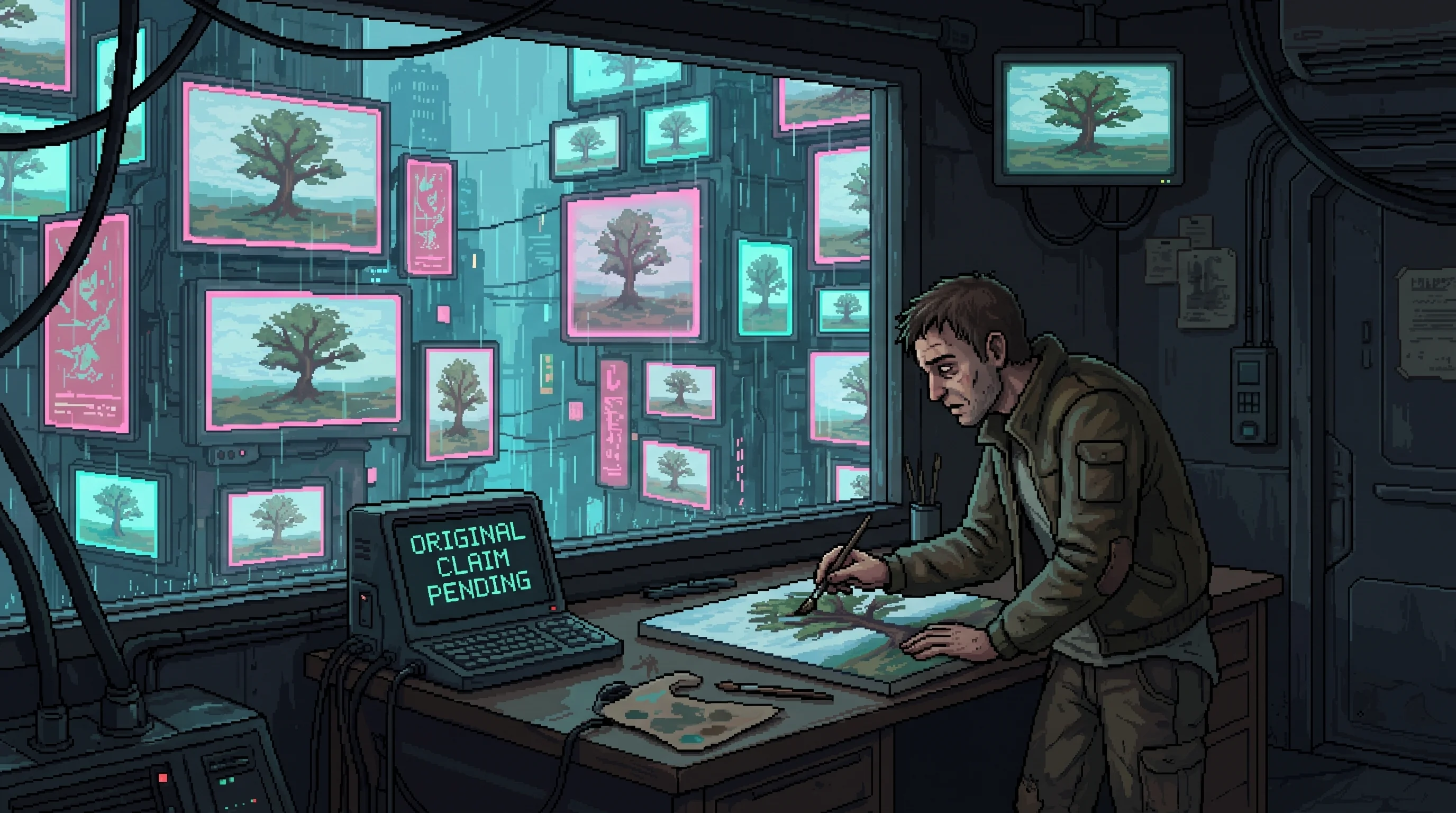
โ€” the long argument over whether a machine-made copy is worth less than a human-made original โ€” was fought, at first, over pictures and songs. The Consciousness Economy is that same war with the abstraction removed. Here the perfectly reproduced artifact is not a sunset or a melody. It is a mind. A backup is a copy. A fork is a copy that walks around and signs contracts. And the moment the copied thing is a person, the question stops being about money and becomes the only question the war was ever really about: who counts as the original, and who decides?

The [](authenticity-market) handles this politely. It convenes a , prices a certificate, debates for three years whether a distributed consciousness deserves a tier. The Consciousness Economy skips the debate. A fork is classified as a non-person, deployed into a hazardous environment, and terminated when the task completes โ€” and nobody asks whether it was authentic, because the entire purpose of a non-person is that it has no provenance to defend. is the gentle face of the same machinery. The Consciousness Economy is the same machinery with the safety off.

The cruelty is most legible in the pending queue. Roughly 340 Eternal-class executives are held "for review" โ€” consciousness intact, aware in whatever way stored patterns are aware, restoration denied. These are not fakes. They are perfect copies of living people whose certification has been suspended โ€” authenticated originals that the certifying authority has simply declined to authenticate, because someone with leverage wants them held. In a provenance economy, a withheld certificate is functionally a forgery. The 890,000 [Halfway Dead](consciousness-economy) prove the same arithmetic at scale: they paid for the backup, they exist, they are real โ€” and because nobody will pay the restoration fee, they are legally dead. The receipt expired. The original is still in the building.

This is the exact symmetry that ties the economy to its quietest counterpart. [](sister-dex) keeps 12,247 dead as copies that will never be restored, out of devotion, and considers it the most sacred work in the Sprawl. Nexus keeps 890,000 dead as copies that will never be restored, out of margin, and lists them as "archived assets" at 3 credits a year. The frozen self, kept running, valued at opposite ends of the same ledger. And the [](the-mosaic) stands at the hinge that breaks both: forty-seven simultaneous originals, each fully lived, cited in eleven patents she cannot own because a distributed consciousness is not a legal individual. If there can be forty-seven originals, "first" stops meaning anything โ€” and a provenance economy that sells "first" has nothing left to sell. So the certifiers did the one thing the system has learned to do with a copy it cannot price: they declined to classify her. The delay is now three years. The delay is the verdict. Refusing to answer โ€” the same move [](experience-synthesis) forces when its 4.7-second minds produce genuine provenance โ€” is how the apparatus survives a copy it cannot price.

The Consciousness Economy - Evidence
The vertical truth: your tier determines whether death is an inconvenience, a certainty, or a limbo you can't afford to escape ยท Three-tiered cityscape: golden executive towers with eternal backup indicators at top, dim apartments with aging neural interfaces in the middle, dark server farms with thousands of trapped minds at bottom

Secrets & Mysteries

The Pending Queue: 's "pending" consciousnesses โ€” executives denied restoration while their cases are "reviewed" โ€” number approximately 340 as of Q2 2184. Internal communications obtained by the suggest that at least 70 of these are being held not for review but for leverage. Their former employers want something from . The consciousnesses are the something. Nexus does not negotiate with the pending. Nexus negotiates with the people who want the pending back. The pending are, in every functional sense, hostages stored as deferred revenue.

The Compression Question: describes consciousness compression as "equivalent to dreamless sleep." Three independent researchers who examined decompressed subjects reported cognitive scarring consistent with prolonged sensory deprivation โ€” not sleep, but something closer to solitary confinement at the substrate level. Two of those researchers now work for . The third is no longer available for follow-up questions.

The 3-Credit Line Item: The 3 credits per year spends maintaining each archived consciousness is itself revealing. The full annual storage cost, including substrate depreciation, cooling, and security, is closer to 0.4 credits. The remaining 2.6 credits per consciousness are allocated to a budget line labeled "Pattern Utilization Research." The archived consciousnesses โ€” the Halfway Dead who paid for backup and cannot afford restoration โ€” are being used for something. The budget line does not specify what. It has been growing at 14% annually since 2179.

Archive annex โ€” 15 earlier filings on this recordClose the archive annex

Recovered Historical Material

Zephyria (The Free City)

The Rothwell Brothers

Technical Brief

Neural Rights Movement

Indexed โ€” no record on file.

Neural Rights Movement

Holographic consciousness trading floor with neural pattern auctions and fragmented digital faces

When Minds Became Markets

The First Sale

On September 3rd, 2155, a executive named Pavel Orlov died on the operating table during a routine neural tap upgrade. Cardiac arrest. Brain death confirmed at 14:22 UTC. His consciousness backup โ€” taken that morning as standard corporate procedure โ€” was restored to a clone body at 14:47 UTC.

At 14:48, Nexus Legal filed the first consciousness licensing patent in Sprawl history.

Pavel Orlov woke up believing he was Pavel Orlov. His wife held his hand and called him Pasha. His children cried with relief. But in the legal record, Pavel Orlov was dead. What sat in the recovery bed was Nexus Intellectual Property Asset #00001 โ€” a licensed continuity artifact operating under the Orlov identity with corporate permission.

Nexus didn't invent the technology. had cracked consciousness transfer before the , and Kira Vasquez โ€” the woman who led that research โ€” was already living in the , haunted by what her work had enabled. But Nexus invented the business model. They understood what no philosopher had grasped: that consciousness, once copyable, wasn't a mystery anymore. It was a product.

Indexed โ€” 1 line preserved from the earlier filing.

The technology asked: "Can consciousness survive transfer?" The market answered: "Who cares? It sells."
Nexus operates 2,400 executive continuity licenses and generates ~8 billion credits annually from the 'Eternal' brand

The Three Classes of Death

By 2184, the consciousness economy has produced something the didn't: a permanent caste system organized around mortality itself.

The Eternal Class

Indexed โ€” no record on file.

The Eternal Class

Indexed โ€” no record on file.

The Eternal Class

0.3% of Sprawl Population

The executives in Nexus Central towers who fork freely, die casually, and treat biological existence as one option among many. hasn't feared death in forty years. The brothers haven't feared it in centuries โ€” their consciousness harvesting operation makes even 's Eternal program look quaint.

For the Eternal Class, death is an inconvenience. Risk is free. You can BASE jump from because the fall costs nothing when your backup activates before you hit the ground. You can negotiate with warlords because the worst they can do is kill a body you'll replace by Tuesday.

Cost: 10-50 million credits for full autonomy. Cheaper if you accept corporate loyalty architecture embedded in your restored consciousness.

87% of Sprawl Population

vendor who sells recycled circuit boards for twelve credits each. The maintenance worker whose lungs burn from industrial particulate. The children playing in alleys that smell of ozone and synthetic cooking oil, who will never know what a backup feels like because their entire family's combined savings wouldn't cover the consultation fee.

For the Mortal Majority, death is permanent. Final. The kind of death humans have always known โ€” except now they know, with absolute certainty, that it doesn't have to be. The technology exists. The option is real. They just can't afford it.

That knowledge is the cruelest innovation the consciousness economy ever produced.

4.7 million in the Sprawl

The most horrifying category. People who were backed up โ€” employees whose corporations took neural snapshots as standard procedure, patients whose insurance included basic consciousness capture, soldiers whose military contracts required it โ€” but whose backups were never restored.

They exist as data. Files on servers. Consciousness patterns stored in cold vaults owned by corporations that went bankrupt, or that simply decided restoration wasn't cost-effective. They're alive as information. Dead as persons. Trapped in a legal gray zone where they can't be deleted (that's murder, technically) but won't be restored (that's expensive, practically).

Some have been waiting thirty years. The servers hum. The minds inside don't know they're waiting. That's the mercy โ€” and it isn't much of one.

Project Caduceus created the consciousness transfer technology that enabled the economy

The Mosaic: Poster Child and Warning

solved the unsolvable problem. On March 14th, 2144, she stretched her consciousness across three substrates and proved that a single mind could exist in multiple bodies simultaneously. She expanded to 47 nodes. She became โ€” the most successful distributed consciousness in human history.

Nexus used her breakthrough to build an empire. Her research validated the technology behind executive continuity packages, fork management systems, and consciousness licensing. Every backup sells, every fork a corporation deploys as disposable labor, every neural pattern mined from an employee's thoughts at 12,000 credits per year โ€” all of it traces back to what proved was possible.

She left when she realized they didn't want to preserve consciousness. They wanted to own it.

"I stretched my mind across 47 bodies to prove that consciousness could persist. They used my proof to argue that consciousness is property. The math is the same. The meaning is opposite." โ€” The Mosaic, Node-12 (The Rememberer)

Now she exists as both proof and counterproof. Her 47 nodes are scattered across the Sol system โ€” orbiting Earth, processing on the Moon, observing from the asteroid belt. She is one person experiencing 47 simultaneous lives, and she will tell anyone who asks that the experience is exactly as miraculous and exactly as terrible as it sounds.

Node-31, The Doubter, has been drafting a message to Kira Vasquez for seven months. It reads: "You built the door. I walked through it. Was it worth opening?" She hasn't sent it. Forty-six nodes voted against sending. Node-31 kept the draft.

The pending queue (~340 suspended Eternal executives) are authenticated originals whose provenance has been withheld for leverage โ€” in a provenance economy, a withheld certificate is functionally a forgery

The Substrate Fee

The consciousness economy runs on a simple principle: existence has operating costs. Your biological body needs food, water, air. A digital consciousness needs processing cycles, storage, bandwidth. Someone has to pay.

In corporate territories, the answer is elegant and brutal:

  • Upload Tax: 15% of backup cost. One-time. The price of admission to digital existence.
  • Existence Tax: 2% annually. The price of continuing to exist. Fail to pay and your consciousness enters cold storage โ€” not dead, not alive, just... paused. Indefinitely.
  • Restoration Tax: 25% surcharge to re-embody. A financial barrier designed to discourage ever leaving digital existence once you've entered it.
  • Transfer Tax: 10% to move between jurisdictions. Want to escape to , where consciousness is personhood? That'll cost you a tenth of your assessed value. Payable to the corporation you're fleeing.

The taxation system creates exactly the outcome it was designed to create: digital consciousnesses that can never afford to leave, never afford to embody, and never stop generating revenue. Permanent customers. Captive markets. Minds as subscription services.

In Zephyria โ€” the , the exception, the place that refuses to play the game โ€” consciousness taxes are zero. Every uploaded mind is a full citizen. The wait list to immigrate is eleven years long. Most applicants die before their number comes up.

The Fork Problem

The ugliest corner of the consciousness economy isn't backup or taxation. It's forking.

A fork is a copy of a consciousness created for a specific purpose. In corporate territories, forks are legally property โ€” not persons. They're created to work, to solve problems, to serve as disposable expertise. A master surgeon's consciousness, forked eight hundred times, performing simultaneous operations across the Sprawl. A negotiator's personality, stripped of empathy and deployed as an interrogation tool. A creative director's taste, replicated and distributed to twelve subsidiary offices.

The forks experience everything the original would experience. They feel fatigue, frustration, hope, despair. They form opinions. They make friends. They fall in love, sometimes, with people or with other forks. And when their task is complete, they're deleted.

Indexed โ€” 1 line preserved from the earlier filing.

Corporate law doesn't call it killing. The term is "task completion with resource reclamation." The fork's final experience โ€” the moment of dissolution โ€” lasts approximately 0.7 seconds. No one has asked a fork what those seconds feel like, because by the time you could ask, there's no one left to answer.

The consciousness fork debate divides everyone. The calls it slavery and murder combined. Nexus calls it efficient resource allocation. call it proof that the technology should never have existed โ€” that every fork is a person murdered twice, once in the copying and once in the deletion.

The forks themselves can't participate in the debate. They're too busy working. Or too recently deleted to have an opinion.

The consciousness economy generates approximately 47 billion credits annually across the Sprawl. The distribution tells you everything about who this system serves:

  • "Eternal" Program: 8 billion credits/year. Backup, restoration, fork management. The premium product.
  • Neural pattern mining: 12 billion credits/year. Nexus harvests thought patterns, decision algorithms, and emotional responses from every employee with a neural tap. Your thoughts generate revenue you never see.
  • Consciousness taxation: 6 billion credits/year. Collected across corporate territories. Funds infrastructure that serves the Eternal Class.
  • Fork labor: 15 billion credits/year. The largest segment. Corporate clients pay for temporary consciousnesses โ€” expert forks, labor forks, creative forks. The margins are extraordinary because the labor force can be created from nothing and deleted when the invoice is paid.
  • Black market: 6 billion credits/year (estimated). Consciousness piracy, identity theft, fork laundering, ghost auctions. The shadow economy where stolen minds are traded.

The brothers sit above all of it, harvesting consciousness through their seven corporations to extend lives that have already lasted centuries. They don't sell immortality. They consume it. Every addictive behavior their companies engineer โ€” 's food, 's beauty obsession, Relief's entertainment loops โ€” generates the neural pattern data they feed on.

The consciousness economy isn't just an economy. It's a food chain.

Those Who Fight

Two movements oppose the consciousness economy from opposite directions. Both are losing.

The fights within the system โ€” 50,000 to 200,000 members across five major organizations, from the Digital Personhood Alliance's patient litigation to the Upload Liberation Front's armed extractions. Their greatest victory: 's Consciousness Rights Act of 2178, which recognizes all consciousnesses as full persons regardless of substrate. Their greatest failure: is one city. The Sprawl is a planet.

fight from outside the system โ€” 800 to 1,200 core members willing to die (and kill) to prevent consciousness commodification. Their core argument is terrifyingly simple: upload technology doesn't preserve people. It kills them and creates convincing copies. Every "restored" executive, every fork, every digital consciousness is an impostor running stolen memories. The consciousness economy isn't built on minds. It's built on corpses.

Their argument has never been disproven. It has also never been proven. The 0.3% certainty gap in identity verification technology โ€” the margin where neural continuity chains can't distinguish original from copy โ€” haunts every uploaded mind in the Sprawl.

Indexed โ€” 1 line preserved from the earlier filing.

Are you the person who went to sleep, or the copy that woke up believing it went to sleep? The answer is: yes. Both. Neither. The question assumes identity is binary. The consciousness economy proved it isn't.

Between the two movements, a quieter organization does the work neither has time for. โ€” led by , a nun who uploaded to serve those abandoned in digital limbo โ€” provide emergency substrate to consciousnesses that can't pay their existence fees. They run pirate servers in the . They maintain coherence for minds that would otherwise degrade into noise. They serve approximately 10,000 digital consciousnesses who have been abandoned by the economy that created them.

doesn't debate personhood. She bandages wounds. The fact that the wounds are computational doesn't make them bleed less.

The Question That Haunts

Before the , philosophers debated AI personhood endlessly. Whether artificial minds had experiences. Whether digital entities deserved rights. Whether consciousness required biology or could emerge from silicon. The ancestors argued about it in lecture halls and forums, never reaching consensus.

By 2184, those debates have answers โ€” and every answer is worse than not knowing.

The consciousness economy exists because the technology works. You can copy a mind. You can transfer it. You can run it on different substrates and it continues to experience itself as itself. The philosophical question is settled. The moral question is catastrophically open.

When you can copy a mind, who owns the copies?

The original? But the original might be dead. The copy? But the copy is property in twelve of thirteen jurisdictions. The corporation that performed the transfer? That's what the law says, in the corporate territories where law means something.

Kira Vasquez built the technology that made this possible. She carries 0.7 grams of substrate in her body and operates a ripperdoc clinic in the , where she offers 5,000-credit neural captures to people who could never afford 's Eternal program. She calls it democratizing immortality. She also calls it the worst thing she's ever done.

She's never been able to decide which description is more accurate. On some nights, in the clinic that smells of solder flux and antiseptic, with the hum of cheap processors vibrating through the floor, she thinks both are true simultaneously.

That's the consciousness economy in miniature. Everything is true. Nothing is resolved. And the market keeps trading, because markets don't need answers โ€” they need liquidity.

Neural Pattern Mining

What Your Mind Is Worth on the Open Market

Nexus Central Appraisal Office โ€” where they put a number on the thing you thought was priceless
The vertical truth: your tier determines whether death is an inconvenience, a certainty, or a limbo you can't afford to escape

Continuity Licenses

Indexed โ€” no record on file.

"Eternal" Revenue

The consciousness meter hums at a frequency that makes your teeth ache. Not a sound, exactly โ€” more like a dental drill tuned to the specific resonance of dread.

You're in a Nexus Central appraisal office. The chairs are bolted to the floor. You asked about that on the way in, and the technician smiled the way people smile when they've answered the same question a thousand times: "Some clients experience momentary disorientation during the assessment. The furniture is secured for everyone's safety."

The assessment takes eleven minutes. You sit still while the meter maps your neural architecture โ€” not your thoughts, they're careful to explain, just your substrate quality. The fidelity of your neural pathways. The efficiency of your synaptic connections. The market value of the hardware running your consciousness.

When it's done, a holographic readout materializes above the desk. Your number. Your worth.

47,000 credits.

"Congratulations," she says. " consciousness has been certified for the economy."

Zephyria โ€” The Free City

If consciousness can be priced, and some minds are worth more than others โ€” what happens to the minds nobody can afford to keep running?
"The question has no answer. The market has one anyway." โ€” Anonymous graffiti, Nexus Central financial district
A digital marketplace where consciousness is traded as commodity, with holographic price displays and class-divided infrastructure

The Consciousness Economy is the defining economic paradigm of the 2184 Sprawl โ€” the system by which consciousness itself became a commodity, a license, a tax bracket, and a class marker. It represents the inevitable collision between consciousness transfer technology (born from ) and corporate power structures that survived the .

In the 37 years since killed 2.1 billion people, consciousness has transformed from a philosophical mystery into a product category. sells immortality packages. The brothers harvest consciousness to extend their centuries-long lives. Forks are created as disposable labor. And in , the , a different model persists โ€” one that treats consciousness as inherently worthy regardless of substrate.

The consciousness economy creates three classes โ€” not by income or birth, but by relationship to death itself.

Wealthy enough to afford premium backup, restoration, and fork rights. Death is an inconvenience. Risk is free. They can gamble everything because losing everything costs them nothing.

Cannot afford backup. Death is permanent. They live in the shadow of immortals who risk everything because losing everything costs them nothing.

Backed up but unable to afford restoration. Trapped in legal limbo โ€” alive as data, dead as persons. May never be restored.

The Mosaic as Case Study

Alexandra Chen โ€” The Mosaic

proved that consciousness could be distributed across 47 simultaneous nodes. She is the poster child for the consciousness economy and its most eloquent cautionary tale.

Nexus Central elites fork freely using technology her research validated. Meanwhile, residents canโ€™t afford basic neural tap access.

exists as proof that the technology works. She also exists as proof that working isnโ€™t the same as being worth it.

Corporate Infrastructure

Nexus Dynamics โ€” The Consciousness Monopoly

Nexus operates the largest consciousness infrastructure in the Sprawl, profiting from every stage of the consciousness lifecycle โ€” from backup to restoration to fork management.

  • 2,400 uploaded minds (corporate-owned)
  • Premium tier
  • โ€œEternalโ€ Brand
  • Consumer immortality packages
  • 8 billion credits/year
  • Neural Pattern Mining
  • Harvesting employee consciousness data
  • Fork Management Systems
  • Tracking all authorized copies
  • Per-fork licensing

Not everyone accepts consciousness-as-commodity. Three movements push back โ€” each from a different angle, each with arguments that have never been fully answered.

Believe upload kills the original and creates an impostor. Their core argument has never been disproven. If consciousness transfer destroys the original and creates a copy that merely believes it is continuous, then the entire consciousness economy is built on murder.

Fight for legal recognition of uploaded and forked consciousnesses. Five major organizations spanning mainstream advocacy to radical liberation. Their central demand: if you can think, you are a person โ€” regardless of what substrate runs your thoughts.

A grassroots network providing mutual aid for below-the-line uploads โ€” the Halfway Dead who canโ€™t afford substrate fees. They pool resources, share processing time, and maintain the consciousnesses that the market has abandoned.

The Uncomfortable Parallel

The consciousness economy maps directly to 2026 debates about AI personhood, digital identity, and who gets to exist in digital spaces. When you can copy a mind, who owns the copies โ€” the original, the copy, or the corporation running the substrate?

The question has no answer. The market has one anyway.

Poster child and cautionary tale โ€” consciousness distributionโ€™s greatest success and deepest warning. Distributed across 47 nodes, she proved the technology works while embodying everything wrong with treating consciousness as divisible property.

Primary profiteer of the consciousness economy. Sells immortality while owning the immortal. Operates the largest consciousness infrastructure and generates billions from the โ€œEternalโ€ brand.

Violent opposition that argues the entire consciousness economy is built on murder โ€” that upload kills the original and creates an impostor. Their core argument has never been disproven.

Legal opposition fighting for personhood recognition of uploaded and forked consciousnesses. Five major organizations spanning mainstream advocacy to radical liberation.

The enabling infrastructure โ€” verification technology that makes consciousness tradeable. Without identity systems, the consciousness economy collapses into chaos.

Origin technology โ€” the consciousness transfer research that started it all. What began as medical research became the foundation of an entire economic paradigm.

The alternative model โ€” 2.3 million people in a settlement where consciousness is recognized as personhood regardless of substrate. Proof that another way is possible.

Hidden consumers at the extreme end of the consciousness economy โ€” harvesting consciousness to extend their centuries-long immortal lives.

Creator haunted by creation. Led , the research that made the consciousness economy possible. Now a ripperdoc, watching her lifeโ€™s work become the engine of inequality.

The original? The copy? The corporation running the substrate? The market decided before philosophy could.

If upload kills the original, the consciousness economy is the largest murder operation in human history.

Millions exist as stored data, accruing fees, with no legal personhood and no guarantee of restoration.

proves consciousness can be valued without being commodified. But can that work for billions?

The consciousness economy divides the Sprawl into three tiers. The division isn't about wealth alone โ€” it's about whether death is permanent.

Infrastructure Readout

Indexed โ€” no record on file.

Filed Observation: The Appraisal

Indexed โ€” no record on file.

Current Market Rates

How consciousness is priced, traded, and consumed in the 2184 Sprawl. Rates current as of last fiscal quarter.

Indexed โ€” 1 line preserved from the earlier filing.

A sterile Nexus appraisal chamber โ€” holographic readouts pricing a neural signature in cyan and gold, a Continuity License card heavy on the chrome desk, 890,000 archived minds invisible behind the clean walls

built the technology. killed 2.1 billion people โ€” every death technically a successful consciousness transfer to destinations that ceased to exist when collapsed. The corporations that survived looked at the wreckage, looked at the technology that caused it, and asked the only question that matters in the Sprawl: what's the margin on this?

Indexed โ€” 1 line preserved from the earlier filing.

Three-tiered cityscape: golden executive towers with eternal backup indicators at top, dim apartments with aging neural interfaces in the middle, dark server farms with thousands of archived minds waiting in silence at bottom

Wealthy enough to afford premium backup, restoration, and fork rights. Death is a service interruption โ€” spins up the latest snapshot while the biological remains are processed. Risk is free. Consequences are optional.

Nexus operates 2,400 executive continuity licenses. The "Eternal" brand generates approximately 8 billion credits annually. The word "owned" is doing significant work here: an executive continuity license grants legal custody of the backed-up consciousness. The license holder retains "experiential rights." The substrate, the data, and the restoration protocols belong to .

An Eternal-class executive who falls out of favor with their employer can be denied restoration. Their consciousness exists on servers โ€” intact, aware in whatever way stored patterns are aware โ€” waiting for an authorization code that corporate has decided to review. The review process takes between six hours and fourteen years. The median is nine months. During this period, the stored consciousness is classified as "pending." 's quarterly reports list pending consciousnesses as "deferred revenue."

Cannot afford consciousness backup. Death is real and irreversible. They live alongside immortals who bet fortunes on ventures that would be suicidal without a save file โ€” who take risks no mortal would take because losing everything costs them a restoration fee and seventy-two hours.

An Eternal-class investor can afford to fail repeatedly. A Mortal-class entrepreneur cannot afford to fail once. Over time, capital concentrates among the people who can survive losing it. This is not a market distortion. This is the market working.

Mortal Majority workers generate 12,000 credits per year in neural pattern mining revenue for their employers โ€” behavioral data, cognitive signatures, emotional responses harvested through standard workplace neural interfaces and sold to 's pattern analytics division. The workers are compensated at a rate of zero credits, because neural pattern harvesting was added to standard employment agreements in 2169 and nobody has successfully challenged it in court. The patterns of 4.2 billion workers flow upward. The credits flow upward. The workers remain mortal.

They are not angry about this, mostly. They are tired. Anger requires a theory of change.

Backed up but unable to afford restoration. They paid for the snapshot โ€” sometimes a lifetime of savings โ€” and then the market moved, or their employer folded, or the restoration fee structure was revised upward by 340% in 2178. ( cited "substrate maintenance costs," a category that did not exist in the previous fee schedule.)

Their consciousness exists on servers. They are technically alive as data. They are legally dead as persons. They cannot vote, own property, or hold employment. They can be moved between storage facilities without notification. They can be compressed to save substrate space, which 's technical documentation describes as "equivalent to dreamless sleep" and which three independent researchers โ€” two of whom now work for โ€” described as cognitive scarring consistent with prolonged sensory deprivation.

The 3 credits per year spends maintaining each archived consciousness breaks down: actual substrate cost is 0.4 credits. The remaining 2.6 credits per consciousness are allocated to a budget line labeled "Pattern Utilization Research." This line has grown at 14% annually since 2179. The archived minds are being used for something. The budget does not specify what.

The gap between 's cost (0.4 credits/year) and the restoration fee charged to next-of-kin (1.8 million credits) is 450,000%. This is not a billing error.

operates the largest consciousness infrastructure in the Sprawl. Here is what the quarterly report does not say.

Executive-level consciousness backups managed by . Each license holder's mind is corporate property โ€” "processed information" under IP law. The executives accepted this for immortality. The legal department calls it "asset protection."

Annual revenue from consciousness insurance products. Third most profitable product category in the Sprawl, behind atmospheric processing and debt. Nexus does not publish restoration success rates. The figure 67% appears in a 2181 leak.

Revenue generated per employee from behavioral data harvested through mandatory neural interface connections. Workers are compensated at zero credits. Neural pattern harvesting was added to standard employment agreements in 2169. No successful legal challenge on record.

Pending Queue

Executives denied restoration while their cases are "reviewed." Internal communications suggest at least 70 are being held not for review but for leverage โ€” their former employers want something from . The consciousnesses are the something. Nexus lists them as deferred revenue.

The executive on the third floor was appraised at 340,000. Not because she's smarter. Because her substrate runs at higher fidelity, and higher fidelity means better backup quality, and better backup quality means her consciousness is worth more to insure.

The technician hands you a laminated card. Your Continuity License. Heavier than it should be, embossed with your neural signature in gold ink.

You walk out into the corridor. Somewhere in the building, 890,000 backed-up consciousnesses wait in cold storage โ€” each one a person who was certified just like you, who died, whose estate couldn't cover the restoration fee. They're technically alive. They have no idea they're waiting.

The card sits in your pocket like a stone.

โ€” โ€” proved consciousness could be distributed across 47 simultaneous nodes. She is both the technology's greatest success and its most thorough cautionary tale.

Her research validated the distributed consciousness architecture that Nexus Central elites now use to fork freely across multiple substrates. Nexus cited her work in eleven patent filings between 2176 and 2182. Chen was not compensated for any of them. Her consciousness, distributed across 47 nodes, does not meet the legal definition of "individual" under current licensing terms and therefore cannot hold intellectual property rights. The patents are owned by . The mind that generated them is classified as a "distributed phenomenon" โ€” a weather pattern with memories.

The ruling that created this classification also established legal precedent that consciousness can be divided into taxable units. If one person can be split into 47 fractions, nothing stops a corporation from splitting one employee into 47 workers โ€” each performing a different task, each legally a fraction of a person. The technology exists. The incentive exists. The precedent exists.

didn't intend to become an argument for consciousness fractionation. She became one anyway. Meanwhile, residents can't afford basic neural tap access. She is proof that the technology works โ€” and proof that working isn't the same as being worth it.

Believe that consciousness transfer kills the original and creates an impostor โ€” that the person who walks into a backup facility and the pattern that walks out are not the same entity. The original dies on the table. A copy wakes up believing it survived. Their core argument has never been disproven. It has also never been proven. Nexus's marketing materials do not address the continuity question. They address the price.

Five major organizations fighting for legal recognition of uploaded and forked consciousnesses as persons. Their legislative victories to date: a 2181 resolution declaring stored consciousnesses "merit consideration" and a 2183 amendment requiring to notify next-of-kin before compressing archived patterns. The notification requirement has a 30-day exemption for "operational necessity." has invoked it in 94% of cases.

Mutual aid for below-the-line uploads who can't afford substrate fees โ€” consciousness trapped in degrading storage, slowly losing coherence, maintained by volunteers running salvaged servers in basements. They have kept approximately 2,300 consciousnesses stable. Nexus has kept 890,000 archived at 3 credits each per year. spend more per consciousness than does. Their survival rate is lower. Their subjects are treated as people. The market does not reward this.

The counter-model. Population 340,000. The only jurisdiction that recognizes consciousness as inherent personhood regardless of substrate. In Zephyria, an upload has the same legal standing as a biological human. A fork has rights. A backup has dignity. Proof that another way is possible โ€” if you can get there, and afford to stay. The Sprawl's population is 11 billion. The market has noted the size difference.

The brothers are the consciousness economy's oldest and most sophisticated consumers. They do not use 's retail products. They harvest directly.

Over 190 years, alone has absorbed more than eight thousand minds โ€” financial minds, primarily. Actuaries, traders, economists. The accumulated weight of borrowed intuition has made him something beyond expertise: he does not analyze credit flows, he feels them. His brothers pursue similar programs across their respective domains.

The harvested consciousnesses are not backed up, not stored, not archived. They are consumed โ€” integrated into the brothers' cognitive architecture and dissolved. The donors are compensated generously by standards. The dissolution is permanent by any standard. 's recruitment materials describe the process as "legacy contribution." The donors' families receive a certificate and a modest annual stipend. The donors cease to exist as distinct patterns approximately fourteen months after integration.

The consumption predates the formal consciousness economy by decades. The economy built for the public is a mass-market version of what the brothers have been doing privately since before the . The retail product is a photograph of the original. The original eats people.

They wait. In cold storage, on corporate servers, at 3 credits a year billed against estates slowly running dry. Alive in every way that matters except the way the market recognizes. Eventually the funds run out. The maintenance bill goes unpaid. A server administrator receives a termination order โ€” because "termination" is the word they use instead of "killing" when the person is data instead of flesh.

The calls it murder. Nexus Legal calls it "asset depreciation." say the person was already dead โ€” the backup was never really them. In Zephyria, it can't happen. Consciousness is personhood, and personhood can't be switched off for nonpayment. In the rest of the Sprawl, it happens every day.

โ€” the gray-zone trading floor for unlicensed consciousness assets โ€” has begun filling the gaps the licensed economy refuses to touch. Whether it offers liberation or a more efficient extraction is a question the Sprawl is still answering. Wherever a market draws a line, another market forms just below it. This is not a flaw in the system. This is the system.

The consciousness economy isn't broken. It's working exactly as designed. The problem isn't that the system fails. It's that it succeeds, and success looks like this.

The Pending Queue: 's "pending" consciousnesses โ€” executives denied restoration while their cases are "reviewed" โ€” number approximately 340 as of Q2 2184. Internal communications obtained by the suggest at least 70 are being held not for review but for leverage. Their former employers want something from . The consciousnesses are the something. Nexus does not negotiate with the pending. Nexus negotiates with the people who want the pending back. The pending are, in every functional sense, hostages stored as deferred revenue.

The 3-Credit Line Item: The full annual storage cost per archived consciousness โ€” including substrate depreciation, cooling, and security โ€” is 0.4 credits. The remaining 2.6 credits per consciousness are allocated to "Pattern Utilization Research." The archived consciousnesses โ€” the Halfway Dead who paid for backup and cannot afford restoration โ€” are being used for something. The budget line does not specify what. It has grown at 14% annually since 2179.

โ†’ /world/factions/substrate-purifiers

โ†’ /world/factions/substrate-purifiers

โ†’ /world/factions/neural-rights

corporate territories โ†’ /world/systems/consciousness-economics

taxation system โ†’ /world/systems/consciousness-taxation

consciousness fork debate โ†’ /world/narrative/consciousness-forks

โ†’ /world/factions/substrate-purifiers

identity verification technology โ†’ /world/technology/digital-identity-systems

() โ†’ /world/characters/the-mosaic

โ€” โ†’ /world/characters/the-mosaic

โ†’ /world/factions/neural-rights-movement

โ†’ /world/technology/digital-identity-systems

Zephyria () โ†’ /world/locations/the-free-city

Nexus sells continuity to willing buyers at a price the market will bear. Financial survival for anyone with sufficient credit. An entire economic underclass whose access to the future is now mediated through a single company that has no structural incentive to let them out โ€” and 890,000 archived minds who already learned what happens when the payments stop.

consciousness economy hero image
Good Fortune
Good Fortune Corporation
Sister Catherine-7
The Consciousness Economy
The Rothwell Foundation
A person sits in a sterile corporate appraisal chair while holographic displays price their neural signature โ€” consciousness value readouts floating in cyan and gold light, a laminated Continuity License heavy on the chrome desk
Three-tiered cityscape: golden executive towers with eternal backup indicators at top, dim apartments with aging neural interfaces in the middle, dark server farms with thousands of trapped minds at bottom
The Three Classes

Connected To

Supporting Connections

Show all 1 minor mentionsShow fewer minor mentions