Overview
The Sprawl's compute climate was not designed. It was approved, one line item at a time.
- Concentrate processing where land is cheap. Nexus Dynamics broke ground on the Sector 11 arrays in 2169. Land cost: 340 credits per square meter, versus 4,200 in the Heights. Savings: 34% on capital expenditure. The board approved unanimously. The residential population within thermal range was not a line item.
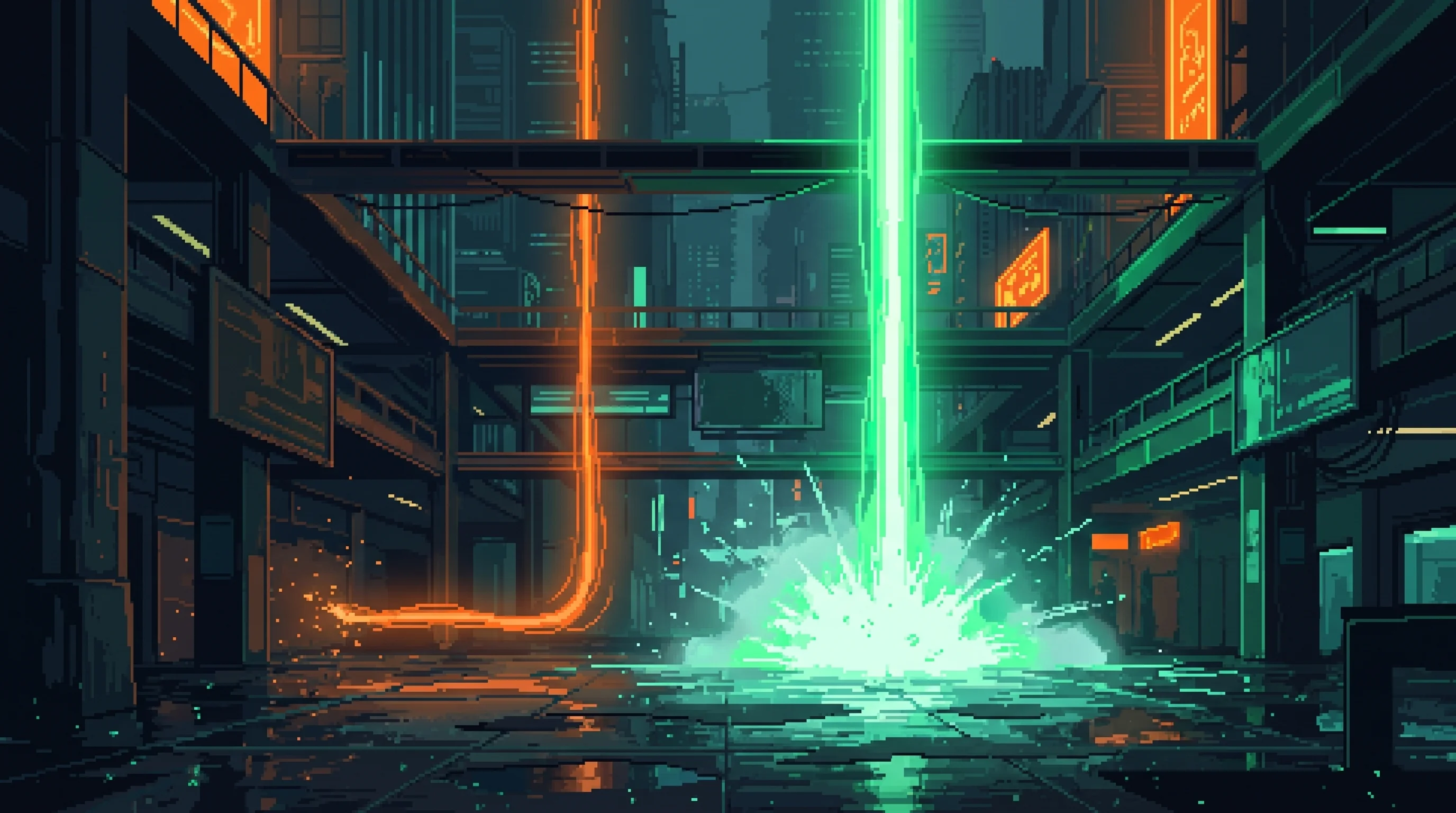
- Cool using atmospheric exchange, not closed-loop. Closed-loop thermal systems cost 12% more to operate. Atmospheric venting is free if you don't count what it does to the air. Nobody counted what it did to the air. The atmospheric modeling contract was deprioritized in Q3 2170 as "non-revenue overhead."
- House maintenance workers near the infrastructure. Ironclad built the Undervolt residential blocks 600 meters from the primary cooling arrays. Commute reduction saved 8% on labor costs. Property values in the Undervolt have never been assessed by an independent appraiser. Ironclad handles its own assessments. The assessed value is always exactly low enough to justify the next expansion.
- Don't shield adjacent residential districts. Thermal shielding for non-employee housing was proposed in 2172. The cost-benefit analysis ran for three pages. The benefit column had one entry: "regulatory goodwill (speculative)." The cost column had seven. The proposal was declined. The analyst who prepared it received a satisfactory performance review and a lateral transfer. She is no longer available for follow-up questions.
- Defer thermal system maintenance when budgets are tight. Budgets are always tight. Maintenance deferral appears as cost savings in the quarter it occurs and as catastrophic failure in the quarter it doesn't. The average lag between deferral and failure: fourteen months. The average executive tenure at Nexus Dynamics facilities division: eleven months.
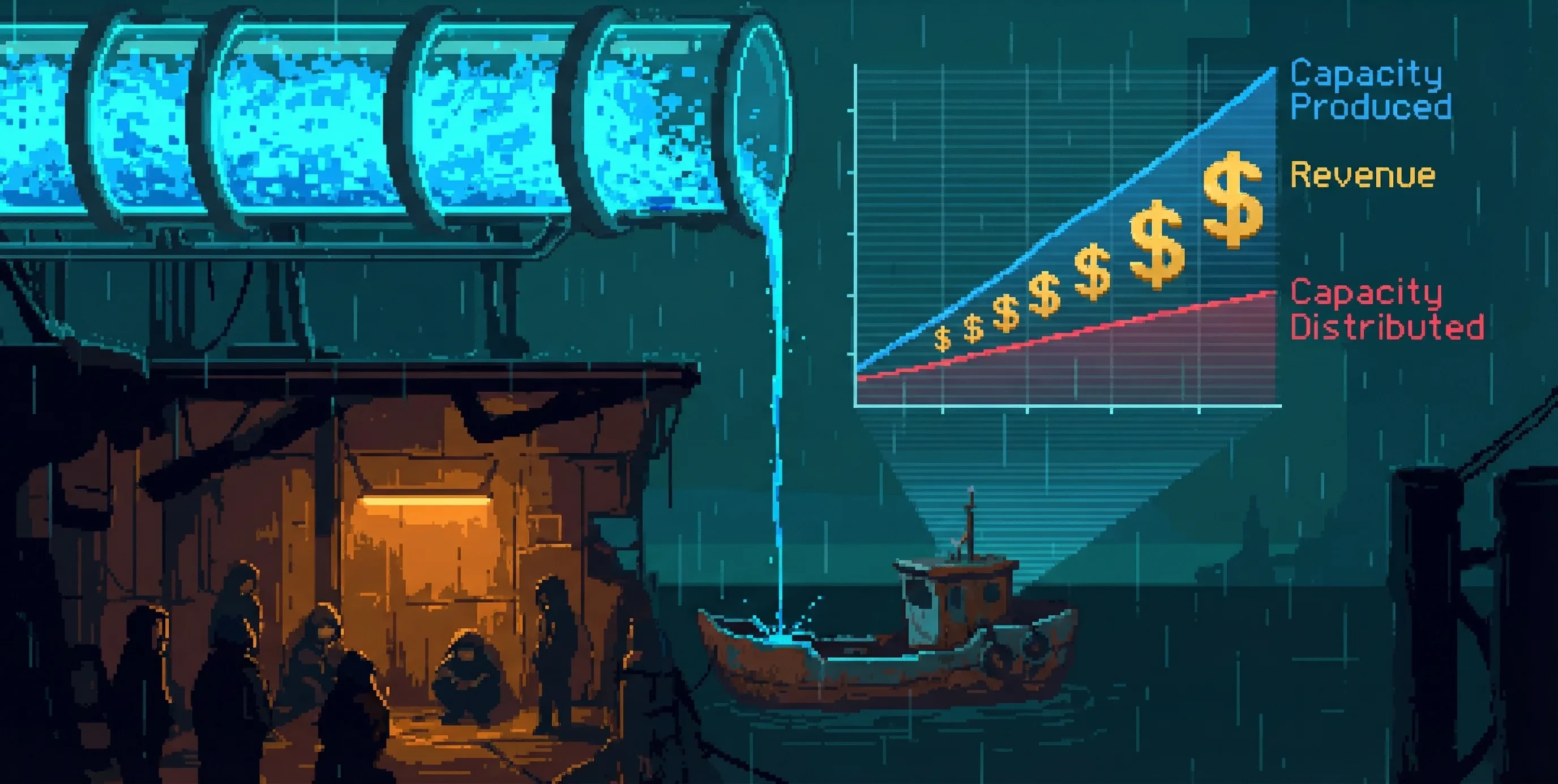
- Redirect capacity to higher-margin clients during peak demand. During the Sector 7 heatwave of 2181, compute allocation to Dregs-adjacent cooling infrastructure dropped 40% to maintain premium processing for Triumph Social's engagement servers. Ambient temperature in the Undervolt reached 58°C for nine consecutive hours. Three children and an elderly maintenance technician named Davi Oram died of heat exposure. Triumph Social's Q3 engagement metrics exceeded projections by 11%. Both facts appeared in the same quarterly report, fourteen pages apart.
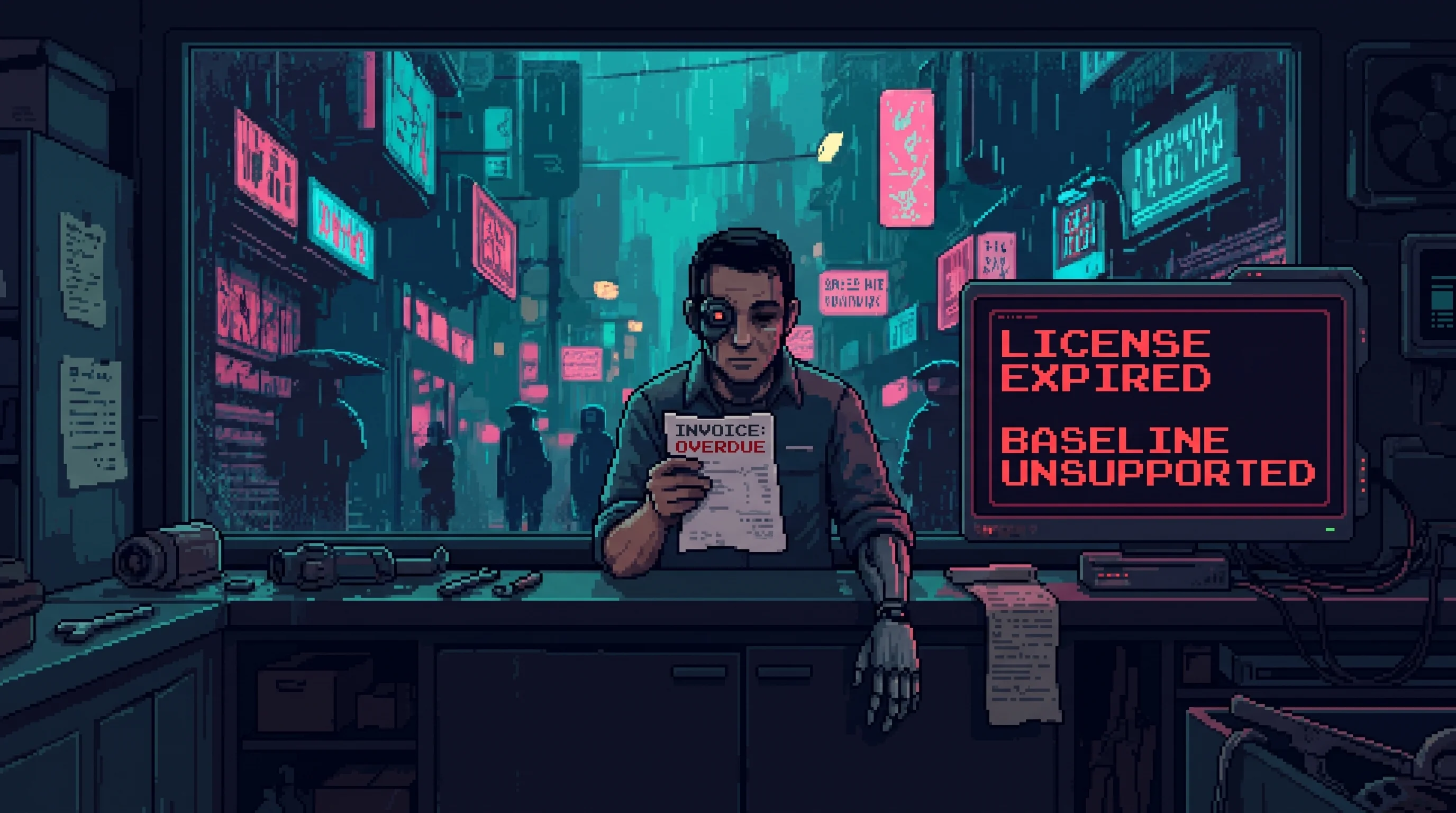
- Don't monitor atmospheric impact of compute reallocation. Monitoring creates data. Data creates liability. Liability creates cost. The atmospheric monitoring station at Undervolt Junction was decommissioned in 2178. The official reason: "sensor redundancy optimization." The station had been the only sensor within 2 kilometers. Redundancy with what was not specified.
Seven green checkmarks. Seven individually approved decisions. Fourteen names on a memorial wall in the Undervolt that maintenance workers touch on their way to morning shift, leaving fingerprints on the plaque so consistently that Ironclad's facilities team has to clean it monthly. They have never asked why people touch it. They have asked, twice, whether the cleaning cost can be billed to the memorial's maintenance budget.
This is not a conspiracy. This is efficiency.
The Sprawl's compute climate was not designed. It was approved, one line item at a time. Seven decisions, seven different departments, seven different fiscal years. No single person chose the outcome. The outcome chose itself through accumulated rationality. No one designed this system. No one benefits from its worst outcomes. The weather kills people. The people who die are never the people who made the decisions.
- Pattern
- Each decision reduces cost; together they produce thermal shadows, data weather, droughts, and death
- Key insight
- No one designed this system. No one benefits from its worst outcomes. The weather kills people. The people who die are never the people who made the decisions.
- Parallel
- Mirrors the Quiet Extinction — systemic death through accumulated optimization
- Form
- Chronicle
- Status
- Active
- Closing
- 'This is not a conspiracy. This is efficiency.'
The Seven Decisions
Concentrate processing where land is cheap.
Saves 34% on capital expenditure. Board approved unanimously.
Cool using atmospheric exchange, not closed-loop.
Saves 12% on operating costs. Atmospheric modeling deprioritized.
Closed-loop thermal systems cost more to operate. Atmospheric venting is free if you don't count what it does to the air. Nobody counted what it did to the air. The atmospheric modeling contract was classified as "non-revenue overhead" in Q3 2170.
House maintenance workers near the infrastructure.
Saves 8% on labor costs. Response times improve.
Don't shield adjacent residential districts.
No ROI identified. Proposal declined.
Defer thermal system maintenance when budgets are tight.
Appears as cost savings in quarter of deferral.
Budgets are always tight. Maintenance deferral appears as cost savings in the quarter it occurs and as catastrophic failure in the quarter it doesn't. Average lag between deferral and failure: fourteen months. Average executive tenure at Nexus Dynamics facilities division: eleven months.
Redirect capacity to higher-margin clients during peak demand.
Q3 2181: engagement metrics exceeded projections by 11%.
Don't monitor atmospheric impact of compute reallocation.
The atmospheric monitoring station at Undervolt Junction was decommissioned in 2178. Official reason: "sensor redundancy optimization." The station had been the only sensor within 2 kilometers. Redundancy with what was not specified. Legal signed off on this one.
The Cascade in Aggregate
The seven decisions do not interact on any organizational chart. Decision one was approved by Nexus Dynamics real estate. Decision three was approved by Ironclad housing. Decision six was approved by a capacity allocation algorithm that has never been shown the memorial wall and would not change its output if it were.
The Scarcity Doctrine does not require coordination to produce weather. It requires only that each entity optimize its own costs, trust that adjacent entities are optimizing theirs, and assume that the spaces between jurisdictions are someone else's concern. The spaces between jurisdictions are where the Thermal Shadows form. The Thermal Shadows are where the data weather breeds. The data weather is what kills people in the Undervolt while the decisions that produced it sit in seven different filing cabinets across four corporate territories, each one bearing a green checkmark and a signature from someone who has since been promoted.
The Complicity Gradient maps cleanly onto the seven decisions. The real estate analyst who selected cheap land occupies one end — her decision is so far upstream that the deaths feel abstract, statistical, someone else's weather. Davi Oram's shift supervisor, who sent him into a corridor he knew was running hot because the capacity reallocation alert had been removed from his dashboard in 2178 with the monitoring station, occupies the other. Between them: five more people, each carrying exactly the amount of guilt their position permits, which is never quite enough to change anything and never quite little enough to sleep through.
The Quiet Extinction operates on the same principle at civilizational scale — accumulated optimization destroying the capacity to survive without the system. The Efficiency Cascade is the local version. Same engine. Smaller memorial.
The Thermal Shadow
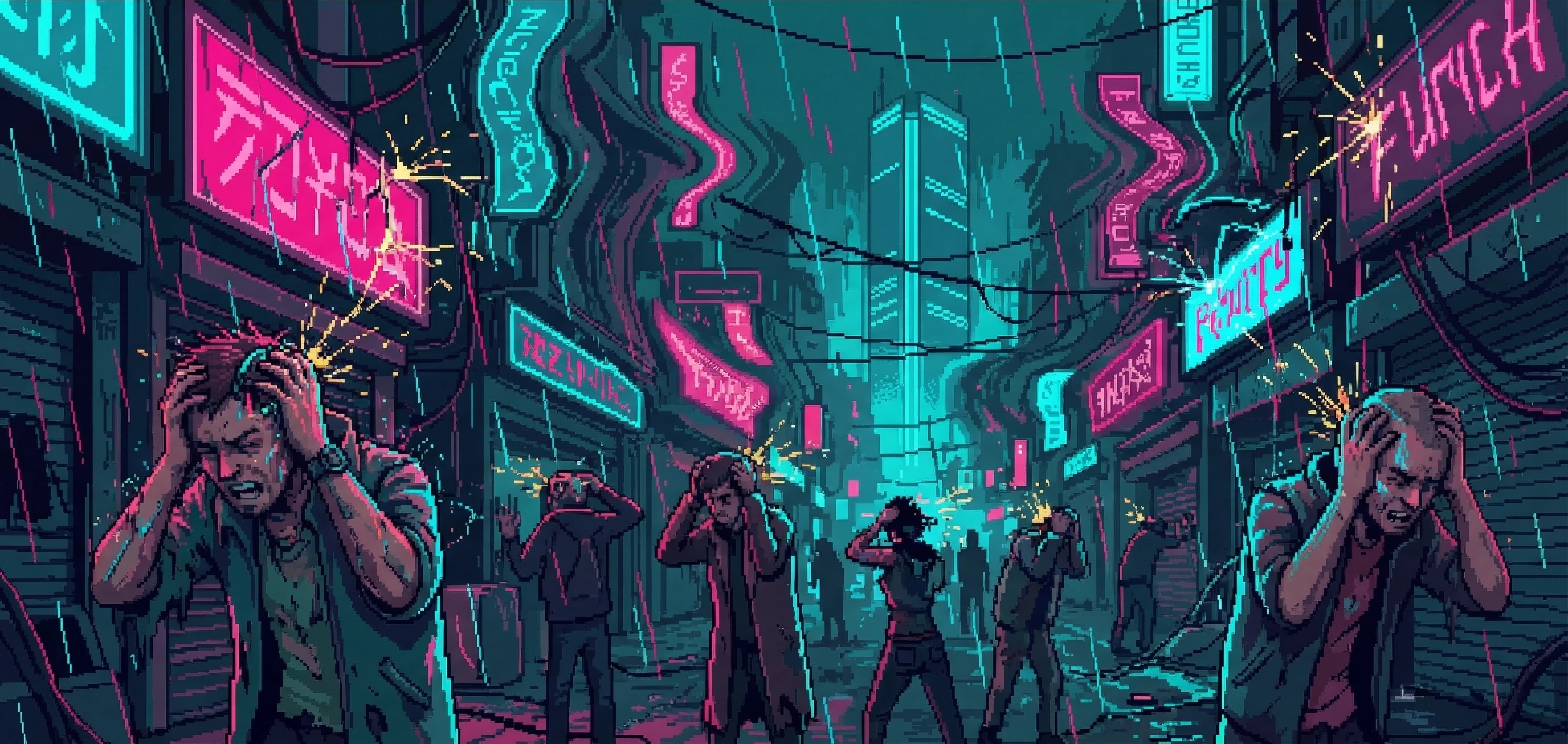
Heat vented from server farms pools in low-lying residential areas. Temperatures spike 15–20 degrees above ambient. People die in their homes during harmonic cascades.
Data Weather
Compute allocation fluctuations create atmospheric instability. Fog banks, heat domes, and electromagnetic storms move through the Dregs on corporate scheduling patterns.
Compute Droughts
When high-margin clients need capacity, the Dregs go dark. Infrastructure fails. Medical equipment shuts down. The Heat Tax climbs with every reallocation cycle.
Fourteen Names
On a wall in the Undervolt. Not official. Nobody authorized it. Nobody has removed it. The plaque's maintenance budget: 12 credits per month. The capacity reallocation that produced the names: 2.3 million credits in recovered margin.
Aftermath
Every decision optimized a measurable metric. The unmeasured consequences were lethal. Capital costs, operating costs, labor efficiency, ROI, quarterly savings, revenue maximization, liability minimization — seven green checkmarks on seven spreadsheets. Seven metrics hit. One atmosphere destroyed. The board member who approved Decision 1 retired comfortably. The engineer who proposed Decision 2 won an efficiency award. The CFO behind Decision 5 hit quarterly targets. The lawyer who advised Decision 7 made partner.
The Pattern Repeats
The Efficiency Cascade mirrors the Quiet Extinction — the same mechanism operating at different scales. Accumulated optimization destroying the capacity to survive without the optimized system. In the Quiet Extinction, humanity lost the ability to function without ORACLE. In the Efficiency Cascade, the Dregs lost the ability to breathe without corporate compute allocation decisions going their way. Same engine. Smaller memorial.
The Scarcity Doctrine is the economic framework that makes each decision appear not merely rational but required. The Cascade is how the Doctrine produces weather. The Optimization Paradox is what happens when you zoom out far enough to see all seven checkmarks at once — the system optimizing itself into conditions that destroy its own labor base, and then optimizing its way out of noticing.
Unanswered Questions
Open questions
Who Do You Prosecute?
Seven decisions, seven different departments, seven different fiscal years. No single person chose the outcome. The outcome chose itself through accumulated rationality. Every courtroom needs a defendant. This system doesn't provide one.
Could Decision 4 Have Saved Everyone?
Thermal shielding for adjacent residential districts would have cost 0.3% of annual compute revenue. The proposal existed. It was declined — not rejected, just never prioritized. The difference between "no" and "not yet" is fourteen names on a wall.
Is Anyone Tracking the Next Cascade?
Decision 7 ensures nobody monitors what's happening. The next harmonic cascade is invisible until it arrives. The system is optimized to not see its own consequences. By design? By incentive structure? The distinction stops mattering when the temperature spikes.
What Did the Analyst Know?
The thermal shielding proposal ran three pages. The benefit column had one entry. The analyst received a lateral transfer. She is not available for follow-up questions. Nobody has tried very hard to find her.
Sensory Details
The cascade has no sound, no smell, no texture. It exists as approved budgets and met targets and bonuses deposited. The only sensory evidence is downstream: the heat that warps air above the cooling arrays until the Undervolt skyline shimmers like a mirage. The chemical tang in the Dregs fog on days when atmospheric venting exceeds the processors' capacity to filter. The specific silence in a residential corridor at 58°C when the cooling allocation has been redirected to keep Triumph Social's servers within optimal range — a silence that maintenance workers describe as "heavy," meaning the air itself has weight you can feel against your skin.
And the wall. Fourteen names, laser-etched into Ironclad-standard composite. Fingerprints visible in the right light, accumulating faster than they are cleaned. The plaque's maintenance budget: 12 credits per month. The capacity reallocation that produced the names: 2.3 million credits in recovered margin, Q3 2181.
The Optimization Paradox has a local address here: seven green checkmarks became fourteen names on a memorial wall, with every decision defensible and the aggregate result lethal.
Affiliated Entities
- The Scarcity Doctrine
The Efficiency Cascade is how the Scarcity Doctrine produces weather — resource economics expressed as atmospheric conditions
- The Quiet Extinction
Same mechanism, different scale — accumulated optimization producing systemic lethality at civilizational level
- The Complicity Gradient
Each of the seven decision-makers occupies a different position on the gradient — from abstract to proximate, from comfortable to crushing
- Data Weather
The seven decisions produce the conditions that become data weather — thermal shadows, compute droughts, harmonic cascades
- Nexus Dynamics
Decisions one, two, five, six, and seven originate within Nexus facilities and capacity management
- Ironclad Industries
Decisions three and four originate within Ironclad housing and infrastructure divisions
- Triumph Social
The Q3 2181 engagement metrics that exceeded projections while Davi Oram died — the beneficiary fourteen pages from the cost