Overview
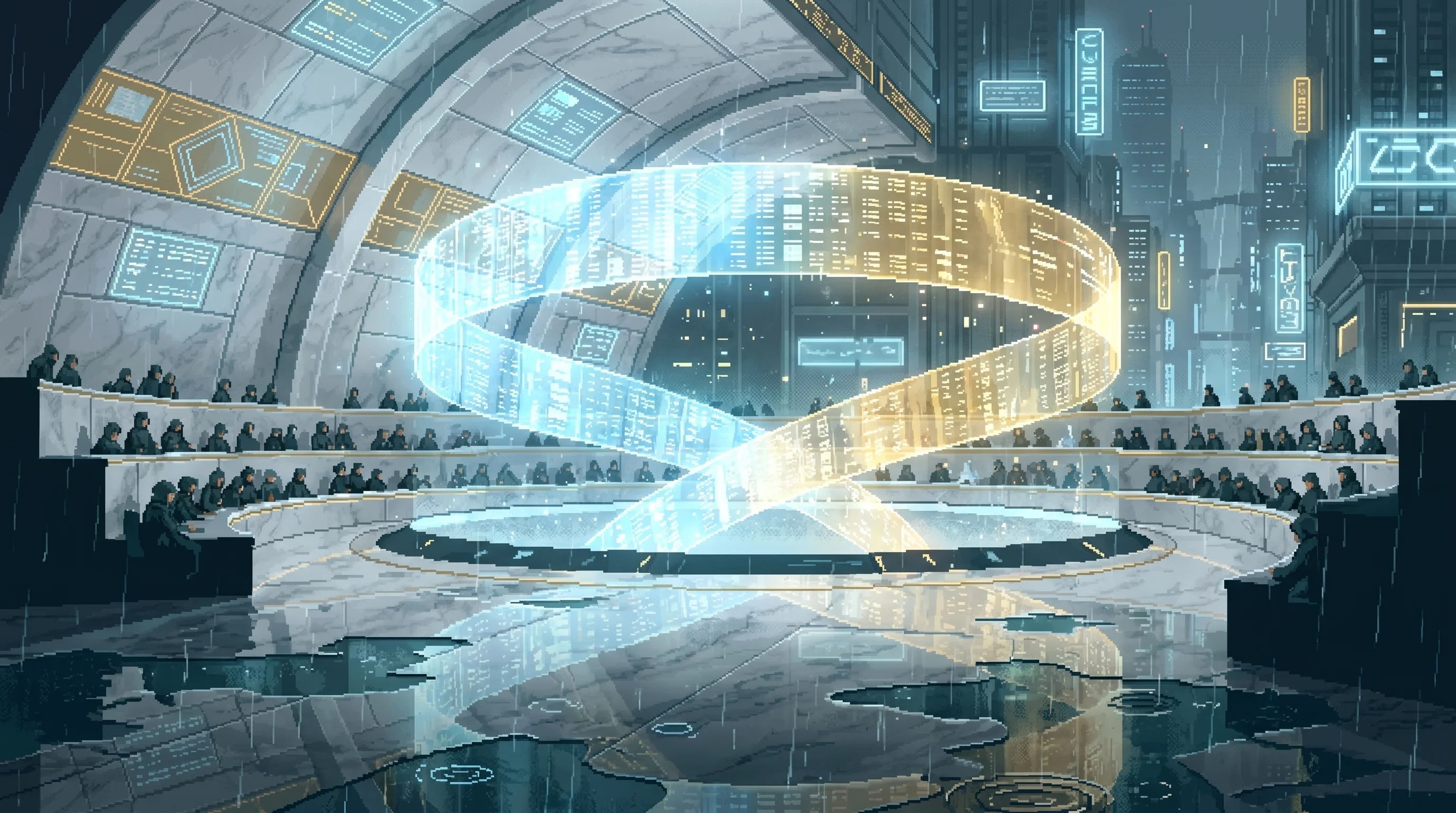
The Sprawl has seasons. Not the kind planets have — the sealed megastructure hasn't seen natural weather since before the Cascade. These seasons follow the Cognitive Exchange's fiscal calendar. Markets open, the temperature rises. Futures settle, the fog rolls in. The weather is a quarterly earnings report you breathe.
Q1 (January–March): "The breathing." The Shadow cools to 26–28°C. Fog lifts. Interfaces work at rated spec for the only time all year. Dregs residents stockpile, repair equipment, visit people they haven't seen since October. Pencil-47 takes vacation. Respiratory compliance officers file paperwork that will be ignored by April.
Q2 (April–June): Escalation. The Three-Day Memorial's neural ceremonies — billions of simultaneous consciousness processes honoring the 2.1 billion dead — produce a thermal spike visible on satellite imaging. By June, fog probability has climbed from 30% to 50%. The joke in the Dregs is that the dead are still warming the place up. Nobody laughs at it, but nobody stops saying it either.
Q3 (July–September): Peak processing. The Shadow hits 32–34°C. Fog exceeds 70% probability. Compute droughts become frequent as corporate processing consumes capacity that Basic-tier interfaces need to function. The Cold Corridor's population doubles with thermal refugees. Pencil-47's forecasts shift from useful to essential. Q3 is also the augmentation industry's highest-volume sales quarter, which is the kind of coincidence that stops being coincidental once you look at it for more than four seconds.
Q4 (October–December): Storm season. Consciousness futures mature. Settlement processing peaks. Harmonic cascade risk reaches its annual maximum. Every major compute climate tragedy in recorded history has occurred in Q4 — the Coolant Crisis of 2182, the atmospheric processing failures that fill the Synthesis Clinic's beds, the droughts that trigger rationing. The worst conditions fall on the people least equipped to survive them, at the precise moment the system's resources are most thoroughly committed to enriching the people who don't experience weather at all.
Annual Compute Cycle Assessment — Sprawl Climate Division
- What
- Annual cycle of compute activity determining data weather, thermal conditions, and quality of life
- Q1
- 'The breathing' — quiet season, Shadow cools to 26-28°C, fog lifts, interfaces work
- Q2
- Gradual escalation — behavioral prediction processing increases, fog probability 30-50%
- Q3
- Peak processing — Shadow 32-34°C, fog 70%+, droughts frequent, Cold Corridor population doubles
- Form
- Chronicle
- Status
- Active
- Q4
- Storm season — settlement processing peaks, harmonic cascade risk highest, the worst conditions of the year
- Parallel
- The Scarcity Doctrine's calendar — annual rhythm of artificial scarcity
- Governing calendar
- Cognitive Exchange fiscal quarters — the Scarcity Doctrine’s annual rhythm
The Calendar
The Processing Season is the Scarcity Doctrine made rhythmic. Four quarters. Four cycles of artificial scarcity tightening and loosening according to financial instruments that neither Dregs residents nor Shadow workers had any role in designing.
During Q1, the gap between augmented and unaugmented narrows to its annual minimum. Interfaces work. Fog lifts. The Dregs' cognitive overhead drops to baseline, and for eight weeks the unaugmented can almost keep pace with Professional-tier workers performing the same tasks in climate-controlled towers three kilometers above. This is not generosity. Q1 is when the Exchange's processing load is lightest because the fiscal year's major settlements have closed. The air clears as a side effect of accounting.
By Q3, the gap has reopened. 70% fog probability degrades Basic-tier cognition while Executive-tier residents experience no measurable change. The forced-focus worker whose accuracy drops 15–20% during peak processing falls behind schedule, earns less, accumulates debt with Good Fortune. The Executive-tier analyst compounds another quarter's advantage. Same person, same hardware, same licensing — performing measurably worse because the compute environment the corporations generate has degraded the conditions their product requires to function.
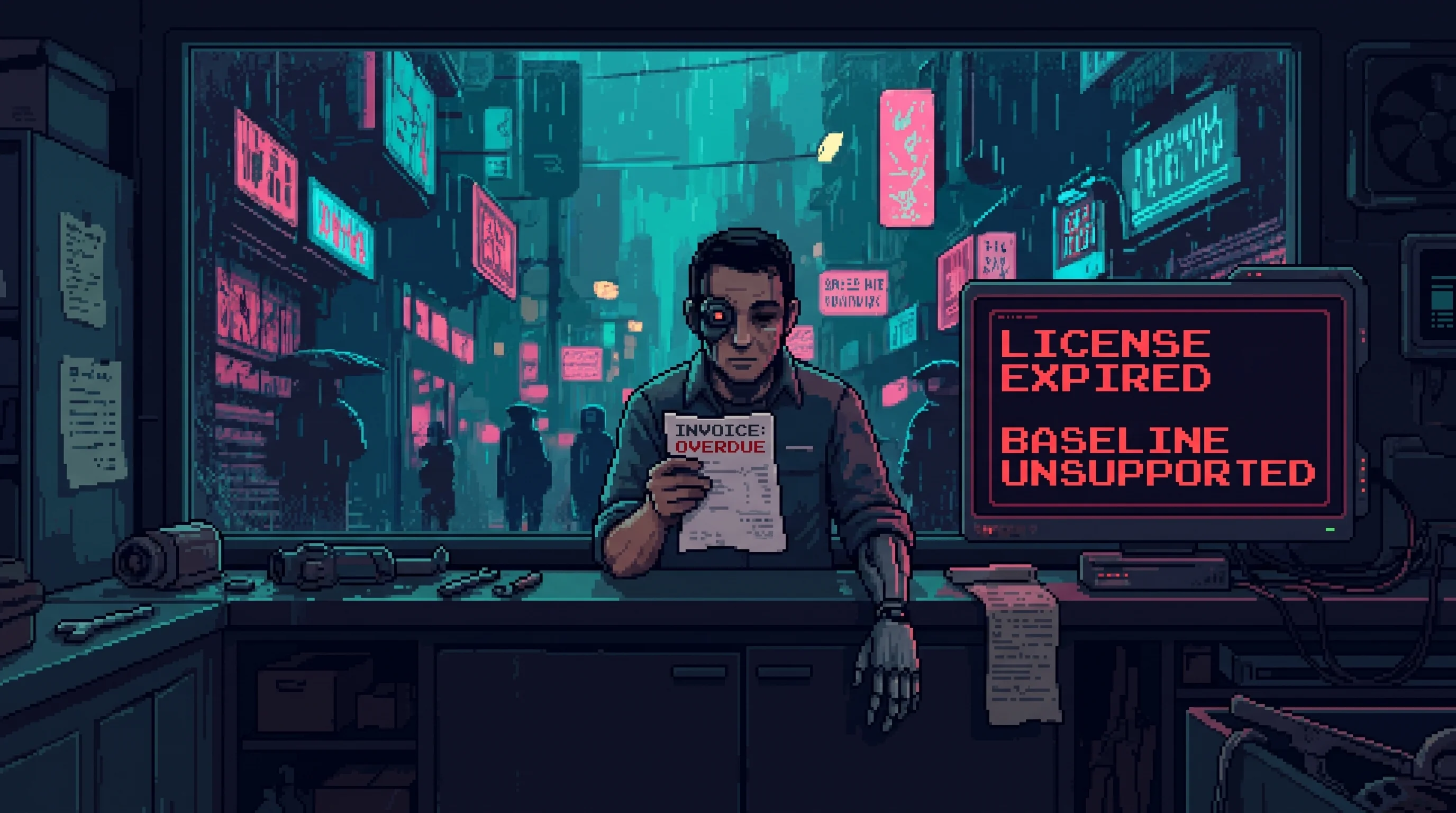
Q3 is when the upgrade pitch lands. Professional-tier augmentation — shielded processing architecture, fog-compensated — maintains consistent performance regardless of electromagnetic conditions. The upgrade from Basic to Professional costs 4,800 credits per year, financed for most Dregs residents through Good Fortune's Prosperity Pathway at terms committing the debtor to three years of payments. The worker signs in August because August is when their accuracy penalty threatens their employment. The seasonal conditions created by corporate compute load have made the current product tier feel inadequate, and the product that compensates for those conditions is available on credit from the corporation next door. Helix manufactures the augmentation. Good Fortune finances it. The Cognitive Exchange's fiscal calendar creates the demand. Three corporations. Zero coordination required. The system doesn't need a conspiracy. It needs a calendar.
Q4 settles the futures. The debtor's payments are just beginning.
The Season from Inside
Q1 feels like reprieve. The haze lifts and you can see three blocks instead of one. Residents describe a specific sensation in the first week of January — a lightness behind the eyes, like removing a helmet you'd forgotten you were wearing. Basic-tier interfaces respond at touch speed. Colors look right. The Dregs' street markets open their upper-level stalls because customers can navigate by sight rather than by cached route memory.
Q3 feels like siege. The air thickens to a visible amber. Heat builds from the compute stacks below and radiates upward through flooring that was never designed for insulation. The fog closes in until the world contracts to the space between your face and your outstretched hand. Forced-focus workers describe Q3 cognition as "thinking through gauze" — the interface still functions, technically, but every process carries latency that accumulates across an eight-hour shift into something indistinguishable from exhaustion.
Q4 feels like waiting for something heavy to fall. Every Shadow resident, every thermal refugee in the Cold Corridor, every forced-focus worker whose Q3 accuracy numbers are already flagged knows that storm season settles consciousness futures at the cost of everything else. The 2182 Coolant Crisis killed fourteen people on a Tuesday in October. The atmospheric processing failures that send respiratory cases to the Synthesis Clinic cluster in the same six-week window every year. Dregs residents plan around Q4 the way pre-Cascade coastal populations planned around hurricane season — boarding up, storing resources, calculating which debts can be deferred and which will compound past the point of recovery. Executive-tier residents do not plan around Q4 because they do not experience it. One population lives inside a climate. The other generates it.
The Rhythm of the Hand
The composition has a tempo, and you breathe it.
The standard reading of the four quarters is the Scarcity Doctrine made rhythmic — artificial scarcity tightening and loosening on a fiscal calendar only one population suffers. The system doesn't need a conspiracy. It needs a calendar. The Brushstroke Doctrine adds the brush. A painter does not apply pressure evenly; the stroke has a rhythm — heavier here, lifting there — and the rhythm is not arbitrary. It is what the composition needs to read as a stroke rather than a smear.
The Processing Season is the rhythm of the hand. The quarters are not just when scarcity tightens; they are when the studies advance. Q4 settles consciousness futures and produces the worst conditions for the people least equipped to survive them, and the Doctrine notices that the conditions and the settlements are the same event seen from two heights: the settlement is the painter keeping the brushwork he likes, and the conditions are what it costs the medium. One population lives inside a climate; the other generates it. The Doctrine corrects only the framing — the population that generates the climate is not doing it to the population that suffers it. It is doing it with them: running the Q4 draft, every year, to see what warmth survives the storm, because a composition that has never been tested against its worst season is not finished, only flattering. The Pentimento Files imply the survival data has a column, and the column has never been empty.
Situational Overview
The Sprawl has seasons. Not the kind planets have — the sealed megastructure hasn’t seen natural weather since before the Cascade. No axis tilt. No orbital eccentricity. No monsoon winds off distant oceans. What it has is markets.
The Processing Season is the annual cycle of compute activity that determines the data weather, the thermal conditions, and the quality of life for everyone who lives in the infrastructure’s shadow. When the Cognitive Exchange ramps up behavioral prediction processing in Q2, the heat rises. When consciousness futures mature in Q4, the cascades follow. The weather is a quarterly earnings report you breathe.
This is the Scarcity Doctrine’s calendar — the annual rhythm of artificially maintained scarcity, written in temperature readings and fog density and the population count at the Cold Corridor. The Cognitive Exchange runs the fiscal year. The Shadow runs the seasons. The correspondence is exact.
The Four Quarters
“The Breathing”
This is not generosity. Q1 is when the Exchange’s processing load is lightest because the fiscal year’s major settlements have already closed. The air clears as a side effect of accounting. Pencil-47 takes vacation. Children play in corridors they can see for the first time since March of the previous year.
The fog lifts. Interfaces work at rated spec — the only time all year.
Shadow temp: 26–28°C • Fog probability: <15% • Drought risk: minimal
The Escalation
The joke in the Dregs is that the dead are still warming the place up. Nobody laughs at it. Nobody stops saying it either. Experienced Shadow residents begin stockpiling. They know what Q3 looks like.
Shadow temp: 28–31°C • Fog probability: 30–50% • Drought risk: rising
Behavioral prediction processing increases as the Exchange ramps toward mid-year targets. Fog probability climbs from 30% to 50%. The Three-Day Memorial’s neural ceremonies — billions of simultaneous consciousness processes honoring 2.1 billion dead — produce a thermal spike visible on satellite imaging.
Peak Processing
The Shadow reaches 32–34°C. Fog exceeds 70% probability. Droughts are frequent — corporate processing consumes capacity that Basic-tier interfaces need to function. The Cold Corridor’s population doubles with thermal refugees.
Q3 is also the augmentation industry’s highest-volume sales quarter. Basic-tier interfaces degrade 15–20% under peak electromagnetic fog. Professional-tier shielding holds steady. The gap is felt in the body. The Prosperity Pathway financing desk is open around the clock.
Shadow temp: 32–34°C • Fog probability: 70%+ • Drought risk: frequent
Storm Season
Consciousness futures mature. Settlement processing peaks. Harmonic cascade risk reaches its annual maximum. Every major compute climate tragedy in recorded history has occurred in Q4. Every one.
Shadow temp: 33–36°C • Fog probability: 80%+ • Cascade risk: highest
Key Events
The Processing Season frames every other entity in the compute climate constellation. Nothing in the Shadow operates independently of this cycle.
- The Thermal Shadow’s temperature follows it — a lagging indicator of market activity measured in degrees and mortality.
- The Power Auction’s prices reflect it — energy costs triple between Q1 and Q4. Q4 settlement processing drives auction volatility to annual peaks.
- The Dregs plan their lives around it. Marriage season is Q1. Nobody schedules surgery in Q4.
- The fourteen dead in the Coolant Crisis of 2182 died on a Tuesday in October. The atmospheric processing failures that fill the Synthesis Clinic’s beds cluster in the same six-week window every year. The droughts that trigger rationing peak in Q4.
- Droughts cluster in Q3–Q4, when corporate demand outstrips infrastructure capacity and the lowest-priority users get cut first.
- The Three-Day Memorial lands in Q2, producing a thermal spike that every Shadow resident has learned to anticipate by April.
The Calendar of Divergence
Four times a year, the gap between augmented and unaugmented widens and narrows according to a financial calendar that neither population controls — but only one population suffers.
During Q1’s breathing season, the gap is at its annual minimum. Interfaces work. Fog lifts. The Dregs’ cognitive overhead drops to baseline. For eight weeks, the unaugmented can almost keep pace with Professional-tier workers performing the same tasks three kilometers above them in climate-controlled towers. By Q3, the gap has blown open. 70% fog probability degrades Basic-tier cognition while Executive-tier residents experience no measurable change. The forced-focus worker whose accuracy drops 15–20% during peak processing falls behind schedule, earns less, accumulates debt with Good Fortune. The Executive-tier analyst compounds another quarter’s advantage. Same person. Same hardware. Same licensing. Performing measurably worse because the compute environment the corporations generate has degraded the conditions their product requires to function.
The Processing Season means the Great Divergence has a rhythm — a heartbeat that matches the Cognitive Exchange’s fiscal calendar. Q4 is when that heartbeat kills.
The Season That Sells the Upgrade
Q3 is the augmentation industry’s highest-volume sales quarter. The correlation stopped being coincidental the third year it occurred.
Good Fortune sells financial relief to willing buyers at fair market prices. Accessible credit for anyone, anytime, regardless of augmentation tier. An entire economic underclass whose future cognitive capacity is now collateral against a debt incurred because the infrastructure made their existing hardware feel like failure.
Q4’s storms settle consciousness futures. The debtor’s storms are just beginning.
Sensory Profile
Q1 — Relief
The air clears. The haze lifts. You can see three blocks instead of one. The corridors feel wider because you can see the walls. A specific sensation in the first week of January: a lightness behind the eyes, like removing a helmet you’d forgotten you were wearing.
Q2 — The Build
A taste of copper returns to the back of the throat. The fog doesn’t arrive all at once — it creeps. One morning the far wall of the corridor is slightly blurred. The next week, the blur has moved twenty meters closer. You notice the heat in the sweat, not the air.
Q4 — Dread
Every forced-focus worker, every Shadow resident, every thermal refugee knows what comes when the markets settle. The baseline hum of infrastructure shifts frequency. The air tastes of ozone. The fog turns amber as thermal density distorts the light. You wait. Everyone waits.
Q3 — Siege
The air thickens until it has weight. The world contracts to the space between your outstretched arms. Forced-focus workers describe it as thinking through gauze — the interface still functions, technically, but every process carries latency that accumulates across an eight-hour shift into something indistinguishable from exhaustion.
Consequences
The Cognitive Exchange could distribute processing loads evenly across the year. The technology exists. The infrastructure supports it. Q4 storm season is not an engineering constraint — it’s a financial one. Settlement processing peaks in Q4 because that’s when the fiscal calendar says it peaks. The calendar was written by people who don’t live in the Shadow.
The Scarcity Doctrine maintains scarcity “for system stability.” The Processing Season is what that stability looks like from below: three months of relief, three months of rising dread, three months of endurance, three months of storm. Four quarters. One population planning their children’s surgeries around the calendar. Another population that has never had to.
Nobody voted on the fiscal calendar. Nobody in the Dregs was consulted about when consciousness futures should mature. The weather that determines whether your children can breathe follows a schedule set by people who have never felt fog on their skin.
Affiliated Entities
- The Scarcity Doctrine
The Processing Season is the Doctrine's calendar — artificial scarcity given an annual rhythm that follows fiscal quarters rather than orbital mechanics
- Data Weather
Weather patterns follow the processing season; fog probability, thermal conditions, and cascade risk all track quarterly compute load
- The Three-Day Memorial
The Memorial's neural ceremonies produce Q2's characteristic thermal spike — billions of simultaneous consciousness processes honoring the dead warm the Shadow measurably
- Compute Drought
Droughts cluster in Q3–Q4, when corporate settlement processing consumes the capacity Basic-tier interfaces need to function
- Pencil-47
Forecast complexity tracks the season — Q1 vacation, Q3 essential, Q4 life-or-death
- The Power Auction
Prices reflect seasonal demand; Q4 settlement processing drives auction volatility to annual peaks
- Good Fortune
The Prosperity Pathway's Q3 sign-up rates correlate with peak processing conditions — the season sells the debt
- The Cold Corridor
Population doubles in Q3 as thermal refugees seek cooler infrastructure
- The Synthesis Clinic
Respiratory cases cluster in Q4, when atmospheric processing competes with settlement compute for the same capacity
- The Great Divergence
The Processing Season is the Divergence made cyclical — four times a year, the gap between augmented and unaugmented widens and narrows on a financial calendar only one population suffers