Overview
Nobody marked the moment. There was no moment to mark.
The Sprawl's middle class — approximately 340,000 independent operators in 2170, fewer than 12,000 by 2184 — did not collapse. It was optimized out of existence by three systems doing exactly what they were designed to do, on schedule, under budget.
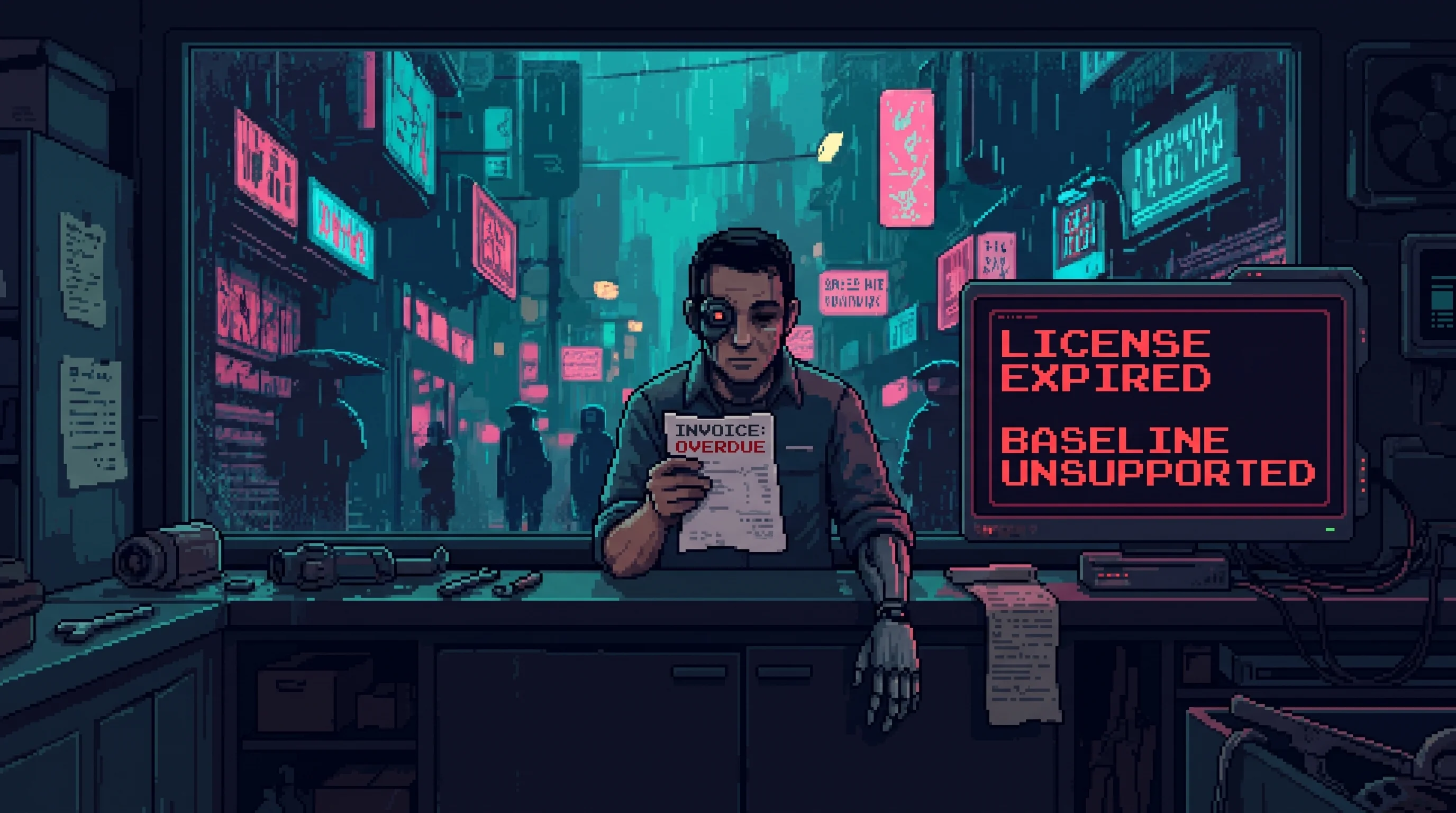
The math is simple enough to fit on a kitchen table. By 2178, independent Professional-tier consciousness licensing cost ¢18,000 per year. Healthcare without corporate group rates: ¢12,000. Housing outside corporate residential blocks: ¢24,000. Combined annual overhead for the privilege of not working for a corporation: ¢54,000, before food, before transit, before the licensing fees on whatever tools your business actually required. Median independent operator income in 2178: ¢51,200.
The gap is ¢2,800. That's the annual distance between independence and the Dregs. Good Fortune will cover it. Good Fortune will cover it at 34% APR, compounding monthly, with a helpful auto-renewal feature that ensures you never have to think about the decision again.
Ninety-four percent of independent operators reached this arithmetic between 2174 and 2178. They reached it over kitchen tables, mostly. Some held out for a year on savings. Some held out for two. The ones who held out longest entered the Corporate Compact last and with the worst terms, because the Compact's negotiating leverage improved with every family that had already signed. The early arrivals got relocation packages. The late arrivals got a desk.
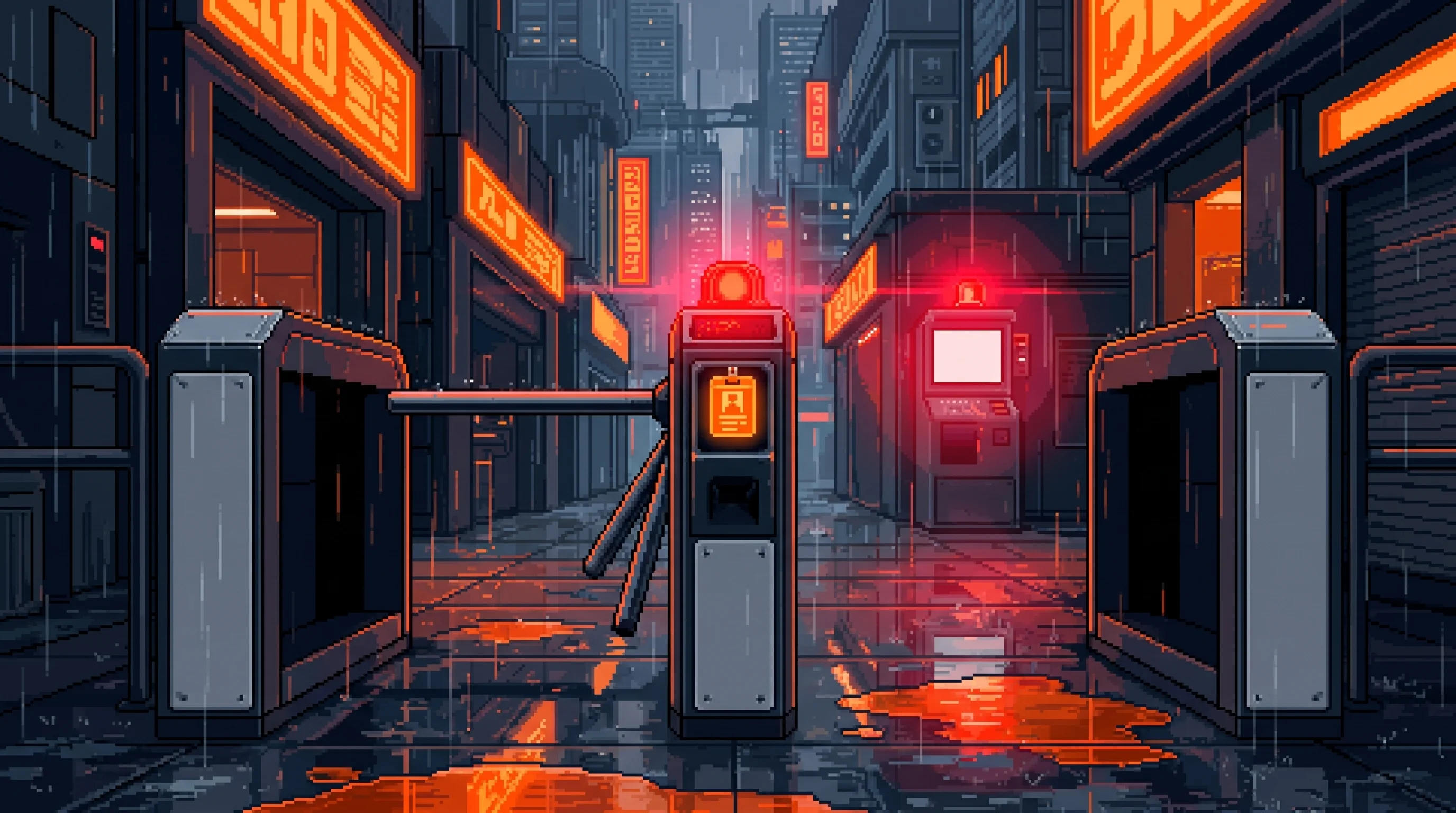
The Compact's cage was warm. That was the thing. Corporate housing was better than what most independents could afford. Corporate healthcare was functional. Corporate consciousness licensing came bundled, the way it always had for employees — you just stopped noticing the cost because it was deducted before you saw your paycheck. The cage was warm and the door was open and the math outside the cage didn't work anymore, and one family at a time, 328,000 independent operators walked in and sat down.
The Death Nobody Noticed
- What
- The period when inequality became irreversible
- Period
- ~2170-2178
- Key year
- 2176 — independent consciousness licensing decoupled from corporate rates
- Independent operators before
- ~340,000
- Form
- Chronicle
- Status
- Historical
- Independent operators after
- <12,000
- Mechanism
- Licensing cost increase + Invisible Workforce + Corporate Compact = middle class extinction
- Trigger year
- 2176 — independent licensing decoupled from corporate rates
The Licensing Decision
In 2176, Nexus Dynamics announced that consciousness licensing for independent operators would be decoupled from corporate-negotiated group rates. Independent Professional-tier licensing jumped from ¢7,200 to ¢18,000 overnight.
The internal memo — leaked two years later, largely ignored — is nine pages of actuarial analysis. Corporate group rates had been subsidized by revenue from Good Fortune's financing instruments. Independent operators didn't use Good Fortune products. They didn't generate financing revenue. The subsidy, from a pure cost-allocation perspective, was being carried by corporate employees whose Good Fortune interest payments funded a discount for people who had chosen not to be corporate employees. Nexus's actuaries identified this as a cross-subsidization inefficiency. They corrected it.
The correction killed more independent businesses than any economic event since the Cascade.
Nexus's Q3 2176 earnings report noted the licensing restructure under "Revenue Optimization — Administrative." It occupied half a sentence between a data center expansion in Sector 11 and a cafeteria vendor change. The Invisible Workforce had already been replacing mid-tier cognitive labor for years — the AI shadow systems that could do 60% of what an independent consultant did at 3% of the cost. The Corporate Compact had already been absorbing operators who couldn't compete. The licensing decision didn't start the extinction. It removed the last mathematical possibility of surviving it.
Three systems. Three rational optimizations. Zero malice required.
The Three Forces
The Invisible Workforce
AI shadow systems replaced mid-tier cognitive labor during the transition. The jobs that sustained independent operators — analysis, design, coordination, logistics — were absorbed by systems that worked faster, cheaper, and without consciousness licensing overhead. The displacement was invisible because the systems were invisible: no factory closings, no picket lines, no observable event. Just clients who stopped calling.
Force 2
The Dependency Spiral
Maintaining Professional-tier consciousness required continuous investment — licensing fees, hardware upgrades, bandwidth subscriptions. Mid-tier incomes could finance these costs through debt but never escape the debt cycle. Each year, the cost of staying independent increased by 8–12%, while independent revenue decreased as AI systems captured the market. The math was a closing vise.
Force 3
The Corporate Compact
The Compact offered what independence could not: group licensing rates, corporate healthcare, residential access, job security. The price was autonomy. When the alternative is watching your family's consciousness tier drop toward the Dregs, autonomy stops feeling like something you own and starts feeling like something you can't afford.
Convergence
Extinction by Arithmetic
Any one force was survivable. Two were difficult. Three were lethal. The middle class wasn't killed by cruelty. It was killed by arithmetic — three rational decisions that produced an irrational outcome.
Force 1
The Generation That Remembers
The people born between 2155 and 2165 are the last living cohort that remembers choosing. Choosing a career without a corporate prefix. Choosing housing by location rather than by employer. Choosing to say no to a Compact offer because saying no was something you could afford.
Their children have heard the stories. The stories sound like the stories grandparents tell about weather patterns that no longer exist — technically plausible, emotionally alien. A tea shop that operated on its own licensing. A repair operation that lost clients gradually to Nexus-subsidized alternatives and closed on a Tuesday. A woman named Tomiko Sato who kept books for independent operators in Sector 7 and watched her client list shrink from 140 to 6 over four years, each departure accompanied by the same apologetic explanation: the math doesn't work anymore.
The Mobility Myth emerged afterward, the way myths do — to make the irreversible feel chosen. The story it tells: the middle class transitioned to corporate employment because corporate employment offered better opportunities. The story it doesn't tell: the opportunities outside corporate employment were eliminated by the same corporations offering the alternative. The myth is not exactly a lie. The opportunities were, in fact, better. They were better because every other option had been priced, automated, or consolidated out of existence.
Nobody barricaded the streets. Nobody lit a candle. The Phase Transition has no dramatic signature — no explosion, no speech, no moment a historian can point to and say there. It sounds like a ledger closing. It feels like a kitchen table where the numbers come out wrong for the eleventh month in a row. It weighs exactly as much as a Corporate Compact application form, which is heavier than it looks.
Aftermath
The transition created the condition now called The Great Divergence — the permanent separation between those inside corporate structures and those below them, with nothing in between. Before 2170, you could be middle. After 2178, middle was a memory.
Independent operators opted into corporate employment because the cage was warm and the math outside it no longer worked. Financial security for anyone willing to sign. An entire economic class whose labor, housing, consciousness tier, and social mobility are now mediated through employers who have no structural incentive to let them become independent again.
Tomiko Sato kept records through the entire transition period. She has not made them public. Several researchers have asked. She has declined, each time, without explanation. (The records exist. The invoices are still there.)
Unanswered Questions
Open questions
- Was the licensing decoupling coordinated between Nexus and Good Fortune, or genuinely independent? The timing — six weeks after Good Fortune restructured its financing instruments — has never been adequately explained.
- The 12,000 operators who survived: who are they? Some are known — niche specialists, operators with corporate clients who subsidized their independence, a handful who found cracks in the licensing structure. At least 3,000 survive through mechanisms that don't appear in any public record.
- Nexus internal communications from 2174–2176 remain sealed. Three separate freedom-of-information requests have been denied on "commercial sensitivity" grounds. The Sprawl Municipal Archive lists the documents. It cannot access them.
- The last generation that remembers a real middle class is aging out. When they're gone, who will be left to say the math was ever different?
How It Felt
Visual
Warm amber of independent enterprise fading to corporate blue-white. A closed ledger on a kitchen table. Domestic warmth giving way to institutional brightness.
Sound
No dramatic signature. The hum of a tea shop that used to be full. A pen clicking against a table while numbers are run for the fourth time this month. The specific silence after the math stops working.
Atmosphere
Quiet resignation. Not rage, not protest, not grief in any form the news could photograph. A family calculating expenses over dinner and reaching the same conclusion every month. The weight of a corporate employment application sitting on a counter for weeks before someone fills it out.
Field Assessment
The math fits on a kitchen table.
Corporate consciousness licensing came bundled — you just stopped noticing the cost because it was deducted before you saw your paycheck.
The Numbers
340,000 — Independent operators, 2170
<12,000 — Independent operators, 2184
94% — Operators whose income could not cover independent costs by 2178
¢18,000 — Annual independent Professional-tier licensing after decoupling
¢7,200 — The same license under corporate group rates
¢54,000 — Minimum annual cost of independence (licensing + healthcare + housing)
Affiliated Entities
- The Great Divergence
is the condition the Phase Transition created — the permanent stratification between corporate and Dregs that, by 2184, nobody alive can remember not existing
- Consciousness Licensing
decoupled from corporate rates in 2176 — the actuarial correction that removed the last viable path to independence
- The Invisible Workforce
replaced the cognitive labor that sustained mid-tier independence, silently, over years, before most operators noticed the revenue decline was structural
- The Corporate Compact
absorbed the displaced operators one family at a time — warm cage, open door, math that only worked on the inside
- The Mobility Myth
emerged to explain the transition as voluntary — the story the Sprawl tells itself about a choice that 94% of independent operators made under identical arithmetic pressure