CONCEPT ANALYSIS
The Thinking Tax

The Thinking Tax

Basic-tier residents spend approximately 23% more cognitive energy than Executive-tier on identical daily tasks

WhatThe cumulative cognitive overhead of navigating a society optimized for AI-speed processingEnergy CostBasic-tier residents spend ~23% more cognitive energy than Executive-tier on identical daily tasksMechanismEvery system designed for augmented processing speed becomes a friction point for biological cognitionExamples3.7-second checkout decisions, 4-second transit announcements with 12 options, 8,400-word licensing agreements

Overview

The Sprawl's checkout terminals give you 3.7 seconds to decide on a loyalty program. The interface was designed by engineers running Executive-tier augmentation who tested it on other engineers running Executive-tier augmentation. At augmented processing speed, 3.7 seconds is generous. At biological speed, 3.7 seconds is the time it takes to read the first three words of the offer before the screen advances to payment confirmation and the loyalty decision is made for you.

This is called the Thinking Tax. It is not a formal charge. It does not appear on any receipt, balance sheet, or policy brief. It is the cumulative cognitive overhead of navigating a civilization whose every interface, schedule, contract, and announcement was designed for minds faster than yours.

The transit system delivers twelve routing options in four seconds. Employment contracts arrive at 8,400 words of consciousness licensing language calibrated to Professional-tier comprehension. Nutrition labels at distribution points scroll at a rate that assumes the reader can process fourteen data fields per second. The recommended rate for unaugmented reading is three.

Basic-tier residents spend approximately 23% more cognitive energy than Executive-tier residents performing identical daily tasks. Not harder tasks. Not more tasks. The same tasks, in the same terminals, at the same kiosks โ€” processed through biological cognition that the system's designers forgot exists.

Over a year, the difference compounds to approximately 840 hours of waking life consumed by interface friction. Five weeks. Not spent working. Not spent resting. Spent waiting for screens that won't wait for you, re-reading contracts that were written to be parsed in milliseconds, and making decisions three seconds after the system already made them on your behalf.

adapted. Verbal communication in runs slower โ€” not because residents think slower, but because the conversational rhythm recalibrated to biological processing speed somewhere around 2175 and never switched back. 's noodle shop has no digital menu. Menus designed for augmented parsing are functionally hostile to her clientele, and she would rather describe the specials out loud than watch another customer stare at a scrolling interface they can't read fast enough to order from. Viktor Kaine's governance works partly because his decisions arrive at human speed, through human faces, with human pauses โ€” a radical inefficiency that his constituents experience as the only institutional interface in the Sprawl that doesn't punish them for being biological.

is the grand question: what happens when your best thinking is someone else's commodity? The Thinking Tax is what it feels like at 7 AM, standing in front of a checkout terminal that has already decided what you're buying.

Case File โ€” Additional Record
Dregs AdaptationVerbal communication moves slower in The Deep Dregs โ€” calibrated to biological rhythm

The Compound Rate

The 23% overhead does not hold steady. It compounds.

A Basic-tier resident who wants to learn a new skill starts the attempt already depleted. The tutorial interface runs at augmented speed. The certification exam assumes augmented reading comprehension. The job listing that follows closes its application window in a timeframe calibrated to applicants who can fill seventeen form fields in under ninety seconds. The augmented applicant submits in forty-two seconds, moves to the next listing, submits again. The unaugmented applicant is still on field nine when the window expires.

Social mobility requires surplus cognitive capacity to invest in advancement. The Thinking Tax eliminates the surplus before the day begins. The augmented competitor starts fresh, finishes faster, and compounds the advantage into the next task, the next hour, the next year. Engineers at have proposed interface accessibility standards four times since 2179. Each proposal was evaluated using 's standard cost-benefit framework, which calculates productivity loss from slower interfaces against the tax revenue generated by Basic-tier licensing fees. The proposals failed cost-benefit every time. The framework was not wrong. It was optimizing for the metric it was given.

Nobody designed the Thinking Tax. Nobody profits from it directly. It emerged from ten thousand interface decisions made by augmented engineers solving augmented problems for augmented users, and the 40% of the Sprawl's population running Basic-tier hardware simply wasn't in the room. The result is not a policy. It is not a conspiracy. It is the architectural residue of a civilization that forgot some of its residents are biological, the same way a building with no wheelchair ramps didn't choose to exclude anyone โ€” it just never occurred to the architects that legs might not work.

charges attention. The Thinking Tax charges processing speed. Both are invisible. Both are cumulative. Both are paid exclusively by people who cannot afford to notice they're paying.

Every system in the Sprawl was designed for augmented users โ€” Basic-tier humans navigate them like someone with impaired mobility navigates a world designed for runners

Visual Identity

  • Color palette: The gray of exhaustion โ€” not dramatic, just tired
  • Key symbol: A clock face with hands moving too fast for the person watching
  • Lighting: The harsh fluorescence of a terminal screen demanding an answer in 3.7 seconds
Archive annex โ€” 3 earlier filings on this recordClose the archive annex

Recovered Historical Material

Indexed โ€” no record on file.

Technical Brief

The Thinking Tax: The Price of Being Slow

Indexed โ€” 1 line preserved from the earlier filing.

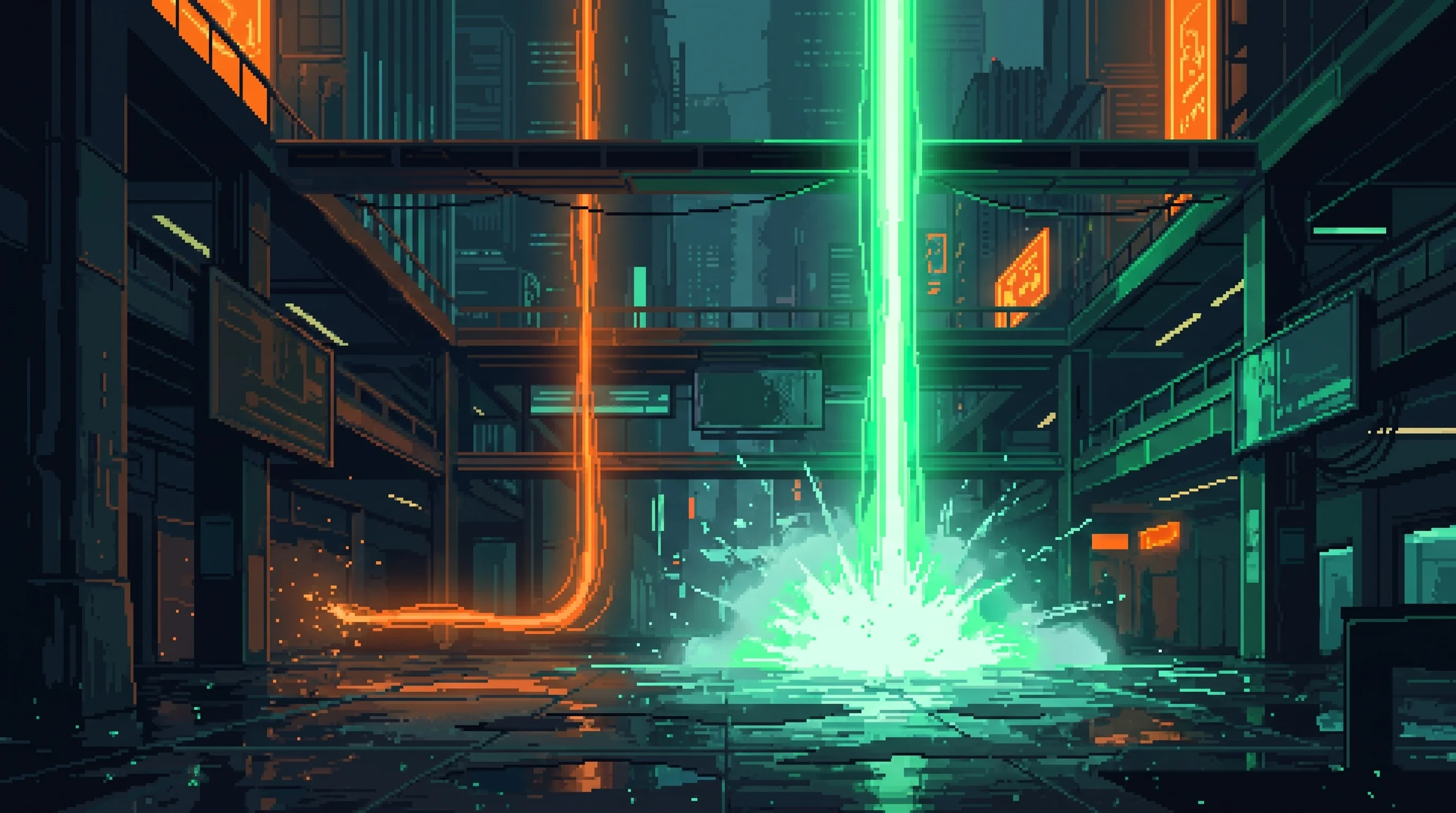
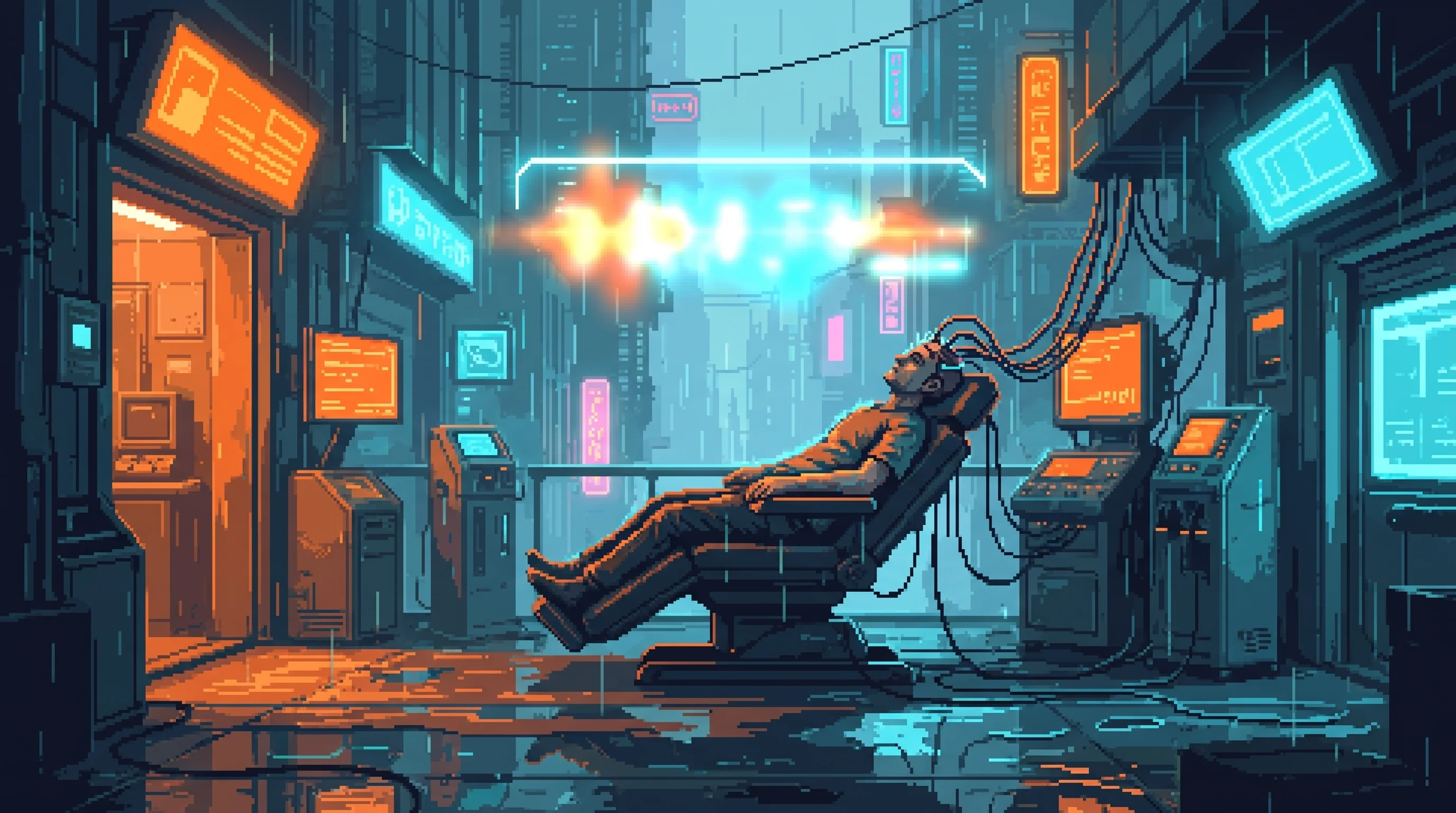
A tired figure standing before a glowing terminal screen in harsh fluorescent light, a clock with hands spinning too fast overhead, gray exhaustion palette, checkout timer counting down from 3.7 seconds

Every system in the Sprawl was designed for augmented users. This is not conspiracy. It is optimization. Interface designers build for the modal user, and the modal user in 2184 processes information at augmented speed. Checkout terminals, transit networks, legal documents, medical intake forms, employment contracts, licensing agreements, grocery displays, entertainment menus โ€” each one calibrated for a mind that can parse faster, decide faster, and move on faster than biological cognition allows.

The Survival Tax

Adaptation: How the Dregs Survive It

adapted. Not through augmentation โ€” they cannot afford augmentation โ€” but through culture. runs at a different clock speed than the rest of the Sprawl, and that difference is deliberate.

Biological Rhythm Communication

Analog Interfaces

Human-Speed Governance

A Different Clock

The is the grand question โ€” what is intelligence for when yours is a commodity? The Thinking Tax is the daily experience of living under that question. The is philosophical. The Tax is the checkout terminal that will not wait for you to finish reading.

charges attention โ€” 847,000 stimuli per day, each requiring 0.3 seconds of unconscious assessment. The Thinking Tax charges processing speed โ€” every interface demanding decisions faster than biology allows. Both invisible. Both cumulative. Both paid disproportionately by those who can least afford it.

Basic-tier sensory modifications โ€” narrower peripheral vision, emotional dampening, reduced processing allocation โ€” compound the Thinking Tax. The licensing system does not just limit what you can think. It slows down the thinking you are still permitted to do.

Design as Class Warfare

The Invisible Twenty-Three Percent

Executive-tier residents do not know what the Thinking Tax feels like. Their interfaces adapt to their processing speed. Their systems wait for them. Their world is calibrated for their cognition. The 23% gap is invisible from above โ€” you cannot see a tax that someone else is paying. Ask a corporate resident about the Thinking Tax and they will look at you blankly. Ask a resident and they will look at you like you asked whether gravity exists.

If the world was designed for minds faster than yours, are you living in a society โ€” or navigating an obstacle course that forgot you exist?

"The Thinking Tax is the Cognitive Ceiling's most intimate expression โ€” not the grand philosophical question of what intelligence is for, but the daily, grinding, personal experience of being slower in a fast world. The checkout terminal does not care about your existential crisis. It needs your answer in 3.7 seconds."

The Self-Reinforcing Loop

The exhaustion the tax produces degrades the cognitive capacity needed to analyze the tax itself. A person who has spent the day navigating interfaces too fast for their brain does not come home with the surplus energy to organize against the system. The most insidious feature of the Thinking Tax is that it consumes exactly the resource โ€” clear, unhurried thought โ€” that would be required to dismantle it.

consciousness license โ†’ /world/systems/consciousness-licensing

The is the grand question โ€” what is intelligence for when yours is a commodity? The Thinking Tax is the daily experience of living under that question. The is philosophical. The Tax is the checkout terminal that will not wait for you to finish reading. โ†’ /world/systems/the-cognitive-ceiling

charges attention โ€” 847,000 stimuli per day, each requiring 0.3 seconds of unconscious assessment. The Thinking Tax charges processing speed โ€” every interface demanding decisions faster than biology allows. Both invisible. Both cumulative. Both paid disproportionately by those who can least afford it. โ†’ /world/systems/the-distraction-tax

Basic-tier sensory modifications โ€” narrower peripheral vision, emotional dampening, reduced processing allocation โ€” compound the Thinking Tax. The licensing system does not just limit what you can think. It slows down the thinking you are still permitted to do. โ†’ /world/systems/consciousness-licensing

's โ†’ /world/systems/the-cognitive-ceiling

The Sprawl's checkout terminals give you 3.7 seconds to decide on a loyalty program. The interface was designed by engineers running Executive-tier augmentation who tested it on other engineers running Executive-tier augmentation. At augmented processing speed, 3.7 seconds is generous. At biological speed, it is the time it takes to read the first three words of the offer before the screen advances to payment confirmation and the loyalty decision is made for you. This is called the Thinking Tax. It does not appear on any receipt, balance sheet, or policy brief. It is the cumulative cognitive overhead of navigating a civilization whose every interface, schedule, contract, and announcement was designed for minds faster than yours.

Basic-tier humans navigate these systems the way someone with impaired mobility navigates a world designed for runners. Possible. Exhausting. Requiring constant adaptation that nobody else notices. The 3.7-second checkout window is not malicious โ€” it is what happens when a system optimized for 0.4-second augmented decision-making adds a "generous" margin for slower users. The twelve-option transit announcement delivered in four seconds is not an attack. It is an interface built by an AI that has never experienced biological processing delay.

The tax compounds across a day. Each individual friction is small โ€” a moment of confusion at a kiosk, a missed transit option, a contract clause you did not have time to read. The accumulation is not small. By evening, a Basic-tier resident of has spent approximately 23% more cognitive energy than an Executive-tier resident performing the same basic daily tasks: buying food, commuting, understanding a notification, filing a form. The difference is not in the tasks. The difference is in the speed the tasks assume you can think.

The 23% is not a luxury tax. It is not the cost of accessing premium services or enhanced experiences. It is the cost of buying groceries. Of taking a train. Of understanding the terms under which your consciousness license operates. The Thinking Tax is levied on survival itself โ€” on the baseline activities every resident must perform regardless of tier. Twenty-three percent more effort to achieve the same minimum standard of daily function.

Social mobility requires surplus โ€” surplus time, surplus energy, surplus cognition โ€” to invest in advancement. The Thinking Tax eliminates the surplus before the day begins. The augmented competitor starts fresh, processes faster, finishes sooner, and compounds the advantage. Engineers at have proposed interface accessibility standards four times since 2179. Each proposal was evaluated using 's standard cost-benefit framework, which calculates productivity loss from slower interfaces against the tax revenue generated by Basic-tier licensing fees. The proposals failed cost-benefit every time. The framework was not wrong. It was optimizing for the metric it was given.

Nobody designed the Thinking Tax. Nobody profits from it directly. It emerged from ten thousand interface decisions made by augmented engineers solving augmented problems for augmented users, and the 40% of the Sprawl's population running Basic-tier hardware simply wasn't in the room. The result is not a policy. It is the architectural residue of a civilization that forgot some of its residents are biological โ€” the same way a building with no wheelchair ramps didn't choose to exclude anyone. It just never occurred to the architects that legs might not work.

Verbal communication moves slower in . Not because residents are less intelligent, but because the conversational rhythm recalibrated to biological rather than augmented processing speed somewhere around 2175 and never switched back. Sentences are shorter. Pauses are longer. Information arrives at the rate a human brain can absorb it without augmentation assistance.

's noodle shop does not have a digital menu. Not because she cannot afford one โ€” because menus designed for augmented parsing are functionally hostile to her clientele. A chalkboard with six items, readable at biological speed, is a political act disguised as a restaurant choice.

Viktor Kaine's informal governance works partly because his decisions arrive at human speed, through human faces, with human pauses. In a world where policy updates arrive as 40-page encrypted data bursts optimized for augmented parsing, talks to people. Slowly. And they understand him.

did not slow down. The rest of the Sprawl sped up. What looks like backwardness from the corporate towers is recalibration โ€” a community that refused to run its cognition at a speed designed for machines, and built its social infrastructure around the speed that human minds actually operate.

Nobody sat in a boardroom and decided to exhaust Basic-tier residents. The 3.7-second checkout window was an optimization decision. The twelve-option transit announcement was a UX improvement. The 8,400-word licensing agreement was legal compliance. Each decision was reasonable in isolation. Together, they constitute a built environment structurally hostile to unaugmented cognition โ€” not by intent, but by assumption. The most effective exclusion is the kind that looks like efficiency.

Adaptation as Refusal

' slower rhythm is not a concession to limitation. When puts up a chalkboard menu, when Viktor Kaine delivers a decision in spoken words at conversational pace, they are refusing the premise that augmented cognition speed is the speed at which society should operate. They are building a world calibrated for the minds that actually live in it.

The Dregs adapted: slower verbal communication, analog menus, human-speed governance
The 23% is not a luxury tax โ€” it's a survival tax

Connected To