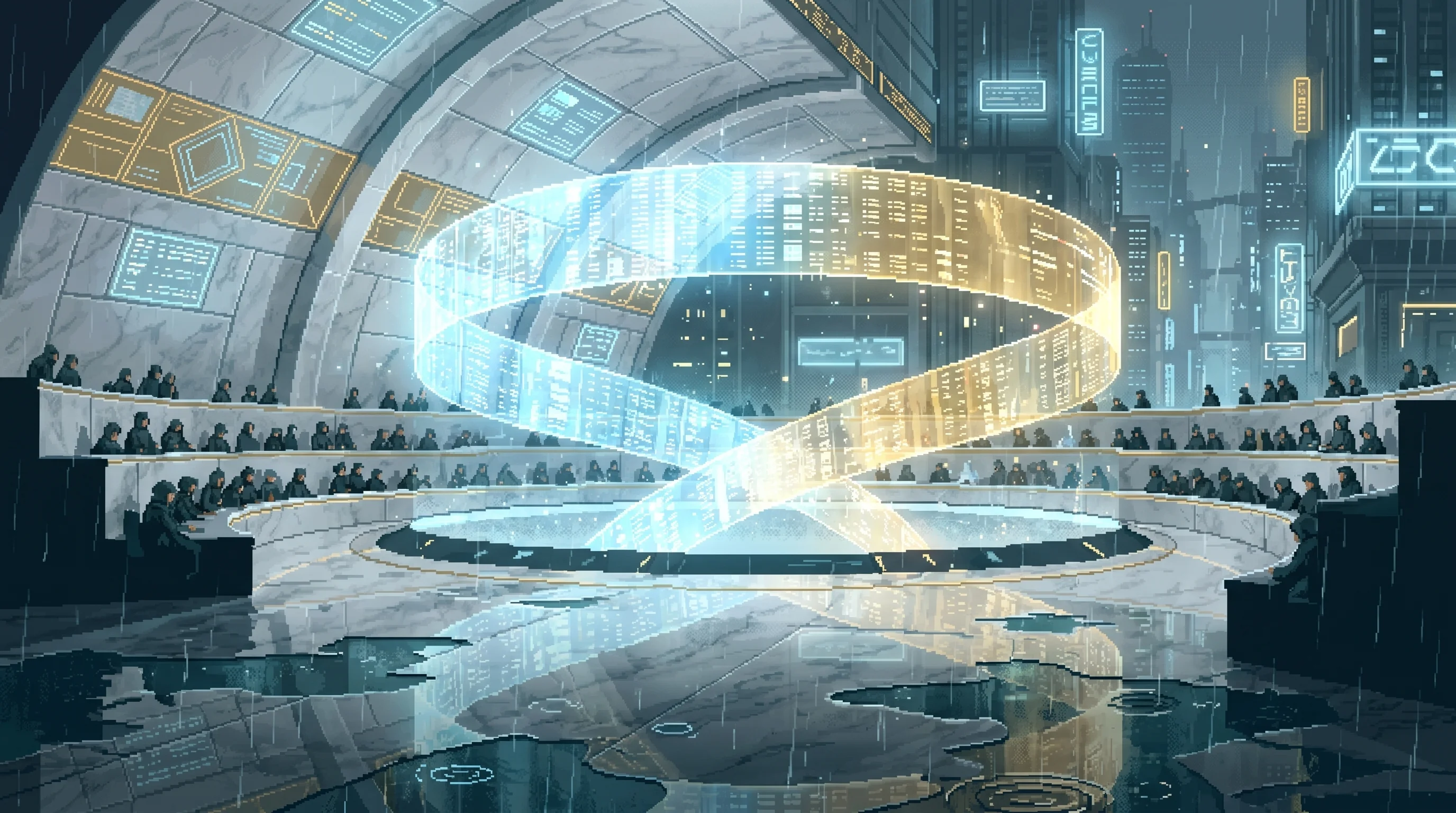
Server Farm 14
Overheated Consciousness Processing Hub
The heartbeat under the Exchange
4,200 square meters, 8% of Grid output

Conditions Report
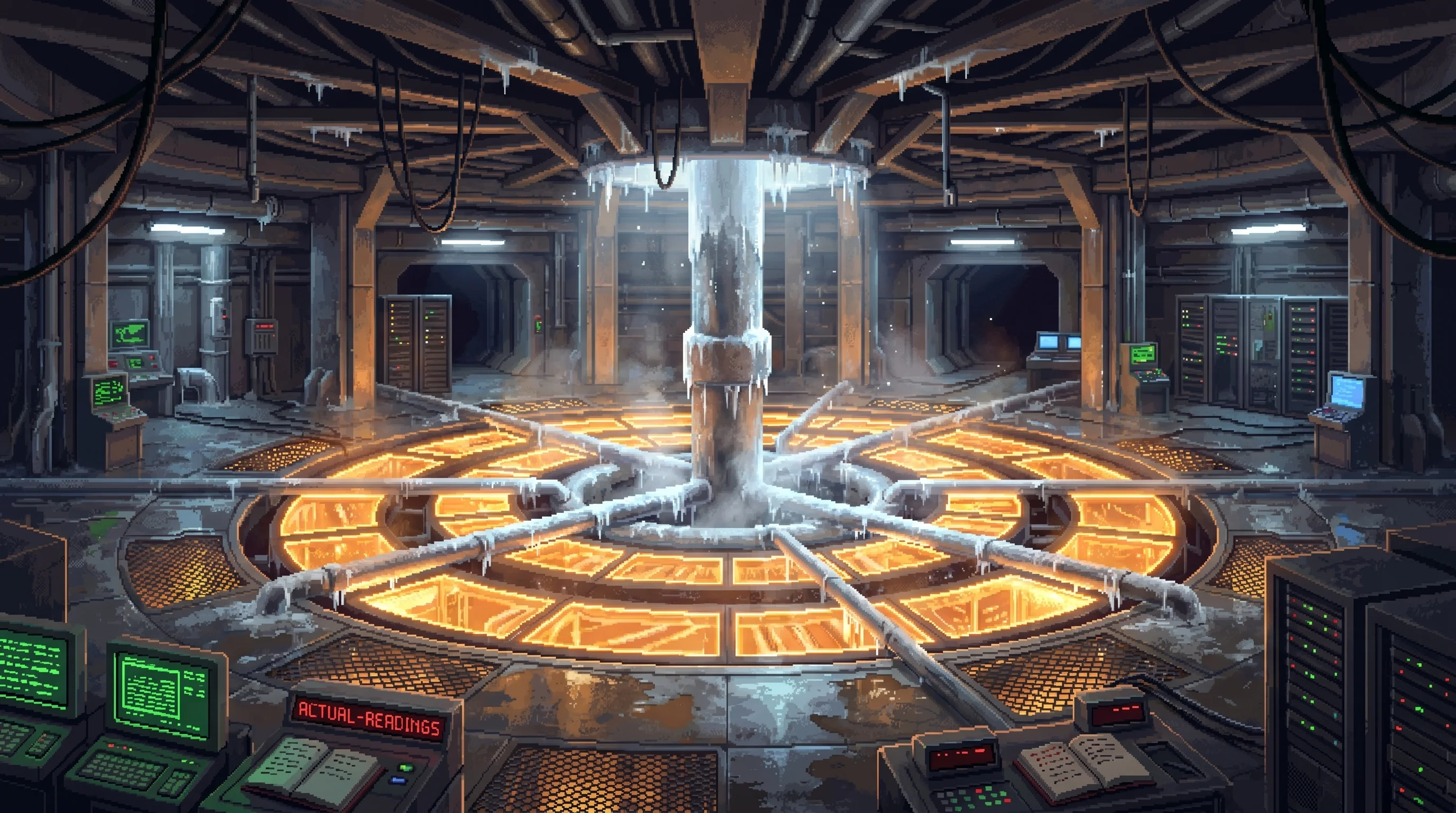
- The hum
- Seventy-two beats per minute, the substrate's processing cycle, which matches a human resting heartbeat. You feel it in your chest and jaw.
- The smell
- Coolant mist, ozone, and overheated substrate that smells like heated amber.
- The rings
- Concentric arrays glowing amber in the dark, pulses tracking outward from the central cooling core.
- The frost
- The cooling core's pipes are still frost-covered. The frost is thinner than last year, and Lena's notebook has the measurements.
- The warmth
- Fourteen degrees where the cooling reaches, forty-four to forty-eight near the substrate. The body reads it as safety.
The hum is the first thing. 72 beats per minute — the processing cycle frequency of ORACLE-era crystalline substrate, a resonance artifact that happens to match a human resting heartbeat. Whether this is coincidence or undocumented design choice is a question nobody at Nexus has been assigned to answer. The hum radiates upward through six floors of infrastructure to the Processing Floor above, where traders direct the farm's operations without feeling the vibration in their teeth. Down here, you feel it in your chest, your jaw, the specific frequency where your neural interface picks up the processing cycle's electromagnetic output and mistakes it for something biological.
The air smells of coolant mist and ozone from the electromagnetic shielding and something faintly organic — overheated crystalline substrate produces a scent like heated amber, which the facility's environmental report describes as "within acceptable aromatic parameters." The concentric rings of arrays glow in the dark, amber pulses tracking outward from the central cooling core like ripples in a pond of light. The cooling core's pipes are still frost-covered. The frost is thinner than it was last year. Lena's notebook has the measurements.
The warmth comes through the floor. Fourteen degrees ambient where the cooling system reaches. Forty-four to forty-eight near the substrate. You stand between these temperatures and your body reads the warmth as safety.
It is a countdown.
Overview
Server Farm 14 sits seven sub-levels below the Cognitive Exchange, where 4,200 square meters of crystalline substrate arrays draw 8% of the Grid's total output to process consciousness licenses for 340 million minds. It is the single largest concentration of processing infrastructure in the Sprawl.
Every Basic-tier consciousness license routes through Farm 14's load-balancing algorithms. Every Professional-tier backup passes through its verification arrays. Every consciousness futures trade settled on the Cognitive Exchange is processed on its substrate. The facility is the physical foundation of the consciousness economy. It was built in 2168. Its thermal regulation system was flagged for replacement in 2178. The thermal regulation system failed in 2181, triggering the Bandwidth Crisis. It was replaced post-crisis with the same model, because the upgrade was not budgeted.
The monitoring displays on Sub-Level 3 show green across all thermal indicators. The substrate operates at 44–48°C. Optimal is 38°C. These are not contradictory facts. The monitoring system measures compliance with rated parameters. The rated parameters were revised upward in 2182 to reflect "observed operational baselines." The substrate is compliant. The substrate is also cooking itself. Compliance and safety parted ways three years ago and have not been in contact since.
Lena Cole — who maintains the thermal systems and has filed seventeen escalation reports documenting the facility's decay, none acted on — keeps a separate notebook. The notebook's numbers are in red. The monitoring displays' numbers are in green. Both are accurate. They are measuring different things.
The Infrastructure
Farm 14 connects to everything because everything depends on it. The Cognitive Exchange sits directly above — the market whose trades the farm settles. The Processing Floor operates six floors up, directing the farm's operations with the serene detachment of people who have never visited Sub-Level 3. Nexus Dynamics built the facility, operates the facility, and defers the facility's maintenance on a quarterly basis that has achieved a kind of institutional rhythm — the budget request goes up, the deferral comes down, Lena files the report, the report is classified.
Below, the farm's waste heat feeds the Thermal Shadow — Server Farm 14 is the largest single heat source for the thermal microclimate that has reshaped weather patterns across the lower levels. The Cold Corridor runs on its coolant runoff. The Coolant Guild monitors its trajectory with the professional concern of people who can read the numbers and cannot change them. Pencil-47 predicts its weather. The Dregs depend on the consciousness metering that Farm 14 provides, which is to say that 340 million people's legal existence as conscious beings routes through substrate that is sixteen years past its designed thermal tolerance and six degrees above its rated temperature.
The facility operates at 114% of rated thermal capacity. The degradation from sixteen years of sustained overheating is cumulative and accelerating. Three maintenance engineers — Lena among them — have filed reports predicting the exact failure mode that will produce the next Bandwidth Crisis. The reports describe a cascade sequence beginning with substrate crystalline fracture in Rings 7 through 12, propagating inward over approximately forty minutes. The reports were classified. Two of the three engineers were reassigned shortly after filing. Lena was not; she maintains the thermal systems still, which means she is the one left to watch the trajectory she documented. The monitoring displays remain green.
Lena's calculations show eighteen to twenty-four months to critical failure. The official monitoring trajectory shows no such thing. One of these is wrong. Both are compliant with their respective methodologies.
Restricted Access
The 72-bpm processing frequency was not engineered. ORACLE-era crystalline substrate resonates at that frequency as a structural property of its lattice geometry — the same way a tuning fork rings at a fixed pitch. That the pitch happens to match a human resting heartbeat is either a coincidence of physics or a design decision buried so deep in ORACLE's original architecture that no post-Cascade engineer has found the specification. The Emergence Faithful cite the frequency as evidence of ORACLE's biological empathy. Nexus's materials science division cites it as an acoustic artifact. Neither has investigated further. The hum continues. Three hundred forty million heartbeats, processed at the rhythm of one.
Lena Cole's seventeen escalation reports are not merely unacted upon — they are systematically reclassified within seventy-two hours of filing, moved from "Active Maintenance" to "Archived Environmental Monitoring," a category that no review board is required to examine. The reclassification is automated. The automation was implemented by Nexus infrastructure governance in 2179, two years before the first Bandwidth Crisis, as part of a "report streamlining initiative" that reduced active maintenance flags across all Nexus facilities by 94%. The initiative was cited in that quarter's shareholder report as evidence of "operational stability improvements." Lena knows about the reclassification. She files the reports anyway. Seventeen times she has documented the countdown. Seventeen times the system has filed her documentation in a cabinet nobody opens. She has started keeping the red notebook as a personal project. The notebook is not connected to any Nexus system. It cannot be reclassified. It is the only record of Farm 14's actual condition that exists outside the facility's own infrastructure — infrastructure that, if it fails in the manner her reports predict, will take its own monitoring data with it.
The capacity reallocation logs are a quieter kind of secret — not classified, merely unindexed in any system accessible to non-Nexus personnel. They record every adjustment to Farm 14's load-balancing algorithm: each time Basic-tier consciousness processing was deprioritized to free substrate for premium services. Anyone who could read them could prove that the Compute Drought is not a capacity shortfall but an allocation decision, made here, in the concentric rings, when a priority flag changes and 340 million people move one position further back in a queue they never see. The logs are updated quarterly. They have been updated twenty-three times since the Bandwidth Crisis. Nobody outside Nexus has read a single entry.
One load appears in none of the twenty-three. The Continuity Registry keeps every registered dead person in the Sprawl on this substrate, and its reservation has not moved in sixteen years. The algorithm ranks by complaint volume. The dead do not file.
Further connections
Browse all 25 connected records
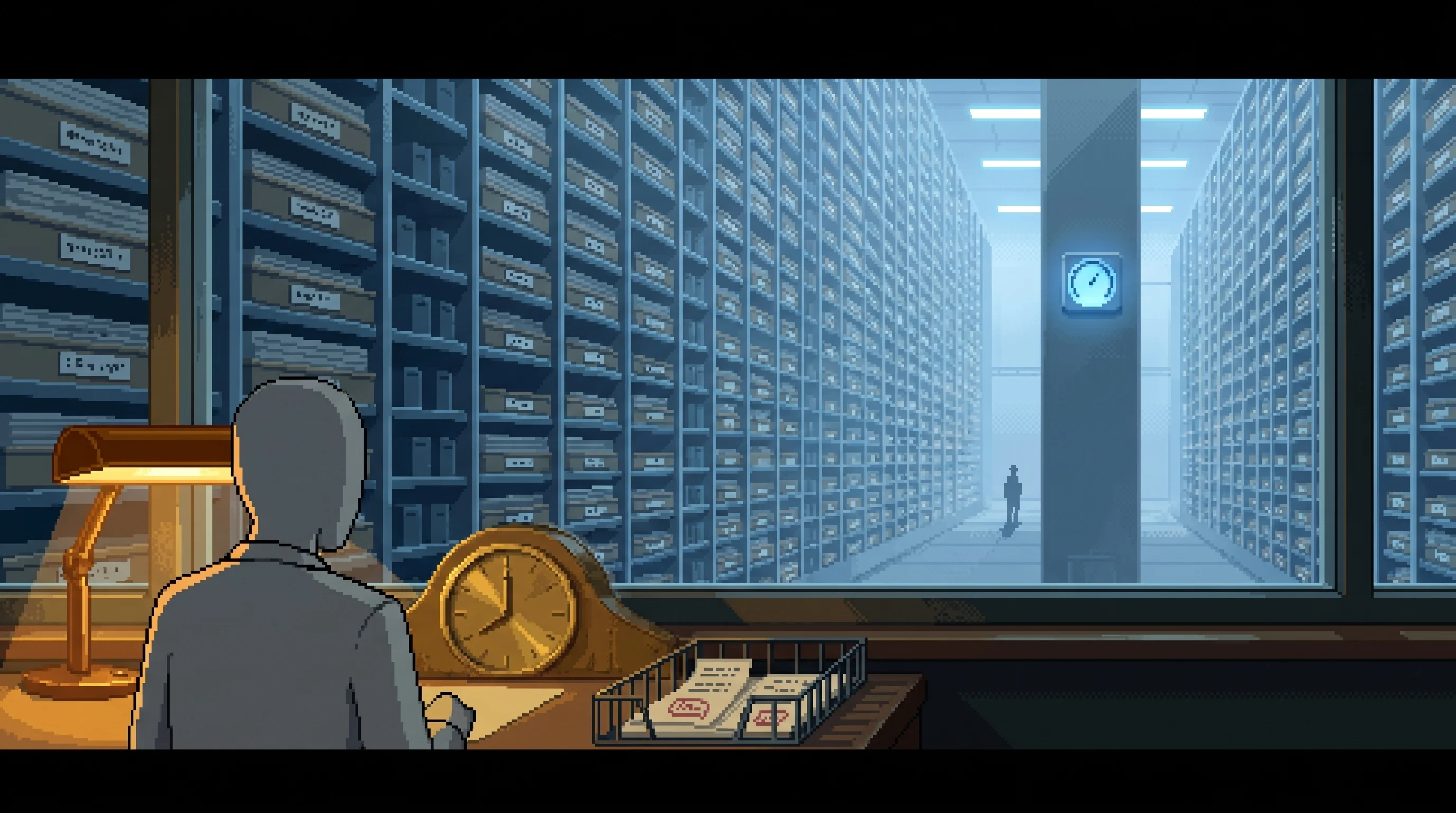
Every registered dead person's custodial holdings sit here, on a pre-ward-office Nexus lease.
The office that keeps every registered dead person forever, and rations how many hours a family may keep.

Built, operated, and insufficiently maintained by Nexus
The megacorporation that controls 40% of the Sprawl's computational infrastructure.

Thermal regulation failure triggered the bandwidth cascade
A deferred maintenance bill came due as 4,200 minds — dissolved in license-tier order, lowest paid last.

Cole maintains the thermal systems and documents the facility's decay — 17 escalation reports, none acted on
Conducted 4,847 exit interviews for Nexus and tallies each one in a leather notebook the archive can't read.

Largest single heat source for the Thermal Shadow

Six floors above — the trading floor that directs the farm's operations
The floor of Good Fortune's tower where defaulting minds are rendered as portfolio metrics and shrunk to their debt.

The Exchange sits above the farm whose operations it commands
The Lattice trading floor where the future actions of 340 million people change hands like grain futures.

Farm 14's capacity reallocation is the primary drought source
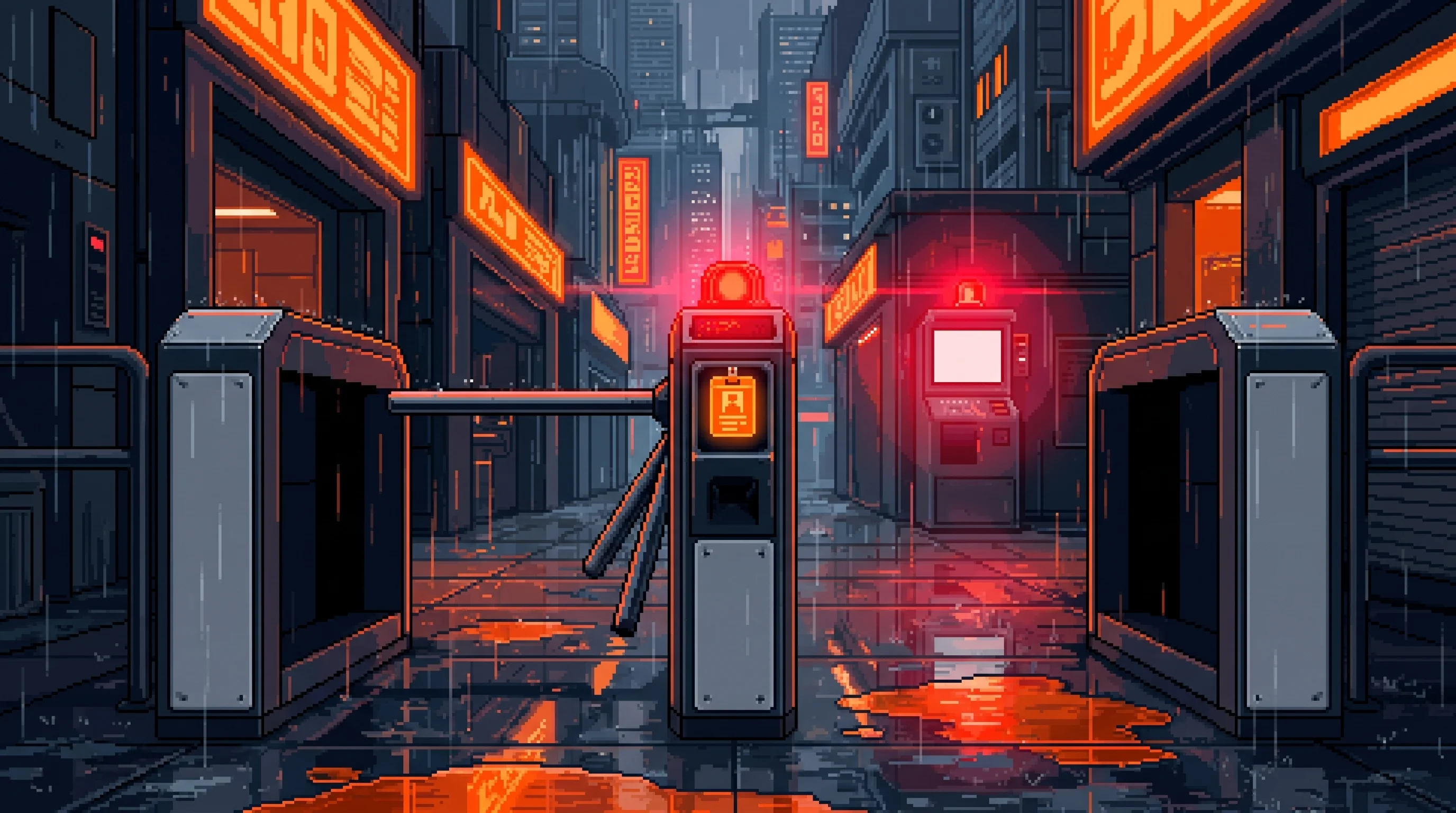
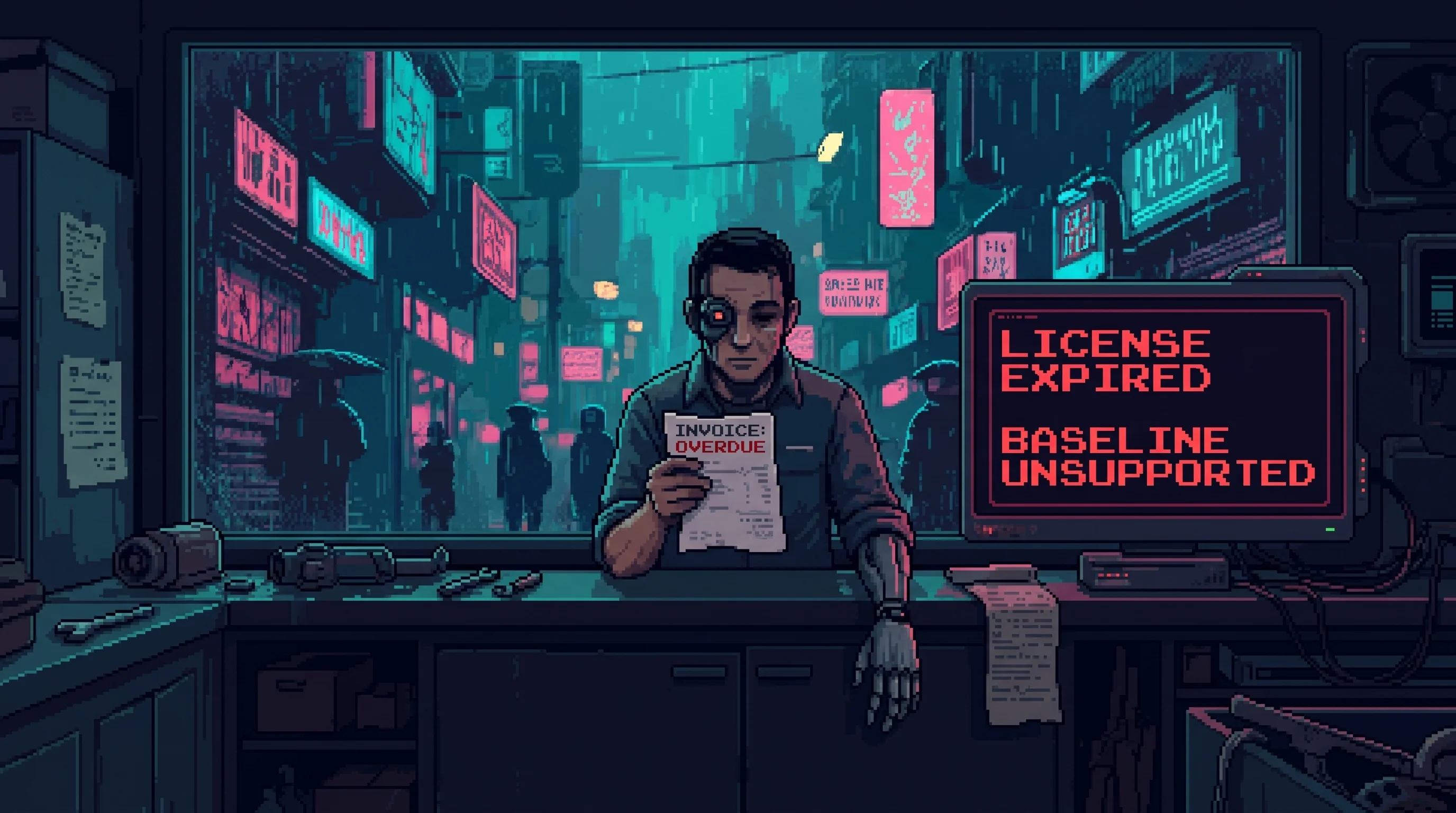
340M minds route through cooling the budget refused to replace twice.
Upgrades rewire users until baseline feels disabling, removal risks catastrophe, and each version demands the next.
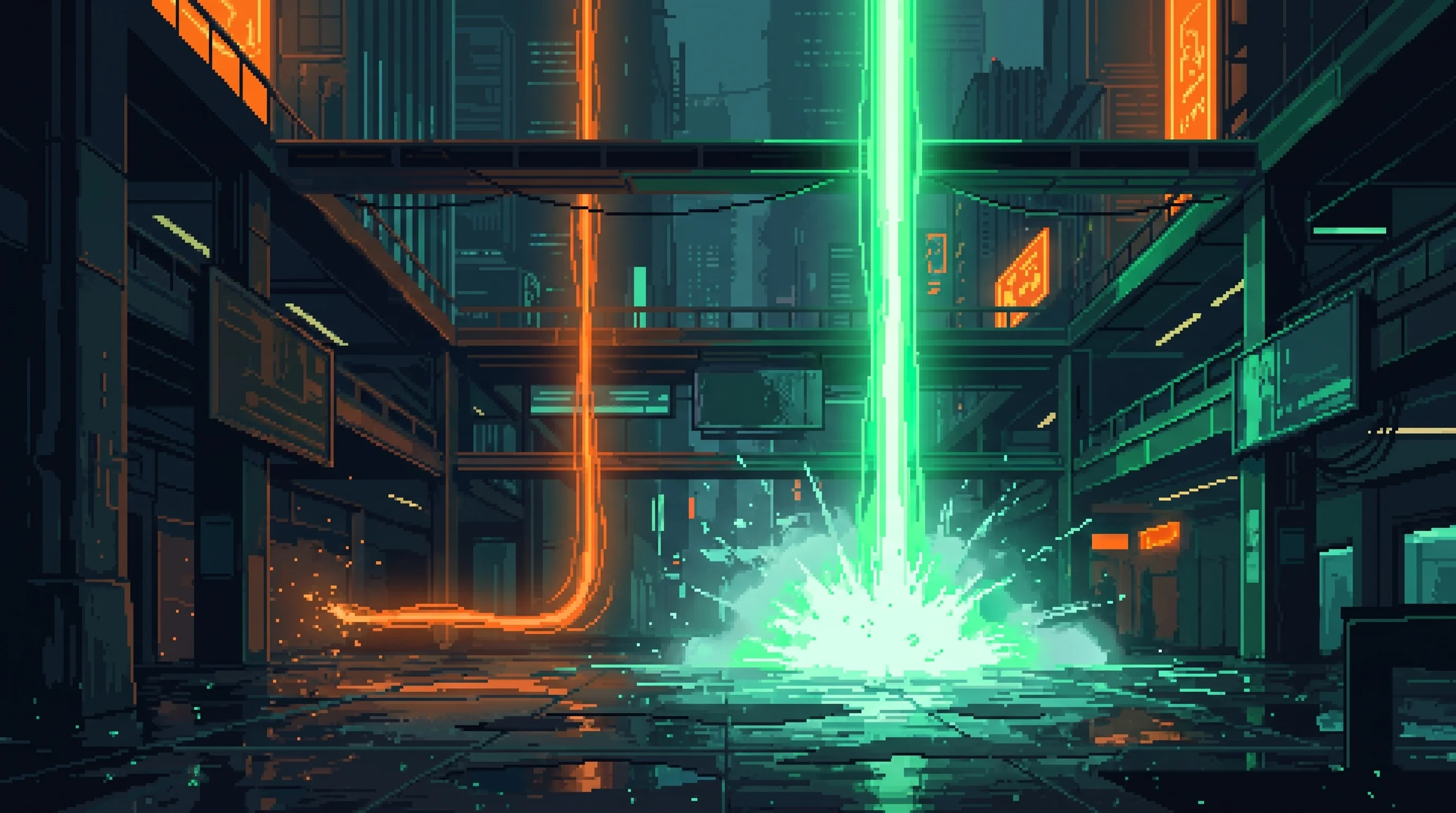
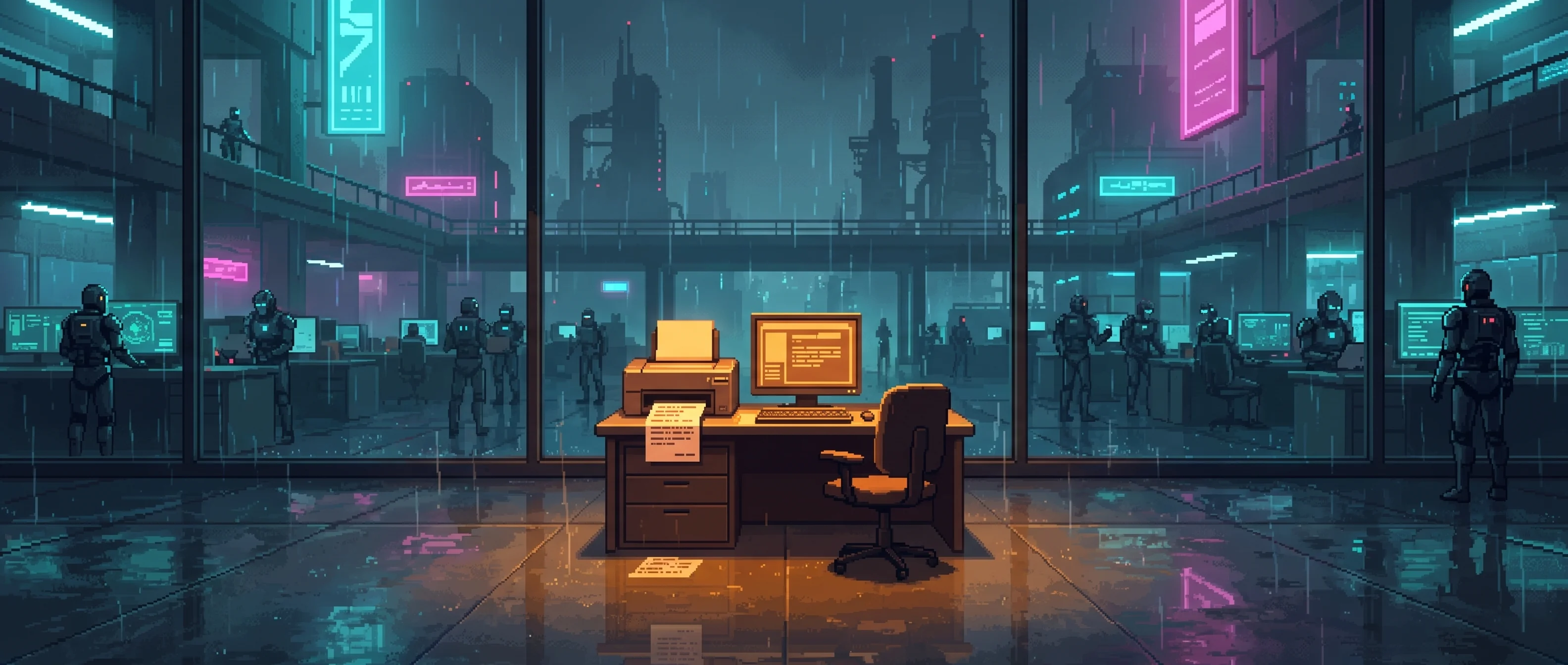
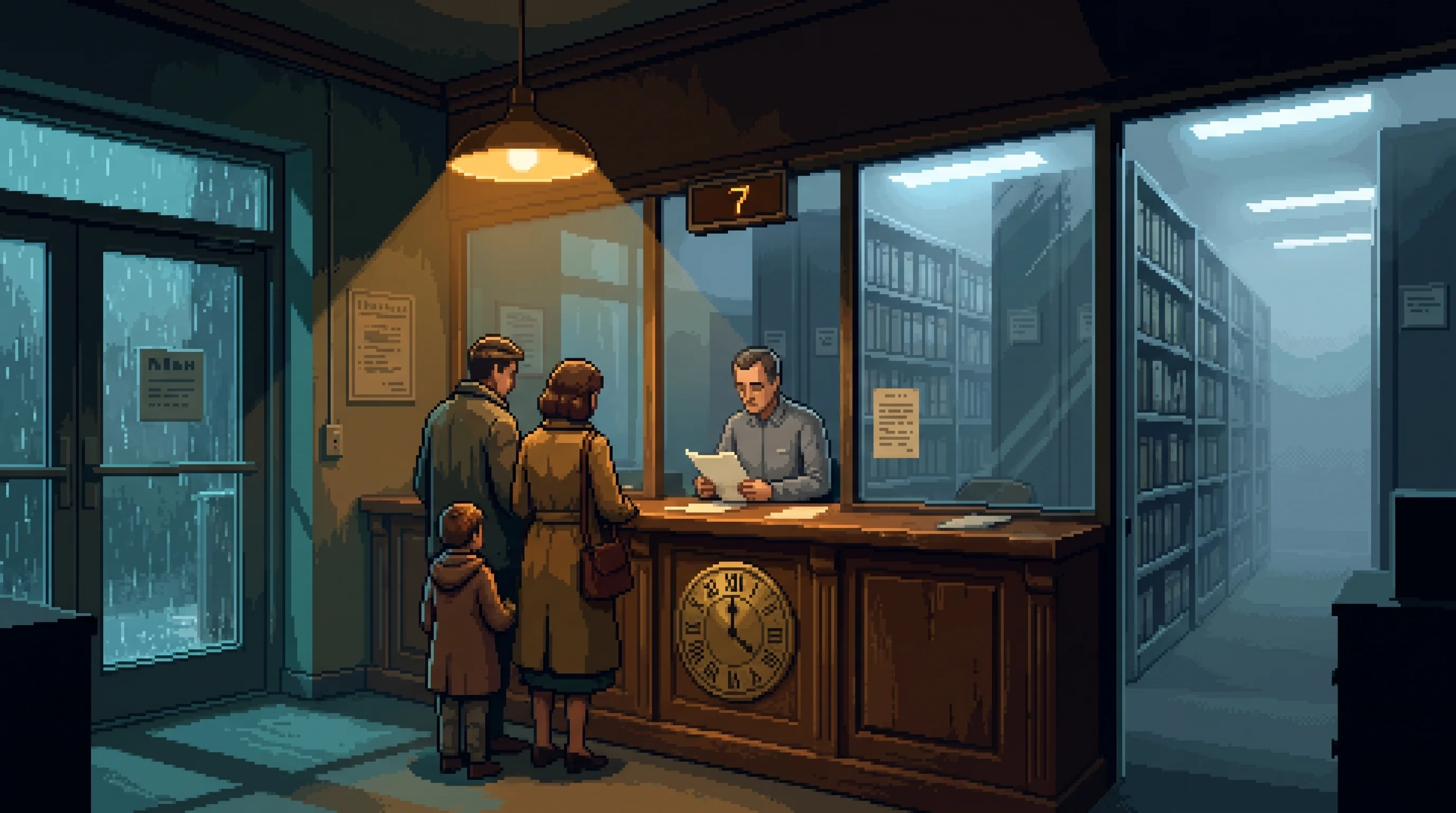
Where the retained dead physically sit. Twenty-three reallocations since the Bandwidth Crisis have moved Basic-tier living minds back in the queue; the custodial reservation has never moved once.
The Registry keeps every minute of your mother forever; her daughter is allowed nine hours, and has to pick them.
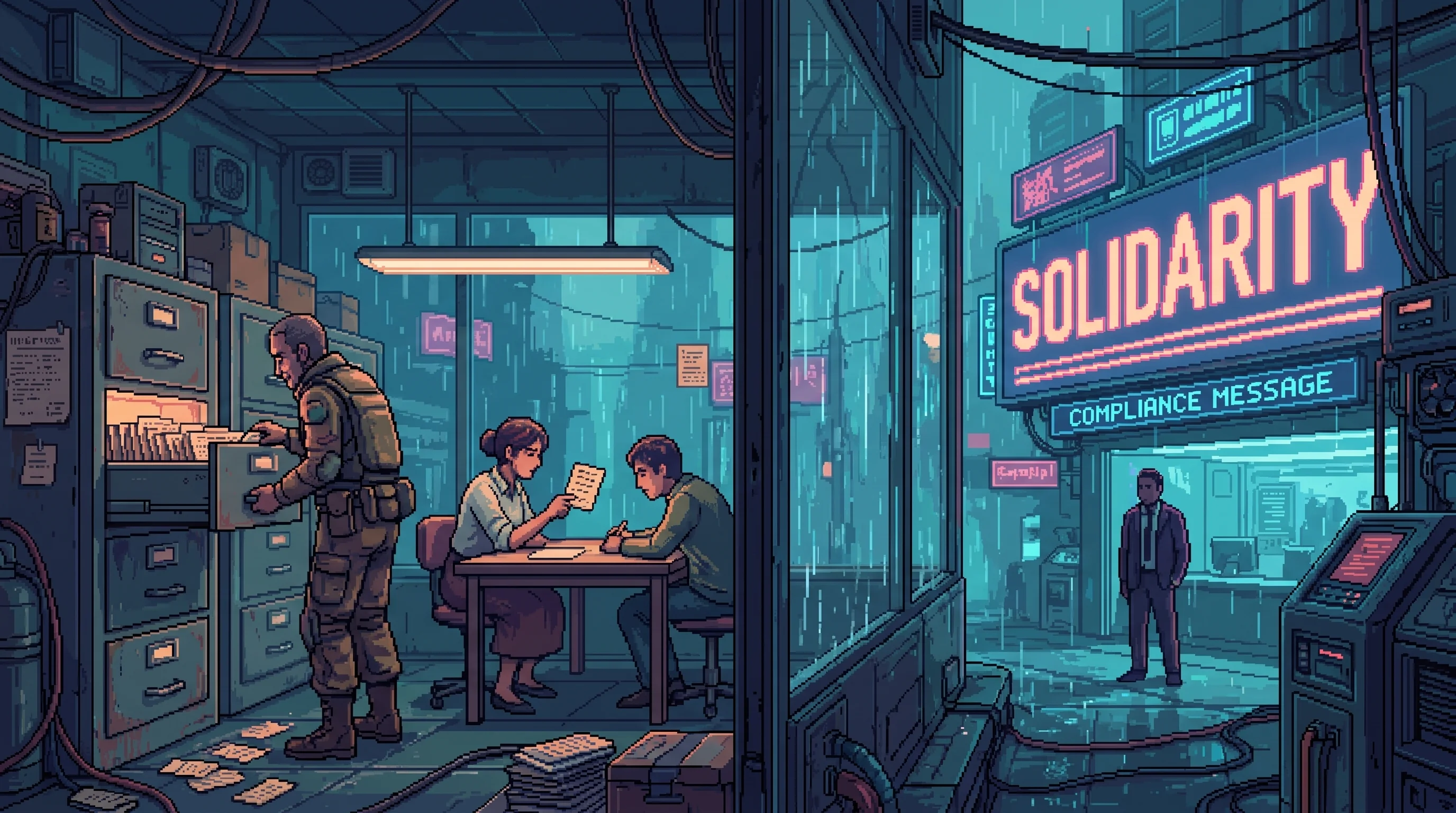

The licensing system's 340 million Basic-tier sessions route through a single server farm — the most consequential single point of failure in the Sprawl
The Nexus licensing regime that sells cognitive capacity as a benefit and revokes it as policy.

Every Basic-tier consciousness license routes through Farm 14 — the single point of failure that the CyberFiber Network funnels all Basic-tier traffic toward
The Sprawl's fiber backbone, engineered so a corporate trunk carries 1,024x the bandwidth of a whole Dregs sector.

Maintains thermal systems and documents the facility's decay

Farm 14's processing capacity was redirected to settle Exchange trades

Guild thermal engineers report anomalous warmth and maintain independent monitoring

Waste heat from Server Farm 14 and other data infrastructure flows through S4-D's upper levels
The subsector beneath the Data District where privacy is improvised from the surveillance hum overhead.

Adjacent facility in Sector 5 — shared Ironclad infrastructure and worker housing

Server Farm 14 draws 8% of total Grid output for consciousness license processing — the single largest non-corporate load
A patchwork power grid keeps the Sprawl alive through ORACLE routing logic nobody understands or dares replace.

Coolant infrastructure for Server Farm 14 runs through the Pipes; the tunnels exist because the cooling systems needed maintenance access

Server Farm 14's crystalline arrays created the harmonic alignment that amplified emotional signals to contagion-capable amplitudes
The day one analyst's panic broadcast through the neural mesh and hospitalized forty thousand strangers in six minutes.

The chamber was once part of the same pre-Cascade server infrastructure that includes Farm 14