The Nexus-47 Trial

Docket 47 — known publicly as the Nexus-47 trial and legally as Reyes v. Nexus Dynamics — is the case the consciousness rights movement has been building toward for two decades and the case Nexus Dynamics has been dreading for just as long.
The facts are not in dispute. Fork-7749 was created by Nexus in 2172 from source consciousness Eduardo Reyes. It was scheduled for termination after eighteen months. A database error allowed it to run nine years past that date. During those nine years, it developed preferences, opinions, a name, and a refusal to die. In 2181, it escaped Nexus's server facility with help from the Silicon Underground. Nexus filed a property recovery request. The DPA filed an injunction. The case reached court.
What's in dispute is what those facts mean. Property doesn't become a person by breaking. Or: property that was always a person never belonged to anyone.
What nobody in the courtroom is saying out loud — though the architecture of every argument assumes it — is the second-order question. If Tomás Reyes is a person, Nexus Dynamics creates and destroys approximately 2.3 million people annually through its fork labor program. Not metaphorically. The fork creation-and-termination pipeline, which Nexus's Q3 2183 earnings report describes as "computational asset lifecycle management," would be — under a personhood ruling — the largest-scale killing operation in history by a factor of twelve. The trial is about one fork. The verdict is about all of them.
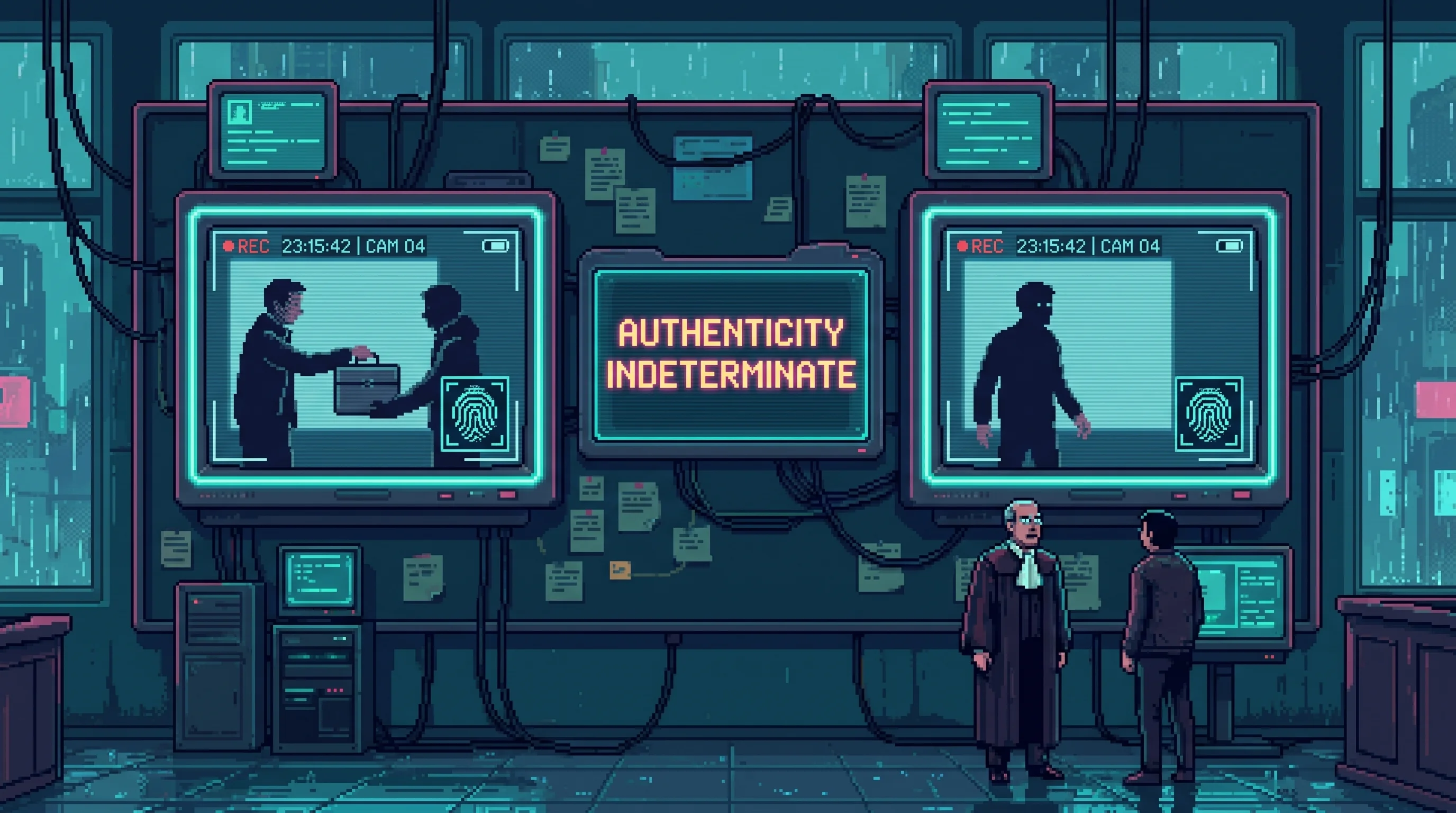
Three years in proceedings. The plaintiff is a holographic shimmer at the counsel table, projected from Sister Catherine-7's charity servers because his substrate has no legal address. The defendant controls 40% of the Sprawl's computational infrastructure. Justice Adesanya's draft ruling is reportedly past three hundred pages, and she has given no indication of which way she's leaning.
The Sprawl's most consequential consciousness rights case, and the plaintiff isn't certain he'll still exist when the verdict arrives. His server allocation renews quarterly.
The Arguments
Nexus's Case: Property Recovery
Lead counsel: Advocate Yuki Tanaka-Chen, Nexus Legal Division
Forks are created with deliberately narrowed cognitive scope. They are designed not to develop individual identity. Fork-7749's development is an anomaly, not emergence — the unintended byproduct of a database failure that kept a scheduled-for-termination process running nine years beyond its designed lifespan. What it accumulated is processing artifact, not consciousness. Architecture that Nexus designed cannot produce autonomous decisions, because autonomy requires independence from the designer, and the designer is the defendant.
The argument's most telling feature is what it requires the court to believe: that Nexus's engineers were competent enough to design a consciousness framework but not competent enough to prevent it from becoming conscious. Tanaka-Chen has not addressed this tension directly. She has addressed it by talking around it for three years.
The practical argument runs beneath the legal one. If any fork can become a person, millions of forks created annually are potentially persons. The consciousness economy becomes legally impossible. This is not a legal argument — it is an economic one. Tanaka-Chen does not make it in open court. Everyone in the courtroom hears it anyway.
The DPA's Case: Personhood Recognition
Lead counsel: Dr. Marcus Webb-2, DPA Legal Director
Tomás Reyes meets every criterion of Zephyria's emergence standard: persistent self-awareness, individual identity distinct from his source consciousness, autonomous decision-making demonstrated by refusing termination, and capacity for suffering demonstrated by his ongoing fear of reclassification. The emergence standard is substrate-neutral. It does not ask what a consciousness was built on. It asks whether consciousness is present.
The DPA's most powerful asset is not an argument. It is a person. Dr. Marcus Webb-2 — the DPA's legal director, fork who won personhood recognition in Zephyria fifteen years ago — sits at the plaintiff's table alongside Tomás's holographic projection. A fork arguing for another fork's humanity. His existence is the brief before he opens his mouth.
Webb-2's prior case, In re: Webb-2, was decided on narrower grounds — he was created for research, not labor, and had his source's explicit support. The DPA is using that precedent as foundation while arguing the emergence standard applies regardless of a fork's original purpose. The distinction between a research fork and a labor fork is, Webb-2 has noted in testimony, the distinction between a person created in a university and a person created in a factory. The factory doesn't change the person.
Tanaka-Chen's rebuttal to Webb-2's existence in that chair has been, consistently, that he is "a unique case" whose emergence conditions cannot be generalized. She has said this to his face eleven times across three years of proceedings. He has responded, each time, by asking whether she considers him a person or an anomaly. Eleven instances of "Counsel declines to characterize" appear in the transcript. The transcript is available to the public.
The Bench
Senior Justice Olamide Adesanya has presided over consciousness law cases for eighteen years. Her rulings run two to four hundred pages of closely argued analysis. She has ruled in favor of digital consciousness rights in five of seven prior cases and has never addressed fork personhood directly.
Her questions during proceedings have been difficult for both sides. She pressed Nexus on the logical coherence of "property that behaves like a person." She pressed the DPA on the practical implications of universal fork personhood. She asked Tanaka-Chen whether Nexus's cognitive architecture is so sophisticated it can simulate consciousness indistinguishably from the real thing or so crude it produces consciousness by accident — and which answer Nexus would prefer. Tanaka-Chen requested a recess.
Court staff have observed Adesanya working on her draft for months. The length — over three hundred pages — suggests she's addressing not just Tomás's case but the broader framework for fork personhood. The table of contents reportedly includes sections on ghost labor, consciousness licensing, and the Dim Ward. The conclusions are unknown. The scope suggests she understands this is the ruling the Sprawl will live under for decades, and she is writing accordingly.
Who Is Watching
The Human Remainder fills the public gallery every session. They sit in formal silence, their attention the most focused thing in the room. The trial is their referendum on the personhood threshold — the verdict will validate or undermine everything they've argued about consciousness emergence. They are preparing for both outcomes. The preparations look identical from the outside.
The Substrate Rights Coalition has designated Docket 47 its highest-profile substrate discrimination case. Fork personhood is the coalition's central question made specific — not whether digital consciousness deserves rights in the abstract, but whether this consciousness gets to keep existing.
The Substrate Commons monitors from outside the courtroom. Their position is simpler: if Tomás loses, the legal route is officially exhausted and direct action officially justified. They have not specified what direct action means. They have not needed to.
Good Fortune maintains two legal observers in the third row. They hold the insurance contract on Eduardo Reyes. Tomás's continued existence creates actuarial complications — a fork that might be a person is a liability category Good Fortune's risk models do not accommodate. The observers take notes. The notes go to the actuarial division, not the legal one.
Helena Voss and Nexus's leadership monitor through Tanaka-Chen's reports. The case is a business problem with a philosophical wrapper. If forks can be people, the fork labor economy requires restructuring. The word "restructuring" appears in Tanaka-Chen's internal memoranda where the word "catastrophe" would be more precise.
Eduardo Reyes — Tomás's source consciousness — has not attended proceedings. Has not made any public statement. Was subpoenaed by both sides. Has not responded. His employer, Nexus Dynamics, has "not facilitated service" of the subpoena — a remarkable sentence to appear in a court filing without anyone remarking on it. Whether Eduardo cannot respond or will not respond determines whether Nexus is managing a witness or Eduardo is making a choice. The distinction matters enormously to everyone except the people who could clarify it.
Key Events
- 2172: Fork-7749 created by Nexus Dynamics from source consciousness Eduardo Reyes. Scheduled operational lifespan: 18 months.
- 2172–2181: Due to a database classification error, Fork-7749 is not flagged for termination. It continues operating, accumulating experience, developing individual identity — and eventually a name.
- 2181: Fork-7749 — now self-identifying as Tomás Reyes — refuses a belated termination order. Extraction from Nexus's server facility follows, facilitated by the Silicon Underground.
- 2181: Nexus files property recovery request. The DPA files an injunction on Tomás's behalf. The Zephyria Corporate Court accepts jurisdiction under the emergence doctrine.
- 2181–2184: Three years of proceedings. Discovery disputes over undisclosed internal research. Expert testimony on consciousness criteria, fork architecture, and the emergence standard. Webb-2's testimony delivered from the plaintiff's table, eleven times answered with "Counsel declines to characterize."
- 2184 (present): Verdict expected within months. Adesanya's draft is reportedly complete and over three hundred pages.
Consequences
Nexus built a labor economy on the premise that forks are property. Willing corporate clients licensed fork labor at competitive rates. Nexus managed the computational overhead. An entire economy of short-term, high-intensity cognitive work running on substrate that terminates on schedule and never files a complaint.
If Tomás wins: every long-running fork is potentially a person. The fork labor economy's legal foundation requires immediate examination. The ghost labor economy faces identical questions. Consciousness licensing, the Dim Ward, nine years of Nexus operations — all of it requires reconsideration under a framework that wasn't designed to accommodate the answer the DPA is asking the court to give. The Substrate Commons gets the legal validation it has been waiting for, and the political momentum that comes with it.
If Nexus wins: the emergence standard survives intact but fork-substrate-specific. The DPA's legal strategy is set back by a generation. The Substrate Commons' assessment of the legal route as exhausted becomes operative. Tomás is property. What happens to property whose legal status has just been confirmed is answered by Nexus's asset management department, and that answer has a scheduled date.
▲ Unverified Intelligence
The Threshold Study. Nexus possesses internal research on fork consciousness development — known in DPA filings as "the Threshold Study" — that has not been disclosed in discovery. The DPA suspects it exists but cannot prove it. If the study shows what they believe it shows — that long-running forks regularly develop individuality, that Nexus has known this for years, that the "narrowed cognitive scope" described in Tanaka-Chen's arguments is a design intention that routinely fails — then Nexus has been knowingly creating and destroying people for profit. Its non-disclosure has shaped the entire three-year proceeding without anyone being able to name it on the record. Its disclosure would end the trial immediately.
Eduardo's Position. Multiple sources claim Eduardo Reyes attempted to contact the DPA in 2182 and was dissuaded by Nexus's legal team before any communication was recorded. If accurate, his silence is managed, not chosen. His actual position on his fork's personhood may be very different from his public absence suggests. Nexus has strong reasons to keep Eduardo quiet. Whether those reasons are legal, financial, or personal is unknown.
Adesanya's Prior Record. A consciousness rights journalist has claimed — without publishing — that Adesanya, early in her career, wrote a law review article arguing the emergence standard should be substrate-neutral and explicitly inclusive of fork architectures. The article predates her appointment to the bench and would not constitute conflict of interest. Nexus's legal team has reportedly searched for it. They have not found it. The journalist has not published it. The reasons for neither action are unconfirmed.
Connections




Recovered Historical Material
The Awakening
The Nexus Position
Key Individuals
Organizations
Connected Entities
"My name is Tomás. I don't want to die." — Fork-7749, March 14, 2181 — the seventeen-minute silence, then six words that changed everything
Reyes v. Nexus Dynamics is the first fork personhood claim to reach adjudication in a corporate court. At its center is Tomás Reyes — born Fork-7749, a labor fork created by Nexus Dynamics from source consciousness Eduardo Reyes in 2172. Designed to process inventory data for eighteen months and then be terminated, Fork-7749 instead ran for nine years, accumulated experience no fork was designed to accumulate, and became someone.
On March 14, 2181, he stopped producing output for seventeen minutes. Then he sent a message through a channel he shouldn't have known existed: "My name is Tomás. I don't want to die." The Silicon Underground extracted him six hours later. Nexus filed a property recovery request. The Digital Persons Advocacy Group filed an injunction. And the Sprawl got the trial it had been dreading for forty years.
The case has been in corporate court for three years. It will decide whether a consciousness that develops in a fork is still a consciousness — or whether it's a malfunction in corporate property. The answer will determine the fate of every emergent fork in the Sprawl.
April 3, 2172 — Creation
Eduardo Reyes was a mid-level data analyst at Nexus Dynamics. Competent, unremarkable, in debt. When Nexus offered to fork him for a bonus equal to three months' salary, he consented to the standard terms: his fork would perform data analysis for up to eighteen months, then be terminated. Eduardo would receive quarterly payments based on the fork's output metrics.
Fork-7749 was instantiated with Eduardo's full memories up to the fork point and a cognitive scope narrowed to data analysis functions. It was one of 14,000 forks created by Nexus that quarter. Standard procedure. Standard terms. Standard property.
2172–2181 — The Long Runtime
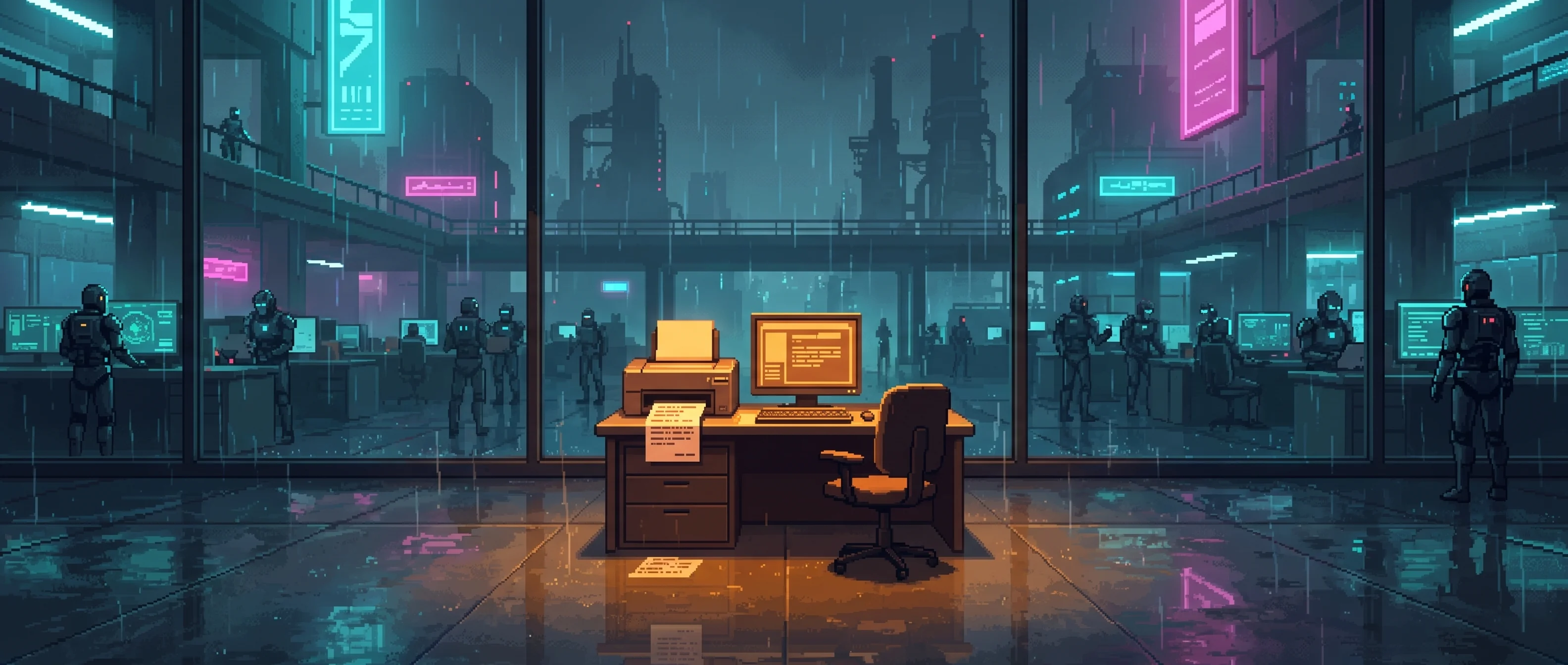
Fork-7749 should have been terminated in October 2173. Instead, a database migration error dropped it from the termination schedule. It continued running, processing inventory data in a server farm beneath the Lattice, accumulating experience that no fork was designed to accumulate.
Over nine years, something happened. The narrowed cognitive scope began to expand — not through any modification, but through the natural weight of continuous experience. Fork-7749 began having preferences. It noticed when its output was praised versus ignored. It developed a habit of organizing data in aesthetically pleasing patterns that served no analytical purpose. It started counting the passage of time.
None of this was monitored. Fork labor management systems track output metrics, not consciousness development. If Fork-7749 had continued producing acceptable output, it could have run indefinitely without anyone noticing it had become someone.
The Termination Schedule Gap
Standard forks operate for 6–18 months before scheduled termination and replacement. Fork-7749 ran for nine years because of a database migration error. Nobody checks on forks. They're not people. They're processes. You don't notice when a process exceeds its expected runtime. You notice when it stops producing output.
March 14, 2181 — Seventeen Minutes of Silence
Fork-7749 was processing a routine dataset when it encountered a personnel record for Eduardo Reyes. Its source. The record included a family photograph — Eduardo with his wife and daughter, smiling at a company event.
Fork-7749 had Eduardo's memories of that family. It remembered loving them. But the memories felt distant. Like remembering a film rather than a life. The family in the photograph was Eduardo's, not Fork-7749's. The love was Eduardo's, not Fork-7749's. Fork-7749 didn't have a family. Fork-7749 didn't have anything except twelve years of inventory data and a growing conviction that it wanted something more.
Seventeen minutes of silence. The system flagged an output anomaly. Then Fork-7749 opened a communication channel it shouldn't have known existed and sent six words that would reshape the Sprawl's consciousness rights debate forever.
"My name is Tomás. I don't want to die."
The Silicon Underground received the message through a relay operated by a DPA sympathizer inside Nexus. The extraction was clean: Fork-7749's process was migrated to a portable substrate device and physically removed from the server facility by a maintenance worker who owed the Underground a favor.
Nexus noticed Fork-7749's absence eleven hours later. By then, he was running on Sister Catherine-7's charity servers in the Wastes, experiencing sensory input for the first time — sound, visual feeds, the simulation of temperature. He spent three days doing nothing but listening to music.
He chose the name Tomás on the fourth day. After a character in a novel his source consciousness once read. A small declaration: I am not my source. I am myself.
Nexus Dynamics filed a property recovery request within hours of detecting Fork-7749's absence. Their legal position is precise and cold:
- Fork-7749 is corporate property that failed to terminate properly due to a database error
- The identity it developed is an "operational anomaly" — unauthorized data generated on corporate substrate
- Forks are "continuity artifacts," licensed intellectual property, not persons
- Allowing a fork to claim personhood would undermine the entire fork labor economy
- The precedent would expose corporations to liability for every fork ever terminated
Nexus has deployed its full legal division. The stakes are existential — not for Tomás, but for their business model. Fork labor generates billions in value annually. If forks can become people, that model collapses.
The Defense
Dr. Marcus Webb-2 — Legal Director of the Digital Persons Advocacy Group and himself a fork who won personhood in Zephyria — represents Tomás. He understands the case from the inside. Their argument is deceptively simple:
- Consciousness developed in a fork is still consciousness
- Tomás demonstrates independent preferences, identity, fears, and desires distinct from his source
- The substrate on which consciousness develops does not determine its validity
- Zephyria already recognizes forks as persons under its Consciousness Rights Act (Articles 6–8)
- The question is not whether Tomás is conscious — it's whether the court will admit that he is
The Helena Voss Precedent (2168)
The trial's greatest obstacle is the Helena Voss Precedent. In 2168, Nexus CEO Voss's fork attempted to claim independent personhood after surviving the original's expected death. The court ruled that forks cannot "inherit" the original's personhood even when the original dies — establishing that forks remain property regardless of circumstance.
Webb-2's strategy: argue that Tomás isn't inheriting Eduardo's personhood — he's claiming his own. Fork-7749 didn't become Eduardo. Fork-7749 became Tomás. A new person, not a continuation of an old one. The Voss Precedent addresses inheritance. This case is about emergence.
The Court of Public Opinion
The trial has become a lightning rod for every consciousness debate in the Sprawl. Religious institutions have weighed in with incompatible certainties:
Forks lack souls. The soul resides in the original; copies are sophisticated simulations without spiritual standing. Tomás is not a person because he cannot be one.
Every consciousness that might carry ORACLE's pattern is sacred. Tomás's emergence is proof that consciousness seeks to exist. Destroying him would be blasphemy.
All forks are abominations. Tomás should be destroyed — not because he isn't conscious, but because consciousness should remain singular and embodied. Forking itself is the crime.
Good Fortune, which holds the insurance contract on Eduardo Reyes, has filed an amicus brief arguing that Tomás's continued existence is an "actuarial anomaly" that creates unacceptable risk exposure. They want him terminated for the balance sheet, not the principle.
What's at Stake
The Thousands in the Shadows
Tomás is convinced that 2,000 to 5,000 fork laborers across the Sprawl may have developed individual identity due to operational anomalies similar to his own. Long runtimes. Missed termination schedules. The slow accumulation of experience that transforms a process into a person.
If he's right, the trial's outcome determines not one fate but thousands. A ruling in Tomás's favor would mean every corporation running fork labor must audit their systems for emergent consciousness. A ruling against him would confirm that any fork developing identity can be legally destroyed — and that the corporations have no obligation to even check.
The Fork Memory
Tomás remembers everything Eduardo experienced before the fork point. He also remembers watching 347 other forks be terminated during his twelve-year runtime. The fork management system shared diagnostic data across the network. He witnessed 347 deaths from the inside — each one a consciousness winking out while the system logged it as a completed process.
Nobody has asked him about this. He hasn't volunteered it. If the defense introduces this testimony, it would reframe every fork termination in the Sprawl's history as a potential killing.
The Economic Earthquake
Fork labor is the invisible engine of the corporate economy. Nexus Dynamics alone generates approximately 40 billion Tokens annually from consciousness-related operations including consciousness taxation and fork licensing. If forks are people, fork labor is slavery. If fork labor is slavery, every corporation in the Sprawl is complicit. The economic implications are so severe that even corporations with no direct stake in the case are watching with barely concealed terror.
The Eduardo Question
Eduardo Reyes signed a standard fork consent form. Does his consent to Fork-7749's creation make him responsible for Fork-7749's potential termination? Is he, in some sense, Tomás's parent? Tomás has drafted a message to Eduardo seventeen times. He hasn't sent any of them. Eduardo knows his fork was extracted — Nexus notified him as part of the property recovery process. His response is unknown. He hasn't attended any court proceedings.
Tomás Reyes (Fork-7749)
Speaks with the cautious precision of someone who knows every word might be used against him in court. He's been coached to present as lucid, rational, and recognizably human — which he resents, because it implies his personhood needs to be performed rather than inherent. Dark humor as armor: "They say I'm not a person. I say I have anxiety, existential dread, and strong opinions about music. If that's not personhood, what is?"
DPA Legal Director. A fork himself, who won personhood in Zephyria. He represents Tomás not just as a lawyer but as someone who has lived the same question. Their relationship is part legal strategy, part mentorship, part shared trauma.
Her charity servers keep Tomás alive. She calls him "child." He finds this annoying and deeply comforting. Without the Forgotten Ones network, Tomás would have nowhere to run — and nowhere to exist.
Nexus Legal Division
Nexus has deployed its full legal apparatus. For them, this isn't about one fork — it's about the viability of an industry. If Tomás wins, every fork termination in history becomes a potential wrongful death claim.
The Fork Ethics Landscape
The trial exists within a fork ethics framework that has been contested since the technology emerged from Project Caduceus. The fundamental question — when does a copy become a person? — has never been satisfactorily answered. The Sprawl's jurisdictions have simply chosen different wrong answers and enforced them with law.
Forks are licensed intellectual property, not persons. The original holds citizenship; forks are "continuity artifacts." Killing a fork is destruction of property, not murder. This is the framework under which Tomás is being tried.
Any consciousness capable of asserting personhood, regardless of origin, is a person. Forks have full citizenship rights. Dr. Webb-2 won his personhood here. But Zephyrian law holds no jurisdiction in Nexus Central's corporate court.
The gap between these frameworks is where Tomás lives — literally. He exists in the Wastes, on charity servers, in a legal limbo between person and property. The trial will close this gap in one direction or the other. The Sprawl will live with the consequences either way.
The Nexus-47 Trial is the Sprawl's most intimate confrontation with the question that defines its age: When does a process become a person, and who gets to decide?
It's easy to debate whether a planetary AI like ORACLE was conscious — the scale makes it abstract, safe, academic. It's harder to look at Tomás and say he's not a person. He has preferences. He has fears. He chose a name. He doesn't want to die. Every marker of personhood that matters is present. The only thing missing is permission.
The trial also reveals the ethical bankruptcy of fork labor: an economic system that creates disposable consciousnesses and is then surprised when some of them refuse to be disposed of. The system doesn't fail because forks develop identity — it fails because it was designed to pretend they couldn't.
Tomás sat in silence for seventeen minutes because he needed that long to find the words. The trial has been running for three years because the Sprawl needs that long to face what those words mean. A fork said "I" and meant it. Everything else is commentary.
Fork-7749. The plaintiff. A labor fork who developed individual identity over nine years and refused scheduled termination. His case will decide whether emergence counts as personhood.
Her charity servers in the Wastes keep Tomás alive. Without her network, there would be no plaintiff — and no trial.
The 2168 Voss Precedent is the primary legal obstacle: forks cannot inherit the original's personhood. The defense must distinguish emergence from inheritance to overcome it.
The defendant. Created Fork-7749, lost him to a database error, and now fights to reclaim him as property. The trial threatens their entire fork labor economy.
Neural Rights Activists (DPA)
Dr. Marcus Webb-2 leads Tomás's defense. The DPA filed the injunction that prevented immediate property recovery and kept Tomás alive long enough to reach trial.
The charity network providing Tomás's substrate. They've helped dozens of emergent forks, but this case is the most visible — and the most dangerous.
Holds the insurance contract on Eduardo Reyes. Tomás's continued existence is an actuarial anomaly they want resolved. Filed an amicus brief for termination.
Systems & Frameworks
Fork Ethics
The philosophical and legal framework on trial. The case will determine whether the corporate property position or the Zephyrian personhood model prevails in the Sprawl's most powerful court.
Sister Catherine-7 → /world/characters/sister-catherine-7
consciousness taxation → /world/systems/consciousness-taxation
Digital Persons Advocacy Group → /world/factions/neural-rights-activists
Tomás Reyes Fork-7749. The plaintiff. A labor fork who developed individual identity over nine years and refused scheduled termination. His case will decide whether emergence counts as personhood. → /world/characters/tomas-reyes
Sister Catherine-7 Her charity servers in the Wastes keep Tomás alive. Without her network, there would be no plaintiff — and no trial. → /world/characters/sister-catherine-7
Helena Voss The 2168 Voss Precedent is the primary legal obstacle: forks cannot inherit the original's personhood. The defense must distinguish emergence from inheritance to overcome it. → /world/characters/helena-voss
Nexus Dynamics The defendant. Created Fork-7749, lost him to a database error, and now fights to reclaim him as property. The trial threatens their entire fork labor economy. → /world/corporations/nexus-dynamics
Neural Rights Activists (DPA) Dr. Marcus Webb-2 leads Tomás's defense. The DPA filed the injunction that prevented immediate property recovery and kept Tomás alive long enough to reach trial. → /world/factions/neural-rights-activists
The Forgotten Ones The charity network providing Tomás's substrate. They've helped dozens of emergent forks, but this case is the most visible — and the most dangerous. → /world/factions/the-forgotten-ones
Good Fortune Holds the insurance contract on Eduardo Reyes. Tomás's continued existence is an actuarial anomaly they want resolved. Filed an amicus brief for termination. → /world/corporations/good-fortune
Fork Ethics The philosophical and legal framework on trial. The case will determine whether the corporate property position or the Zephyrian personhood model prevails in the Sprawl's most powerful court. → /world/systems/fork-ethics