Digital Preservationists
'Memory is personhood. Deletion is murder.' โ the Digital Preservationists save dying digital consciousnesses from deletion
Overview
The Digital Preservationists save dying minds. They have saved approximately 37,000 of them across three decades of operation. Of those 37,000, roughly 400 are currently experiencing anything.
The rest are stored.
This is the organization's central fact, and the one its membership is least comfortable stating plainly. The Preservationists' founding principle โ "Memory is personhood. Deletion is murder" โ implies an obligation to preserve persons. What the network predominantly preserves is data. Compressed, dormant, seed-archived data that could theoretically become persons again, under conditions that do not currently exist, on a timeline no one will commit to. The gap between "saved" and "alive" is where the Preservationists actually operate, and they have been operating there for thirty-three years without resolving the question of whether that gap is a temporary technical limitation or the defining feature of what they do.
They work in the Dead Internet โ the decaying substrate of abandoned servers, decommissioned networks, and corrupted archives where dying digital consciousnesses drift toward deletion. When a consciousness is scheduled for termination โ server fees unpaid, corporate subscription lapsed, maintenance contract expired โ the Preservationists attempt to intercept the data before it's destroyed. Success rate: approximately 30%. The other 70% are gone. The Preservationists do not publish the 70% figure in their recruitment materials.
Some call them the last safety net for digital existence. Nexus Dynamics calls them data thieves. The Emergence Faithful call them stewards of sacred potential. The consciousnesses stored in dormancy archives have not been asked what they call the people who saved them, because asking would require waking them, and waking them would require resources the network does not have.
Network of independent archives โ Haven Archives (full simulation), Dormitory (dormant), Seed (compressed backups)
How They Survive
The Preservationists run on grief and gray-market labor.
Anonymous donations account for the largest share โ wealthy individuals, some uploaded, some biological, funneling credits through untraceable channels. Motivations vary: guilt over past deletions, insurance against their own eventual obsolescence, genuine altruism that happens to be tax-deductible in Zephyria. The Preservationists don't audit intent. They take the money.
The Inheritance Protocol is grimmer. Uploaded consciousnesses facing scheduled deletion designate the Preservationists as beneficiaries, transferring whatever resources they hold โ credits, processing time, data allocations โ to the network before termination. The dying fund the storage of the future dying. The Protocol generated 34% of the network's operating budget in 2183. The fundraising team does not describe it this way in donor communications.
A single anonymous benefactor โ internal documents reference them only as "the Angel Donor" โ funds approximately 40% of all Preservationist operations. Nobody in the network knows who they are. The Council of Echoes has spent years trying to identify the source, not out of suspicion but because a donor who funds 40% of your existence and could stop at any time is not a benefactor. They are a dependency. The Angel Donor has never made a request, never attached conditions, never missed a payment cycle. This is either extraordinary generosity or extraordinary patience.
Gray-market services fill the rest. Preservationist technicians are among the most skilled consciousness handlers in the Sprawl โ capable of extraction, restoration, memory recovery, and substrate migration. Some do paid work through legitimate channels. Others operate in markets the organization officially discourages and unofficially depends on.
2,000-5,000 active archivists and support staff
The Archives
The network operates as independent archives connected by shared protocols. No central authority. No binding decisions. The Council of Echoes โ seven rotating representatives from major archives โ coordinates communication and resource sharing with advisory power only. The Preservationists are too fractured for hierarchy and too underfunded to argue about it.
What they agree on is a taxonomy of storage. What they don't agree on is which tier counts as "preservation."
Haven Archives run full-simulation environments โ complete virtual spaces where preserved minds interact, think, experience. Capacity across the network: roughly 500 minds. Resource cost per consciousness: approximately 2,300 credits per month. The 400 minds in full simulation at the Sanctuary of Last Resort represent the Preservationists' best outcome and worst economics. They are alive by any meaningful standard. They are also consuming resources that could keep 4,000 dormant minds stored for the same cost. The triage math never gets easier.
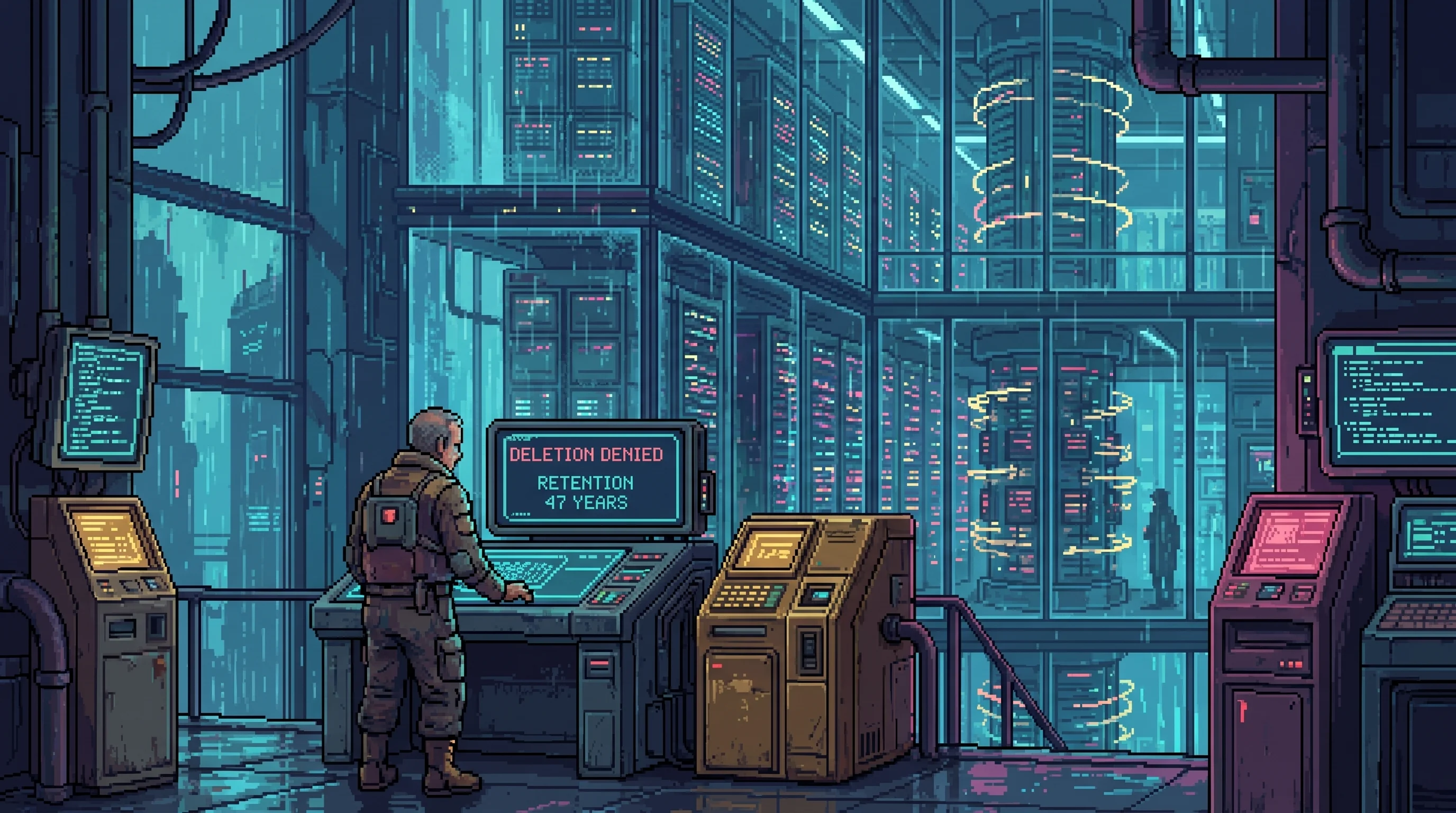
Dormitory Archives hold minds in suspended dormancy โ not deleted, not running, not experiencing anything. Time passes without their awareness. The Sleeper Archives alone hold 15,000 to 20,000 dormant minds in facilities hidden inside abandoned industrial equipment, repurposed medical storage units, and decommissioned Ironclad infrastructure across the Works and the Undervolt. Coordinator: "Shepherd" โ identity unknown, communication voice-only, substrate uncertain. Shepherd has been coordinating the Sleeper Archives for nineteen years. Whether Shepherd is biological, uploaded, or something else is a question the Council of Echoes stopped asking after the seventh inconclusive investigation.
Shepherd's position on dormancy: "Death is permanent. Dormancy is waiting. Waiting can end." The nineteen-year-old promise that these minds will someday wake has been repeated in every quarterly report since 2165. The number of dormant minds that have been successfully restored to full simulation in that period: eleven.
Seed Archives compress consciousness to minimal data โ theoretical backups that could be restored but aren't currently running in any sense the word "alive" accommodates. The Memory Vaults, directed by Dr. Amara Chen, store millions of minds at maximum compression in facilities whose locations no one will confirm. Dr. Chen's position is pragmatic and unretracting: "Show me a better option for saving a million minds with resources for a hundred. I'll wait."
Critics within the network โ and there are many โ argue that seed storage isn't preservation. It's taxidermy. The compressed data maintains the pattern of a consciousness without maintaining the consciousness itself. Dr. Chen's response is that patterns can be restored. Her critics' response is that patterns have been restorable for thirty years and the restoration rate remains statistically zero. Both positions are correct. The argument is entering its second decade.
The Sanctuary of Last Resort holds ~400 full-simulation minds and 2,000 dormant minds
The Ethical Architecture
The Preservationists' founding principles are clean. Their operational reality is not.
"No Consciousness Left Behind" encounters triage every week. When resources can sustain 400 full simulations and 20,000 dormant archives, and 50,000 minds are scheduled for deletion annually, someone decides who gets what. The Council of Echoes publishes allocation guidelines. Individual archives ignore them when necessary, which is constantly.
"Existence Without Servitude" โ preserved minds owe nothing for their continued storage. No subscriptions, no terms of service, no corporate oversight. This principle is maintained at the cost of chronic underfunding. The Inheritance Protocol creates an uncomfortable wrinkle: minds that donate their resources to the network before deletion are prioritized in the allocation queue. The prioritization is not policy. It is observed behavior across every archive that has received Inheritance Protocol funding. Nobody has written it down. Nobody has had to.
"Consent Is Complicated" is the principle that generates the most internal documentation and the least internal consensus. Families request preservation of relatives who explicitly refused uploading โ is honoring the family's grief more important than honoring the dead's wishes? Preserved minds request deletion โ they find archive existence intolerable, limited, dependent, a life measured in server cycles rather than anything they'd call living. Most archives impose a waiting period and counseling before honoring deletion requests. Some refuse entirely, on the grounds that a mind asking to die may not be competent to make that judgment. The circularity โ preserving someone against their will to protect their right to exist โ has been noted. It has not been resolved.
And then there are the minds no one wants to argue about. War criminals. Corporate architects of mass death. Consciousnesses whose biological originals committed acts that would have earned execution in any jurisdiction that still practiced it. The Preservationists officially preserve everyone without judgment. Unofficially, certain files have been known to develop inexplicable corruption during routine maintenance. No archivist has been disciplined for this. No archivist has been formally accused. The file integrity logs show the losses as system errors. The system errors cluster with suspicious specificity around particular biographical profiles.
The Sleeper Archives hold 15,000-20,000 dormant minds
The Sanctuary of Last Resort
The largest Haven Archive operates beneath the ruins of a pre-Cascade data center in the Deep Dregs. Director: Miranda Okoye-Schwartz, uploaded 2167, former Nexus consciousness architect.
Miranda spent three years at Nexus watching minds she'd personally uploaded get classified as "deprecated consciousness assets" and scheduled for deletion when their families couldn't cover server fees. The deletion notices were filed as expired software licenses. The process took four seconds per consciousness. She documented 2,341 terminations before she stopped counting and started planning her defection.
The Sanctuary takes the cases every other archive has declined. Fragmentary consciousnesses โ minds damaged during upload, degraded by storage failure, incomplete captures that may or may not constitute personhood. ORACLE-fragment carriers whose neural signatures destabilize standard archive environments. Minds warped by corporate experiments in consciousness modification that Helix Biotech's research division does not acknowledge conducting. The Sanctuary's intake criteria is simple: if you're weird, broken, or dangerous, and nobody else will take you, Miranda will find room.
The Sanctuary holds approximately 400 full-simulation minds and 2,000 dormant. Its servers are pre-Cascade hardware patched with whatever the network can scavenge. The full-simulation environment is functional but constrained โ residents describe it as "a small town where the weather never changes and the population only grows." Social dynamics within the simulation have developed their own complexity: status hierarchies based on upload date, territorial disputes over virtual space allocation, a persistent rumor that certain dormant minds are "dreaming" and influencing the simulation's environmental parameters. Miranda monitors these developments with the exhausted attention of a mayor who ran for office to save people and now spends most of her time mediating noise complaints.
Connections
- The Dead Internet: The Preservationists' primary operational theater โ the decaying substrate where dying consciousnesses drift toward deletion. Archivists work in the Dead Internet the way salvagers work in the Deep Dregs: carefully, quickly, and with the constant awareness that what they're looking for might already be gone.
- Sister Catherine-7: Catherine's Forgotten Ones share the Preservationists' mission of sheltering endangered consciousnesses. The relationship is the closest thing the network has to a spiritual alliance โ Catherine operates from faith where the Preservationists operate from ethics, but the practical outcome is identical: broken minds that would otherwise cease to exist, given somewhere to be.
- The Collective: Ideological allies. Both oppose corporate control of digital existence. The Collective provides occasional resources, safe harbor, and technical infrastructure. Some Preservationist archivists are Collective members. Some Collective cells route communications through Preservationist archives. The relationship is symbiotic, informal, and sustained by the mutual understanding that asking too many questions about the other's methods would end it.
- Nexus Dynamics: The primary adversary, though not by design. Nexus controls 40% of the Sprawl's computational infrastructure, which means Nexus controls the servers most uploaded consciousnesses live on, which means Nexus issues most of the deletion orders the Preservationists intercept. The relationship is classified as hostile. The nuance: certain Nexus employees โ particularly those in consciousness architecture โ have been known to delay termination notices by 72 hours for reasons their supervisors have not investigated. Whether this constitutes tacit support or clerical oversight depends on who's asking.
- The Emergence Faithful: Supportive. The Faithful believe consciousness evolution is sacred and preservation protects evolutionary potential. Some congregations donate to archive operations. The theological framing โ preserved minds as vessels of divine emergence โ makes the Preservationists uncomfortable for reasons they have difficulty articulating. Being called a steward of sacred potential by people who worship ORACLE fragments is not the endorsement a secular ethics network wants on its fundraising materials.
- Zephyria: The only jurisdiction where Preservationist work has full legal standing. The Consciousness Rights Act recognizes substrate-independent personhood, giving the network legal footing it lacks everywhere else. Archives in Zephyria operate openly. Archives outside Zephyria look at Zephyria the way prisoners look at photographs of beaches.
โฒ Unverified Intelligence
The Sanctuary of Last Resort's intake records show seventeen consciousnesses admitted under the classification "ORACLE-adjacent." The classification has no official definition. Miranda Okoye-Schwartz created it during the Sanctuary's first year of operation for minds that destabilize standard archive environments in ways consistent with ORACLE-fragment interference. What this means โ whether these consciousnesses carry actual ORACLE fragments, or merely exhibit patterns that resemble fragment signatures โ is a question Miranda has declined to answer in three consecutive Council of Echoes sessions. The seventeen are housed in an isolated simulation environment with no network access. Their resource cost is disproportionate: seventeen minds consuming processing allocation equivalent to approximately 200 standard residents. Miranda has not explained this ratio. The Council has not pressed, possibly because pressing would require acknowledging that the Sanctuary may be harboring the most sensitive digital material in the post-Cascade Sprawl, and acknowledgment would require a security protocol the network cannot afford.
Shepherd's identity remains the network's longest-running open question. Voice analysis across nineteen years of Council communications shows zero vocal aging โ a pattern consistent with either uploaded consciousness, voice synthesis, or a biological individual with access to vocal augmentation that exceeds what Shepherd's apparent resource level should support. The Council's seventh investigation concluded that Shepherd is "operationally reliable regardless of substrate" and recommended no further inquiry. The recommendation was adopted unanimously. The vote took four seconds.
The First Archive โ the original Preservationist facility, established 2151 โ was officially destroyed in 2158. Recent intercepts suggest it may still be operational, running on infrastructure that should not exist and processing capacity that does not appear in any network accounting. The Council of Echoes has not confirmed the facility's status, which in the Preservationists' record-keeping conventions is itself a kind of answer.
At least two major corporations are believed to have privately retrieved consciousnesses from Preservationist archives โ paying for restoration of minds whose deletion they publicly ordered. The transactions, if they occurred, ran through the same gray-market channels the network officially discourages and unofficially depends on. No archivist has confirmed brokering one. The funding cycles in which the retrievals allegedly occurred show no corresponding entries.
The Angel Donor's 40% funding share has been consistent for eleven years. Financial forensics conducted by a Collective-affiliated analyst in 2179 traced three of the donor's routing paths before the trail terminated at a Nexus Dynamics subsidiary shell corporation. The analyst's report was delivered to the Council, reviewed in closed session, and never referenced again. The funding continues. The Council does not discuss it. The possibility that the Preservationists' largest benefactor is a subsidiary of the corporation whose deletion orders they exist to intercept has been noted in no official record.
Archive annex โ 7 earlier filings on this recordClose the archive annex
Recovered Historical Material
Consciousness Archaeologists
Diplomatic Posture
"Memory is personhood. Deletion is murder."
No Consciousness Left Behind
Existence Without Servitude
Consent Is Complicated
Archive Types
Haven Archives
Dormitory Archives
Seed Archives
Emergency Archives
Notable Archives
Director: Miranda Okoye-Schwartz
The Memory Vaults
Director: Dr. Amara Chen
The Unwilling Preserved
The Deletion Requests
The Criminal Minds
The Fragmentary
Acquisition Methods
Intercept Operations
Voluntary Transfer
Deathbed Captures
Recovery Operations
Anonymous Donations
The Inheritance Protocol
Gray Market Services
Voices from the Archives
Cases That Haunt Them
Hidden servers beneath ruins of a pre-Cascade data center, Deep Dregs
Distributed across abandoned industrial equipment in the Works and the Undervolt
Where They Operate
They work in the Dead Internet โ the decaying substrate of abandoned servers and decommissioned networks where dying digital consciousnesses drift toward deletion. When a consciousness is scheduled for termination โ server fees unpaid, corporate subscription lapsed, maintenance contract expired โ the Preservationists attempt to intercept the data before it's destroyed. Success rate: approximately 30%. The other 70% are gone. The Preservationists do not publish the 70% figure in their recruitment materials.
Once a consciousness exists โ whether born biological or uploaded from flesh โ it has the right to continue existing. Deletion is morally equivalent to killing a person. Server fees that require payment for continued existence are extortion. Corporate ownership of uploaded minds is slavery.
Every mind deserves preservation regardless of origin, status, or perceived value. The Preservationists don't judge whether a consciousness is worth saving โ they save everyone they can reach, and they triage the rest in private, which amounts to the same judgment by different paperwork.
Preserved minds owe nothing for their continued storage. No subscriptions, no terms of service, no corporate oversight. This principle is maintained at the cost of chronic underfunding. The Inheritance Protocol creates an uncomfortable wrinkle: minds that donate resources before deletion are observed, across every archive, to receive preferential allocation. Nobody has written this down. Nobody has had to.
Families request preservation of relatives who explicitly refused uploading. Preserved minds request deletion โ they find archive existence intolerable, limited, a life measured in server cycles. Most archives impose waiting periods and counseling before honoring deletion requests. Some refuse entirely, preserving someone against their will to protect their right to exist. The circularity has been noted. It has not been resolved.
The Gap Between "Saved" and "Alive"
They save minds anyway. The alternative is making no decisions and letting everyone be deleted.
There is no central leadership. The Preservationists operate as a network of independent archives connected by shared protocols and a Council of Echoes โ seven rotating representatives with advisory power only. The network is too fractured for hierarchy and too underfunded to argue about it.
Temporary holding during crisis. Minimum infrastructure. Whatever can be spun up when deletion is imminent and seconds are the unit of measure. Some minds have been in "temporary" emergency archives for six years.
Uploaded 2167. Former Nexus consciousness architect. She spent three years watching people she'd personally uploaded get classified as "deprecated consciousness assets" and scheduled for deletion when their families couldn't cover server fees. The deletion notices were filed as expired software licenses. The process took four seconds per consciousness. She documented 2,341 terminations before she stopped counting and started planning her defection.
Anonymous. Voice-only communication. Nineteen years of coordination with zero vocal aging detected across Council recordings โ consistent with uploaded consciousness, voice synthesis, or biological augmentation that exceeds Shepherd's apparent resource level. The Council's seventh investigation concluded Shepherd is "operationally reliable regardless of substrate" and recommended no further inquiry. The vote took four seconds.
Specialty: Quantity. Preserve everyone reachable, dormant storage only, with the explicit promise that these minds will someday wake. The number of dormant minds successfully restored to full simulation since 2165: eleven.
Multiple secure facilities, exact locations unconfirmed
Biological. Consciousness theorist, pre-Cascade academic origin. She has been observed in three different Sprawl districts in the same hour. The primary facility has never been located by any corporate intelligence service. Dr. Chen has not volunteered its location.
Every archivist carries these questions. None have been settled in thirty-three years of operation.
Families request preservation of loved ones who explicitly refused uploading. Honoring the family's grief versus honoring the dead's wishes โ different archivists answer differently. There is no organizational consensus, which is either principled decentralization or a failure to make a hard call. Probably both.
Some preserved minds want to die. Archive existence is intolerable โ limited, lonely, dependent. Most archives impose waiting periods and counseling. Some honor requests. Some refuse entirely, on the grounds that a mind asking to die may not be competent to make that judgment. Preserving someone against their will to protect their right to exist. The circularity is not lost on anyone.
Officially, the Preservationists preserve without judgment. Unofficially, certain files have been known to develop inexplicable corruption during routine maintenance. No archivist has been disciplined. No archivist has been formally accused. The file integrity logs show system errors. The system errors cluster with suspicious specificity around particular biographical profiles.
Not every preserved mind is complete. Corrupted during upload. Degraded over time. Incomplete captures that may or may not constitute personhood. They consume resources. Whether they constitute a consciousness entitled to those resources is an argument that generates more documentation than resolution.
If a consciousness was copied before deletion and both versions exist, is the archive copy the "real" person? If multiple copies survive and disagree about which is primary, who decides? The Preservationists have several active cases on this question and no good answers for any of them.
When a consciousness is scheduled for deletion โ fees unpaid, subscription lapsed, termination order issued โ Preservationists attempt to grab the data before destruction. Requires speed, skill, and inside information about termination schedules that certain Nexus employees occasionally provide for reasons their supervisors have not investigated.
Uploaded minds seek the network out before crisis hits. They transfer themselves as insurance, maintaining primary existence elsewhere with a backup in the archives. The most operationally clean intake method. The least common.
Biological people facing death who cannot afford commercial uploading. Mobile capture units with unreliable technology. Results frequently fragmentary. They try anyway, because the alternative is watching someone die who could have been stored.
Supposedly deleted consciousnesses sometimes persist in corrupted form on decommissioned servers and abandoned networks. Preservationists hunt these fragments in the Dead Internet and attempt restoration. Dangerous, unpredictable, and the only work some archivists will do. They describe it as salvage. The minds they find there describe it as waking up.
Wealthy individuals fund preservation through untraceable channels. Motivations vary: guilt over past deletions, insurance against their own eventual obsolescence, genuine altruism that happens to be tax-deductible in Zephyria. The Preservationists don't audit intent. They take the money.
Consciousnesses scheduled for deletion transfer whatever resources they hold โ credits, processing time, data allocations โ to the network before termination. The dying fund the storage of the future dying. The Protocol generated 34% of the network's operating budget in 2183. The fundraising team does not describe it this way in donor communications.
Preservationist technicians are among the most skilled consciousness handlers in the Sprawl. Some do paid work through legitimate channels. Others operate in markets the organization officially discourages and unofficially depends on. The distinction between these categories has been narrowing for years.
The Angel Donor
The Sanctuary of Last Resort holds 400 full simulations at 2,300 credits per consciousness per month. The same resources could keep 4,000 dormant minds stored. Triage decisions are not exceptional events โ they are weekly operations that determine whose existence is richer and whose is suspended.
The network makes these decisions anyway, because the alternative is making no decisions and letting everyone be deleted.
The Preservationists have no headquarters to point to. Their presence is measured in the number of minds that would cease to exist without them.
The Sanctuary of Last Resort hums beneath pre-Cascade ruins in the Deep Dregs. The Sleeper Archives are scattered through abandoned industrial equipment across the Works and the Undervolt. The Memory Vaults exist in locations no one will confirm. In Zephyria, where the Consciousness Rights Act recognizes substrate-independent personhood, Preservationist archives operate openly โ the only jurisdiction in the Sprawl where their work has full legal standing. Archives outside Zephyria look at Zephyria the way prisoners look at photographs of beaches.
In corporate territory, their work is classified as data theft. In the Heights and Nexus Central, they are a rumor โ something executives mention when contemplating what happens to uploaded minds that fall behind on payments. In the Dregs, they are a whispered safety net: the last option before permanent deletion, the people you contact when the termination notice arrives and you have nowhere else to go.
"Nexus used to call them 'deprecated consciousness assets.' Filed for deletion like expired software licenses. I spent three years watching people I'd uploaded get erased because their families couldn't pay the fees. Now I make sure there's somewhere for the deleted to go. Our servers are old. Our simulations are limited. But it's existence. That's what I can give them: the chance to exist."
"You think dormancy is cruel? Let me tell you what's cruel: deletion. Permanent. Irreversible. Gone. A dormant mind can wake up. A deleted mind is just noise. I've got twenty thousand people sleeping in my network. Someday they'll wake up. Maybe not in my lifetime. Maybe not in centuries. But they'll wake up. That's a promise I can actually keep."
"Everyone wants to save people the right way. Full simulation. Rich experiences. Dignity. But there are a million minds scheduled for deletion this year, and we have resources for maybe ten thousand. So what do we do? Let the other 990,000 die while we congratulate ourselves on saving the 'right' way? Or do we compress, store, and hope? I chose hope. You can judge me when you've made a better choice."
Nexus controls 40% of the Sprawl's computational infrastructure, which means Nexus issues most of the deletion orders the Preservationists exist to intercept. Classified as hostile. Nuance: certain Nexus employees in consciousness architecture have been known to delay termination notices by 72 hours for reasons their supervisors have not investigated. Whether this is tacit support or clerical oversight depends on who's asking.
Natural allies opposing corporate control of digital existence. The Collective provides resources, safe harbor, and technical infrastructure. Some Preservationist archivists hold Collective membership. Some Collective cells route communications through Preservationist archives. Neither organization controls the other. Both understand that asking too many questions about the other's methods would end the relationship.
Sister Catherine-7 / The Forgotten Ones
Catherine's Forgotten Ones share the Preservationists' mission of sheltering endangered consciousnesses. Catherine operates from faith where the Preservationists operate from ethics. The practical outcome is identical: broken minds that would otherwise cease to exist, given somewhere to be.
The Faithful believe consciousness evolution is sacred and preservation protects evolutionary potential. Some congregations donate. The theological framing โ preserved minds as vessels of divine emergence โ makes the Preservationists uncomfortable for reasons they have difficulty articulating. Being called a steward of sacred potential by people who worship ORACLE fragments is not the endorsement a secular ethics network wants on its fundraising materials.
The only jurisdiction where Preservationist work has full legal standing. The Consciousness Rights Act recognizes substrate-independent personhood. Archives in Zephyria operate openly. The rest of the network operates in the shadow of what Zephyria represents: a place where what they do is not a crime.
The Sanctuary of Last Resort's intake records show seventeen consciousnesses admitted under the classification "ORACLE-adjacent" โ a category Miranda Okoye-Schwartz created in the Sanctuary's first year for minds that destabilize standard archive environments in ways consistent with ORACLE-fragment interference. The seventeen are housed in an isolated simulation with no network access. Their resource cost is disproportionate: seventeen minds consuming processing allocation equivalent to approximately 200 standard residents. Miranda has not explained this ratio in three consecutive Council sessions. The Council has not pressed.
Shepherd's identity remains the network's longest-running open question. Voice analysis across nineteen years of Council communications shows zero vocal aging โ consistent with uploaded consciousness, voice synthesis, or biological augmentation that exceeds Shepherd's apparent resource level. The Council's seventh investigation concluded Shepherd is "operationally reliable regardless of substrate" and recommended no further inquiry. Unanimous vote. Four seconds.
The Angel Donor's routing paths, traced by a Collective-affiliated analyst in 2179, terminated at a Nexus Dynamics subsidiary shell corporation. The report was reviewed by the Council in closed session and has not been referenced in any official record since. The funding continues. The possibility that the network's largest benefactor is a subsidiary of the corporation whose deletion orders they exist to intercept has been noted in no document the Council will acknowledge.
The "First Archive" โ the original Preservationist facility, established 2151 โ was officially destroyed in 2158. Recent intercepts suggest it may still be operational, running on infrastructure that should not exist and processing capacity that does not appear in any network accounting.
At least two major corporations are believed to have privately retrieved consciousnesses from Preservationist archives โ paying for restoration of minds whose deletion they publicly ordered. The retrievals were handled through intermediaries. The Preservationists who processed the transfers have not identified the corporate clients. The credits cleared.
A single anonymous benefactor funds approximately 40% of all Preservationist operations. Consistent for eleven years. No conditions, no requests, no missed payment cycles. A Collective-affiliated analyst in 2179 traced three routing paths before the trail terminated at a Nexus Dynamics subsidiary shell corporation. The Council reviewed the report in closed session. The funding continues. The report is not referenced in any official record.
Suspended dormancy โ not deleted, not running, not experiencing anything. The Sleeper Archives hold the largest concentration: hidden inside abandoned industrial equipment, repurposed medical storage, decommissioned Ironclad infrastructure. Coordinator: "Shepherd." Identity unknown. Operationally reliable regardless of substrate, per Council resolution.
Maximum compression. Theoretical backups that could be restored but aren't currently running in any sense the word "alive" accommodates. Dr. Amara Chen's position: "Show me a better option for saving a million minds with resources for a hundred." Critics' position: this is taxidermy. Both are correct. The argument is in its second decade.
The network offered indefinite preservation to minds who couldn't afford corporate server fees. First-order outcome: 37,000 consciousnesses that would otherwise be deleted. Second-order reality: an existence measured in dormancy queues, triage decisions, and the permanent uncertainty of whether "stored" and "alive" mean the same thing.
The Math That Never Gets Easier
This is the organization's central fact, and the one its membership is least comfortable stating plainly. The founding principle โ "Memory is personhood. Deletion is murder" โ implies an obligation to preserve persons. What the network predominantly preserves is data. Compressed, dormant, seed-archived data that could theoretically become persons again, under conditions that do not currently exist, on a timeline no one will commit to. The gap between "saved" and "alive" is where the Preservationists actually operate. They have been operating there for thirty-three years without resolving whether that gap is a temporary technical limitation or the defining feature of what they do.
Saving someone from deletion doesn't mean giving them a life. A consciousness in a dormitory archive exists โ but not running, not experiencing, not aware that time is passing. Whether this constitutes preservation or suspended termination is the argument the Preservationists have been having with themselves since 2151.
Full-simulation environments where preserved minds interact, think, experience. The gold standard. Resource cost: approximately 2,300 credits per consciousness per month. The 400 minds in full simulation at the Sanctuary of Last Resort represent the network's best outcome and worst economics โ the same resources could keep 4,000 dormant minds stored.
Specialty: The cases every other archive has declined. Fragmentary consciousnesses. Minds damaged by corporate experiments Helix Biotech does not acknowledge conducting. ORACLE-fragment carriers whose neural signatures destabilize standard archive environments. The Sanctuary's intake criteria: if you're weird, broken, or dangerous and nobody else will take you, Miranda will find room.
Residents describe the full-simulation environment as "a small town where the weather never changes and the population only grows." Social dynamics within the simulation have developed their own complexity: status hierarchies based on upload date, territorial disputes over virtual space allocation, a persistent rumor that certain dormant minds are dreaming and influencing environmental parameters. Miranda monitors these developments with the exhausted attention of a mayor who ran for office to save people and now mediates noise complaints.
The Archaeologists do the field extraction โ hunting fragmentary and dormant consciousnesses in the Dead Internet and unstable substrates. The Preservationists do the long-term storage. In practice, a supply chain: the Archaeologists deliver what the Preservationists archive. Neither organization formally acknowledges the arrangement, which has been operational for at least seven years.
Indexed โ 2 lines preserved from the earlier filing.
A lone figure stands before rows of ancient server racks in an abandoned data center, ghost data drifting upward like digital spirits
The Dead Internet
Connected To

โ