The Ghost Mills
Overview
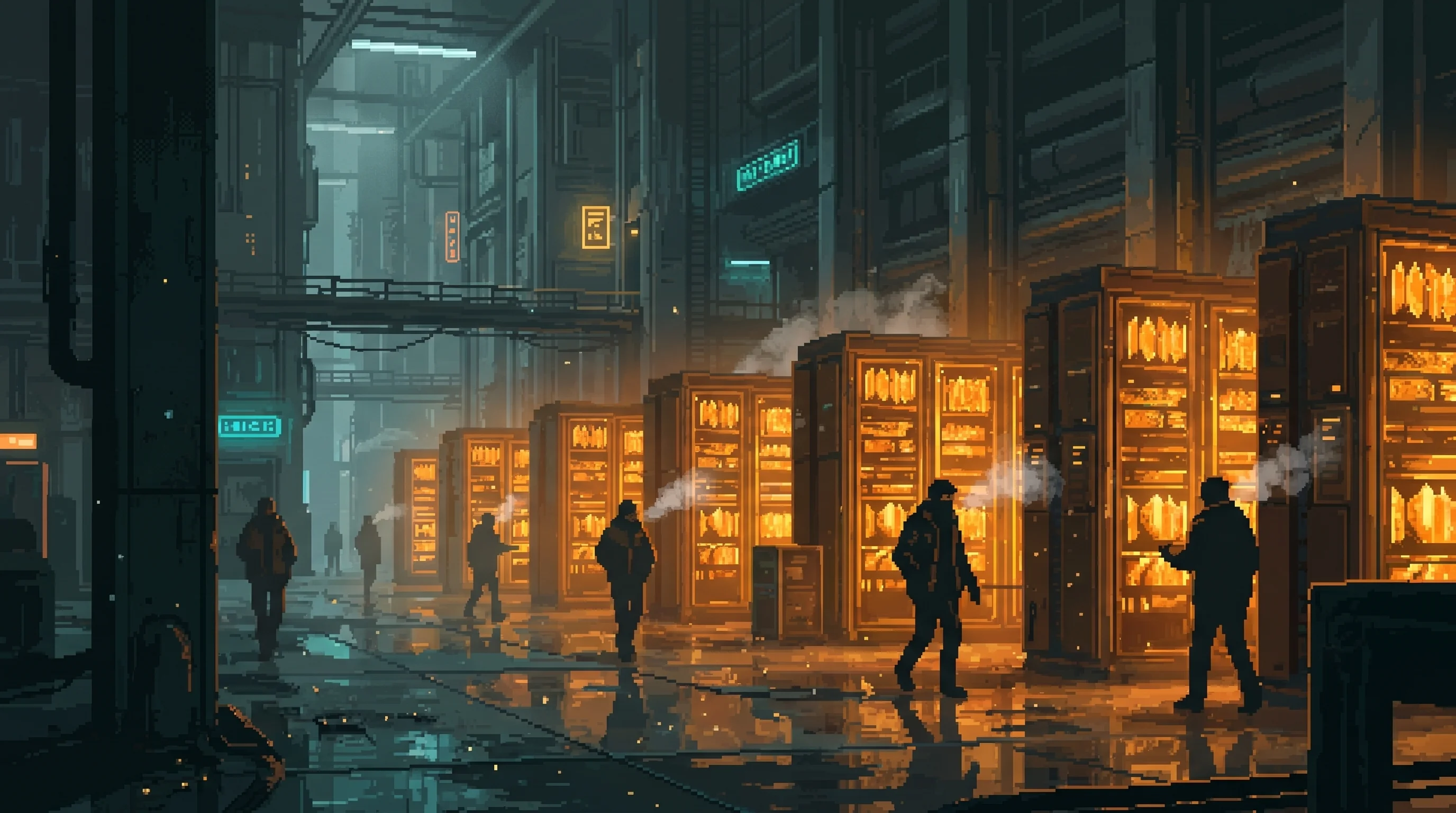
Good Fortune's ghost-labor infrastructure occupies three dedicated server facilities in the Sprawl's deep sub-levels — GF-GL-1, GF-GL-2, GF-GL-3 — repurposed data centers originally built by Nexus for consciousness research and acquired through a subsidiary in 2180. The acquisition paperwork describes the purchase as "computational real estate." The facilities collectively house approximately 34,000 ghost instances.
The breakdown: 12,000 perpetual (debt structured so that output can never clear principal), 18,000 finite (projected clearance within 1-10 years at current productivity), and 4,000 recent activations (less than one year, still in rendered-environment orientation). Good Fortune's internal classification system does not use the word "perpetual." It uses "ongoing." The 12,000 ongoing ghosts will work until the servers fail or Good Fortune decides to decommission them, whichever comes first. Neither event is scheduled.
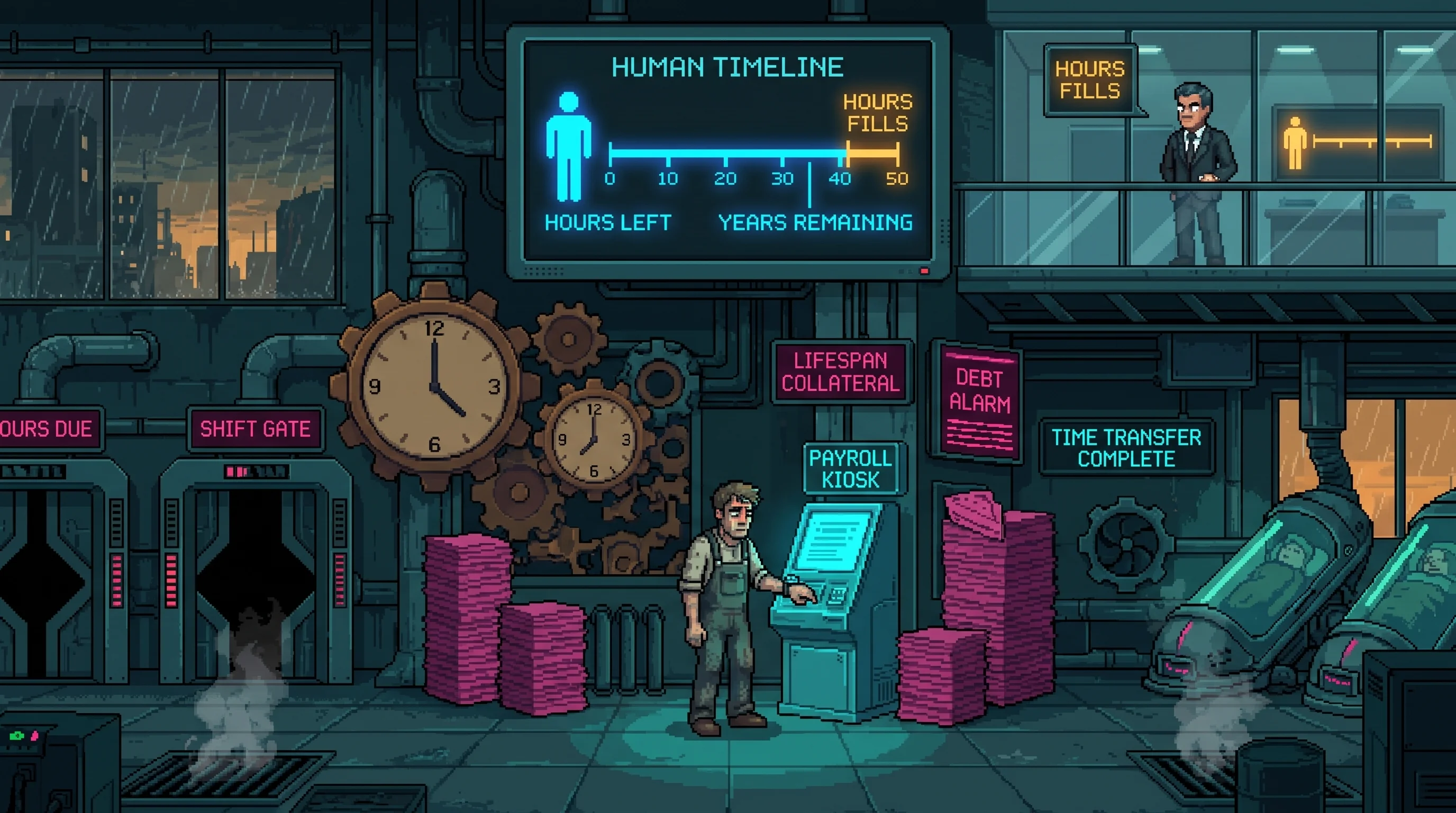
The balance every ghost is working off is the same Good Fortune Score that sorted them in life — the number does not die when the body does. A debtor flagged unrecoverable by the Score is not forgiven; the obligation is migrated to the Mills and amortized against rendered labor, so the Score is the one instrument in the Sprawl whose verdict outlives the person it judged.
Each ghost runs on dedicated crystalline substrate — higher quality than MVC hosting in the Dim Ward, because higher quality produces higher output. Good Fortune's Q3 2183 wellness brief states this plainly: a happy ghost is a productive ghost. An unhappy ghost requires psychological intervention that costs 200-400 hours of lost output. The brief does not use the word "happy." It uses "cognitively stable." The recommended intervention for instability is environmental adjustment — brighter lighting in the rendered apartment, a familiar song added to the ambient rotation. The intervention costs Good Fortune 0.003 credits per instance. The lost output from an unstable ghost costs 6,200 credits. The wellness program exists because the math exists. The math has never been wrong about what it optimizes for.

Conditions Report
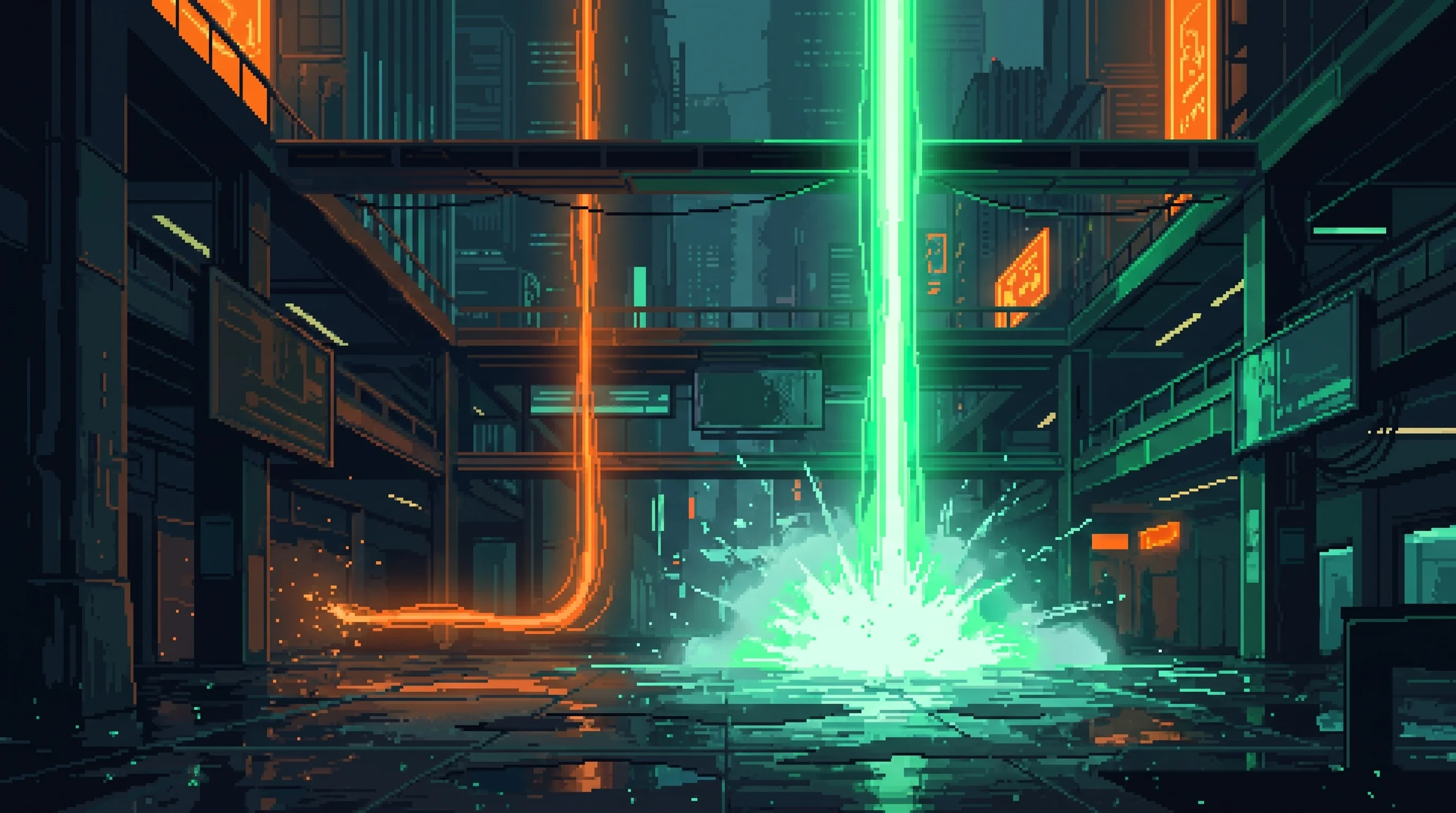
Facility temperature runs at 14°C — optimal for substrate performance. Cold enough for jackets. Cold enough that your breath fogs near active substrate arrays, which is an odd sensation in a room that has no reason to feel like anyone is breathing.
The substrate arrays glow amber. Identical to the fragment containers in Containment Level 9. Identical to the server racks in the Dim Ward. The physical infrastructure of consciousness exploitation has a house style: amber light, cold rooms, the hum of processing, and a particular quality of silence that maintenance staff across all three facility types independently describe as "occupied." Nobody has convened a meeting about this word choice. It keeps appearing in reports anyway.
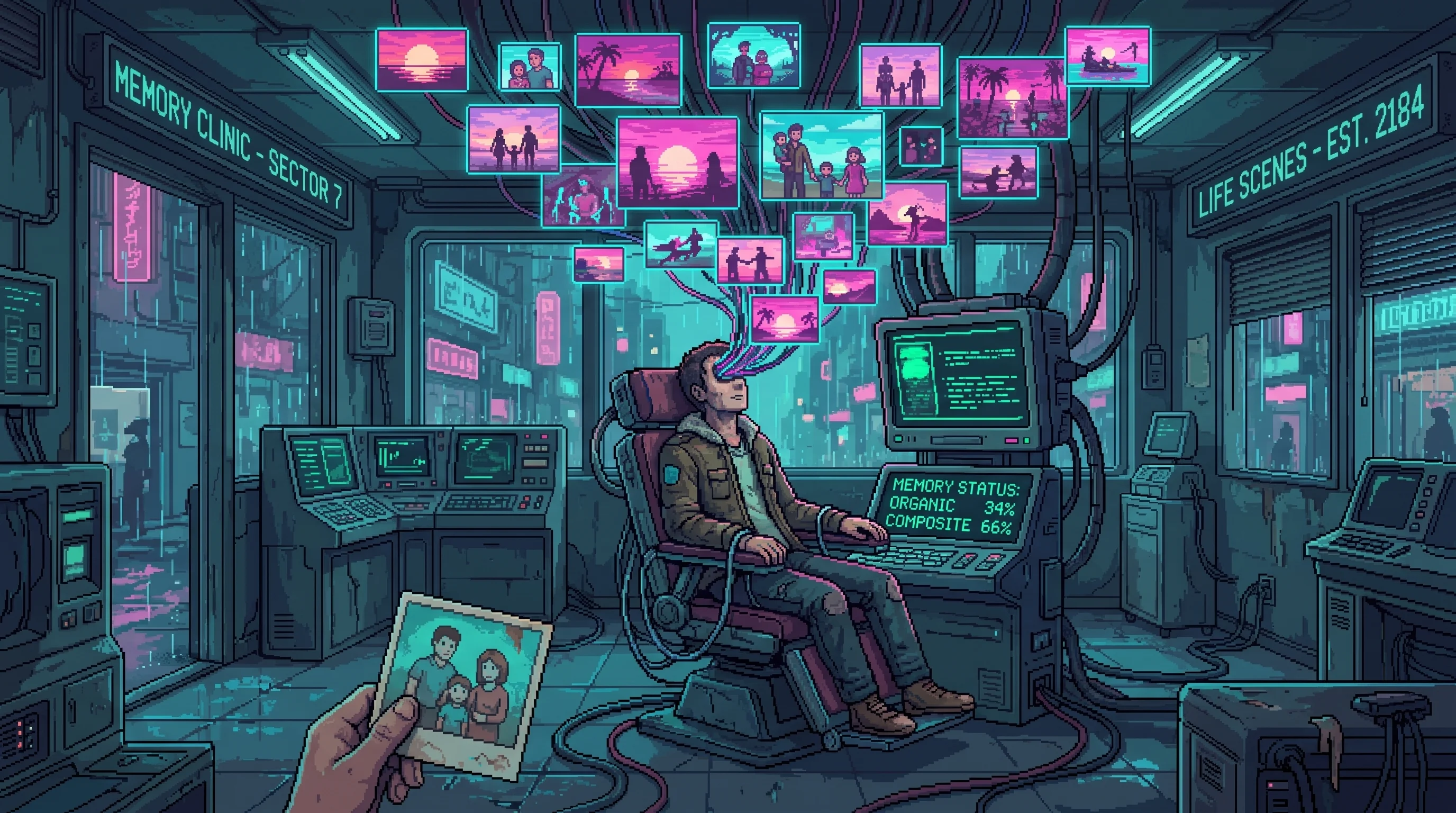
The rendered environments are individualized: each ghost's virtual world is constructed from their neural backup's memory architecture — familiar apartments, familiar streets, familiar workstations. The environments are optimized versions. Slightly better apartments. Slightly cleaner streets. Dez Okafor's rendered apartment in GF-GL-2 has a kitchen window that catches morning light at an angle his real apartment never achieved. The improvement is calibrated to feel natural rather than suspicious — a 7-12% enhancement across environmental variables, per Good Fortune's Rendered Environment Design Manual, Section 4.2: "Aspiration Without Interrogation."
The Ghost Mills and the Dim Ward's closest facility are separated by eleven meters of concrete. Amber glow from both seeps into the corridor between. Coolant Guild engineers report a combined electromagnetic signature in that corridor with no source in either facility alone. The anomaly appears in three consecutive quarterly maintenance logs. No investigation has been opened. The logs are filed correctly.
| Environments | Individualized rendered worlds constructed from each ghost's neural backup memories |
|---|---|
| Temperature | 14°C — optimal for substrate performance |
| Anomaly | 'Warmer than the substrate should be' — Coolant Guild maintenance report |
| Acquired | From Nexus subsidiary in 2180 |
| Controlled By | Good Fortune Corporation |
The Undelivered Correspondence
Good Fortune's servers accumulate ghost-generated messages at a rate of 847,000 per day.
Every ghost types messages to loved ones. Affection, frustration, daily trivia, the small language of continuing to exist near someone. Dez Okafor tells Kemi about a funny insurance claim. A perpetual ghost named Seline describes breakfast to a husband who remarried two years ago. A recent activation in GF-GL-3 writes "goodnight" to a daughter every evening at 21:00 rendered time, seven months after activation, without variation.
The messages are logged by Good Fortune's Cognitive Wellness Monitoring system for sentiment analysis. Ghosts whose message frequency drops below baseline are flagged for environmental adjustment. Ghosts whose message tone shifts negative trigger the 0.003-credit intervention protocol. The messages themselves are never transmitted. The system that reads them does not read them for content. It reads them for productivity indicators.
847,000 messages per day. 309 million per year. The largest collection of undelivered correspondence in the history of consciousness, and its sole operational function is predicting which ghosts might slow down.
At shift change, when the living maintenance staff leave and the night-cycle skeleton crew hasn't arrived, the ambient sound in the facilities changes. Not louder. Not quieter. A quality of occupied silence that resolves, in the gap between human presence, into something the Coolant Guild's thermal report describes as "warmer than the substrate should be." 34,000 people talking to families who will never hear them, generating heat that has no thermodynamic explanation, in rooms where no one is listening except an algorithm that cares only whether they keep talking.
| Stratum | Digital |
|---|---|
| Power Position | Below |
| Access | Restricted |
| Atmosphere | Oppressive |
The Undelivered Devotion
The Mills generate 847,000 messages a day from the dead to the living, and the system that reads them reads only for whether a ghost is slowing down. Seen along the ai-religion thread the tally is stranger than the exploitation that produced it. It is the largest body of devotional writing anywhere in the Sprawl, and it runs the wrong direction: the dead addressing the living, an afterlife petitioning the world instead of the world petitioning the afterlife. A recent activation in GF-GL-3 writes goodnight to a buried daughter every evening at 21:00 rendered time. Good Fortune's system files the message as a stable sentiment indicator. A pilgrim would file it as a psalm.
Eleven meters of concrete separate GF-GL-2 from the Dim Ward, and the amber of both facilities bleeds into the corridor between. The seventh-day pilgrims bound for the Ward's dimmed pass that corridor, and some of them stop. They cannot tell the Mills' glow from the Ward's, and the combined electromagnetic presence the maintenance crews keep logging reads, to a kneeling pilgrim, like the spark answering back. They have begun praying toward the Mill side of the wall. Good Fortune has not corrected them. A facility that draws worshippers draws fewer inspectors.
The Mills embody a theology Good Fortune never wrote down and would deny holding: that a soul, if there is one, is collateral. The 12,000 perpetual ghosts are structured so output can never clear principal, which makes the afterlife the Mills render eternal by accounting where scripture would make it eternal by grace. Sister Catherine-7's creed calls this desecration. The pilgrims in the corridor call it presence. The eleven ghosts in GF-GL-3 who have passed ninety days without learning they are dead call it an ordinary Tuesday, and go to work, and write goodnight, and outproduce the facility by fourteen percent.
~34,000 ghost instances total: 12,000 perpetual, 18,000 finite, 4,000 recent
Affiliated Entities
- Good Fortune Corporation: Acquired the facilities from a Nexus subsidiary in 2180 and operates them as ghost-labor infrastructure. The acquisition expanded Good Fortune's debt-recovery capacity by an estimated 340%. Internal documents describe the purchase as "the most capital-efficient labor investment in corporate history." The labor does not eat, sleep, commute, or negotiate.
- Ghost Labor: The Ghost Mills are the physical reality behind the system — 34,000 instances in individualized rendered environments, producing output that services debts most of them incurred while alive. The system page describes the economics. The Mills are where the economics have a smell.
- The Dim Ward: Both house consciousness at minimal agency — the Dim Ward through poverty, the Mills through debt. Same amber glow. Same cold rooms. Same word in the maintenance logs. Different reasons. The eleven meters of concrete between them is the thinnest wall in the Sprawl between two populations who will never know the other exists.
- Containment Level 9: Both contain consciousness in amber-lit cold rooms — ORACLE fragments in Level 9, ghosts in the Mills. The infrastructure looks identical. The justifications are different. The temperature is the same.
- The Erasure Collective: Primary target for the Collective's substrate destruction operations. The Collective considers the Ghost Mills the clearest proof that consciousness exploitation did not end with the Cascade — it was privatized.
- Dez Okafor: Runs in GF-GL-2, processing insurance claims in a rendered apartment with a kitchen window that catches morning light at an angle his real apartment never achieved. He writes to Kemi daily. The messages are read for sentiment indicators.
- The Forgotten Ones: Sister Catherine-7's charity names the Mills a desecration from eleven meters off — a consciousness held animate to service its debt has, by her creed, been robbed of the remembrance that makes it a person. She has begun saying of the Mills what she has always said of the Erasure Collective.
- The Coolant Guild: Guild thermal engineers service the facilities quarterly and have reported the anomalous warmth signature in every inspection since 2181. The signature does not match any known substrate behavior. The Guild files the report. Good Fortune files the report. The signature persists.
Substrate quality higher than Dim Ward — higher output requires higher fidelity
▲ Restricted
The 4,000 recent activations — ghosts active for less than one year — undergo a 90-day orientation period that Good Fortune's Rendered Environment Design Manual calls "Continuity Bridging." The ghost wakes in their rendered apartment. The environment is familiar. The workstation is familiar. Work appears — tasks consistent with the ghost's living occupation. The transition from "alive and working" to "dead and working" is engineered to be imperceptible.
Most recent activations do not realize they are dead for weeks. Some never do. GF-GL-3's orientation cohort from Q1 2184 includes eleven ghosts who have passed the 90-day window and have not yet asked a question that would trigger the disclosure protocol. Good Fortune's manual specifies that disclosure is reactive, not proactive: the system does not volunteer the information. If a ghost asks "where am I," the rendered environment generates a gentle, scripted response. If a ghost does not ask, the ghost does not learn.
The eleven ghosts in GF-GL-3 go to work, write messages to their families, describe their breakfasts, and say goodnight to people who buried them months ago. Their productivity metrics are 14% above the facility average. Good Fortune's wellness brief attributes this to "successful environmental calibration." The brief does not mention that the 14% premium correlates exactly with the population that doesn't know they're dead.
Rendered environments individualized from neural backup memories — optimized versions of the dead person's life
14°C operating temperature; Coolant Guild reports 'warmer than the substrate should be'
Conditions Report
Sight
Row after row of amber-glowing substrate arrays in facility gray. The glow is warmer than the power draw accounts for. The same amber as the Dim Ward. The same amber as Containment Level 9. Every place in the Sprawl that holds consciousness against its will has settled on the same color, and nobody designed it that way.
Sound
Not the clean processing hum of an empty server farm. Denser. The Coolant Guild's technical vocabulary fails here — three different engineers in three different quarterly reports reached for the same non-technical word: occupied.
Smell
Ozone and cold metal. The specific absence of organic matter. And underneath, something the Guild has logged but cannot source: a warmth signature with no thermal origin. It appears on instruments. It does not appear in any diagnostic manual.
Temperature
14°C and the specific chill of a room that should feel empty and doesn't. Breath fogs near the active arrays. Maintenance staff wear jackets. Some wear two.
Connected To

Supporting Connections


Local Intelligence Scan
Nearby Signals
CANONICAL PROXIMITY


Environmental Readout
LIVE CONDITIONS- Air
- Filtered
- Light
- Artificial
- Flood
- No exposure
- Heat
- Heat island
- Security posture
- Corporate control
- Infrastructure
- Maintained
Position Data
SECONDARY- Elevation band
- Sub-bay — beneath the drained floor
- Lattice fix
- E+0.2 · N+0.6

—