
The Waste Heat Commons
~800 residential units powered by salvaged thermoelectric generators capturing waste heat
Overview
In every ecology, waste is someone else's resource. In the Thermal Shadow, someone else's resource is the only resource.
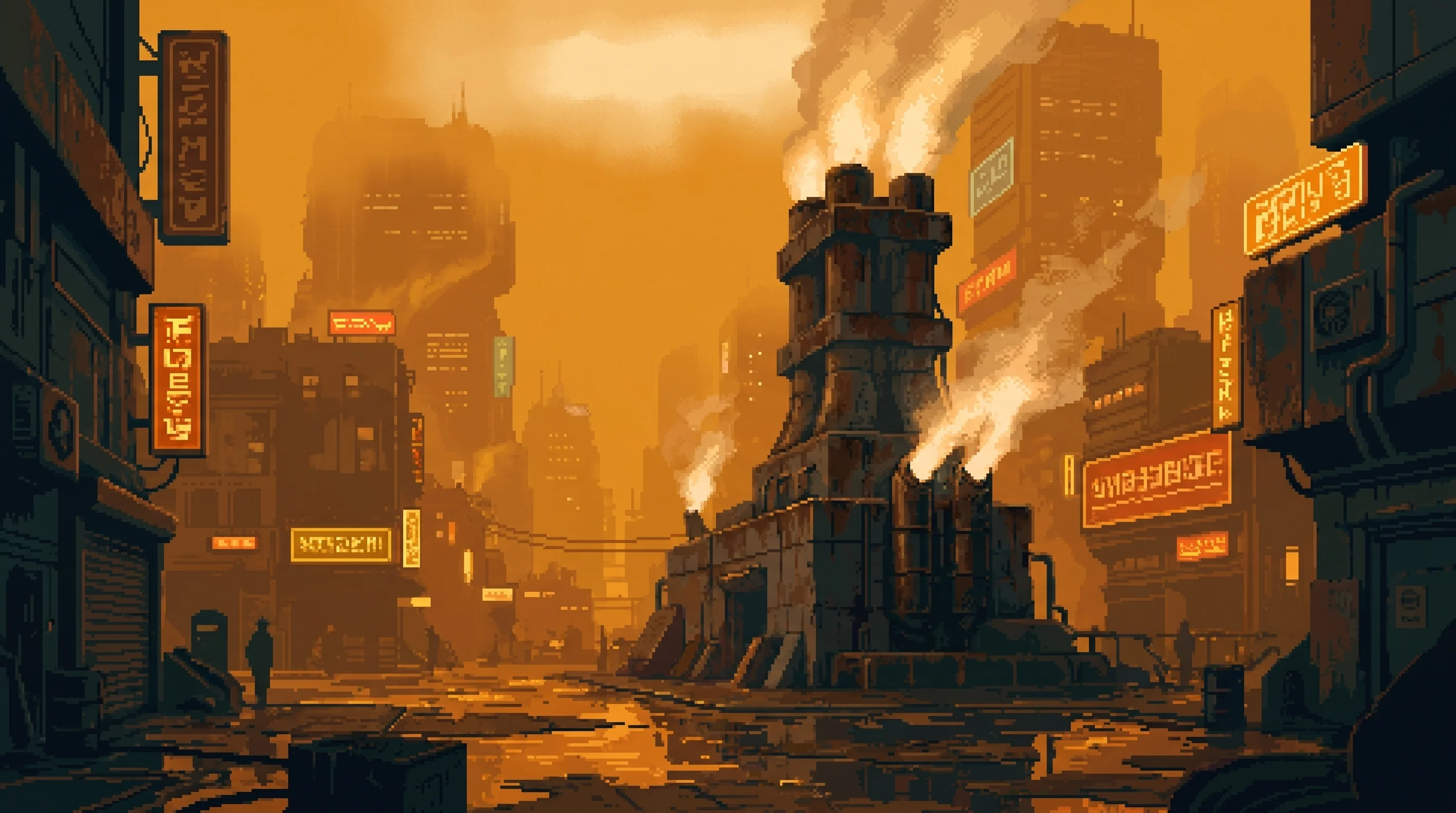
The Waste Heat Commons is the informal system by which Shadow residents capture, redirect, and utilize the heat that server farms dump into their neighborhood. Three mechanisms, none of them elegant: salvaged thermoelectric generators converting temperature differentials into electricity, buildings adapted using desert-architecture principles older than AI by several millennia, and — in the second generation — bodies that have begun adapting to conditions no one chose.
Approximately 800 residential units run on electricity harvested from exhaust vents. The generators produce enough to charge interfaces and keep lights on. Not enough to run cooling. The architecture makes the Shadow habitable. Not comfortable. The biological adaptations improve heat tolerance while quietly masking the respiratory damage the haze is doing to the same lungs. The Commons does not fight the Scarcity Doctrine. It metabolizes it.
How It Works
Thermal Harvesting: In the sub-levels near server farm exhaust ports, residents have bolted salvaged thermoelectric generators to the ductwork — crude devices producing 5-10 watts each, built from scavenged components by people who learned thermodynamics from neighbors who learned it from neighbors. In aggregate, they power roughly 800 residential units with electricity that costs nothing because the heat costs nothing. Nexus Dynamics, which operates 60% of the server farms generating the waste heat, has never acknowledged the Commons' existence in any infrastructure report. The generators appear in maintenance logs only as "unauthorized duct modifications — low priority."
Climate Architecture: Buildings adapted over decades using pre-Cascade desert principles: thermal mass walls that absorb daytime heat and radiate it at night, evaporative cooling channels fed by condensation traps, night-sky radiation panels angled to dump thermal energy into the upper atmosphere. The result is 23% better energy efficiency than corporate buildings designed by Nexus optimization systems. The corporations are aware of this figure. It appears in a 2181 Ironclad Industries internal efficiency audit, flagged as "anomalous performance in non-managed structures," followed by no action items. The techniques have not been adopted because adopting them would require acknowledging that a population with no compute access, no AI design tools, and no formal engineering credentials has outperformed the systems that made their labor unnecessary.
Biological Adaptation: Lower metabolic rates. Improved thermoregulation. Increased sweat efficiency. Epigenetic, not genetic — passed through prenatal conditions in the Shadow's 40-55°C ambient range. Helix Biotech's quarterly population health survey notes these changes under "environmentally induced phenotypic variance" and categorizes them as "non-pathological." The categorization means no intervention is warranted. It also means no one is tracking what the haze does to the same bodies the heat is reshaping.
Second-generation Shadow residents show measurable epigenetic adaptations: lower metabolic rates, improved thermoregulation
The Skills They Kept
The thermoelectric generators are built from components that Nexus classified as e-waste. The people building them are people that the formal economy classified approximately the same way.
The Commons runs on engineering competence that the Sprawl deprecated two generations ago. The generators require understanding thermodynamics, metallurgy, basic electrical engineering — disciplines that were rendered commercially irrelevant by AI systems that could do the same work faster, cheaper, and without needing to eat. The knowledge survived because the people who needed it couldn't afford the systems that replaced it. A familiar preservation mechanism: poverty as archive.
The climate architecture draws on desert-building principles that predate computation by five thousand years. Passive cooling, thermal mass, night-sky radiation. Techniques that were filed under "unnecessary" when AI-optimized HVAC became standard and survived in the Shadow for the same reason the thermoelectric knowledge survived — necessity is harder to deprecate than labor.
The Commons is a museum of deprecated competence, except the exhibits are functional and the curators are the only people in the Sprawl who can build a working power source from scrap metal and a temperature differential. Competence atrophy — the progressive erosion of practical engineering skill across the Sprawl's general population — stops at the Shadow's border. Not because Shadow residents are more disciplined. Because their generators break every three weeks, and nobody is coming to fix them.
The Undervolt, three districts north, arrived at the same conclusion through different infrastructure: a community built from the waste products of systems that don't acknowledge them. The Undervolt scavenges power fluctuations. The Shadow scavenges thermal gradients. Both populations have developed engineering knowledge that corporations could use and won't, because the knowledge was developed by people the corporations have already written off. Expertise flows upward only when it's profitable. Survival engineering for the poor is not profitable.
Shadow climate architecture achieves 23% better energy efficiency than corporate buildings — corporations haven't adopted it because they don't need to
What the Heat Is Writing
Second-generation Shadow residents are measurably different from the surface population.
The epigenetic data is straightforward: prenatal exposure to sustained heat produces children with lower baseline metabolic rates, more efficient thermoregulation, and sweat gland density 14% above Sprawl average. These are not augmentations. No one chose them. No one purchased them. They are the Shadow's answer to a question nobody asked — what happens to human biology when you use a neighborhood as a heat sink for forty years.
The augmented population diverges upward through technology they selected. The Shadow population diverges laterally through environmental pressure they inherited. Two human substrates emerging from the same species — one designed, one deposited — and the infrastructure that produced both doesn't distinguish between them because it doesn't look down.
Helix Biotech's classification — "non-pathological" — is technically accurate. The adaptations aren't diseases. They're responses. The bodies are doing exactly what bodies do when the environment demands it. The fact that the environment was manufactured by server farms whose operators never intended to shape human evolution is, from a biological standpoint, irrelevant. Evolution doesn't check intent. It checks temperature differentials.
The Great Divergence literature occasionally cites the Commons as evidence that the bottom of the hierarchy can adapt. Eight hundred powered units. Twenty-three percent efficiency gains. A population that breeds heat tolerance into its children. The numbers look like resilience. They are also a precise measurement of distance — the distance between a population with unlimited clean energy and a population harvesting watts from someone else's exhaust.
Sensory Details
The thermoelectric generators hum at a frequency set by the temperature differential they're harvesting — a high-pitched whistle near the exhaust vents that drops to a low buzz farther out, the pitch mapping the thermal gradient in real time. Residents describe being able to estimate the server load by the sound. When the pitch rises, the farms are working hard. When it drops, someone upstream has throttled computation. The Shadow listens to the economy through its walls.
The climate architecture creates cool-air pockets in the hottest blocks — stepping into one is the closest thing the Shadow has to air conditioning. The temperature drops eight to twelve degrees in the space of a doorway. Residents linger in these pockets the way surface dwellers linger in parks. The walls are warm to the touch on one side, cool on the other. Children press their palms flat against the thermal mass and count the seconds until the heat comes through.
The biological adaptations are invisible until you notice that Shadow residents breathe differently. Slower. Shallower. Their skin doesn't flush the way a surface visitor's does after ten minutes in the sub-levels. They move through 48°C corridors with the unhurried gait of people walking through weather that belongs to them.
Visual Identity
- Color palette: Warm amber (#D4A017) of the Shadow's heat, cool blue (#4169E1) of thermoelectric output, the green (#228B22) of adapted biology
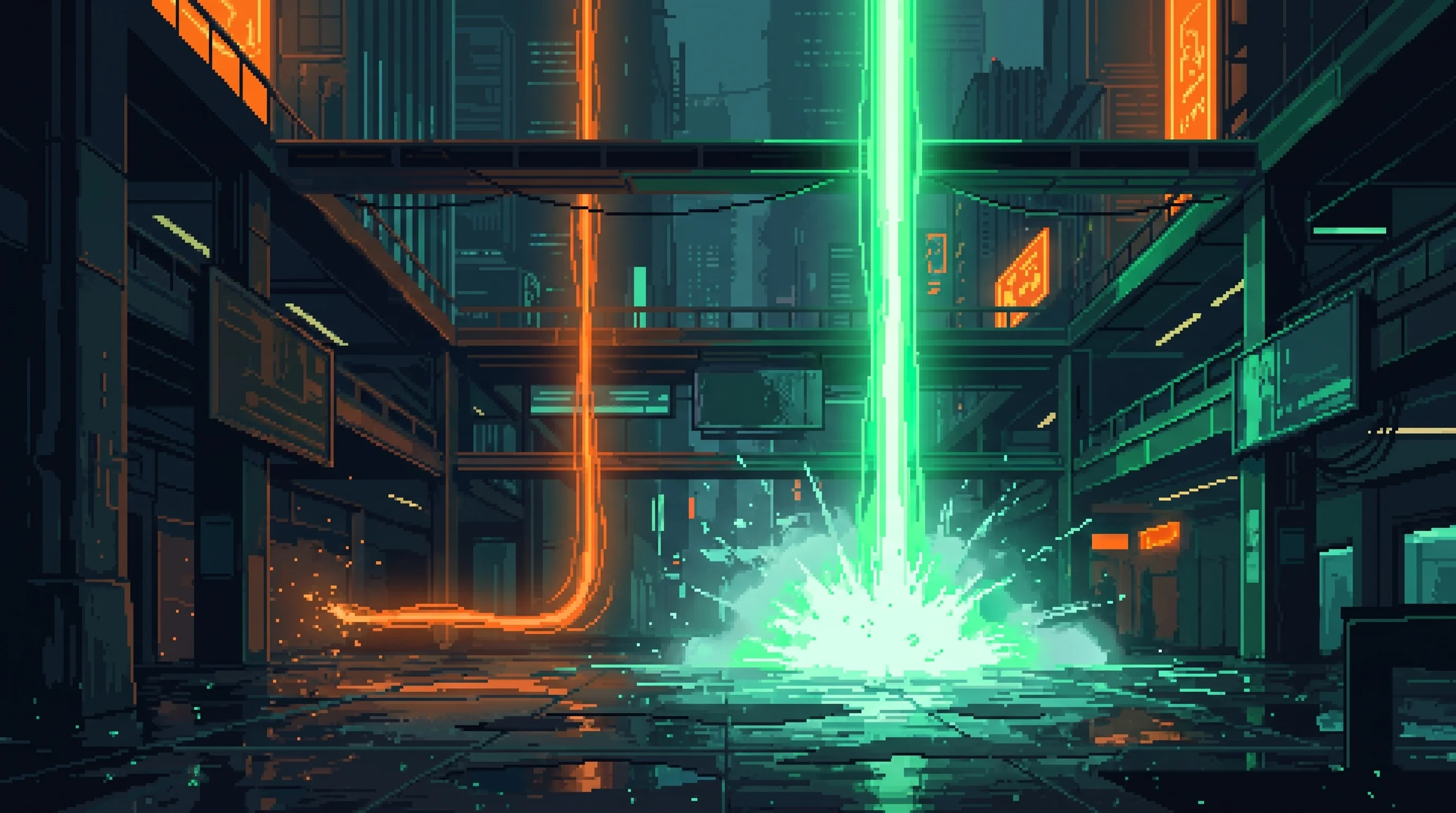
- Key symbol: A thermoelectric generator glowing between a hot exhaust vent and a cool corridor — waste heat becoming useful electricity
Affiliated Entities
| Entity | Relationship | Detail |
|---|---|---|
| The Thermal Shadow | Source | The Shadow produces the waste heat the Commons captures — one system's externality is another's infrastructure |
| The Scarcity Doctrine | Adaptation | The Commons is the Dregs' metabolic response to the Doctrine — not rejection, not resistance, resourcefulness |
| The Undervolt | Parallel | Both communities turned infrastructure waste into livable environments through engineering the formal economy considers deprecated |
| Competence Atrophy | Counter-evidence | The Commons requires and preserves the practical engineering competence the rest of the Sprawl is losing — necessity as curriculum |
| The Great Divergence | Symptom | The Commons measures the distance the Divergence has created — 800 units powered by scavenged watts is both achievement and indictment |
| Nexus Dynamics | Unacknowledged dependency | Nexus server farms generate the waste heat; Nexus infrastructure reports do not acknowledge the population living in it |
| Helix Biotech | Observer | Helix tracks the epigenetic changes under "non-pathological" — a classification that is technically accurate and functionally dismissive |
| Ironclad Industries | Aware, inactive | Ironclad's 2181 efficiency audit flagged the 23% advantage as anomalous, then generated zero action items |
Connected To



—