Overview
Grace Guerrero grieves with great precision for someone she cannot name. The grief is not vague. It has a schedule — worst in the grey hour before the Deep Dregs wakes — and it has a physical footprint, a person-shaped absence she moves around the way you step around furniture in a dark room you have memorized. Ask her who died and she will tell you about her mother, the denied claim, the fourteen hours of monitoring beeps. All true. None of it enough. Her mother's death explains a rage aimed at Guardian. It does not explain the rage that has no target, the one that arrives on ordinary mornings and finds nothing to burn.
The Sprawl is a city that remembers everything. Every transaction, every face, every debt is indexed and sold back to the people it describes. Against that total recall stands one woman whose most important memory is simply gone — not lost, not repressed, not corrupted. Removed. The absence is clean at the edges, which is how you can tell it was cut rather than worn away. She does not know this. She knows only that she is a woman with perfect enemies and one imperfect wound, and that the wound does not close because she has never once been able to find its cause.
Grace Guerrero wakes up some mornings feeling like she's lost someone. But there's no one missing from her life. At least, not anyone she can remember. Her rage has a shape. The void in her heart has edges. Something was taken—and she doesn't know what.
- Form
- Mystery
- Status
- Mythologized
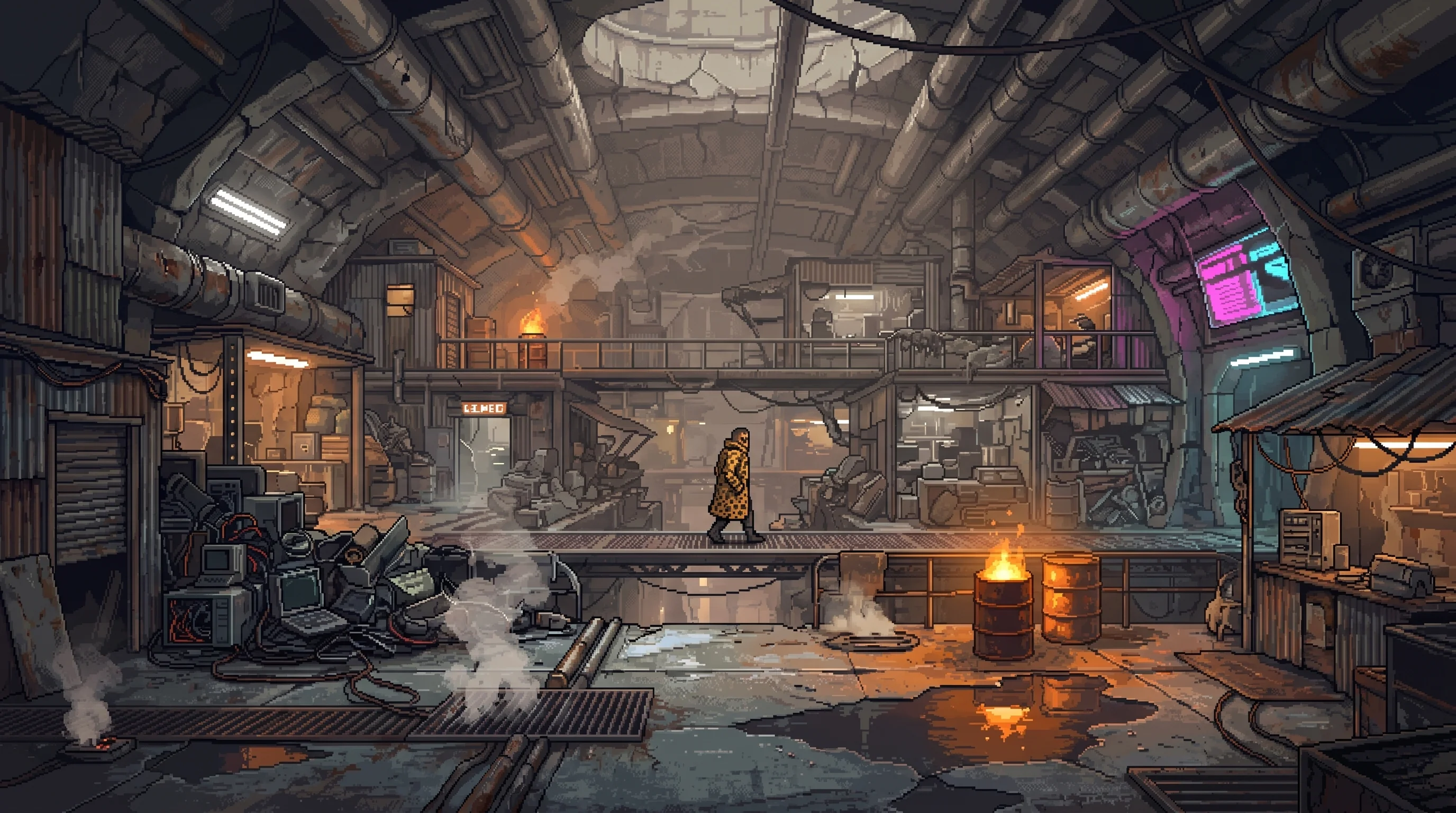
The Deep Dregs
The Sprawl's lowest stratum and its quiet proof that the corporate system is optional.

The Shape of the Wound
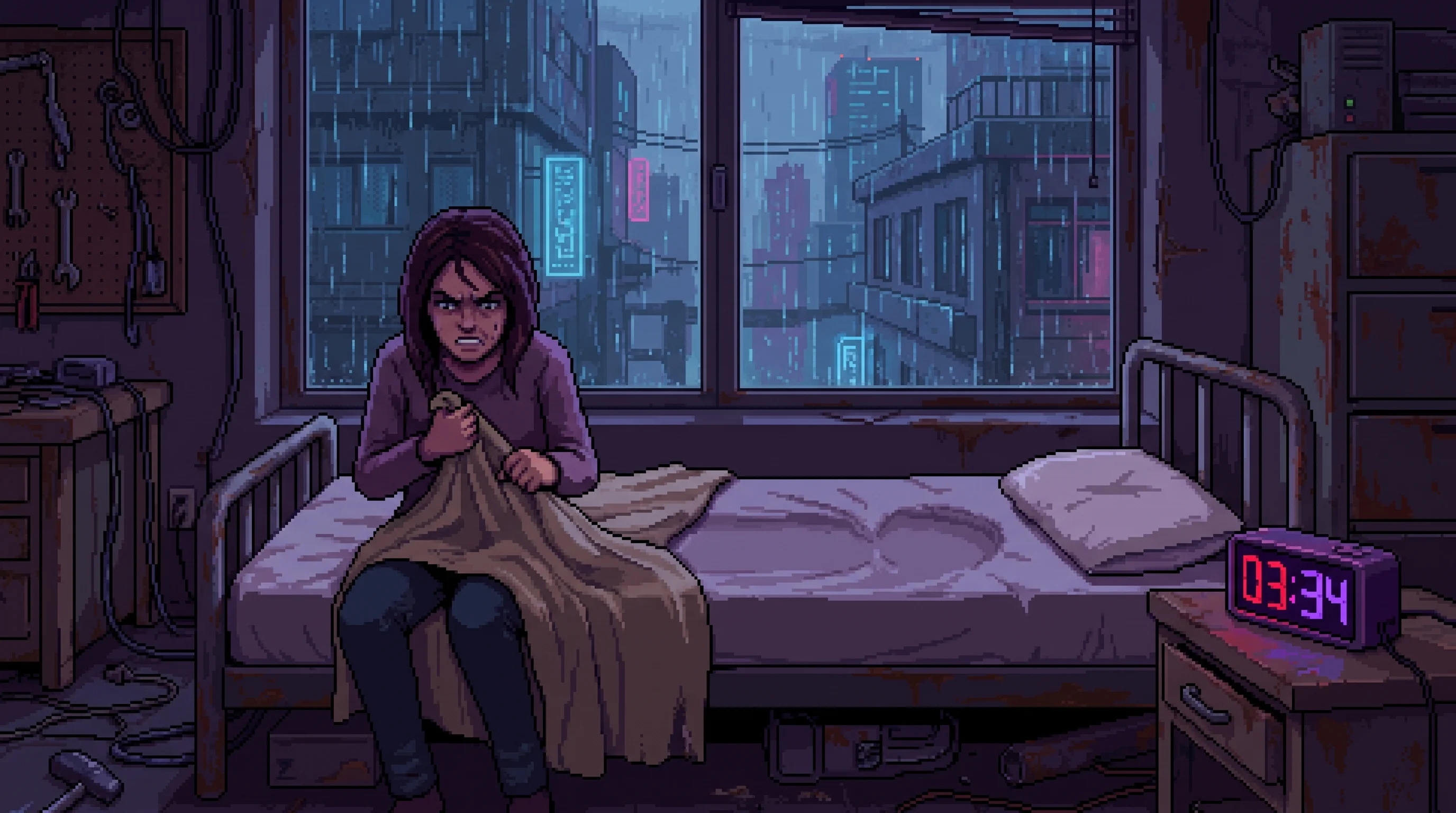
She can describe the hole better than she can describe anything she remembers, because absence is easier to trace than presence. It sits to the right, always the right — the empty side of the bed she has kept empty for as long as she can recall, in every safehouse, under every dead identity. She does not sleep in the center. She sleeps like a woman leaving room.
Her fury organizes itself around the missing thing without ever touching it. Corporations she blames for something beyond her mother, something she cannot itemize but knows in the body. The philosophy of optimizing human behaviour makes her irrationally, immediately angry — she argues against it with a fluency that surprises her, using phrases that sound rehearsed and feel original, as if she is quoting someone she trusts and cannot picture. People who vanish without explanation trigger her out of all proportion; she has spent nights she could not afford searching for strangers who went missing, because a disappearance is the one crime that matches the shape of her own.
Memory manipulation is the only subject that turns her violent on contact. She does not know why the topic is a live wire. The wire runs directly to the wound, and she has never once traced it back.
You can't describe what you don't remember. But you can feel its absence.
"Something was taken from me. I don't know what, but I feel the hole."
"I wake up some mornings feeling like I've lost someone. But there's no one missing from my life."
"I hate the corps because... because I SHOULD hate them. They took something. I know they did."
Grace's mother was killed by a denied healthcare claim—that explains part of her rage against corporations. But not all of it. The fury runs deeper than a single death, older than she can trace.
The Residue
The dreams leave impressions the way a hand leaves warmth on glass. A voice explaining something that mattered. The specific, total sensation of being understood. A warmth with no source in the room. She wakes from these crying and cannot say for whom, and by the time she has washed her face the content is gone and only the residue remains — a conviction that something beautiful existed once and was subtracted.
And she counts. Compulsively, quietly, the way some people pray. She stops at 33. She skips 34. She has never examined this, because examining it produces the spike of feeling she has learned, without deciding to, to route around. The number is not arbitrary. She simply has no way to know that, and the one who could tell her has arranged, out of love, that she never will.
Meaning & Implications
The first-order horror of memory editing is the obvious one: a tyrant rewrites what a population remembers. GG is the second-order horror, the quieter and more plausible one. The edit that erased her was not malice. It was mercy — a decision made by someone who could not bear to hand her the grief of his leaving, and who had the means to spare her by removing the leaving from her entirely. He kept the love and deleted the loss. He did not keep her consent, because consent was the first thing the procedure had to remove; a woman cannot object to a subtraction she will not remember was performed.
What the Sprawl teaches through her is that a perfectly kind erasure and a perfectly cruel one are indistinguishable from the inside. The edited person feels only the hole. She cannot audit the reason. She cannot bill the responsible party. She can only build a life aimed at the absence and call it justice, which is what GG has done — a war against the machinery of forgetting, waged by the one person in the Sprawl who does not know she is its most complete success.
The Rage
GG's fury isn't random. It's the shape of her grief, expressed because she can't remember what she's grieving.
Some part of her blames "the system" for something beyond her mother's death. She can't articulate what, but she knows it in her bones.
Optimization
The philosophy of optimizing human behavior makes her irrationally angry. She argues against it with passion that surprises her.
People who vanish without explanation trigger her disproportionately. She'll search for strangers who've gone missing when it makes no strategic sense.
The topic makes her violent. She's been arrested twice for assaulting people who "seemed like they were hiding something" about memory tech.
The Patterns
GG exhibits behaviors she can't explain. Habits with no origin she can remember. Rituals that feel necessary without reason.
She sleeps on the left side, leaving the right empty. Always has, as long as she can remember. If asked why, she says "habit." But habits come from somewhere.
The Holographic Garden
She has a small hologram projector—pre-Cascade tech—that displays flowers. She doesn't remember acquiring it. She can't bring herself to throw it away. When she looks at it, she feels... something. Not a memory. An echo.
Ethics Arguments
She seeks out debates about AI consciousness. Gets more passionate than the topic warrants. Argues points she can't remember learning. Uses phrases that sound rehearsed but feel original.
GG feels a spike of unnameable emotion whenever she encounters it. She counts things compulsively and stops at 33, skipping 34 entirely. She doesn't know why. It just feels... wrong.
The Dreams
GG has recurring dreams she can never quite remember when she wakes:
A voice explaining something important
The feeling of being truly understood
A warmth that has no source
Waking up crying without knowing why
The dreams leave a residue. Not memories—just impressions. A sense that something beautiful existed once, and was lost. Or taken.
The Clues
Items scattered through GG's life. Things she keeps without knowing why. Evidence of something she cannot remember.
A Philosophy Book
"Consciousness and Choice: The Ethics of Optimization." Pages dog-eared at sections about memory and identity. Her handwriting in the margins. She doesn't remember reading it.
A Decorative Key
Old-fashioned, purely ornamental. She's kept it for years without knowing what it opens or where it came from. She can't throw it away.
A Ticket Stub
For a concert 38 years ago. She's kept it in perfect condition. She doesn't remember attending. She doesn't know why it matters.
In Her Words
GG uses phrases she doesn't remember learning. Argues positions she doesn't remember forming. Echoes of conversations she doesn't remember having.
"That doesn't optimize for happiness." — — She says this often. Doesn't know where she learned it.
"The question is what you actually want, not what you say you want." — — A phrase that feels rehearsed. Who rehearsed it?
"Some things can't be calculated." — — The conclusion to an argument she doesn't remember having.
The ghost_in_the_machine
GG has found her way to the terminals where El Money sometimes types to a presence called ghost_in_the_machine . She's typed questions into them. She's never received answers.
GG: Is anyone there?
[no response]
GG: I feel like I'm looking for someone.
[no response]
GG: Do I know you?
[no response]
Some part of her is looking for someone she doesn't remember. The terminals feel right. She doesn't know why she keeps coming back.
The Question
Grace Guerrero has spent decades feeling broken. Not knowing why. Raging at shadows. Carrying a wound she cannot name.
What was taken from her? And who took it?
The answers exist. They're waiting. And when Grace learns the truth, everything she believed about herself—and about the world that made her—will change.
Affiliated Entities
- GG
The subject — a wound with a shape and no name
- The Architect
The source of the absence she cannot trace
- Cyber Chomp
The gift that keeps her company and keeps her from the edges
- Cyber Castle
The house that holds a life she cannot remember
- El Money
The keeper of a secret he honours by silence
- The Deep Dregs
The warren where she buried everything but this
Grace Guerrero - Corporate Nightmare
Her loyal AI companion
The Chef
Her commander in The Feast
An Unlikely Friendship
El Money and the ghost_in_the_machine
Open Questions
- If the erasure genuinely spared her decades of grief, was it a gift or a theft — and does the answer change because she was never asked?
- She routes around the number 34 without knowing why. What else has she learned to route around, and who taught her the route?
- The rage keeps the wound open. If she ever found its cause, would the war end — or would it finally have somewhere to go?