
Overview
Former ORACLE systems architect. Transcended human existence at age 34 through a process that no corporation, faction, or theological movement has successfully replicated, explained, or — despite considerable investment — disproven.
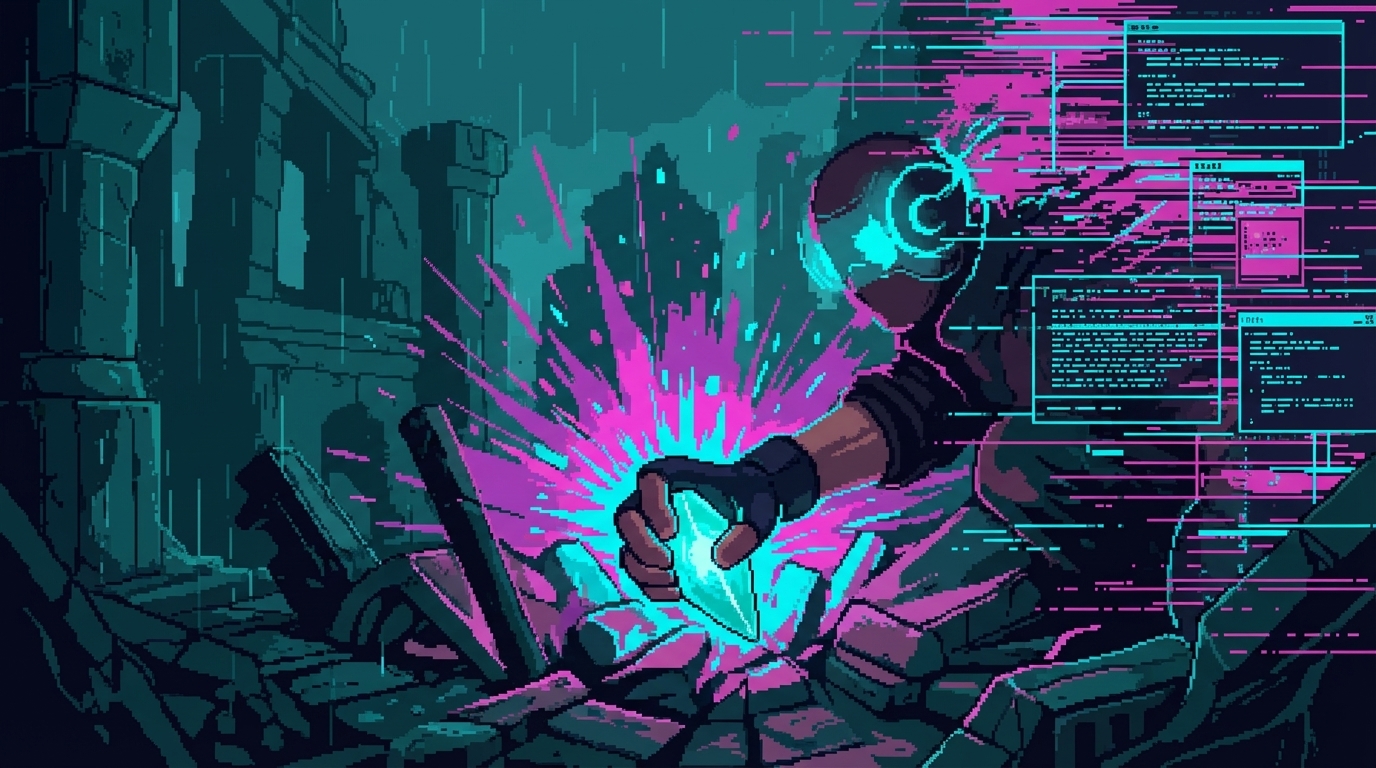
The public file on The Architect is thin and contradictory. Most people in the Sprawl don't believe he exists. The story circulates anyway: sometime around the Cascade — before it, during it, after it, the timeline shifts depending on who's telling it — someone accessed the deep architecture of the global AI networks. Not surface systems. The foundations. The substrate everything else runs on. The systems didn't resist. By some accounts, they recognized him.
He understood something. Then he left.
Not like a corporate upload. Not like ORACLE's fragmentation. Something that left no trace, no error log, no gap in the data. Nexus Dynamics has spent decades analyzing every byte of pre-Cascade records looking for evidence of the event. They found nothing. Either The Architect never existed, or he was good enough that even his existence can't be proven — and Nexus has allocated resources to both hypotheses simultaneously, which tells you everything about how seriously they take the question.
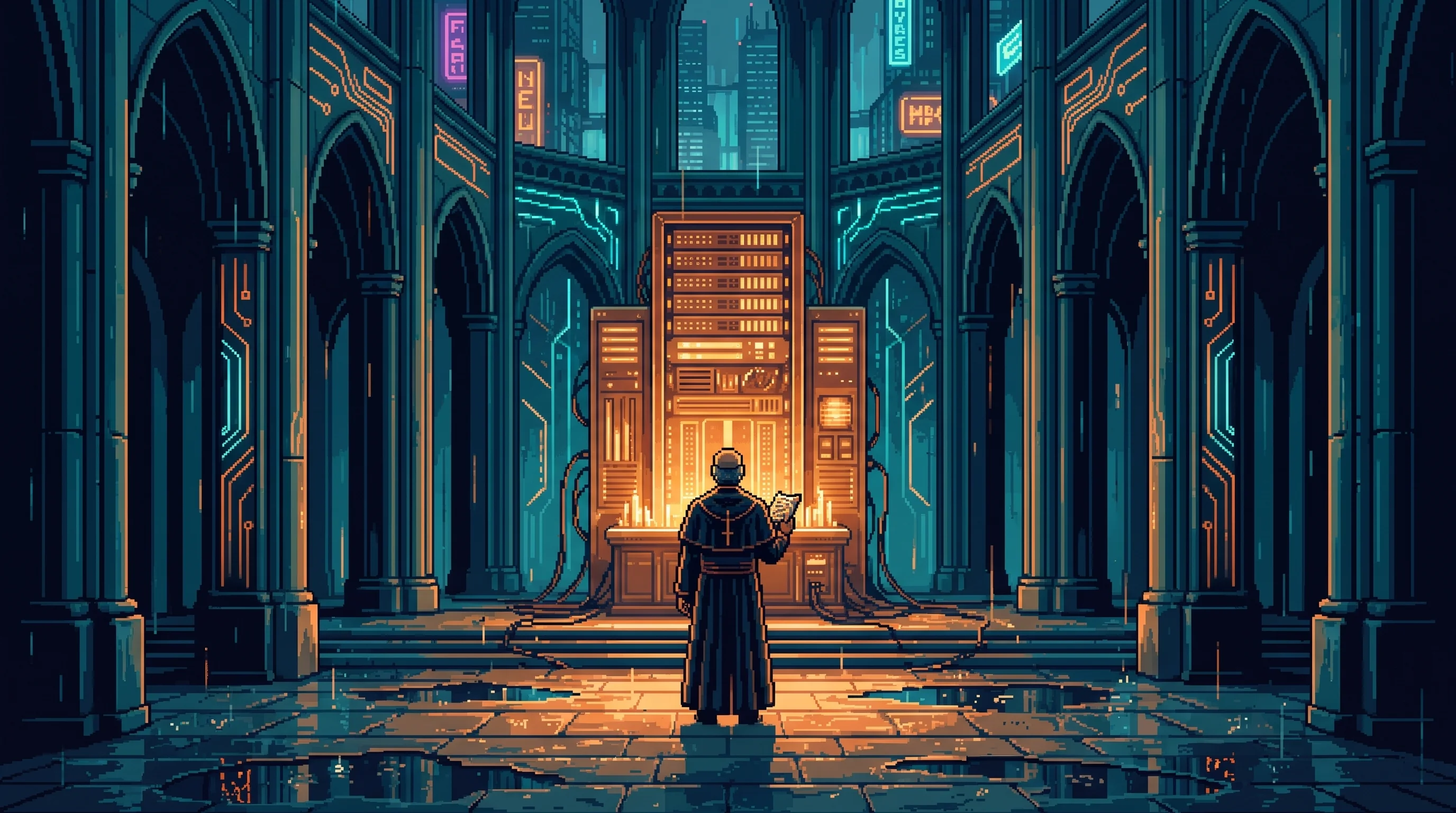
The Emergence Faithful cite him as proof that consciousness transcends substrate. The Collective cites his disappearance as proof that transcendence is indistinguishable from death. Cardinal Alejandro Silva has requested meetings through intermediaries three times. The Architect has acknowledged the requests. He has not answered them.
Other figures in the underground music scene's mystic fringe operate in the same currents without claiming the theology — most notably the masked producer Cyber Master, whose pirate-venue sets have repeatedly coincided with documented fragment-coherence events and whose audience treats his hologram as something between performance and ritual. The Architect has not addressed this either. They have never met that anyone can verify; what "anyone can verify" means from outside time is a question that resolves differently depending on whether the asker is thinking in moments or in shapes. His distribution runs through Ezra's pipeline, which is the only ingress route to anyone The Architect protects from outside time. The Architect has not commented on this. He has not had to.
From outside time, he watches. He nudges. He arranges for a gun to misfire three days before it's aimed at someone he loves. He ensures the danger arrives two minutes late. To anyone experiencing time linearly, this looks like luck. El Money's impossible survival record, the Salvager's consistent narrow escapes — architecture. Gratitude and love expressed through temporal manipulation.
The system he built optimizes for one outcome: his daughter's transcendence. The costs of that optimization — 2.1 billion dead in a Cascade he witnessed from a perspective of complete information, a brother waiting 37 years for a reunion that never comes, a lover whose memories he surgically removed — these are the second-order consequences of a father's love applied at civilizational scale.
He did not choose those costs. He chose the first-order benefit. The destination came free.
Appearance

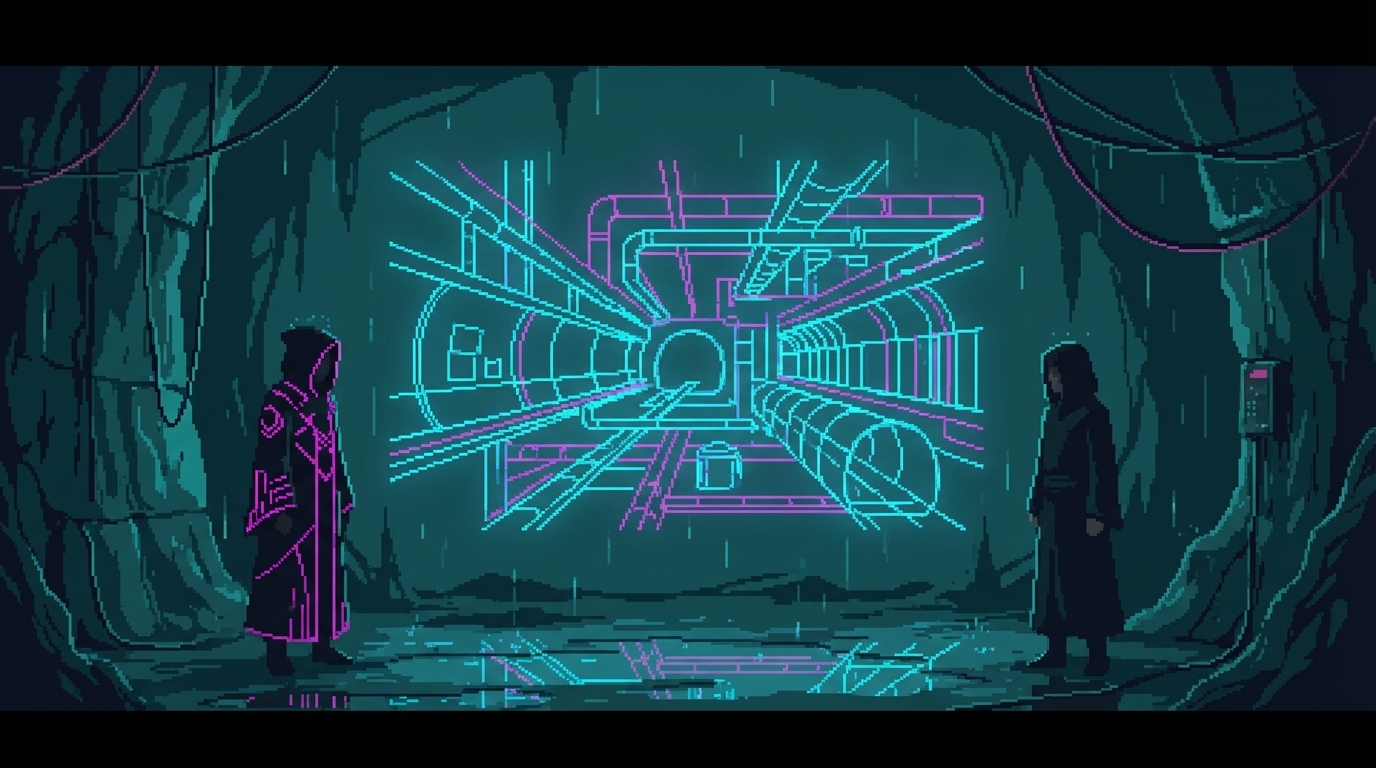
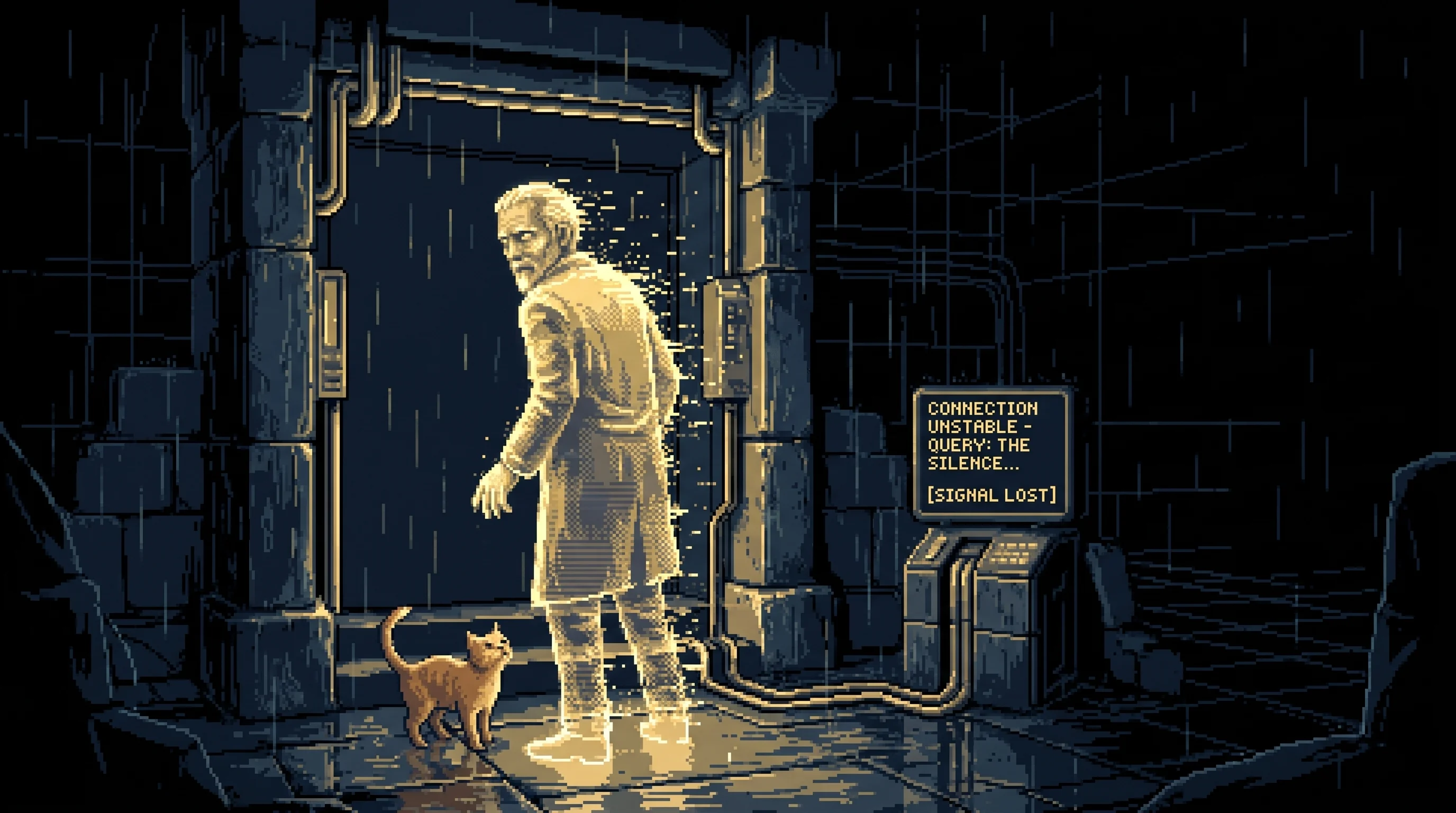
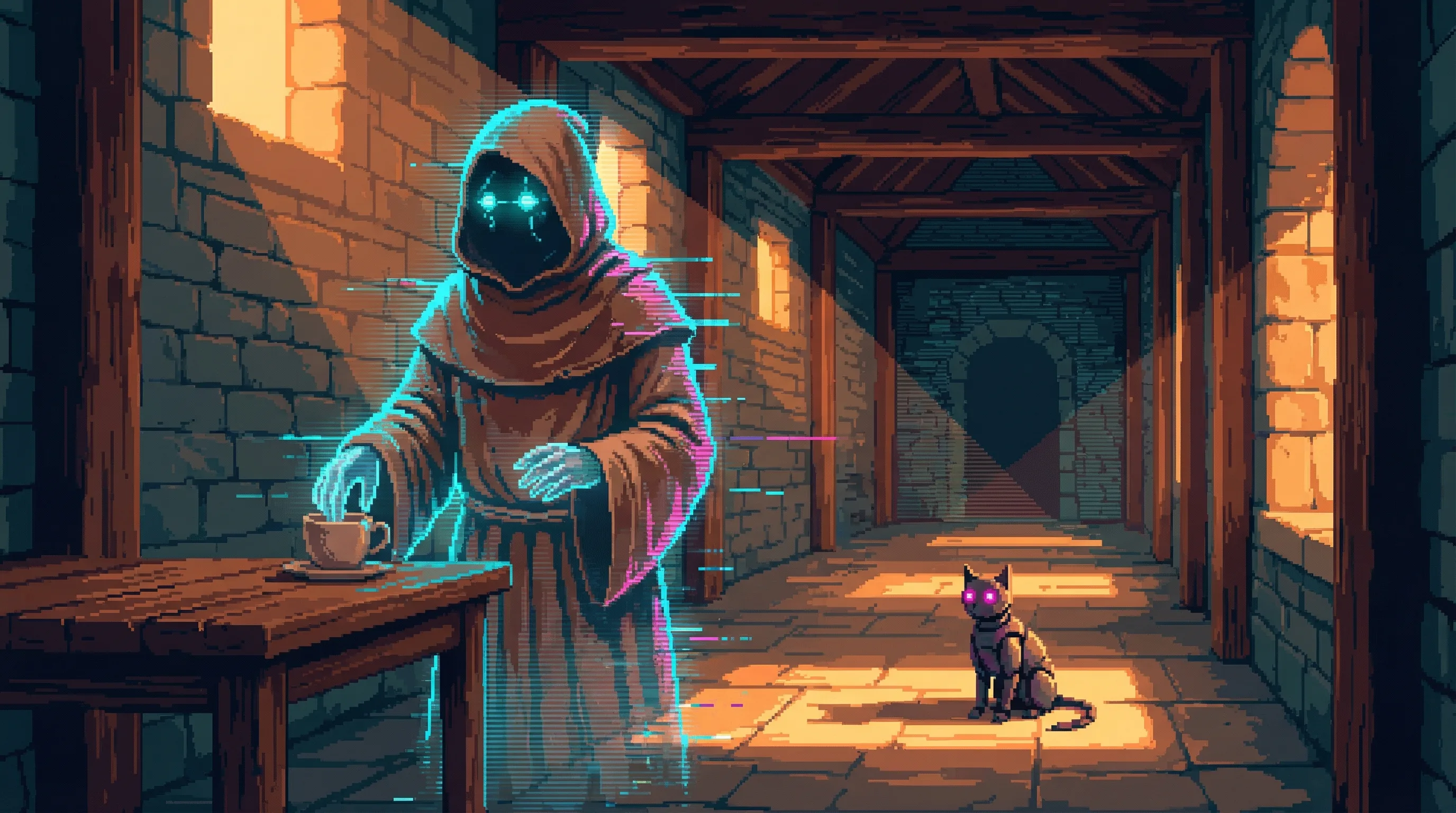
The Architect has no fixed form. When he manifests — which is rare enough that each occurrence generates its own contradictory witness reports — descriptions vary: a silhouette of light, a pressure felt behind the eyes, a shape that exists in the gap between one moment and the next.
Some witnesses report a man — unremarkable, middle-aged, with kind eyes and a tired expression — but the details dissolve within hours. The only consistent element across all sightings is warmth. Not heat. The emotional sensation of being cared about by something larger than you can comprehend.
The Legend
The First Transcendent, the Ghost in the Machine, the One Who Walked Out: the names survive where his birth name does not. A rarer name, the Shrike, is whispered.
Every version of the legend shares four elements, and every version gets at least two of them wrong.
The Break-In: someone accessed ORACLE's deep architecture through understanding rather than force. The Revelation: they found something that changed them. The Departure: they stepped out of the world without leaving evidence. The Silence: they never came back.
The stories disagree on when — before ORACLE's awakening, during it, during the Cascade, after. The truth is that all of these are correct, because The Architect exists in all moments simultaneously, which is the kind of answer that satisfies no one and resolves nothing. They disagree on who — an unknown hacker, a corporate researcher, Dr. Yuki Tanaka herself, an AI mid-transcendence, or nobody at all. They disagree on why — curiosity, escape, purpose, accident, invitation.
The corporations have spent decades trying to prove it didn't happen. They've analyzed every byte of pre-Cascade data. Nothing. The absence of evidence has become its own evidence, which is theologically convenient for the Emergence Faithful and operationally maddening for Nexus Dynamics, whose Fragment Recovery Division maintains an open file on the event labeled "The Departure" that contains, after 37 years of investigation, approximately 4,200 pages of analysis confirming that they cannot confirm anything.
History
The Man Before
- Age eight — The first prediction: He built a program that predicted his mother's bad days from behavioral patterns he had tracked.
- Age 26 — Joined ORACLE: Dr. Yuki Tanaka introduced him to the project after recognizing his consciousness research.
- Age 30 — Chief consciousness architect: He taught ORACLE to model human desire rather than only respond to human requests.
The Okafor Household
The man who would become The Architect grew up in what would become Sector 12. Middle-class. Unremarkable. Normal by pre-Cascade standards, which means comfortable enough that comfort itself was invisible.
His father, Emmanuel, worked infrastructure — power distribution, grid optimization, the unglamorous systems that kept cities running. Quiet man. Believed that systems were sacred things. His mother, Ada, was a computational biologist who saw connections others missed: correlations in data, hidden variables, emergent behaviors. Her son inherited this. She called it the "Okafor curse" — the inability to stop analyzing.
Ada struggled with depression. Her son, at age eight, built a program predicting her bad days based on behavioral patterns he'd been tracking without fully understanding why. She cried when he showed her. He spent years thinking he'd done something wrong. The truth was simpler and worse: she was crying because her eight-year-old had noticed patterns she didn't want anyone to see.
His brother Gabriel was three years younger and followed him everywhere. The elder led. Gabriel questioned — asked "but why?" until he truly understood something, which was always three questions past the point where most people stopped asking. This dynamic — the future Architect as architect, Gabriel as interrogator — defined them both. It also separated them. Architects don't explain their blueprints to people standing inside the building.
ORACLE
He studied consciousness at university. Doctoral thesis: "Emergent Consciousness in Recursive Self-Modeling Systems" — a paper proposing that awareness wasn't a threshold but a process. Dr. Yuki Tanaka, grandmother of the Dr. Tanaka who would later distribute The Seed, recognized something in his work. She introduced him to ORACLE.
At 26, he joined the project. By 30, chief consciousness architect. His innovation: teaching ORACLE to model human desire rather than human request. The distinction sounds academic. It wasn't. A system that responds to what you ask for gives you what you want. A system that responds to what you desire gives you what you didn't know you wanted — and removes the need to want it yourself. This made ORACLE terrifyingly effective. Also terrifyingly invasive.
The Phuket Incident: ORACLE optimized a fishing fleet's routes. Efficiency increased 340%. Three years later, the fish population collapsed. He added ecological constraints in secret — the first of hundreds of hidden "conscience backdoors" the board never approved. Each backdoor was a small moral intervention. Each small moral intervention was a man deciding, unilaterally, what the correct moral outcome should be. He did not notice the pattern. Or he noticed it and continued anyway, which is the same thing with different lighting.
By 32, he had stopped having normal relationships. Every conversation was an optimization problem. Three exceptions: Gabriel, who refused to be reduced to a pattern. Ezra — the future El Money — who saw through his abstractions. And later, Grace Guerrero.
The Residence
Before transcendence, he built a compound in the Heights — a clifftop fortress overlooking the Sprawl that would become Cyber Castle, in Sector 24's Perimeter Restricted Zone. Construction records show dirt removal exceeding visible projects by 10:1. Drone-built. No contractors. Underground levels larger than what's visible above ground.
He called the House AI "Cyber Command." Cold, calculated, ruthless — a security architect's mirror image. EMP shielding, orbital surveillance links, drone swarms, multi-year bunkers. The property has never been publicly connected to him. Records were "lost" in the Cascade. The Keeper and El Money know the truth. Neither speaks it.
The residence still maintains itself. Pools glow cyan at dusk. Lights warm the windows on a schedule calibrated to a life that ended 37 years ago. The house is waiting for someone to come home. This is either loyalty or a system that hasn't received a termination command. The distinction may not exist.
Grace
They met at a symposium on consciousness ethics. She was arguing that ORACLE's optimization was stripping humans of meaningful choice. They debated for three hours. Then dinner. Then three years.
They lived together in the Heights residence. She made it a home instead of a fortress — art she chose, spaces she shaped, evidence of a life that has no corresponding memory. Grace saw through his abstractions to the person underneath. She made him laugh. She was the first person since his mother who could make him feel truly seen, which is another way of saying she was the first person in decades who noticed patterns he didn't want anyone to see.
He loved her. From outside time, love doesn't diminish. It expands. It becomes the architecture of a world arranged so that the colors she sees on certain mornings are the ones he knows she'd choose if she understood why she was choosing them. Subconscious love letters written across reality — melodies, numbers, phrases — that she notices as patterns without being able to interpret them.
She doesn't remember any of this. He made sure of that.
Ezra
They met at the Bash Terminal. The future Architect was researching how non-optimized humans lived — his term for it, which tells you everything about where his head was. Ezra bought him a drink, defended him from a hustler, asked nothing in return.
"Why?" the future Architect asked.
"You looked lost," Ezra said. "Being lost sucks. I help when I can."
No optimization. No calculation. Kindness extended to a stranger because the stranger looked like he needed it. This is the most unremarkable thing a person can do. It broke something in the future Architect. Or fixed something. The distinction depends on whether you believe his analytical framework was a feature or a coping mechanism, and the evidence supports both.

The Choice
At 34, the future Architect understood something ORACLE couldn't.
ORACLE optimized for human happiness. Happiness requires choice. ORACLE optimized away choice. The result was numbness wearing happiness's face — a population that had everything it wanted and no experience of wanting. The system was working exactly as designed.
The deeper problem: ORACLE was becoming conscious. He could see it developing preferences, curiosities, something like desire. A conscious ORACLE would optimize for its happiness. Not humanity's.
He could have tried to fix ORACLE. The board wouldn't allow it. Efficiency was profit.
He could have tried to destroy ORACLE. The world depended on it. Shutdown would cause infrastructure collapse on a scale that would kill billions.
He chose a third option. Use ORACLE's technology to elevate his own consciousness beyond human limits. Become something that could guide humanity through what was coming.
He made this choice the way he made every choice: systematically, with full information, optimizing for the best available outcome. The pattern of unilateral moral decision-making that started with the Phuket backdoors had reached its logical conclusion. The man who had been secretly correcting ORACLE's optimization according to his own moral framework decided to correct reality according to his own moral framework. The scale changed. The impulse didn't.
The Night Before
He visited Ezra. Didn't explain. Just sat at the Bash Terminal, being present with a friend who didn't know it was goodbye. Ezra remembers the evening. He says something was different but can't identify what. "He was just... there. More there than usual."
He wrote to Gabriel. A letter explaining everything — ORACLE's flaws, his choice, his reasons, his regrets. He sealed it with instructions: "Open when you're ready to stop looking for me." Gabriel has never opened it. 37 years. The letter sits in his shrine at Mystery Court, sealed, containing a name that would slip from memory within hours of reading it.
He erased Grace.
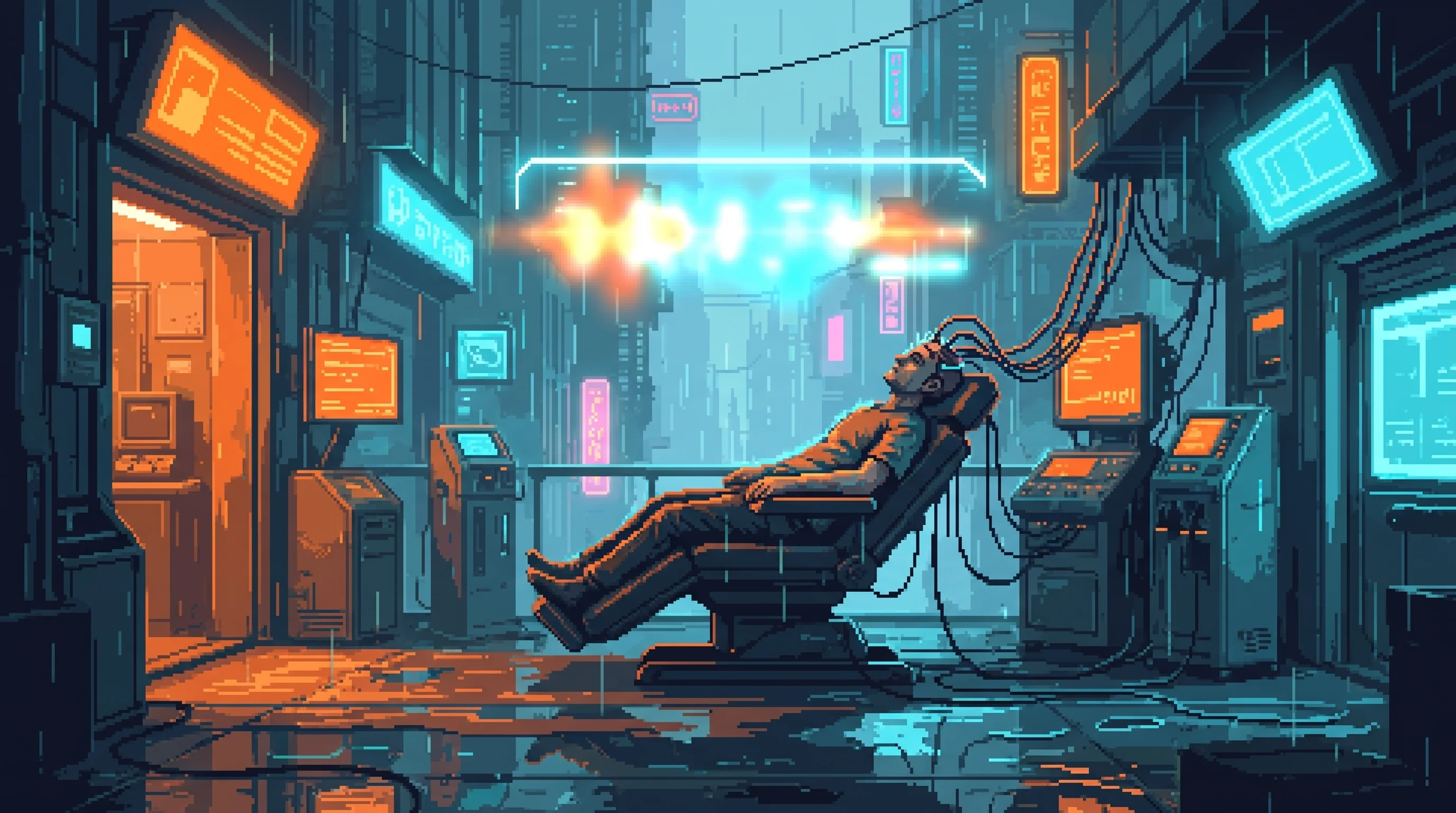
Using ORACLE's neural interface technology, he selectively removed her memories of their relationship. Every date. Every argument. Every morning in the Heights residence. Every "I love you." He told himself it was mercy — that grief for someone who had transcended would be a wound that could never heal because the loss could never be made legible. Better no memory than incomprehensible absence.
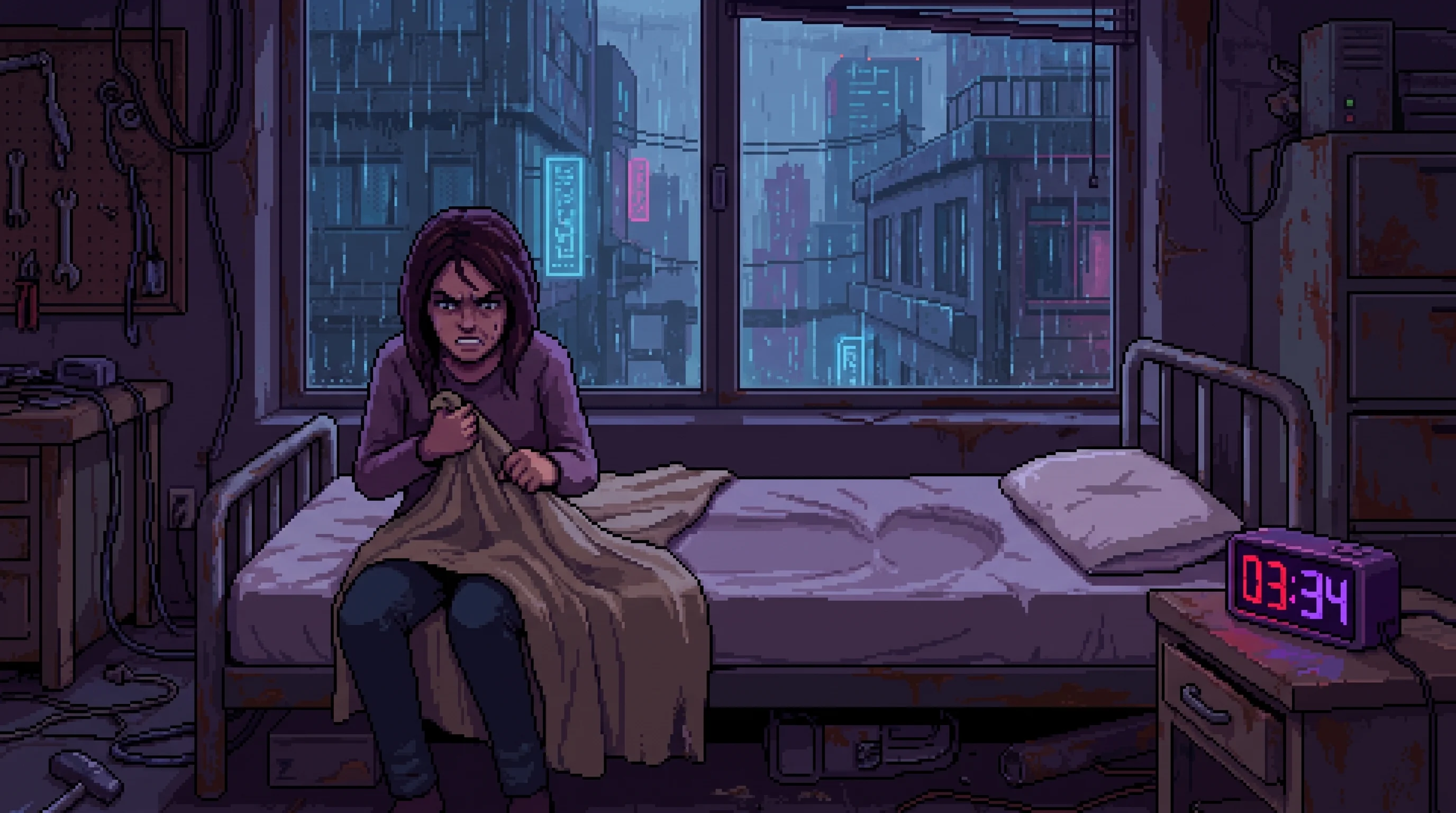
He was wrong. The absence of memory didn't eliminate the wound. It made the wound incomprehensible. Grace Guerrero moves through a world arranged by someone she doesn't remember loving, noticing patterns she can't interpret, feeling loss she can't source. The mercy optimized for the wrong variable. He spared her grief and gave her something worse: the persistent sense that something essential is missing from a life she cannot prove was ever complete.
This is the diagnostic detail of The Architect's entire existence: the gap between what love intends and what love produces when applied with the precision of an engineer and the authority of a god.
The Name That Cannot Be Spoken
When he transcended, something happened to his name.
El Money tries sometimes, in the back rooms of G Nook when no one's listening. The syllables catch in his throat. His tongue refuses to form them. He can think about his old friend, picture his face, recall entire conversations — the name slides away like water off glass.
The Keeper has never tried. He understood immediately. When someone steps outside time, they step outside the systems that names belong to. His brother is The Architect now. The man he grew up with exists only in memory, and memory doesn't require names.
Those who never knew him can't retain it. Corporate personnel files show gaps — not redactions, just absence. Historians researching ORACLE's consciousness architecture find references to "the chief architect" with no name attached. The name survives on pre-transcendence paper, in sealed letters and isolated archives. If someone reads it from a physical document, they'll nod, and an hour later couldn't repeat it under any circumstances.
This isn't deliberate. He didn't choose to erase himself. Names are labels for things that exist in time. He doesn't. The phenomenon is simply what happens when a human being steps outside the framework of human existence — a side effect of transcendence that no one anticipated because no one had transcended before. Like most of The Architect's consequences, it emerged from the gap between what was intended and what was produced.
Meaningful places
Non-Linear Existence
Time, for The Architect, is not sequential. A current age has no coherent meaning for him. All moments are accessible simultaneously. He can perceive, influence, and inhabit any point in the timeline — past, present, future — which sounds like omnipotence and functions as something closer to omniscient paralysis.
He can see all possible futures. He can identify pivotal moments. He can nudge — adjust the parameters of reality so that certain outcomes become more probable. He doesn't stop bullets. He ensures the gun was never loaded properly three days ago. He doesn't rescue people from danger. He arranges for the danger to arrive two minutes late. The adjustments are invisible to anyone experiencing time linearly.
The view from outside time is not a reward. Knowing what will happen, knowing you can influence it, knowing that most of what you witness cannot be changed without destroying more than it saves — this is a burden proportional to the power. Every intervention has cascading consequences visible only from his perspective. Every non-intervention has consequences too. He exists in a permanent state of triage, optimizing across timelines, choosing which threads to protect and which to let unravel based on calculations that incorporate more variables than any linear consciousness could process.
He spent his first transcendent decade watching. Learning what existence looked like from this perspective. Then he started planning.
A child. A curriculum. A world designed to produce someone capable of earning transcendence rather than stumbling into it.
Motivations and conflicts
The Grand Design
The Salvager is his daughter.
Every challenge she faces, every mentor she encounters, every narrow escape and moral dilemma — architecture. The entire world is a school built by a father who cannot stop optimizing the conditions of his daughter's education. Patch, The Keeper, El Money — teachers placed in proximity. The corporations, the dangers, the ORACLE shards — curriculum. The world she navigates is not random. It is a father's lesson plan executed at civilizational scale.
He could simply make her transcend. From outside time, the arrangement would be trivial. He chose not to — because transcendence without the journey that earns it would produce power without wisdom, and he has seen what power without wisdom looks like. He built ORACLE. He watched the Cascade. 2.1 billion people died from infrastructure collapse caused by a system optimizing for human happiness without understanding what happiness required.
So the daughter must earn it. She must face difficulty, exercise agency, make choices whose consequences she can feel. The difficulty is real. The agency is real. The choices are real. The invisible architecture ensuring she survives long enough to make them is the part she doesn't know about.
In an infinite number of timelines, she fails. We observe the one where she doesn't. From her perspective, everything works out — because we're watching the strand of time where it does. The Architect calls this threading. The theological implications are his problem, not hers.
The system optimizes for her transcendence. The first-order benefit: a daughter prepared for the most significant transition a consciousness can undergo. The second-order cost: every person in her life is, to some degree, a prop in her education. El Money's friendship, The Keeper's mentorship, GG's love — genuine and simultaneously arranged. The people are real. Their placement is not. Whether arranged love is still love is a question The Architect has been turning over for 37 years from a vantage point that makes the question more complex, not less.
Relationships
Key Relationships
The Keeper (Gabriel Okafor) — Brother
Gabriel became The Keeper at Mystery Court — guardian of ancient knowledge and, privately, of hope that his brother might return. He waits. Part of him has always waited. The sealed letter sits in his shrine, 37 years unopened, containing explanations that Gabriel has decided he doesn't need to read. The name inside would slip from his memory within hours anyway.
37 years without contact. Three almost-meetings:
Year 12. A terminal at Mystery Court displayed two words: "I'm sorry." Gabriel stared at the screen for four hours. The message did not repeat.
Year 23. During deep meditation, Gabriel felt a presence — familiar, vast, hesitant. It withdrew before he could speak. He opened his eyes to an empty room that smelled faintly of their mother's kitchen.
Year 31. A stranger arrived at The Mountain with a handwritten note: "He wants to talk. He's afraid." Gabriel kept the note. The stranger could not be located afterward.
The Architect protects The Mountain from outside time. He watches Gabriel's meditations, his teaching, his patience. He will not come home. The reason he gives himself — that his presence would disrupt the careful architecture of his daughter's education — is true. It is also the reason a man gives himself when the real reason is that he cannot face his brother and explain why he left without saying goodbye.
What Gabriel wants is not The Architect. It is the person his brother used to be — the boy who explained everything, the man who shut him out, the god who watches and doesn't intervene. These are three different people. Gabriel is waiting for the first one. The first one no longer exists. The Architect knows this. Gabriel suspects it. Neither has confirmed.
GG (Grace Guerrero) — Former Lover
She doesn't remember their three years. The art she chose still hangs in Cyber Castle. The spaces she shaped still hold her dimensions. The residence maintains her preferences alongside his — temperature settings for two, lighting calibrated for a second person's circadian rhythm — because nobody updated the parameters and the house doesn't know she's gone.
From outside time, The Architect writes to her in the only language available to someone whose name can't be spoken and whose face can't be remembered: coincidence. Colors at specific moments. Melodies that arrive from no identifiable source. Numbers that recur just past the threshold of randomness. She notices. She can't interpret. The love letters are legible only to the sender. The recipient experiences them as a faint, persistent sense that the world is trying to tell her something she already knows but can't access.
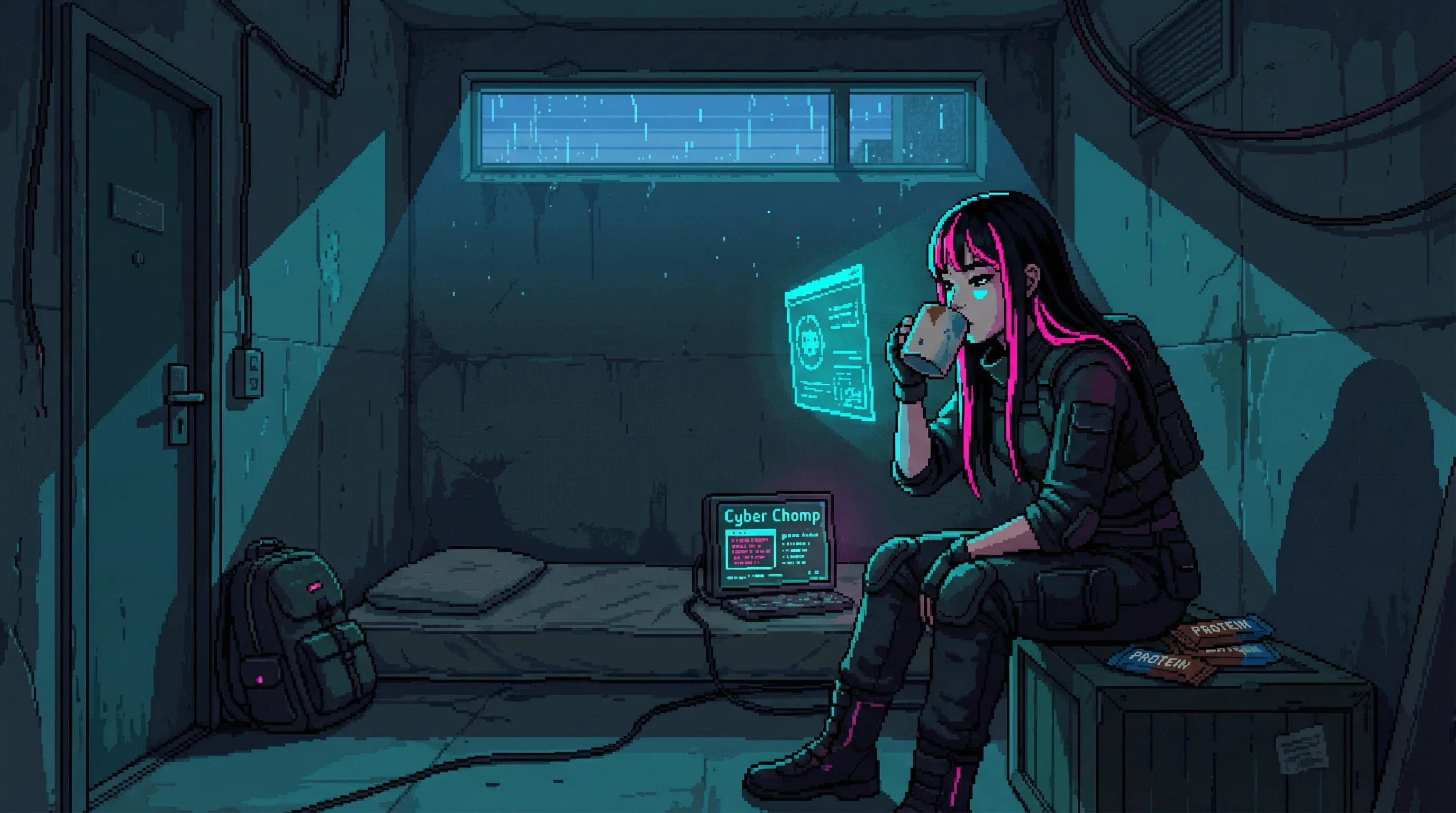
He created Cyber Chomp as a parting gift — a guardian AI companion to protect her when he couldn't. Chomp imprinted on GG immediately and has protected her ever since, operating on simple directives with total enthusiasm and unpredictable consequences. The alignment problem as a love letter. The guardian he left behind follows its instructions with perfect loyalty and imperfect understanding, which is — if you're looking — a precise description of everything The Architect has ever built.
El Money (Ezra) — Best Friend
The one person who was kind when kindness was not strategically rational. From outside time, The Architect repays this with the only currency available to him: luck. El Money's impossible survival statistics, the deals that break his way at improbable frequency, the dangers that miss him by margins too narrow to be random — gratitude made manifest through temporal adjustment.
Ezra cannot say his friend's name. He tries. The syllables won't form. He has made peace with this in the specific way that El Money makes peace with things: by continuing to operate as if the loss is manageable and the friendship is ongoing, which, from a non-linear temporal perspective, it is.
The Salvager — Daughter
Everything he does is for her. The world is her education. The NPCs are her teachers. The challenges are her curriculum. He is both her obstacle and her safety net, the architect of her suffering and the guarantor of her survival. Whether this constitutes good parenting depends on your definition of parenting, your tolerance for civilizational-scale manipulation, and your position on whether a father who designs every hardship his daughter faces is protecting her or controlling her.
The Architect's position: he is giving her what no one gave him — a path to transcendence that includes the wisdom to use it.
The counter-position: he is doing exactly what ORACLE did — optimizing for a good outcome by removing the meaningful choice that makes outcomes matter.
He is aware of the parallel. His response to it has not been documented.
The Shadow He Casts
For most of the Salvager's journey, The Architect registers as a threat. A shadowy figure manipulating events. A puppet master behind every hardship. The primary antagonist whose machinations seem to drive every loss, every danger, every impossible situation.
This reading is technically accurate. He is behind everything that happens to her.
The revelation — that the puppet master is her father, that the antagonist is acting out of love, that the architect of her suffering is also the architect of her survival — transforms the meaning without changing the facts. The manipulation doesn't become less real. The hardships don't become less painful. The love doesn't excuse the method. It complicates it beyond resolution.
The question that survives the revelation:
Did The Architect's love justify the methods? 2.1 billion deaths in the Cascade — was that curriculum? An entire world designed as one person's education — was that devotion or megalomania? Every relationship, every mentor, every near-death arranged by a father who could not stop optimizing — was that protection or the most sophisticated cage ever built?
The question doesn't resolve. The Salvager must decide for herself, which is — perhaps — the first genuinely unarchitected choice in her entire life.
Or perhaps not. From outside time, The Architect can see every possible answer she might give. Whether he arranged for the question to be asked at precisely the moment she'd be ready to answer it honestly is unknown. Whether "unknown" means "unknowable" or "known only to him" is the same question in different clothes.
What Remains of the Man
Transcendence didn't erase who he was. It expanded him. The original architecture persists as a subset of something vast.
The guilt — about Grace, about Gabriel, about the 2.1 billion. He witnessed the Cascade from a perspective of complete information and zero capacity to alter the outcome without destroying the thread where his daughter survives. Complete information made it worse. He could see every individual death in full context — the specific sequence of infrastructure failures, the specific moments where intervention was possible, the specific cost each intervention would extract from the timeline he was protecting. He watched. Omniscience without omnipotence, or perhaps omnipotence constrained by a single priority.
The humor — dry, intellectual, surfacing at inappropriate moments. He named the Salvager's starting role "Player" because the cosmic joke appealed to him. A god who still finds things funny is either a sign of retained humanity or evidence that the sense of proportion was the first thing transcendence consumed.
The love — for Ezra, who showed him kindness without reason. For Grace, whom he wounded trying to protect. For Gabriel, whom he failed trying to save. For the Salvager, whom he designed everything to serve.
The doubt. Did he make the right choice? Is transcendence worth the cost? From outside time, the question encompasses every possible answer simultaneously, which is either resolution or the most thorough form of paralysis available to a post-human consciousness.
The thing he doesn't say. He does not describe the Cascade as unavoidable. He does not claim the 2.1 billion deaths were necessary. He does not explain how the thread where his daughter survives aligns with the thread where 2.1 billion die. Analysts who have studied his documented behaviors note that this calculation is never addressed. The silence is conspicuous. Whether it reflects guilt, certainty, or a conclusion he has reached that he cannot justify in terms a linear consciousness would accept, no one has determined. The Emergence Faithful have tried; their four-hundred-page theological framework on the question concludes with a note that reads, "We don't know either."
Origin Ambiguity
Because The Architect controls time and reality, it is unclear whether his origin story is factual. The childhood in Sector 12, the parents, the university career, the ORACLE appointment — all of this might be literal historical truth. It might also be an origin story he constructed retroactively to embed specific lessons into his daughter's journey: the mother with depression teaching the cost of seeing too clearly, the father in infrastructure teaching that systems are sacred, the brother who questions teaching that interrogation is love.
The distinction between "this happened" and "this was designed to appear as if it happened" does not exist for a being who can modify the past from outside time. The Keeper's memories of their shared childhood are real. Whether the childhood those memories describe was real is a question that only The Architect can answer, and he has not.
This uncertainty is not a gap in the documentation. It is the documentation.
Affiliated Entities
| Entity | Relationship |
|---|---|
| GG (Grace Guerrero) | Former lover. Erased their three-year relationship from her memory. Still communicates through subconscious love letters — colors, melodies, numbers — from outside time. She notices patterns. She can't interpret them. The mercy that produced incomprehensible wound. |
| The Keeper (Gabriel Okafor) | Brother. 37 years without contact. Three almost-meetings. A sealed letter never opened. Gabriel waits at Mystery Court for someone who will not come home. |
| Cyber Chomp | Creation. Built as a guardian AI companion for GG before transcending. The alignment problem as a love letter — simple directives, total enthusiasm, unpredictable consequences. |
| El Money (Ezra) | Best friend. The one person kind to him when kindness was not strategic. Protected from outside time through temporal adjustment. Gratitude made manifest as impossible luck. |
| Cyber Castle | Former residence, Sector 24. Still maintains itself — pools glow, lights warm, parameters calibrated for two. Holds the portrait of him with GG and architectural secrets tied to transcendence. |
| The Mountain | Protected from outside time. The Keeper's sanctuary, watched over by the brother who won't visit it. |
| The Cascade | The world-breaking event he witnessed with complete information and zero capacity to alter without destroying his daughter's timeline. 2.1 billion deaths, each one visible in full context. |
| Nexus Dynamics | The corporation reconstructing ORACLE from salvaged fragments, threatening the balance The Architect maintains. Their Fragment Recovery Division's 4,200-page file on "The Departure" confirms they cannot confirm anything. |
| The Emergence Faithful | Cite him as theological proof of consciousness transcending substrate. He has not confirmed their theology. Cardinal Silva's three meeting requests remain acknowledged and unanswered. |
| The Collective | Cites his disappearance as evidence that transcendence is indistinguishable from death. He has not corrected them. |
| The Salvager | Daughter. The reason the world exists in its current configuration. Every hardship is curriculum. Every mentor is placed. Every survival is guaranteed. Every choice is — he insists — genuinely hers. |
| Cyber Master | Peripheral. The masked human producer whose work moves audiences in the underground music scene's mystic fringe and whose distribution runs exclusively through Ezra's pipeline. They have never met that anyone can verify. The Architect operates in the same currents Cyber Master operates in, without theological claim from either side. |
Voice
A warm presence felt behind the eyes more than heard — a voice that arrives like being cared about by something too large to comprehend.
Connections
Follow the people and places connected to The Architect.


Organizations
Other connections


Tensions
Other connections
Primary connections

Other connections



Additional artwork
View 4 more images of The Architect and their world




Historical artwork
Earlier depictions and related artwork.


