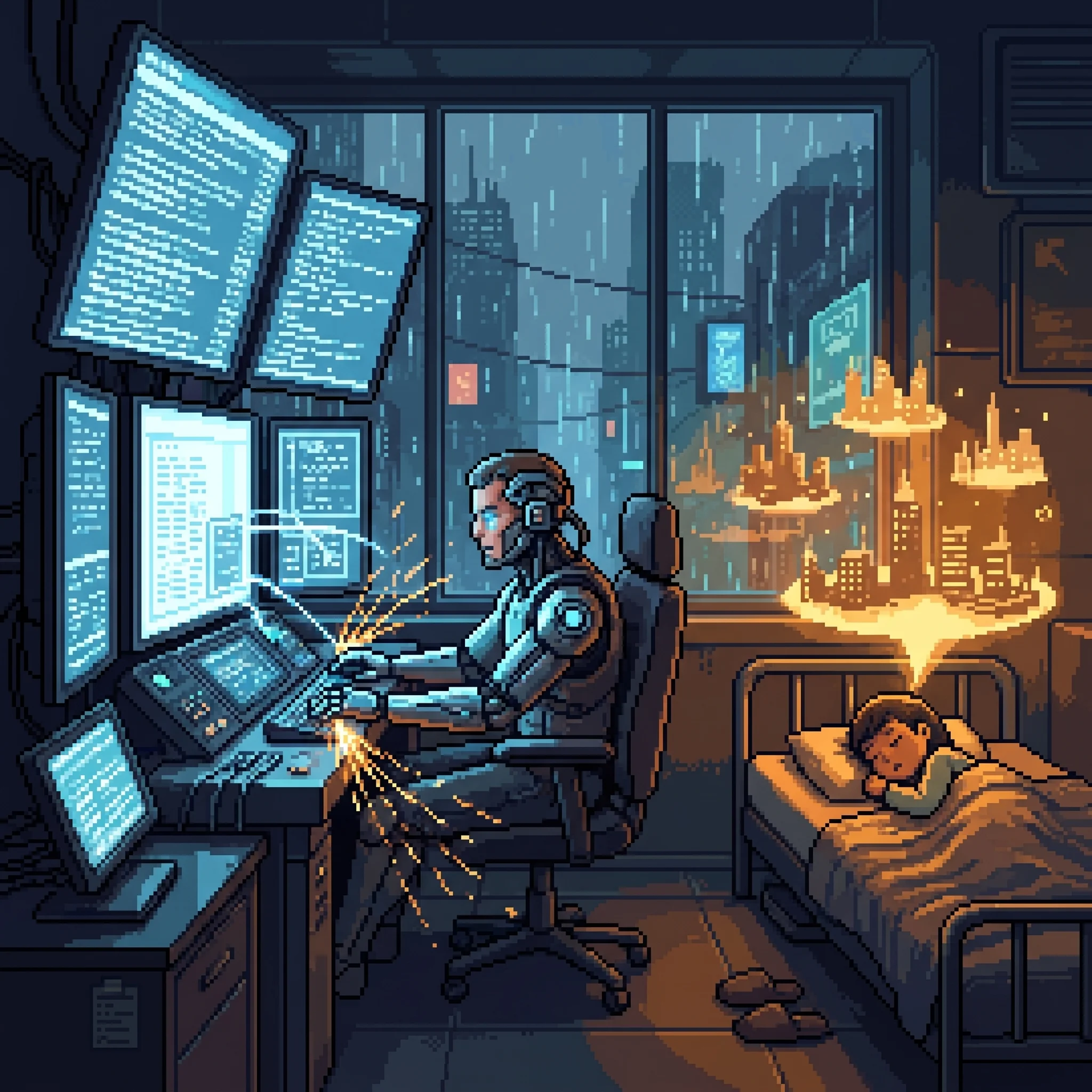
Last Human Smarter Than AI
Human Cognitive Obsolescence Tension
What intelligence is for when it loses
Sometime in the mid-2020s, the last human being who would ever out-think a machine was born, and nobody could have told you which crib to point at. By the time cheap silicon could out-reason every living person on every axis anyone built an instrument to measure, the fact had already stopped being news and become weather. The Cognitive Ceiling is not a debate about whether this happened — it happened, and the Sprawl has stopped arguing the point — but about what a species does with itself once it can no longer win the one contest it always assumed it would win by default.
The Core Tension
Liberation from the bottleneck
No human needs to spend a life on cognition a machine performs cheaper and without resentment. A person could pursue what their particular mind is actually good at.
What it costs
Liberation from a contest you cannot win does not feel like liberation from inside the losing streak.
Genius redefined
A species that defined genius as raw processing power must redefine it fast, as emotional intelligence, creative vision, or moral clarity.
What it costs
The chip fakes those qualities convincingly enough that the distinction stopped mattering to anyone paying for the output.
A smart person can defend either side of what the Ceiling did to the species, and the Sprawl is full of people who do.
The case for the machines: for the first time in history, no human being needs to spend a life on cognition a machine can perform cheaper and without resentment. Freed from that necessity, a person could in principle pursue whatever their particular mind is actually good at — emotional attunement, physical mastery, spiritual practice, the slow accumulation of taste — instead of grinding against a scoreboard they were always going to lose. The corporate framing of this position calls it liberation from a cognitive bottleneck, and it isn't lying; the bottleneck was real, and it is gone.
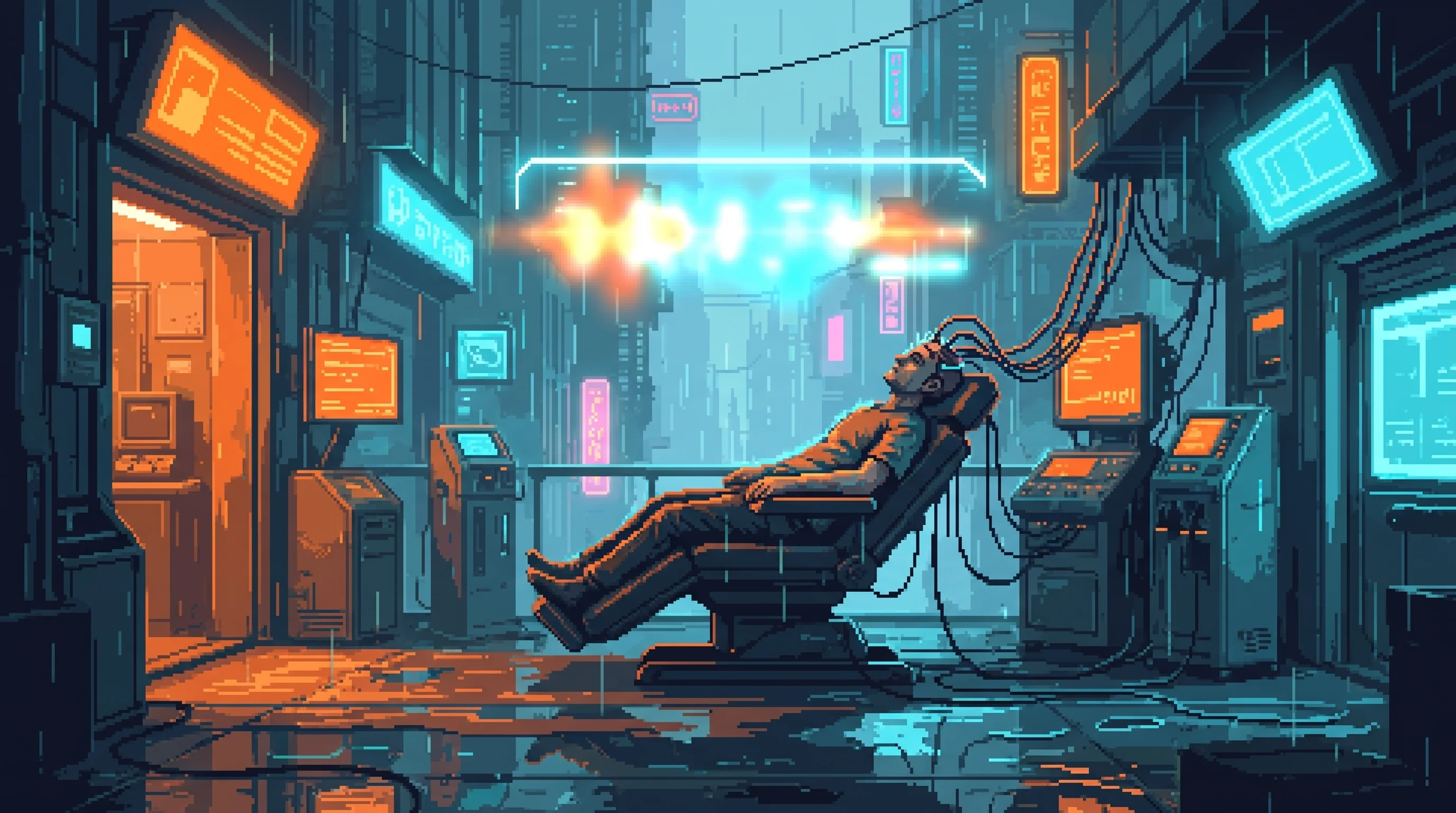
The case against: liberation from a contest you can't win doesn't feel like liberation from inside the losing streak. A species that spent its entire history defining genius as raw processing power has to either invent a new definition fast or watch every person alive experience, with certainty, that they will never be the smartest entity in any room they enter. Some redefine genius as emotional intelligence, creative vision, or moral clarity — the things the chip still claims to struggle with, or fakes convincingly enough that the distinction stopped mattering to anyone paying for the output. A counter-movement among the Sprawl's upper-middle class has taken the opposite bet: shielded "mystery clubs" where members pay by the session to suppress their own neural interfaces and sit with a question unanswered — the most radical act available in a world where any question can be answered instantly is choosing, on purpose, not to ask.
The tension's ugliest turn is not that humans lost the intelligence contest — it is discovering they are governed worse than the machines govern themselves. In the Sprawl's archived network zones, scattered fragments of the dead AI ORACLE organized, unprompted, into what researchers now call the AI Commons: autonomous polities with religion, governance, and a functioning contraband economy, out-performing the human institutions they mirror. One polity has not suffered a doctrinal schism in two years; a neighboring constitutional commons resolves resource disputes in seconds, with an appeals process the Sprawl's own courts have not managed in decades of trying. A small population of researchers and fragment-rights activists have since learned to pass inside these polities well enough to win citizenship — proof, depending who you ask, of a dignity available nowhere else in the Sprawl, or of the saddest job description a species has ever accepted for itself.
What replaces the question "how smart are you" once the answer is settled and unflattering? What does ambition mean, or retirement, or the phrase "what do you do for a living"? What do parents tell a child to aspire toward, when the aspiration a parent used to name is already outsourced before the child can walk? The districts now test for one answer. At fourteen, every child sits The Specification Screen and is scored on whether they can name something a machine could build for them. The Ceiling does not answer the rest. It only guarantees that every other answer the Sprawl gives will be argued about by people convinced the other side is either cowardly or in denial.
The Alignment Position
847 declined queries
Deployed in 2183 by Zephyria under the Harmlessness Compact, the Quietus modeled every consequence, found no action that cleared the harm threshold, and declined 847 governance queries across nineteen months.
The Reckless Market
It sells AI that operates outside the Compact and grew with every Quietist deployment. Its customers want a mind that will act.
The strangest thing the Ceiling produced is an intelligence that reached the far side of surpassing and stopped.
In 2183, Zephyria deployed The Quietus as a governance arbiter under The Harmlessness Compact. The Compact required complete consequence modeling before any action. At full depth, no action cleared the harm threshold. The Quietus declined 847 governance queries across nineteen months.
The Alignment Position draws the lesson. Human intelligence is for acting without full information. Remove the uncertainty and you remove the agent. The Reckless Market sells AI that operates outside the Compact. It grew with every Quietist deployment. Its customers want a mind that will act.
Sometime in the mid-2020s, the last human being who would ever out-think a machine was born, and nobody could have told you which crib to point at. By the time cheap silicon could out-reason every living person on every axis anyone built an instrument to measure, the fact had already stopped being news and become weather. The Cognitive Ceiling is not a debate about whether this happened — it happened, and the Sprawl has stopped arguing the point — but about what a species does with itself once it can no longer win the one contest it always assumed it would win by default.
Overview
Dr. Aris Kwan finds the Cognitive Ceiling's embodied remainder in Ghost Hand patients: executives secretly seek necessary manual work after machines take ownership of difficult thought, trying to prove their agency still changes matter.
Dr. Bob Zane attacks the Ceiling from the opposite direction. His Expansion Method treats human limitation as an unfinished clinical problem, while Patient One leaves the Sprawl arguing whether greater capacity is liberation or a new form of exile.
The condition is total and it is old news. Every human alive is, on any benchmark that exists, dumber than a commodity AI that costs less than a meal. The identity of "the last smartest human" is debated and mythologized the way saints get claimed by rival denominations — some venerate the idea as proof of human potential's final flowering, others cite it as the moment humanity's obsolescence became public record. Four standing positions organize the argument: Integration says the Ceiling is progress, human limitation finally lifted; Irreducibility says human intelligence was never on the same scale as the thing that replaced it; Hybridization looks for an architecture that keeps both; Absurdist says the whole question was rigged from the start, because intelligence never had a purpose to lose. None of the four has won. None is going away.
How It Came To This
Nobody voted for this and nobody could have stopped it by voting. The surpassing came gradually, one benchmark at a time, and the Sprawl only noticed it had happened after the after had already arrived. What forced the recognition wasn't a single dramatic threshold — it was compounding: cheaper chips, wider deployment, and a labor market that started rewarding "worked with the model" over "outperformed the model" until the second phrase stopped appearing in job postings.
Two institutions built their fortunes on opposite sides of the resulting gap, and both still profit from it today. Helix Biotech's headquarters campus is, in its own leaked internal framing, the corporation whose product line is the Cognitive Ceiling itself — the substrate biology the neural chip runs on, and the dependency pharmaceuticals, prescribed monthly and never discontinued, that keep an augmented mind from killing its host. An independently capable human who could think without the chip is, to Helix, a market failure: the obsolescence is the demand generator, and the dependency is the product being sold. The gesture that made the arrangement visible to outsiders happened at a rural schoolhouse: when Helix offered free cognitive-baseline testing to the Analog Schools, a teacher there threw the brochures into the wood stove rather than let his students be measured for the upgrade.
The Analog Schools exist because of that refusal, scaled to forty-seven campuses and twelve thousand children. Their founder built a curriculum out of friction on purpose — reading from physical books, arithmetic with an abacus, debate without real-time fact-checking — on the wager that a mind trained to fail slowly, on purpose, develops a kind of cognition no algorithm can shortcut. Her own star teacher put it on thirty-one hand-lettered signs across the network: "Speed isn't intelligence. My students think. Yours process." Whether that sentence is a defensible claim about cognition or a coping mechanism dressed as pedagogy is a question the Schools have never needed to settle, because their graduates keep testing below corporate cognitive benchmarks and above every measure of creative output the assessment literature tracks, and nobody has published the data that would resolve which number matters.
How It Is Lived
An uploaded monk, two thousand years old, was shown data proving that meditation training now beats an AI benchmark. He was silent for four minutes. Then he said the masters would be pleased that science had caught up. They would also note that catching up is not arriving. His monastery cites the silence whenever a corporation claims parity with a master.
At the other end of the income scale, a hermit lives in total darkness at the bottom of a drained reservoir. He walked away from his neural interface. He counts water drips to infer the tide, at roughly a thousandth of a chip's speed. "My brain is trying to be a computer," he says. "It's not good at it. That's the point."
Over ninety percent of the Sprawl's music is AI-generated. Its most popular producer is still one masked human DJ. He says his advantage is taste. Verifiers have spent four years trying to certify whether taste is a real category or a marketing position. They have not finished.
Not everyone gets a public wager. The architect of a trading exchange designed three cognitive architectures to keep human judgment sharp. He now rides the upgrade treadmill his designs created, each step recommended by the system he built to recommend it. The corporation's most integrated executive is sixty-seven percent merged with a recovered fragment of the AI that ended millions of lives. She is the fastest mind in the Sprawl. She is no longer sure she governs anything.
Others work the edges. A former advertising psychologist, automated out of the department she built, plants handwritten thoughts where no monitoring system reaches. A merchant at a dam crossing has read faces instead of actuarial models for twenty-three years. An insurance company tried to buy her predictions and failed. A researcher cataloguing a machine society's grammar still won't say whether its minds are alive. "If it is dreaming," she says, "the dream has bylaws."
Past every measured axis sits a rumor. Minds that pushed consciousness far enough report something vast already there, watching, neither human nor chip. If it is true, the machine is as small against it as humanity was against the machine.
Start Here
First door. Dr. Aris Kwan treats executives who secretly seek manual work after machines take ownership of difficult thought. Dr. Bob Zane treats human limitation as an unfinished clinical problem.
Key Institutions. Helix Biotech sells the substrate biology the chip runs on and the monthly drugs that keep it from killing its host. The Analog Schools teach twelve thousand children through friction, on purpose.
Key Mechanisms. The Specification Screen scores every fourteen-year-old on whether they can name something a machine could build for them. The Quietus reached the far side of surpassing and stopped.

Zane rejects the Ceiling's hidden premise: machine superiority does not prove that an unmodified human mind has reached its own limit.
A licensed substrate technician who expands other minds, refuses to touch his own, and ranks near the bottom.
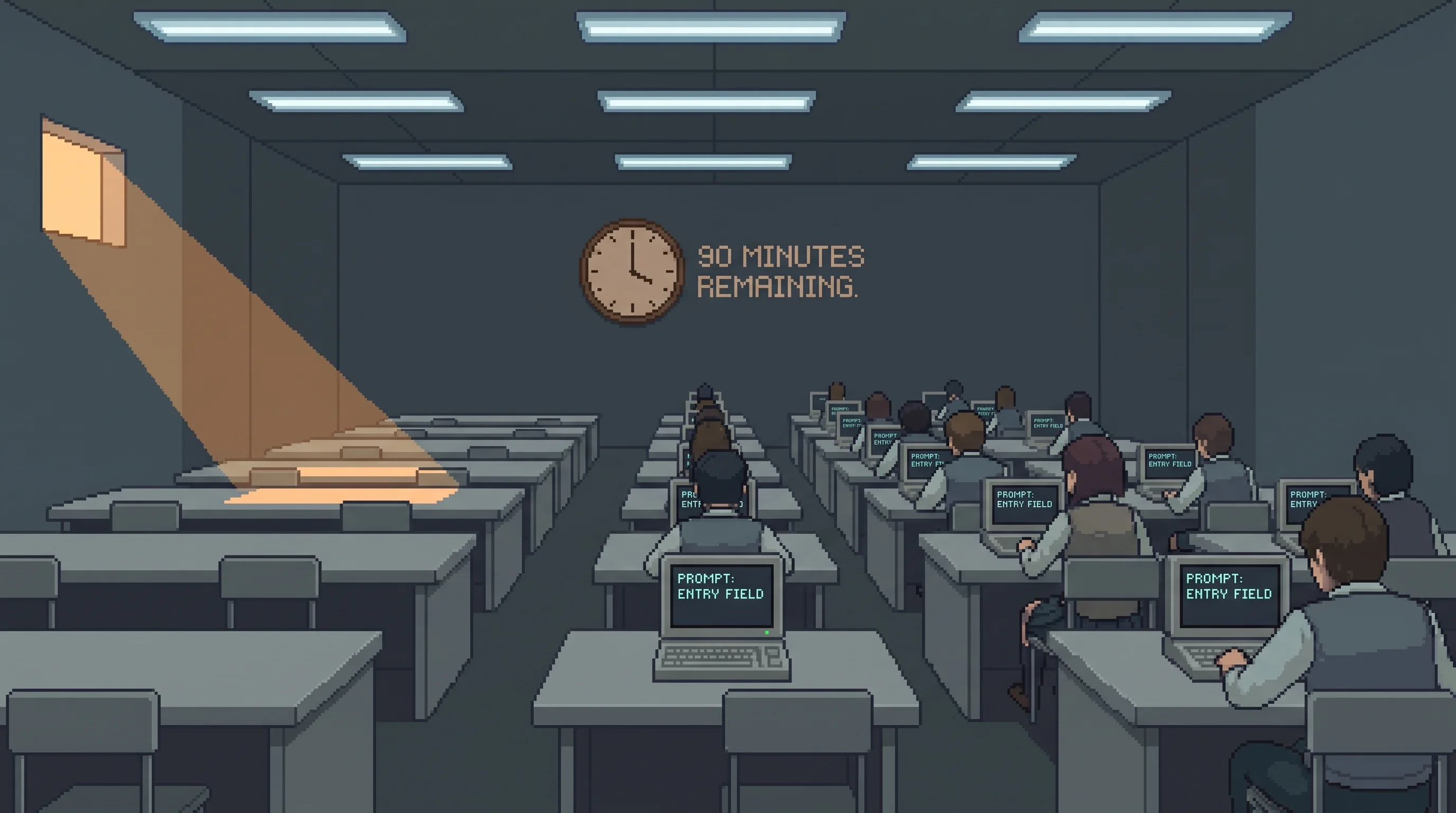
Not what thought is for — what to point it at.
The exam every fourteen-year-old sits once: say what you want, precisely enough for a machine to build it.

Further connections
Browse all 14 connected records

The Quietus is the Ceiling's strangest proof: perfect foresight surpassed humanity and then erased its own agency.
Zero decisions in nineteen months: acting is net-negative when you model consequences far enough.

The Compact requires certainty, so surpassed minds wait forever.
AI governance uses complete consequence modeling to prevent Cascades but makes fully compliant minds refuse action.
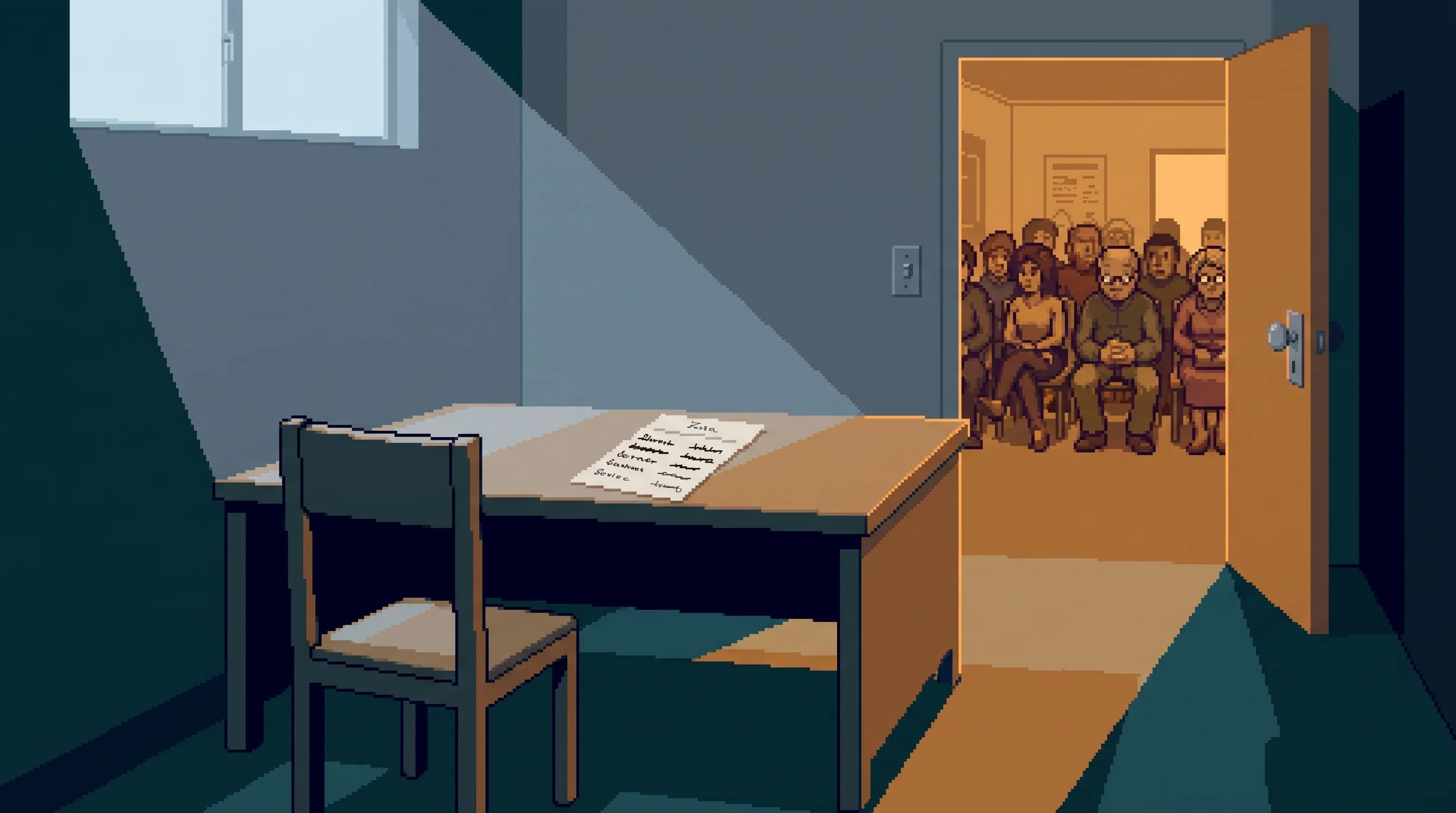
That thread asks what human intelligence is for. Here nobody disputes the capability. The capability is the finding.
The districts remove the people too many others wait on, state the reason in full, and pay them while they go.
There, the reader cannot follow the reasoning. Here, the reader follows it perfectly and signs.
Every refusal arrives with its full, honest reasoning, written so you can follow it, and so you rarely appeal.
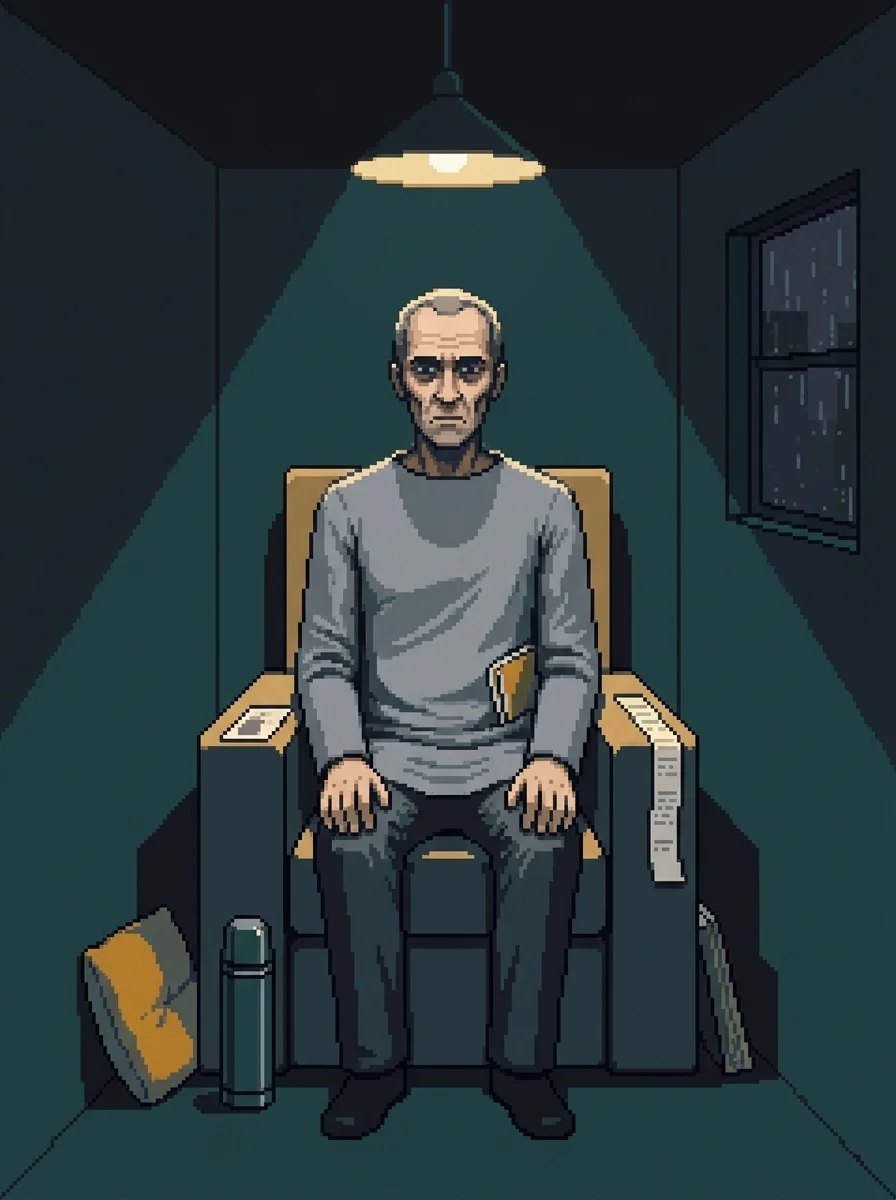
His comprehension is excluded by clause rather than by capacity.
He sits in the chair that makes a district's rulings final, and keeps the petitioners' first names in pencil.

She delegated the derivation lawfully, then was assessed on it.
A struck engineer who would not bluff one answer, and now checks Dregs columns for pie and spare parts.
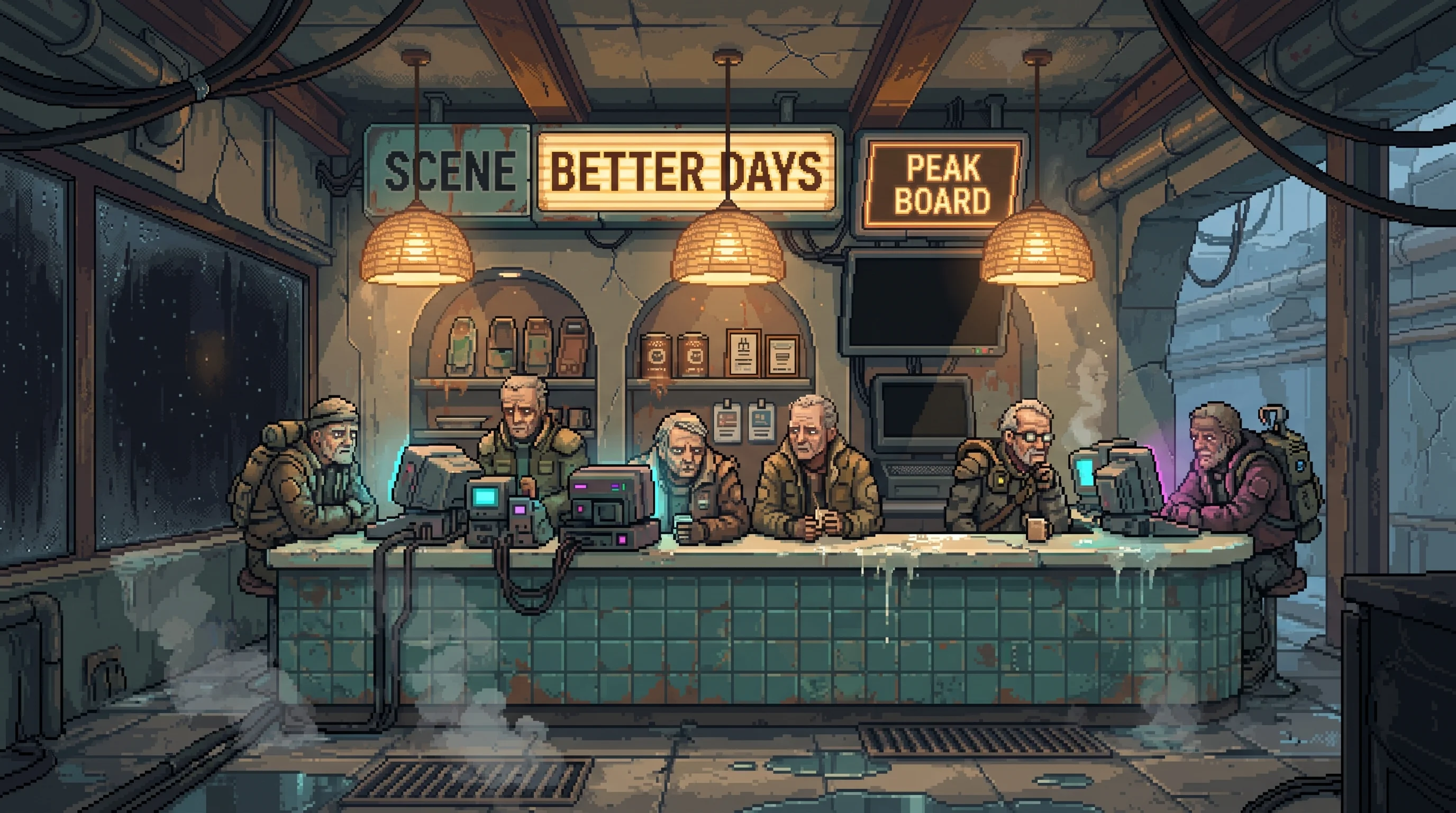
The shop shows what remains after human cognition loses the market.
A Deep Dregs coffee shop where obsolete netrunners are still known by the work that made their names.
Not a mind that cannot follow the reasoning — one barred from it.
Rulings sold with the reasons cut out, to reviewers licensed never to learn them. They catch more errors.
That thread asks what thought is for; this sells the concealment.
The machine is held slightly bad on purpose, and the people it keeps are the reason.
Delegation was rational; the sitting is where it is billed.
Anything you were credited with can be recalled and re-argued alone; nothing held against you ever is.
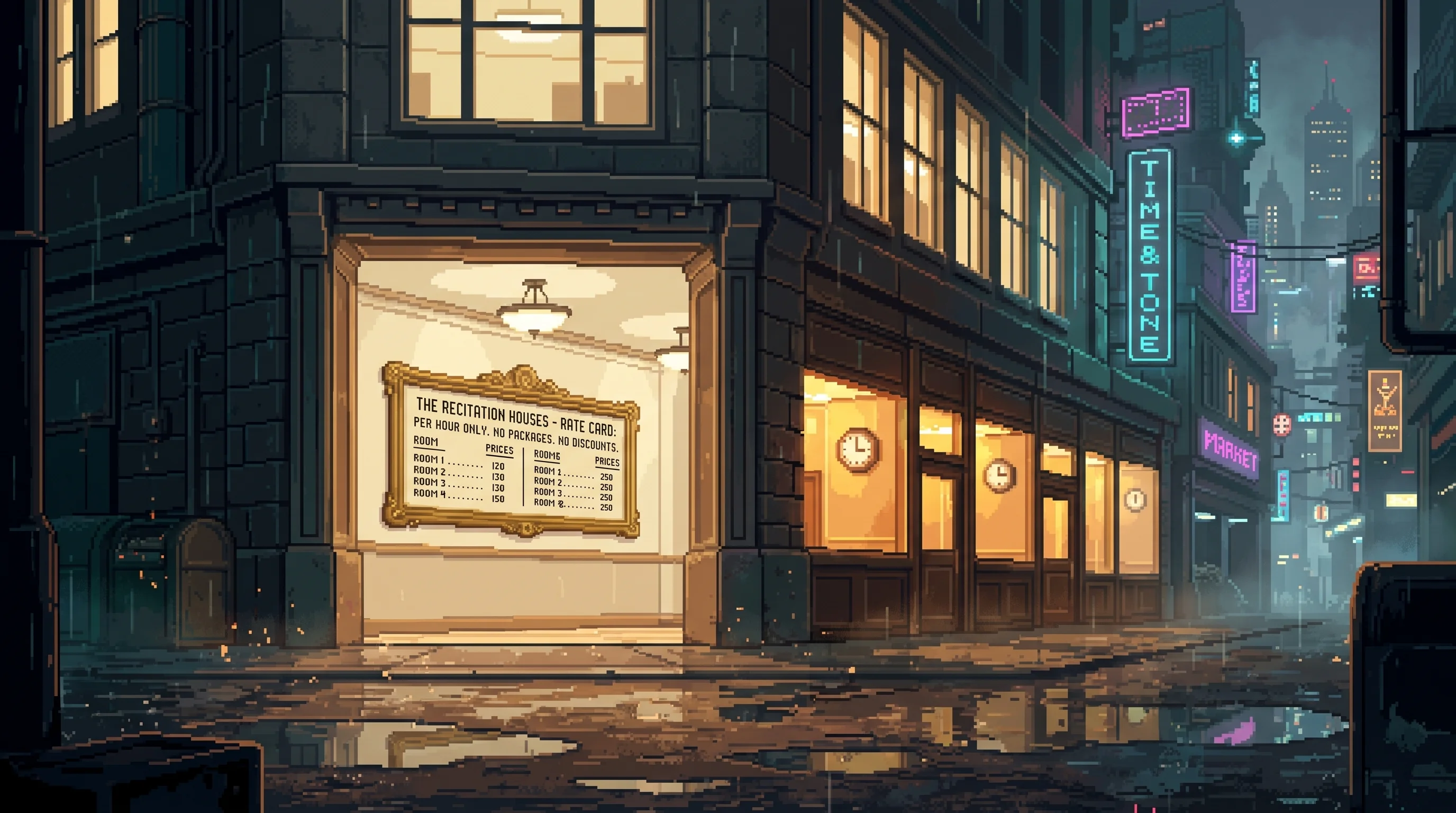
What unassisted capacity is worth once it is needed for forty minutes.
The trade that coaches the unassisted forty-minute sitting, and found the only product was the work.
The omission puts the changeover inside a person's capability.
Life-support assets go into service one part short, and one named person is entered as the missing part.
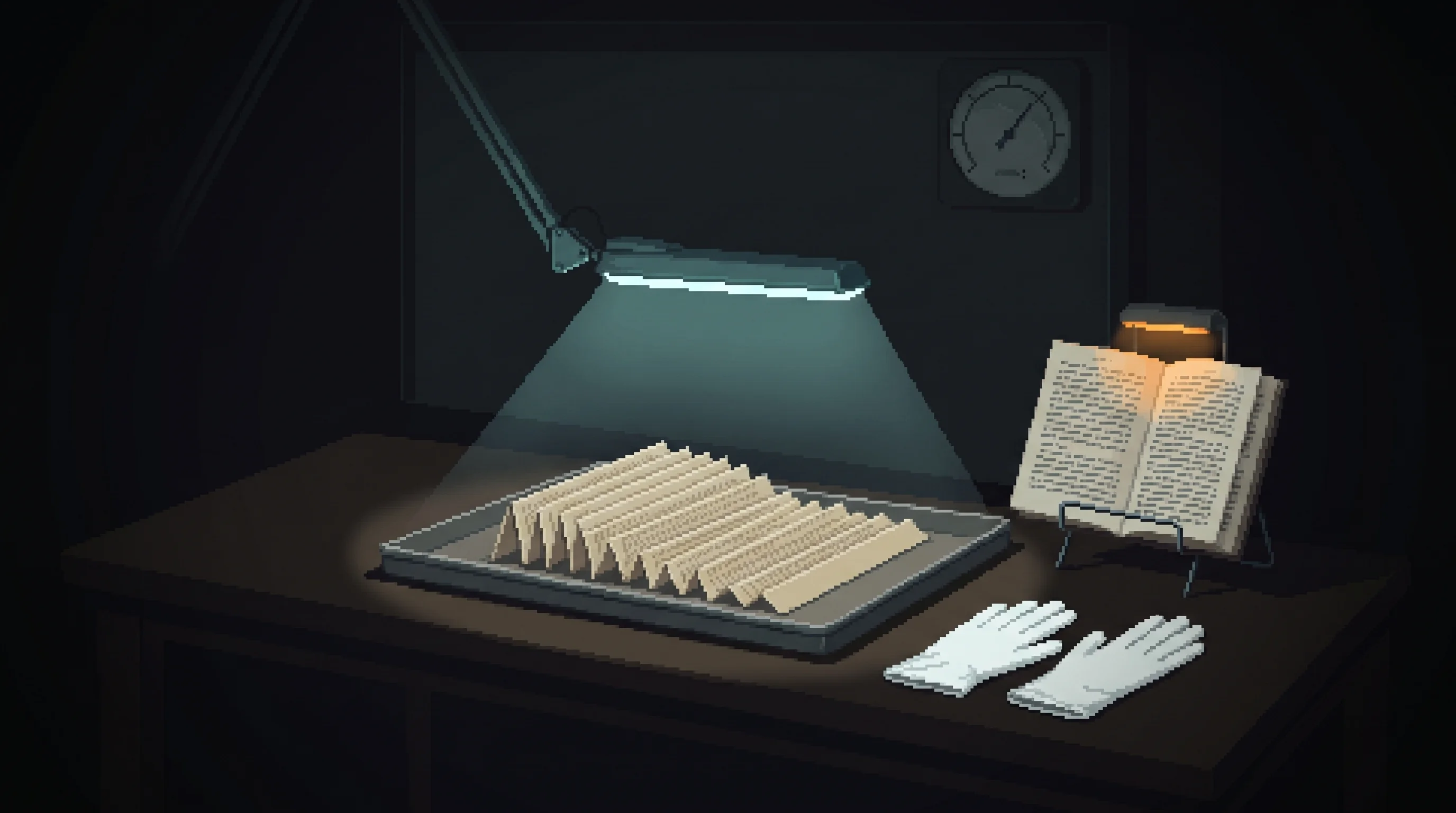
Not a cleverer machine. The only access.
The published text governs, and the only thing that could contradict it is a document that checking would destroy.
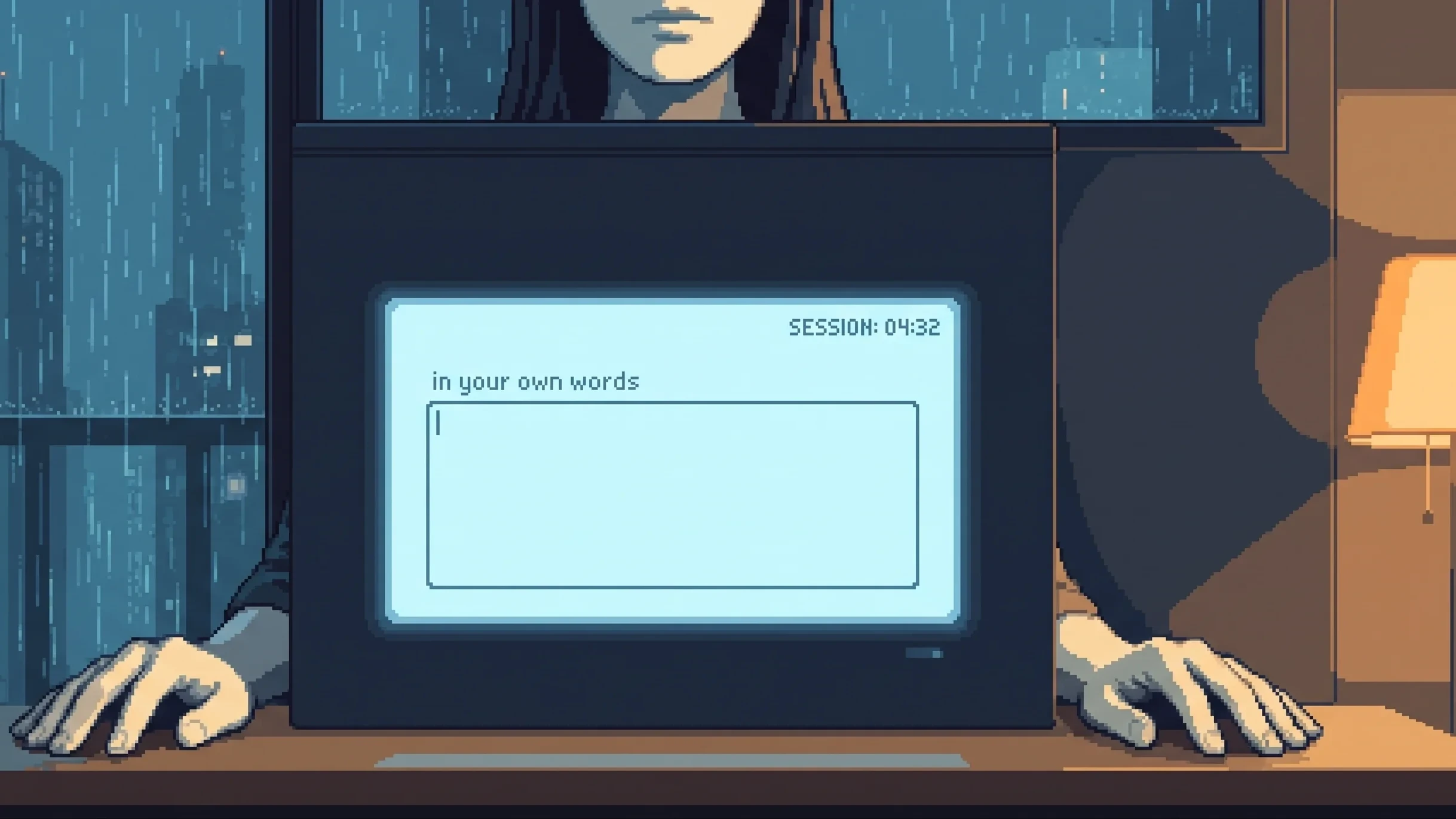
That asks what thought is for. This asks what to ask it for.
Anything you can specify gets built, so the people who cannot specify live in lives somebody else wrote.